We see things they’ll never see, we’re gonna live forever
Editor’s notes:
The Rock and Roll Hall of Fame will be inducting the latest batch of artists in November, and here at Hack’s Back Pages, that means publishing profiles of these honorees: Phil Collins, Billy Idol, Iron Maiden, Joy Division/New Order, Oasis, Sade, Luther Vandross and Wu-Tang Clan.
Frankly, I’m nonplussed and unprepared to write about the majority of these artists. In most cases, I am either ambivalent about them or I simply don’t care for their musical output. But over the next few weeks, I intend to do the necessary research and familiarize myself with them enough to write knowledgeably about their music and their careers.
****************************
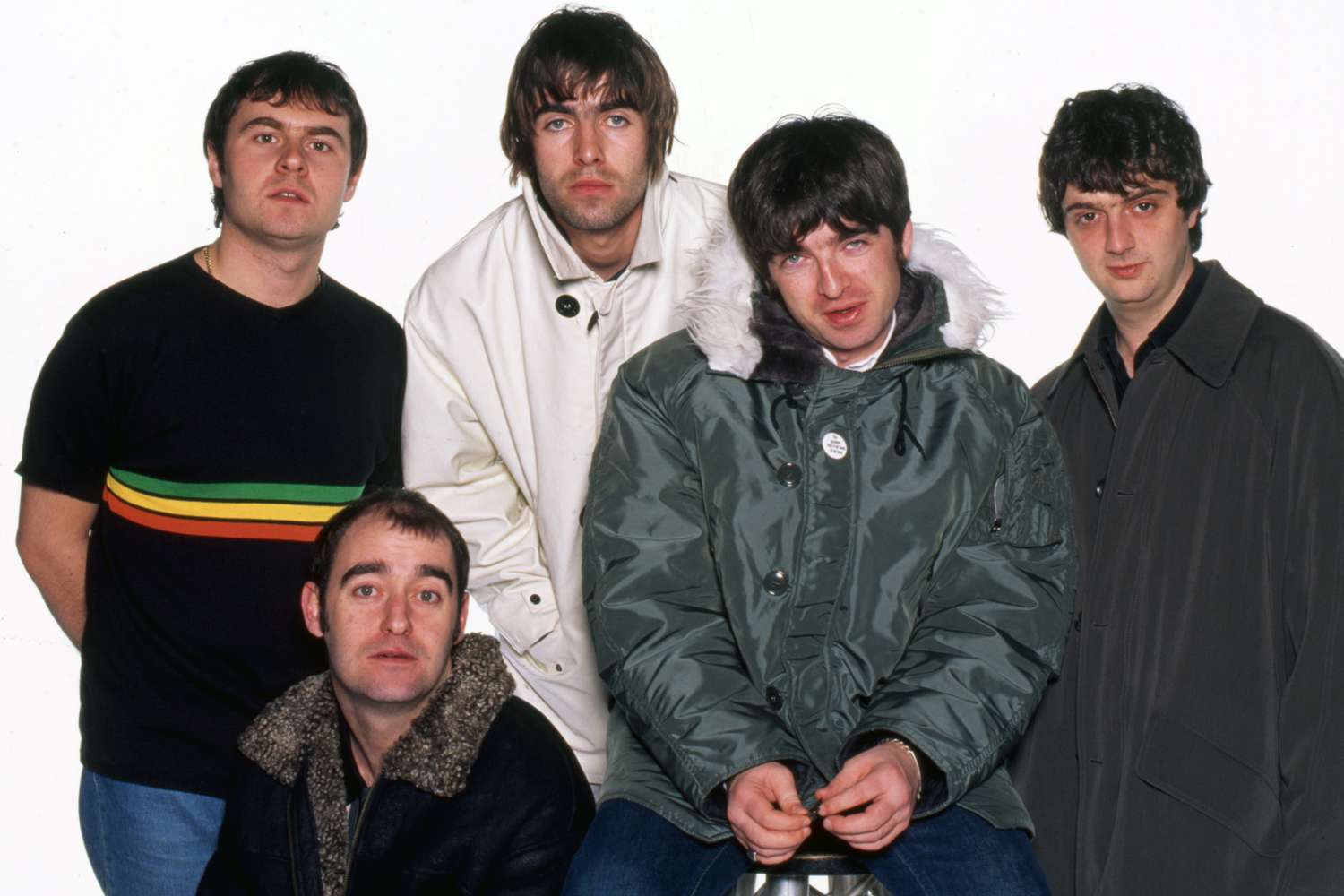
My son-in-law, Johnny Ashby, is a 37-year-old Londoner who has a keen understanding of and a deep love and respect for Oasis, one of England’s most successful groups of the last 40 years, and indeed, of all time.
I could’ve written my own profile of Oasis, which would have no doubt shown a less enthusiastic and shallower grasp of their oeuvre. Instead, since Johnny is not only an accomplished musician and songwriter but a damn fine writer as well, I chose to invite him to take my place and offer his own take on the group and its memorable career, something I’ve done only a couple of times before on this blog. After reading his perceptive and personal essay, I’m confident I made the right decision.
He also helped me compile the Spotify playlist found at the end, inserting songs I’d omitted and removing a few he felt were unworthy of inclusion. Exposure to the full breadth of the Oasis catalog has resulted in my deeper appreciation for their work, and I am indebted to Johnny’s insights and eager participation.
*****************************
By Johnny Ashby

I’ve been putting off this article for some time because it seemed like an impossible task. But when my father-in-law asked if I would write a guest article on Oasis for his blog, I could hardly say no.
For the last few weeks, I’ve been trying to piece together all of my various thoughts about a topic I hold dearly, a genre of music known as Britpop, which is, for me, the best of the best out of all the many different eras of modern music. It was born out of a musical rebellion against the dark, doom and gloom of America’s ’90s grunge movement — a celebration of the 1960s British Invasion and everyday British life led by the likes of Oasis, Blur, Pulp, Travis and The Verve, to name a few.
So, where do I start when writing about one of, if not the greatest band to ever emerge from the UK? I’ve loved Oasis for as long as I can remember. They were there the first time I discovered what a band even was. I’ve not only listened to their catalogue, I’ve learnt to play it, too. I’ve performed their songs on both sides of the Atlantic, in pubs, working men’s clubs and dive bars, and you can pretty much guarantee “Don’t Look Back In Anger” is going to start a sing-along every time. I’ve had plenty of heated debates with many an American about Oasis’ right to the throne of rock and roll, and I can say, quite confidently, that I’ve won every single time.
The Birth of Britpop
Before Oasis, my musical tastes were much as you would expect from a pubescent young lad. I listened to things I’m now ashamed to admit. Boybands had started taking over the pop mainstream, and the charts were a mix of one-hit wonders and monotonous beats. Then something changed with the revival of the guitar band. If you want to understand how the ’90s kicked off, you have to start with The Stone Roses, and if you want to understand The Stone Roses, you have to start with The Smiths. The music scene in Manchester has always passed down the baton this way. The Smiths gave British music its wit and furnished it with jangly guitars. Then The Stone Roses took those jangly guitars, added an indie dance beat and pointed the whole thing at a new generation. It was a sound that felt both completely new and somehow inevitable. The Stone Roses built the runway, and without them, Britpop and Oasis probably wouldn’t have happened.

Although Blur had only a fraction of the impact and commercial success in the US that they did in England, in the mid-’90s they were locked in a fierce competition in the UK with Oasis in what was known as The Battle of Britpop. During that time, it was considered deeply suspicious to like both Blur and Oasis. You had to pick a side; it was either one or the other. I was nervous to discuss my musical tastes with people back then, and rightly so. I was, I’m ashamed to admit, one of the suspicious people, and I got judged and bullied mercilessly for it as a kid. As I get older, I still appreciate Blur for who they were, but their music now feels a little too knowing and perhaps a little bit too clever to listen to most days. If I listen to their big hit single “Girls and Boys,” it takes me to a wonderful place for three and a half minutes, somewhere in 1994 in the backseat of the car with my headphones on. Blur have aged into nostalgia, which is, I suppose, its own kind of compliment.
Oasis, on the other hand, never really seemed to go away. They never needed to be revived or re-contextualised. Oasis 2025 didn’t feel like any of the other long-awaited reunions we’ve seen before, because Oasis have always been around. That’s the difference between a singles band and an album band. Whereas Blur gave us moments, Oasis gave us a world we could live inside.
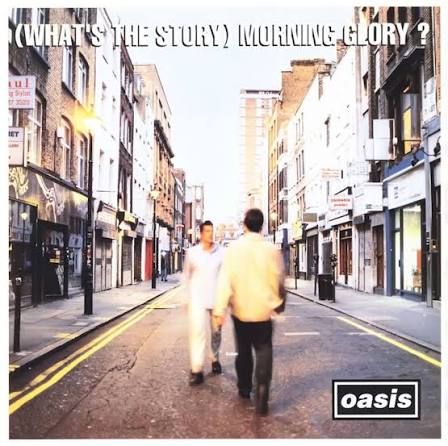
Oasis broke out when I was a kid of and didn’t stop until I was well into my teens. I remember all of it like it was yesterday. I had copy of “(What’s the Story) Morning Glory?” on cassette and played it until the tape broke, literally. If you know what that means, you were there. If you don’t, just know it means I listened to that album more times than any sane person should be expected to listen to anything. They were inescapable, but not like an annoying song that gets stuck in your head. “(What’s the Story) Morning Glory?” didn’t just soundtrack the mid-90s, it survived them. It survived “Be Here Now,” their third LP in 1997, which was, in my mind, a complete catastrophe of an album, and everyone knew it at the time, including the band and the people who bought it. It survived the split, and another fifteen years of the two principals refusing to be in the same room.
The Band
Noel and Liam Gallagher grew up together on a council estate in south Manchester. They shared a bedroom for most of their childhood, which almost definitely contributed to their lifelong habit of arguing. They were, by most accounts, completely different people from the start. Polar opposites. Liam was the golden child, high energy, obsessed with football and utterly unconcerned with music until he was nearly eighteen. His older brother Noel was, as Liam put it, “the weirdo in the family.” A daydreamer and a loner. A kid who retreated into his own world and taught himself guitar because there was, in his own words, absolutely nothing else to do. Sometime in his early twenties, Noel managed to talk his way into a job as a roadie and guitar tech for another Mancunian band, the Inspiral Carpets. During his time out on the road and the endless miles of motorway that followed, he started writing songs on an acoustic guitar.
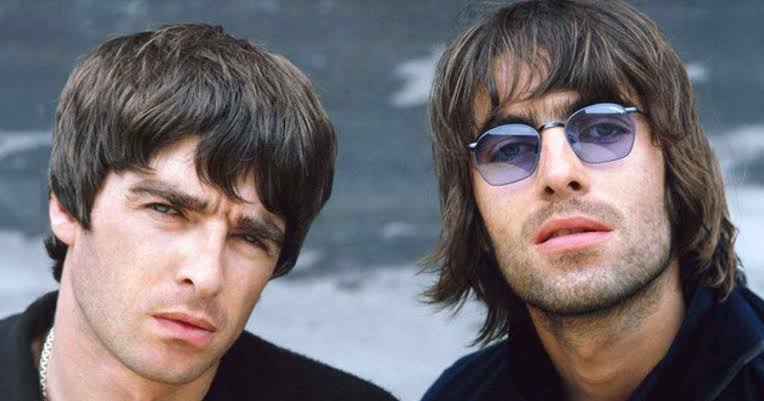
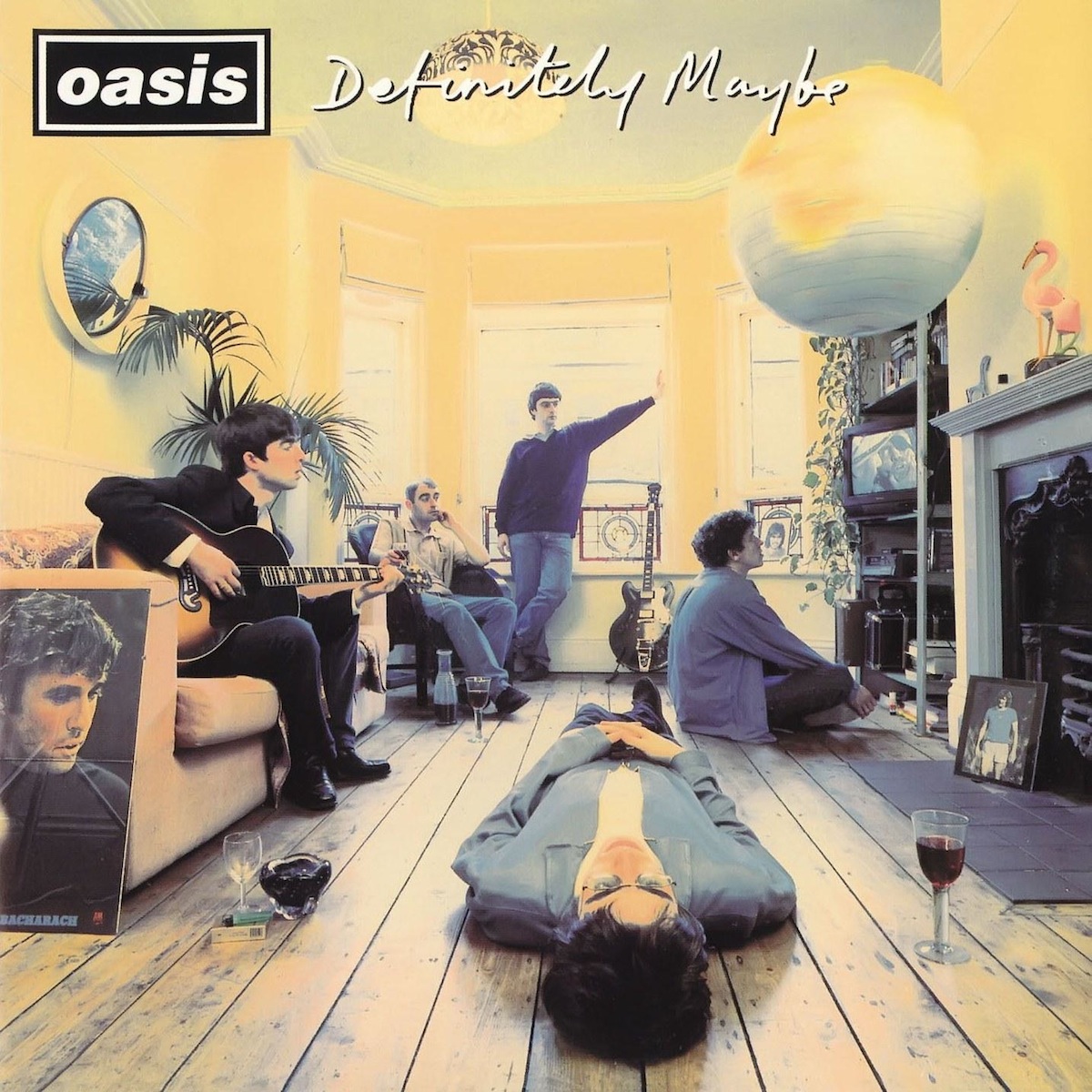
It was during a break between tours with the Inspiral Carpets that Noel heard that his brother Liam had formed a band. He went and saw their first gig at the Boardwalk in Manchester and was impressed enough to want in. He joined on the condition that he would maintain complete creative control as the sole songwriter. The band willingly agreed because they probably had little choice. Noel’s songs were so good they thought he was playing covers. All those songs Noel had written alone while working as a roadie eventually became the backbone of their repertoire, and when they performed them at King Tut’s in Glasgow, they were signed on the spot by Alan McGee of Creation Records, and the rest is history. Their incredible debut, 1994’s “Definitely Maybe,” followed soon after by “(What’s the Story) Morning Glory?,” went on to soundtrack an entire generation, and Oasis became Oasis.
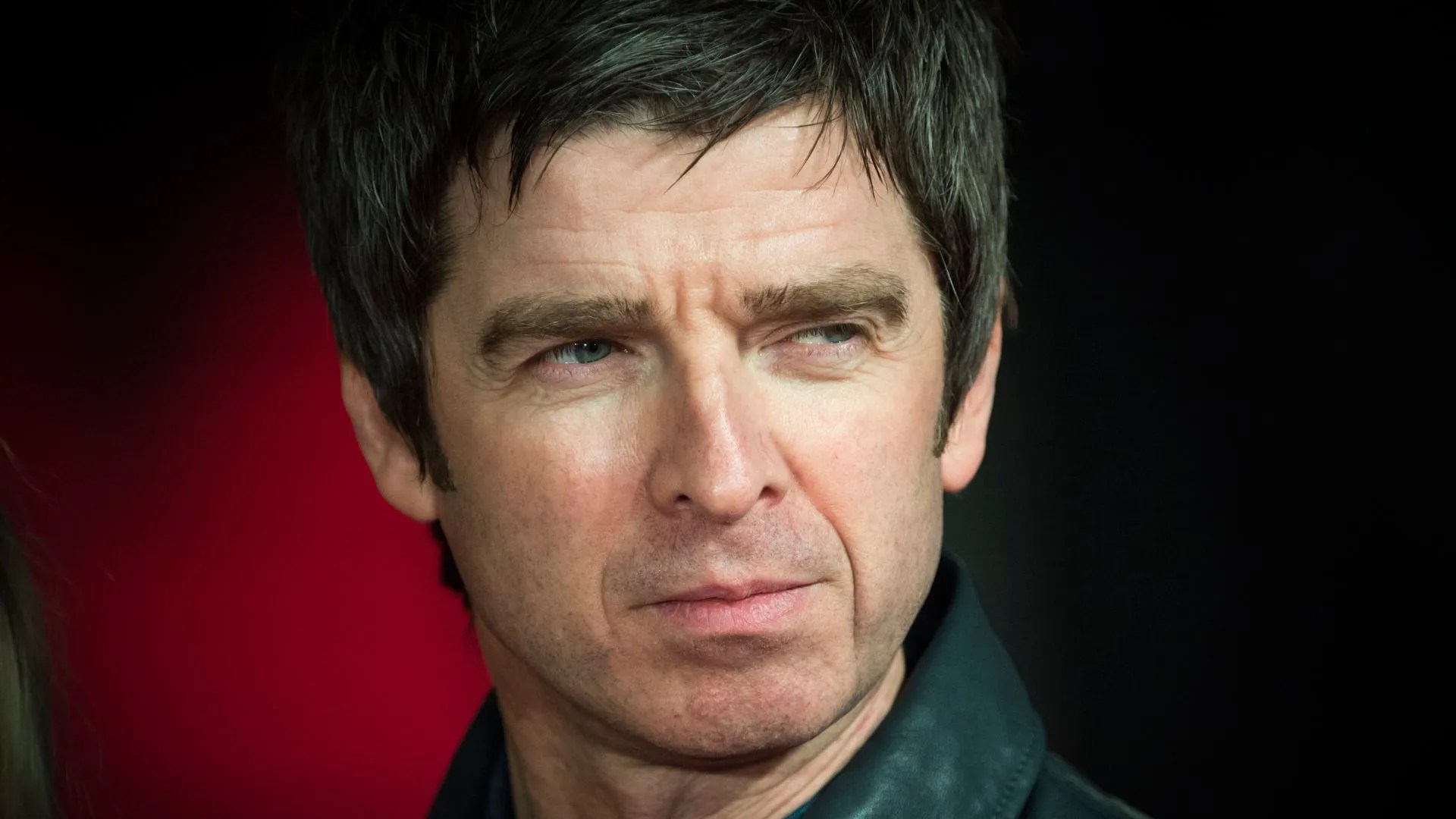
Noel Gallagher is one of the great British songwriters — not just of his generation, or his era, but one of the great ones ever. Period. I place him on a relatively high pedestal alongside Bob Dylan and a small handful of others who seem to have been given access to something the rest of us can’t quite reach. Songwriting at their level is not a skill you can simply learn. You either have it or you don’t. You can get better at it, sure, but only if you kind of know what you’re doing in the first place. Songwriting is a craft, built on melody, harmony, structure and lyrics. But in order to be great, you need an instinct for what makes a good song, and I’m not sure that’s something you can teach.
Liam is often underestimated and never should be. He didn’t write the songs, but he carried them. He’s everything you want in a frontman and he has all the ingredients that make a great one. During the sessions for “Definitely Maybe” and “(What’s the Story) Morning Glory?,” producer Owen Morris described what happened in the studio as a “freaky thing.” Noel would play a song Liam had never heard before, once, on an acoustic guitar in the control room. Then he’d hand Liam the lyrics, and Liam would sing it. Just like that. Perfectly. One after the other. Five songs in five days. “Like, what the fuck? He’s only heard the song once,” Morris said.
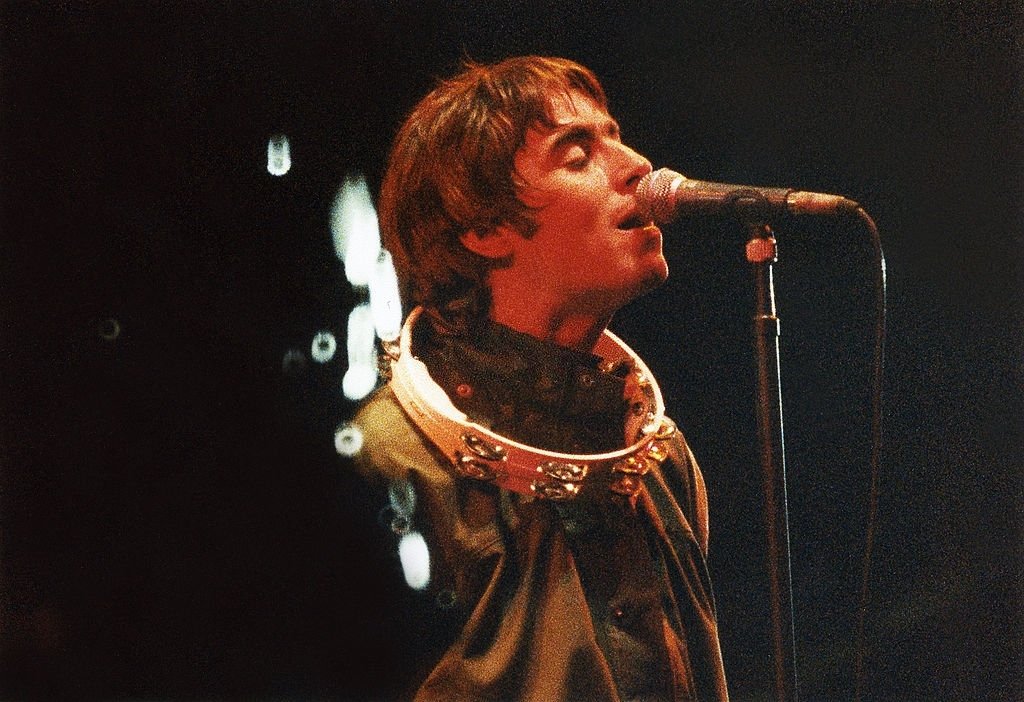
A voice like Liam Gallagher’s on tunes like “Live Forever,” “Champagne Supernova,” “Supersonic” and “Wonderwall” comes along once in a generation, maybe less. Noel and Liam’s vocal styles couldn’t be more different, and that contrast is part of what made them such a remarkable pairing. Noel’s voice, heard on tracks like “Don’t Look Back in Anger,” “Talk Tonight,” “The Masterplan” and “Little By Little,” sounds like a Catholic cathedral filled with booze and cigarettes. There’s something almost angelic about it, and it holds a Bono-esque quality. It’s both crisp and powerful, and somehow sacred and slightly dangerous at the same time. Liam, on the other hand, is the perfect rock and roll voice, full stop. The tone alone says everything. It’s every bit of “come and have it then” that you want from the guy with the mic and the tambourine. Where Noel sounds like he’s delivering something from above, Liam sounds like he’s daring you to argue with him about it.
But it’s not just about Liam and Noel. We owe a nod to the people who made up the rest of Oasis at various points too. It was a band so tumultuous that only a brave few survived the mishaps, and the Gallaghers, long enough to leave their mark. Tony McCarroll, the original drummer, was sacked in 1995 after a confrontation with Noel in Paris that McCarroll later described as “probably the most stupid thing I’d ever done in my life.” Then there’s Paul “Bonehead” Arthurs and Paul “Guigsy” McGuigan, and Gem Archer, Andy Bell, Alan White and, most recently, Joey Waronker. A talented bunch that rarely get talked about because the Gallagher brothers take up all the available oxygen in any room, on any stage, and in any article ever written about the band. A great band always needs more than two people, and together they were unlike anything else.
Like all good rock bands, there’s an ego. A nice healthy dollop of it. And Oasis possibly have one of the biggest. They’ve declared themselves the best band in the world on numerous occasions and at one point said, and I quote, “We’re better than the Beatles.” They have a theory that they’ve practiced with remarkable consistency, and that theory is “Any press, good or bad, is better than no press at all.” Most bands would crumble under the weight of that self-belief, but Oasis wore it like a parka, and to be honest, they weren’t entirely wrong. Not about being better than the Beatles; nobody is better than the Beatles, so I’m told.
The Songs
Noel Gallagher wrote “Live Forever” when he was 22 years old. Now, if you’ve been identifying “Wonderwall” as the definitive Oasis song this whole time, with respect, you’ve been doing it wrong. “Wonderwall” has obviously become its own anthem, and recently seemed to have been given the banner as the unofficial national anthem for England in the World Cup. But is “Wonderwall” their best song? Probably not really. It’s the one your mate plays at 3 am when he’s had a few too many and thinks he’s been through something. I urge you to listen to all the others in the playlist below and make your own assessment, but for me, “Live Forever” is the one. Not so much for the chord progression and the melody, but for the boldness of writing a song about wanting to live forever and making it feel profound rather than childish.
Of course, there are other songs in the catalogue that don’t get enough credit. “Little by Little” from “Heathen Chemistry” (2002) is one of the most quietly gorgeous things Noel ever wrote. It’s a terrace ballad that builds like a slow tide coming in. I’ve played this song in bars all around the world and no matter how many times I’ve played it, I’m still floored by its structure and melody. There’s something in the chord progression that sits perfectly under the chorus, a clever use of slash chords thickening up the harmony in a way that power chords rarely do. It gives it a weight that most ballads don’t even attempt. For me, it was one of the standout moments of the 2025 reunion tour. When Noel stepped up to the microphone and started singing, 80,000 people disappeared and everything just stopped, and I got lost in it.
“The Importance of Being Idle” arrived in 2005 and reached number one in the UK, and although we didn’t know it at the time, it was their last #1 as a band. It became their 19th consecutive top ten UK hit, beating a record previously held jointly by the Beatles and ABBA. It’s a bit looser and more playful than most of the songs in their catalogue. I remember watching the music video for the first time on MTV and thinking it was original and unlike anything I’d seen up to that point. It’s one of the few songs actually led by Noel which, for me, is a special thing. When he gets to sing his own songs, there’s a different type of conviction in his voice that Liam lacks. It became the song of the summer and could be heard all over, drifting out of car windows along the high street and across booze-filled pub gardens.
Once again, it seemed like they were unstoppable and a tour was on the horizon, but behind closed doors the band was crumbling. The apple had fallen from the tree and was beginning to rot. In hindsight, (despite 2008’s “Dig Out Your Soul” being their last album), the album “Don’t Believe the Truth” felt like the perfect goodbye from the band. Oasis disappeared shortly afterwards on what turned out to be a rather extended hiatus, leaving behind a song and an album that felt like a gift we hadn’t quite appreciated until it was gone.
In the years that followed the split, we saw many different attempts from both brothers to carry the torch. Liam formed Beady Eye with the remaining members of Oasis after Noel’s departure. It was a valiant effort but it never quite captured what people were missing. When Liam finally went solo, something clicked. Noel’s work under Noel Gallagher’s High Flying Birds moved toward something more experimental, but Liam did the opposite. “As You Were” (2017), “Why Me? Why Not” (2019) and “C’mon You Know” (2022) were a well executed trio of albums that leaned hard into everything that made Oasis great in the first place: Big stadium anthem rock songs, with massive “sing-along” choruses, and a lot of swagger. In 2017 Liam and Noel released solo albums within weeks of each other, and during their first week of release, Liam’s “As You Were” sold over 100,000 copies against Noel’s “Who Built The Moon” at 78,000.
The Reunion
When the 2025 reunion tour happened, it became pretty clear that Oasis were more popular than ever. The shows sold out almost as soon as they’d been announced, with 41 dates across 14 countries, starting in Cardiff, Wales and ending in Sao Paulo, Brazil. I was lucky enough to see them for two nights in Los Angeles. It was an unforgettable weekend spent with friends, an obscene amount of alcohol, and a lot, a lot of Adidas sportswear. I consider myself a realist, though my wife will probably disagree with me. I went as far as to buy ticket insurance for the first time in my life. The odds didn’t exactly seem in anybody’s favour, and at $400 a ticket, I wasn’t going to risk it.
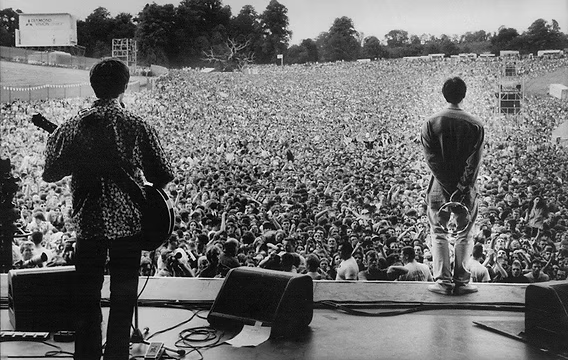
I didn’t fully know what I was expecting, but I was genuinely concerned they wouldn’t keep it together long enough to make it to California. But they did, and despite their previous misadventures on the other side of the Atlantic, when Oasis arrived on American stages, they were greeted with scenes that felt less like a comeback and more like a homecoming. It was pretty remarkable when you consider how many catastrophic gigs there have been, how many public arguments, how many times Noel has quit the band, and how many fans have been left standing in the rain holding a ticket to something that simply didn’t happen. Any one of those things would finish most bands. Oasis somehow collected them all like trophies and kept going. It gives fans every excuse to turn their backs and walk away, but we didn’t.
Here’s the thing about Oasis that is almost impossible to explain to someone who wasn’t there. If you ask someone what makes Britain quintessentially British, you tend to hear the same answers. The Queen. A cup of tea. Football. A queue for something that probably isn’t worth queueing for. Well, somewhere along the way, without anyone really planning it, Oasis made themselves part of that list too. They are a band this country has claimed as its own in a way that feels instinctive rather than chosen. An Oasis t-shirt is worn proudly in the stands at an England game, just like an official England football jersey. Oasis are, and always will be, ours.
Could there be a new album? Nobody knows. In true Oasis style, Noel has been characteristically non-committal, which from him means anything from “definitely not” to a “definitely maybe” to a “probably yes.” During the 2025 reunion tour, they played the same 23-song setlist every night, which tells you something about where they are creatively as a band. One might say that they’re consolidating rather than expanding. They’ve both proved, after two incredibly successful solo careers, that they still have it in them. Noel Gallagher can write, but whether he and Liam are currently in a headspace to make something new together is a question that only the Gallagher brothers can answer, and they will answer it in their own time, on their own terms.
The Rock & Roll Hall of Fame
I’d argue that Oasis are the last true rock and roll band we’ve seen. What happened to Oasis simply doesn’t happen anymore. They were a working class band from a council estate in Manchester, who were discovered whilst playing a gig on the circuit. They were signed on the strength of their songs alone, and went on to become the biggest band in Britain within two years. Sadly, the music industry that made it possible for bands to break into the mainstream like that no longer exists. The old ways have been replaced by the new and have been taken over by algorithms, streaming metrics and follower counts. The A&R gatekeepers who used to listen at the back of a dingy, sweat-filled room with a drink in their hand now sit at a desk with a cup of weak piss-poor coffee, staring at their metric dashboards. The music and the songs no longer matter to them, only the follower counts do.
You can’t really have a band like Oasis again. If they arrived tomorrow, I doubt they would get label support. It’s just a harsh truth. Major record labels aren’t going to take a punt on a band whose frontman might tell them to fuck off. They won’t risk signing a band whose members might argue with each other in public, take drugs or deliberately miss a gig. They see it as too high a risk. The traditional rockstar as we knew it is probably dead. The modern rock band is expected to be a marketable one, easily manageable, squeaky clean and most importantly, online. Songs have changed too; now they need a chorus that works in fifteen seconds. Something that can be clipped, looped and dropped into a reel. Something that performs well in an algorithm. And it hurts me to say it, but most of the music we hear these days is unlikely to stand the test of time. Maybe that’s the real difference. Rock and roll was never supposed to be safe. It was supposed to be loud, unpredictable, unapologetic and rebellious. The danger was always part of the appeal and for me that’s Oasis 101. Oasis might very well be the last band to have broken out in that organic way, on the circuit, at that level. Nobody has come close since. Which makes what they achieved feel even more extraordinary in retrospect. Oasis are not just a great band but possibly the last of a kind, and if that’s true, then the Rock & Roll Hall of Fame is exactly where they belong.

Liam Gallagher once called the Rock & Roll Hall of Fame “a load of bollocks.” And yet here we are, and Oasis are being inducted in November. As bizarre as it sounds, they will stand on a stage alongside Iron Maiden, Billy Idol, Wu-Tang Clan and Phil Collins, who Noel once called a dinosaur. Their acceptance speech alone might be worth the price of admission, and amidst the shenanigans, they’ll probably break the internet. With Oasis, you never quite know what’s coming next, and that is precisely why, thirty years on, we are still watching. After all, any press is good press, remember?
************************

