Didn’t I do the best I could, now didn’t I?
How strange it is, and unfortunate, when the people who put in the hours and do the bulk of the work aren’t given the credit or the glory for what they’ve contributed.
In pop music, this has happened fairly often. The superstar singer basks in the spotlight while the session musicians or touring band work their wonders largely in the background.
In the 1960s, there was a loose confederation of hip studio musicians in Los Angeles who came to be known as The Wrecking Crew because they were “wrecking the industry” for the button-down guys who came before them. I’ve already written about The Wrecking Crew in Hack’s Back Pages, most recently when drummer Hal Blaine passed away last year. He and players like Larry Knechtel, Tommy Tedesco, Carol Kane and others worked in anonymity while laying down the amazing bass, drums, keyboards and guitars on hundreds of hit singles by dozens of famous artists from The Fifth Dimension 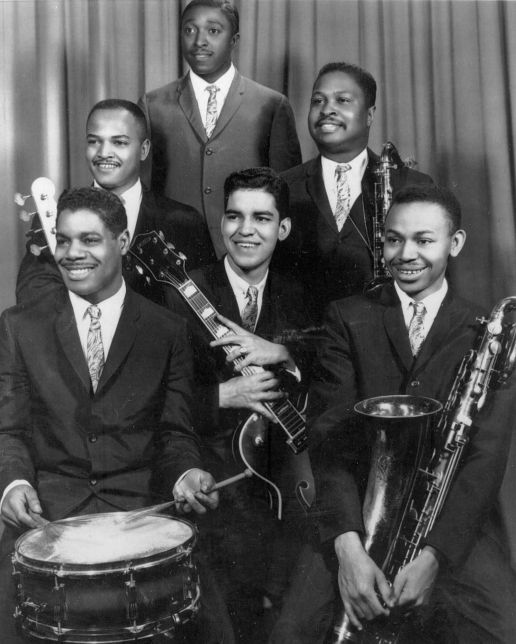 and Frank Sinatra to The Beach Boys and Neil Diamond.
Over in Detroit, where Berry Gordy established his Motown Records “Hitsville U.S.A.” juggernaut, the same thing happened, only more so.
The hundreds of hit records that millions of us danced to — back then and still today — were sung by widely known stars like The Supremes, Marvin Gaye, The Four Tops, Stevie Wonder, The Temptations. But who played the bass, drums, keyboards and guitars that were the crucial foundation bubbling along under the singers?
Most people, even most fans of Motown music, have no idea.
These 13 men (give or take) liked to call themselves The Funk Brothers. Why, you ask? Legend goes, at the end of one enthusiastic all-night recording session, drummer Benny Benjamin paused as he was heading out, turned and said to his colleagues, “You all are The Funk Brothers!” The moniker stuck, even if it was unknown to the public at large.
Whereas some of The Wrecking Crew went on to fame (Glen Campbell, Leon Russell), none of The Funk Brothers achieved any kind of celebrity status, either during or after Motown’s glory years (1961-1972), at least until recently.
“It was bigger than we thought it was gonna be,” recalls keyboardist Joe Hunter, one of the early stalwarts of The Funk Brothers. “We didn’t know it was gonna be that big. At first, we didn’t notice what was going on because we were too busy creating the music and the magic. Finally, you know you’ve played on all those hit records, on jukeboxes and radios everywhere, and everyone says, ‘Oh, that’s Motown.’ But they never knew us. Nobody ever mentioned too much about us. After a long time goes by, finally it gets to you. When the dust cleared, we realized we were being left out of the legacy. We wondered, will anyone ever know who we are and what we did?”
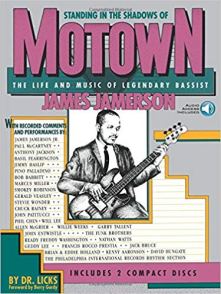 The Funk Brothers can thank Allan Slutsky, a musician/arranger and music historian, for his efforts to increase awareness about The Funk Brothers and their monumental contributions to popular music. In 1989, he wrote “Standing in the Shadows of Motown,” an award-winning best seller that told the fascinating yet tragic story of the late James Jamerson, The Funk Brothers’ influential giant on bass guitar. The book doubled as a bass instruction book, detailing Jamerson’s game-changing bass lines on iconic tracks like “I Was Made to Love Her,” “My Girl,” “Reach Out I’ll Be There,” “Nowhere to Run” and “What’s Going On.”
Then, in 2002, Slutsky produced the Grammy-winning documentary of the same name, which broadened its scope to tell the story of all The Funk Brothers, offering first-person accounts of their backgrounds and their recollections of the many sessions where their  legendary music was created. Slutsky’s narrative put it this way: “The Funk Brothers were an overpowering lineup of veteran groove masters and trailblazing virtuosos… An irresistible tapestry of instrumental hooks and counterrhythms that defined the Motown sound. The dance floors of the world didn’t stand a chance.”
It’s a compelling narrative, and I urge you to check it out on DVD or various streaming sources.
In 1959, when Gordy was just getting started, he knew he needed really great musicians to work in his recording studio, and he knew where to find them. He went to the various night clubs around Detroit and scouted the jazz musicians performing there.
“Berry came in to the club — I think it was Chappy’s, or Baker’s Keyboard Lounge — and said he wanted to set up a record company and needed good musicians,” said Hunter. “He knew (drummer) Benny, and he got a bunch of us to come over for a rehearsal at Smokey Robinson’s house.”
Guitarist Robert White and keyboard great Earl “Chunk of Funk” Van Dyke were among the early recruits, as were percussionist Eddie Brown and guitarists Eddie Willis and Joe Messina. This original gang of players added a few more names over the next couple of years: Uriel Jones and Robert Allen on drums, Johnny Griffith on keyboards, Bob Babbitt on bass and Jack Ashford on percussion.
Gordy bought a small house at 2648 West Grand Boulevard, and while he and his wife lived in second-floor quarters, the lower level was converted for use as Studio A, lovingly 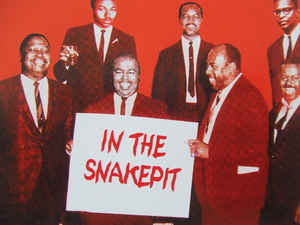 known as “The Snake Pit” because of all the cables running down from the ceiling. It was in this relatively cramped yet mystical place the Funk Brothers called home where all those hundreds of Motown songs were created, sometimes in an hour or less.
Numerous tracks by various aspiring artists were recorded in the first year or two but without much success on the Billboard Top 40 chart, although several records like Barrett Strong’s “Money (That’s What I Want)” did well on the lesser R&B charts.
The musicians who made up The Funk Brothers still did gigs in their old haunts around Detroit, and that camaraderie and time spent together jamming on various jazz tunes hatched new ideas, new riffs, new techniques that eventually made their way into The Snake Pit and onto pop records.
In 1960, Robinson and his vocal group, The Miracles, became Motown’s first crossover chart success with the #2 hit, “Shop Around.” They scored big again in 1962 with “You Really Got a Hold On Me,” as did The Contours with the timeless “Do You Love Me” and The Marvelettes with Motown’s first chart topper, “Please Mr. Postman.” Playing the instrumental foundation on these records? The Funk Brothers, of course.
From 1964 to 1969, Motown ruled the airwaves as The Supremes, The Temptations, The  Four Tops, Marvin Gaye, Stevie Wonder, Smokey and The Miracles, Mary Wells, Martha and The Vandellas, The Contours, Kim Weston, Junior Walker and The All-Stars, Gladys Knight and The Pips and Brenda Holloway took turns dominating the pop charts with records that are all still enormously popular 50 years later. Accompanying them on every one of their records was one combination or another of The Funk Brothers.
By the late ’60s, the psychedelic soul of Jimi Hendrix and Sly and the Family Stone made its mark, and Motown took notice. Producers like Norman Whitfield lobbied to bring in additional guitarists like Dennis Coffey to perform the wah-wah on tracks like The Temptations’ “Cloud Nine.”
But no musician credits were ever listed on Motown releases, at least not until Gaye insisted on it on his trailblazing 1970 LP, “What’s Going On.” From then on, The Funk Brothers’ individual names started appearing in the liner notes.
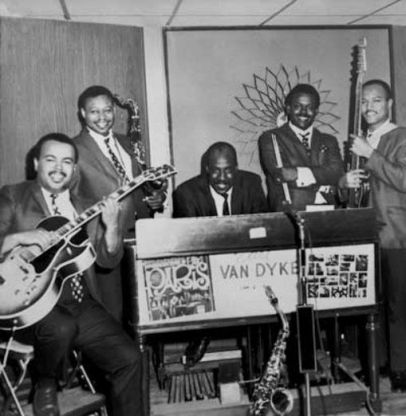 The Funk Brothers often moonlighted on the sly for other labels, recording in Detroit and elsewhere, in bids to augment their Motown salaries. It became a worst-kept secret that Jackie Wilson’s 1967 hit “(Your Love Keeps Lifting Me) Higher and Higher” did not have a Motown influence by accident; the Funk Brothers migrated to do the Wilson session. Various Funk Brothers also appeared on such non-Motown hits as “Cool Jerk” (by the Capitols), “Agent Double-O Soul” by Edwin Starr, “(I Just Wanna) Testify” by the Parliaments, “Band Of Gold” by Freda Payne and “Give Me Just A Little More Time” by Chairmen of the Board.
“They were just really, really good jazz musicians,” noted Don Was, bass player and influential producer in the ’80s and ’90s. “They could swing like crazy, and that’s not something that’s always present in pop music. When there’s a groove like that, the subliminal effects, everybody just feels good.”
“No disrespect to any of the great artists who sang on them, but truthfully, anybody could’ve sung on them,” claimed producer/drummer Steve Jordan, “because the
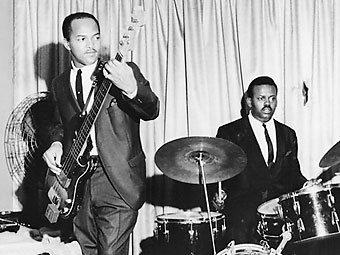
James Jamerson and Benny Benjamin
instrumental tracks underneath were just so incredible. They were musical entities unto themselves.”
Many observers singled out Jamerson for his bass playing. “He represented the height of creative freedom and experimentation on bass,” said multi-instrumentalist and singer/songwriter Ben Harper. “West Coast, East Coast, any coast you name, the man absolutely changed the course of the bass, not just holding down a steady bottom, but adding countermelody and riffs. No one else knew, but savvy musicians knew. Paul McCartney kept asking Beatles producer George Martin, ‘I want my bass lines to sound like the ones we hear on the Motown tracks.'”
It’s almost criminal that it wasn’t until decades later that these guys received any kind of  industry recognition. Jamerson was posthumously inducted into the Rock and Roll Hall of Fame in Cleveland in 2000, and Benjamin in 2003. The Funk Brothers received a collective Lifetime Achievement Award at the 2004 Grammys and were inducted into the Musicians Hall of Fame in Nashville in 2007. A star on the Hollywood Walk of Fame was instilled in 2013.
Martha Reeves recalled a session that was hastily called together, and a few faces were missing. “Where’s James? He’s out of town? Call the other guy. Get ’em in here. Ain’t no 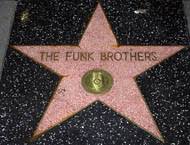 one recording nothing without The Funk Brothers!”
Drummer Asher said, “For years and years, players and producers tried to find that magic Motown sound, as if it was some sort of a formula or something. It wasn’t the artist, or the producers, or the way the building was constructed, the covering on the walls, the wood on the floor. It was the musicians, plain and simple. Without them, you’re nowhere. As Marvin sang, ain’t nothing like the real thing, baby.”
Claims Paul Riser, Motown arranger/producer, “Without The Funk Brothers, there really wouldn’t be a Motown. They were the sound, the essence of Motown.”
Shall we recap? Here it is, a comprehensive but incomplete list of classic songs on which The Funk Brothers played their anonymous (until now) role:
“Stop! In the Name of Love,” “Do You Love Me,” “The Tracks of My Tears,” “Ooh Baby Baby,” “My Cherie Amour,” “Can I Get a Witness,” “I Can’t Get Next to You,” “Reach Out I’ll Be There,” “My World is Empty Without You,” “I Was Made to Love Her,” “My Girl,” “Shotgun,” “Mercy Mercy Me,” “Hitch Hike,” “Cloud Nine,” “Dancing in the Street,” “You Keep Me Hangin’ On,” “I Heard It Through the Grapevine,” “Ain’t Too Proud to Beg,” “Don’t Mess With Bill,” “Ain’t That Peculiar,” “My Guy,” “Get Ready,” “Baby Love,” “Signed, Sealed, Delivered,” “(I Know) I’m Losing You,” “Baby I Need Your Loving,” “Nowhere to Run,” “Love Child,” “Ain’t No Mountain High Enough,” “You Can’t Hurry Love,” “Uptight (Everything’s All Right),” “What Becomes of the Broken Hearted,” “It Takes Two,” “I Hear a Symphony,” “Bernadette,” “Going to A Go-Go,” “I Wish It Would Rain,” “(Love is Like a) Heat Wave,” “Tears of a Clown,” “Papa Was a Rolling Stone,” “Someday We’ll Be Together,” “What Does It Take (To Win Your Love),” “This Old Heart of Mine,” “Standing in the Shadows of Love,” “Where Did Our Love Go,” “How Sweet It Is (To Be Loved by You),” “Roadrunner,” “Reflections,” “Just My Imagination,” “Pride and Joy,” “The Way You Do the Things You Do,” “I Can’t Help Myself,” “Ain’t Nothing Like the Real Thing,” “I Second That Emotion,” “For Once In My Life.”
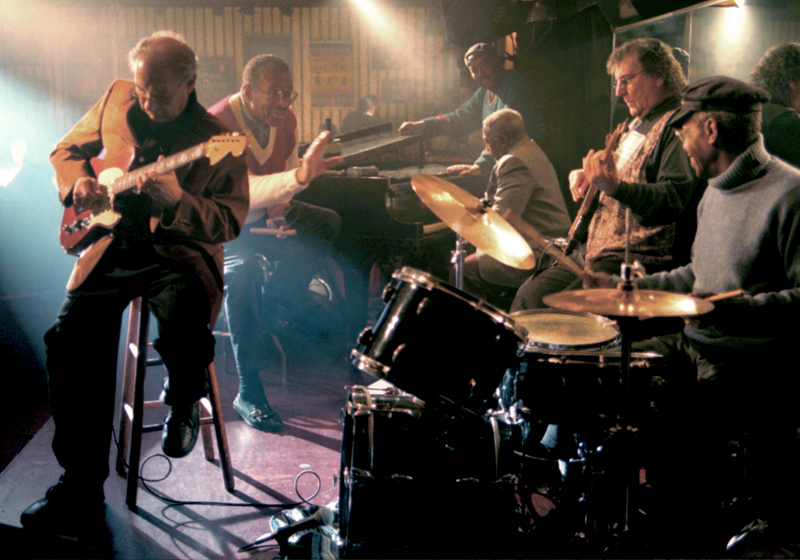
Good Lord, can I hear an “amen” for the wondrous talent of The Funk Brothers??!!
**************
 To some extent, we are all creatures of our own times. The people we knew, the experiences we had, and definitely the music we listened to when we were in our teens and ’20s made permanent impressions on us.
 Pete Townshend struggled mightily to come up with a suitable followup to The Who’s monumental rock opera “Tommy.” His concept, entitled “Lifehouse,” was to be a multi-media project focusing on the relationship between an artist and his audience, centered around the idea of one perfect, universal note symbolizing human unity. Townshend damn near had a nervous breakdown over the frustrations encountered in bringing the thing to fruition, which caused him to abandon “Lifehouse” and instead release most of its music as a single album. That album, “Who’s Next,” is often regarded as The Who’s finest, but curiously, it’s missing “Pure and Easy,” the excellent tune that best defined the project for which it was written. That outstanding track didn’t appear until the 1974 compilation album “Odds & Sods.”
 Coming during a transitional phase in The Kinks’ career arc, “Lola Versus Powerman and the Money-go-round, Part One” was described by one critic as “a wildly unfocused but nevertheless dazzling tour de force, featuring some of Ray Davies’ strongest songs.” Certainly, “Lola” was an unqualified chart success for the band, even if Davies (and many others) grew to hate it over the years. The better tune from the LP, in my view as well as Davies’, is “Apeman,” just as whimsical and sing-songy as “Lola” but far more musically engaging. It reached #5 in the UK but stiffed at #45 in the US, qualifying it as a candidate for this “lost classics” playlist.
 The smoldering, powerful voice of Paul Rodgers was the key element in making Bad Company such a hard rock sensation in the 1970s, but before that, Rodgers was the vocal foundation of the great, underappreciated British band Free, known foremost for the Top Five rock classic “All Right Now.” Free assembled in 1968 and released their first LP when all four members were barely 18, cranking out a few blues rock standards and several originals by Rodgers and guitarist Andy Fraser. The 1969 second album “Free” failed to make the US charts but was popular among cult fans, especially the mesmerizing opener “I’ll Be Creepin’,” which has all the elements that sold millions the next year on “All Right Now.”
 Years before they filled arenas and topped the charts, Yes was another struggling British progressive rock band, rehearsing daily and learning their chops while playing cover songs in small club gigs. Atlantic Records took notice and signed them in 1969, and although their first LP (“Yes”) failed to chart anywhere, their follow-up, “Time and a Word,” did modestly well in England, reaching #45, even though they were still unknowns in the US. The album consisted mostly of Jon Anderson originals, one of which, “Then,” has always appealed to me. The track features organ and guitar work by Tony Kaye and Peter Banks, respectively, both of whom were replaced by the time of their 1971 breakthrough LP, “Fragile.” Anderson’s tenor voice is, as on nearly every Yes song, front and center on the recording.
 As the precursor to the legendary “Aqualung” album, “Benefit” is often neglected in discussions of Jethro Tull’s music, and when it is mentioned, talk centers on the hard rock tunes that dominate the proceedings (“To Cry You a Song,” “With You There to Help Me”). One of Ian Anderson’s most delightful acoustic numbers is “Inside,” which features the ever-present flute, an irresistible uptempo beat, and some on-point lyrics about life and the need for a positive outlook (“I’m sitting on the corner feeling glad, got no money coming in, but I can’t be sad, that was the best cup of coffee I ever had, and I won’t worry ’bout a thing because we’ve got it made here on the inside, outside’s so far away…”)
 Reed’s preferred version of this classic tune came on The Velvet Underground’s fourth LP, “Loaded,” marked by a pretty 15-second melodic intro, and the uptempo arrangement later copied and made more famous in Mott the Hoople’s 1972 recording of it. Reed continued performing “Sweet Jane” throughout his solo years, and there’s a fabulous eight-minute live version on the 1974 live LP “Rock ‘n Roll Animal.” In the late 1980s, the Canadian band Cowboy Junkies revived Reed’s slow-tempo version in their rendition that was a popular single in Canada and on modern rock stations here. But The Velvet Underground’s original is still a gas to hear.
 People were taken aback when Harrison’s solo debut was a double album (actual a triple, but the third was just a bunch of random jams), but it shouldn’t have been that surprising. With two brilliant egomaniacs running the show in The Beatles, Harrison’s songs were often pushed aside, which meant he had a lot of material sitting on the shelf when “All Things Must Pass” was being assembled. One was “Art of Dying,” whose lyrics date to 1966 when Harrison was first getting into Eastern teachings and spiritual enlightenment. Phil Spector gave this track his trademark “wall of sound” production, with lots of reverb and layers of instruments, and Eric Clapton adding some dazzling guitar fills. It should’ve been a big radio tune but is instead a lost classic.
 McCartney’s solo debut album was on the receiving end of a lot of bad vibes, arriving as it did at the time Paul made the official announcement of The Beatles’ breakup (although they’d technically split at least six months earlier). McCartney played all the instruments, and wrote and recorded the whole album at home on a 4-track recorder, and to many people, that made it sound amateurish. “Maybe I’m Amazed” got all the airplay because it was arranged to sound like it could’ve come from “Abbey Road.” But there are some really great nuggets to be found here as well, including “That Would Be Something,” “Man We Was Lonely,” and two songs rejected by The Beatles, “Junk” and “Teddy Boy.” My favorite track is “Every Night,” with its great melody and potent lyrics about the depression McCartney was going through following the disintegration of The Beatles.
 One of my favorite records of 1970 has to be “Moondance,” Morrison’s third album in a career that includes forty studio releases over 50 years. It’s one of his most likable LPs, chock full of easygoing melodies and romantic lyrics. I never understood why the title cut wasn’t released as a single — it has certainly become one of his best known tunes in the years since. Instead, the choice for the single was “Come Running,” which barely made the US Top 40. It’s a catchy little shuffle featuring piano and sax and Morrison’s immediately identifiable vocals, all the ingredients that turned up the following year on his Top Ten hit “Domino.”
 Following Randy Bachman’s departure from The Guess Who in 1970, singer/keyboardist Burton Cummings assumed control of the band’s direction, and by the time of the 1971 LP “So Long Bannatyne,” we started hearing more piano-based tracks like “Sour Suite” that veered from the band’s straightforward hit-single formula. This mellow, melancholy piece didn’t make it higher than #50 on the US singles chart, although it reached #12 in their native Canada, and many diehard fans pick it as one of their favorites in the group’s catalog. The lyric “It’s just like 46201” refers to an Indianapolis zip code, where Cummings wrote the song while in a glum mood one morning after an off night performing there.
 Out of nearly 50 studio albums released in Sir Elton’s lengthy career, critics have often picked “Tumbleweed Connection” as the cream of the crop, and I’m inclined to agree with them. Lyricist Bernie Taupin had become fascinated with tales of the American Wild West, and most of the tunes that appeared on “Tumbleweed” reflected that interest. “Come Down in Time,” however, was more of a timeless ballad that might’ve appeared on other albums from that period. With delicate use of harp, oboe and strings, producer Gus Dudgeon made it one of the LP’s most memorable songs, carried, of course, by John’s tender voice.
 In my view, Mason never achieved the success he should have. He’s a gifted songwriter, guitarist and singer, but he seemed to run into roadblocks along his path, some of them due to his own quirky stubbornness. He could’ve been a key component of Traffic, but he kept leaving and coming back, feuding often with leader Steve Winwood. Strangely, Mason’s solo albums were only half-heartedly promoted by the various labels who released them. His 1970 debut “Alone Together” is one of the best LPs of that era, and it reached #22 on the album charts, but it coulda-shoulda been a chart topper. You’ll find great songs throughout (“Only You Know and I Know,” “World in Changes,” “Sad and Deep as You”), but the real highlight is the 7-minute closer, “Look at You, Look at Me,” with Mason’s stellar guitar work, especially on the extended fadeout.
 Hack's Back Pages