Let your voice ring back my memories

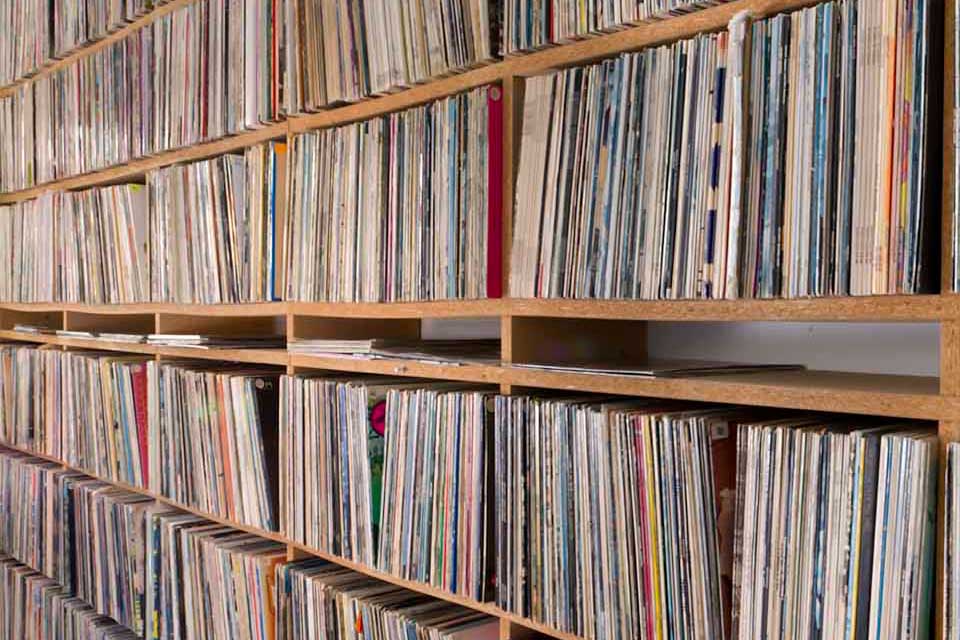
When I go deep diving for “lost classics” in my collection of 1,800 vinyl albums and CDs, I often lean more toward the uptempo rock music I favored much of the time.  Just as important to me, though, were the acoustic strains of the early ’70s singer-songwriter era, a time when I was learning to play guitar so I could perform them at parties and school variety shows.

Popular-Guitar-Chord-SongsI certainly didn’t learn how to play all of them, but the songs of James Taylor, Joni Mitchell, Crosby Stills & Nash, Paul Simon, Cat Stevens and others will always have a soft spot in my heart.  They wrote such lovely melodies and piercing lyrics that speak so tenderly of the human condition we all must navigate.

For this week’s post on the blog, I’ve decided to focus exclusively on songs from that genre and that period.  The forgotten deep tracks from these artists’ albums were great then and are just as mesmerizing now as I’m helping you rediscover them.  Crank up the Spotify playlist and pay attention as these tunes gently wash over you.

***************

“One Man Parade,” James Taylor, 1972

536d9e4fe675fabdea3ff2be2348bc23.800x800x1Both his “Sweet Baby James” and “Mud Slide Slim” albums had been recorded in L.A. studios, but for his next effort, “One Man Dog,” he decided to record in his new homemade studio in a barn next to his homemade house on Martha’s Vineyard.  He had written a dozen or so short songs, intending to tie them together in an “Abbey Road”-like manner, and the result was compelling, but he also had a couple of standard-length tunes that might get Top 40 radio play.  Sure enough, “Don’t Let Me Be Lonely Tonight,” reached #12 on the charts, but the follow-up single, “One Man Parade,” inexplicably died on the vine at #67.  It’s one of Taylor’s most carefree tunes, with a charming melody and lyrics about how his dog is exactly the kind of friend he’s looking for — loyal, easygoing, enjoying life’s simple pleasures.

“To Each His Own,” America, 1972

AmericaHomecomingDewey Bunnell, Dan Peek and Gerry Beckley comprised America, a talented trio of singer-songwriters who had great success on the charts in the early ’70s — “A Horse With No Name,” “I Need You,” “Ventura Highway,” “Lonely People,” “Sister Golden Hair.”  The albums these songs came from were chock full of more acoustic melodies and CSN-like harmonies that have pretty much been forgotten over the years.  On their second LP “Homecoming,” you can find the amazing John Martin song “Head and Heart” and Peek’s minor hit “California Revisited” and country-inflected “Don’t Cross the River,” but my favorite is the simple melody of “To Each His Own,” Beckley’s song of a romance that is ending even though the love endures.

“The Lonely One,” Dave Mason, 1973

it-s-like-you-never-left-albums-photo-u1As one of the founders of the British folk-jazz-rock group Traffic, Mason was quickly overshadowed by Steve Winwood and decided to head out on his own instead.  His solo debut LP “Alone Together” is considered one of the finer albums of 1970, but Mason found himself mired in a struggle with his foundering label Blue Thumb, losing career momentum in the process.  When he signed with Columbia and released “It’s Like You Never Left” in 1973, he began a run of six successful albums and nearly non-stop touring throughout the ’70s, peaking with the platinum “Let It Flow” LP and Top Ten single “We Just Disagree” in 1977.  At least a dozen Mason tracks qualify as lost classics, and this go-around, I’ve picked the acoustic gem “The Lonely One” from the 1973 album.  Dig Stevie Wonder’s excellent harmonica here!

“Barangrill,” Joni Mitchell, 1972

image_10135e2c-0d61-4e71-8787-061f9ee8e993In every discussion of Mitchell’s repertoire, everyone focuses on her confessional masterpiece “Blue” from 1971 or her pop-jazz pinnacle “Court and Spark” from 1974.  Me, I’ve always been partial to the album in between these two, 1972’s “For the Roses,” mostly because I discovered it during an emotional time when I was able to absorb her music non-stop through headphones.  Again, I could have selected any of nine of the 12 tunes on this amazing record (“Banquet,” “For the Roses,” “See You Sometime”), but I was moved to go with “Barangrill,” a perceptive study of the regulars and employees at the nation’s truck-stop diners.

“Where Do the Children Play?”, Cat Stevens, 1970

51yt4ogh5wL._SX466_So many of my generation were instantly captivated by the music of Cat Stevens when his “Tea for the Tillerman” album arrived in late 1970, sparked by the hit single “Wild World.”  Stevens (who later embraced Islam and changed his name to Yusef) had released three earlier albums that were ignored in the U.S., but that changed in a hurry with “Tillerman.”  “Father and Son” emerged as an underground favorite, and pretty much every song here qualifies as a lost classic.  My candidate would have to be “Where Do the Children Play?”, one of the first songs I remember hearing that decried the spoiling of the planet and our environment.

“One Of These Things First,” Nick Drake, 1971

220px-Bryter_LayterDrake’s tragic story of sublime talent tortured by stage fright and clinical depression wasn’t well known during his short life, which ended in suicide in 1974.  He made just three albums, all critically acclaimed, but he wasn’t appreciated more deeply until the new millennium.  Like many folks, I discovered Drake from the use of his song “Pink Moon” in a TV commercial ten years ago, and consequently picked up a wonderful anthology CD featuring a robust cross-section of his repertoire.  The song that grabbed me instantly, originally found on his “Bryter Later” album, is “One of These Things First,” a beautiful piano-and-guitar melody carried by Drake’s feather-light voice.  If you’re not familiar with Drake’s work, here’s a great place to start.

“Peace Like a River,” Paul Simon, 1972

R-3055486-1372780911-7597.jpegAs a huge fan of Simon and Garfunkel, I was very disappointed when Simon chose to give his partner the heave-ho and go solo following the stratospheric success of “Bridge Over Troubled Water.”  Their friendship endured in an on-again-off-again way, but Simon was far more interested in exploring the rhythms and musical textures of other lands than Garfunkel was.  The reggae feel of “Mother and Child Reunion” and the peppy Latino beat of “Me and Julio Down By the Schoolyard” are the two most notable examples to be found on the “Paul Simon” solo debut LP.  Buried on side 2 is “Peace Like a River,” which sounded to me like the album track that would have fit quite nicely on any S&G album.

“Minstrel Of the Dawn,” Gordon Lightfoot, 1970

R-1361049-1285558009.jpegThe acoustic guitar work, strong vocals and delightful songwriting that have marked Lightfoot’s lengthy career as a recording artist were at their most simple and direct on his breakthrough LP, “If You Could Read My Mind.”  That album’s title tune reached #5 and made a fan out of me, but there were another 4-5 songs on the LP that I found just as engaging.  One is “Minstrel of the Dawn,” a lovely piece that describes the life of a traveling troubadour, offering a lively string arrangement that augments Lightfoot’s dextrous finger-picking and strong baritone vocals.

“Johnny’s Garden,” Manassas, 1972

Manassas-by-Stephen-StillsCritics called Stephen Stills’ band’s double LP “a sprawling masterpiece,” with an impressive diversity of rock, folk, country, blues, Latin and bluegrass music.  Side 3 of “Manassas” focuses on folk and folk rock, and the centerpiece is the lost classic “Johnny’s Garden,” written by Stills in honor of the gardener who tended to the extensive grounds at the English manor Stills once owned.  The song is perhaps the simplest on the album, with an arrangement limited to Stills’ guitar, Fuzzy Samuels’ bass and some light drums from Dallas Taylor.  It’s one of Stills’ most engaging songs, harkening back to the tunes he was writing when with Crosby, Nash and Young.

“Seagull,” Bad Company, 1974

220px-BadCompanyBadCompanyKnown far and wide as a straightforward British rock band, Bad Company hit a home run with their debut LP in 1974, which topped the charts in the U.S. and spawned three singles.  Buried amidst the solid rock and roll of “Can’t Get Enough,” “Ready for Love” and “Movin’ On” is an evocative track called “Seagull” that features vocalist Paul Rodgers humming and singing along to his own acoustic guitar accompaniment.  I always wondered if Rodgers might have had any more songs like this tucked up his sleeve that were never recorded…  A tip of the hat to my friend Ray for turning me on to this fine song when he sang it often around the campfire.

“Bitter With the Sweet,” Carole King, 1972

220px-CKRhymesKing’s “Tapestry” LP was the early ’70s biggest success story, selling 20 million copies and reigning supreme on the charts for most of 1971.  The two albums that followed — “Music” and “Rhymes and Reasons” — carried on in the same vein as “Tapestry,” with similar heartfelt lyrics and easygoing piano-based melodies.  The singles “Sweet Seasons” and “Been to Canaan” did well, and the albums reached #1 and #2 respectively, but how often do you hear Carole King any more, besides “It’s Too Late”?  Such a treasure trove of fine tunes on these albums.  I’ve always been fond of “Bitter With the Sweet,” carried by Charles Larkey’s bouncing bass line and Bobbye Hall’s spritely bongos, congas and tambourine.  King’s lyrics tell of the importance of learning how to accept the bad with the good that life has to offer.

“Warmth of Your Eyes,” Lazarus, 1971

603497980567-1Peter Yarrow of Peter, Paul and Mary was on tour in 1971 supporting his solo debut LP when a struggling singer-songwriter named Bill Hughes approached him after a gig and invited him to his home nearby.  Yarrow agreed and was then exposed to a demo tape of Hughes’ music, performed by his three-piece group Lazarus.  “I was overwhelmed by the beauty of the songs — music and lyrics — and the stunning harmonies,” said Yarrow, who helped the group secure a recording contract.  Sadly, inexplicably, Lazarus never did break through, throwing in the towel after only two albums, but I’m here to tell you their music is superb, and well worth your time.  I could have selected any of a half-dozen tracks from their debut LP, but I’m going with “Warmth of Your Eyes” for its gentle, spiritual vibe and gorgeous harmonies.

*****************


Right now all I got’s this lonesome day

On September 14, 2001, three days after the 9/11 attacks, Bruce Springsteen was walking down the street in New Jersey, just across the river from Manhattan.  A man driving by slowed down next to him, opened his window, stared at Springsteen and said, “Man, we really need you now.”

Springsteen had been out of the limelight for several years at that point.  His last album of new music had been 1995’s “The Ghost of Tom Joad,” a critical favorite but a relative c121852__bruce_lommercial dud.  He and the E Street Band had parted ways in the late ’80s, and The Boss and his wife had turned their attentions to raising a family.

“That guy really stopped me in my tracks,” Springsteen recalled.  “The events of 9/11 had affected me profoundly, as it had so many others, but I’d been caught in a daze, wandering around those first couple of days, worried for my kids, worried for my country, not sure what to think.  When he said ‘We need you now,’ it snapped me back into focus.  I thought, ‘It’s time to get busy doing what I can do.'”

One of rock’s most prolific songwriters got busy, all right.  Over the next few weeks, he wrote nearly 50 songs in a burst of creativity, determined to come up with music that might help in the healing process.  He made a call to the boys in the E Street Band and said, “Guys, it’s time.  Let’s get back together and make a record.”  They eagerly agreed, and the result was “The Rising,” a triumphant rejuvenation of Springsteen’s career and a 220px-Springsteen_The_Risingmuch-needed shot in the arm for his legions of fans, many of whom were still grieving huge personal loss.

This week, as we marked another anniversary of that dark day in the nation’s history, I revisited “The Rising,” and also did some research to look for other noteworthy songs that were written in the aftermath of 9/11.  I found it challenging to immerse myself in these difficult emotions and painful memories, but ultimately, I came out the other end feeling stronger, as we often do when we face our fears.

Critics were nearly unanimous in their praise for “The Rising.”  Thom Jurek of AllMusic called the album “one of the very best examples in recent history of how popular art can evoke a time period and all of its confusing and often contradictory notions, feelings and impulses.” The British magazine Uncut called the LP “a brave and beautiful album of humanity, hurt and hope from the songwriter best qualified to speak to and for his country … A towering achievement.”

In particular, the lyrics to seven tracks dealt with the emotions felt in the aftermath:  the sadness for the loss of life, the gratitude for the first responders, the dark desire for revenge, the despair for the loss of innocence, the craving for closeness and community, the need to keep hope alive.

Some of these songs specifically address the events of 9/11.  “Into the Fire,” for instance, pays tribute to the firemen who headed into the towers as everyone else was evacuating:   “It was dark, too dark to see, you held me in the light you gave, you lay your hand on me, then walked into the darkness of your smoky grave, somewhere up the stairs into the fire, somewhere up the stairs into the fire, I need your kiss, but love and duty called MV5BMzY1ZThmYmUtZjZhYi00MTA1LTg3YTktMjk1Nzg4MzdjYWFlXkEyXkFqcGdeQXVyOTc5MDI5NjE@._V1_you someplace higher, somewhere up the stairs into the fire…”

The leadoff track, “Lonesome Day,” ranks among Springsteen’s finest efforts, a musically robust rocker that also warns about how a demand for justice needs to be tempered by a sense of collective calm that doesn’t escalate matters:  “Hell’s brewin’, dark sun’s on the rise, this storm’ll blow through by and by, house is on fire, viper’s in the grass, a little revenge and this too shall pass, this too shall pass, I’m gonna pray, right now all I got’s this lonesome day…”

Other album tracks demonstrate Springsteen’s deft ability at writing words that deal with emotions in a more general, universal way that could apply to other kinds of loss.  “You’re Missing” delicately speaks to the void that families felt when their loved ones didn’t return home that day, but it could just as easily refer to soldiers who died on the battlefield, or victims of mass shootings:  “Pictures on the nightstand, TV’s on in the den, your house is waiting for you to walk in, but you’re missing, when I shut out the lights, you’re missing, when I close my eyes, you’re missing, when I see the sun rise, you’re missing…”

The title song, “The Rising,” is a magnificent song of resolve and hope, with lyrics that apply in any situation when the chips are down and all seems lost:  “I make my way through this darkness, I can’t feel nothing but this chain that binds me, lost track of how far I’ve gone, how high I’ve climbed… a dream of life comes to me like a catfish dancing on the end of my line, come on up for the rising, come on up, lay your hands in mine, come on up for the rising, come on up for the rising tonight…”

*************

In the wake of 9/11, several dozen songs surfaced, written and released by a wide range of artists.  I’ve selected a dozen that I found sufficiently moving to share with you on my blog this week.  I hope you absorb them in the spirit in which they were proffered to us.

“Let’s Roll,” Neil Young, 2001

Pegi-YoungYoung chose to focus on the amazing, harrowing story of the brave souls on United Flight 93 who stormed their hijacked cockpit and prevented the plane from reaching its intended target in Washington, D.C.:  “I know I said I love you, I know you know it’s true, I’ve got to put the phone down and do what we got to do, one’s standing in the aisle way, two more at the door, we’ve got to get inside there, before they kill some more, time is runnin’ out, let’s roll…”

“Tuesday Morning,” Melissa Etheridge, 2004

hqdefault-17Etheridge also addressed those on United Flight 93, with an added edge.  One of the heroes on board was a gay man who had faced injustices that prevented his ability to marry or be a school teacher.  Etheridge defiantly asked us to consider the freedoms and rights that are still denied to some of our citizens:  “He stood up on a Tuesday morning, in the terror, he was brave, and he made his choice and without a doubt, a hundred lives he must have saved, and the things you might take for granted, your inalienable rights, some might choose to deny him, even though he gave his life, stand up, America, wake up, America…”

“Prayer,” Disturbed, 2002

maxresdefault-28This Chicago-based heavy metal band found controversy when they filmed a riveting video for this song that appeared to be a re-creation of the Ground Zero area (view it on YouTube at your own risk).  The lyrics take Evil’s point of view:  “Another nightmare about to come true will manifest tomorrow, another love that I’ve taken from you, lost in time, on the edge of suffering, another taste of the evil I breed will level you completely, bring to life everything that you fear, live in the dark, and the world is threatening, let me enlighten you, this is the way I pray…”

“Hole in the World,” The Eagles, 2003

61cXDyMwScL._SY355_As part of the 2003 release of the 2-CD package “The Very Best of The Eagles,” Don Henley and Glenn Frey wrote this new track to weigh in with their thoughts on 9/11: “They say that anger is just love disappointed, they say that love is just a state of mind, but all this fighting over who will be anointed, oh, how can people be so blind?, there’s a hole in the world tonight, there’s a cloud of fear and sorrow, there’s a hole in the world tonight, don’t let there be a hole in the world tomorrow…”

“Sacrificed Sons,” Dream Theater, 2005

maxresdefault-26Influenced by British prog rock bands like Yes and Pink Floyd, the Boston-based Neo-progressive group Dream Theater turned a few heads with its 2005 release “Octavarium.”  Of particular interest was the 10-minute opus “Sacrificed Sons,” with lyrics by vocalist James LaBrie that recalled the 9/11 attacks:  “Heads all turning towards the sky, towers crumble, heroes die, who would wish this on our people and proclaim that His will be done, scriptures they heed have misled them, all praise their sacrificed sons…”

“Illume (9-11),” Fleetwood Mac, 2003 

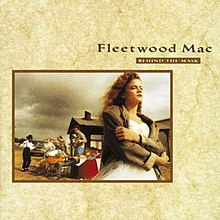
500bf53780eead0482a1671f086520d5.800x800x1Stevie Nicks wrote this poignant piece less than two weeks after 9/11, but it didn’t see the light of day until Fleetwood Mac reconvened to record the 2003 LP “Say You Will.”  Nicks reflected on how difficult it can be to overcome deep heartbreak:  “What I saw on this journey, I saw history go down, I cannot pretend that the heartache falls away, it’s just like a river, ooh, it’s never ending, I cannot pretend that the heartache falls away, because it’s just like a river, it’s never ending…”

“Hey Ma,” James, 2008

HeyMaAlbumArtThe British band James offered another perspective, looking at 9/11 as a fork in the road where unfortunate choices with long-lasting global consequences were made:  “Now, the towers have fallen, so much dust in the air, it affected your vision, couldn’t see yourself clear, from the fall came such choices even worse than the fall, there’s this chain of consequences, within, without, action, cause and reaction never follows to plan… Please don’t preach me forgiveness, you’re hardwired for revenge, war is just about business, within, without…”

“When New York Had Her Heart Broke,” John Hiatt, 2011

john-hiattVeteran songwriter Hiatt came up with this tearjerker on his 2011 LP “Dirty Jeans and Mudslide Hymns,” on which he ruefully recalled the mood of New Yorkers when their city became the focal point of the 9/11 attacks:  “And the daylight fell dark, F-16s over Central Park, when New York had her heart broke, we were dazed in the streets, from the blood and dust and heat, when New York had her heart broke…”

“Where Were You (When the World Stopped Turning),” Alan Jackson, 2001

dam_asset_image-26864920180714-21667-10qsscyJackson found it hard to write a song about how he felt in the wake of 9/11, but he forged ahead and came up with this moving track.  After debuting it at the Country Music Awards less than eight weeks after 9/11, it was released as a single, topping the country charts for five weeks and reaching #28 on the pop charts.  The lyrics present a series of thought-provoking questions:  “Did you stand there in shock at the sight of that black smoke risin’ against that blue sky?  Did you shout out in anger, in fear for your neighbor, or did you just sit down and cry?  Did you weep for the children who lost their dear loved ones, and pray for the ones who don’t know?  Did you rejoice for the people who walked from the rubble, and sob for the ones left below?…”

“Courtesy of the Red White and Blue (The Angry American),” Toby Keith, 2002

Angry_American_Single_CD_CoverAlways a political conservative, Keith came up with this inflamed diatribe that stoked the rage amongst his audience and soared to #1 on the country charts upon its release in May 2002.  He has said it was written in support of the U.S. soldiers in Afghanistan, but it was interpreted to reflect his generally hawkish views:   “Now this nation that I love has fallen under attack, a mighty sucker punch came flyin’ in from somewhere in the back, soon as we could see it clearly through our big black eye, man, we lit up your world like the 4th of July… Oh, justice will be served and the battle will rage, this big dog will fight when you rattle his cage, and you’ll be sorry that you messed with the U.S. of A, ’cause we’ll put a boot in your ass, it’s the American way…”

Skylines and Turnstiles,” My Chemical Romance, 2002

GettyImages-85033606-1560026014-1500x1000Gerard Way was so saddened and outraged by the events of 9/11 that he was inspired to form the emo/post-hardcore punk group My Chemical Romance.  The debut LP “I Brought You My Bullets, You Brought Me Your Love” includes “Skylines and Turnstiles” with its brutally graphic lyrics:  “Steel corpses stretch out towards an ending sun, scorched and black, it reaches in and tears your flesh apart as ice cold hands rip into your heart, that’s if you’ve still got one that’s left inside that cave you call a chest, after seeing what we saw, can we still reclaim our innocence?…”

“Exodus Damage,” John Vanderslice, 2005

71KAl4fX77L._SX355_Indie rock singer/songwriter Vanderslice produced ten albums out of his San Francisco-based studio/record company.  His 2005 album “Pixel Revolts” had a decidedly political bent, with several tracks about 9/11 and the Iraq War, especially “Exodus Damage” with its highly provocative lyrics:  “So the second plane hit at 9:02, I saw it live on a hotel TV, talking on my cell with you, you said this would happen, and just like that, it did, wrong about the feeling, wrong about the sound, but right to say we would stand down, an hour went by without a fighter in the sky, you said there’’s a reason why, so tell me now, I must confess, I’’m not sick enough to guess…”

*****************

springsteen-the-rising-1-600x450