We’re the young generation, and we’ve got something to say
I was only 11, so I didn’t really understand what was happening. I was pretty much a pawn in the show business game of foisting a product upon an unsuspecting public.
It was September 1966, and overnight, I became a huge fan of a prefabricated rock band called The Monkees.
“They’re going to be bigger than The Beatles!” I told my skeptical parents. “They even have their own weekly TV show!”
This was just what the show’s producers were counting on — gullible American teens and pre-teens buying into the sanitized Hollywood vision of what a rock band should look  like and sound like: Four zany young guys with dreams of making it big, making their way through one silly weekly adventure after the next, always finding a way to work in at least one “performance” of one of their songs that were being heard concurrently on Top 40 radio.
And it worked. For a while.
The half-hour NBC-TV show “The Monkees” was an instant hit in the ratings and, at the Emmy Awards nine months later, scored an upset by winning Outstanding Comedy Series, triumphing over shows with far better credentials like “Bewitched,” “Get Smart,” “The Andy Griffith Show” and “Hogan’s Heroes.”
On the Billboard Pop charts, the first songs and albums released by The Monkees all 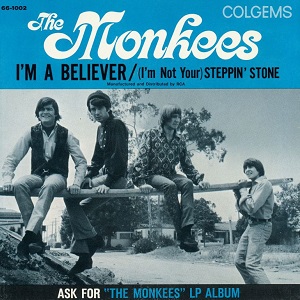 went to #1 and stayed there for many weeks on end. “I’m a Believer” was the #1 song in the nation for nearly three months. Here’s a fact that still astonishes me today: Year-end sales figures for 1967 show that more units of Monkees records were sold than The Beatles and The Rolling Stones combined!
But there was a fly in the ointment that soon derailed this runaway success. When the public learned that the band members weren’t really playing the instruments on the records they were hearing or on the TV performances they were seeing, there was a backlash from which they never fully recovered. Critics pounced, calling The Monkees “The Pre-Fab Four,” a derisive take on The Beatles’ “Fab Four” nickname. The TV show lasted only one more season through continually sagging ratings, and was cancelled in the summer of 1968.
There were six commercially huge hit singles between September 1966 and March 1968 that cemented The Monkees’ name in pop music history. “Last Train to Clarksville,” “I’m a Believer,” “A Little Bit Me, A Little Bit You,” “Pleasant Valley Sunday,” “Daydream Believer” and “Valleri” all reached at least #3, with four of them topping the charts. They’re so ingrained in my head that I could sing you every word of these songs right now, today. But then the bottom fell out, with each successive single faring worse through 1968 and 1969, and by 1970, the jig was up.
In retrospect, the case can be made that the four individuals who comprised the band — Davy Jones, Micky Dolenz, Mike Nesmith and Peter Tork — were just as much pawns in the show business game as anybody. They were hired not as musicians but as comic actors playing the roles of musicians in a TV sitcom.
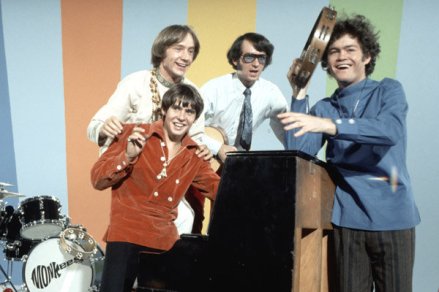 Producer Bob Rafelson had come up with the concept of a TV show about a rock and roll group as early as 1960, but it wasn’t until The Beatles’ spectacular arrival and, more specifically, the success of their film “A Hard Day’s Night” in 1964 that Rafelson got the green light from Screen Gems, the TV arm of Columbia Pictures, to develop his idea. At first he thought of using an existing pop band to star in the program, but after being turned down by The Lovin’ Spoonful and The Dave Clark Five, he decided to manufacture his own group.
Rafelson concluded that Jones, whose Broadway acting pedigree had already won him a contract with Screen Gems and Columbia as an actor/singer, would be an ideal choice for this project, bringing a charming Brit-pop sensibility. The rest of the group would be found through auditions, just as was done with any other TV show at the time.
This was the ad copy that ran in Daily Variety and The Hollywood Reporter: “Madness! Auditions. Folk & Roll Musicians-Singers for acting roles in new TV series. Running parts for four insane boys age 17-21.”
Many rock music fans may not be aware that among the hundreds of hungry young musician/actor wanna-bes who showed up for the cattle-call audition was a young
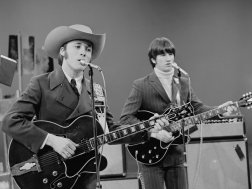
Stills (left) soon after declining a Monkees audition in 1966
singer-songwriter named Stephen Stills. “I went in there to sell my songs. I told them, ‘I have all these songs.’ They said, ‘Oh, that part of it has already been taken care of.’ I said, ‘What, you’ve got some Tin Pan Alley people writing your songs?’ And they said ‘Yeah.’ I said, ‘Well, I don’t want the job, but I know a guy you might like.’ I was already writing songs and looking to form a band. I had zero interest in being a damn fake Beatle on television.”
But Stills’ guitarist friend Peter Tork was interested, and he ended up winning one of the three remaining parts, along with Dolenz, a former child actor who had starred in the inconsequential 1950s sitcom “The Circus Boy.” Rounding out the quartet was Nesmith, a competent songwriter/guitarist with a droll sense of humor and a keen business sense inherited from his mother, a secretary who had invented “Liquid Paper” correction fluid and built it into a multi-million-dollar company.
The foursome did what was asked of them, learning their lines and playing their parts on the show, but when they showed up at the recording studio, Nesmith and Tork were chagrined to learn their musical skills would not be needed. Dolenz and Jones were  tapped to dub lead vocal parts onto the finished tracks. The show’s musical supervisor was the notorious Don Kirshner, who had selected Tommy Boyce and Bobby Hart from his stable of Brill Building pop songwriters to write, record and produce most of the songs for the group’s first album, “The Monkees,” which was essentially intended as a companion soundtrack to the TV show’s first season.
The first sign of trouble, as far as Nesmith was concerned, was when that debut LP appeared. “The first album showed up and I looked at it with horror, because it made us appear as if we were a bonafide rock ‘n’ roll band. There was no credit given for the other musicians who actually played on the tracks. I went completely ballistic, and said, ‘What are you people thinking?’ And the powers that be said, ‘Well, you know, it’s the fantasy.’ I said, ‘It’s not the fantasy. You’ve crossed the line here. You are now duping the public. They know when they look at the television series that we’re not a rock ‘n’ roll band; it’s a show about a rock ‘n’ roll band. Nobody for a minute believes that we are somehow this accomplished rock ‘n’ roll band that got their own television show. You putting the record out like this is just beyond the pale.'”
Kirshner, irritated at Nesmith’s objections, plowed ahead, assembling a dozen more tracks recorded in the same manner and releasing them a mere three months later as the second LP “More of The Monkees.” Despite the fact that the album was a big commercial hit, Nesmith and the other Monkees had reached their breaking point about what they 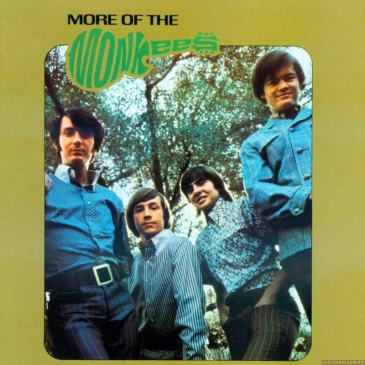 felt was nothing short of fraud. Kirshner was ousted and The Monkees won creative control of all recordings from then on.
On those initial two dozen recordings, the musical parts were handled largely by the seasoned pros who made up what was known in some circles as The Wrecking Crew. Some names you might recognize: guitarists Glen Campbell, James Burton and Louie Shelton; pianist Larry Knechtel (who later joined the soft-rock band Bread); drummer Hal Blaine; bassist Carol Kaye; percussionist Jim Gordon. Also contributing were Carole King, who wrote “Sometime in the Morning” and “Pleasant Valley Sunday” and added piano and backing vocals, and Neil Diamond, who wrote “I’m a Believer” and “A Little Bit Me, A Little Bit You” and added guitar.
It’s kind of unfair that The Monkees were singled out for not playing much on their own records. Truth be told, this wasn’t all that different from what occurred with other hip groups of the period. On several of the big hits released by The Beach Boys (“I Get Around,” “Help Me, Rhonda,” “Good Vibrations”) and The Byrds (“Mr. Tambourine Man”), the drums, bass, guitar and keyboard parts were played by Wrecking Crew session guys because the record label executives didn’t yet have confidence in the band members’ musical abilities.
Glenn Baker, author of “Monkeemania: The True Story of the Monkees,” put his finger on the real problem that tarnished The Monkees’ image, even to this day: “The rise of the ‘Pre-fab Four’ coincided with rock’s desperate desire to cloak itself with the trappings of respectability and credibility. Session players were being heavily employed by many acts of the time, but what could not be ignored, as rock disdained its pubescent past, was a group of middle-aged Hollywood businessmen had actually assembled their concept of a profitable rock group and foisted it upon the world. What mattered was that the Monkees had success handed to them on a silver plate. Indeed, it was not so much righteous indignation but thinly disguised jealousy which motivated the scornful dismissal of what 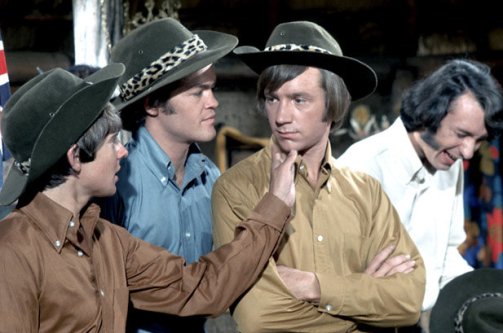 must, in retrospect, be seen as an entertaining, imaginative and highly memorable exercise in pop culture.”
From my point of view as a teen in 1966-67, The Monkees were definitely entertaining. My friends and I held instruments and pretended to be Monkees in school skits, aping their movements and lip-synching their lyrics. The TV show offered half-hour escapes of mindless fun each Monday evening. Most of the controversy surrounding their legitimacy was, frankly, just not important to me at the time.
The hard-fought freedom The Monkees won to control their recorded output was complicated by the fact that they didn’t share a common vision regarding the band’s musical direction. Nesmith favored leaning toward country rock and country blues. Jones fancied the more showy Broadway-type music, while Tork and Dolenz enjoyed dabbling in psychedelia and other more avant-garde genres. Still, they understood the  need to maintain some continuity to what their young fan base expected, which was straightforward pop with accessible hooks.
Their 1967 singles “Pleasant Valley Sunday” and “Daydream Believer” are still enormously popular today, but their third and fourth LPs, “Headquarters” and “Pisces, Aquarius, Capricorn & Jones Ltd.,” exemplified the group’s inner 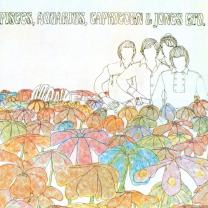 turmoil and rudderless direction (although both nevertheless reached #1 on the album charts). By the time of the fifth LP, “The Birds, The Bees and The Monkees,” the TV show had been cancelled, and the experimental film and soundtrack they released in November 1968, “Head,” proved disastrous commercially. Tork left the band, and efforts to continue as a threesome failed. The end had come.
It’s interesting to note that both The Monkees’ music and TV show are now regarded with more respect than at their time of release. If you analyze some of the TV episodes, you’ll find, amidst the silliness, some groundbreaking creativity. During an era of formulaic domestic sitcoms and corny comedies, it was a stylistically ambitious show, with a distinctive visual style and tempo, an absurdist sense of humor and almost radical story structure. It utilized quick edits strung together with interview segments and even occasional documentary footage.
When Nesmith asked John Lennon in 1967 what he thought of The Monkees, he said, only partly in jest, “I think you’re the greatest comic talent since The Marx Brothers. I’ve

Winning the Outstanding Comedy Emmy in 1967
never missed one of your programs.”
It rarely gets the credit for it, but The Monkees’ show was one of the essential pioneers of the music video format, and Nesmith himself later dreamed up and pitched the prototype for what became MTV, the game-changing phenomenon of music delivery in the 1980s.
Writing in 2012 at the time of Jones’ death, columnist James Poniewozik said, “Even if the show never meant to be more than harmless entertainment and a hit-single generator, we shouldn’t sell it short. It was far better TV than it had to be. In fact, ‘The Monkees’ was the opening salvo in a revolution that brought on the New Hollywood cinema, an influence rarely acknowledged but no less impactful. As a pop culture phenomenon, The Monkees paved the way for just about every boy band that followed in their wake, from New Kids on the Block to ‘N Sync to the Jonas Brothers, while Davy set the stage for future teen idols David Cassidy and Justin Bieber. You would be hard pressed to find a successful artist who didn’t take a page from The Monkees’ playbook, even generations later.”
In 2009, Jones said, “We touched a lot of musicians, you know. I can’t tell you the amount of people that have come up and said, ‘I wouldn’t have been a musician if it hadn’t been for the Monkees.’ It baffles me even now. I met a guy from Guns N’ Roses who was just so complimentary of our work.”
Numerous Monkees revival tours have been met with huge, adoring crowds, mostly aging Sixties kids looking for nostalgic memories. When MTV re-aired the TV show in the late ’80s, a new generation of fans hopped on The Monkees’ train. New albums in 1987 (“Pool It!”) and again in 1996 (“Justus”) weren’t commercial or critical successes, but they served their purpose of keeping The Monkees name before the public. Tours 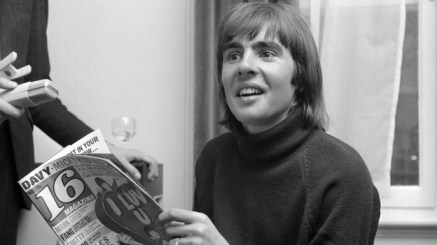 usually featured only three of the four principals (either Nesmith or Tork holding out), but that didn’t seem to matter to those who bought tickets to see them.
Many middle-aged women wept in 2012 when their teen idol Davy Jones died of a heart attack at age 66. Social media activity was substantial and brought about increased sales of Monkees material. Dolenz, Tork and Nesmith collaborated once more on the praised 2016 album “Good Times!” which features several tracks I find worthy of your attention (“You Bring the Summer, “Me & Magdelena”), and even an unearthed track from 1967 (“Love to Love”) on 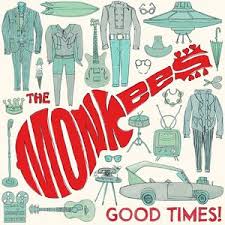 which Jones sang lead vocals.
Just last week, Peter Tork died of cancer at age 77, which will most likely spell the end of Monkees performances…but you never know. If the twosome of Pete Townshend and Roger Daltrey can keep The Who alive in 2019, what’s stopping Nesmith and Dolenz from doing the same thing with The Monkees?
I’m envisioning an upcoming promotional poster: “Hey Hey, we’re still The Monkees, damnit!”
***************
I’ve compiled a playlist on Spotify that collects the essential Monkees hits and many additional album tracks I’ve always enjoyed. I hope you like “A Barrelful of Monkees”!
 But now it’s mid-February, the whole country is freezing their collective asses off, and sitting by a cozy fire sounds awfully nice. So let’s proceed.
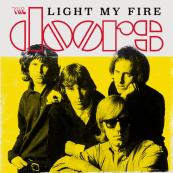 “Light My Fire,” The Doors/Jose Feliciano (1967/68)
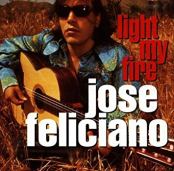 Summer of Love in 1967. Only a year later, Puerto Rican vocalist/guitarist Jose Feliciano re-recorded the song with a radically different tempo and arrangement, which reached #3. The lyrics are all about passion and pushing a relationship to the limits: “The time to hesitate is through, no time to wallow in the mire, try now, we can only lose, and our love become a funeral pyre, come on baby, light my fire, try to set the night on fire…”
  This wickedly captivating song, co-written by Bowie and film score writer Giorgio Moroder, was recorded as the theme for the 1982 Nastassja Kinski film “Cat People.” A six-minute version appeared in the film and reached #1 in several countries, and #16 in England. It was later re-recorded by Bowie and included on his 1983 hit LP “Let’s Dance.” The lyrics speak of the futility of making emotional matters worse: “Well it’s been so long, so long, so long, and I’ve been putting out fire with gasoline…”
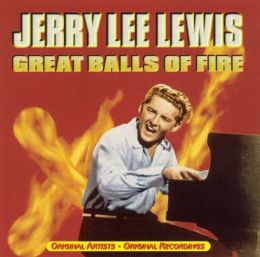 “Great Balls of Fire,” Jerry Lee Lewis (1957)
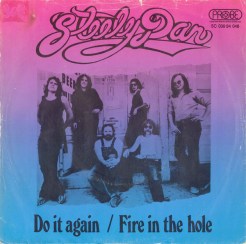 I’m hard pressed to choose my favorite Steely Dan album, but I often find myself favoring their fabulous debut LP, “Can’t Buy a Thrill.” In addition to “Do It Again” and “Reelin’ in the Years” and the FM favorite “Dirty Work,” every other song is pretty much irresistible, even a deep track like “Fire in the Hole.” Although the phrase “fire in the hole” typically refers to an imminent detonation of explosives, that’s not the case here: “Don’t you know there’s fire in the hole, and nothing left to burn, I’d like to run out now, there’s nowhere left to turn…”
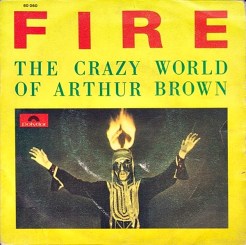 “Fire,” Crazy World of Arthur Brown (1968)
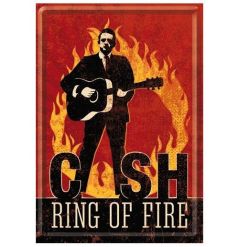 The phrase sounds rather ominous but, as the lyrics explain, it’s actually about how love can feel inescapable: “I fell into the burning ring of fire, and it burns, burns, burns, the ring of fire…” Cash wrote the song but gave credit to his second wife, June Carter Cash. Cash’s first wife, Vivian Liberto, claims Cash “was drunk one night when he wrote it about a certain female body part.” The recording topped the country charts for seven weeks, and reached #17 on the pop charts.
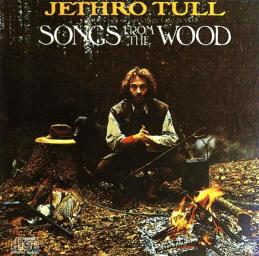 “Fire at Midnight,” Jethro Tull (1977)
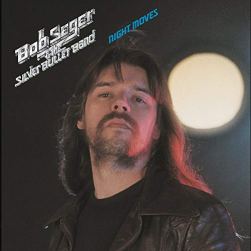 Seger’s songs on his 1976 breakthrough LP “Night Moves” paint vivid pictures of the desperate characters that inhabit the cityscapes of mid-’70s America, notably on “Main Street” and the title track. In “The Fire Down Below,” he writes about the shady desires of all types of men who stalk the night, looking for willing young women: “There go the street lights, bringin’ on the night, here come the men, faces hidden from the light, all through the shadows, they come and they go, with only one thing in common, they got the fire down below…”
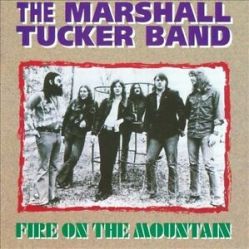 During the California Gold Rush of 1859, prospectors dreaming of making it rich would often use the phrase “fire on the mountain” to connote the gold lying hidden in the hills. The Marshall Tucker Band wrote and recorded “Fire in the Mountain” as a sad story-song about just such a family of Carolina dreamers: “Six long months on a dust-covered trail, they say heaven’s at the end, but so far it’s been hell, and there’s fire on the mountain, and lightning in the air, gold in them hills and it’s waiting for me there…”
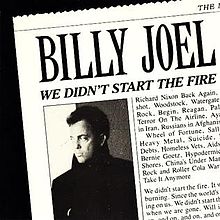 After hearing a 21-year-old in 1988 complain that the problems of that period were worse than anything in history, Joel wrote this song about how the world has had problems since the beginning of time. “Every decade, every century, has had problems, and I decided to rattle off the things I’d experienced during my lifetime (1949-1989),” Joel said, with each verse concluding, “We didn’t start the fire, it was always burning, since the world’s been turning, we didn’t start the fire, no, we didn’t light it, but we tried to fight it…”
 “Fire and Ice,” Pat Benatar (1981)
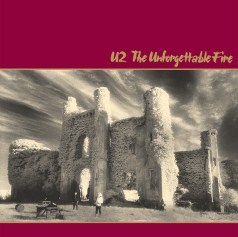 In 1984, Bono was deeply moved by an art museum exhibit by victims of the atomic bombings of Hiroshima and Nagasaki. It inspired him to write what became the title track of U2’s compelling, transitional LP “The Unforgettable Fire,” which set the stage for 1987’s multi-platinum “The Joshua Tree.” Bono’s lyrics speak darkly and cryptically about the effects of the most horrific use of fire in world history: “Ice, your only rivers run cold, these city lights, they shine as silver and gold, dug from the night, your eyes as black as coal, walk on by, walk on through, walk ’til you run and don’t look back…”
 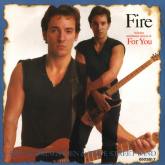 The Boss wrote the smoldering, passionate “Fire” with Elvis Presley in mind, but Presley died before he had a chance to record it. Still, Springsteen often performed “Fire” in concert, and it became an audience favorite, although he never released his studio version until “The Promise” in 2010. The R&B vocal
 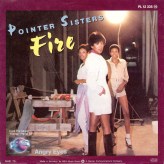 group The Pointer Sisters recorded their own version in 1979, changing the lyrics to the female point of view, and had a #2 hit. Either way, the lyrics are about a will-she-or-won’t-she standoff between boy and girl: “I’m riding in your car, you turn on the radio, you’re pulling me close, I just say no, I say I don’t like it, but you know Im a liar, ’cause when we kiss, oooh, fire!…”
 When Nicks made her fourth solo LP, “The Other Side of the Mirror,” she worked with British producer/musician Rupert Hine, recording and mixing in an historic castle outside London, and they ended up in a stormy relationship. “Whenever Rupert walked into one of those old dark castle rooms, it seemed that the room was on fire,” she said. “It was a little spooky.” Her song about that experience reached #16 on the charts: “Well, maybe I’m just thinking that the rooms are all on fire every time that you walk in the room, well, there is magic all around you, if I do say so myself, I have known this much longer than I’ve known you…”
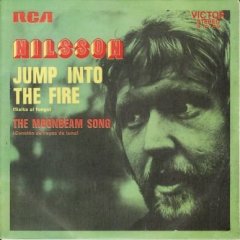 Harry Nilsson is best known for melodic acoustic songs, but this hard rock track from his hit LP “Nilsson Schmilsson” became a favorite for its frenetic, relentless beat and Nilsson’s screaming vocals. It was used in 1990’s Martin Scorsese film “Goodfellas” to accompany a pivotal scene depicting Ray Liotta’s cocaine-induced paranoia: “You can climb a mountain, you can swim the sea, you can jump into the fire, but you’ll never be free…”
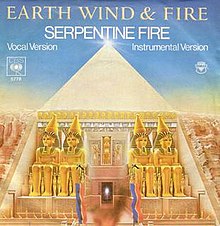 Maurice White, the leader of EW&F, was a big believer in spiritual enlightenment and yoga practices. “A person’s spiritual energy is often referred to as a serpentine fire,” he said. “It’s the fire in your spine, the forced that guides your vitality and makes you unique.” “Serpentine Fire” became a #13 hit for the group in 1977: “I want to see your face in the morning, sun, ignite my energy, the cause and effect of you has brought new meaning in my life to me, gonna tell the story, morning glory, all about the serpentine fire…”
 The maxim “If you play with fire, you’ll get burned” is the inspiration for this early Stones song. The Jagger-Richards songwriting team composed several songs that disparaged the temptress-like behavior of certain wealthy British women, and warned that they might regret it one day: “Well, you’ve got your diamonds and you’ve got your pretty clothes, and the chauffeur drives your car, you let everybody know, but don’t play with me, ’cause you’re playing with fire…”
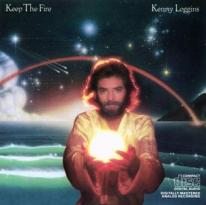 One of the earliest examples of a vocoder in a hit pop song can be found on this lush, uplifting track by Kenny Loggins, on the 1980 album of the same name. He and his then-wife Eva Ein collaborated on the lyrics, which use the metaphor of fire to urge perseverance when things become challenging: “Where’s your vision if the embers flicker out, don’t let it slip from view, the horizons are waiting, so keep the fire burning tonight, for tonight, just keep the fire burning bright…”
  No one was ready for the jolt that Jimi Hendrix brought to the rock/pop music scene when he released his psychedelic “Are You Experienced?” debut LP in the summer of 1967. The album is full of milestone recordings (“Purple Haze,” “The Wind Cries Mary” “Foxy Lady”), but let’s not forget “Fire,” his red-hot rocker about sexual desire and burning love: “You say your mum ain’t home, it ain’t my concern, just play with me and you won’t get burned, I have only one itching desire, let me stand next to your fire…”
