I’m no schoolboy but I know what I like
On the face of it, it really makes no sense.
How is it that a 76-year-old man can successfully do what amounts to an aggressive  aerobics workout while leading his band of septugenarians through a kickass two-hour performance of classic rock and roll?
I saw it, along with 60,000 other Rolling Stones devotees at the Rose Bowl last week, but I wasn’t quite believing what I was seeing.
(Let’s get my age-related joke out of the way right here: At the merchandise booths before the show, alongside the tongue-and-lips t-shirts and hoodies, I was almost expecting there would be Rolling Stones walkers and canes for sale. Boom! I’ll be here all week…)
Seriously, though, if I were Mick Jagger’s doctor, I’m not so sure I would have given him the green light, following heart surgery only three months earlier, to run relentlessly across the stage like the 25-year-old he isn’t anymore. Then again, Jagger is and has always been his own man, and I don’t imagine he needs anyone’s permission to do whatever he wants, even if it’s just to go down to the Chelsea Drug Store to get a prescription filled. Clearly, he loves to perform, he wants to perform, and he is still very good at it, so he WILL perform, whether it’s as a street fighting man, a man of wealth and taste, or as a man stuck between a rock and a hard place.
As for his Glimmer Twin, the indestructible human specimen called Keith Richards, he too has the rock and roll gene buried deep in his DNA, but he appeared far less enthusiastic about the need to continue going through his paces on stage. He was smiling now and then, and just might have been enjoying himself, as he chipped in some  monster guitar chords just when you thought he might doze off. But for much of the night, he seemed bored and uncaring, and more than happy to turn over most of the guitar duties to his younger teammate, the 71-year-old Ronnie Wood.
And wow, what a 180-degree difference! I went home from the show with a revived respect for Wood’s contributions to this band. He did almost all of the heavy lifting, from some inspired slide guitar playing to quicksilver lead guitar runs, all the while demonstrating an impish playfulness in the way he carried out his assignments. Not to mention, he’s a lot easier on the eyes than Richards, who looks these days as if he’s wearing a rubber mask that was left out in the sun too long.
Drummer Charlie Watts, meanwhile, was… well, critic Chris Willman from Variety put it beautifully: “He’s still our darling, sitting at a minimalist kit and moving even more minimally with his casual jazz grip, looking like the mild-mannered banker who no one in the heist movie realizes is the guy actually blowing up the vault.” The 78-year-old guy didn’t appear to even break a sweat as he unfailingly laid down the beat for 20 Stones classics for more than two hours. Me, I get winded going up a few flights of stairs.
At a stadium show like this one, most people are so far from the stage that they can barely see the performers, and if not for the four truly astounding visual screens that hung behind the stage, they wouldn’t know for sure it was the actual Rolling Stones and not some paid actors. I  don’t know who the art director is who was responsible for the spectacular graphics and visual content of these displays, but if you ask me, he should be paid as much as Jagger and Company. The audience (unless you were those fortunate few in the first 30-40 rows) spent the entire evening watching the concert via the screens, and believe it or not, this was not a bad thing. Unlike the simplistic, average-quality visuals I’ve been forced to watch at many other stadium shows, these were state-of-the-art, presenting the four featured players in as favorable a light as you could possibly imagine.
The camera people didn’t neglect the other musicians who added significant parts to The Stones’ live stage presentation. Darryl Jones, who has been handling the bass guitar parts in the touring band since original member Bill Wyman’s departure in 1994, had several moments in the spotlight, most notably as he carried the day on an extended rendition of “Miss You.” Similarly, veteran keyboardist Chuck Leavell, who has toured with not only the Stones but also The Allman Brothers for decades now, offered some integral piano work on crowd-pleasing selections like “She’s a Rainbow” and the anthemic “You Can’t Always Get What You Want.”
Most photogenic, though, was 37-year-old Sasha Allen, making her debut appearance in place of long-time touring vocalist Lisa Fischer to belt out backing vocals and, most significantly, the Merry Clayton vocal solo during “Gimme Shelter,” which still sounds as threatening and chilling as the original did 50 years ago.
Those uber-professional screens, by the way, proved to be far better stage accoutrements  than the silly cherry pickers and inflatable penises The Stones previously trotted out as concert spectacles. I had been a witness to both of these laughable visual props at the 1981 “Tattoo You” arena tour and the 1989 “Steel Wheels” stadium tour, respectively, and I can tell you I would have much preferred these quality screen shots of the band members doing their thing.
While the visual presentation is always important (why else go to a concert in the first place?), equally crucial is the song list the band decides to perform. Most classic rock bands still out there on the road have chosen to play it safe by limiting themselves to the hits everyone supposedly came to hear, and in that regard, The Stones did indeed stick to the tried-and-true standards.
I look at the Stones’ music in four distinct eras. First there’s the early years (1963-1967), from their humble beginnings covering old blues tunes through their first attempts at writing their own songs, some of which become huge Top 40 hits in the UK and the US alike. From that period, they offered three tunes at the Rose Bowl show: the vaguely menacing “Paint it Black,” the flower-power curiosity “She’s a Rainbow” and the most durable war horse of their whole catalog, “(I Can’t Get No) Satisfaction.”
Then, there’s the glory years, from their “Beggar’s Banquet” LP in 1968 through “Exile on Main Street” in 1972. This is when The Stones were truly “the greatest rock and roll band in the world,” especially in the studio, writing and recording some of the most amazing music in rock history. This period was, as expected, broadly represented at the Pasadena show: “Street Fighting Man,” “Sympathy For the Devil,” “Jumpin’ Jack Flash,” “Gimme Shelter,” “You Got the Silver,” “Honky Tonk Woman,” “Midnight Rambler,” “You Can’t Always Get What You Want,” “Brown Sugar,” “Dead Flowers,” “Sweet Virginia” and “Tumbling Dice.”
It was during “Midnight Rambler” that Jagger whipped out his harmonica and helped make that song the winner of my “best moment of the evening” contest, although it won by only a fraction over a mesmerizing, hypnotic “Sympathy for the Devil.”
 The third era of Stones music I’ll describe as the erratic years, when the group’s records meandered between average ambivalence (“Goat’s Head Soup,” “Black and Blue”) and meaty masterpieces (“Some Girls,” “Tattoo You”), and this wild swing in quality was a frustrating time for Stones fans. From this period (1973-1986), last week’s show included only three selections: The not-to-be-denied disco stomp “Miss You,” Richards’ defiant “Before They Make Me Run” and their final #1 hit single, 1981’s “Start Me Up.”
The fourth era, if you can even call it an era, is everything from 1989 to the present. It’s a pretty lame 30-year stretch that included just four LPs, and only one of those (“Steel Wheels”) was anywhere close to the high standards they’d laid down in their best days. Not surprisingly, we heard only one track from this period, the so-so “You Got Me Rocking.” (Wouldn’t “A Rock and a Hard Place” have been a better choice?)
When you analyze the setlist in this way, it’s clear to see that The Rolling Stones in 2019 choose to present themselves pretty much as The Rolling Stones of 1969 or so, concentrating on the finest songs they ever wrote. And why not? I mean, hey, if they’re going to continue to tour well into their 70s, they might as well put their best cards on the table. The audience, largely made up of longtime fans also in their grey-haired years, wants to hear the songs they know and love best.
Me, I’m a rock writer and veteran rock-concert attendee, and I would’ve frankly preferred to hear a few more of the less obvious choices. I guess they did go out on a limb when they moved down the catwalk to sit down and try their hand at “unplugged” tunes like “Sweet Virginia” and “Dead Flowers.” But I don’t know, it seems to me they could have taken a chance or two with the set list during the meat of the program. Maybe drop “Honky Tony Woman” and make room for “Monkey Man” or “Can’t You Hear Me Knockin’.” Or even go deep and offer up “Respectable,” or “Too Much Blood,” or “Slave.”
 Understand, I’m not complaining. It was fun to hear Jagger make references to L.A. landmarks and neighborhoods like “Thursday night’s turtle races at Brennan’s” (in Marina Del Rey), or unsuccessfully searching for their star on Hollywood Boulevard (inexplicably, there isn’t one, guys), or being unable to get a reservation at Spago’s (it’s been closed since 2001). And we were all reminded of our mortality when he said it has been 55 years since The Stones’ first Los Angeles concert, and 25 years since they’d last played the Rose Bowl.
I was thoroughly entertained, and who knows if these guys will still have enough in the tank to show up in town again four or five years from now for another go round. If so, I suspect I’ll be here, “just waitin’ on a friend.”
*************
The Spotify playlist below offers the songs from the August 22nd Rose Bowl show in the order they were played, followed by a few other gems from their catalog I would have loved to have heard…
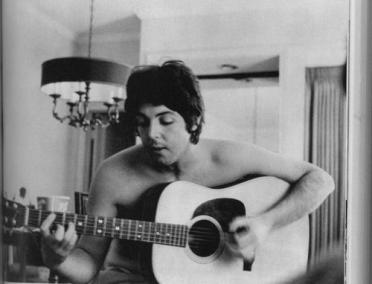 One of McCartney’s simplest melodies and prettiest acoustic guitar playing features lyrics with a serious yet uplifting message. He said the words were inspired by his hearing the call of a blackbird while on retreat in Rishikesh, India in early 1968 with the other Beatles and, alternatively, by the unfortunate state of race relations in the United States in the 1960s. “It wasn’t really about a blackbird whose wings are broken. It’s symbolic of black people’s struggle in the southern states,” said McCartney years later. “You were only waiting for this moment to be free, blackbird fly, black bird fly into the light of the dark black night, blackbird singing in the dead of night, take these broken wings and learn to fly, all your life, you were only waiting for this moment to arise…”
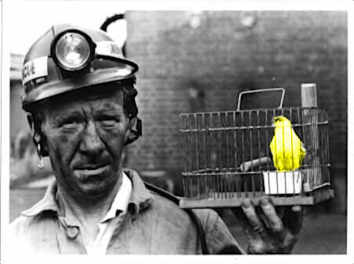 In a primitive attempt to monitor how lethal the air quality was becoming in their working environment, coal miners routinely took a caged canary with them. When it keeled over, they knew the time had come to exit for a while. Police songwriter Sting found that an intriguing subject for a song, comparing the canary to a timid woman who became afraid at the first sign of trouble. Their track appeared on their 1980 LP “Zenyatta Mondatta,” which reached #5 in the US and #1 in their native UK: “First to fall over when the atmosphere is less than perfect, your sensibilities are shaken by the slightest defect, you live your life like a canary in a coalmine, you get so dizzy even walking in a straight line…”
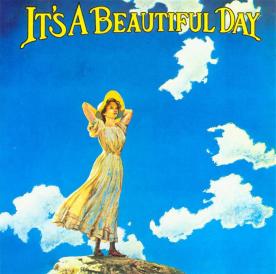 It’s a shame we never got to hear more from this San Francisco-based group, but their manager chose to squirrel them away in a Seattle apartment to write songs and play small clubs there. By the time they’d returned, they had grown tired of each other and split up, but not before writing and recording this stunning tune, which was an FM radio favorite of the era. “We were like caged birds in that attic — no money, no transportation, and the weather was miserable,” said singer-songwriter David LaFlamme. “We were just barely getting by. It was quite an experience, but it was very creative in a way.” “White bird in a golden cage on a winter’s day in the rain, white bird in a golden cage alone, white bird dreams of the aspen trees with their dying leaves turning gold, but the white bird just sits in her cage growing old, white bird must fly or she will die…” (I can’t seem to find the original version of “White Bird” on Spotify, so my playlist has a live rendition that isn’t as good…)
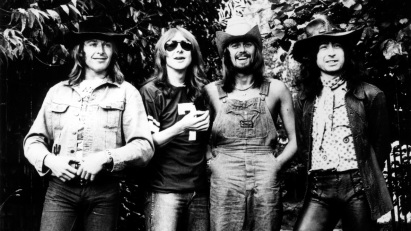 Solid hard rock was the recipe for the bulk of Bad Company’s impressive debut LP, which reached #1 in 1974. The sleeper tune on the album was “Seagull,” which used acoustic guitars in its comparatively gentle approach. Said songwriter/vocalist Paul Rodgers, “‘Seagull’ was written sitting on the beach. Music is about atmosphere, and an effective way to create the atmosphere you want is to actually be there. You don’t have to imagine it — it’s right there. You could see the horizon.” The lyrics, penned by Rodgers, wax philosophically about the cosmos: “Seagull, you fly across the horizon into the misty morning sun, nobody asks you where you are going, nobody knows where you’re from, here is a man asking the question, is this really the end of the world? Seagull, you must have known for a long time the shape of things to come…”
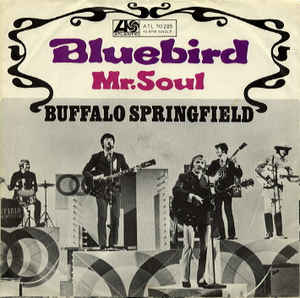 Stephen Stills was entering his most remarkable, prolific songwriting period when he came up with this amazing song on the Springfield’s best album, “Buffalo Springfield Again.” The original version (heard on my playlist ) uses a banjo in the final moments, but on the extended rendition found on a later collection album, Stills takes off on a soaring electric guitar solo that Joe Walsh tried to emulate on the cover version he recorded with The James Gang in 1969. “Listen to my bluebird laugh, she can’t tell you why, deep within her heart, you see, she knows only crying, just crying, there she sits, a lofty perch, strangest color blue, flying is forgotten now, thinks only of you, just you…”
 Joni’s 1976 LP “Hejira” is a song cycle about traveling and searching, part of the ongoing self-analysis she has done throughout her extraordinary career. “Black Crow,” with its superb acoustic guitar rhythms and soaring vocals, offers amazing imagery that equates her relentless search with that of the crow, looking for the next important morsel: “In search of love and music, my whole life has been illumination, corruption, and diving, diving, diving, diving, diving down to pick up on every shiny thing, just like that black crow flying in a blue sky…”
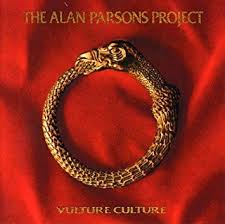 The phrase “Vulture culture” is about a love and appreciation of the natural world and animals, and how vultures keep an animal’s spirit alive by keeping its bones and celebrating its beauty. The Parsons Project album of that name, and its title track, twisted that reference to describe unworldly people steeped in the arts and the ever-increasing ruthlessness of mankind in a world of stark economic reality: “Vulture culture, use it or you lose it, vulture culture, choose it or refuse it, Hollywood is calling, won’t you join the dance, moving onto Wall Street, why not take a chance, it’s a vulture culture, never lend a loser a hand, just a vulture culture, living off the fat of the land…”
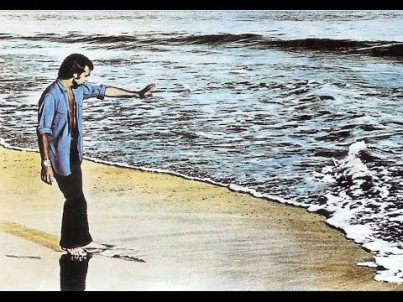 One of my favorite deep tracks from the first and best phase of John’s extraordinary career is this final tune from his 1972 LP “Don’t Shoot Me, I’m Only the Piano Player.” Bernie Taupin wrote it about a young woman he knew who had become involved in drugs and ended up committing suicide. “My high-flying bird has flown from out my arms, I thought myself her keeper, she thought I meant her harm, she thought I was the archer, a weatherman of words, but I could never shoot down my high-flying bird…”
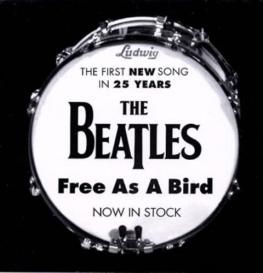 In 1993, when the massive CD/DVD/book project “Beatles Anthology” was underway, Paul McCartney, George Harrison and Ringo Starr convened in a home studio with producer Jeff Lynne to record the first new Beatles music in 25 years. As a way of involving the spirit of John Lennon in their work, they used the rough demo of a song Lennon had written and recorded in 1977, and the result was a #6 hit in the US. The additional lyrics they added to Lennon’s framework referenced their 1969 breakup: “Where did we lose the touch that seemed to mean so much? It always made me feel so free as a bird, like the next best thing to be…”
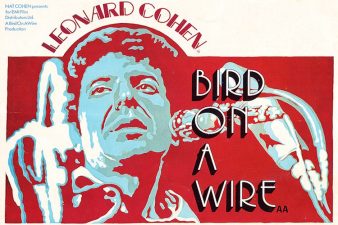 Cohen had been an accomplished poet and writer who began composing songs at age 30. He suffered from occasional bouts of depression, but his ladyfriend at the time, Marianne Ihlen, helped him by urging him to pick up his guitar as they sat in their apartment on the Greek island of Hydra. Outside the window, telephone poles and wires were being installed, and a lone bird came to rest on a wire there, inspiring Cohen to write what became one of his signature songs, later covered by the likes of Judy Collins, Joe Cocker, Joe Bonamassa, Jennifer Warnes and k.d. lang: “Like a bird on the wire, like a drunk in a midnight choir, I have tried in my way to be free….”
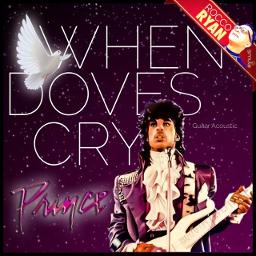 Prince wrote this song upon request from “Purple Rain” director Albert Magnoli, who wanted a tune to accompany a scene that intermingled parental difficulties and a love affair. “When Doves Cry,” by the way, is almost an anagram for “When love dies”: “How can you just leave me standing alone in a world that’s so cold, maybe I’m just too demanding, maybe I’m just like my father, too bold, maybe you’re just like my mother, she’s never satisfied, why do we scream at each other, this is what it sounds like when doves cry…”
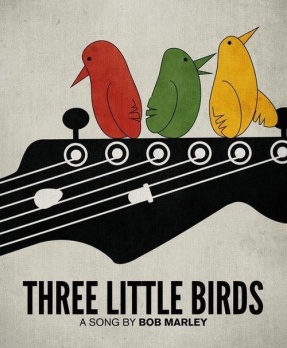 Marley, like most songwriters, was inspired by the things he saw around him every day. Outside his Jamaica home, three canaries made their nest and were regularly within earshot and eyeshot of Marley, so naturally, he wrote what became one of his trademark songs about them. Three women who sang in concert with him claim the lyrics also refer to them, as he would ask, ‘What is my three little birds saying?” “Rise up this mornin’, smile with the risin’ sun, three little birds pitch by my doorstep, singin’ sweet songs of melodies pure and true, sayin’, ‘This is my message to you-ou-ou,’ singin’, ‘Don’t worry ’bout a thing ’cause every little thing gonna be all right’…”
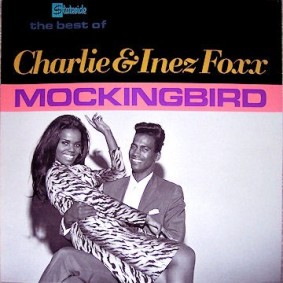 The brother-sister team of Inez and Charlie Foxx wrote and recorded this R&B track as a novelty song in 1963, playing on the nursery rhyme “Hush Little Baby,” and to their surprise, it reached #7 on the pop charts that year. It was soon covered by Dusty Springfield and Aretha Franklin, among others, and finally by then-husband-and-wife James Taylor and Carly Simon, appearing on Simon’s 1974 LP “Hotcakes,” where it reached #5 on the pop charts: “Everybody have you heard, he’s gonna buy me a mockingbird, and if that mockingbird don’t sing, he’s gonna buy me a diamond ring, and if that diamond ring won’t shine, he’s gonna surely break this heart of mine…”
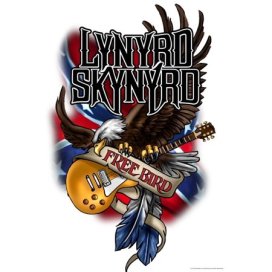 Lynyrd Skynyrd guitarist Allen Collins came up with the chords to this iconic power ballad and was searching for the right lyrics to accompany them. One day his girlfriend Kathy, whom he later married, asked him, “If I leave here tomorrow, would you still remember me?” He was struck by her words and used it as the opening line to “Free Bird.” Singer Ronnie Van Zant, who co-wrote the lyrics, said the song is “what it means to be free, in that a bird can fly wherever he wants to go. Everyone wants to be free. That’s what this country’s all about.” “If I leave here tomorrow, would you still remember me? For I must be traveling on now ’cause there’s too many places I’ve got to see, but if I stayed here with you, girl, things just couldn’t be the same, ’cause I’m as free as a bird now, and this bird you cannot change…”
 Hack's Back Pages