‘Cause when we kiss, ooh, fire!
Each week, I ask my readers to suggest ideas for this blog — topics to write about, artists I should feature, and subjects that might make entertaining playlists.
A few months ago, a friend suggested “songs about fire,” but here in California, where wildfires have decimated thousands of acres in recent months, I decided it was “too soon” for that.
 But now it’s mid-February, the whole country is freezing their collective asses off, and sitting by a cozy fire sounds awfully nice. So let’s proceed.
Fire brings us light, and warmth, and is often used as a metaphor for passion and desire. Yet it also can connote rage, violence, destruction, and hellfire.
With all those possible meanings for the “fire” imagery, I wasn’t surprised to find nearly 100 classic rock songs with “fire” in the title, and still more that mention “burning” or “flame.” Here at Hack’s Back Pages, I prefer to focus on tracks from the 1955-1990 period, so I’ve narrowed down the field to 20 titles that appear in the Spotify playlist referenced below. I’ve relegated another 15 songs to “honorable mention” status.
Enjoy!
*****************
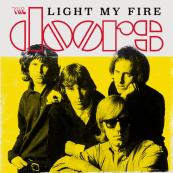 “Light My Fire,” The Doors/Jose Feliciano (1967/68)
Guitarist Robby Krieger created the song’s musical structure, Jim Morrison added the lyrics, and keyboardist Ray Manzarek came up with the opening hook on Vox Continental organ, and the result was the one of the biggest songs of the infamous  Summer of Love in 1967. Only a year later, Puerto Rican vocalist/guitarist Jose Feliciano re-recorded the song with a radically different tempo and arrangement, which reached #3. The lyrics are all about passion and pushing a relationship to the limits: “The time to hesitate is through, no time to wallow in the mire, try now, we can only lose, and our love become a funeral pyre, come on baby, light my fire, try to set the night on fire…”
“Cat People (Putting Out Fire),” David Bowie (1983)
 This wickedly captivating song, co-written by Bowie and film score writer Giorgio Moroder, was recorded as the theme for the 1982 Nastassja Kinski film “Cat People.” A six-minute version appeared in the film and reached #1 in several countries, and #16 in England. It was later re-recorded by Bowie and included on his 1983 hit LP “Let’s Dance.” The lyrics speak of the futility of making emotional matters worse: “Well it’s been so long, so long, so long, and I’ve been putting out fire with gasoline…”
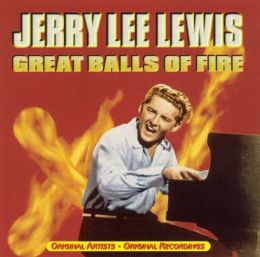 “Great Balls of Fire,” Jerry Lee Lewis (1957)
Lewis’s second international hit single of 1957 was R&B songwriting legend Otis Blackwell’s classic that uses the title phrase in two ways. It was originally a biblical reference to fire raining down from the sky, but in this song, it takes on sexual meaning of a lustful man in need of being satisfied: “You shake my nerves and you rattle my brain, too much love drives a man insane, you broke my will, oh what a thrill, goodness gracious, great balls of fire!…”
“Fire in the Hole,” Steely Dan (1972)
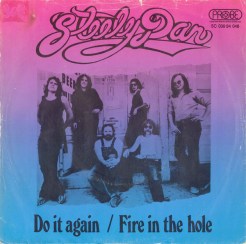 I’m hard pressed to choose my favorite Steely Dan album, but I often find myself favoring their fabulous debut LP, “Can’t Buy a Thrill.” In addition to “Do It Again” and “Reelin’ in the Years” and the FM favorite “Dirty Work,” every other song is pretty much irresistible, even a deep track like “Fire in the Hole.” Although the phrase “fire in the hole” typically refers to an imminent detonation of explosives, that’s not the case here: “Don’t you know there’s fire in the hole, and nothing left to burn, I’d like to run out now, there’s nowhere left to turn…”
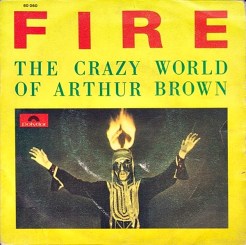 “Fire,” Crazy World of Arthur Brown (1968)
“I am the god of hellfire, and I bring you…Fire!!” British musician Arthur Brown and his band were among the most popular bands in England in 1968, thanks in large part to this insistent rocker with the Satanic lyrics and attention-getting opening. Brown was known for shocking performances in costume and makeup, predating Alice Cooper and Kiss at that game. They lasted barely a year, but Brown later formed Kingdom Come and worked with other prog-rock artists in the ’70s.
“Ring of Fire,” Johnny Cash (1963)
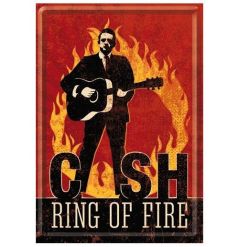 The phrase sounds rather ominous but, as the lyrics explain, it’s actually about how love can feel inescapable: “I fell into the burning ring of fire, and it burns, burns, burns, the ring of fire…” Cash wrote the song but gave credit to his second wife, June Carter Cash. Cash’s first wife, Vivian Liberto, claims Cash “was drunk one night when he wrote it about a certain female body part.” The recording topped the country charts for seven weeks, and reached #17 on the pop charts.
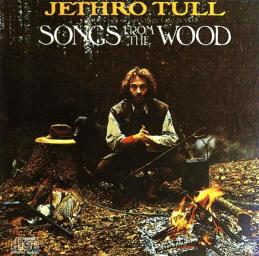 “Fire at Midnight,” Jethro Tull (1977)
Ian Anderson claims to have always been a homebody, preferring an evening snuggling by the fireplace to a bustling night on the town. Tull’s “Songs From the Wood” LP featured several acoustic-based tunes that evoked a sense of serenity and appreciation of what nature has to offer. The album closes with “Fire at Midnight,” the perfect song to cue up in your den as night falls: “Kindled by the dying embers of another working day, go upstairs, take off your makeup, fold your things neatly away, me, I’ll sit and write this love song, as I all too seldom do, build a little fire this midnight, it’s good to be back home with you…”
“The Fire Down Below,” Bob Seger (1976)
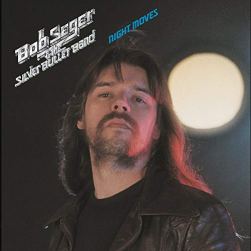 Seger’s songs on his 1976 breakthrough LP “Night Moves” paint vivid pictures of the desperate characters that inhabit the cityscapes of mid-’70s America, notably on “Main Street” and the title track. In “The Fire Down Below,” he writes about the shady desires of all types of men who stalk the night, looking for willing young women: “There go the street lights, bringin’ on the night, here come the men, faces hidden from the light, all through the shadows, they come and they go, with only one thing in common, they got the fire down below…”
“Fire on the Mountain,” Marshall Tucker Band (1975)
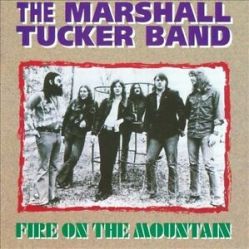 During the California Gold Rush of 1859, prospectors dreaming of making it rich would often use the phrase “fire on the mountain” to connote the gold lying hidden in the hills. The Marshall Tucker Band wrote and recorded “Fire in the Mountain” as a sad story-song about just such a family of Carolina dreamers: “Six long months on a dust-covered trail, they say heaven’s at the end, but so far it’s been hell, and there’s fire on the mountain, and lightning in the air, gold in them hills and it’s waiting for me there…”
“We Didn’t Start the Fire,” Billy Joel (1989)
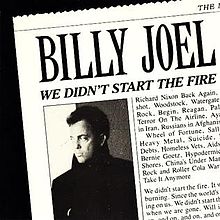 After hearing a 21-year-old in 1988 complain that the problems of that period were worse than anything in history, Joel wrote this song about how the world has had problems since the beginning of time. “Every decade, every century, has had problems, and I decided to rattle off the things I’d experienced during my lifetime (1949-1989),” Joel said, with each verse concluding, “We didn’t start the fire, it was always burning, since the world’s been turning, we didn’t start the fire, no, we didn’t light it, but we tried to fight it…”
 “Fire and Ice,” Pat Benatar (1981)
Inspired by an ex-lover who loved her and left her, Benatar co-wrote “Fire and Ice,” the hit single from her 1981 “Precious Time” album. Both the music and the lyrics explore the wild swing of tempos and emotions that consume so many romantic relationships: “Fire and ice, you come on like a flame, then you turn cold shoulder, fire and ice, I wanna give you my love, you’ll just take a little piece of my heart, please tear it apart…”
“The Unforgettable Fire,” U2 (1985)
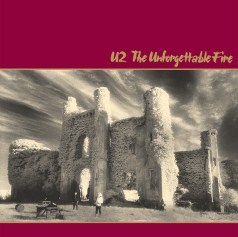 In 1984, Bono was deeply moved by an art museum exhibit by victims of the atomic bombings of Hiroshima and Nagasaki. It inspired him to write what became the title track of U2’s compelling, transitional LP “The Unforgettable Fire,” which set the stage for 1987’s multi-platinum “The Joshua Tree.” Bono’s lyrics speak darkly and cryptically about the effects of the most horrific use of fire in world history: “Ice, your only rivers run cold, these city lights, they shine as silver and gold, dug from the night, your eyes as black as coal, walk on by, walk on through, walk ’til you run and don’t look back…”
“Fire,” Bruce Springsteen (1978), The Pointer Sisters (1979)
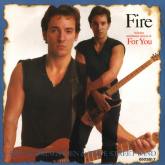 The Boss wrote the smoldering, passionate “Fire” with Elvis Presley in mind, but Presley died before he had a chance to record it. Still, Springsteen often performed “Fire” in concert, and it became an audience favorite, although he never released his studio version until “The Promise” in 2010. The R&B vocal
 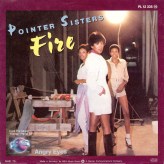 group The Pointer Sisters recorded their own version in 1979, changing the lyrics to the female point of view, and had a #2 hit. Either way, the lyrics are about a will-she-or-won’t-she standoff between boy and girl: “I’m riding in your car, you turn on the radio, you’re pulling me close, I just say no, I say I don’t like it, but you know Im a liar, ’cause when we kiss, oooh, fire!…”
“Rooms on Fire,” Stevie Nicks (1989)
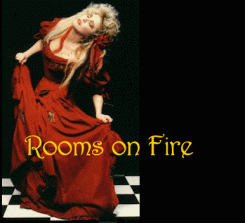 When Nicks made her fourth solo LP, “The Other Side of the Mirror,” she worked with British producer/musician Rupert Hine, recording and mixing in an historic castle outside London, and they ended up in a stormy relationship. “Whenever Rupert walked into one of those old dark castle rooms, it seemed that the room was on fire,” she said. “It was a little spooky.” Her song about that experience reached #16 on the charts: “Well, maybe I’m just thinking that the rooms are all on fire every time that you walk in the room, well, there is magic all around you, if I do say so myself, I have known this much longer than I’ve known you…”
“Jump Into the Fire,” Nilsson (1971)
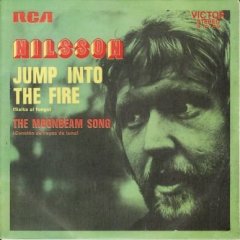 Harry Nilsson is best known for melodic acoustic songs, but this hard rock track from his hit LP “Nilsson Schmilsson” became a favorite for its frenetic, relentless beat and Nilsson’s screaming vocals. It was used in 1990’s Martin Scorsese film “Goodfellas” to accompany a pivotal scene depicting Ray Liotta’s cocaine-induced paranoia: “You can climb a mountain, you can swim the sea, you can jump into the fire, but you’ll never be free…”
“Serpentine Fire,” Earth, Wind and Fire (1977)
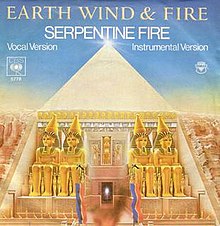 Maurice White, the leader of EW&F, was a big believer in spiritual enlightenment and yoga practices. “A person’s spiritual energy is often referred to as a serpentine fire,” he said. “It’s the fire in your spine, the forced that guides your vitality and makes you unique.” “Serpentine Fire” became a #13 hit for the group in 1977: “I want to see your face in the morning, sun, ignite my energy, the cause and effect of you has brought new meaning in my life to me, gonna tell the story, morning glory, all about the serpentine fire…”
“Play With Fire,” The Rolling Stones (1965)
 The maxim “If you play with fire, you’ll get burned” is the inspiration for this early Stones song. The Jagger-Richards songwriting team composed several songs that disparaged the temptress-like behavior of certain wealthy British women, and warned that they might regret it one day: “Well, you’ve got your diamonds and you’ve got your pretty clothes, and the chauffeur drives your car, you let everybody know, but don’t play with me, ’cause you’re playing with fire…”
“Keep the Fire,” Kenny Loggins (1980)
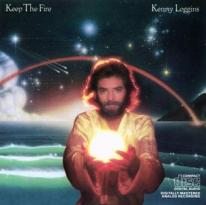 One of the earliest examples of a vocoder in a hit pop song can be found on this lush, uplifting track by Kenny Loggins, on the 1980 album of the same name. He and his then-wife Eva Ein collaborated on the lyrics, which use the metaphor of fire to urge perseverance when things become challenging: “Where’s your vision if the embers flicker out, don’t let it slip from view, the horizons are waiting, so keep the fire burning tonight, for tonight, just keep the fire burning bright…”
“Fire,” Jimi Hendrix (1967)
 No one was ready for the jolt that Jimi Hendrix brought to the rock/pop music scene when he released his psychedelic “Are You Experienced?” debut LP in the summer of 1967. The album is full of milestone recordings (“Purple Haze,” “The Wind Cries Mary” “Foxy Lady”), but let’s not forget “Fire,” his red-hot rocker about sexual desire and burning love: “You say your mum ain’t home, it ain’t my concern, just play with me and you won’t get burned, I have only one itching desire, let me stand next to your fire…”
****************
Honorable mention:
“Into the Fire,” Bryan Adams, 1987; “Fire and Rain,” James Taylor, 1970; “Fight Fire With Fire,” Metallica, 1984; “Wildfire,” Michael Murphy, 1975; “Fire of Unknown Origin,” Blue Oyster Cult, 1974; “This Wheel’s on Fire,” Bob Dylan and The Band , 1967; “Quest for Fire,” Iron Maiden, 1983; “Hearts on Fire,” Steve Winwood, 1988; “Fire,” Ohio Players, 1974; “After the Fire,” Roger Daltrey, 1985; “House of Fire,” Alice Cooper, 1989; “Who in Fire,” Leonard Cohen, 1974; “She’s On Fire,” Aerosmith, 1985; “Fire Woman,” The Cult, 1989; “I’m on Fire,” Bruce Springsteen, 1984.
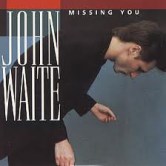 Case in point: “Missing You” was the title of a minor hit (peaking at #23) for Dan Fogelberg in 1982, and then John Waite soared to #1 with his own song called “Missing You” in 1984. Later that same year, Diana Ross reached #10 with Lionel Richie’s “Missing You,”
 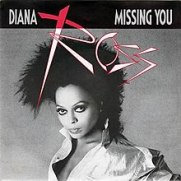 a tribute to Marvin Gaye.
 Here’s another: “Best of My Love,” written by Don Henley, Glenn Frey and J.D. Souther, was The Eagles’ first #1 hit in the summer of 1974. A completely different “Best of My Love,”
  composed by Maurice White and Al McKay, was also a #1 hit for the female disco group The Emotions in 1977.
 “Feel Like Makin’ Love,” an R&B tune by Eugene McDaniels, was a big #1 hit for Roberta Flack in 1974, and then Paul Rodgers and Mick Ralphs of Bad
 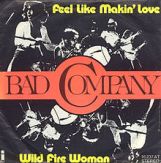 Company wrote a harder rocking, different “Feel Like Makin’ Love” that went to #10 in 1975.
 1969 second LP, but you won’t find it on the Top 40 charts. Instead you’ll find three different songs called “Heartbreaker” over the years: a 1973 Jagger-Richards song, technically called “Doo Doo Doo Doo Doo (Heartbreaker),” that reached #15; Pat Benatar’s first hit in 1979 by two obscure British songwriters; and a Dionne Warwick number in 1983 written by the Gibb Brothers that made it to #10.
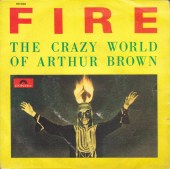 How about the simple title “Fire,” which has at least three hit songs bearing that title. The Crazy World of Arthur Brown went first with their 1968 song, peaking at #2; then the Ohio Players with their dance track in 1975, a #1 hit; and then Bruce Springsteen’s smoldering tune (he wrote it for Elvis, who never got the chance to record it) was made into a #2 hit by the Pointer Sisters in 1979. Actually, the first rock recording called “Fire” was a Jimi Hendrix tune from the “Are You Experienced?” debut LP in 1967.
 “Cherish” was an enormous #1 hit for The Association in 1966, followed nearly two decades later by Kool & The Gang’s own “Cherish” (#2), and then a third “Cherish” (#2) by Madonna in 1989.
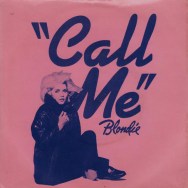 “My Love,” which topped the charts in 1973.
 The song title “Magic” showed up in three configurations: Mid-’70s pop by Pilot (#5 in 1975); a chart-topper by Olivia Newton-John from the “Xanadu” soundtrack in 1980, and a #12 hit by Ric Ocasek for The Cars in 1984.
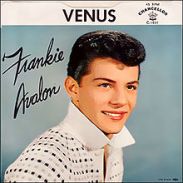 How about “Venus“? That was a song title that reached #1 three times. First, teen idol Frankie Avalon did it in 1959 with a #1 hit song written by Ed Marshall and Peter DiAngelis; but the title reappeared at #1 two more times on another song, this time written by Dutch songwriter Robbie Van Leeuwen. First the Dutch band Shocking Blue topped the charts with it in 1970, and then the British female pop band Bananarama did its cover in 1986.
 known as “All Night Long (All Night).”
 One of the more unusual duplications of a song title was “Shining Star,” because both compositions were bonafide R&B songs. First came the Maurice White-Philip Bailey dance classic, a #1 hit for their group Earth, Wind & Fire in 1975. Then in 1980, The Manhattans, a vocal group dating back to the early ’60s who were reborn with a new lead singer in the late ’70s, had a #5 hit with another “Shining Star,” written by Leo Graham and Paul Richmond.
 We can’t forget the timeless title “Lady,” which appears on the top of the sheet music page for four different hit songs: First came power pop band Styx’s number by Dennis DeYoung (#6 in 1975); and then, in rapid succession, Little River Band’s tune (#10 in 1979), the Lionel Richie-penned #1 smash in 1980 by Kenny Rogers, and The Commodores’ hit, technically called “Lady (You Bring Me Up),” and not to be confused with their tune “Three Times a Lady.”
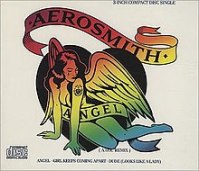 The example I find most interesting is “Angel.” Check this out: It’s the title of Aretha Franklin’s #20 hit in 1973, written by her sister Carolyn; it’s another hit song (#5) written by Madonna and Steve Bray for her “Like a Virgin” LP; and it’s a #3 hit song by Steven Tyler and Desmond Child for Aerosmith’s 1987 comeback. But here’s the unique thing: There are actually two Fleetwood Mac recordings of two different songs called “Angel”! The first was by Bob Welch and appeared on their “Heroes are Hard to Find” LP in 1974, and the second was by Stevie Nicks on the group’s “Tusk” LP in 1979.
 “Good Times” — Sam Cooke, 1964; Chic, 1979
 “One” — Three Dog Night, 1969; Metallica, 1988; The Bee Gees, 1989; U2, 1991
 “Runaway” — Del Shannon, 1961; Jefferson Starship, 1978
 “On the Road Again” — Canned Heat, 1968; Willie Nelson, 1980
