Once in a lifetime, same as it ever was
Since the beginning of the rock music era, the dream of many artists was to have one big hit single.
Some artists, of course, had far greater ambitions — dozens of hit singles, several million-selling albums — superstars like The Beatles, Billy Joel, U2, Madonna, Elton John, Prince, The Rolling Stones, Queen, Diana Ross.
Other musicians didn’t seem to care about hit singles at all, instead setting their sights on big-selling LPs: Jimi Hendrix, The Allman Brothers, Jethro Tull, Emerson, Lake & Palmer, Frank Zappa.
The groups who had just one big moment of fame have been derisively labeled “One-Hit Wonders.” That is, they had one hugely successful song, but then seemed to disappear  entirely from the public consciousness.
About half of these artists earned their dubious distinction for good reason: They really didn’t have much talent in the first place. They simply lucked out — once — with the right combination of ingredients, a kind of perfect storm: An irresistibly catchy melody, a simple lyric, a memorable voice, an infectious hook, a distinctive studio production sound, a persuasive marketing push, an eager public and great timing all come together, and the result is a national (or worldwide) Top Five hit song. Perhaps the songwriter and producer brought most of the talent to the party, and the artist didn’t really offer much. Therefore, like catching lightning in a bottle, they found this feat nearly impossible to duplicate, and the band whose name appeared on the hit was never heard from again. Here are a few: Carl Douglas, Blues Magoos, Paper Lace, Zager and Evans, Terry Jacks, Strawberry Alarm Clock, Starland Vocal Band.
On the other hand, there are many “one-hit wonders” who deserved a much better fate. They wrote/recorded many great songs and albums, but for reasons unclear, they  never achieved further success on the charts. (Poor management/promotion, radio station indifference, record company blackballing, etc.). A few examples of this sad phenomenon are: Karla Bonoff, Argent, Sanford and Townsend, Rickie Lee Jones, Golden Earring, Steve Forbert, Free.
You can find many reference books that explore this subject in great detail, including the one I own, The Billboard Book of One-Hit Wonders, first published in 1990 and covering the period from 1955 to 1984. Other books limit their coverage to the Sixties, or Seventies, or more recent decades.
Below are 15 “one-hit wonders” that I’m singling out because I really liked them at the time of release, and I still enjoy hearing them today. They’re catchy without being annoying, and they hint at the possibility that the artists may have done more good stuff worth exploring.
The Spotify list at the end includes all these songs, and I encourage you to search deeper and listen to other songs by some of these artists. I’ll bet you’ll be pleasantly surprised.
*************
 “Fire,” Crazy World of Arthur Brown, 1968
Brown emerged from the British town of Leeds, and he pursued theatrical skills in London and Paris. By 1968, he had formed The Crazy World of Arthur Brown, known for a prototype “shock rock” which influenced Alice Cooper, Kiss and other heavy metal bands of the ’70s. His one moment in the sun was the organ-dominated “Fire,” which opened with him screaming, “I am the god of hellfire,” and later in the song, “You’re gonna burn, burn, burn, burn, burn…” It reached #1 in the UK and #2 in the US. Brown was frontman for Kingdom Come, another British group, and also released a few solo LPs, but he never again made the charts in the US.
 “Black is Black,” Los Bravos, 1966
The first Spanish group to make the Top Ten in the US, Los Bravos was based in Madrid. They sought to make their mark in the European market making English-based pop music. Their lead singer, the German-born Mike Kogel, had a vocal style that sounded a lot like Gene Pitney’s, so when their single “Black is Black” started getting radio play in the States, many US listeners thought it must be a new Pitney song. That may have contributed to the success of the track, which reached #4 in the US in mid-1966 (and #2 in England). Their follow-up, “I Don’t Care,” peaked at #16 in England but failed to make any impression in the US, nor did any of their subsequent releases.
 “All Right Now,” Free, 1970
One of the most notable thing about this accomplished blues rock band from England is that, upon their 1968 debut, all four members were under 18 years old. By the time of their third LP, “Fire and Water,” they had the #2 album in the UK, and charted six Top Ten albums there during their reign. That album reached #17 in the States, helped along by their 1970 monster hit single, “All Right Now,” which peaked at #4, Free’s only appearance on the US Top 40. (“The Stealer,” the follow-up single from their next LP, stalled at #49.) Following the band’s breakup in 1973, singer Paul Rodgers and drummer Simon Kirke joined forces with guitarist Mick Ralphs from Mott the Hoople and Boz Burrell from King Crimson to form Bad Company, which far surpassed Free in sales and chart success throughout the ’70s and into the ’80s.
 “Magic,” Pilot, 1974
This hit single, which reached #5 in the US in 1975, was a bit too cutesy for my taste, but I was impressed with their pedigree. Singer David Paton, keyboardist Billy Lyall and guitarist Ian Bairnson, all from Scotland, combined forces with EMI producer Alan Parsons on Magic’s debut. Although they never charted again in the US, their follow-up, “January,” went to #1 in the UK. Paton and Bairnson went on to become regular contributors to the repertoire of The Alan Parsons Project, and participated on four US hit singles with that group in the 1980s — “Eye in the Sky” (#3), Games People Play” (#16 ), “Time” (#15 ) and “Don’t Answer Me” (#15 ).
 “99 Luftballons,” Nena, 1984
Gabriele Kerner, a German-born singer/songwriter/actress, took the stage name Nena, which also served as her band’s name, and their debut single, “99 Luftballons,” topped the charts in West Germany and throughout Europe in 1983. They made the decision to record a second version, “99 Red Balloons,” with English lyrics (although not a direct translation of the original German) and watched it reach #1 across the British Isles and Canada. Curiously, it was the German version that climbed to #2 in the US in 1984. Radio personality Casey Kasem merged parts of each version to play on his syndicated program. First with her band and then on her own, Nena went to chart 10 Top Five albums in Germany and Austria, but she never showed up again on US charts.
 “Ooh Child,” The Five Stairsteps, 1970
Five siblings who comprised the Burke family made up the lineup of The Five Stairsteps, a Chicago-based soul vocal group developed with the help of R&B legend Curtis Mayfield. The group enjoyed many Top 20 hits on the R&B charts between 1966 and 1980, but only one song made the Mainstream Top 40 — “O-o-h Child,’ which reached #8 in the summer of 1970 and ranked #402 on Rolling Stone‘s “500 Greatest Songs of All Time.” Keni Burke eventually signed with George Harrison’s Dark Horses label as a solo artist and went on to become an in-demand bass player for dozens of artists throughout the 1980s.
 “Hocus Pocus,” Focus, 1973
This Dutch band of progressive rock instrumentalists emerged in 1969 and had a solid run of success in 1971-1975 with albums in The Netherlands, England and, to a lesser extent, the US. They are still an active band today playing small European venues, although with numerous personnel changes. In 1971, their second LP, “Moving Waves” (also known as “Focus II”), included their best-known track, “Hocus Pocus,” which featured Deep Purple-ish fast guitar riffs and some startling yodeling instead of vocals. At 6:42, it was too long to gain much traction as a single, but in the spring of 1973, Focus’s label truncated the track to a more radio-friendly 3:18, and became the group’s only hit in the US at #9.
 “Little Girl,” Syndicate of Sound, 1966
This garage-rock band out of San Jose won a “battle of the bands” contest in the Bay Area in 1965, and the prize was the chance to record a single. Unfortunately, “Prepare for Love” could muster only local airplay, but they were given a second chance, and band members Don Baskin and John Sharkey came up with “Little Girl,” which caught the ear of execs at Bell Records, who gave them a national distribution deal, and the song went to #8 in early 1966. They won a spot on a tour with Paul Revere & The Raiders and The Young Rascals, but the Bell deal never amounted to anything else, and the Syndicate of Sound faded away.
 “867-5309/Jenny,” Tommy Tutone, 1982
Guitarist/singer Tommy Heath and guitarist/keyboardist Jim Keller founded Tommy and the Tu-Tones in California in 1978, and by 1981, they shortened their name to Tommy Tutone and recorded “867-5309/Jenny,” a contagious song brought to them by songwriter Alex Call. Peaking at #4 in early 1982, it became probably the most successful song in pop history to feature a phone number, but Tommy Tutone went in absentia from then on. While the phone number has been eliminated in many parts of the country, it’s still a working number in a few places, and rock fans still delight in calling it now and then to ask for Jenny.
 “I Fooled Around and Fell in Love,” Elvin Bishop, 1976
Bishop was an integral member of the legendary Paul Butterfield Blues Band out of Chicago from 1964-1968. He then began a solo career while also appearing and recording with other illustrious blues groups like The Allman Brothers, The Grateful Dead, John Lee Hooker, Bo Diddley and B.B. King. His solo albums never sold well but he had a decent following throughout the ’70s. In 1976, he struck gold his one and only time with “Fooled Around and Fell in Love,” a #3 hit that appeared on his 1975 LP “Struttin’ My Stuff.” The single featured vocals by Mickey Thomas, who would become frontman for Jefferson Starship three years later.
 “Ride Captain Ride,” Blues Image, 1970
The Blues Image was a Tampa-based band formed in 1966 who moved on to Miami and then eventually Los Angeles, hoping for success. They were signed there by Atco Records, and released two albums, “Blues Image” and “Open” in 1969 and 1970. From that second LP came “Ride Captain Ride,” a commercially appealing tune that rose all the way to #4 on US charts, but that was the extent of it as the band soon went their separate ways. Several members went on to join other groups like Three Dog Night and Iron Butterfly, and the most notable alumnus of Blues Image was percussionist Joe Lala, who performed with Crosby, Stills, Nash & Young, Joe Walsh and Manassas, and appeared on Andy Gibbs’ #1 single “Shadow Dancing.”
 “One Toke Over the Line,” Brewer & Shipley, 1971
Among the many acoustic duo singer-songwriters in the early ’70s was this twosome from Missouri, who were known for tight harmonies and intricate acoustic guitar work, much like Seals and Crofts. Mike Brewer and Tom Shipley achieved only modest success on the charts, except for the infamous “One Toke Over the Line,” the country-ish #10 song from 1971 with the obvious marijuana references. Incredibly, a squeaky-clean duo called Dick and Dale performed the song on the ultra-straight “Lawrence Welk Show” that year, where it was described as a “modern spiritual”! It’s there on YouTube if you want a good belly laugh.
 “Hold Your Head Up,” Argent, 1972
Keyboardist Rod Argent was a pivotal member of The Zombies, a British band that had three big hits (“Tell Her No,” “She’s Not There” and “Time of the Season”) in the ’60s, as well as the critically praised LP “Odessey and Oracle.” He then went on to form Argent, which lasted for about four years, and enjoyed big success with their only hit, “Hold Your Head Up,” which reached #5 in the US in the summer of ’72. The song still gets plenty of airplay today, and was covered by several bands in the late ’70s, including the Marc Tanner Band, Jellyfish and Mother Love Bone. Argent’s bassist and drummer eventually became members of The Kinks in the 1980s.
 “What I Am,” Edie Brickell & New Bohemians, 1989
The “New Bo’s,” as they were affectionately called, made quite a wave in the Dallas clubs in the mid-’80s, especially after Edie Brickell joined as their lead singer. Their first official LP, “Shooting Rubberbands at the Stars,” was widely praised, reaching #4 on the US album charts. The debut single from that LP, “What I Am,” was a #7 hit in early 1989. But the band broke up the following year, and Brickell married the great Paul Simon in 1991. Simon helped gather multiple veteran session musicians for Brickell’s excellent solo LPs, 1994’s “Picture Perfect Morning” and 2003’s “Volcano,” but both albums failed to generate airplay. I encourage you to check them out!
 “Pictures of Matchstick Men,” Status Quo, 1968
There have been a number of bands over the years who were huge in England but were virtually unknown in the States. Perhaps the most remarkable example of this is Status Quo, who debuted in both countries in early 1968 with the psychedelic rock hit, “Pictures of Matchstick Men,” which peaked at #12 in the US and #2 in England. That was the end of their chart success in the States, but Status Quo went on to set records that still stand today. Once they switched from psychedelia to a boogie band, they have charted more than 20 Top Ten LPs in England and Europe, including four #1s between 1972 and 2016, and they have more than 60 singles, with 40 of them reaching the Top 20. In the US, 99% of music listeners have likely never heard of them…
************
Honorable mention:
“(We Ain’t Got) Nothin’ Yet,” The Blues Magoos, 1967; “Cool Jerk,” The Capitols, 1966; “Get It On,” Chase, 1971; “Evil Woman,” Crow, 1970; “Come On Eileen,” Dexys Midnight Runners, 1984; “Friday On My Mind,” Easybeats, 1967; “Rock On,” David Essex, 1974; “Precious and Few,” Climax, 1972; “Keep Your Hands to Yourself,” Georgia Satellites, 1986; “Dancing in the Moonlight,” King Harvest, 1973; “Into the Night,” Benny Mardones, 1980; “More Today Than Yesterday,” Spiral Starecase, 1969; “Thunder and Lightning,” Chi Coltrane, 1972; “Romeo’s Tune,” Steve Forbert, 1980.
 songs: “The Letter” (The Box Tops in 1967, Joe Cocker in 1971), “Sea of Love” (Phil Phillips in 1959, The Honeydrippers in 1984), “Proud Mary” (Creedence Clearwater Revival in 1969, Ike and Tina Turner in 1971), “Killing Me Softly With His Song” (Roberta Flack in 1973, The Fugees in 1996).
 “Imagine,” a hit single by John Lennon in 1971, and covered by Keb’ Mo’ in 2004
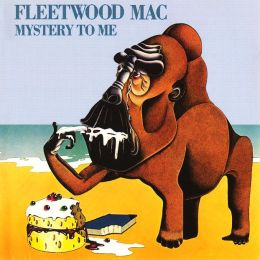 “For Your Love,” a hit single by The Yardbirds in 1965, and covered by Fleetwood Mac in 1973
 “Classical Gas,” a hit single by Mason Williams in 1968, and covered by Tommy Emmanuel in 2005
 “Good Golly Miss Molly,” a hit single by Little Richard in 1958, and covered by Creedence Clearwater Revival in 1969
 “On Broadway,” a hit single by The Drifters in 1963, and covered by Eric Carmen in 1975
 “You Don’t Know How It Feels,” a hit single by Tom Petty in 1994, and covered by Liz Huett in 2018
 “All Along the Watchtower,” a hit single by Jimi Hendrix Experience in 1968, and covered by Dave Mason in 1974
 “If I Were a Carpenter,” a hit single by Bobby Darin in 1966, and covered by Robert Plant in 1993
 “It’s My Party,” a hit single by Lesley Gore in 1963, and covered by Bryan Ferry in 1973
 “Eye of the Tiger,” a hit single by Survivor in 1982, and covered by The Rural Alberta Advantage in 2010
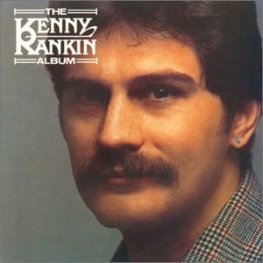 “Groovin’,” a hit single by The Rascals in 1967, and covered by Kenny Rankin in 1976
 “I Feel Free,” a hit single by Cream in 1966, and covered by David Bowie in 1993
 “Family Affair,” a hit single by Sly and the Family Stone in 1971, and covered by Steve Winwood in 1997
 “Wichita Lineman,” a hit single by Glen Campbell in 1968, and covered by James Taylor in 2008
 “Need You Tonight,” a hit single by INXS in 1987, and covered by Bonnie Raitt in 2016
 “The Boxer,” a hit single by Simon and Garfunkel in 1969, and covered by Mumford and Sons with Jerry Douglas and Paul Simon in 2012
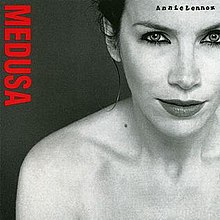 “I Can’t Get Next to You,” a hit single by The Temptations in 1969, and covered by Annie Lennox in 1995
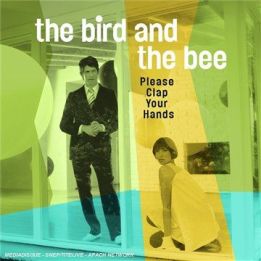 “How Deep is Your Love,” a hit single by The Bee Gees in 1977, and covered by The Bird and The Bee in 2007
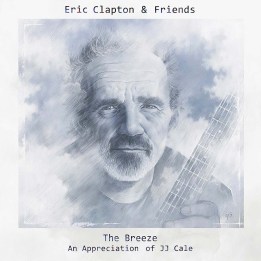 “Call Me the Breeze,” an FM favorite by Lynyrd Skynyrd in 1974, and covered by Eric Clapton in 2014
 “While My Guitar Gently Weeps,” an FM classic by The Beatles in 1968, and covered by Carlos Santana with India.arie and Yo-Yo Ma in 2010
