If the wind is right, you can sail away

Some people, it seems, are born to be out on the water. They might be paddling down a river, rowing across a lake, sailing around a harbor or opening the throttle on a speedboat. Or they might be career sailors on a freighter, or staff members on a cruise ship. For them, navigating a vessel through a body of water is a joy, a pastime, a lifestyle.

Me? Can’t say I’ve ever been much of a boat person. I’m a decent swimmer, so it’s certainly not a fear of drowning, but it somehow makes me a little uneasy to be out on the water for very long. I prefer keeping my feet planted on terra firma, watching the boats and ships come and go, as in the harbor in Santa Barbara pictured below.

Songwriters have been writing for centuries about traveling the high seas and the narrow waterways of the world. There’s something romantic about it (maybe that’s why they refer to boats as “she”), and boating offers an apt metaphor for negotiating the crests and troughs of life.

In perusing the songs of the ’60s, ’70s and ’80s, I’ve come up with a collection of 16 songs with boat or ship in the title, with another dozen that snuck on the list as honorable mentions. There’s a Spotify playlist at the end of the post, so you can listen as you read about these familiar and lesser-known songs about watercraft, and maybe provide a soundtrack for the next time you venture out across the water.  

***************************

“If I Had a Boat,” Lyle Lovett, 1987

Houston-born Lovett has enjoyed a prolific career singing and writing folk, country, swing, rockabilly and Americana music over an award-winning career spanning four decades. From his highly praised second LP, “Pontiac,” which reached #12 on country charts in 1987, the opening track is this engaging tune on which the narrator fantasizes about owning a boat and a pony and living an easy life as a single man: “And if I had a boat, I’d go out on the ocean, /And if I had a pony, I’d ride him on my boat, /And we could all together go out on the ocean, Me upon my pony on my boat…”

“Ship of Fools,” Bob Seger and The Silver Bullet Band, 1976

After nearly a decade as a struggling solo artist out of Detroit, rocker Bob Seger formed The Silver Bullet Band in 1976 and immediately hit pay dirt with the seminal “Night Moves” LP. The title track, “Mainstreet” and “Rock and Roll Never Forgets” got most of the airplay, but I’ve always enjoyed the deep track “Ship of Fools,” about an ill-fated fictional voyage where warning signs were ignored: “The wind came building from the cold northwest, and soon the waves began to crest, /Crashing ‘cross the forward deck, all hands lost, /I alone survived the sinking, I alone possessed the tools on that ship of fools…

“Come On Down to My Boat,” Every Mother’s Son, 1967

Wes Farrell was a songwriter/producer with a number of hit songs in the ’60s and ’70s, including The McCoys’ “Hang On Sloopy,” Jay & The Americans’ “Come a Little Bit Closer,” The Shirrelles’ “Boys” and The Partridge Family’s “Doesn’t Somebody Want to Be Wanted.” In 1967, he collaborated with Jerry Goldstein to write “Come On Down to My Boat,” a #6 hit for the New York pop group Every Mother’s Son. The narrator fancies a girl sitting on the dock who’s under the thumb of her father’s protective nature: “She smiled so nice like she wants to come with me uh, huh, /But she’s tied to the dock and she can’t get free, /Come on down to my boat, baby, come on down where we can play…”

“Boat Drinks,” Jimmy Buffett, 1979

Buffett wrote this party song on a cold February day in Boston when he was homesick for the warmer climate of Florida. He and his band figured they’d order boat drinks (mostly rum concoctions) to get their minds off how cold they were in New England: “Boat drinks, waitress, I need two more boat drinks, /Then I’m headin’ south ‘fore my dream shrinks, /I gotta go where it’s warm…” Although it was never released as a single, it was a popular track from his “Volcano” LP in 1979 and became a regular song in his concert set list. 

“River Boat Song,” J.J. Cale, 1989

Cale had a marvelously chill vocal delivery to match the easygoing blues shuffle that dominated his many songs in the 1970s, including hits like “After Midnight,” “Crazy Mama” and “Call Me the Breeze.” He sat out most of the 1980s, returning in 1989 with the more uptempo “Travel-Log” album, accompanied by the rock rhythm section of drummer Jim Keltner and bassist Tim Drummond. The LP includes songs of wanderlust like “River Boat Song,” about a lover who entertained on the Mississippi River: “I know she’s getting near, river captain, bring my baby home, /I get so lonesome since she’s been gone, /She’s been down in Tupelo, working the river boat song…”

“Wooden Ships,” Jefferson Airplane, 1969

In early 1969, David Crosby wrote the music for this classic song, and compatriots Stephen Stills and Paul Kantner collaborated on the lyrics, which explain how survivors of nuclear war might escape radioactive fallout by sailing away on wooden ships. Crosby, Stills and Nash recorded it for their eponymous debut LP, and then Kantner’s band Jefferson Airplane recorded their version for their “Volunteers” LP a few months later. Both groups performed the song in their Woodstock sets that summer. While the CSN version is more familiar, I decided to feature the Airplane’s rendition here instead: “Wooden ships on the water very free and easy, /Easy, you know the way it’s supposed to be, /Silver people on the shoreline, let us be, /Talkin’ ’bout very free and easy…”

“Longer Boats,” Cat Stevens, 1970

In the wake of the 1969 moon landing, Stevens remembers a lot of talk about the possibility of UFOs visiting Earth, and that was on his mind when he wrote “Longer Boats,” one of the songs for “Tea For the Tillerman,” his 1970 LP. ”I was making a plea for human unity in the face of external threats, either extraterrestrial or hostile forces, like when the Vikings in their long boats invaded Britain,” he said: “They’re coming to win us, they’re coming to win us, /Longer boats are coming to win us, hold on to the shore, /They’ll be taking the key from the door…”

“The Crystal Ship,” The Doors, 1967

From The Doors’ phenomenal debut LP comes this rather dark song of mystery Jim Morrison wrote to his then-girlfriend, with whom he had just broken up. The “crystal ship,” according to most interpretations, is not a seagoing vessel but a metaphor for sleep or a drug-induced haze. Critics called it one of the band’s most underrated tracks, building from a gentle intro to a more full-bodied arrangement by the end, and one of Morrison’s finest vocal performances. The lyrics clearly reflect the pain of a breakup, yet with hope of reconciliation: “The days are bright and filled with pain, enclose me in your gentle rain, the time you ran was too insane, we’ll meet again, we’ll meet again…”

“Boats Against the Current,” Eric Carmen, 1977

Carmen was the spark plug behind Cleveland’s favorite sons The Raspberries in the early ’70s, after which he went solo and had two bigs hits in 1975-76 with the treacly “All By Myself” and The Beach Boys knockoff “Never Gonna Fall in Love Again.” His sophomore LP in 1977 was problematic, taking four recording sessions to get the songs up to snuff, and still yielded only one minor hit, “She Did It.” The dramatic title track is a real standout, with philosophical lyrics about a changing relationship: “Tomorrow, we’re going to find what we’re after at last, feelings that we left in the past, /There’s romance in the sunset, we’re boats against the current to the end…” It was covered by the likes of Olivia Newton-John, Frankie Valli and Patti LaBelle, but as a single, Carmen’s original flopped at #88.

“Don’t Rock My Boat,” Bob Marley & The Wailers, 1970

Back in the late ’60s, when Marley was known only to fans of the then-new Jamaican reggae genre, The Wailers recorded several records that didn’t chart, including 1970’s “Soul Revolution Part II.” One track, “Don’t Rock My Boat,” was repackaged a few years later on their “African Herbsman” album in 1973, and then again in 1979 under a new title, “Satisfy My Soul,” when it reached #21 on UK charts as a single. The lyrics remind us that Marley prefers the calm, chill approach to life: “Oh, please don’t you rock my boat, /Because I don’t want my boat to be rocking, /I’m telling you that, oh woh, /I like it, I like it this, /So keep it steady, like this…”

“Slow Boat to China,” John Prine, 1984

“Guys and Dolls” composer Frank Loesser wrote the pop standard “(I’d Like to Get You on a) Slow Boat to China” in 1948, which was covered by many artists in the years since. Perhaps inspired by that tune, Prine wrote his own wry song called “Slow Boat to China” in 1984, which shared the idea of enjoying the romantically leisurely pace of a very long boat ride halfway around the world: “Let’s take a slow boat to China, leave from South Carolina, /Let’s take our time and go the long way, /On a junk boat to Thailand with your hand in my hand, /I sure hope we got something to say, /Well, this old boat’s got no sail, so won’t you please hold our mail…”

“Ship of Fools,” Robert Plant, 1988

Critics raved about this subtle track from Plant’s fourth solo LP, 1988’s “Now and Zen.” For the former lead singer of the biggest blues-rock band of them all, “Ship of Fools” was quite a departure, a lovely ballad in which the narrator questioned his desire to set sail away from the safe harbor where his lover lives: “Beneath a lover’s moon I’m waiting, I am the pilot of the storm, /Adrift in pleasure I may drown, I built this ship, it is my making, /And furthermore, my self control I can’t rely on anymore, /Turn this boat around, back to my loving ground, /Crazy on a ship of fools…”

“River Boat,” Allen Toussaint, 2017

Best known as a New Orleans songwriter, arranger, producer and pianist, Toussaint’s songs reached their widest audience when performed by others, most notably Glen Campbell’s #1 version of “Southern Nights.” Toussaint didn’t consider himself a performer and recorded on his own only sporadically. The swampy groove of “River Boat,” which didn’t surface until it was included on a posthumous compilation album in 2017, drew on the images of the paddlewheelers near his New Orleans home: “Rain just keeps on pouring, love just keeps on growing, /Opportunity knocking, big boat just keeps a-rocking…. River boat keeps on chugging and we just keep right on hugging, /We’ve got love…”

“There’s a Boat Dat’s Leavin’ Soon For New York,” Louis Armstrong, 1957

George and Ira Gershwin wrote the music and lyrics for the 1935 opera “Porgy and Bess,” which also became a Broadway musical and feature film. Armstrong joined forces with Ella Fitzgerald on several projects, including the jazzy material from “Porgy and Bess” in 1957, and Armstrong did a solo performance of “There’s a Boat Dat’s Leavin’ Soon For New York,” the number in which Bess is wooed by her drug dealer to join her in sailing from Charleston to The Big Apple while Porgy is in jail: “Come along with me, dat’s de place, /Don’t be a fool, come along, come along, /There’s a boat dat’s leavin’ soon for New York, /Come with me, dat’s where we belong, sister…”

“Ships in the Night,” Be-Bop Deluxe, 1976

Combining elements of progressive rock, glam rock and traditional hard rock, England’s Be-Bop Deluxe never made much a splash in the US, but their five LPs between 1974 and 1978 were well received in the UK. Most notably, their 1976 album “Sunburst Finish” reached #17 there, thanks to the attention given to the single “Ships in the Night,” which peaked at #23. Its lyrics speak of the absence of love being like ships passing each other by: “Without love, I have no pleasures, /Without love, my light is dim, /Without love, I have no treasures, /Without love, my chance is slim, /Without love, we are like ships in the night, /Without love, selling our souls down the river…”

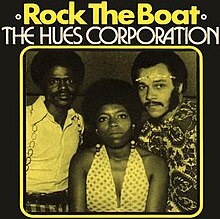
“Rock the Boat,” The Hues Corporation, 1974

Songwriter Waldo Holmes came up with this tune full of metaphors about how loving arms can provide shelter from the stormy ocean waves. It didn’t get much attention until New York discos started playing the original Hues Corporation track, sparking its remix to boost the bass and drums, which helped make “Rock the Boat” one of the first disco songs to reach #1 on the US pop charts in the summer of 1974: “Our love is like a ship on the ocean, we’ve been sailing with a cargo full of love and devotion, /So I’d like to know where you got the notion, I said I’d like to know where you got the notion
to rock the boat (don’t rock the boat, baby), rock the boat (don’t tip the boat over)…”

************************

Honorable mentions:

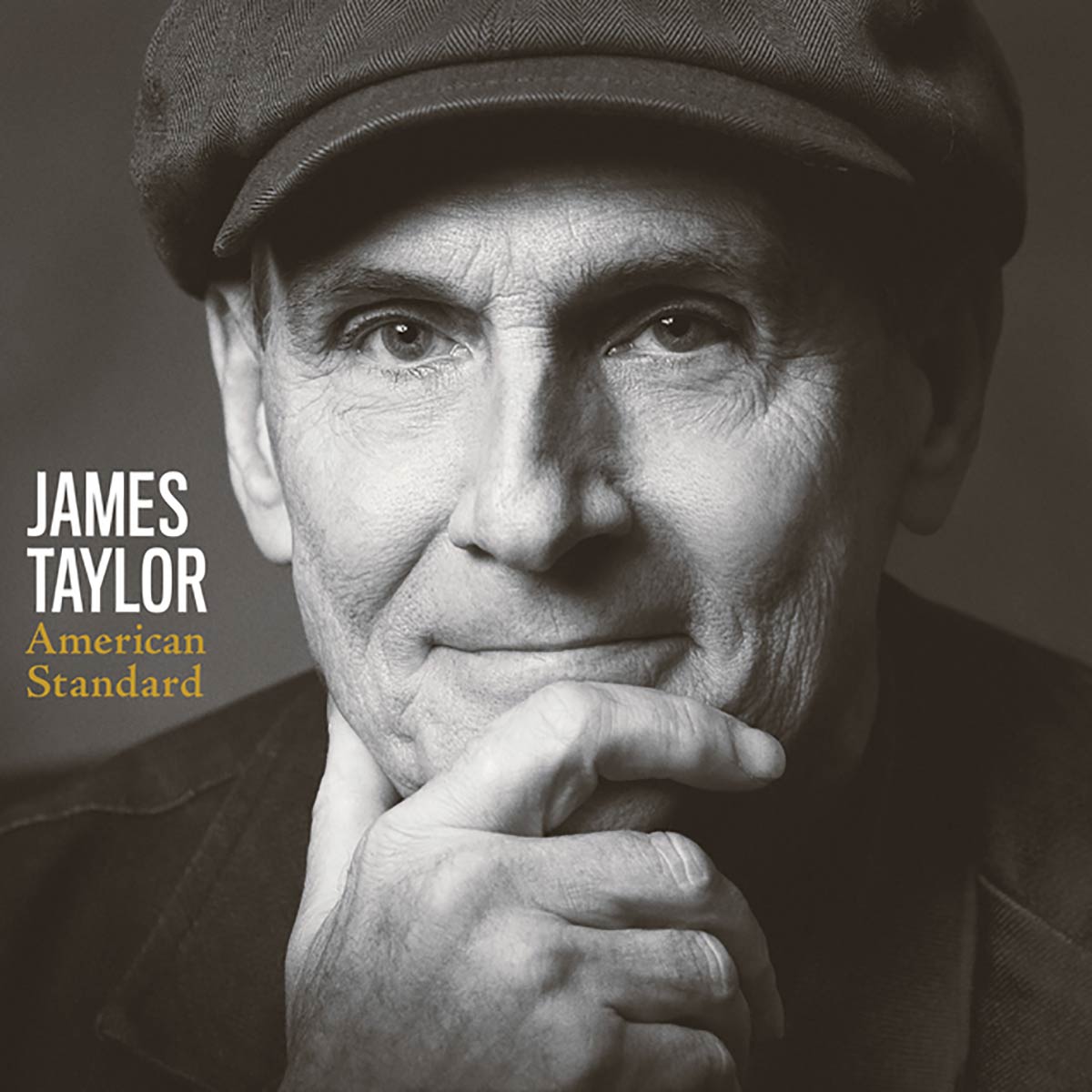
Sit Down, You’re Rockin’ the Boat,” James Taylor, 2020; ”Michael Row the Boat Ashore,” Peter, Paul & Mary, 1961; ”Boat on the Charles,” Told Rundgren, 1971; ”Ships,” Big Country, 1991; ”Last Boat Leaving,” Elvis Costello, 1989; ”On a Slow Boat to China,” Willie Nelson, 2009; ”Boat on the River,” Styx, 1979; ”The Boat That I Row,” Neil Diamond, 1966; ”Ships,” Ian Hunter, 1979; ”Six Months on a Leaky Boat,” Split Enz, 1982; ”Ships Passing Through the Night,” Jimi Hendrix, 2010.

*************************

How I hate to be late

For most of my life, I have made it my business to be on time as often as possible. I think punctuality is an admirable trait that demonstrates responsibility and consideration for others. 

Still, there have been instances when I have not acted in a timely fashion, like showing up late to a play, movie or wedding, which can come across as rude. Other times, I missed a deadline or let too much time go by (signing up for a health plan by the deadline, taking too long to apologize for bad behavior) and it cost me money or damaged a friendship. Sometimes, being late can’t be helped, like when unforseen traffic tie-ups cause us to miss a flight.

There are people in my life who don’t share my desire to be prompt. Perhaps their parents didn’t stress the importance of being punctual, so it’s never been all that important to them. In their defense, they are often ambitious folks who try unsuccessfully to cram too many tasks into too little time and end up late for most everything. Their intentions may be good, but their time management skills need improvement. 

Just as I enjoy the feeling of being on time, it makes me a little crazy when I realize I miscalculated how much time it takes to get somewhere and am now going to be late. There’s a scene in Walt Disney’s 1951 animated film version of “Alice in Wonderland” where The Rabbit, on his way to an “Un-Birthday Party,” checks his watch and realizes he’s running behind schedule. He frantically runs off, singing: “I’m late, I’m late for a very important date, /No time to say hello, goodbye, I’m late, I’m late, I’m late!”

Popular songwriters have written plenty of songs about being late. I found it interesting that there are at least ten different songs that share the title “It’s Too Late,” generally referring to a person being too tardy to change one’s ways and save a romantic relationship. I’ve rounded up 15 songs from the 1950s through the 2010s that focus on the consequences of failing to act in a timely manner. There’s a Spotify playlist at the end, including multiple versions of some songs.

**************************

“It’s Too Late,” Carole King, 1971

After toiling away for a decade in New York’s famed Brill Building writing many hit singles for other acts like The Shirrelles, Bobby Lee, Herman’s Hermits, The Monkees and Aretha Franklin, King divorced her songwriting partner Gerry Goffin and moved to LA, where she began her second career as a performing artist. Her second LP, 1971’s “Tapestry,” became one of the biggest sellers of all time, and its double-sided single “It’s Too Late”/”I Feel the Earth Move” topped the charts as well. On “It’s Too Late,” King and her new songwriting collaborator Toni Stern captured the resigned feeling of knowing when it’s time for a once-great relationship to end. Several R&B artists, notable The Stylistics, Billy Paul and The Isley Brothers, recorded their own versions of the song within the next year or so.

“Too Late For Goodbyes,” Julian Lennon, 1984

When he was only five years old, Julian Lennon’s father John divorced his mother Cynthia and, from then on, the boy rarely saw his father, and never fully reconciled with him before Lennon’s murder in 1980. So it was only natural that many people interpreted Julian’s single, “Too Late for Goodbyes,” as being about the estranged father-son relationship, but that’s not the case. ”Initially, it was about a relationship with a girl, that’s all,” he said. “The phrase kept coming up as I was working on the music , so I stuck with it for the title and chorus.” It reached #5 on US charts in early 1985, followed by “Valotte,” the album’s title song, which peaked at #9.

“Late For the Sky,” Jackson Browne, 1974

Browne, a masterful lyricist, had only a handful of hit singles, but his first seven albums (1972-1983) all reached platinum or multi-platinum status and were widely praised. His third LP had no singles but is considered by many to be his masterpiece, with tracks like “Fountain of Sorrow,” “For a Dancer” and “The Late Show.” The lyrics of the title cut (which some speculate are about his affair with Joni Mitchell) poignantly tell of a relationship that’s doomed to fail because the lover’s expectations of him are too great: “You never knew what I loved in you, I don’t know what you loved in me, /Maybe the picture of somebody you were hoping I might be…”

“It’s Too Late,” Derek and The Dominos, 1970

R&B singer/songwriter Chuck Willis wrote and recorded this song (about taking too long to tell someone you care about them) in 1956, reaching #3 on the R&B charts that year. Other legendary artists later recorded it as well, including Buddy Holly and The Crickets (1957), Roy Orbison (1960), Otis Redding (1965) and Freddie King (1969). I hadn’t heard any of these versions when Eric Clapton, then leading Derek and The Dominos, added their own take on it to the landmark 1970 double LP “Layla and Other Assorted Love Songs.” Clapton’s singing and guitar fills, along with Bobby Whitlock’s counterpoint vocals, made it one of my favorite tracks on the LP. The Dominos performed “It’s Too Late” on “The Johnny Cash Show” in 1971 in the group’s only TV appearance.

“Too Late to Turn Back Now,” Cornelius Brothers & Sister Rose, 1972

In 1970, Rose Cornelius had been touring and making TV appearances as part of a group called The Gospel Jazz Singers. When her brothers, Eddie and Carter, won a recording contract with United Artists, they convinced their sister to join their act, somewhat awkwardly titled Cornelius Brothers & Sister Rose. They scored a #3 hit in the summer of 1971 with the Eddie Cornelius tune “Treat Her Like a Lady.” A year later, the follow-up single “Too Late to Turn Back Now” (also by Eddie Cornelius) made it to #2, and although they managed two more minor chart appearances in the autumn of 1972, they disbanded in 1975 when both brothers joined different religious sects.

“Little Too Late,” Pat Benatar, 1982

In the fall of 1982, Benatar released her third consecutive Top Five LP, “Get Nervous,” carried by her Grammy-winning single “Shadows of the Night.” The follow-up single, “Little Too Late,” which reached #20, was written by the underrated singer/songwriter Alex Call, who also co-wrote the Tommy Tutone hit “867-5309/Jenny” and Huey Lewis’s “Perfect World,” as well as lost classics like “Just Another Saturday Night,” “New Romeo” and “Blue Avenue.” The song’s lyrics put the cheating boyfriend in his place: “And now you come collapsin’ back, I feel the heat of your attack, /Want me to take you back, I’m givin’ you the sack, so don’t waste your time, /It’s a little too little, it’s a little too late…”

“It’s Late,” Rick Nelson, 1959

Rockabilly singer Dorsey Burnette Jr., who formed the Rock and Roll Trio with brother Johnny Burnette, wrote “It’s Late” in 1958 and recorded it that year, but it was never released until included on a compilation record in 1980. In early 1959, Nelson, then a TV celebrity on the family sitcom “The Adventures of Ozzie and Harriet” and a burgeoning pop idol in his own right, took his version of “It’s Late” to #9 on the US charts, his eighth of 18 Top Ten singles in his career (“Poor Little Fool,” “Hello Mary Lou,” “Travelin’ Man,” “Garden Party,” among others). He once performed the song on the TV show, as he often did with his hit singles as his singing career blossomed.

“Late For Your Life,” Mary Chapin Carpenter, 2001

Carpenter emerged from the Washington D.C. area in the late ’80s and enjoyed a successful run of hit singles and Top Ten albums in the 1990s, mostly on the country music charts (“Down at the Twist and Shout,” “Passionate Kisses,” “He Thinks He’ll Keep Her,” “Shut Up and Kiss Me”). After a five-year hiatus, Carpenter returned in 2001 with her “Time*Sex*Love*” LP, which maintained her streak of Top Ten country albums despite a lack of charting singles. One that should’ve done well was “Late For Your Life,” which urges us to act before it’s too late: “A change of scene would sure be great, the thought is nice to contemplate, /But the question begs: Why would you wait? Don’t be late for your life…”

“It’s Too Late,” Wilson Pickett, 1963

Although the Chuck Willis tune “It’s Too Late” was already successful in various versions, Pickett wrote an original R&B song with the same title in 1963 that became the title track for his debut LP and his first significant exposure on radio (#7 on R&B charts, although only #49 on pop charts). The lyrics, both sung and spoken, share the same focus on the narrator regretting bad behavior that caused his girl to walk. Pickett’s own “It’s Too Late” was the first of an impressive 32 Top Twenty R&B singles (including four #1s) and a half-dozen hits on pop radio (“In the Midnight Hour,” “634-5789 (Soulsville USA),” “Land of 1,000 Dances,” “Mustang Sally,” “Funky Broadway”).

“It’s Too Late to Love Me Now,” Dolly Parton, 1978

After more than a decade as a country singer, Parton made a conscious attempt in the late ’70s to write and record songs that might have pop chart success. She succeeded with “Here You Come Again” (a #3 pop hit in 1977) leading up to the huge #1 mainstream hit “9 to 5″ in 1980. ”It’s Too Late to Love Me Now,” a deep track from her 1978 LP, didn’t have much of an impact but was later a minor hit for Cher and Jeanne Pruett. The lyrics admonish the suitor for waiting too long and missing his chance with her:  “Don’t you know how hard I tried to hold out just for you? Lovin’ you from memory day by day, /Then someone came into my life, turned my dreams around, he’s takin’ all the love you threw away…”

“Late Again,” Stealers Wheel, 1972

Scottish school pals Gerry Rafferty and Joe Egan formed a folk rock band called Stealers Wheel in 1972, and their debut LP performed well, reaching #50 in the US, thanks to the hit single, “Stuck in the Middle With You,” which reached #6 on US pop charts in early 1973. All the LP’s songs were written by either Egan or Rafferty or as a duo, including the hit and the leadoff track, “Late Again,” in which the narrator berates himself for staying out too long and disappointing his lady when he arrives home “late again.” Six years later, Rafferty would be back on top as a solo artist with a string of successful albums, and singles like “Baker Street,” “Right Down the Line” and “Get It Right Next Time.” 

“Late to the Party,” Kacey Musgraves, 2015

Josh Osbourne, one of country music’s most prolific songwriters of the past decade, co-wrote this fun, suggestive tune with Musgraves for her 2015 LP “Pageant Material,” which reached #1 on the country charts and #3 on Billboard’s Top 200 albums that year. He previously earned a Grammy for Best Country Song in 2014 for Musgraves’ single “Merry-Go-Round.” The lyrics to “Late to the Party” slyly wink about the reason why the singer and her man were late (lingering at home for a little roll in the hay). Perhaps it’s a bit self-indulgent, but I’d call it just about the best possible excuse for being tardy to the party!

“Too Much, Too Little, Too Late,” Deniece Williams and Johnny Mathis, 1978

From 1956 to 1960, Mathis charted an astounding ten consecutive Top Ten albums, offering his soothing brand of what became known as “easy listening” music, notably “Chances Are,” “The Twelfth of Never” and “Misty.” In 1978, he found himself back at the top of the charts briefly with “Too Much, Too Little, Too Late,” a duet with Deniece Williams, in which the songwriting team of Nat Kipner and John Vallins hit just the right balance of affection and resignation in describing a long-time marriage that’s breaking up: “Yes, it’s over, the kids are gone, what’s the use of tryin’ to hang on? /Somewhere we lost the key, so little left for you and me, and it’s clear to see, /Too Much, Too Little, Too Late to try again with you…”

“Too Late,” The Cars, 2011

Songwriter Ric Ocasek, the clear leader of The Cars during their ten-year run (1978-1987), felt burnt out and dissolved the group at that point. In 1997, when asked about a reunion, he said, “I’m saying never and you can count on that.” Nevertheless, he reconsidered in 2010, reconvening the band members (except Benjamin Orr, who had died in 2000) and cranking out the surprisingly strong and consistent “Move Like This” LP, which one critic described this way: ”As bright, infectious, and tuneful as The Cars in their prime.” Ocasek (who died in 2019) wrote songs like “Keep on Knocking,” “Take Another Look” and especially “Too Late,” a song of remorse about an old flame.

“It’s Too Late,” Johnny Rivers, 1967

Hollywood club impresario Elmer Valentine gave Rivers a one-year contract as the opening act at the Whisky A Go Go on the Sunset Strip, and he capitalized on that opportunity by recording a series of live albums there (1964-1968) with spirited audience participation. Some tracks became big radio hits, l.ike his cover of Chuck Berry’s “Memphis,” Willie Dixon’s “Seventh Son” and the spy novelty tune “Secret Agent Man.” A marvelous deep track from his fifth live album is “It’s Too Late,” which was actually written and first recorded by middle-of-the-road crooner Bobby Goldsboro. The live rendition Rivers cut ran circles around Goldsboro’s vanilla version.

**************************

Honorable mention: ”It’s Late,” Queen, 1977; ”Too Late For Love,” Def Leppard, 1983; ”It’s Too Late,” Aldo Nova, 1982; ”Too Late,” Journey, 1979; ”It’s Too Late,” The Kinks, 1965; ”It’s Late,” David Gray, 2019.