And our mamas smiled and rolled their eyes

It was more than a century ago when President Woodrow Wilson declared the second Sunday of May to be Mother’s Day, a national holiday set aside to honor mothers, motherhood, maternal bonds and the influence of mothers in society. Mom, after all, is “the person who has done more for you than anyone in the world,” said Anna Jarvis, the Suffragette-era activist who spearheaded the move for an official Mother’s Day.

This weekend, my mother-in-law, my wife and my two daughters — a quartet of exemplary mothers — have convened in their home town of Cleveland to celebrate the holiday together. Between them, they represent 107 years of motherhood — the fierce devotion, selfless sacrifice, kind patience and unconditional love that we look for and come to expect from mothers everywhere. In recognition of their reunion, I have chosen to resurrect a favorite post (with a new wrinkle or two) that features a mixed bag of 16 songs about mothers. In genres from hard rock to country, from Top 40 pop to soul, mothers have served as a fairly frequent topic for songwriters of all kinds.

There are a few tunes about mothers that are not what you’d call heartwarming. John Lennon’s harrowing 1970 track titled simply “Mother” bemoans their distant relationship during his childhood and grieves her death when he was just a teen. On their “Synchronicity” LP, The Police also released a song called “Mother” that painted her as an inconvenience: “The telephone is ringing, /Is that my mother on the phone? /The telephone is screaming, /Won’t she leave me alone?…” Queen has a song entitled “Tie Your Mother Down” that, while thankfully not espousing bondage, is about a teen couple callously wanting to keep Mom constrained long enough for them to fool around uninterrupted.

There’s a place for such songs, I suppose, but not here, not now.

No, we’re going to turn our attention to more positive stuff, songs that generally celebrate a mother’s benign influence and knack for practical advice. My selections adopt a generally appreciative attitude toward her, some with humor, some with honor and love, and maybe with a touch of constructive criticism. I think the Spotify playlist found at the end will be well received by those who choose to play it as a soundtrack for your weekend celebration. For completists, there’s a second playlist with “honorable mention” selections.

Happy Mother’s Day!

************************

“Your Mother Should Know,” The Beatles, 1967

This track was one of the half-dozen Paul McCartney sing-song numbers recorded by The Beatles in their final three years that John Lennon derisively referred to as “Granny music” (songs that your grandparents would like).  Paul said he wrote it on a harmonium in his London home when Liverpool relatives were visiting, inspired by the kinds of songs they used to sing in the parlor at Christmastime. It looked good in a scene in the band’s experimental film “Magical Mystery Tour” with the foursome descending a grand staircase in white tuxedos.  Musically, it’s rather slight, but it has a nice sentiment that Dear Old Mom should love: “Let’s all get up and dance to a song that was hit before your mother was born, /Though she was born a long long time ago, Your mother should know…”

“That’s All Right Mama,” Elvis Presley, 1954

In one of his earliest recording sessions, Elvis and his combo were messing around with a speeded-up version of this old Arthur Crudup blues tune.  Producer Sam Phillips was immediately struck by it and concluded it was the “blues meets country” sound he’d been looking for, and it ended up as Presley’s first single and, many claim, one of the first rock and roll songs ever. With only minimal distribution or promotion, it didn’t chart nationally but reached #4 on local Memphis charts. Fifty years later in 2004, its re-release reached #4 in the UK. In Crudup’s lyrics, the narrator sings: “Mama she done told me, /Papa done told me too, /’Son, that gal you’re foolin’ with, /She ain’t no good for you,’ /But that’s all right, that’s all right, /That’s all right now, mama, anyway you do…”

“Mother,” Kacey Musgraves, 2018

Of the half-dozen songs I found entitled “Mother,” this recent bauble by Kacey Musgraves stands out. Less than 90 seconds long, it nevertheless packs a punch about how much we can miss our moms when we’re not with them often enough. “I was missing my mom,” Musgraves explained, “and I started thinking about the cycle of mothers and the fact that I was sitting there in Tennessee missing my mom who was sitting there in Texas missing her mom. It just goes on and on.” It’s a tender piano-based ballad, a vulnerable moment tucked into the bounty of great songs that make up “Golden Hour,” Musgrave’s triumphant 2018 Album of the Year Grammy winner.

“Mama Told Me Not to Come,” Three Dog Night, 1970

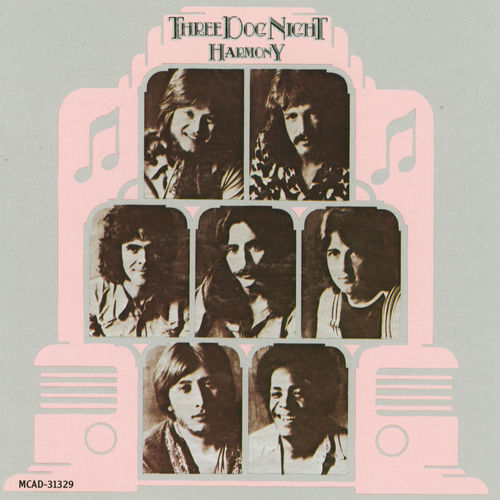
Randy Newman, one of the more celebrated songwriters and film composers of his generation, came up with this tune as part of his 1970 debut release, “12 Songs.”  He didn’t achieve much commercial success as a recording artist, but his songs often did well in the hands of others.  Three Dog Night had one of the biggest radio hits of 1970 with their version of Newman’s “Mama Told Me (Not to Come),” which features one of his typically sardonic lyrics about a guy who is uncomfortable attending drug parties and realizes he should’ve listened to his mother’s advice:  “I seen so many things I ain’t never seen before, /Don’t know what it is, I don’t wanna see no more, /Mama told me not to come, /Mama told me not to come, /She said, ‘That ain’t the way to have fun, son’…”

“Your Mama Don’t Dance,” Loggins and Messina, 1972

Jim Messina recalled his home environment this way: “My stepfather was into country. He was an Ernest Tubbs/Hank Snow kind of guy. But my mom loved Elvis, and Ricky Nelson, and R&B stuff. She was shy, though, and didn’t really dance much. So the song’s title, first line and chorus were based on that experience I had growing up in that household.” He fleshed it out with references to curfews and drive-in movies, and “Your Mama Don’t Dance” ended up reaching #4 on US pop charts in late 1972 as Loggins and Messina’s biggest chart hit: “The old folks say that you gotta end your date by ten, If you’re out on a date and you bring it home late, it’s a sin, /There just ain’t no excuse and you know you’re gonna lose, /You never win, I’ll say it again, /And it’s all because your mama don’t dance and your daddy don’t rock and roll…”

“Mama Said,” The Shirelles, 1961

The Shirelles, a New Jersey-based trio who became one of the early “girl group” successes, had several classic singles during the 1960-1963 period: “Will You Still Love Me Tomorrow,” “Dedicated to the One I Love,” “Soldier Boy,” “Baby It’s You,” “Foolish Little Girl.” One of their best was “Mama Said,” written by Willie Denson and Luther Dixon, which peaked at #4 as their third consecutive Top Five hit. Its lyrics reinforced the wisdom of a mother’s warning about how young love can knock you off your feet: “I went walking the other day, /Everything was going fine, /I met a little boy named Billy Joe, /And then I almost lost my mind, /Mama said there’ll be days like this, there’ll be days like this, my mama said…” The song inspired John Lennon’s “Nobody Told Me” (1980) and Van Morrison’s “Days Like This” (1995).

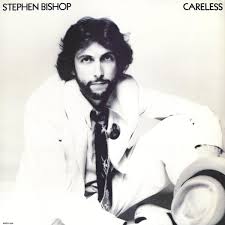
“New Mama,” Stephen Stills, 1975

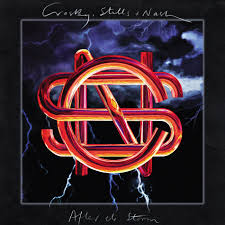
The testy but respectful relationship that Stills has had with compadre Neil Young over the years sometimes manifested itself in cover versions. Stills has recorded Young’s “Only Love Can Break Your Heart” and “The Loner,” and in 1975 on the “Stills” LP, he cut a faithful rendition of “New Mama,” a gentle ode to new motherhood which had appeared on Young’s 1973 album “Tonight the Night.” Stills used veterans Russ Kunkel, Lee Sklar and Joe Lala on drums, bass and percussion, respectively, with newcomer Donnie Dacus on guitar and Firefall’s Rick Roberts on vocal harmonies, ultimately beefing up the arrangement compared to Young’s stripped down original. It’s an overlooked track on an underrated album.

“Mother and Child Reunion,” Paul Simon, 1972

In 1971, eager to begin his solo career, Simon was in a Chinese restaurant in New York City one night when he was amused to see a chicken-and-egg dish on the menu creatively called Mother and Child Reunion.  “What a great song title,” he thought, and began writing a song that addressed the sometimes fickle nature of the mother-child relationship. Enamored by the strains of Jamaican reggae, he incorporated the intriguing rhythms into the song’s structure, and by early 1972, he had his first solo Top Ten hit. The lyrics describe the “strange and mournful day” when the mother (the chicken) and the child (the egg) are reunited on a dinner plate: “Though it seems strange to say, /I never been laid so low, /In such a mysterious way, /And the course of a lifetime runs over and over again…”

“Mama’s Pearl,” Jackson 5, 1970

The Jackson 5’s fifth single was originally entitled “Guess Who’s Makin’ Whoopee (With Your Girlfriend),” but the folks at Motown intervened, thinking it would be inappropriate for such overt thoughts to be coming out of 12-year-old Michael’s mouth. Producer Deke Richards rewrote a few lyrics and changed the title to “Mama’s Pearl,” and it ended up reaching #2 in early 1971. The track still retaining the lyrical idea that the boy wished his sheltered girlfriend would loosen up and move beyond the making-out stage:  “We kiss for thrills, then you draw the line, /Oh baby, /’Cause your mama told you that love ain’t right, /But don’t you know good loving is the spice of life, /Mama’s pearl, let down those curls, /Won’t you give my love a whirl, /Find what you been missing, ooh ooh now, baby…”

“Mamas, Don’t Let Your Babies Grow Up to Be Cowboys,” Willie Nelson & Waylon Jennings, 1978

In 1978, Nelson and Jennings, both seasoned veterans of country music, were each riding high with a string of #1 albums in 1975-1977. They were good friends and had performed together on occasion, so they chose to collaborate on “Waylon & Willie,” which not only sat at #1 on country album charts for three months, it reached #12 on pop charts as well. A big reason for that was the success of the single, “Mamas, Don’t Let Your Babies Grow Up to Be Cowboys,” with lyrics that urged mothers everywhere to raise their children to be “doctors and lawyers and such” instead of cowboys, because “they’ll never stay home and they’re always alone, even with someone they love…”  The track appeared in a scene from the 1979 Jane Fonda-Robert Redford film “The Electric Horseman.”

“Mama Kin,” Aerosmith, 1973

Emerging from the smoky rock clubs of Boston in 1973, Aerosmith launched their career with their self-titled debut album, which flopped, stalling at #166 on US album charts. Some critics dismissed them as “a K Mart version of The Rolling Stones.” By 1976, after the triumph of their next three LPs, the debut album re-entered the charts and peaked at #21, thanks to the tardy success of “Dream On.” The first single, “Mama Kin,” never even charted but became a popular live song at Aerosmith concerts over the years. Its composer, vocalist Steven Tyler, says the lyrics are essentially about “the importance of staying in touch with your family, your roots, your ‘Mama Kin.’ Keeping in touch with mama kin means keeping in touch with the old spirits that got you there in the first place.”

“For a Thousand Mothers,” Jethro Tull, 1969

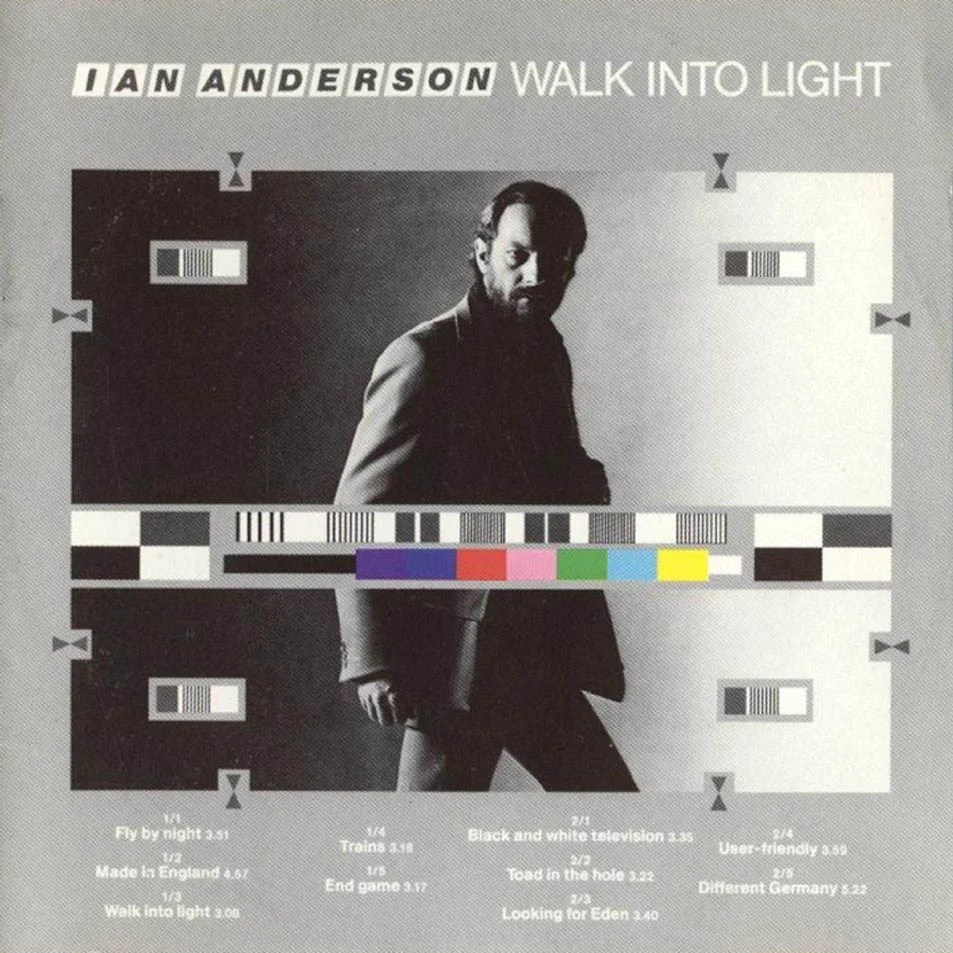
Tull’s highly praised and popular second album, 1969’s “Stand Up,” offers an eclectic smorgasbord of rock, blues, folk and jazz influences, with Ian Anderson providing the lyrics from fictional scenarios, occasionally mixed with biographical anecdotes or experiences from his personal life. Songs like “Back to the Family” and “For a Thousand Mothers” described Anderson’s relationship with his parents at the time, alternately loving and tempestuous. The latter tune took his mother and father to task for their lack of emotional support of his musical dreams: “Did you hear mother? Saying I’m wrong, but I know I’m right, /Did you hear father? Calling my name into the night, saying I’ll never be what I am now, /Telling me I’ll never find what I’ve already found, /It was they who were wrong, and for them here’s a song…”

“Mama Lion,” Crosby and Nash, 1975

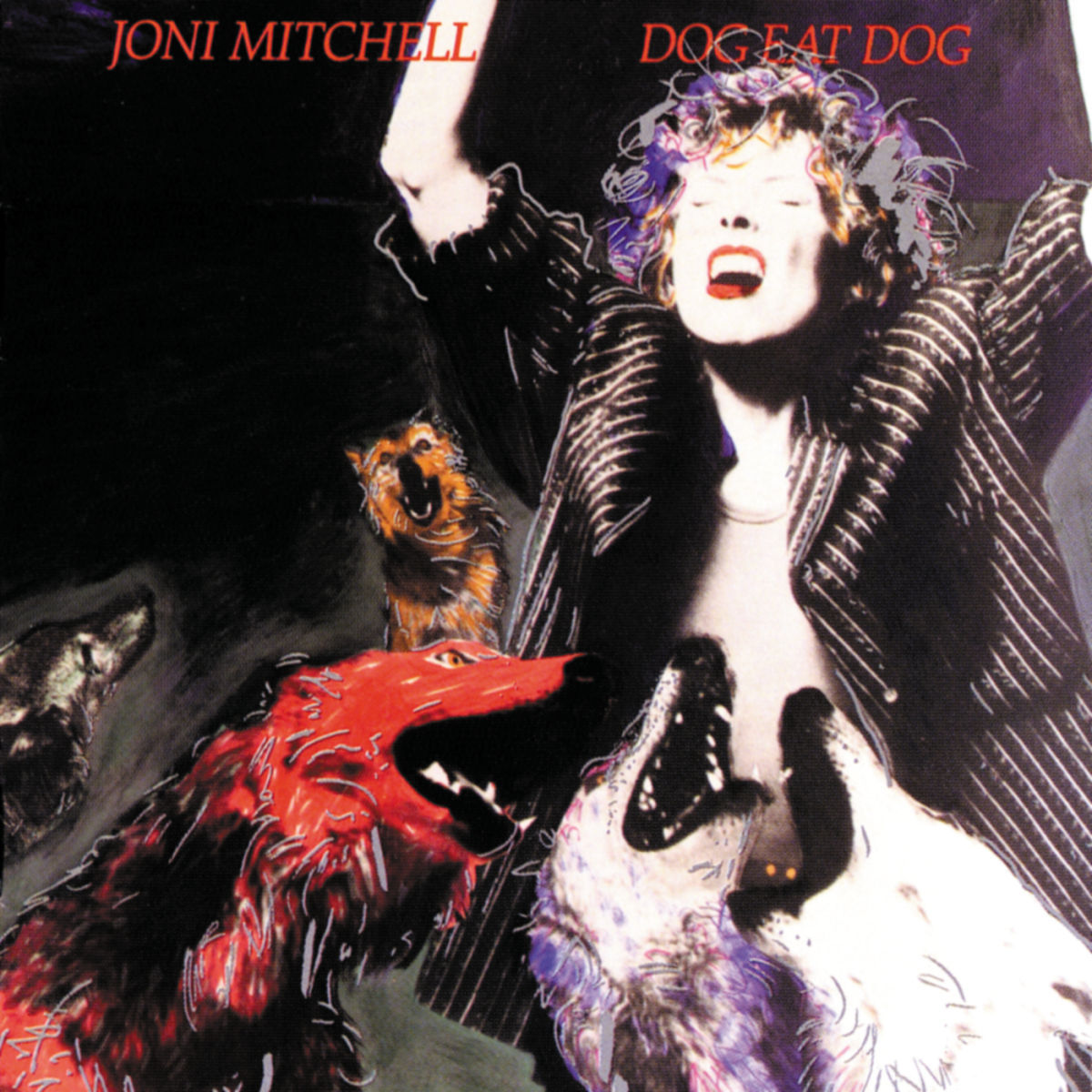
In 1969-70, Graham Nash had had an intense relationship with Joni Mitchell, and they both later wrote songs about it (Joni’s “Willy” and “My Old Man,” Graham’s “Our House” and “Simple Man”). In 1972, Joni wrote “See You Sometime,” which includes the line, “I run in the woods, /I spring from the boulders like a mama lion.” As he was writing songs for “Wind on the Water,” Nash’s 1975 LP with periodic collaborator David Crosby, he came up with “Mama Lion,” which takes a sobering look at the romantic relationship’s aftermath, based on Mitchell’s earlier tune: “Mama lion, mama lion, I’m starting to sink, /Beneath the sunshine and the icicles, and the things that you think, /There’s a hole in my destiny, and I’m out on the brink, /Mama lion, mama lion…”

“Mother’s Little Helper,” The Rolling Stones, 1966

As the recreational use of mind-altering drugs like marijuana and LSD began increasing in the mid-’60s, Mick Jagger and Keith Richards couldn’t help but notice the hypocrisy of parents who criticized the practice while secretly taking amphetamines and tranquilizers to boost their energy or calm them down. They co-wrote “Mother’s Little Helper,” a phrase some moms used as code to describe their own hushed-up vice: “And though she’s not really ill, there’s a little yellow pill, she goes running for the shelter of a mother’s little helper, and it helps her on her way, gets her through her busy day…” The song peaked at #8 in 1966 as The Rolling Stones’ 12th single. Richards and Brian Jones played altered 12-string guitars to mimic the sound of a sitar, one of several Indian instruments then in vogue.

“Stacy’s Mom,” Fountains of Wayne, 2003

This power pop tune from the early 2000s straddles the line between cringey and humorous. Adam Schlesinger, one of Fountain of Wayne’s two songwriters, said the song was inspired by a middle school friend of his who confessed he had a mad crush not on Schlesinger’s mom but on his grandmother! “I told him, ‘Hey, you’re stepping over the line,’ but at that point in life, I wouldn’t put it past anyone. So I tried to strike a balance between humor and personality. I was thinking about the whole Mrs. Robinson thing, and. musically, we were going for a Cars feel.” The song reached #21 on US pop charts and had a very popular music video that used comedic scenes to depict the boy’s attempts to get closer to his girlfriend’s mother.

“Tell Mama,” Etta James, 1968

Written and recorded by Clarence Carter as “Tell Daddy” in 1967, this tune was retitled “Tell Mama” for Etta James to sing when Muscle Shoals Studios producer Rick Hall took charge of the recording session. James objected at first, reluctant to be cast as an Earth Mother, “the gal you come to for comfort,” but it turned out to be her biggest hit on the US pop charts, reaching #23 (and #10 on R&B charts). Over a spirited, horn-driven arrangement, James sings about a young man who’s betrayed by his girl, after which his mother reaches out to give him some TLC: “She would embarrass you anywhere, /She’d let everybody know she didn’t care… /Tell Mama all about it, /Tell Mama what you need, /Tell Mama what you want, /And I’ll make everything all right…”

*******************************

Honorable mentions:  

“Mama Gets High,” Blood Sweat & Tears, 1971;  “Mother,” Pink Floyd, 1979;  “Crazy Mama,” J.J. Cale, 1972;  “That Was Your Mother,” Paul Simon, 1986;  “Sweet Mama,” The Allman Brothers, 1975;  “Mother,” Danzig, 1988; “Motorcycle Mama,” Neil Young and Nicolette Larson, 1978;  “Never Tell Your Mother She’s Out of Tune,” Jack Bruce, 1969; “Mother Goose,” Jethro Tull, 1971;  “Momma,” Bob Seger, 1975;  “Mother,” The Police, 1983; “Mother Nature’s Son,” The Beatles, 1968;  “Mama,” Genesis, 1983;  “Look What They’ve Done to My Song, Ma,” The New Seekers, 1970;  “Mother,” Chicago, 1971;  “Mother Freedom,” Bread, 1972; “Good Mother,” Jann Arden, 1994; “Mothers Talk,” Tears For Fears, 1985;  “Mother,” John Lennon, 1970; “Tie Your Mother Down,” Queen, 1976; “Tough Mama,” Bob Dylan, 1974;  “Mamma Mia,” ABBA, 1975.

********************************

How all the pros play the game: you change your name

Norma Jean Mortenson. Archibald Leach. Alphonso D’Abruzzo.

Vincent Furnier. Stefani Joanne Germanotta. Richard Starkey.

Who are these people? They aren’t names you’re likely to recognize…until you discover they’re the birth names of celebrities who went on to great fame using these stage names:

Marilyn Monroe. Cary Grant. Alan Alda.

Alice Cooper. Lady Gaga. Ringo Starr.

Since the dawn of the modern film and music business, hundreds of people in the performing arts have chosen (or been advised) to change their names. Some people do so because their birth name is considered unattractive, dull or unintentionally amusing. Perhaps it’s diificult to pronounce or spell. Maybe a performer wants to adopt a name that’s unusual or flashy or outlandish in order to attract attention.

The world of rock ‘n roll is full of famous musicians who use a different name than the one they were born with. I’ve addressed this topic before here at Hack’s Back Pages, but this time around, I thought I’d make it fun and turn it into a quiz.

Below I’ve identified 15 major recording artists by their birth names and some facts about their upbringing and their career development. From these thumbnail sketches, how many stars can you identify?

The answers, and how they came by their stage names, are featured in the second half as you scroll down. I’ve included a Spotify playlist that includes two songs for each of these artists.

*************************

#1

Steven Demetre Georgiou, born in London in 1948, was the youngest child of a Greek father and Swedish mother who operated a restaurant in the Soho district. Steven developed an interest in piano at a young age, eventually using the family baby grand piano to work out the chords, since no one else there played well enough to teach him.  At 15, he became interested in the guitar and began playing it and writing songs. He did poorly in school in everything but art, and considered a career as a cartoonist but instead decided to pursue a musical career. He performed briefly under the name “Steve Adams” in the mid-’60s, then adopted a different stage name and became an international star throughout the 1970s. By 1980, he changed his name again in accordance with his religious beliefs and left his music career behind for 25 years before returning to it again in recent years.

#2

Farrokh Bulsara was born in 1946 to parents from the Gujarat region of British-owned India.  He was born in the African country of Zanzibar, then a British colony, and attended a boarding school in Bombay, India, where he learned piano and focused more on music than academics.  After returning to Zanzibar at age 17, he and his family had to flee the 1964 revolution there, settling in Middlesex, England.  He earned a degree in art and graphic design, but music was his passion, and he became a member of several bands in the late ’60s. By 1971, Farrokh had developed an astonishing four-octave vocal range and a flamboyant stage presence, and when he met a guitarist and drummer from a band called Smile, they added a bass player, and both Farrokh and the band changed their names, and by 1976, they were an international success. Farrokh died in 1991 at age 45.

#3

Walden Robert Cassotto was born in New York City in 1936 to Nina Cassotto, who was only 18 at the time, so Walden was raised to believe his maternal grandmother was his mother and Nina was his much older sister. At age 22, he entered the music business as a songwriter for Connie Francis, then started a career as a singer of originals and covers, having several big hits in the late ’50s and early ’60s. He also earned some recognition as a film actor, and married actress Sandra Dee. In the late ’60s, when Walden learned about the deception regarding his real mother, he felt betrayed and slipped into seclusion and depression. He died in 1973 at age 37 of complications following open-heart surgery.

#4

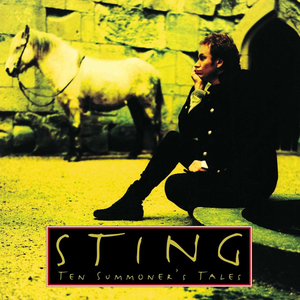
Gordon Matthew Thomas Sumner was born in 1951 in Wallsend, England, a major shipbuilding town. Although Gordon was fascinated by ships and thought his future lay there, he became obsessed with a Spanish guitar left behind by an emigrating friend of his father. After leaving school in 1969, Gordon worked as a bus conductor, a building laborer and a tax officer before getting a teaching degree in 1974, then taught grammar school for two years. A lover of classical, rock and reggae, Gordon also followed jazz and spent time in a jazz ensemble. Eventually he became the bassist, singer and chief songwriter of a successful rock trio in the late ’70s/early ’80s and then as a hugely successful solo artist in the decades since.

#5

Marvin Aday was born and raised in Dallas, Texas, by a schoolteacher and policeman. Marvin showed an early interest in music and theater arts, appearing in several high school musicals.  He was very close to his mother (who sang in a gospel quartet) and, following her death, he dropped out of North Texas State College and relocated to Los Angeles in 1969 to pursue a career in the arts, as was his mother’s wish.  Marvin formed a band that had some notoriety warming up for the likes of Janis Joplin, the Grateful Dead and the Who, and he also took on several acting roles, both on stage an in film. By 1977, he became a rock music sensation when he co-created one of the biggest selling albums of all time. He died in 2022 at age 74.

#6

Malcolm Rebennack was born in 1941 in New Orleans, where his father ran an appliance shop fixing radios and TV and selling records. He was inspired by his many relatives who sang and played piano, and his father’s music industry connections gained him early access to recording studios of jazz and rock artists like Louis Armstrong and Little Richard. At age 14, Malcolm met Professor Longhair, the eccentric artist with flamboyant attire and musical style, and performed with him on guitar and piano, beginning a lifelong career in music. His New Orleans upbringing had spawned an interest in voodoo, which sparked the development of an on-stage persona (and on records) of a spiritual healer with props and costumes, focusing on R&B and psychedelic rock. Between 1968 and his death in 2019, Malcolm released more than four dozen albums.

#7

David Howell Evans was born in 1961 in East London to Welsh parents and was raised in Dublin, Ireland after the family moved there when he was still a baby. David’s parents were enthusiastic supporters of music education, giving him piano and guitar lessons. He and his brother Richard both had proper guitars by age 12 and practiced relentlessly. In 1976, the boys both responded to a notice at their school seeking musicians to form a band. Both were accepted, but Richard eventually left to join a different group, leaving David as the lead guitarist. Their foursome got a record deal in 1980 and were off and running, eventually becoming one of the biggest bands in the world in the late ’80s, 1990s and beyond.

#8

Henry Deutschendorf

Henry was the son of a decorated military man, John Deutschendorf, Sr., who earned a spot in the Air Force Hall of Fame, but the father had little time for his son.  It was his mother’s mother who instilled in Henry the love of music and bought him his first guitar.  As a military brat, he lived in multiple locations across the southern U.S. His uncle, a member of the ’60s group The New Christy Minstrels, encouraged Henry to write songs and work on his guitar techniques.  Henry’s songs were soon recorded by acts like Peter, Paul & Mary, which won him his own record deal, kicking off a hugely successful career throughout the 1970s. He died in an accident in 1997 at age 53.

#9

Ellen Cohen was born in 1941 in Baltimore to Jewish parents who were children of Russian immigrants, and the family struggled there and in Alexandria, Virginia.  Blessed with a versatile voice and a knack for stage performance, Ellen appeared in several musicals in New York before becoming part of a successful singing trio called The Big 3 that made appearances on TV and stage. In 1965, she lobbied hard to join another vocal group she admired, and although her heavy-set appearance worked against her, Ellen’s soaring alto voice got her the job. The group was featured on leading TV variety programs and had nearly a dozen successful hits in the mid-to-late ’60s. Ellen followed that with a sporadic solo career that ended prematurely when she died in 1974 at age 33.

#10

Joachim Krauledat was born in 1944 in East Prussia (now a part of Russia), and lived with his mother in East Germany and West Germany under post-war British occupation. He was first exposed to rock and roll while listening to Little Richard on U.S. Armed Forces radio, and by the time he reached age 14, his family moved to Toronto, Canada. In 1963, Joachim moved to Buffalo, New York, where he became a U.S. citizen. He had a congenital defect that made him sensitive to light and legally blind. In 1965, he returned to Canada and reunited with friends in a band called The Sparrows. The band moved to California, changed its name and, with Joachim as lead singer, became one of the pioneer bands spearheading the hard rock/heavy metal genre, with several iconic hit singles as well.

#11

Ernest Evans was born in 1941 in rural South Carolina and raised in the projects of South Philadelphia. By age 11, Ernest formed a street-corner harmony group, and by the time he entered high school, he had learned the piano and entertained his classmates by performing vocal impressions of popular entertainers of the day. One of his part-time jobs was at a poultry martlet, and his boss’s friend arranged for Ernest to do a private recording for “American Bandstand” host Dick Clark, which included a spot-on impression of Fats Domino. Ernest won a record contract and became famous doing songs about various dance crazes of the early ’60s. After decades of being snubbed, he was inducted into the Rock and Roll Hall of Fame in 2025.

#12

Brenda Gail Webb was born the youngest of eight children in 1951 in rural Kentucky, moving to Indiana at age 4. Her mother recall Brenda sang before she talked, hearing radio hits and singing along. Her older sister became a big country music star, which inspired Brenda to pursue a career in music as well. Her break came when she sang at the Grand Ole Opry in 1967 in place of her sister who had fallen ill, and that led to a recording contract with Decca Records, who insisted she change her name from Brenda because they already had singer Brenda Lee on their label. She ended up with a string of more than 30 Top Ten singles and eight Top Ten albums in the country charts between 1975 and 1990. Now in her 70s, she continues to perform occasionally.

#13

McKinley Morganfield‘s birthdate and birthplace are not conclusively known, but he said he was told he was born in 1913 in an unincorporated community in Sharkey County, Mississippi. McKinley taught himself to play harmonica at age 8, sang in the gospel choir in his Baptist church and bought his first guitar at age 17 for $5. In the 1940s when McKinley was about 30, he began performing on tours with blues legends like Big Bill Broonzy and Memphis Minnie, and by 1948, he had been signed to a contract and had his earliest hits on R&B charts. He continued recording and performing well into the 1970s, inspiring new generations of blues guitarists. He died in 1983 at age 70.

#14

Perry Miller was born in 1941 in Queens, New York, to musical parents. His mother was a violinist and singer with perfect pitch, while his father, an accountant. played piano and had a passion for classical music. Perry won a scholarship to study classical guitar but ended up jumping among several different universities in Ohio and New York, eventually moving to Greenwich Village in Manhattan to become a full-time musician. Regarding himself as something of a rebel, Perry led a unique folk-rock band in the ’60s and then went solo in the ’70s, enjoying a modestly successful career in each case. He died in 2025 at age 84.

#15

Roberta Joan Anderson was born in 1943 and raised in the prairie province of Saskatchewan, Canada, Roberta showed an early interest in the arts, specifically painting, poetry, piano and guitar. An early bout with polio weakened her left hand, which necessitated her devising different guitar tunings she could successfully play. She embraced folk music but always showed a deep passion for the experimental nature of jazz. Roberta relocated to Toronto at age 18 and began performing and writing her own songs. Her early marriage to an American didn’t last but she remained in the US to pursue her musical dreams, eventually winning a record contract and beginning a highly respected career as a songwriter, performer and recording artist that continues to this day.

*****************************
*

*

*

*

*

*

*

*

*

*

*

*

ANSWERS:

#1

Steven Demetre Georgiou is Cat Stevens (later Yusuf). As he began his career at age 18, he thought his birth name might be difficult to remember, so he chose the stage name Cat Stevens, partly because a girlfriend said he had eyes like a cat, but mainly because “I couldn’t imagine anyone going to the record store and asking for ‘that Steven Demetre Georgiou album’. And in England and, I was sure in America as well, they love animals.”

#2

Farrokh Bulsara is Freddie Mercury. While attending boarding school in India, Farrakhan started calling himself “Freddie” to avoid being ostracized by his classmates. Years later, as his band Queen was developing their debut LP, he wrote lyrics to the song “My Fairy King” which included the line “Mother Mercury, look what you’ve done to me,” allegedly about his own mother. He soon decided Mercury would be a much better stage name than Bulsara, and Freddie Mercury was born.

#3

Walden Robert Cassotto is Bobby Darin. As a child, he always went by a form of his middle name (Bobby) instead of Walden. At 18, he chose to pursue an acting career on Broadway, hoping to later become a recording artist as well. As legend has it, he chose “Darin” after seeing a neon sign for a Mandarin Restaurant where the letters “MAN” were burned out.

#4

Gordon Matthew Thomas Sumner is Sting. He gained his nickname during his time with a jazz group when bandleader Gordon Solomon remarked that Sumner’s habit of wearing a black-and-yellow striped jumper made him look like a wasp.

#5

Marvin Aday is Meat Loaf. When he formed his first band in LA, Marvin chose to name it after his mother’s favorite Saturday night dish. As the group’s beefy front man, he eventually decided to adopt the name for himself as well.

#6

Malcolm Rebennack is Dr. John the Night Tripper. As a young man, Rebennack developed the idea of the Dr. John persona for an old friend, based on the life of a man who called himself Dr. John, who was a prince, herb doctor and spiritual healer from Senegal. When Malcolm’s friend dropped out of the music scene, Malcolm decided to take over the role (and identity) of Dr. John.

#7

David Howell Evans is The Edge. Early in U2’s career, Evans was given the nickname “the Edge” by members of the Lypton Village street gang to which Bono belonged. The nickname was believed to be derived from the angular shape of Evans’ head, but Evans has said it had more to do with his preference for being more of an observer, not fully involved, and therefore remaining “on the edge” of things.

#8

Henry John Deutschendorf is John Denver. When his musician uncle suggested he change his name to something easier and less ethnic, he decided to adopt the name of the capital city of his favorite state (Colorado), pairing “Denver” with his middle name.

#9

Ellen Cohen is Cass Elliot. When she was dreaming of a career in the performing arts, she started calling herself “Cass,” a shortened version of the Greek mythological figure Cassandra. She later adopted Elliot as her last name in tribute to a friend who died young.

#10

Joachim Krauledat is John Kay. At age 14, Joachim’s family moved to Toronto, where teachers apparently had trouble pronouncing his name correctly, and he became known simply as John K. He fleshed it out from “K” to “Kay” when he turned 18 and joined his first band, The Sparrows, who later became Steppenwolf.

#11

Ernest Evans is Chubby Checker. Ernest was indeed an overweight kid, and his boss at the poultry market where he worked after school took to referring to him as “Chubby.” Ernest didn’t seem to mind, and when he started doing impressions of Fats Domino and other musicians, Domino’s wife suggested he become Chubby Checker, in reference to Domino’s obsession with the board game.

#12

Brenda Gail Webb is Crystal Gayle. When her label insisted she lose the name Brenda, she decided to use her middle name Gail instead, changing the spelling to Gayle. It became her last name when sister Loretta Lynn saw a Krystal fast-food restaurant and said to her, “That’s your name! Crystals are bright and shiny, like you.”

#13

McKinley Morganfield is Muddy Waters. His grandmother gave him the nickname “Muddy” when he was about four because he loved playing in the muddy creek that ran behind her house, and the name stuck throughout his life.

#14

Perry Miller is Jesse Colin Young. He liked the idea of an outlaw stage persona, so he shed the nondescript Perry Miller and instead combined the names of Wild West bad boys Jesse James and Cole Younger, along with iconoclastic Formula One design engineer Colin Chapman.

#15

Roberta Joan Anderson is Joni Mitchell. She never much cared for her given name and chose to call herself Joan from a very young age. At age 22, she married a man named Chuck Mitchell, who liked to call her Joanie, which soon enough morphed into Joni. The marriage dissolved in less than two years, but she’d begun performing as Joni Mitchell, so she left it alone.

***************************
Honorable mentions:

Paul Gadd is Gary Glitter; James Osterberg is Iggy Pop; Brian Hines is Denny Laine; Chaim Witz is Gene Simmons.

*********************************