Born under a bad sign

“Capricorn, Scorpio, /Taurus, Gemini, Virgo, Cancer, /Pisces, Leo, Libra, Aries, /Aquarius, Sagittarius… /No matter what sign you are, /You’re gonna be mine, /Can’t let astrology chart our destiny…”

These lyrics to a 1969 tune by Diana Ross and The Supremes called “No Matter What Sign You Are” reinforce my basic viewpoint about astrology: It’s interesting to contemplate, but it isn’t science.

My natural skepticism has kept my interest in astrology at arm’s length since I first encountered it as a teen. Initially, I was fascinated by the notion that everybody born in the same 30-day period — say, mid-March to mid-April, like I was — essentially share the same personality traits, strengths and weaknesses. Eventually, I found it all just too far-fetched, too generalized. The belief that there are only a dozen different types of personalities for billions of people just doesn’t make sense to me.

Historically, astrology claimed the ability to predict human behavior and earthly events based on the position of celestial objects during a given calendar year. By the 19th Century, researchers exposed it as pseudoscience with no scientific validity. Still, there are areas of the world today where astrology is enthusiastically embraced, including the U.S., where thousands of books have been published on the subject.

Among those who do so are the world’s artists — poets, painters, novelists, musicians. Astrology has inspired so much literature, fine art, and music, and I figured I’d find plenty of examples of popular songs about astrological signs in the annals of classic rock of the ’60s, ’70s and ’80s. Curiously, this was not the case. I had to broaden my search to include material from more recent decades and from other musical genres just to find enough suitable tracks to represent each of the 12 signs of the zodiac for the Spotify playlist that you’ll find at the end of this blog entry.

***********************

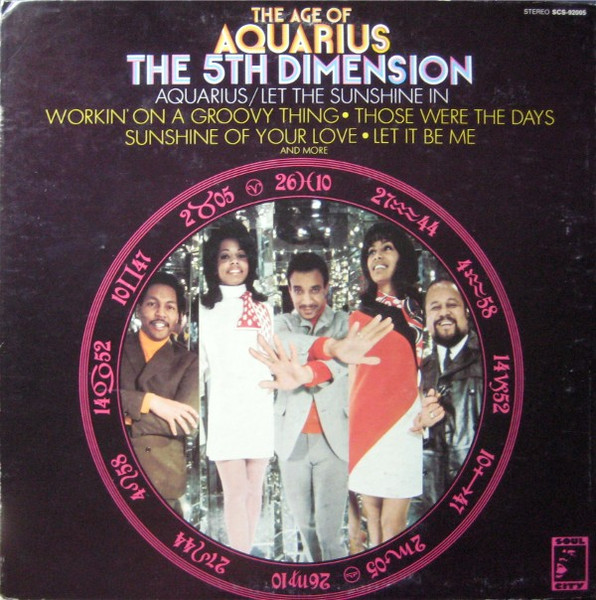
“Aquarius/Let the Sunshine In,” The 5th Dimension, 1969

Any discussion of songs about the zodiac signs pretty much has to begin with this enormous hit that dominated the airwaves in the spring of 1969. The two songs that form the medley were written in 1967 for the groundbreaking Broadway play “Hair: The American Tribal Love-Rock Musical,” which made daring observations about the hippie counterculture and sexual revolution of the Sixties. A key message was based on the notion that the universe was about to enter the next astrological age — the age of Aquarius, marked by group consciousness and humanitarianism: “When the moon is in the Seventh House, and Jupiter aligns with Mars, /Then peace will guide the planets, and love will steer the stars, /This is the dawning of the age of Aquarius…” Upon seeing the show, Billy Davis of The 5th Dimension insisted that the band should record “Aquarius,” but producer Bones Howe felt it was only a song fragment and got the idea to create a medley with a few bars from another song in the show (“The Flesh Failures”) that repeated the words “let the sunshine in.” Although the two song fragments are in different keys and tempos, Howe “jammed them together like two trains,” and the result was a dramatic track that sat at #1 on US pop charts for six weeks.

“Scorpios,” Adam and The Ants, 1981

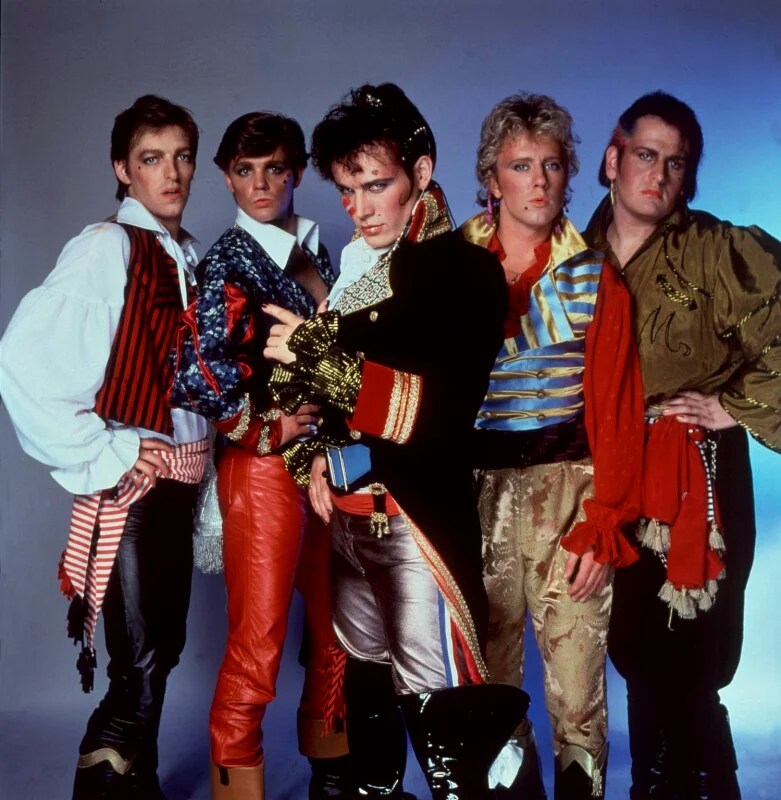
Stuart Goddard, known professionally as Adam Ant, had a very successful run on the British pop charts between 1980-1983, earning 10 Top Ten hit singles both as lead singer of the New Wave band Adam and The Ants and as a solo artist. In the US, his chart appearances were far more limited, reaching the Top 20 just twice, in 1982 and 1990. Goddard, born in early November as a Scorpio, had been a hot-tempered child who twice threw bricks through his teacher’s office window, but another teacher helped him channel his anger into creative expression. After seeing the Sex Pistols in 1975, he said, “I wanted to do something different, be someone else. I decided I wanted to be Adam, because he was the first man, and I chose Ant because, if there’s a nuclear explosion, the ants will survive.” There’s a deep track on the 1981 “Prince Charming” album called “Scorpios,” which reflects on the aggressive nature of the scorpion: “Listen here from one who knows, be fearless just like the Scorpios, /Pretty, look young, be fearless like the scorpion…”

“Goodbye Pisces,” Tori Amos, 2005

Amos was something of a child prodigy, earning a scholarship to the music conservatory at Johns Hopkins University at a young age. Her piano and vocal skills were unquestioned but her rebelliousness didn’t sit well with authorities, and she struck out on her own as a solo artist in the 1990s, scoring multiple Top Ten albums including “Boys For Pele,” “From the Choirgirl Hotel,” “Strange Little Girls” and “Scarlet’s Walk.” Her 2005 LP “The Beekeeper,” a double concept album that focused on the themes of femininity and female empowerment, included a poignant breakup tune called “Goodbye Pisces,” in which she says farewell to a man who used to offer tender-loving care but has grown cold and insensitive: “In your boys life, you become like a bull in a china shop, /Smash it up into smithereens, /There you go again, breaking porcelain, /Is that all I am, just a doll you got used to? /We’ve done this before, /As Mars sauntered through his door, /Don’t say it’s time to say goodbye to Pisces…”

“Son of Sagittarius,” Eddie Kendricks, 1974

In 1960, Kendricks teamed up with Paul Williams, David Ruffin, Melvin Franklin and Otis Williams to become a vocal group first known as The Primes, and then The Temptations. Kendricks was the group’s first tenor but often sang in falsetto, carrying the high melody on many of their hits, including “The Way You Do the Things You Do,” “Get Ready,” “I’m Gonna Make You Love Me” and “Just My Imagination.” He found himself at odds with the band and its managers by 1971 and decided to strike out on his own, eventually enjoying a #1 solo hit with 1973’s “Keep On Truckin’.” The title song of his second solo LP “Boogie Down” reached #2 in 1974, and a second single from that album, “Son of Sagittarius,” reached #28 on pop charts. Kendricks and his father were both born under the Sagittarius sign (mid-November to mid-December), hence the lyrics: “People, I am the fire, number nine Zodiac sign, /Jupiter brings me the power, Saturn brings me peace of mind, /I must be clear there’s no use in trying to change me, in Lady Luck I put my trust, /I’m the one, I’m the one, I’m the son of a Sagittarius…”

“Aries,” Freddie Hubbard, 1964

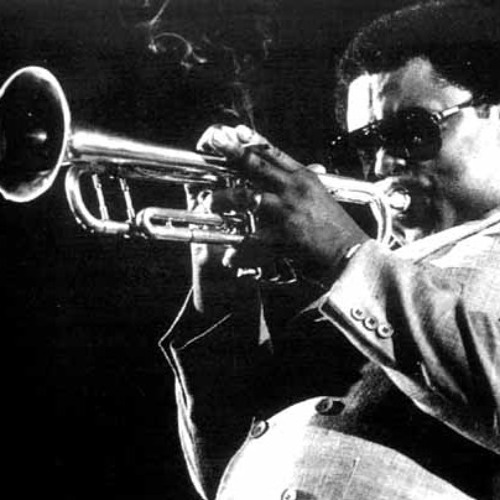
Hubbard was a master of jazz trumpet, specializing in bebop, hard bop and post-bebop, broadening the perspectives of modern jazz from the early 1960s well into the 1990s. Even in his 20s, he performed and recorded with some of the biggest names in jazz, including Wes Montgomery, John Coltrane, Sonny Rollins, McCoy Tyner and Quincy Jones. He released more than 60 albums on Blue Note and other labels, almost exclusively instrumental explorations, and participated as a sideman on upwards of 120 other LPs by a broad range of jazz artists. On his 1964 release “The Body & The Soul,” there’s a concise little track called “Aries,” titled, I assume, because Hubbard was an Aries himself, born in early April.

“Gift From Virgo,” Beyoncé, 2003

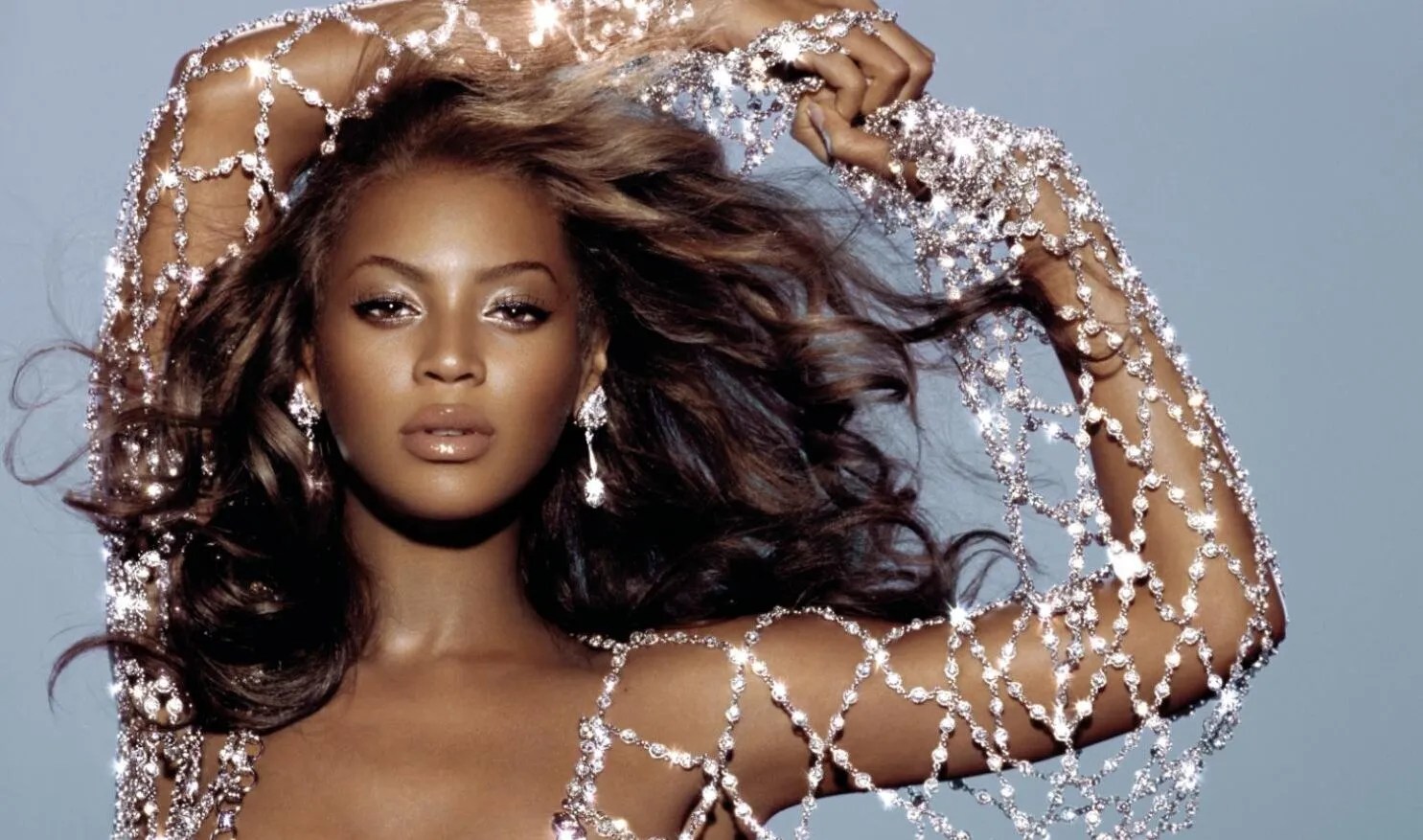
The superstar pop icon whose unparalleled success earned her the nickname Queen Bey got her start as a member of the R&B female vocal group Destiny’s Child in the 1990s, and then went on to score seven consecutive Number One albums as a solo artist. Her first, “Dangerously in Love,” came in 2003 and included the international hits “Crazy in Love,” “Baby Boy,” “Me, Myself and I” and “Naughty Boy.” Born in early September, Beyoncé is a Virgo, who tend to be detail-oriented perfectionists but with a practical and logical side, which might explain why her music has been meticulous and well thought out. In her song “Gift From Virgo” from that same album, the lyrics touch on the innocence of first love, and they hint that the narrator’s virginity might be the gift in question: “Do you remember our first kiss? It wasn’t long enough, /Remember the first time we spent those weeks together? They were not long enough, /One day we’ll make love, finally I’ll be yours, /Only you, only you, I could love you, /But it’s too late, I already love you…”

“Taurus,” Spirit, 1969

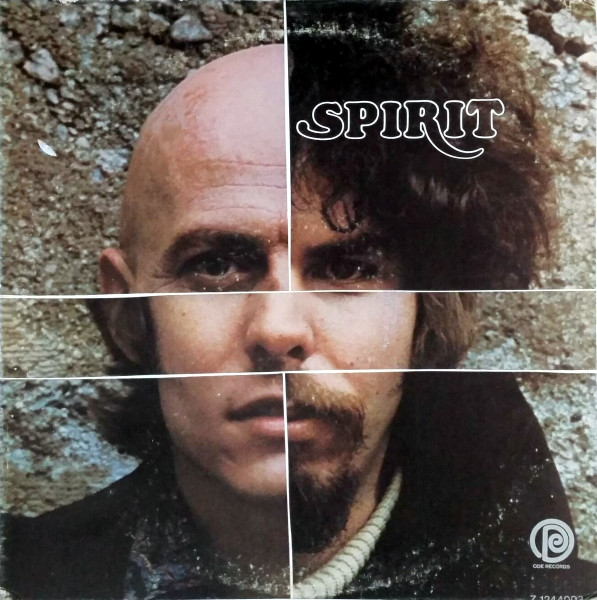
One of the better rock bands to come out of Los Angeles in the late ’60s, Spirit was underrated, although they had modest success with a few singles (“Fresh Garbage,” “I Got a Line on You,” “Mr. Skin,” “Nature’s Way”) and albums (“The Family That Plays Together” and “The Twelve Dreams of Dr. Sardonicus”). They had a strong cult following in California especially, touring often during their initial five years of existence. Singer Jay Ferguson wrote the bulk of their repertoire, although guitarist Randy Wolfe (who went by Randy California) also composed a few tracks. One that later generated considerable controversy was a short instrumental piece entitled “Taurus.” Since it has no lyrics, it’s hard to gauge the relevance of its title, except that it’s a quiet, reflective track, in keeping with the preference of Taurus folks for “serene environments, soft sounds, soothing aromas and succulent flavors.” It offers a prominent guitar passage that later bore a striking resemblance to the introductory section of Led Zeppelin’s 1971 tour de force, “Stairway to Heaven.” Wolfe’s estate ended up filing a copyright infringement lawsuit in 2014 which proved unsuccessful, but it brought attention to both the band and that particular tune.

“Cancer,” Joe Jackson, 1982

A product of the post-punk New Wave movement in London in the late ’70s, Jackson established a reputation as an “angry young man” with biting, sarcastic lyrics and a sneering vocal delivery. By 1982, he showed a remarkably sophisticated musical approach on his brilliant 1982 LP “Night and Day,” a cycle of songs inspired by his first lengthy visit to New York City. The sprightly arrangement of “Steppin’ Out” and tender melody of “Breaking Us in Two” put him on the US pop charts that year, but just as compelling were deeper piano-driven tracks like “Target” and “Cancer.” The latter was Jackson’s commentary on the fitness craze of the ’80s, and how, no matter how much we tried to take better care of ourselves, “Everything that’s enjoyable is bad for your health. It seems like everything gives you cancer.” Again, this is all about the incurable disease, not the astrological sign, which includes such personality traits as keen emotional intelligence, an almost supernatural sensitivity, and the ability to compassionately meet the needs of others.

“Leo,” Grace Kinstler, 2023

Kinstler is a phenomenal 21-year-old singer from Chicago who moved to Los Angeles and gained fame as a finalist on the 2021 season of the “American Idol” TV talent program. She performed in the Rose Bowl Parade in January 2023, introducing her new single “Leo” at the event. The artist and her music are so new that there’s little information about this song that I could find, but I was intrigued by it when I came across it on Spotify. Is Leo the guy’s name, the astrological sign, or maybe both? Leos are confident, drama-loving, fiercely protective and comfortable with being the center of attention. You decide: “Shuffling down memory lane, doesn’t feel quite the same without you, how can my mind get away when he smiles on my face, I miss you, heading way down, I’m missing all your signs, when I see you around, got me feeling so inspired, so many words, I don’t know what to write, but you know I’m gonna try… I’ll do it over and over again, I’ll be a Leo…”

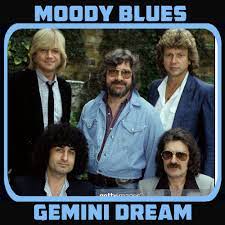
“Gemini Dream,” The Moody Blues, 1981

Guitarist Justin Hayward and bassist John Lodge, who had individually written many of the songs in The Moody Blues catalog, collaborated for the first time on this engaging rocker from the group’s strong 1981 LP, “Long Distance Voyager.” Lodge wrote about the band getting back on tour and in the studio after several years while Hayward came up with verses referring to two people sharing the same dream, and they combined the two lyrical topics into one melodic structure which ended up reaching #12 on US pop charts. Is it coincidental that the two musicians worked together on a song with twin topics and be titled “Gemini Dream”? Perhaps not. Like the astrological sign, the song has two sides — an intelligent pursuit of creative ideas but with a short attention span driven by restlessness: “Long time, no see, short time for you and me, /So fine, so good, we’re on the road like you knew we would… There’s a place, a Gemini dream, /There’s no escaping from the love we have seen, /So come with me, turn night to day, /You know you’re gonna wake up in a Gemini dream…”

“Libra,” Max Roach, 1968

Roach was another major player in the modern jazz arena as a drummer and occasional composer, who worked with the likes of Duke Ellington, Dizzy Gillespie, Miles Davis, Charles Mingus and Thelonius Monk. From his debut LP in 1953 into the 1990s, Roach put together an enviable catalog of vintage jazz recordings including several as the Max Roach Quartet. One of his favorite sidemen was noted saxophonist Gary Bartz, who wrote the busy instrumental track “Libra” for the 1968 LP “Members, Don’t Git Weary”on Atlantic. Again, I must presume Bartz used the title because he was a Libra, born in late September…

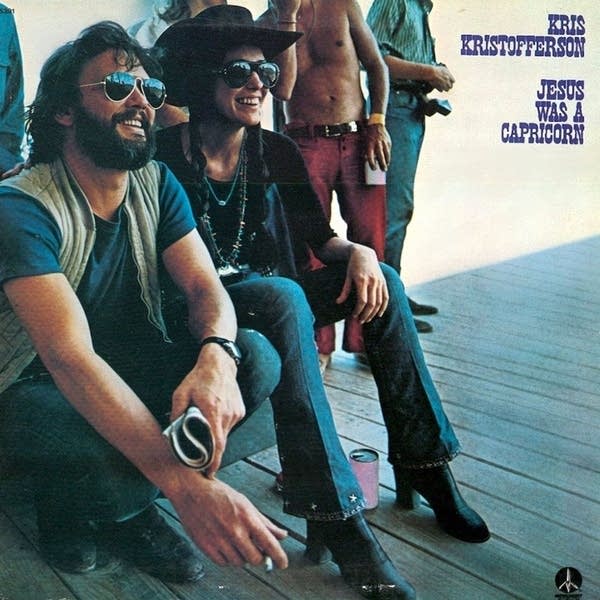
“Jesus Was a Capricorn,” Kris Kristofferson, 1972

“Honest, loyal, sensitive and confident” are four of the dominant personality traits of those born in the sign of Capricorn (Dec 21-Jan. 19), which includes Christmas, the supposed birthdate of Jesus. Kristofferson wrote “Jesus Was a Capricorn” as a tribute of sorts to John Prine, whose songwriting he greatly admired, with lyrics that were at once whimsical and irreverent: “Jesus was a Capricorn, he ate organic food, /He believed in love and peace, and never wore no shoes, /Long hair, beard and sandals, and a funky bunch of friends, /Reckon we’d just nail him up if he came down again…” Kristofferson had bristled at some of the criticism written about his earlier work, which sparked the line in the chorus, “Everybody’s gotta have somebody to look down on… /If you can’t find nobody else, then help yourself to me…” It became the title song to his third LP in 1972. The album didn’t do well at first but, a year later, it reached #1 on country charts on the strength of its third single, “Why Me.”

********************************

What’s it all about?

You all know me. I’m pretty transparent about my fascination with song lyrics and the stories behind the songs I love from the ’60s, ’70s and ’80s. I get a kick out of reading when songwriters let us in on what inspired them to write the words they do, the words I have memorized and continue to sing along with whenever I hear them. It gives my listening experience more depth and nuance when I learn how the music evolved or what sparked the idea for the song in the first place.

There’s this guy named Marc Myers who writes for the Wall Street Journal’s Arts section, where he fashioned a series of columns under the rubric “Anatomy of a Song.” He selected what he considered to be iconic tunes, interviewed the songwriters and other principal musicians, and laid out the who, what, where, when and why of these tracks in their own words. In 2016, Myers published a compendium of his columns titled “Anatomy of a Song: The Oral History of 45 Iconic Hits That Changed Rock, R&B and Pop.” (Why 45? Why not 50? Beats me.) I haven’t seen that first volume yet (it’s been ordered), but I came across its 2022 sequel recently, inventively titled “Anatomy of 55 More Songs” (at least I figured out why 55).

The songs hark from 1964-1996, roughly the same period that “Hack’s Back Pages” covers (1955-1990). I have taken the liberty of selecting eight of Myers’s choices and distilling the quotes and anecdotal info he provided to give you compelling tidbits of songs you surely know and revere. At the end, of course, is a Spotify playlist of these songs.

I intend to revisit this idea again in future posts, using Myers’s lists as a guide of sorts (although I’ll certainly be adding a few songs he chose not to include). And if you have a favorite you’d like to know more about, by all means, let me know!

**********************

The Band (from left): Levon Helm, Richard Manuel, Robbie Robertson, Rick Danko and Garth Hudson

“The Weight,” The Band, 1968

Robbie Robertson and his band The Hawks had toured and recorded behind Bob Dylan for three years in the 1965-1967 period, culminating in sessions at a house in Woodstock, New York, which were later released as “The Basement Tapes” in 1975. “We were just finishing up with Bob, and we had already written enough material for an album we would call ‘Music From Big Pink,’ our first album under our new name, The Band,” Robertson remembered. “But we needed one or two more. One evening I picked up my 1951 Martin D-28 acoustic guitar, holding it across my lap. I looked into the sound hole and saw the label that said “Nazareth, Pennsylvania,” where Martin Guitars are made. Seeing the word ‘Nazareth’ unlocked a lot of stuff in my head from Luis Buñuel’s “Nazarín,” a Mexican film about a priest with no possessions who travels the countryside. Once I’d written a few chords, I came up with “Pulled into Nazareth, was feeling ’bout half past dead.” I had no grand plan as to where the story might go, but the first thing he does is ask the first person he sees about a place to stay the night. A very biblical concept. I wanted various characters to unload their burdens on this guy. Take care of my dog, keep my friend company. You know, ‘Take a load off, and put it right on me.'” The song stalled at #63 on US pop charts upon release, but it became an Americana classic and was covered by many artists, including Aretha Franklin, The Staple Singers, Joe Cocker, Smith, Little Feat, King Curtis and Duane Allman, and The Grateful Dead.

“Year of the Cat,” Al Stewart, 1976

Stewart loved to tell stories with his songs, and in 1968 he wrote “Foot of the Stage” about a comedian contemplating suicide. Using the same melody, the song evolved in 1974 into “Horse of the Year,” about Princess Anne, an accomplished equestrian. Neither version was ever recorded. In 1975, Stewart saw a book about Vietnamese astrology, which his girlfriend had left on his kitchen table, open to a chapter entitled “Year of the Cat,” which was the zodiac sign for that year. “I looked at my ‘Horse of the Year’ song title, which seemed silly, while ‘Year of the Cat’ sounded really good,” he recalled. “Later that day, ‘Casablanca’ came on TV, and it occurred to me that the song should be about some exotic place where something memorable happened, all in the Year of the Cat. The opening line came to me: ‘On a morning from a Bogart movie, in a country where they turn back time.’ It was a novelistic approach, even cinematic. The woman in the song is no one specific, just an abstract fantasy. The guy is trying to make sense of what’s occurring, but she doesn’t give him time for questions.” Keyboardist Peter Wood had written the piano riff that became the introduction, and Stewart decided to add a middle section for various instrumental solos: strings, acoustic guitar, electric guitar and sax. Producer Alan Parsons turned it all into a six-minute tour de force that reached #8 on US pop charts in early 1977.

“Sunshine Superman,” Donovan, 1966

Donovan Leitch has said hearing “Sunshine Superman” brings back fond memories, even though its genesis came from unrequited love. “While in California promoting my first album and single, I met and fell for a woman named Linda,” he said. “We spent several weeks together, but she was still very fragile after breaking up with Brian Jones of The Rolling Stones, with whom she had had a child. So she turned down my marriage proposal, and I returned to England, but I missed her terribly and started writing a song about her. Like many of my songs, it expressed hopeful melancholy. I was miserable that it hadn’t worked out, but I felt optimistic it would someday: ‘When you’ve made your mind up, forever to be mine…’ ” The music used an unusual mix of harpsichord, tambura and acoustic bass and guitar, with half of what would become Led Zeppelin (Jimmy Page and John Paul Jones) on electric guitar and electric bass, respectively, which gave it what became known as a psychedelic pop vibe. Some heard veiled references to LSD (“I could’ve tripped out easy…” and “sunshine” was slang for acid), but Donovan denied it, saying “it was about how I could’ve slipped into depression but didn’t. Superman had nothing to do with the superhero or physical power. It was a reference to Frederich Nietzsche and the evolution of consciousness to reach a higher superman state.” This was all groundbreaking stuff for the US Top 40, and it went on to become his only #1 hit, and one of four Top Ten singles here.

Walter Becker and Donald Fagen of Steely Dan in 1977

“Peg,” Steely Dan, 1977

In 1976, as Donald Fagen and Walter Becker were beginning to work on the songs that would comprise their milestone “Aja” LP the following year, the two songwriters watched the Bette Davis classic, “All About Eve,” which tells the story of an ingenue who manipulates her way to stardom. “Unlike Eve, the main character in our song doesn’t become a star at all but has starlet fever,” Fagen explained years later. “On her way up, she ditches her boyfriend, but he continues to hang around. All the lyrics are from his perspective, and he’s ambivalent, but he’s convinced there will be a karmic reckoning coming: ‘Peg, it will come back to you.’ He’s thinking that her career will tank, and she’ll end up in some cheesy 3-D film or in someone’s favorite foreign movie, which would be a far cry from her original aspirations.” At that point, Fagen and Becker had become meticulous perfectionists in the studio, and they had seven different guitar players come in to try their hand at the solo during the middle break. They finally settled on Jay Graydon’s work, which was actually spliced together from three different takes. Michael McDonald provided the distinctive harmonies, overdubbed three times. “We felt we’d achieved a special simplicity with that song,” Fagen added. “I think it’s easy on the ears.” As the album’s first of three hit singles, it reached #11 in the fall of 1977.

“Doctor, My Eyes,” Jackson Browne, 1972

In 1969, Browne, then just 21 and struggling to write songs on his grandfather’s old upright piano in the Echo Park area of L.A., had a problem. “During the writing process, my eyes became infected and badly encrusted,” he noted. “I could barely see until I went to the doctor and got some medicine, but it took a while for my eyes to return to normal. That was the initial inspiration for the song’s lyrics. But that’s not much of a song, so the eye issue became a metaphor for lost innocence and having seen too much: ‘Doctor, my eyes, tell me what is wrong, was I unwise to leave them open for so long?‘ It became about a slow erosion of idealism.” The first draft of “Doctor, My Eyes” was rather bleak, he recalls, with the narrator adopting an almost fatalistic point of view about life. By the time he recorded the song for his self-titled debut LP in early 1972, Browne had given it a decidedly upbeat arrangement and tempo, driven by lively drums and congas, with killer harmonies by David Crosby and Graham Nash, all of which served to make the still-downbeat lyrics more palatable: “My eyes have seen the years, and the slow parade of fears without crying, /Now I want to understand.” As one reviewer put it, “As with many of Browne’s song, ‘Doctor, My Eyes’ is essentially a spiritual search — no preaching, no conclusions, just searching.” The song put him on the map, becoming a surprise hit at #8 in the spring of 1972.

Blondie (from left): Gary Valentine, Clem Burke, Debbie Harry, Chris Stein and Jimmy Destri

“Rapture,” Blondie, 1980

Singer Debbie Harry and guitarist Chris Stein had found success in the late 1970s as founding members of Blondie, one of the best of the New York-based bands specializing in the punk/New Wave genres then in vogue. “We had become good friends with Bronx-based hip-hop artists like Fab 5 Freddy Brathwaite,” said Harry, “and he invited us to a rap event one night in 1978. We were so impressed and excited by the skill of the emcee’s rhymed lyrics delivered in a freestyle way. We went to several more of these events, jammed into this room with a writhing mass of humanity, dancing and pressing against each other as Chic-inspired disco music played. It wasn’t long before we decided to try our own rap song, and Chris thought it should be called ‘Rapture.'” He came up with the guitar and bass line, and they teamed up on lyrics for the verses based on what they’d seen in The Bronx: “Toe to toe, dancing very close, /Barely breathing, almost comatose, /Wall to wall, people hypnotized…” The band recorded the basic track in the studio, including the verses, but the rap section hadn’t been written yet. Harry and Stein took 20 minutes to figure it out, using Stein’s affinity for B-movies and science fiction imagery (“The man from Mars”), and they recorded it in two takes. The drummer found some tubular bells in the studio and added them to the mix for a haunting, ethereal feel. It became their fourth #1 single in 1981. “It was an homage to what I saw, and to a form that was exciting for us,” said Harry. “I probably should’ve worked on it a little more. It was a bit too sing-song-y and childlike, but it evolved in live performances.”

John Oates and Daryl Hall, 1974

“She’s Gone,” Hall and Oates, 1973

One of this Philadelphia duo’s finest moments, and indeed, one of the great “blue-eyed soul” songs of all time, “She’s Gone” is a classic example of how songwriting partnerships can work. John Oates had a New Year’s Eve date who never showed up, and he was feeling bummed out. “I sat on the sofa strumming my guitar,” he revealed, “and came up with a folky refrain about being stood up that I thought might make a good chorus: ‘She’s gone, I better learn how to face it, /She’s gone, I’d pay the devil to replace her, /She’s gone, what went wrong?’ When he played it for Daryl Hall a couple days later, Hall was intrigued, but felt it sounded like a Cat Stevens song. “I’m much more R&B,” he said, “so I suggested, ‘Let’s try it in another groove.’ I sat down at my electric piano and played the keyboard lick you hear on the intro, and I started hearing the way the song could really build dramatically.” Hall’s first marriage was dissolving at the time, so the “she’s gone” concept struck home and inspired some verses of his own. “Everyone was telling me not to worry, that I was going to be all right,” said Hall, “but none of that was helping,” which prompted these lines: “Everybody’s high on consolation, /Everybody’s trying to tell me what is right for me.” The song was largely ignored on its first go-around in 1973, but after H&O had the #1 hit “Rich Girl,” the label re-released “She’s Gone” in 1976 and it peaked at #7. It’s been covered by R&B artists like Tavares, Lou Rawls and The Bird and the Bee.

“Hello It’s Me,” Todd Rundgren, 1968/1972

Written in 1967 about a painful high school breakup, “Hello It’s Me” was Rundgren’s first attempt at songwriting at the tender age of 17. He had founded the band Nazz, who played cover songs, “but if we wanted a record deal, we needed original material. The chords and melody to this song came pretty quickly, but I wasn’t sure about lyrics yet.” Eventually he decided to focus on a high school crush, a girl he had been crazy about, “but her father hated me on sight, probably because of my long hair, and she was forbidden to see me anymore. I adored her and was heartbroken about it.” When he was writing the lyrics the following year, “I turned the story around so instead of being the victim, I was breaking up with her, which gave me a little power and allowed me to imagine how I might have done things differently. To ease the blow, I wrote a bridge about why the breakup was good for her: ‘It’s important to me that you know you are free, /’Cause I never want to make you change for me…’ I think it’s how I would have wanted to be let down.” Nazz recorded it first on their 1968 debut as a slow ballad, which wasn’t quite the way Rundgren envisioned it. By 1971, he had embarked on a solo career, and as he was putting finishing touches on his astonishing double-album debut, “Something/Anything?”, he updated “Hello It’s Me” with a bouncier pop arrangement. He re-released it as the third single from that album, and it reached #5 in 1973, the commercial high point of his lengthy career.

**************************