Play me one more song that I’ll always remember
Back in 2002, Graham Nash released an underappreciated album called “Songs For Survivors,” a sort of companion LP to his 1971 solo debut, “Songs For Beginners.” Its highlight was a wistful tune called “Lost Another One,” with lyrics that bemoan the passing of a fellow musical traveler:
“Just another morning cup of tea, I turn my radio on
And in between the static and the headlines, I heard that you were gone
We lost another one
There was a time we thought we were invincible, that we’d go on and on and on
And all along we’d thought we’d do another show and write another song
But I guess we’ve lost another one…”
If Nash wrote it about a particular person, he never talked about it, which was probably wise, because now it can apply more generally to anyone’s (and everyone’s) death.

In 2021, we lost at least two dozen notable artists in the rock music pantheon, and Hack’s Back Pages is paying tribute to them in this post, the final one of this very strange year. I’ve included a Spotify playlist with a couple samplings from each of those being honored.
Rest in peace, rockers. In 1974, the Righteous Brothers song said, “If there’s a rock and roll heaven, well, you know they’ve got a hell of a band.” Imagine how phenomenal that band must be 50 years later!
************************
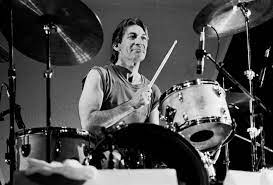
Charles “Charlie” Watts, widely respected drummer of The Rolling Stones from their inception in 1963 until his death on August 24th, died at 80. He regarded himself as more of a jazz drummer, and occasionally played side gigs in small jazz clubs, but his presence on The Stones’ recordings and at concerts for nearly 60 years was, as Keith Richards put it, “the secret essence of the whole thing.” For an in-depth reflection on Watts and his seismic impact on rock music, please check out my earlier blog post, “A line of cars and they’re all painted black.” https://hackbackpages.com/2021/09/03/a-line-of-cars-and-theyre-all-painted-black/
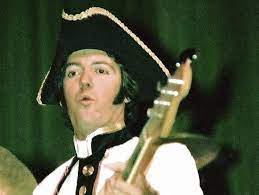
Keith Allison, guitarist and vocalist for ’60s pop favorites Paul Revere and The Raiders, died November 17 at age 79. Allison joined Revere and The Raiders after their initial heyday in 1968 and remained through 1975. Beyond that tenure, Allison also contributed to recording sessions for a host of rock’s elite, including Ringo Starr, Harry Nilsson, Sonny and Cher, Johnny Rivers, Rick Nelson, The Monkees and Alice Cooper.

David Blatt, known professionally as Jay Black as the lead singer of ’60s pop group Jay and The Americans, died October 22 at age 82. He was not the group’s original lead singer, but when he replaced Jay Traynor, the group enjoyed their greatest successes, first in 1964-65 with “Come a Little Bit Closer” (#3) and “Cara Mia” (#4) and later in 1969 with their cover version of the Drifters’ “This Magic Moment” (#6). Black left in 1973 and continued to tour as Jay and the Americans using different backing musicians, which generated contentious legal disputes.

John “Tim” Bogert III, innovative bass player and vocalist for ’60s hard rock band Vanilla Fudge and blues rock group the Jeff Beck Group, died of cancer January 13 at age 76. He helped found Vanilla Fudge, known for extended heavy rock versions of popular hits (“You Keep Me Hanging On”), then left in 1970 to form the short-lived band Cactus with drummer Carmine Appice. In 1973, they both teamed up with Beck on tour and then recorded the “Beck Bogert & Appice” LP as a power trio, which included a fabulous cover of “Superstition.” Bogert was a pioneer of using distortion with his bass to help it cut through the mix with the low-powered amps of his time.
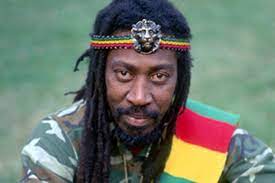
Neville O’Riley Livingston, founding member of the pioneering Jamaican reggae group The Wailers, died March 2 at age 73. Livingston was known professionally as Bunny Wailer, one of two singer-songwriters in the group along with Bob Marley, and also its percussionist. As Marley became the more dominant figure when the group began seeking international fame, Wailer chose to embark own a solo career, generally staying in Jamaica. His Solo album “Blackheart Man” and several compilation LPs won Grammy awards in the ’80s and ’90s.

Ron Bushy, drummer for ’60s hard rock band Iron Butterfly, died August 29 at age 79. Bushy is best known for the widely familiar drum solo he performed (in one take!) in the middle of the group’s 17-minute iconic psychedelic piece, “In-A-Gadda-Da-Vida.” He was a founder of the Los Angeles-based band in 1967 and stayed in the lineup for all of the group’s six albums, through 1975. He recalled how Iron Butterfly’s pièce de resistance was originally just a two-minute ditty, “a love song from Adam to Eve,” until they went into the studio in 1968 and expanded it into one of the true classics of that era.

Armando Anthony “Chick” Corea, considered one of the foremost jazz pianists of the post-John Coltrane era, died of a rare form of cancer February 9 at age 79. He was an accomplished composer, keyboardist, bandleader, and occasional percussionist, playing with the great Miles Davis in the late ’60s at the birth of the jazz fusion genre. His own ’70s jazz ensemble Return to Forever influenced a generation of jazz fusion artists, and Corea’s compositions like “Spain,” “500 Miles High,” “La Fiesta” and “Windows” are considered jazz standards. Corea won 25 Grammys and was nominated 60 times.
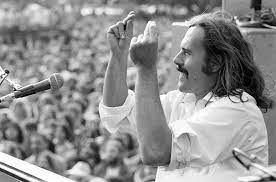
George “Commander Cody” Frayne IV, leader, pianist and vocalist of the ’70s country rock band Commander Cody and His Lost Planet Airmen, died September 26 at age 77. The band came up with a unique, compelling brew of music that melded country and rock with older styles like Western swing, jump blues and boogie-woogie. Their 1971 album “Lost in the Ozone” is regarded as a must-have LP of that period, partly because of their one hit single, a cover of the 1955 speed-talking, fast-picking “Hot Rod Lincoln.”

Graeme Charles Edge, drummer and lyrical poet for The Moody Blues from the group’s beginnings in the early ’60s, died November 11 at age 80. He saw the band through its first phase with singer Denny Laine, followed by the triumphant years as trailblazers of the British progressive rock era (1967-1973), and eventually into a new period of chart success in the 1980s. Edge was a consistent contributor, not only on the drum kit but by providing spoken-word poetry as an element of The Moodies’ sound. For more about the lasting legacy of The Moody Blues, and Edge’s contributions, see my earlier blog post, “The music to the story in your eyes.” https://hackbackpages.com/2021/11/19/the-music-to-the-story-in-your-eyes/

Isaac Donald “Don” Everly, one half of the ’50s-’60s vocal duo The Everly Brothers, died August 21 at age 84. Together with younger brother Phil, who died in 2014, The Everly Brothers rode high on the charts from 1957 to 1965 with their sweet harmonizing on such classics as “Wake Up, Little Susie,” “All I Have to Do is Dream,” “Bye Bye Love” and “Cathy’s Clown.” The brothers endured a rocky period but eventually reunited and also appeared in concert and on record with Simon and Garfunkel in the early 2000s. For more about Don and Phil Everly and their impact on early rock vocals, please see my earlier blog post, “Bye bye, my love, goodbye.” https://hackbackpages.com/2021/08/27/bye-bye-my-love-goodbye/
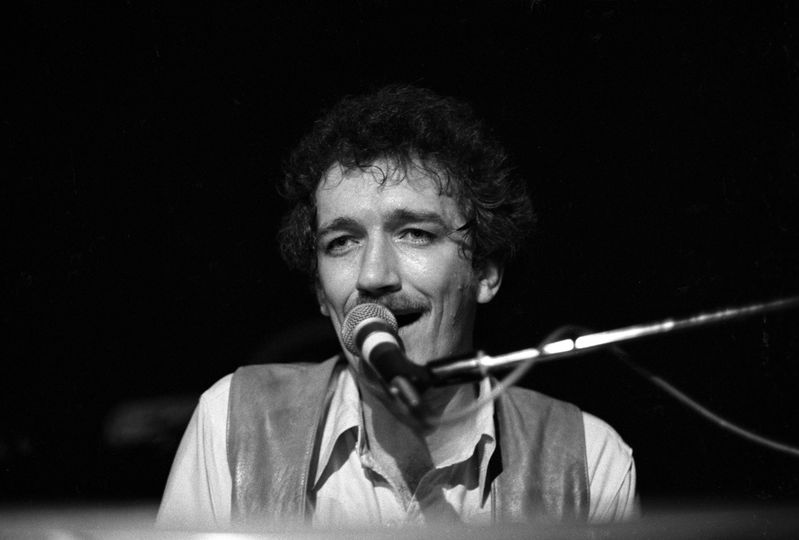
Michael Kelly Finnigan, an extraordinarily in-demand keyboard player in recording sessions and on tour, died from cancer on August 11 at age 76. A master of the Hammond organ and a vocal contributor as well, Finnigan toured with and played on sessions for some of the biggest names in rock, including Jimi Hendrix, Crosby Stills and Nash, Dave Mason, Michael McDonald, Joe Cocker, Buddy Guy, Etta James, Peter Frampton, Ringo Starr, Cher, Bonnie Raitt, Tracy Chapman and Rod Stewart. In the playlist at the end of this piece I’ve included three tracks on which he made a significant contribution: “Rainy Day, Dream Away” by Hendrix; “Bring It On Home to Me” by Mason; and “Southern Cross” by Crosby Stills & Nash.

Joe Michael “Dusty” Hill, longtime bass player and singer for ZZ Top, died July 28 at age 72. Hill, guitarist Billy Gibbons and drummer Frank Beard hold rock music’s longevity record for longest lifespan of a band without a personnel change (51 years). Founded in 1969, ZZ Top was a Texas blues/boogie band in its first iteration with tunes like “Lagrange” and “Tush” but later morphed into MTV favorites with synthesizer-laced hits like “Legs,” “Give Me All Your Lovin'” and “Sleeping Bag.” For more about Hill and his part in the story of ZZ Top, I direct you to my earlier blog post, “I said, lord, take me downtown.” https://hackbackpages.com/2021/08/06/i-said-lord-take-me-downtown/
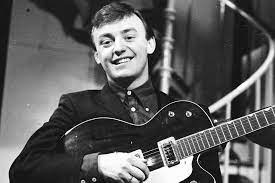
Gerard “Gerry” Marsden, leader and singer of the British Merseybeat group Gerry and The Pacemakers, died from a blood infection January 3 at age 78. Marsden and his group were signed to EMI Records by George Martin, who had also signed The Beatles around the same time. The Pacemakers’ first hit, in fact, was “How Do You Do It,” which The Beatles also recorded but rejected in favor of their original, “Love Me Do.” The Pacemakers took their version to #1 in the UK (it reached #9 in the US later on). Marsden and company also scored hits in the US with “Don’t Let the Sun Catch You Crying” and “Ferry Cross the Mersey.”
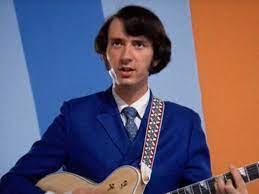
Robert Michael Nesmith, guitarist, singer and songwriter as a member of the The Monkees, died December 10 at age 78. He pushed for and won greater control of The Monkees’ recorded output, which included such successes as “I’m a Believer,””Plesasant Valley Sunday” and “Daydream Believer,” as well as lesser-known tracks penned and sung by Nesmith. He was also an unsung pioneer of the country rock genre, releasing several country-flavored albums with The First National Band and under his own name. He was involved behind the scenes in early iterations of the music video revolution that came in the 1980s. For more on Nesmith, please refer to my earlier blog post, “Disappointed haunted all my dreams.” https://hackbackpages.com/2021/12/17/disappointment-haunted-all-my-dreams/
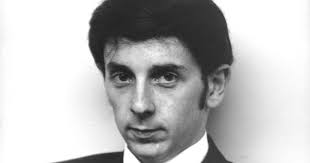
Harvey Phillip “Phil” Spector, a titanic name in pop music history for his innovative recording techniques in the 1960s, died in prison on January 16 at age 82. Spector came up with what is known as the “Wall of Sound” approach, in which he used multiple pianos, guitars, strings, horns and voices in a “Wagnerian approach to rock and roll,” as he put it. His hits for The Ronettes (“Be My Baby”), the Crystals (“He’s a Rebel”) and The Righteous Brothers (“You’ve Lost That Lovin’ Feeling” and “Unchained Melody”) made effective use of this practice. Spector also produced The Beatles’ “Let It Be” LP and the first couple of solo albums by John Lennon (“John Lennon/Plastic Ono Band” and “Imagine”) and George Harrison (“All Things Must Pass” and “Concert For Bangla Desh”). In 2009, Spector was convicted of the 2003 murder of actress Lana Clarkson and sentenced to 19 years to life.
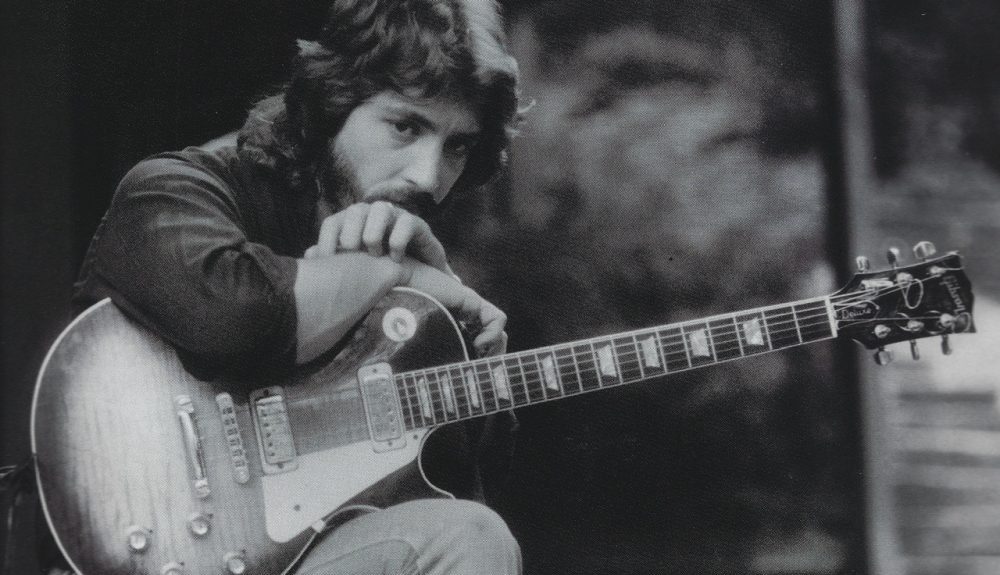
Michael Stanley Gee, leader, guitarist singer and songwriter of The Michael Stanley Band, died on March 5 at age 72. The pride of Cleveland, Ohio, Stanley began as an acoustic singer-songwriter in the early ’70s, collaborating with Joe Walsh, which inspired his move to form MSB in 1975 , beginning a string of 10 solid Midwest rock albums that should have become nationwide successes but caught on only fleetingly. Still, the band set attendance records at venues throughout Ohio and other Midwest towns where they enjoyed a diehard following well into the 2000s. For a deeper look at Stanley and his band, please read my earlier blog post, “Here’s a song for a friend soon gone.” https://hackbackpages.com/2021/03/12/heres-a-song-for-a-friend-soon-gone/
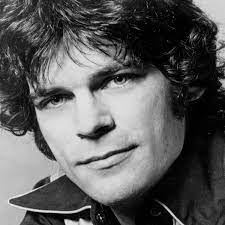
Billy Joe “B.J.” Thomas, widely known as a singer of pop and country hits in the ’60s and ’70s, died May 29 at age 78. He charted six songs in the US Top 20 between 1966 and 1975, including two #1 hits — Burt Bacharach’s “Raindrops Keep Fallin’ On My Head,” which won a Best Song Oscar from the “Butch Cassidy and the Sundance Kid” film soundtrack, and the 1976 Best Country Song Grammy winner (and the longest song title of any #1 song ever), “(Hey Won’t You Play) Another Somebody Done Somebody Wrong Song.” Other notable hits by Thomas include the original version of “Hooked On a Feeling,” a cover of the Hank Williams chestnut “I’m So Lonesome I Could Cry,” “I Just Can’t Help Believing” and”Rock and Roll Lullaby.”

Mary Wilson, one of the three founding members of The Supremes, died February 8 at age 76. Along with Diana Ross and Florence Ballard, Wilson reached the pinnacle of success as The Supremes, Motown Records’ most successful act and the highest-charting female group in history. They compiled an astonishing 12 #1 hits between 1964 and 1970, including “Stop! In the Name of Love,” “Come See About Me,” “Baby Love,” “I Hear a Symphony,” “You Can’t Hurry Love,” “Love Child” and “Someday We’ll Be Together.” After Ballard and Ross left, Wilson remained as new members were brought to the lineup, and she stayed until the group’s dissolution in 1977. She later set sales records for her autobiography “Dreamgirl: My Life as a Supreme” in 1986.

Norman Russell “Rusty” Young, pedal steel guitarist and vocalist for the country rock band Poco, died April 14 at age 75. He was a founding member, having met Jim Messina and Richie Furay during sessions for Buffalo Springfield’s final LP. Young was known as a virtuoso and innovator on pedal steel, coaxing a Hammond organ sound out of it by playing it through a Leslie speaker cabinet. After Furay left in 1975, Young stepped up in both songwriting and singing, and ended up songs like “Rose of Cimarron” and Poco’s biggest hit, “Crazy Love.”
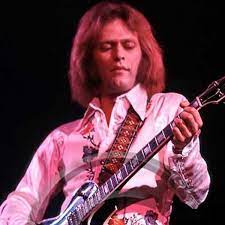
Norman Paul Cotton, guitarist and singer-songwriter for Poco, died July 31 at age 78. He joined Poco in 1970 following the departure of founding member Jim Messina and remained an integral member of the band until 2010. It was Cotton who wrote “Heart of the Night,” one of Poco’s two Top ten hits from the 1978 LP”Legend,” and he also wrote such gems as “Down in the Quarter,” “Indian Summer” and “Bad Weather.”
For a closer look at Poco, and Young’s and Cotton’s work, please see my earlier blog post, “We’re bringin’ you back down home.” https://hackbackpages.com/2021/04/23/were-bringin-you-back-down-home/
*****************************
For this playlist, I’ve selected two songs for each honoree, except Charlie Watts, who deserves three, and the two members of Poco, who deserve three between them.


