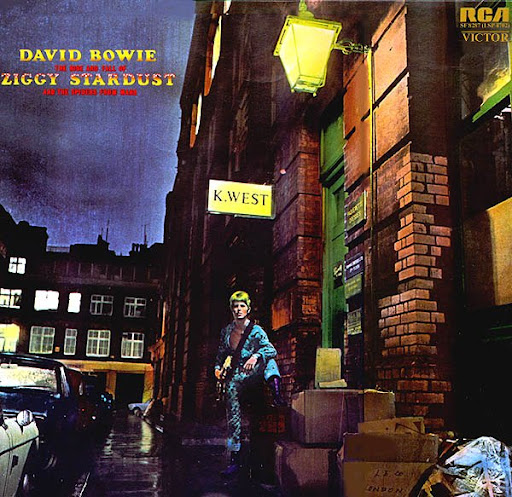
Say I’m old fashioned, say I’m over the hill

It’s time once again for another dive deep into the long-ignored waters of the albums of the 1960s and 1970s to remind you all of the great hidden music to be found there.

record_stores-0213

Classic rock stations are happy to overexpose you to the same two or three or four songs from a band’s repertoire that you know all too well.  You know the tired old format:  If they play Led Zeppelin, you can be sure it’ll be “Stairway to Heaven,” “Whole Lotta Love,” “Black Dog,” “Immigrant Song,” “Fool in the Rain” or “D’yer Ma’ker” (or, if you’re lucky, “Kashmir”).  But good God, there are another five dozen great Zep tracks just sitting there, waiting to be exhumed!

My job here, as I see it, is to select a dozen or so great “lost gems” from classic albums and entice you to dig them out, look them up, and savor their deliciousness.

I urge you to send me your suggestions of other excellent forgotten tracks I can include in future blog posts about these wonderful old songs.

Rock on, everybody!

****************************

“It’s Up to You,” The Moody Blues, 1970

It’s no secret that guitarist/singer Justin Hayward has always been the songwriting wizard of The Moody Blues, one of the true pioneers of what became known as progressive rock.  Their collaboration with the London Symphony Orchestra on 1967’s “Days of Future Passed” (including the eventual worldwide hit “Nights in White Satin”) was an unprecedented merger of disparate musical genres. By 1970, the band had already shown a keen knack for crafting album-length song cycles, and their #3-ranked LP “A Question of Balance” was the best yet, an intelligent, challenging musical lesson in coping with a world ravaged by war and environmental indifference.  Songs like the hit single “Question” and “Dawning is the Day” were Hayward compositions that asked sobering queries about our future, and the clincher, “It’s Up to You,” is the appealing, hopeful apex, urging us all to get involved and help save the planet from extinction.

“Georgia,” Boz Scaggs, 1976

Born in Ohio, raised in Texas, Scaggs met up with Steve Miller as a teenager, and they eventually collaborated in San Francisco on The Steve Miller Band’s first two albums, “Children of the World” and “Sailor.”  Boz went out on his own in ’69 with a self-titled debut that included the legendary 10-minute “Loan Me a Dime,” anchored by a smokin’ lead guitar performance by the late great Duane Allman.  Always rooted in R&B, Scaggs’ solo albums leaned toward blue-eyed soul, culminating in 1976 in the trendsetting #2 LP “Silk Degrees,” with four hit singles, most notably “Lowdown” and “Lido Shuffle.”  The LP also included Scaggs’ fine ballad “We’re All Alone,” made famous by Rita Coolidge.  The hidden gem on this album could be the sensual “Harbor Lights,” which is music to undress to, but I prefer the joyous, upbeat “Georgia,” which, by the way, is a tribute to a woman, not the state.

“Chain Lightning,” Steely Dan, 1975

You can make a convincing case that Steely Dan’s seven albums during its 1972-1980 period represented the most consistently excellent music of the Seventies.  By far the most underrated of the those LPs, in my opinion, is 1975’s “Katy Lied.”  The band’s songwriting masterminds, Donald Fagen and Walter Becker, have forlornly disparaged the album because of a studio mishap that allegedly damaged the master tapes and rendered it “unlistenable” (to their audiophile ears), but frankly, I can’t figure out what they’re talking about.  To me, it sounds incredible, full of killer pop/jazz hooks, stunning vocals, standout instrumental passages (dig the Phil Woods sax solo on “Doctor Wu”) and some of the best dark-humor lyrics in the entire Dan catalog.  Almost any track would be a worthy candidate for this “lost gems” list, but I’m going with the sublime, blues-based “Chain Lightning.”

“On the Border,” Al Stewart, 1976

The singer-songwriter era — popularized by James Taylor, Joni Mitchell, Cat Stevens, Carole King and others — had peaked by 1976.  Still, there were promising acoustic-based artists in the US and England who continued to press forward, and Glasgow-born Al Stewart was one of them.  He had released four albums in Britain between 1967 and 1972, without much success, and two more LPs (1973’s “Past, Present and Future” and 1975’s “Modern Times”) saw modest exposure on US radio playlists.  And then came his seventh and best LP, “Year of the Cat,” in 1976.  Some found his distinctly nasal voice off-putting, but there was no denying his finely structured story-songs, beautifully performed and produced on this album, with nary a weak moment.  The title track fought through the relentless onslaught of disco music at the time to reach #8 on the Billboard charts, but the track that has always blown me away is “On the Border,” featuring the fine Spanish guitar work of Peter White.

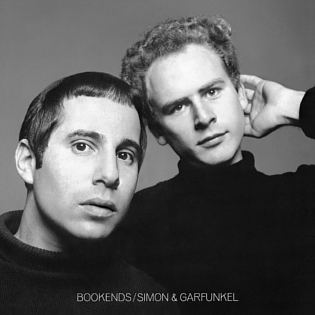
“The Only Living Boy in New York,” Simon and Garfunkel, 1970

At the time of the January 1970 release of the award-winning “Bridge Over Troubled Water” LP, the primary buzz was all about the shimmering title anthem, and the interesting choices for follow-up singles, “El Condor Pasa” and “Cecilia.”  We’d already heard and embraced another album track, “The Boxer,” as a landmark single nearly a year earlier.  But there were three or four other outstanding songs on the album that got no airplay whatsoever, and the best of those, “The Only Living Boy in New York,” ranks among my top four or five Paul Simon compositions of all time.  It tells the story of Tom (a veiled reference to Art Garfunkel’s late ’50s persona, when the duo was known as Tom and Jerry) heading to Mexico to act in a movie (“Catch-22”), leaving his partner behind in New York to work alone on their next album.  It aggravated their tenuous relationship to the point where Simon chose to end it and go solo a year later.  But what a gorgeous final statement, only recently resurrected during the duo’s 2004 “Old Friends” reunion tour.

“Woman of Heart and Mind,” Joni Mitchell, 1972

Nobody can write an autobiographical confession song like Miss Mitchell, whose first six or seven albums (1968-1974) are a virtual diary of her love life and childhood reveries.  Usually with only spare guitar or piano accompaniment, Joni offered up searing portraits of herself and her various relationships on memorable songs like “Blonde in the Bleachers,” “I Had a King,” “My Old Man,” “See You Sometime,” “Little Green,” “A Case of You” and “Car on a Hill.”  It’s difficult to pick which one of her many poignant deep album tracks to bring out into the light here, but I’ve settled on the incredible “Woman of Heart and Mind” from her 1972 “For the Roses” LP.  Joni cuts to the bone by sizing herself up this way:  “You think I’m like your mother, or another lover, or a sister, or the queen of your dreams, or just another silly girl…”  It’s a devastatingly personal piece of work, and beautiful in its simplicity.

“Samba Pa Ti,” Santana, 1970

Mention the Santana LP “Abraxas” and everyone automatically thinks of the #1 hit “Black Magic Woman” (actually written and first recorded by Peter Green’s original version of Fleetwood Mac in 1968), or maybe the Latino-flavored “Oye Como Va.”  Carlos Santana had assembled a delicious brew of African-American, Caucasian and Latino musicians in San Francisco that enjoyed an explosive national debut at Woodstock in 1969, and “Abraxas” was a marvelous smorgasbord of their best work.  Often overlooked, though, was the band’s mellower side on smoldering instrumental tracks like “Samba Pa Ti,” where Carlos’s expressive guitar led the way through a sensual first part into a more upbeat second half that leaves listeners emotionally drained.

“Winter,” The Rolling Stones, 1973

Following the brilliant four-LP dominance of “Beggars Banquet,” “Let It Bleed,” “Sticky Fingers” and “Exile on Main Street,” the Stones found themselves pretty much out of songs, out of vibes and out of gas.  For their mostly disappointing 1973 LP “Goat’s Head Soup,” Jagger and Richards conjured up the acoustic gem “Angie” (which became yet another #1 single for them), and the horn-driven stomper “Doo Doo Doo Doo Doo (Heartbreaker),” but the rest of the album seemed flat and uninspired.  The obvious exception was “Winter,” a compellingly melancholy collaboration between Jagger and second guitarist Mick Taylor, who ended up leaving the band a year later (replaced by Ronnie Wood).  Taylor’s layered-chord approach offered a striking contrast to the choppy riffs of Richards, who didn’t appear on the track at all.

“Within You Without You,” The Beatles, 1967

I remember, at age 13, pointedly skipping this strange, otherworldly song whenever I lowered the needle onto Side Two of the “Sgt. Pepper” LP, but years later, I developed a deep respect for George Harrison’s thoughtful, sitar-driven piece and its spiritually cosmic lyrics.  The colorful phantasm of “Lucy in the Sky With Diamonds,” wistful storytelling of “She’s Leaving Home,” communal warmth of “With a Little Help From My Friends” and unparalleled brilliance of “A Day in the Life” all combine to give the “Sgt. Pepper” album its legendary status as one of the best in rock history.  But take the time to consider Harrison’s boundary-stretching musical arrangement, and his all-knowing words derived from Eastern philosophy:  “Try to realize it’s all within yourself, no one else can make you change, and to see you’re really only very small, and life flows on within you and without you…” Many critics labeled the song as “the conscience of the album” and “its ethical soul,” and I’m inclined to agree.

“Kitty’s Back,” Bruce Springsteen, 1973

It’s hard to imagine the rock landscape without the dominance of Bruce Springsteen’s presence, but in 1973-1974, he and The E Street Band were still struggling mightily for exposure, recognition and stardom.  The Boss’s first LP had stalled at #60 on Billboard’s album charts.  His second LP, the magnificent “The Wild, The Innocent and the E Street Shuffle,” was also largely ignored at the time, despite amazing, epic songs like “Rosalita,” “Asbury Park, Fourth of July (Sandy)” and “Incident on 57th Street.”  In the years since, “Rosalita” has been properly acknowledged as a titanic track full of Bruce’s early exuberance, but we mustn’t overlook the wonder that is “Kitty’s Back,” a seven-minute cauldron of simmering emotion and over-the-top joy, carried by a relentless beat and tight ensemble playing, led by Clarence Clemon’s monstrous sax riffs.

“Fire,” Jimi Hendrix Experience, 1967

What a firestorm Jimi Hendrix was!  The Seattle-born guitarist moved to London in 1966, formed his legendary trio, and recorded one of the most incendiary debuts of all time, “Are You Experienced?”  By mid-summer, the rock music world knew all about this virtuoso, thanks to a show-stopping appearance at the Monterey Pop Festival and the amazing music from that first LP.  The singles “Hey Joe,” “Purple Haze” and “The Wind Cries Mary” had all reached Top Five in the UK, but the fickle US singles market failed to embrace any of them. However, the rock music scene was changing that year, and fans began preferring albums over singles, and they sent “Are You Experienced?” to #5 on US album charts, the first of four consecutive Top Five LPs here before he died prematurely in 1970.  One of the most astonishing tracks, rarely heard on the radio, is the compact 2:34-length song “Fire,” which features The Experience’s guitar/bass/drums mix at its best, particularly the work of drummer Mitch Mitchell.

“When the Levee Breaks,” Led Zeppelin, 1971

By 1971, Led Zep had become the undisputed kings of hard rock, both on record and in concert, and they were eager for their fourth LP to blow everyone’s minds.  With “Stairway to Heaven” leading the way, the album — released without an official title, but known as “Zoso,” “Led Zeppelin IV” or even “Untitled” — is still regarded as their masterpiece.  The complicated syncopation of “Black Dog,” the rollicking onslaught of “Rock and Roll,” the band’s quieter acoustic side beautifully represented by the mandolin-heavy “The Battle of Evermore” and the Page/Plant tribute to Joni Mitchell, “Going to California” — it all came together majestically.  But for many true fans, the earthshaking moment on the LP is the seismic closer, “When the Levee Breaks,” a song which actually dates back to the 1930s and legendary blues woman Lizzie “Memphis Minnie” Douglas.  John Bonham’s drums alone — recorded in a cavernous stone atrium/stairwell in an English countryside castle — are unlike anything you’ve ever heard before or since.

More “lost gems” to come!  There are SO MANY waiting to be rediscovered!

R.I.P. to a soul man and a Band leader

The talented musicians, songwriters and entertainers of the ’60s, ’70s and ’80s who inspired and influenced so many have been passing away with disconcerting regularity lately. These have included singers and instrumentalists whose contributions to key songs and/or albums from that era have made a significant impact on my musical preferences and those of younger artists who have followed in their footsteps. Such is the case with two notable deaths recently, both of whom I feel are worthy of a detailed look back.

*****************************

When the soul music genre is discussed, many people focus on high-profile acts at Motown Records like The Supremes, The Temptations, The Four Tops, Smokey Robinson and The Miracles, Marvin Gaye and Stevie Wonder.

Just as influential, however, were the high-octane singers on Atlantic Records and its Memphis-based subsidiary, Stax Records: Aretha Franklin, Otis Redding, Ray Charles, Wilson Pickett, Solomon Burke… and Sam & Dave.

Sam Moore (right) and Dave Prater in concert in the late ’70s

Like so many of the dynamic soul music practitioners who came of age in the ’60s and ’70s, Sam Moore and Dave Prater each began their singing careers in their Baptist church choirs — in Florida and Georgia, respectively — belting out gospel music. By the time they reached 30, the two men had teamed up to become one of the most popular soul music acts of their era.

Moore passed away January 10th following complications during surgery at age 89. Prater had died in an auto accident in 1988 at age 50.

The two had paid their dues in regional gospel groups in the 1950s, Moore with The Melionaires and Prater with The Sensational Hummingbirds, each pushing their respective groups to inject more secular elements into their gospel repertoires. They met at an R&B club in 1961 when they appeared on the same bill and decided to join forces and concentrate on soul tunes while using the irresistible “call and response” style of gospel to incite audiences.

Jerry Wexler, the iconic music producer and co-founder of Atlantic who first saw the duo perform in 1964, wrote in his 1993 autobiography “Rhythm and the Blues”: “I put Sam in the sweet tradition of Sam Cooke or Solomon Burke, while Dave had the ominous Four Tops’ Levi Stubbs-sounding voice, the preacher promising hellfire.” He and Atlantic co-founder Ahmet Ertegun signed Sam & Dave on the spot that night and put them on their Stax label to augment the work of Redding, Eddie Floyd and Booker T. and The MGs, among others.

While their voices meshed so effectively, their personalities didn’t, resulting in a rather tempestuous relationship during and after their relatively brief 1965-1969 heyday.

But what a heyday it was. Sam & Dave’s chart success began with “You Don’t Know Like I Know,” which reached #7 on R&B charts in late ’65, followed by their first pop chart appearance, the classic “Hold On I’m Comin’,” in early 1966, which peaked at #21 and went to #1 on R&B charts. Three more Top Ten R&B chart hits followed (“Said I Wasn’t Gonna Tell Nobody,” “You Got Me Hummin'” and “When Something Is Wrong With My Baby”) before they came up with the one-two punch that iced their reputation with the mainstream public: “Soul Man” and “I Thank You.”

Sam & Dave revving up audiences in 1967

In particular, “Soul Man” captured the hearts and minds of many in the fall of ’67, becoming a must-play at every teen dance and R&B club across the country. With instrumental backing by Booker T. and The MGs, Stax Records’ house band, Sam & Dave reached #2 on pop charts, followed a couple months later by “I Thank You” at #9. Even the concurrent LP “Soul Men” managed to reach #62 on mainstream album charts. All of these tunes, by the way, were written and produced by the Stax songwriting/producing team of David Porter and Isaac Hayes (who later became a performing star in his own right).

Their chart appearances waned by 1970, but for those who saw Sam & Dave in concert, their reputation and legacy as a “frenetic and kinetic” live act is etched in stone. Known in the industry as “The Sultans of Sweat” and “Double Dynamite,” Sam & Dave ’s live shows were so powerful that even as charismatic a performer as Redding was hesitant to follow them on the bill for fear of being upstaged.

They broke up in 1970 and each attempted solo careers with little success, which precipitated more than one reunion tour that ended acrimoniously. “We were a duo but we weren’t a partnership,” wrote Moore in the 1998 book “Sam and Dave: An Oral History.” He conceded that his drug habit at the time played a part in their troubles and speculated that it made industry executives leery about giving them a second chance.

Although Moore never had another hit, a 1978 cover of “Soul Man” by John Belushi and Dan Aykroyd as The Blues Brothers (with guitarist Steve Cropper and other members of The MGs in the group) put Sam & Dave back in the limelight for a spell. However, Moore said it chafed at him a bit because he felt that “Saturday Night Live” audiences thought “Soul Man” originated with The Blues Brothers.

Additionally, Bruce Springsteen befriended Moore around that time and welcomed him on stage for occasional guest appearances over the years. Said Springsteen in the wake of Moore’s death, “Over on E Street, we are heartbroken to hear of the death of Sam Moore, one of America’s greatest soul voices. There simply isn’t another sound like Sam’s soulful tenor in American music. Having had the honor to work with Sam on several occasions, I can tell you that he was a sweet and funny man, filled with stories of the halcyon days of soul music. He had that edge of deep authenticity in his voice that I could only wonder at.”

E Street Band member Steve Van Zandt chimed in by saying, “Sam was one of the last of the great Soul Men. He and Dave Prater were the inspiration for me and Johnny Lyon to start Southside Johnny and the Asbury Jukes. He was an important, righteous, wonderful man.”

Sam & Dave were inducted into the Rock and Roll Hall of Fame in 1992. Moore’s solo album “Plenty Good Lovin’,” which he recorded in 1970 but was never released, finally arrived to glowing reviews in 2002. He performed for presidents and recorded with not only Springsteen but also Lou Reed, Conway Twitty and others. He also worked to help secure other performers’ and songwriters’ long-overdue copyrights and royalties.

“It’s been a roller-coaster ride, but mostly a good one,” said his wife Joyce Moore in 2014. “The toughest part has been realizing how mistreated Sam and his peers were by managers and record labels. Many of them are gone and never got the credit or the money they deserved. Still, we’ve been blessed.”

**************************
He has been described as “a musical polymath,” “a virtuoso multi-instrumentalist” and “an avant-garde pianist in a 1915 grindhouse.” From piano and accordion to sax and violin, he could play them all with style and dexterity, sometimes simultaneously.

He was Garth Hudson, the oldest and last surviving member of the pioneering Americana/roots music group known simply as The Band. He died Tuesday, January 21, at age 87.

John Simon, one of the top record producers of the late ’60s who manned the boards for The Band’s iconic first two albums, had this to say about Hudson: “He was a wonderful, mad, brilliant genius, a wonderful guy who had so many gifts. He could play one melody with his left hand, another with his right hand, a wah-wah pedal with one foot, another thing with the other foot. And if you put something in his mouth he could play that too, all at the same time.”

Full confession: I have always respected The Band and what they accomplished, but I wouldn’t call myself a big fan. I saw them once in concert (1974) as part of a triple bill and bought only their debut album and a “Best Of” package after they’d disbanded. Once I got around to seeing their acclaimed concert film “The Last Waltz” many years after the fact, I began a comprehensive exploration of their catalog, and am very glad I finally did. There’s much to be enjoyed and admired.

The Band’s body of work — especially its first two LPs, 1968’s “Music From Big Pink” and 1969’s “The Band” — seemed wholly unique, going totally against the grain of both the pop mainstream as well as the psychedelic underground scene of that era. Hudson, guitarist Robbie Robertson, drummer Levon Helm, pianist Richard Manuel and bassist Rick Danko were indeed a band in the best sense of the word: five earnest, dedicated instrumentalists who also sang up a storm and eschewed individual virtuosity in deference to the musical whole. Their recorded legacy stands as a testament to their communal work ethic and their many years as a performing entity honing their craft before they found fame.

Hudson was born in Windsor, Ontario, to a mother who was a pianist and a father who played a variety of wind instruments. Hudson showed musical talent and an inventive nature at an early age, once disassembling and rebuilding his father’s old pump organ at age 10. He was playing accordion in a country band at age 12, and his parents sent him to the Toronto Conservatory, where he learned to play Bach preludes and Anglican hymns.

He soon developed a deep love of rock & roll and, as a member of The Capers, he played piano and sax, backing up touring stars like Johnny Cash and Bill Haley when they came to town. Rockabilly veteran Ronnie Hawkins recognized Hudson’s talent and invited him to join his backing band, The Hawks, but Hudson was hesitant until he was offered a new organ, extra money and the title “music consultant” so that his parents would feel better about their gifted son playing “mere rock ’n’ roll.”

Within The Hawks, Hudson made everyone sit up and take notice at his intricate swirls on the Lowrey organ (a departure from the Hammond B3 organ preferred by most rock keyboardists). And he could play almost anything — saxophone, accordion, synthesizers, trumpet, French horn, violin — and in a wide range of styles that could fit in comfortably in a conservatory, a church, a carnival or a roadhouse.

With Robertson’s songs, the spirited vocals of Helms, Manuel and Danko, and the inspired musicianship of Hudson, The Hawks soon outgrew the limited rockabilly genre and, in 1965, they hitched their wagon instead to Bob Dylan, who was in the process of evolving from an acoustic folk artist playing protest songs into a rock musician writing wondrous, expansive pieces. When Dylan toured in early 1966, the bill labeled them as “Bob Dylan and The Band,” and the simple name stuck.

“Like everyone who encounters Garth for the first time,” Helm wrote in his memoir, “Bob was blown away by his versatility and broad musical background. Robbie used to say that Garth could just as easily have played with John Coltrane or the New York Symphony Orchestra.”

The Band in 1969: Hudson (left), Robertson, Helm, Danko and Manuel

When Dylan isolated himself in the rustic town of Woodstock, NY, after a motorcycle accident, The Band lodged themselves in a nearby modest pink house, where they worked long hours on more than 100 songs, for years available only as bootlegs, that later became known as “The Basement Tapes.” The music varied from old folk, country and Appalachian songs to such new compositions as “Tears of Rage,” “I Shall Be Released” and “This Wheel’s on Fire.” It was Hudson who set up and oversaw the capture of these sessions on surprisingly advanced home recording equipment.

Hudson found the area magical, and it would become the home base for much of his life. He grew a long beard and became, more than any of his bandmates, a musical mountain man, collecting guns and knives, skinning roadkill, and building a miniature pipe organ. With his reserved manner and technical skills, he lent the group a gravitas that set it apart from peers during the so-called Summer of Love, and he helped elevate The Band from rollicking juke-joint refugees into one of the most resonant and influential rock groups of the 1960s and ’70s.

On their debut LP, “Music From Big Pink,” Hudson immortalized the Lowery’s church-like pipe-organ tone with “Chest Fever,” whose extended introduction (sometimes referred to separately as “The Genetic Method”) would become his signature song. It begins with a fragment of Bach’s “Toccata and Fugue in D minor,” before launching into a landmark fusion of classical music reach, jazz wandering, and R&B grind that stands as perhaps the greatest organ performance in rock history. Legend holds that Hudson never played the intro the same way twice. Robertson once referred to him as “far and away the most advanced musician I’ve ever known.”

Jon Pareles, the highly respected rock critic at The New York Times, wrote eloquently about Hudson the other day: “Ever so self-effacingly, Garth Hudson breathed history into songs. At his magisterial Lowrey organ, he summoned Bach, hymns, the gospel church or a circus calliope. At the piano, he bounced through ragtime chords and splashed out filigrees of honky-tonk or jazz. On accordion, he could invoke a Cajun dance party, a medicine show, a polka or the skirl of a bagpipe. On saxophones, he built cozy studio horn sections and occasionally stepped forward for a plaintive solo. And as his equipment choices expanded, he deployed synthesizers and electric keyboards as scenic backdrops, brass bands and wry commentary.”

Hudson used an early version of the Hohner clavinet in his rig, which he famously ran through a wah-wah pedal, mimicking the sound of a jaw harp for The Band’s early classic “Up on Cripple Creek.”

The Band in “The Last Waltz” with Hudson prominent on accordion

After The Band called it quits in a very public way with its Thanksgiving Day concert dubbed “The Last Waltz” in 1976, Hudson continued working in studios and on the road with the likes of Van Morrison, Leonard Cohen and Emmylou Harris, as well as with various lineups of The Band, including the solo work of Robertson and Danko. By the 1990s, he began working with a younger group of musicians who idolized him and his work, including Neko Case, Norah Jones and Wilco. Hudson even released a solo LP, “The Sea to The North,” in 2001, and a set of covers with multiple artists called “Garth Hudson Presents a Canadian Celebration of The Band” in 2010.

Hudson endured some rough patches of financial difficulties matter-of-factly, even when some of his most cherished belongings were sold off by an impatient landlord. He even sold his publishing rights of The Band’s recordings to Robertson, yet showed no bitterness. “The deal was made,” he said. “It was a good gig. My job was to provide arrangements with pads and fills behind good poets, same poems every night, and I got out of it alive.”

R.I.P., Mr. Hudson. Your impact was perhaps greater than you ever knew.

****************************

I’ve assembled two Spotify playlists: one which assembles many of Sam Moore’s greatest musical moments, and another of songs on which Garth Hudson’s most notable contributions are featured.