I love coffee, I love tea

Dolly Parton got it right regarding what I do the moment my feet hit the floor each morning when she sang, “Well, I tumble out of bed and stumble to the kitchen, pour myself a cup of ambition…”

The drink that got its start in Eastern Africa before migrating to the equatorial countries of the Americas is a crucial elixir many of us sip each day to get our personal engines running. For more than a century now, half of all coffee produced worldwide each year is consumed in the US. From the 10-cent cup of coffee of the 1950s to the $5+ concoctions at Starbucks today, we are happy to pay the price for that morning jolt.

In England, tea is the preferred beverage, due in part to its history of importation from India (a British colony for many decades) and its affordability. Tea is an integral part of the culture, a fact not lost on the songwriters of Great Britain.

Musicians from both countries have been writing and recording songs about coffee and tea since The Jazz Age. I have assembled 15 of the best ones, with another ten honorable mentions, and all are included on my Spotify playlist at the end. The styles and tempos are all over the map, so they might not be “your cup of tea” if you are like me and “take your coffee with a dash of silence.” But it’s a fun set I hope you enjoy at some point in your day.

****************************

“Black Coffee,” k.d. lang, 1988

In 1948, lyricist Paul Francis Webster (who went on win Oscars for “Love is a Many Splendored Thing” and “The Shadow of Your Smile”) collaborated with jazz composer/arranger Joe “Sonny” Burke to write this bluesy torch song that finds salvation in a steaming cup of coffee when you’re up all night waiting to hear from your loved one. “Black Coffee” was recorded by some big names of that era, notably Sarah Vaughan, Peggy Lee and Ella Fitzgerald, and many more artists in the years since. I’m partial to k.d. lang’s 1988 recording from her “Shadowland” LP. “I’m feeling mighty lonesome, I haven’t slept a wink, /I walk the floor and watch the door, and in between I drink black coffee, /Love’s a hand-me-down brew…”

“Second Cup of Coffee,” Gordon Lightfoot, 1972

Lightfoot is a national hero in his native Canada, still performing occasionally at age 83. In the U.S., he first hit the charts with “If You Could Read My Mind” in 1970, followed a few years later with the #1 song and album “Sundown.” In between, a couple of fine LPs curiously didn’t attract much attention, one being “Don Quixote” with its stunning love song “Beautiful.” Also on that album was “Second Cup of Coffee,” in which he hopes the caffeine he’s drinking to soothe his broken heart will stave off any impulse for harder stuff later on: “I’m on my second cup of coffee, and I still can’t face the day, /I’m thinking of the lady who got lost along the way, /And if I don’t stop this trembling hand from reaching for the phone, /I’ll be reachin’ for the bottle, Lord, before this day is done…”

“Afternoons and Coffeespoons,” Crash Test Dummies, 1993

The Dummies, led by the instantly identifiable bass/baritone vocals of Brad Roberts, was one of the biggest Canadian bands of the 1990s, and had some substantial success in the U.S. with the #3 single “Mmmm Mmmm Mmmm Mmmm.” Another fan favorite from the same album was “Afternoons and Coffeespoons,” inspired by T.S. Eliot’s landmark 1915 poem, “The Love Song of J. Alfred Prufrock.” Roberts calls it “a song about being afraid of getting old, which is a reflection of my very neurotic character”: “Woah, afternoons will be measured out, measured out, measured with coffeespoons and T.S. Eliot…”

“Black Coffee in Bed,” Squeeze, 1982

British band Squeeze were one of the best to emerge from the New Wave era, with several hit singles and albums in England. U.S. audiences were more selective but did embrace some of their work, notably the 1981 hit “Tempted,” which reached #8, and the sublime 1982 follow-up “Black Coffee in Bed,” which peaked at #26, and includes backing vocals by Elvis Costello and Paul Young. Another look at lost love, but this time seen as more of a relief: “Oh, from lips without passion to the lips with a kiss, there’s nothing of your love that I’ll ever miss, /The stain on my notebook remains all that’s left, of the memory of late nights and coffee in bed…”

“One More Cup of Coffee,” Bob Dylan, 1976

Dylan wrote some of the best kiss-off songs of all time — “Don’t Think Twice, It’s All Right” and “Positively 4th Street” come immediately to mind — but he has many other lesser-known breakup songs throughout his voluminous catalog. Buried on his #1 LP “Desire” in 1976 (highlighted by the hit “Hurricane”) is “One More Cup of Coffee,” on which he croaks out a duet with Emmylou Harris: “I don’t sense affection, no gratitude or love, /Your loyalty is not to me but to the stars above, /One more cup of coffee for the road, one more cup of coffee ‘fore I go…”

“Coffee and TV,” Blur, 1999

British rock band Blur found only modest chart success in the U.S., but in their native UK, they were, along with Oasis, the chief purveyors of “Britpop,” scoring five consecutive #1 albums and a dozen Top Ten singles in the late 1990s. From their LP “13” in 1999, there’s a song with lyrics by guitarist Graham Coxon in which he describes his battles with alcoholism, using television and many pots of coffee to stave off his cravings and darker impulses: “So give me coffee and TV, easily, /I’ve seen so much, I’m goin’ blind, and I’m brain-dead virtually, /Sociability is hard enough for me, take me away from this big bad world…”

“You’re the Cream in My Coffee,” Nat King Cole Trio, 1950

The team of Ray Henderson (music) and Buddy DeSylva (lyrics) wrote this infectious little tune back in 1928 for their Broadway musical, “Hold Everything!” Early recordings included those by Annette Hanshaw and Ruth Etting, and later The Ray Conniff Singers and the Les Brown Orchestra put it on vinyl as well, but the best version, to my ears, was by the incomparable Nat King Cole and his King Cole Trio. The lyrics praise the woman he loves as crucial to his well being: “You’re the cream in my coffee, you’re the salt in my stew, /you’ll always be my necessity, I’d be lost without you…”

“Black Coffee,” Ike and Tina Turner, 1972

In 1972 Ike & Tina Turner, still a functioning duo riding high on their scorching cover of “Proud Mary” from the previous year, released the funk rock classic “Feel Good,” comprised almost entirely of Tina Turner originals, including a stomper called “Black Coffee.” In her song, SHE is the Black Coffee — “My skin is brown, but my mind is black” — and she spits it out with sass and fire, with Ike’s raging guitar behind her. Brit rockers Humble Pie put out a fine cover version on their “Eat It” double album the following year. “Black coffee is my name, black coffee is not a thing, /Black coffee, freshly ground and fully packed, /Hot black coffee, is where it’s at…”

“Cigarettes and Coffee,” Otis Redding, 1966

Steve Cropper, guitarist with Stax Records’ house band Booker T and the MGs, considers this “a hidden gem” in the Redding portfolio. Written by singer Jerry Butler in 1961, “Cigarettes and Coffee” went nowhere at first, but when Redding used Cropper and the rest of the MGs in Stax Records’ Memphis studio to record his version in 1966, it became a featured track on his LP “The Soul Album” that year. The narrator is simply thrilled to be with his love at 3 am: “I would love to have another drink of coffee now, and please, darling, help me smoke this one more cigarette now, /I don’t want no cream and sugar, ’cause I’ve got you, now darling…”

“Starfish and Coffee,” Prince, 1987

As a wildly eccentric, boldly artistic guy, Prince could certainly relate to a story about another wildly eccentric, boldly artistic person. Prince’s occasional collaborator Susanne Melvoin told him about a real girl she knew from 6th grade named Cynthia Rose who did quirky things like draw hearts on walls and happily shout out what she had for breakfast. Naturally, Prince turned it into a funky pop song, found on his “Sign ‘o the Times” album in 1987: “If you asked her what she had for breakfast, this is what she’d say, /’Starfish and coffee, maple syrup and jam, /Butterscotch clouds, a tangerine, and a side order of ham…”

“Coffee Song,” Osisiba, 1976

Flying under the radio of most American listeners was the music of Osisiba, a lively, inventive band of West African and Caribbean musicians who came together in England in 1970 and made more than a dozen albums of what became known as “world music,” blending rock, Latin, jazz, soul, reggae, calypso and pop. On their 1976 LP “Ojah Awake,” you’ll find their take on a 1946 novelty tune called “The Coffee Song.” First recorded by Frank Sinatra and later by The Andrews Sisters, Sam Cooke and Stan Ridgway, the tune adopts a humorous stance on Brazil’s abundant surplus of coffee: “Way down among Brazilians, coffee beans grow by the billions, /So they’ve got to find those extra cups to fill, they’ve got an awful lot of coffee in Brazil…”

“Espresso (All Jacked Up),” Todd Rundgren, 1995

From the beginning, Rundgren has been a non-conformist, often choosing experimental directions and methods of recording and releasing new music. In the ’90s, he pioneered the concept of interactive CDs, giving listeners the freedom to play producer with his tracks. From his 1995 release, “The Individualist,” he came up with this ode to coffee drinks and how they keep him going when out on tour: “Gimme one more hot espresso, have another cappuccino, /Fire me up a caffè latte, make it one with lots of chocolate in the middle of it, /Hot espresso, I’m all jacked up!…”

A couple of mugs from our kitchen collection

***********************

“English Tea,” Paul McCartney, 2005

McCartney has proudly defended his love for “that whole fruity way of talking that the English do, very endearing, I love it.” For this slight little song from his “Chaos and Creation in the Back Yard” album in 2006, he was amused to observe how people in England used to talk about merely “a cuppa tea,” always the same, but now there are different types, and you must be more specific and ask for English tea, with formal mannerisms like in a drawing room stage play: “Would you care to sit with me for a cup of English tea, very twee, very me, /What a pleasure it would be, chatting so delightfully, any Sunday morning…”

“Tea in the Sahara,” The Police, 1983

From their spectacular fifth and final album, “Synchronicity,” The Police recorded a marvelous, moody treatment of this song Sting wrote, based on a poetic novel by Paul Bowles called “The Sheltering Sky.” In the book, three women wait for a prince who vowed to return to have tea in the desert with them, but he never comes back. In his song, Sting has the women waiting year after year, withering in the heat “with their cups full of sand”: “My sisters and I have one wish before we die, /And it may sound strange, as if our minds are deranged, /Please don’t ask us why, beneath the sheltering sky, /We have this strange obsession, you have the means in your possession, /We want our tea in the Sahara with you…”

“Have a Cuppa Tea,” The Kinks, 1971

There are few British rock bands more decidedly English than The Kinks, thanks to songwriter Ray Davies and his penchant for lyrics that describe English people, places and practices. Think “Waterloo Sunset” or “Victoria.” On their commercially unsuccessful but critically praised “Muswell Hillbillies” album in 1971, one of the best tracks is “Have a Cuppa Tea,” with lyrics that humorously celebrate the British custom of drinking tea and the civility that comes with it, delivered in a tongue-in-cheek fashion:  “Tea in the morning, tea in the evening, tea at supper time, /You get tea when it’s raining, tea when it’s snowing, tea when the weather’s fine, /You get tea as a mid-day stimulant, you get tea with your afternoon tea, /For any old ailment or disease, for Christ sake, have a cuppa tea…”

***************************

Honorable mention:

“Cup of Coffee,” Johnny Cash, 1966; “Coffee Blues,” Mississippi John Hurt, 1963; “One Cup of Coffee,” Bob Marley, 1976; “Coffee Club,” Spandau Ballet, 1982; “Tea for One,” Led Zeppelin, 1976; “Another Pot o’ Tea,” Anne Murray, 1974; “Afternoon Tea,” The Kinks, 1967; “Everything Stops for Tea,” Long John Baldry, 1972; “Tea for the Tillerman,” Cat Stevens, 1970.

****************************

We’re crazy on a ship of fools

Circus impresario P.T. Barnum famously claimed, “There’s a sucker born every minute.” If that’s true, then wrap your head around these headlines from the rock music world:

“KEITH RICHARDS MARRIES ADELE”

“OZZY OSBOURNE PERFORMS WITH MORMON TABERNACLE CHOIR”

“SONY TO ISSUE NEW ALBUMS AS EMBEDDED MICROCHIPS”

april-fools-day

These aren’t true, of course, but these days, you could be forgiven for believing they are. Almost nothing surprises me anymore.

But today, in particular, I suggest we all watch out for friends, colleagues and loved ones who enjoy duping us with practical jokes and pranks. It’s April Fool’s Day, the 24-hour period when we try to see how gullible people can be. All in good fun, of course.

It’s a tradition that dates back many centuries when nobles would send servants on “fool’s errands” to mark the beginning of Spring following the vernal equinox.  The first printed reference occurred in Chaucer’s “The Canterbury Tales” (1392) when the vain rooster is tricked by the fox on March 32nd (oops, April 1st).

Radio and TV stations have sometimes fooled their listeners and viewers into believing fake announcements and news stories broadcast during the early morning hours of April 1 in hopes of generating buzz and publicity.  In 1961, the BBC announced a concert featuring the “distinguished and experimental” pianist Lirpa Loof that very evening.  Of course, no concert occurred, as Lirpa Loof is “April Fool” backwards.

I recall one instance in the mid-1980s when the DJs on the “Morning Zoo” program at WMMS-FM in Cleveland generated outrage among their devoted rock and roll listeners by announcing a change in format from album-oriented rock to easy listening.  The phone lines lit up like they were on fire until the prank was revealed a couple of hours later.

In honor of today’s commemoration of fools everywhere, I offer a playlist of 20 classic rock songs that focus on fooling someone, playing the fool, and embracing foolish things. There’s a Spotify playlist at the end (with 10 honorable mentions too) that should serve nicely as a soundtrack to your day. No foolin’!

*****************

“April Fool,” Ronnie Lane & Pete Townshend, 1977

Lane, formerly with Small Faces, invited The Who’s Townshend to produce his solo album “Rough Mix,” which turned into a full-blown collaboration between the two, with Townshend writing and singing most of the tracks. “April Fool,” however, was Lane’s tune, a gentle British folk song that bemoans a lost relationship: “She said, I’ll see you in the morning, darling, I’ll see you when the kids have gone to school, /Oh well, I know tomorrow is your birthday, I know you know that you’re an April Fool…”

“Chain of Fools,” Aretha Franklin, 1968

This excellent soul tune by Don Covay was one of The Queen of Soul’s signature songs, which rose to #2 and won a Grammy that year for Best R&B Song, and ranked #234 on Rolling Stone’s Top 500 Songs of All Time.  The legendary Aretha, who recorded the track in one amazing take, wails about the betrayal and humiliation she feels when she learns her man has many lady friends: “For five long years, I thought you were my man, but I found out I’m just a link in your chain, chain-chain-chain, chain of fools…”

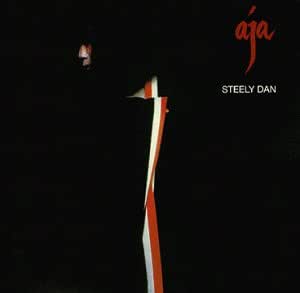
“Only a Fool Would Say That,” Steely Dan, 1972

Steely Dan’s outstanding debut LP, “Can’t Buy a Thrill,” is brimming with the kinds of irresistible melodies, undeniable hooks, flashy guitar solos and intriguing lyrics we soon learned to expect from maestros Donald Fagen and Walter Becker. One of the sleepers on the album is this compelling samba rock tune that spells out some of the foolish things people say: “I heard it was you talkin’ ’bout a world where all is free, it just couldn’t be, /And only a fool would say that…”

“Everybody Plays the Fool,” The Main Ingredient, 1972

This classic #3 hit single was nominated for a Grammy for Best R&B Song in 1973 and then enjoyed a second life when Aaron Neville’s version went to #8 in the early ’90s.  The lyrics by veteran songwriters Rudy Clark and J.R. Bailey speak of the universal truth of how you feel when you love someone but that feeling is not reciprocated:  “Everybody plays the fool sometimes, there’s no exception to the rule, it may be factual, it may be cruel, I ain’t lyin’, everybody plays the fool…”

“These Foolish Things,” Billie Holiday, 1936

This jazz/blues standard by a pair of British songwriters dates to the 1930s, and was first recorded by Billie Holiday in 1936.  Dozens more renditions have been released through the decades by the likes of Nat King Cole, Etta James, Sam Cooke, Aaron Neville, James Brown, Bryan Ferry and Rod Stewart. The lyrics rattle off a number of “foolish things” that bring back memories of lost love:  “The winds of March that make my heart a dancer, a telephone that rings but who’s to answer, oh how the ghost of you clings, these foolish things remind me of you…”

“What a Fool Believes,” The Doobie Brothers, 1979

Singer/songwriters Michael McDonald and Kenny Loggins combined forces in 1978 to write this hugely popular song.  Loggins recorded it first on his 1978 album “Nightwatch,” but it was The Doobie Brothers’ version featuring McDonald that became a worldwide #1 hit in 1979 and won multiple Grammys.  The lyrics explore the feelings of a man who attempts to rekindle a romantic relationship with a woman from his past before learning no relationship ever really existed:  “No wise man has the power to reason away, what seems to be is always better than nothing, there’s nothing at all but what a fool believes he sees…”

“Get Yourself Another Fool,” Sam Cooke, 1963

One of the greatest gospel and soul vocalists of all time, Cooke could also wrap his voice around a smooth blues number like this one from his 1963 LP “Night Beat.”  You can also find it on the superlative compilation album “The Rhythm and the Blues.”  The lyrics speak of the difficulty in learning how his lady has mistreated him:  “Oh, at last I’ve awakened to see what you’ve done, what can I do but pack up and run, now I know the rules, get yourself another fool…”

“I Played the Fool,” Southside Johnny & the Asbury Jukes, 1978

Steve Van Zandt, guitarist in Bruce Springsteen’s E Street Band, produced and wrote many songs for this fabulous Jersey Shore band that never seemed able to make the charts, despite a killer catalog of great soul/R&B tunes like this one from the band’s “Hearts of Stone” LP.  The lyrics bemoan how badly it hurts when you’ve been duped:  “I’m just the kind of guy who never learns, I guess you had to go, why was I the last to know, I played the fool, girl, I did just what you expected…”

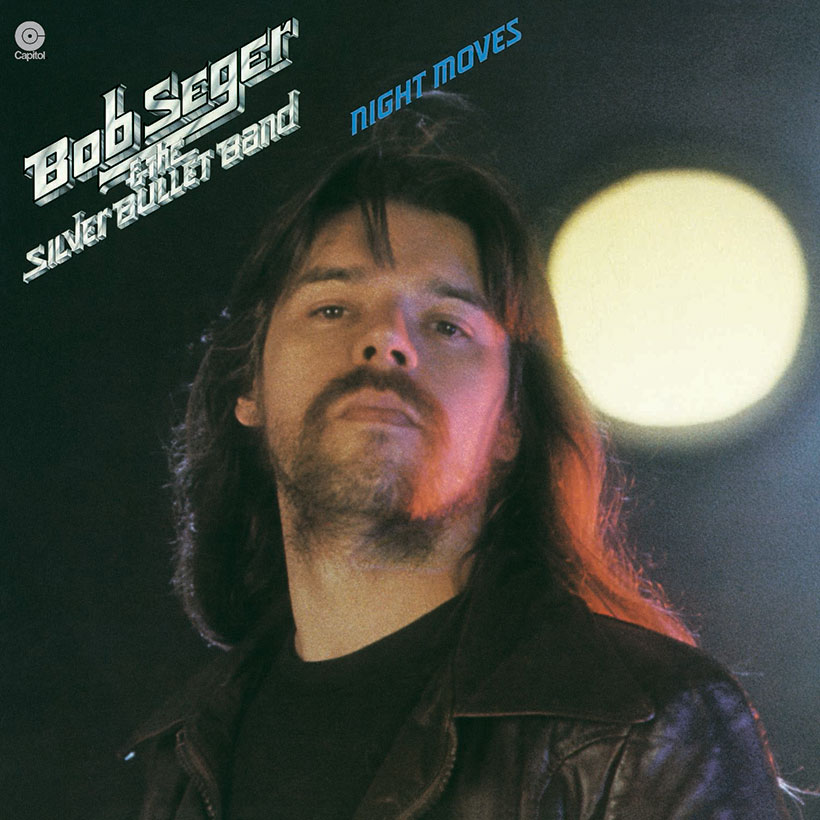
“Ship of Fools,” Bob Seger, 1976

While Seger’s “Night Moves” album — his first studio effort with The Silver Bullet Band — rocks out convincingly, there are a few acoustic tracks with mellower arrangements that show influence from artists like Dylan and Van Morrison. On “Ship of Fools,” Seger tells a sad tale of a sea captain who kept fiercely to himself, foolishly refusing to answer questions about his past. A storm claimed his life, but the narrator lived to tell the tale: “He stood there, like some idol, and he listened, like some temple, and then he turned away… I alone survived the sinking, I alone possessed the tools, on that ship of fools…”

“I Was a Fool to Care,” James Taylor, 1975

There are several tracks on Taylor’s mostly uplifting 1975 LP “Gorilla” that really tug at the heartstrings. Look no further than “I Was a Fool to Care,” which focuses on the pain of being hoodwinked by a former lover. His denial of her dishonesty only made the pain worse: “Had I listened to the grapevine, I might have had my doubts, but I did my level best just to block them out, /’Cause love is so unwise and love has no eyes, and it took a while for a fool to see what his friends were on about…”

“Why Do Fools Fall in Love?” Frankie Lymon and The Teenagers, 1956

One of rock ‘n roll’s earliest tunes, this classic reached #6 in early 1956 for the New York-based group when Lymon was only 15.  Twenty-five years later in 1981, Diana Ross had a #7 hit with her vivacious rendition.  The pessimistic lyrics, co-written by Lymon and two other members of The Teenagers, regard love as a dangerous place for gullible types: “Love is a losing game, love can be a shame, I know a fool you see, for that fool is me! /Tell me why, who do fools fall in love?…”

“Fool to Cry,” The Rolling Stones, 1976

Lead guitarist Mick Taylor had just left The Rolling Stones when this Jagger-Richards ballad was recorded in late 1974.  It ended up as the first single from the group’s 1976 LP, “Black and Blue,” and reached #10 on the US singles chart.  The lyrics describe a man who has the love of family and ought to feel grateful and happy but nevertheless feels sad and can’t seem to pinpoint why: “I put my head on her shoulder, she whispers in my ear so sweet, you know what she says? ‘Ooh, daddy, you’re a fool to cry, you’re a fool to cry, and it makes me wonder why’…”

“Who But a Fool,” Bonnie Raitt, 1986

Always a critic’s favorite, Raitt cultivated a modest but loyal fan base that consistently put her work in the Top 30 on the album charts throughout the ’70s. In the ’80s, she hit a rough patch before the overdue Grammy/platinum success of the early ’90s. The 1986 album “Nine Lines” did poorly, but it included a wonderfully funky track that wonders who falls for the man who steals hearts and is unfaithful: “Anybody on the street knows that you cheat, /The damage that you’re doin doesn’t cross your mind, /Steal the heart just like a thief, /Who but a fool lets a thief into paradise? Tell me, tell me, tell me, /Who??…”

“Fool on the Hill,” The Beatles, 1967

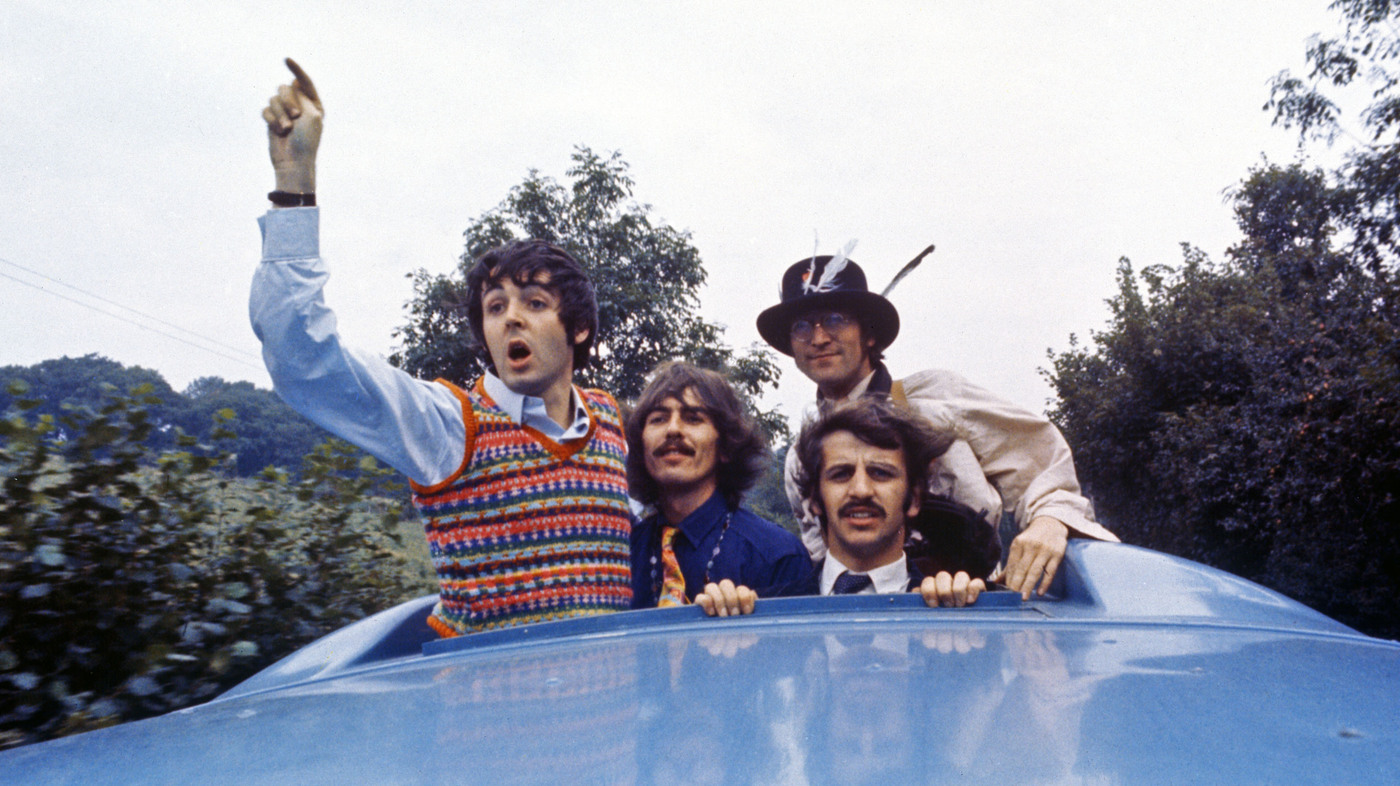
This wistful Paul McCartney ballad showed up in a scene from The Beatles’ haphazard experimental film project, “Magical Mystery Tour,” which followed the spectacular success of the “Sgt. Pepper” LP in late 1967.  The Beatles never released “Fool on the Hill” as a single, but the Latin/jazz/bossa nova combo led by Sergio Mendes had a #8 US hit with their version the following spring.  McCartney said the lyric refers to a solitary man — “kind of like the Maharishi with his giggle” — who is not well understood by others but is actually wise.   “The man with the foolish grin is keeping perfectly still, but nobody wants to know him, they can see that he’s just a fool…”

“Poor Damned Fool,” Harry Chapin, 1978

Chapin was a talented song craftsman, especially when it came to lyrics. He could tell a story that grabbed us by the lapels and pulled us in. On the otherwise lackluster LP “Living Room Suite,” this song shines through, taking an unusual approach in which the guy who gets the girl feels sorry for the guy before him who let her get away: “I’ve heard ’bout finders keepers, and how losers are the weepers, /It’s OK, I know it’s my lucky day, still I just got to say, /That he’s a poor damned fool ’cause he went and let you go now, /Just a poor damned fool, he never will know now…”

“A Fool’s Paradise,” Lazarus, 1973

The late Billie Hughes was the singer-songwriter-guitarist behind Lazarus, a three-man group from Texas who recorded only two albums in the early ’70s, but oh, what fine albums they were. Songs like “Blessed,” “Warmth of Your Eyes” and “Ladyfriends I and II” boast shimmering harmonies and Hughes’ strong tenor out front. On their second LP, the title track warns us not to get fooled by fleeting visions of a false Eden: “A fool’s paradise ain’t like another man’s you ever seen before, /And it looks oh so nice when you first walk in through them open doors, let me go, let me go back home, ’cause I just can’t go on this way…”

“Dancin’ Fool,” The Guess Who, 1974

When The Guess Who’s Burton Cummings wrote this song in 1974, he probably had no idea its title would become so widely used to describe anyone who’s crazy about dancing, whether they’re any good at it or not. It turned out to be the Canadian band’s last of 15 Top 40 hits, reaching #28. Here was a shy guy who hadn’t had the nerve to ask a girl to dance, but once he got out there, he found he had good moves: “Never thought that I could shake and groove it, now I’m a dancin’ fool, /No more time for feelin’ shy and lonely, now I’m a dancin’ fool…”

“Fool For the City,” Foghat, 1974

“Lonesome Dave” Peverett, lead singer and rhythm guitarist for Foghat, came up with this classic mid-’70s rocker, carried by the forceful guitar work of Rod Price. Born and raised in London, Peverett (formerly of Savoy Brown) wrote this after spending two months in the English countryside. “I like the beauty and quiet out there, but I found myself craving the excitement and chaos of the big city,” he said. “That’s where I belong.” Indeed: “Breathin’ all the clean air, sittin’ in the sun, when I get my train fare, I’ll get up and run, /I’m ready for the city, air pollution here I come, /’Cause I’m a fool for the city…”

“Fool in the Rain,” Led Zeppelin, 1979

Robert Plant and John Paul Jones collaborated on this invigorating track for Led Zep’s “In Through the Out Door” album after hearing the lively samba beats played during the World Cup in Argentina. Drummer John Bonham gets quite a workout as the tempo shifts from stutter-step rock to a Latin double-time. Plant devised the words about a poor sap who waits in the rain, looking for the girl who never shows up: “And I’ll run in the rain ’til I’m breathless, when I’m breathless I’ll run ’til I drop, /The thoughts of a fool’s kind of careless, I’m just a fool waiting on the wrong block…”

“Won’t Get Fooled Again,” The Who, 1971

One of the iconic anthems of rock ‘n roll is this seismic finale from The Who’s best LP, “Who’s Next.”  The eight-minute track, one of the first to successfully integrate the synthesizer into a rock song, clocked in at more than eight minutes but was edited down to 3:35 for the single, which reached #15 in the US.  Many have interpreted composer Pete Townshend’s lyrics as pro-revolutionary, but he insists it’s more about keeping realistic expectations where the government is concerned. “Me, I just pick up my guitar and play,” he said, “and I get on my knees and pray we don’t get fooled again…and again…and again…”

******************************

Honorable mentions:

“Fooled Around and Fell in Love,” Elvin Bishop, 1976; “Poor Little Fool,” Ricky Nelson, 1958; “I Pity the Fool,” B.B. King & Buddy Guy, 1993; “Foolish Heart,” Grateful Dead, 1989; “The Bigger the Fool (The Harder the Fall),” Kris Kristofferson, 1978; “Fool For You,” James Taylor, 1972; “Ship of Fools,” Robert Plant, 1988; “Fool For Your Loving,” Whitesnake, 1980; “Dancin’ Fool,” Frank Zappa, 1979; “A Fool For Your Stockings,” ZZ Top, 1979; “You Fool No One,” Deep Purple, 1974, “Ship of Fools,” World Party, 1987.