Is there anybody going to listen to my story?
To tell a story in a compelling way is an art; to do it to a melody is a wondrous thing.
For probably a thousand years or more, great stories of myth, legend and history have been told in song. In the past century, the country, folk and blues genres have told hundreds and hundreds of tales of heartbreak, tales of war and famine, tales of love and tradition. These story-songs had characters, a plot, and a message, much like a well-crafted short story in literature.
Not surprisingly, these ballads tended to last five or six minutes or longer, which largely prevented them from making the pop charts, where the average song lasted no more than three minutes, which is hardly enough time for the lyrics to say much of anything beyond “It’s my party and I’ll cry if I want to” or “I want to hold your hand.”
Still, some songwriters — country, pop, rock — through the decades have shown a fine talent for telling riveting stories in a succinct enough way that they ended up as chart successes, with a beginning, middle and end, even if they went a little beyond the conventional song length. I’ve selected a handful of tracks that offer a healthy cross section of story-songs from the ’50s, ’60s, ’70s and ’80s. Some topped the singles charts, some were far more obscure tracks by major artists, but all are fascinating stories set to song.
*************
“Taxi,” Harry Chapin, 1972
 Great story-songs paint an aural picture, a visual place where we can understand what’s going on with the lead characters. In the case of this remembrance from Chapin’s real past, there’s Harry, the taxi driver, and Sue, the wealthy lady who was once his lover. They meet again by chance when she hails his cab, and they share an uneasy moment. “She was gonna be an actress, and I was gonna learn to fly…” Neither one achieved their dreams, evidently, but as they part, he appears to be content just driving a cab, while she seems unhappy in whatever wealthy enclave she ended up. Chapin’s debut single reached #24 on the pop charts in the fall of 1972.
“Paradise By the Dashboard Light,” Meat Loaf, 1977
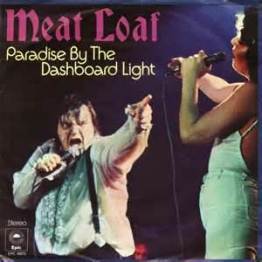 The entire “Bat Out of Hell” album was worthy material for a Broadway stage play, with multiple stories about the exploits of numerous characters conjured up by lyricist Jim Steinman for his pal, Mr. Loaf, to sing. None was more cinematic than “Paradise By the Dashboard Light,” the vivid story of a teenage boy hoping to seduce his girlfriend. They volley back and forth until she asks for his undying love in exchange for a night of passion (“What’s it gonna be, boy, yes or no?” “Let me sleep on it”). It’s still acted out all these years later by boomer men and women at bars and parties across America.
“Papa Was a Rolling Stone,” Temptations, 1972
 Motown artists were known for short, punchy dance tunes, but they weren’t opposed to taking a stab at the story-song. The Temptations hit it big with this urban tale of a family who struggled to move on after their deadbeat father flew the coop and then died (“on the Third of September, a day I’ll always remember”). It was originally recorded as an epic 12-minute track with multiple instrumental passages (including a nearly 4:00 introduction), and even the Top 40 version clocked in at nearly seven minutes. The vocal group’s final #1 single set the tone for many more soul records that told stories over the next decade.
“Uneasy Rider,” Charlie Daniels Band, 1973
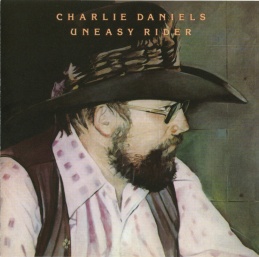 This song goes on and on with thirty (30!) triplets that tell the amusing story of a hippie from California who’s stuck in Mississippi with a flat tire and has to do some fast talking to avoid a beating from a gang of rough rednecks. Standard country fare, perhaps, but it ended up on the mainstream Top 40 at #9 in the summer of 1973. It helped expand the appeal of country rock beyond the confines of the Deep South, with numerous country-rock groups hitting the Top Ten over the next several years.
“Rocky Raccoon,” Beatles, 1968
 By the time of the “White Album,” the Beatles had tried just about everything in the way of song structure, so it was only a matter of time before they (actually Paul McCartney) came up with a story-song. “Rocky Raccoon,” with an arrangement dominated by acoustic guitar and jangly piano, is basically a country-western yarn with McCartney front and center singing about South Dakota rivals Rocky and Dan, and the object of their competing affections, a girl named Magill (“who called herself Lil, but everyone knew her as Nancy”).
“A Boy Named Sue,” Johnny Cash, 1969
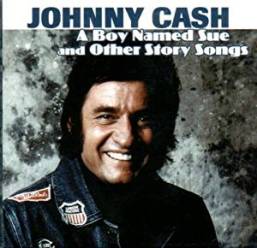 The late great Johnny Cash was deeply rooted in country music but periodically crossed over into the pop music scene, most notably with his #2 hit “A Boy Named Sue” in 1969. The tune tells the story of a boy whose father left his family but not before naming his son Sue to make him strong and defiant in the face of adversity. The boy hated the name, naturally, and eventually learned why his father had done this, but vowed to name his own son “Bill, or George, or any damn thing but Sue!”
“Me and Bobby McGee,” Janis Joplin, 1971
 In 1969, songwriter Kris Kristofferson wrote this poignant story of two drifters (male and female) trying to make something of their hardscrabble lives. It was first recorded by Roger Miller (a #12 hit on the country charts), then by Kristofferson himself, and then Gordon Lightfoot, and in those versions Bobby (Bobbi?) was the woman. But then it was recorded by Janis Joplin in 1970 only a few days before her death, and Bobby became the male character. Her version went to #1 on the pop charts in the spring of 1971 and remains the definitive rendition.
“The Wreck of the Edmund Fitzgerald,” Gordon Lightfoot, 1976
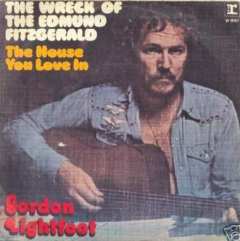 Canada’s folk hero had been recording and touring for more than ten years when he scored his biggest chart success with his ode to the sunken freighter. It resonated with Americans and Canadians alike, especially those who lived near the Great Lakes and know all about the ferocious storms that have laid claim to dozens of vessels through the years. It’s a great story artfully told but, frankly, one of Lightfoot’s more boring songs, featuring only three chords stretched out over seven verses.
“American Pie,” Don McLean, 1972
 Not so much a story as a historical treatise, “American Pie” took listeners on a journey, told in enigmatic language, through the evolution of rock and roll from its birth in 1955 to 1971, when the song was written. It has earned a place as one of rock’s true anthems, with its veiled references to icons like Buddy Holly, Bob Dylan, The Beatles, The Byrds and The Rolling Stones, and events like Woodstock and Altamont, and how they changed both popular music and popular culture.
“Ode to Billie Joe,” Bobbie Gentry, 1967
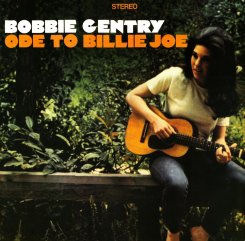 This sleepy, sultry number about a fictional Deep South tragedy would’ve worked perfectly in the soundtrack to “In the Heat of the Night,” the Oscar-winning movie from the same year. As it is, the song was a big #1 hit on the pop charts for then-newcomer Gentry, who wrote it with sensitive, descriptive lyrics. It tells the tale of a rural Mississippi family’s reaction to news of the suicide of local boy Billie Jo MacAllister at the Tallahatchie Bridge, the subsequent passing of the family patriarch, and the effects of the two deaths.
“Alice’s Restaurant,” Arlo Guthrie, 1967
 Perhaps the longest story in popular music (and subsequently made into a feature film), “Alice’s Restaurant” is an 18-minute rambling account (apparently true) of what happened to songwriter Guthrie in Stockbridge, Massachusetts, one Thanksgiving Day during the Vietnam War protest years. It’s mostly comic and whimsical in the telling, although the underlying message is one of sadness and disbelief at the folly and absurdity of war as well as the justice system’s overreach.
“Same Old Lang Syne,” Dan Fogelberg, 1981
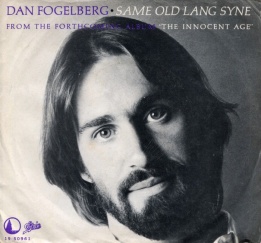 This tale tugs at the heartstrings, as many Fogelberg songs do. The narrator runs into his old girlfriend in the grocery store on Christmas Eve, and they end up drinking a six-pack in her car while recalling the good old times…but they say their goodbyes and, presumably, never cross paths again. It struck a chord with many people who recall past flings and relationships, and Fogelberg deftly weaved in a few bars of “Auld Lang Syne” as the song concludes. It reached #9 on the charts and still gets plenty of airplay during the Yuletide season.
“Take the Money and Run,” Steve Miller Band, 1976
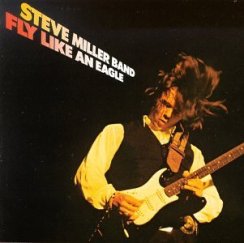 “This is the the story ’bout Billy Joe and Bobby Sue…” For his hugely successful LP “Fly Like an Eagle” in 1976, Steve Miller came up with this tale of two young outlaws on the run from their various crimes, kind of a modern-day Bonnie and Clyde. It reached #11 as the first of three hits from the album that year. Film director Quentin Tarantino has said he modeled the depraved murderers in his movie “Natural Born Killers” after the felonious couple Miller described in the song.
“Jack and Diane,” John Cougar Mellencamp, 1982
 “Little ditty ’bout Jack and Diane…” John Mellencamp was still Johnny Cougar when he wrote this commercial story-song about another down-and-out couple who just didn’t have what it took to succeed in life. Allegedly based on the Tennessee Williams play “Sweet Bird of Youth,” Mellencamp sexed it up a bit and gave it a more contemporary bent for the ’80s audience. With a catchy guitar riff and stutter-stop rhythm, it turned out to be one of the biggest hits of 1982, and still gets a ton of exposure today.
“Cortez the Killer,” Neil Young, 1975
 This 11-minute opus, found on Young’s sprawling “Zuma” album, tells the story of Hernan Cortes, the Spanish warrior who fought the native Aztecs to conquer Mexico for Spain in the 16th Century. Young had been reading historical biographies during this period of his life and was moved to write about Cortes and his exploits. The turmoil of the many battles won and lost is symbolically represented in the fiery guitar solo that dominates the track.
“Incident on 57th Street,” Bruce Springsteen, 1973
 Like Dylan, The Boss has written many story-songs over the years, but perhaps none as dramatic as “Incident on 57th Street,” an under-the-radar saga from his “The Wild, the Innocent and the E Street Shuffle” in late 1973. It tells the tragic tale of Johnny and Jane, a couple who live in a New Jersey walk-up with a minimalist view of New York City, and how they try to make do in a rough-and-tumble world in which Johnny feels an undeniable need to prove his manhood in the streets.
“Shooting Star,” Bad Company, 1975
 Writing a story-song was not the exclusive domain of American composers — witness this minor classic by British rockers Bad Company. Found on their “Straight Shooter” LP, “Shooting Star” tells the story of Johnny, the kid who is inspired by The Beatles to become a rock star, has a hit single, becomes famous, and then dies as a victim of the excesses of the rock and roll lifestyle. Singer Paul Rodgers has said this is among his favorites in the Bad Company repertoire.
“Blaze of Glory,” Joe Jackson, 1989
 This one, from Jackson’s extraordinary but underrated 1989 song-cycle “Blaze of Glory,” tells the story of a young musician named Johnny (so many Johnnys in these songs!) who made it big, but then “the ride started to go too fast and Johnny conveniently died.” Jackson, a New Wave iconoclast who was only briefly a mainstream artist (1982’s “Steppin’ Out” in particular), has produced some incredible work in the ’80s, ’90s and beyond, even though no one has seemed to notice.
“Hurricane,” Bob Dylan, 1976
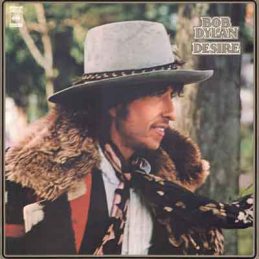 Dylan has written so many story-songs through the years that I could do an entire column just on his work. Perhaps his most notable is the one about real-life boxer Reuben “Hurricane” Carter, who, though far from a saint, got unjustly caught up in a homicide rap, and Dylan was sufficiently outraged to write this lengthy piece that told Carter’s story. It’s a sordid tale of institutional racism at its worst, and Dylan is almost libelously specific in his accusations about the prosecutor and his questionable testifying witnesses.
***************
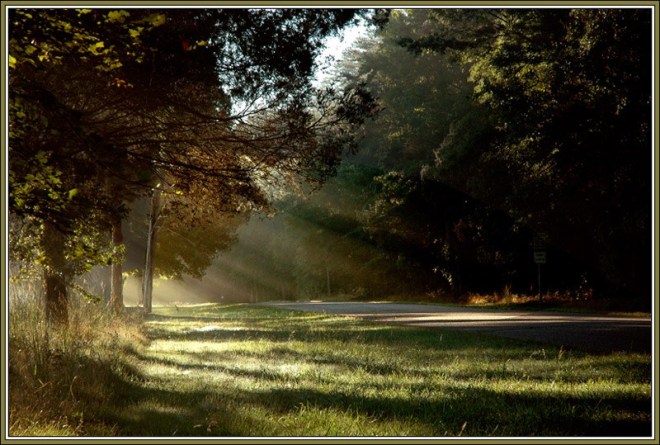
 There are several small cities in the U.S. named Morgantown, most notably in West Viriginia, and I have no idea if Mitchell was referring to any of them in particular or just a town she imagined when she wrote this delightful piece that opens her 1970 LP “Ladies of the Canyon.” The point is, she finds a way to create a warm portrait of a village where everyone greets the day with love and kindness: “When morning comes to Morgantown, the merchants roll their awnings down, the milk trucks make their morning rounds in Morning Morgantown…”
 At the beginning of Fogelberg’s career, he moved from his native Illinois to Nashville to record his first album with producer Norbert Putnam, who added nice touches of cellos and strings to some of the tracks. Although mostly ignored at first, the “Home Free” album eventually sold a million copies after his career took off in the late ’70s. This gorgeous song was the album’s memorable opening track: “Watching the sun, watching it come, watching it come up over the rooftops, cloudy and warm, maybe a storm, you can never quite tell from the morning, and it’s going to be a day, there is really no way to say ‘no’ to the morning…”
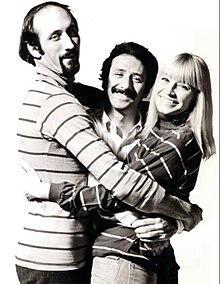 Canadian legend Gordon Lightfoot made his mark in the U.S. as a songwriter before emerging later as a successful singer as well. One of his first songs to make the charts here was “Early Morning Rain,” in a gorgeous rendition by Peter, Paul & Mary. Lightfoot deftly conveys the loneliness of being broke and homesick: “In the early morning rain with a dollar in my hand, with an aching in my heart and my pockets full of sand, now I’m a long way from home, and I miss my loved ones so, in the early morning rain with no place to go…”
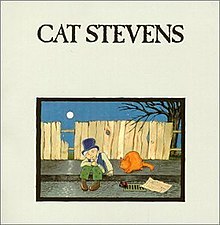 In 1931, English poet Eleanor Farjeon was asked to compose lyrics to the traditional Scottish tune “Bunessan” to create a hymn that gives thanks to the new day. By 1971, Cat Stevens decided to record the gentle piece as “Morning Has Broken,” with piano accompaniment by Rick Wakeman. It became a #6 hit in early 1972, and it’s still included in church services worldwide: “Morning has broken like the first morning, blackbird has spoken like the first bird, praise for the singing, praise for the morning, praise for them springing fresh from the world…”
  Songwriter Irene Higginbotham and lyricist Ervin Drake teamed up to write this jazz standard in 1946, and the late great Billie Holliday recorded it that same year. More than 50 other artists have covered the song, from Sam Cooke and Etta James to Natalie Cole and Tony Bennett, and Diana Ross’s version in the 1972 biopic “Lady Sings the Blues” is the best known, but I’ll take Holiday’s original any day. What a fine lyric about waking up with the blues: “Good morning, heartache, here we go again, good morning, heartache, you’re the one that knew me when, might as well get used to you hanging around, good morning, heartache, sit down…”
 “I’m gonna give you ’til the morning comes, ’til the morning comes, I’m only waiting ’til the morning comes, ’til the morning comes…” More a tune fragment than a bonafide song, this track lasts only 1:17 and finishes side one of Young’s wonderful 1970 LP “After the Gold Rush.” The album was recorded in Young’s Topanga Canyon house with help from musicians from his periodic backing band Crazy Horse, plus Stephen Stills on vocals and an 18-year-old Nils Lofgren handling piano duties.
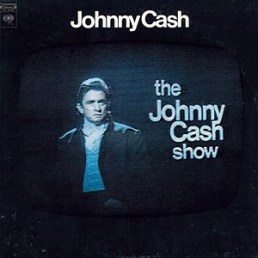 In 1969 Kris Kristofferson wrote this classic hangover song for country artist Ray Stevens, but it’s Johnny Cash who recorded the definitive version in 1970 for his live album from “The Johnny Cash Show.” It’s a lonely piece that explores how we all search for some sort of self-fulfillment but sometimes end up alone trying to cope with the effects of the night before: “Well, I woke up Sunday morning with no way to hold my head that didn’t hurt, and the beer I had for breakfast wasn’t bad, so I had one for dessert, then I fumbled in my closet and found my cleanest dirty shirt, and stumbled down the stairs to face the day…”
 Lightfoot reigns as perhaps Canada’s best-ever songwriter, with well over 250 songs to his credit. His lyrics paint vivid pictures of life and love, work and play, tough times and carefree moments. From his 1972 LP “Old Dan’s Records” is a favorite of mine called “Lazy Mornin’,” which captures the gentle feeling that often strikes us upon awakening: “Another lazy mornin’, no need to get down on anyone, my son, coffee’s in the kitchen, woman on the run, no need to get bothered, I’ll think about Monday when Monday comes…”
 Continuing the theme of sunny optimism that marked their previous #1 hit “Groovin,” songwriters Felix Cavaliere and Eddie Brigati of The Young Rascals came up with the joyous “A Beautiful Morning,” which became a big hit in April 1968, perhaps the happiest hippie anthem in a tumultuous year that needed all the good vibes it could get: “It’s a beautiful morning, I think I’ll go outside for a while, and just smile, just take in some clean fresh air, boy, no sense in staying inside if the weather’s fine…”
 “
“ “If I’ve got to be strong, don’t you know I need to have tonight when you’re gone?, until you go, I need to lie here, and think about the last time that you’ll touch me in the morning…” This bonafide classic was the first success for songwriter Michael Masser, who collaborated with seasoned lyricist Ron Miller to score a #1 hit. Ross, who had young children at the time, preferred recording in all-night sessions, and this track proved especially challenging for the Motown diva before she finally nailed the take she wanted at 5 a.m. as the sun rose.
 This delightful acoustic ditty, which appears on Mitchell’s second LP “Clouds” in 1969, became one of the most beloved songs in her catalog (it was the reason Bill & Hillary Clinton named their daughter Chelsea, they say). Mitchell wrote it while she was living in an apartment in the Chelsea neighborhood of New York City: “Woke up, it was a Chelsea morning, and the first thing that I knew, there was milk and toast and honey, and a bowl of oranges too, and the sun poured in like butterscotch and stuck to all my senses…”
 Written by Sonny Boy Williamson back in 1937, this blues standard has been recorded by dozens of artists in the years since, from The Yardbirds to Van Morrison, from Johnny Winter to Widespread Panic, from Paul Butterfield to Huey Lewis. I really like the version the late blues titan Muddy Waters recorded in 1964 on his only all-acoustic album, “Muddy Waters, Folk Singer.” I love the tune, but frankly, the lyrics sound more than a little unsavory today: “Good morning little schoolgirl, can I go home with you, I’ll tell your mother and your father that I’m a little schoolboy too…”
 This simple blues tune in five verses is one of 10 superb tracks that made up Dylan’s 1975 masterpiece album “Blood on the Tracks.” They say that misery and heartbreak are excellent muses for songwriters, and this album is proof of that. At the time, Dylan was bemoaning the breakup of his marriage to Sara Lownes, and the lyrics to “Meet Me in the Morning” reflect that loss: “They say the darkest hour is right before the dawn, but you wouldn’t know it by me, every day’s been darkness since you’ve been gone…”
 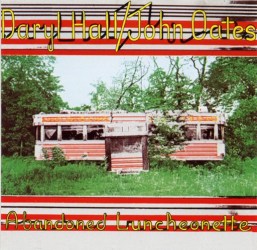 The Philadelphia duo became superstars in the early 1980s, but first Hall and Oates were struggling artists producing soft rock and blue-eyed soul in 1971-72. Their second LP, 1973’s “Abandoned Luncheonette,” included the gem “She’s Gone” (a hit upon re-release in 1976), and also a few other beauties like “Las Vegas Turnaround” and “When the Morning Comes: “Now I’m out in the cold, and I’m getting old, standing here waiting on you, but it’ll be all right when the morning comes…”
 A Canadian folk musician named Bonnie Dobson wrote this thought-provoking song in 1961 about a man and woman who survive a nuclear apocalypse: “Walk me out in the morning dew, no, there is no more morning dew, because what they’ve been sayin’ all these years has come true, it had to happen, you know, now there is no more morning dew…” The Grateful Dead included it on their first record in 1967, and probably the best known version is on Jeff Beck’s 1968 debut LP “Truth,” with vocals by a young Rod Stewart. But I’m partial to the version laid down by Duane and Gregg Allman for a shelved album that never saw release until 1972 after The Allman Brothers Band had become stars.
 Lou Gramm and Mick Jones collaborated many tunes in the Foreigner repertoire. One of their darker songs is this one about a musician who is troubled by a broken relationship and finds himself depressed and unable to reconcile: “Out in the street, it’s six a.m., another sleepless night, three cups of coffee, but I can’t clear my head from what went down last night…” The song reached #15 on the charts in March 1979 as the third single from Foreigner’s second LP, “Double Vision.”
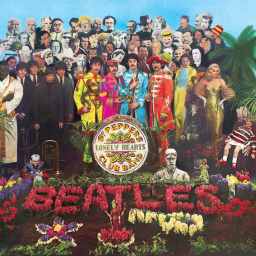 John Lennon claims he wrote this song one morning while eating corn flakes for breakfast and watching TV. “It was just another typical morning in 1967, and I was writing about how some days are just a drudgery — ‘going to work, don’t wanna go, feeling low down’ — and then by evening, you’re feeling better — ‘go to a show, you hope she goes.’ I wrote it very quickly. It’s a throwaway song, but I kind of like it.” It’s one of the 12 songs that comprise The Beatles’ most celebrated work, the landmark 1967 LP “Sgt. Pepper’s Lonely Hearts Club Band.”
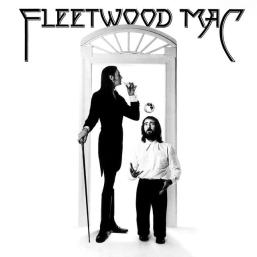 This great Lindsey Buckingham pop song kicked off the 1975 “Fleetwood Mac” album that rebooted the band’s career just as they were about to break up. Buckingham’s pop sensibility and distinctive guitar playing and vocals, combined with harmonies from Stevie Nicks and Christine McVie, gave this track the spark that turned heads from the moment you dropped the needle on that classic LP. The lyrics use days of the week to show the fleeting nature of relationships: “Monday morning you sure look fine, Friday I’ve got traveling on my mind, first you love me, then you fade away, I can’t go on believing this way…”
 While Blood, Sweat & Tears and Chicago were paving the way in the late ’60s and early ’70s with their use of jazz horn instruments in a rock band, a group called Lighthouse had considerable success in Canada with the same genre. Their only US hit was “One Fine Morning,” which offered a sizzling arrangement with guitar, horns and a rollicking jazz piano solo, and songwriter Skip Prokop’s sunny lyrics about a couple hoping to make their dreams come true: “One fine morning, girl, I’ll wake up, wipe the sleep from my eyes, go outside and feel the sunshine, then I know I’ll realize that as long as you love me, girl, we’ll fly…”
