Shall I tell you about my life?
I’ve found that many, possibly a majority, of American fans of Fleetwood Mac are unfamiliar with the name Peter Green. And that’s a shame, even an outrage, and I hope this post this week helps open a few eyes to his importance to the band’s history, and to rock and blues music in general.
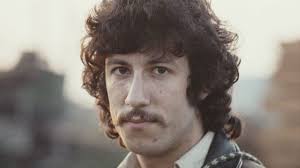
Green, who passed away July 25 at the age of 73, was the brilliant, influential guitarist and founder of the British blues band that he chose to call Fleetwood Mac, named after the rhythm section of drummer Mick Fleetwood and bassist John (Mac) McVie.
He was an enormously crucial figure in England during his tenure with the band, which ran for only three years from 1967-1970. In 1969, Fleetwood Mac was the biggest group in England, selling more records there than The Beatles and The Rolling Stones. In the U.S., though, Green and his band were known only to blues aficionados and rock music

L-R: Fleetwood, Green, Spencer, McVie
geeks. The first three albums — “Fleetwood Mac” (1968), “Mr. Wonderful” (1968) and “Then Play On” (1969) — were all Top Ten hits in Britain, but they barely made the Top 200 here.
Same was true for their singles, “Albatross” (#1), “Man of the World” (#2), “The Green Manalishi” (#10) and “Oh Well” (#2) — huge hits in England that failed to chart in the U.S. (except “Oh Well,” which stalled at #55). It wasn’t until nearly a decade later, after another incarnation of Fleetwood Mac became international superstars, that Green started earning more recognition here, even though relatively few of the band’s new fans took the time to go back and listen to Green’s pivotal contributions on those early LPs and singles.
His time in the limelight was relatively brief because of inner demons that haunted him almost daily and got worse as time moved on. He had low self-esteem and suffered from mental illnesses that were made far worse from experimentation with drugs, especially LSD. Green didn’t like the idea of being paid for his talent, choosing instead to withdraw from the public eye and society in general. Just as Pink Floyd had Syd Barrett, Fleetwood Mac had Peter Green, two creative leaders who went mad under the pressure and left before their bands ended up going mega-platinum.
Still, Green’s legacy is in his recorded works, which has become far more widely 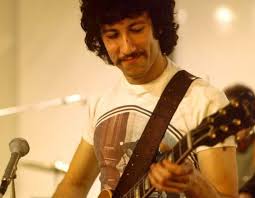 appreciated in recent years. I certainly knew the highlights of his work in the Sixties, but I confess to missing out on many of the deep tracks and live recordings in his catalog, which I’ve immersed myself in all week. The guy had such a marvelous economy of style with his Gibson Les Paul, and I urge you to treat yourself to a focused listen to the playlist I’ve assembled below.
A measure of his reputation today is the number of top flight media outlets that have prominently featured obituaries this week about Green’s life. It was not just Rolling Stone, NME and Guitar Player that ran articles in recent days; Green was also lauded in lengthy tributes by NPR, CNN, the BBC, Bloomberg, The Atlantic and The New York Times. Even The Economist ran a piece that dares to call him “Britain’s greatest blues guitarist.”
Green was in that generation of young post-war Brits who were energized by the American rock and roll records they heard on “pirate radio” because the BBC wouldn’t play them. “I was passionate about my love for American music, for rock and roll, and somehow it went from that to the blues,” Green said years later. “The music drove me to learn guitar. I really wanted to spread the word about this music.”
He met Fleetwood in 1964 when he joined a local London band called Peter B and The Loons. “When Greenie (as his friends and admirers called him) settled in and trusted us to back him, his playing became a voice no one could ignore,” Fleetwood wrote in his “Play On” autobiography. “He could be running through a blues progression we’d heard a thousand times, but when Greenie played it the old notes sounded new. His tone was wailing, high and lingering. It gave me shivers every night. Still does when I hear the records.”
In the summer of 1966, John Mayall’s Bluesbreakers (the premier blues band at the time) suffered a mighty blow when virtuoso guitarist Eric Clapton left to form the power blues  trio Cream. Mayall, having heard Green at blues festivals, invited him to fill the void many naysayers thought couldn’t be filled. Imagine their surprise when they heard Green’s beautifully crafted guitar parts on the group’s 1967 LP, “A Hard Road,” or the stunning solos he served up in concert. Green actually added value to the band because he also played a mean harmonica, and more important, he contributed original blues songs and sang them, something Clapton wasn’t doing yet.
When Green was given free studio time one day to record demos of five originals, he invited Fleetwood and McVie to play behind him. Recalls Fleetwood, “One instrumental number was a dirty bit of Chicago-style electric blues, and it came out fucking hot. ‘I’ve got a name for that one,” Greenie said with a knowing grin. ‘I’m calling it Fleetwood Mac.’ I said, ‘You mean, as in John and me? Why would you call it that?’ He answered, ‘Easy. Fleetwood Mac is the name of my favorite rhythm section.'”
 Green had said he always wanted to play his own music in his own band, and so it was only about eight months later that he broke away from Mayall, coercing Fleetwood to follow him. Bassist McVie had been with Mayall longer and chose to remain, but he was soon convinced to join Green, who was so thrilled to have both men in the lineup that he named the band after them, just as he did with the demo. Jeremy Spencer, a slide guitarist and singer who also did spot-on imitations of several of the early rock and roll pioneers, rounded out the original lineup, and Fleetwood Mac was born.
The foursome became known for their exhilarating concerts, full of Green’s both fast- and slow-tempo blues, uncanny Elvis takes by Spencer, and a dose of naughty  vaudevillian humor from Fleetwood to spice things up. They toured relentlessly around England and Europe, and Green’s reputation as a real boy wonder (he was 21) on guitar only grew. In early 1968, they released their debut LP, “Fleetwood Mac,” which came along at just the right time on blues music’s arc of popularity in Britain, reaching #4 and remaining high on the charts through the end of the year.
The band’s first single, “Black Magic Woman,” didn’t fare as well, stalling at #37 (although a little more than two years later, Santana took Green’s  song to #4 in the US where it remains a staple of classic rock). Fleetwood Mac’s second LP, “Mr. Wonderful,” came out only seven months after the first, and although it did well, peaking at #10, it suffered from muffled production and a sameness to the tracks. Still, with two albums in the Top 30, Fleetwood Mac was one of the hottest bands going.
It was right around this time that Green started telling Fleetwood that he had grown uncomfortable with the fame the band was now getting. “Peter didn’t want to be a star, but he did need to express himself,” wrote Fleetwood. “He had a real presence, off-stage and on, that made people take notice of him. He didn’t want to be king of the castle, although by shining so brightly, he couldn’t avoid it.”

Kirwan and Green
Green’s strategy was to bring in a third guitarist, someone with a style that would mesh well with his, someone who could also write great songs and sing, therefore taking some of the pressure and spotlight off Green. They found that person in 18-year-old Danny Kirwan, who joined the band just in time to participate in their first #1 single, a beautiful instrumental called “Albatross,” which was a radical left turn from the strict blues/rock repertoire.
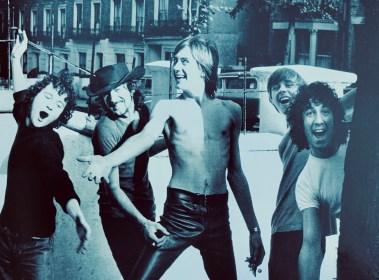
Spencer, McVie, Fleetwood, Kirwan and Green in 1969
“Peter was the type of creative person who needed to evolve,” said Fleetwood. “Once he became comfortable doing a chosen form, his nature was to mutate. The truly talented players did that, and did it well. Look at The Beatles.
“So we added Danny, and he and Peter found a natural fit, with Danny’s sense of melody on rhythm guitar really drawing Peter out, allowing him to write songs in a different style than he’d been able to previously. Rock songs just poured out of him.”
 The third LP, “Then Play On,” the last to include Green, was dominated by Kirwan and his songs, vocals and subtle guitar playing, with Green happy to play a secondary role. The songs he started writing seemed incrementally darker; the next hit single, Green’s “Man of the World,” had lyrics that offered plenty of red flags about his deteriorating mental condition: “Shall I tell you about my life?/ They say I’m a man of the world/ I guess I’ve got everything I need/ I wouldn’t ask for more/ And there’s no one I’d rather be/ But I just wish that I’d never been born…”
It was a classic psychological battle he was fighting in his head: He was eager to get his blues music out there, to play guitar and sing his own songs, but he was uncomfortable with all the attention and, eventually, even the money their success brought in. Like with many bands of that era, dabbling in recreational drugs was all the rage, and Green turned out to be fond of LSD, despite the deleterious effect it was having on his fragile psyche.
Fleetwood: “The complicated mental illness that seized him in 1970 had transformed him from the friend and co-pilot I’d loved so dearly to a mystery I still can’t fathom.  Since the onset of his condition, he had struggled morally with the fact that his gift — his beautiful, singular guitar playing — was something that could be commodified. He refused to acknowledge that his playing should be celebrated, let alone rewarded. Rather than let that happen, he started refusing to play.”
Green, who was born Jewish as Peter Greenbaum, began wearing robes and wanting to have long discussions about Christianity. He fell in with a manipulative cult in Germany, and soon wanted to sell his guitars and give away all his money, living simply off the land. He finally left the band for good in May 1970 after the release of Green’s last song, the harrowing acid-rock excursion “The Green Manalishi,” full of extreme guitar and anguished howling. “Losing Peter was like taking the rudder out of a 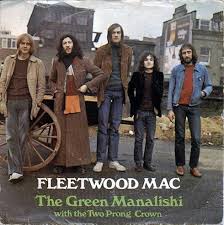 sailboat,” said Fleetwood. “As a band, we were still afloat, but we were drifting, with no map and no land in sight.”
Green went through institutionalization and rehabilitation in the 1970s, living reclusively and avoiding his old mates, who had soldiered on with a revolving door of different guitarists, each with their own set of emotional issues. Even the lineup that recorded the hugely successful “Fleetwood Mac,” “Rumours,” “Tusk,” “Mirage” and “Tango in the Night” albums between 1975-1987 had major relationship problems that were great fodder for songs but detrimental to the band’s emotional well being.
Ironically, Green returned to the business in 1980 and ended up making a half-dozen pretty decent solo albums, the first two (“In the Sky” and “Little Dreamer”) reaching the

“In the Sky” LP
mid-30s on the UK album charts. After another decade of obscurity brought on by depression, he resurfaced in 1997 in the form of Peter Green’s Splinter Group, which included musicians like Nigel Watson and Cozy Powell who helped Green rekindle his career once again. The Spotify playlist below includes healthy servings of the best of both phases of his post-Fleetwood Mac music.
This past February, Fleetwood organized “A Tribute to Greenie” at the London Palladium, with Pete Townshend, Billy Gibbons, David Gilmour, Noel Gallagher, and Kirk Hammett all taking the stage (although Green did not).
As Premier Guitar put it this week: “If a true sign of a guitarist’s impact on his art are the players who carry the torch of his influence, Green’s acolytes are an impressive lot. They include former Rolling Stones member Mick Taylor, who replaced him in Mayall’s Bluesbreakers; Clapton himself, who has praised Green as “one of the best”; Aerosmith’s

Green in 2005
Joe Perry; Genesis’ Steve Hackett; the Black Crowes’ Rich Robinson, and Wishbone Ash’s Andy Powell. Gary Moore, who bought Green’s Les Paul from him shortly after Green left Fleetwood Mac, owned it for 36 years before selling the instrument at auction. Since then, it was purchased by Hammett, who paid $2 million and has used it in recent live performances.
The late B.B. King once said of Green, “He had the sweetest tone I ever heard. He was the only one who gave me the cold sweats.”
Stevie Nicks, who joined the band in 1975 as it rocketed to superstardom, had this to say: “It was, in the beginning, called Peter Green’s Fleetwood Mac. I thank you for that, Peter. You changed my life. When Lindsey and I were invited to join the group, I went out and bought all the albums and listened to them, and I was very taken with Peter’s guitar

Fleetwood and Green, 2005
playing. It was one of the reasons I was excited to join the band. My biggest regret is that I never got to share the stage with him. I always hoped in my heart of hearts that that would happen.”
Fleetwood added, “No one has ever stepped into the ranks of Fleetwood Mac without a reverence for Peter Green and his talent, and his belief that music should shine bright and always be delivered with uncompromising passion.”
Rest in peace, Peter. Your legacy is intact.
*********************

.
 find the man himself, signing autographs and taking photos.
 writing and recording with Charlie, but my favorite memories are of simply talking with the man when it was just the two of us alone. Farewell, dear friend, until we meet again.”
 The “Devil” she’s referring to is, of course, “The Devil Went Down to Georgia,” Daniels’ signature song and by far his biggest commercial peak, reaching #3 on the pop charts and #1 on the country chart in the summer of
  1979. It’s essentially a spirited bluegrass workout, telling the story of a competition between Satan and local boy Johnny as to who was the better fiddler. It was featured in the popular film “Urban Cowboy,” won the Country Music Awards’ Single of the Year, and earned the band a Grammy. The album it came from, “Million Mile Reflections,” reached #5 on the pop chart and #1 on the country chart, and reached triple-platinum sales figures.
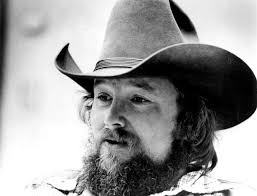 “Nashville Skyline,” “Self Portrait” and “New Morning” LPs.
 The 1974 album “Fire on the Mountain” was the first to be credited to The Charlie Daniels Band, which included Taz DiGregorio on keyboards, Tom Crain on guitars, Fred Edwards and Don Murray on drums and Charlie Hayward on bass. CDB, as their fans called them, toured relentlessly and began hosting and headlining the annual Volunteer Jam in Nashville that year, a tradition that ran for 20 years and featured big names like The Allman Brothers Band, Willie Nelson, Stevie Ray Vaughan, James Brown, Emmylou Harris, Ted Nugent, Chris Stapleton and Billy Joel.
 (“Saddle Tramp”) that were huge in concert.
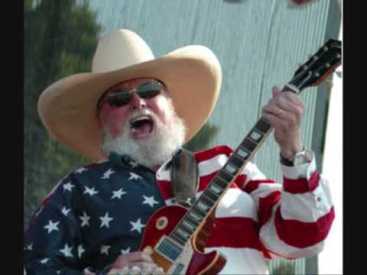 hostage crisis, and “Still in Saigon” (#22) commiserated with veterans who returned from Vietnam with post-traumatic stress disorder and other mental illnesses.
 fine, although I didn’t buy much of it. I saw them in concert once, in the summer of 1982, when I was reviewing concerts for a Cleveland newspaper. Here’s what I had to say at that time: “CDB is a very tight band, and they clearly enjoy what they’re doing. They offered two dozen songs that mixed the newer hits with a liberal dose of tunes from their earlier albums to keep new fans on their toes and older fans happy. Without a doubt, it was Daniels, a mountain of a man with a gentle twang in his fine singing voice, who dominated the proceedings. He played his trusty fiddle on only four songs, not quite enough to suit me, but his guitar and the piano, lead guitar and pedal steel of his colleagues more than compensated.”
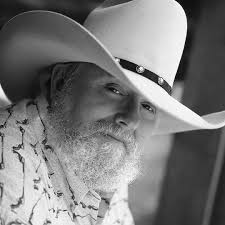 the floor right in front of the stage, with our cowboy hats and bottles of Rebel Yell, and we held up signs requesting ‘MORE FIDDLE!’ The band liked the signs enough that they invited us back stage to party afterwards. What a memorable time hanging out with them. They were all really great, fun guys, and such terrific musicians!”
