Looks like we’re in for nasty weather
Periodically, I use this space to pay homage to artists who I believe are worthy of focused attention — artists with an extraordinary, influential, consistently excellent body of work and/or a compelling story to tell. In this essay, I share the sad tale of a driven, talented musician who reached the mountaintops of rock and then found himself bottoming out, the victim of naiveté and greed: John Fogerty and Creedence Clearwater Revival.
**************
The history of popular music is littered with hundreds of cases of rapacious managers and record labels screwing artists and songwriters out of their rightful share of profits and royalties from the music they have written and recorded.
It happened to The Beatles. It happened to The Rolling Stones. It happened to many bands because they were usually just kids in their teens or early 20s, with no understanding or proper advice on how to avoid the charlatans and greed heads who
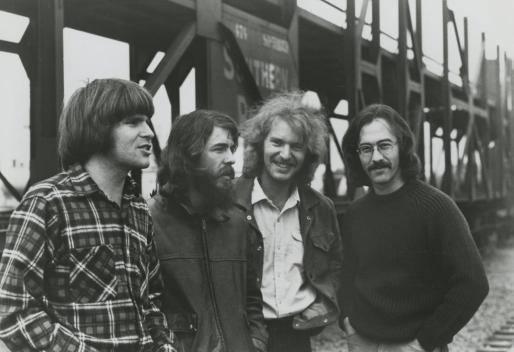
Creedence Clearwater Revival in 1969: John Fogerty, Doug Clifford, Tom Fogerty, Stu Cook
manipulate the artists’ naiveté and make off with most of the money made from the sale and airplay of their hit records.
What happened to John Fogerty and Creedence Clearwater Revival is perhaps the most heartbreaking story I’ve heard about what can and did happen in this brutal, unsavory business.
There are those who will read Fogerty’s 2016 autobiography “Fortunate Son: My Life, My Music” and feel little sympathy. They’ll see him as an egotist with no business sense who made some very bad decisions that haunted him for decades. But I see him as a guy with 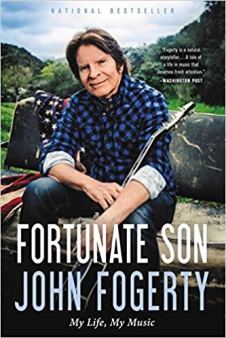 a dream, a strong work ethic, a fierce determination and, perhaps to his detriment, resolute trust that those around him would be true to their word and treat him fairly.
Fogerty grew up in El Cerrito, California, a small town north of Berkeley, where his hardscrabble childhood was marred by divorce, family alcoholism and estrangement. In high school, he formed a band with fellow classmates Stu Cook (bass) and Doug Clifford (drums), eventually recruiting older brother Tom Fogerty (rhythm guitar) from a rival group and branded themselves The Blue Velvets. They were just having fun, Fogerty recalls, playing school events and parties while covering the rock and roll hits of the late ’50s and early ’60s.
In 1964, The Blue Velvets signed to Fantasy Records, a small, San Francisco-based label run by Max and Sol Weiss, specializing in jazz and comedy records. They were renamed The Golliwogs, but had no luck releasing records under that name, and by 1967, a man named Saul Zaentz took over Fantasy Records, and became the group’s manager.
Fogerty had spent a year in active military duty, and upon his discharge, he and the band decided “it was time be more serious about getting really good. We made a regimen of practicing every day, because we figured this was going to be our last fling at the big dream. So we were gung ho. It was acknowledged that I seemed to have a clear idea of what we should be doing musically, because not only was I able to sing, but I understood the music enough that I could teach. I knew how the instruments should sound. My arrangements had become more focused. I had the strong belief that we could actually achieve our dream.”
Zaentz gave the group a pep talk and told them he believed in them, and was eager to sign them to a new contract. “We put faith in him because he seemed like he was our friend,” Fogerty recalls. “At that time, Fantasy consisted pretty much of just the five of us — Stu, Doug, Tom, Saul and me.”
Fogerty said the band had always hated the name Golliwogs, and Zaentz encouraged them to select a new name. In the spirit of other long-winded band names of the time (Quicksilver Messenger Service, Strawberry Alarm Clock), they came up with Creedence Clearwater Revival. As Fogerty remembers it: “Credence Nuball was a friend of Tom’s, and I liked the idea of credence, which means credibility, belief, positive vibe. Then ‘clearwater’ came from an Olympia Beer commercial, and a public service announcement I saw about the push for clean water legislation. And I really liked the i dea of our band having a renewal, a resurgence, so ‘Revival’ fit. It seemed like quite a mouthful, but we loved it.”
Creedence told Zaentz they wanted to record in a proper studio so they could make a more professional-sounding record, so they booked time in RCA Studios in LA. That resulted in their first breakthrough: “Susie-Q,” a cover version of the 1957 Del Hawkins rockabilly classic. The album version was an eight-minute jam with Fogerty solos and vocal adornments, but the single version, at 4:30, hit #11 on the charts, giving them a foothold on the ladder to further success.
And that’s when Zaentz insisted on the new contract. Recalls Fogerty, “We didn’t have any legal representation, but Stu’s father was an attorney, so we decided to have him
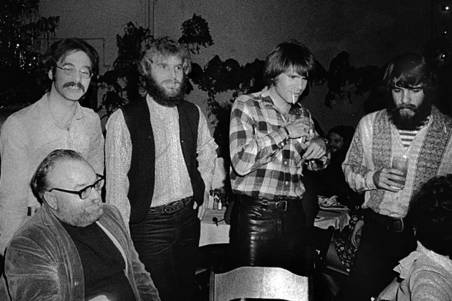
Saul Zaentz (below left) with CCR
give it to his dad to look it over. We were told the contract looked fine and was okay to sign. To this day, I don’t think Stu even showed it to his father. I take my share of the responsibility for signing it in January 1968, but at the time, I thought ‘Saul is our friend. He isn’t going to screw us, right?’
“How innocent and naive we all were. That contract was terrible for all of us financially — our royalty rate was 10 percent, paid out of net sales, not gross — but for me, as the sole creator of the material, there were long-reaching implications. Saul owned the copyright on all our songs, lock, stock and barrel. But I didn’t really discover this until two years later.”
Fantasy was now owed 180 songs over seven years (about 25 per year) — and if not completed once that period ended, they’d still be owed. “In our best year, 1969, we recorded three albums, or 26 songs. Besides me, nobody wrote songs in Creedence that amounted to anything, so when we broke up, the other guys were all set free. Not me. Fantasy Records not only chiseled me out of a fortune, they still owned my future. I was basically enslaved.”
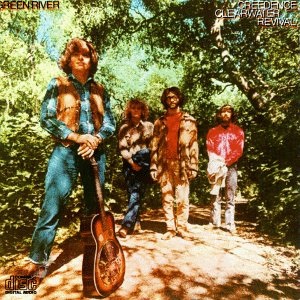 Meanwhile, Fogerty began one of the most remarkable songwriting streaks that rock has ever seen. Between late 1968 and early 1972, Creedence was the nation’s most prolific, most successful band, and all the hit songs (and most album tracks) were Fogerty compositions — “Proud Mary,” “Born on the Bayou,” “Bad Moon Rising,” “Lodi,” “Green River,” “Commotion,” “Down on the Corner,” “Fortunate Son,” “Travelin’ Band,” “Looking Out My Back Door,” “Who’ll Stop the Rain,” “Up Around the Bend,” “Have You Ever Seen the Rain.”
“I was very driven,” he says. “It was life and death. We didn’t have a publicist, we didn’t have a manager, we didn’t have a producer, and we were on the tiniest label in the world, so we had to do it with music. And that pretty much meant me.”
Fogerty perfected a simple approach, writing basic rock and roll melodies with relatable lyrics, and using recording techniques and specific types of guitars to get the sound he  wanted on the records. He said he was disappointed when he discovered that the others in the group weren’t much interested in learning, preferring to party and leave the hard work to Fogerty.
“It was very frustrating, because they chose to see this as me trying to be in control of every detail about our recordings and how they sounded. To some extent, they were right — I took over doing all the vocals, both the lead vocals and the harmonies on overdub, because they just didn’t sound as good when the others sang. But to me, this was all about making the very best records we could, and the results prove I was right.”
Five albums — “Bayou Country,” “Green River,” “Willy and the Poor Boys,” “Cosmo’s Factory,” and “Pendulum” — were all multi-platinum, Top Five chart successes, and “Green River” and “Cosmo’s Factory” reached #1 in 1969 and 1970, respectively. They were every bit as popular as any other band at that time.
*************
My first encounter with Fogerty’s music, like so many of my earliest discoveries, came at a wonderful little independent record store called, oddly enough, Fantasy Records, located in the bohemian Coventry Village section of Cleveland Heights, Ohio, about two miles from my home. Albums cost $3.99 back then, and each day the proprietor would put a different new album on sale for only $1.99. It was a great ploy to get customers to  stop in regularly, and I would ride my bicycle there at least twice a week, eager to see which album was on sale. One day, it was “Bayou Country,” and although I’d never heard of Creedence Clearwater Revival before, I liked what I heard coming out of the store’s sound system, so I plunked down my two bucks and took the album home.
I think I must’ve played that record every day for two months. “Born on the Bayou” in particular simply mesmerized me, and the band’s version of the Little Richard classic “Good Golly Miss Molly” was a close second. Fogerty’s growl was so distinctive and unusual, and the band played tight rock arrangements that grabbed me. And let’s not forget the amazing groove of the album’s closer, “Keep on Chooglin’,” an infectious jam the band often saved as the finale at their live shows. I didn’t know what “chooglin'” was, but I didn’t much care. I sure loved the sound of it.
***************
By 1972, the other members of Creedence mutinied, insisting that they be able to contribute songs and record them their way. Fogerty, against his better judgment, acquiesced, and the resulting album, “Mardi Gras,” was by all accounts a failure, with only Fogerty’s song “Sweet Hitch-hiker,” getting any airplay. It would prove to be CCR’s final album.
 Once Fogerty learned the particulars about the implications of the onerous contract he had signed, he found it so soul-crushing that he lost the desire, and ability, to write hit songs. The muse had left him. Almost as soon as the band was over, he realised the songs no longer flowed like water from a tap. He’d never known where they came from, and when they no longer came, he didn’t know where they’d gone.
What followed were decades of legal strife, bad blood and creative paralysis. In fact, Fogerty even became estranged from his own songs. He refused to perform them for another 25 years, even though this audiences wanted to hear them. The associations were too painful, he said, and he couldn’t stand the thought of Zaentz making any more money from them. Whenever one of his old hits came on the car radio – which happened often – he would turn it off.
Fogerty claims Zaentz repeatedly broke promises and went back on his word in their dealings together. The fact that Zaentz used the money made off Creedence’s music to launch a hugely successful movie producer career only made things worse for Fogerty.
It took him more than a decade to mount a solo comeback. In 1985, Fogerty managed to score a #1 LP, “Centerfield,” with a Top Ten hit, “The Old Man Down the Road,” but even 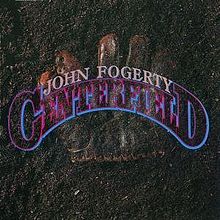 that was tainted after Zaentz sued him, saying “The Old Man Down the Road” plagiarized Fogerty’s earlier hit, “Run Through the Jungle.” He couldn’t believe it. “How can you steal your own song?” He took some satisfaction out of playing both songs live in a courtroom, demonstrating there was only a modicum of similarity, thus winning his case.
But the damage done to his spirit was profound. Fogerty was shaken by the malicious, mean-spirited way in which he had been treated by his adversaries. He withdrew from touring, becoming isolated as he began drinking heavily, losing all sense of the drive and determination that had served him so well in earlier years. It wasn’t until the ’90s when he met his current wife Julie, who he credits with saving his life and turning him around.
He finally began playing his old catalog again, partly because other musicians like 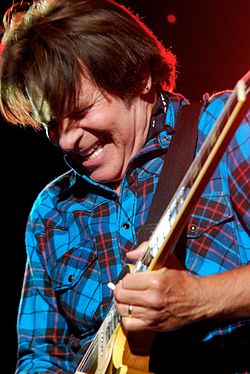 George Harrison urged him to do so. In a reference to Ike and Tina Turner’s #4 hit cover version, Harrison said, “John, if you don’t start playing ‘Proud Mary’ again, people are going to start thinking Tina Turner wrote it!”
In 2013, Fogerty recorded “Wrote a Song for Everyone,” an album of Creedence songs done in collaboration with such artists as Bob Seger, The Foo Fighters, Miranda Lambert, Brad Paisley, My Morning Jacket and Jennifer Hudson. It peaked at #3 on the album charts that year.
These days, Fogerty is much more serene and matter-of-fact about his life and the music business. “When I was coming up, I met so many rock ‘n’ roll people from the first wave who were bitter,” he says. “I was 22 and I’d think: ‘Why is he so angry?’ You’d think with lots of hit records and success that you’d be very happy. Of course, we both know that in a lot of cases, that’s not what happens. In fact, show business seems to be unusually full of folks who things go wrong for. They were justifiably frustrated.
“But I’ve learned that frustration is a destructive emotion, and you just have to let it go, as difficult as that often can be. I focus on the things I’m grateful for, like Julie, and my love for music.
“I’m fortunate I was given the gift of being able to write and record all those Creedence songs that ended up in the soundtracks to millions of people’s lives. What a blessing.”

 organ, Gabriel found himself with less to do, and he consequently developed an obsession for exploring esoteric lyrical concepts and themes, often inspired by ornate poetry, eccentric fantasy characters and the bizarrely literate humor of Monty Python’s Flying Circus, the comedy trouped newly signed to their Charisma record label.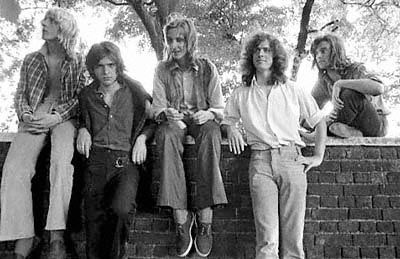
 jockey on a horse. I used to have a lot of fun telling the drummers how to do their drum parts. Once Phil came along, that finished.”
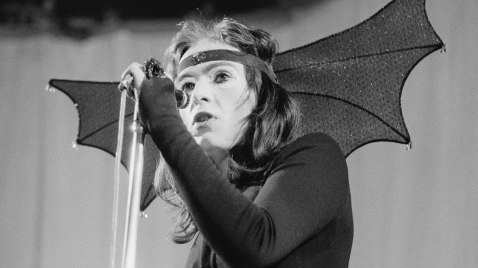 entertainer who wears a flower mask one minute and a weathered dwarf face the next, he introduces each selection with strange neo-fantasy monologs which border on insanity.”
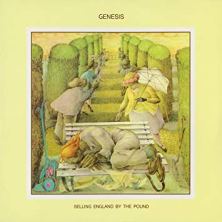 attended their small-venue shows here were loyal but few in number. Full confession: I was not among the Americans who comprised that cult following who were absorbing and worshipping these records upon their release. I loved certain British prog rock groups, especially Jethro Tull and Yes, but for some reason, I wasn’t exposed to the wonder of Genesis until about 1976, after Gabriel had already flown the coop. It took a while (and prodding by the girl I would eventually marry) to go back and learn to appreciate the marvelous complexities of lengthy tracks like “The Magical Box,” “Supper’s Ready,” “The Cinema Show,” “Dancing With the Moonlit Knight,” “The Carpet Crawlers” and a dozen others that featured Gabriel and company at their most inventive.
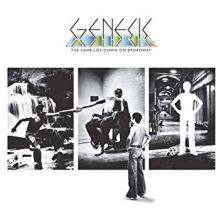 Meanwhile, in 1974, Gabriel, who had quite intentionally placed himself at the vortex of the group’s stage shows, had also come to dominate the songwriting process, much to the consternation of Banks, Rutherford and Hackett. The often impenetrable lyrics to “Lamb Lies Down” were exclusively Gabriel’s domain and, combined with the ever-tricky special effects and numerous costume changes he insisted on, life on tour with Genesis became wearisome, especially for Gabriel, as it turned out.
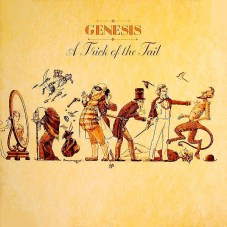 band, and Peter’s were big shoes to fill,” Collins said. They tried hard to find a guy who could convincingly sing challenging touchstones like “Supper’s Ready” or tricky new pieces like “Squonk” but the candidates kept coming up short.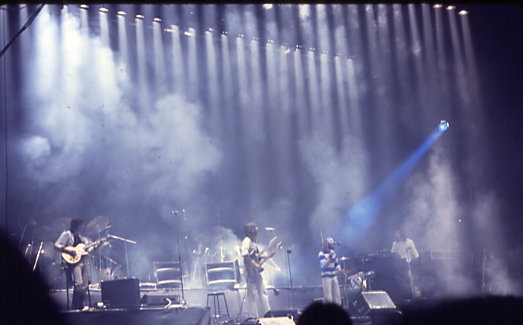
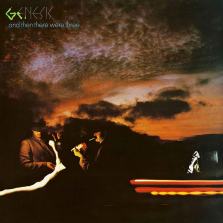 to write actual songs with lyrics, songs that could be hit singles that reached the pop charts. Sure enough, the group’s first entry in the US Top 40 came in the spring of 1978 with “Follow You Follow Me,” peaking at #22, which helped push the album to #14. By 1980’s “Duke,” Genesis had become a very hot commodity here, now filling arenas and making regular appearances on the singles chart with catchy ditties like “Turn It On Again” and “Misunderstanding.”
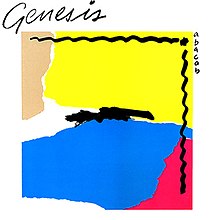 songs that won them the praise of newer, younger audiences had little to do with the mystery and complexity of Genesis’s earlier period.
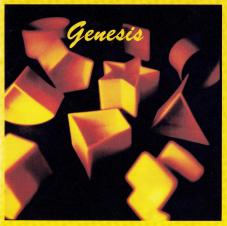 More Night,” “Sussudio,” “Don’t Lose My Number”). He even wrote all the music to the 1999 Disney animated movie “Tarzan,” and it was Collins alone, not Genesis, who made the memorable appearance(s) on both stages at the Live Aid concert event in 1985.
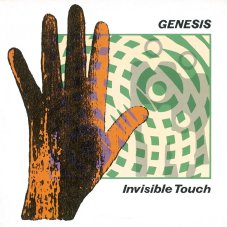 which showed up in tres cool tunes like “Home By the Sea/Second Home By the Sea,” the two-part “In the Glow of the Night”/”The Last Domino” and the 10-minute beauty “Driving the Last Spike.”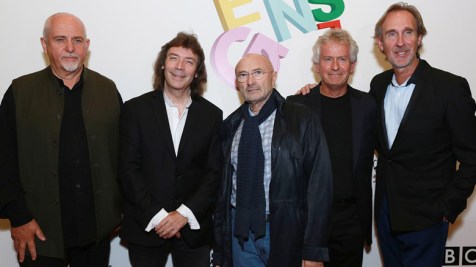
 Hack's Back Pages