Don’t you know I’m feeling mellow

Going back into the catacombs to find another dozen lost classics to feature here is always a labor of love for me. They might be great obscure songs you’ve never heard before, or great songs you heard once or twice many years ago but have long forgotten about. The point is, they’re songs that are well worthy of your attention. Listen up. Maybe with headphones (or just ear buds) if you like.

This time around, I was in a more mellow mood than usual, so I thought I’d let that see where it took me. The result is a list of thoughtful, relaxing tunes that might be just right to accompany your first cup of coffee, or to close out a trying day. We’ll rock out on the next go round. This playlist is for quieter times. I hope you like it.

**************************

“I Think It’s Going to Rain Today,” Dusty Springfield, 1968

Long before he won Oscars in the 1990s and beyond for composing songs and film scores for Pixar movies like “Toy Story,” Randy Newman was a critically acclaimed songwriter in the 1960s and 1970s, writing tunes covered by other artists from Three Dog Night to Barbra Streisand, from The Everly Brothers to Bonnie Raitt. “I Think It’s Going to Rain Today” was perhaps his most widely covered song from that period, with fine renditions recorded by Judy Collins, Nina Simone, UB40, Joe Cocker and my favorite, Dusty Springfield, on her “Dusty…Definitely” LP in 1968, the same year Newman recorded it himself for his debut album. The music is achingly beautiful, while the lyrics (which Newman has said he doesn’t like much) are alternately hopeful and dark.

“Elton’s Song,” Elton John, 1981

When Elton John first revealed in 1976 that he was gay, it wasn’t exactly a surprise but, coming at a time well before homosexuality was widely accepted, it hurt his career for a few years. Album sales dropped off, and hit singles were few and far between. He put his longtime partnership with lyricist Bernie Taupin on the shelf for a spell, instead using Gary Osborne and gay rights activist/musician Tom Robinson. On John’s so-so 1981 LP “The Fox,” Robinson wrote lyrics for a deep track he called “Elton’s Song,” which I recently learned is about the angst and shame of a gay schoolboy crush. I recall finding the music captivating and thinking the lyrics were about a boy who pined for an out-of-reach girl. Either way, a beautiful, poignant piece.

“Hello in There,” John Prine, 1971

Prine, who died last year at 73, wrote and recorded extraordinarily compelling, deceptively simple country folk songs, often with humorous lyrics about daily life and regular folks. “Hello in There,” on the other hand, offers a profoundly melancholy take on aging, and how old people are too often ignored or forgotten in their declining years: “You know that old trees just grow stronger, and old rivers grow wilder every day, /Old people just grow lonesome, waiting for someone to say, ‘Hello in there, hello,’ /So if you’re walking down the street sometime, and spot some hollow ancient eyes, /Please don’t just pass ’em by and stare as if you didn’t care, /Say, ‘Hello in there, hello’…” The song appears on his 1971 debut album and has been covered by Bette Midler, 10,000 Maniacs and others.
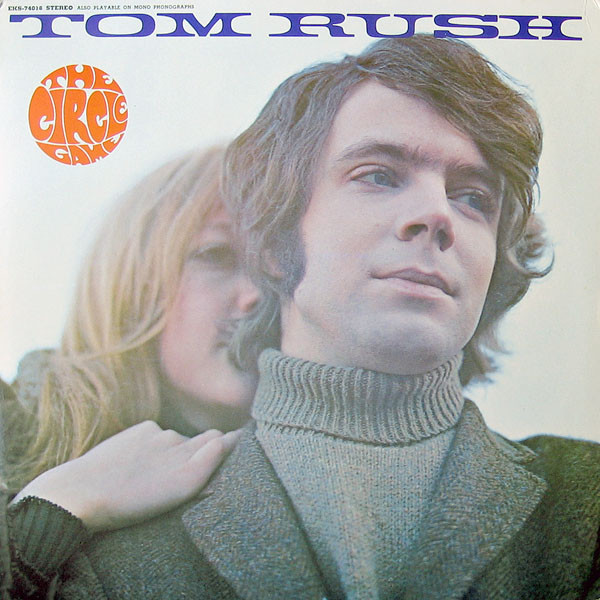
“No Regrets,” Tom Rush, 1968

Rush holds a unique place in the canon of singer-songwriters who popularized the confessional style of the late ’60s and early ’70s. He covered the tunes of Joni Mitchell, James Taylor and Jackson Browne before they began their own recording careers (Mitchell’s “The Circle Game,” Taylor’s “Something in the Way She Moves,” Browne’s “These Days”), but also wrote his own lovely, insightful songs. “No Regrets” may be Rush’s best, carried by his pleasantly gruff baritone and subtle arrangement of guitars and light percussion. It’s one of the better songs about looking back on a relationship that’s ending: “No regrets, no tears goodbye, don’t want you back, we’d only cry again, say goodbye again…”

“Toulouse Street,” The Doobie Brothers, 1972

People tend to have one of two impressions of Doobie Brothers music. Either it’s the solid-rocking, guitar-based tunes of founder/singer Tom Johnston (“Listen to the Music,” “Long Train Runnin'”), or it’s the R&B-leaning, keyboard-based songs of the Michael McDonald era of the group (“Takin’ It to the Streets,” “What a Fool Believes”). Sometimes forgotten in the analysis of this superb band are the contributions of guitarist/singer/songwriter Patrick Simmons, who brought a sweetly melodic sense to their catalog on songs like “South City Midnight Lady” and the hauntingly beautiful “Toulouse Street.” Simmons’s tribute to the French Quarter district of New Orleans uses gentle acoustic picking, flute and easy-on-the-ear vocals that offer a delightful contrast to The Doobies’ other oeuvres.

“How Deep It Goes,” Heart, 1975

When Seattle-based Heart first won a recording contract, it was with a small Canadian label, Mushroom Records, who chose the lush ballad “How Deep It Goes” as the debut single in early 1975. It received scant attention, but it was included on the debut LP, “Dreamboat Annie,” released in Canada in fall 1975 and the U.S. in spring 1976. Heart quickly became known for a hard rock sound through its successful hits “Crazy On You” and “Magic Man,” carried by the astonishing lead vocals of Ann Wilson. While their hard rock approach remained their forte throughout their impressive career, the group’s mellower songs like the 1985 #1 hit “These Dreams” and the aforementioned “How Deep It Goes” mustn’t be ignored.
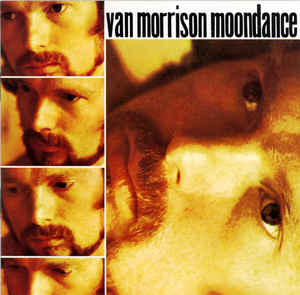
“Into the Mystic,” Van Morrison, 1970

While Morrison’s stream-of-consciousness jazz/ folk music on his 1968 LP “Astral Weeks” was a critical favorite, it sold poorly, so once he signed with Warner Brothers in 1969, he charted a new, more accessible course that embraced soulful horns, chorus and a vibrant rhythm section. The first fruit from that tree was the magnificent “Moondance” album, which has been described as “a rock musician singing jazz, fixated on the power of nature.” It’s an overwhelmingly warm collection of songs that merge Morrison’s new R&B style with the orchestrated leanings of his previous work. In particular, “Into the Mystic” evokes what critic Joe Harrington calls a “visionary stillness, a sense of cosmic harmony” through judicious use of sax, piano, guitar and Morrison’s distinctive vocals.

“Johnny’s Garden,” Manassas, 1972

Following the implosion of the CSN/CSNY axis — probably doomed from the outset by outsized egos and too many talented songwriters in one band — Stephen “Captain Manyhands” Stills continued his proclivity to dominate everything he worked on. His solo debut showcased his multiple talents: prolific songwriting, stunning acoustic and electric guitar playing, earthy production and a gruff, soulful voice. In 1972, he recruited ex-Byrd Chris Hillman and several other top-notch session players to form Manassas, who merged blues, folk, country, Latin and rock. As Stills put it, “Manassas reminded me of Buffalo Springfield at its best. They could play anything.” Deft guitar work and sublime melody make Stills’ “Johnny’s Garden” one of my favorites from the group’s classic 1972 double LP.

“Please Be With Me,” Eric Clapton, 1974

After surviving a harrowing period of heroin addiction, Clapton found himself humbled and seeking a stronger spiritual foundation when he reemerged in 1974. His “461 Ocean Boulevard” LP was startling in its abandonment of the virtuoso blues guitar workouts that had marked his days with Cream and Derek and The Dominos. Instead he embraced gospel, folk, reggae and an acoustic-based blues, all highlighted by a plaintive vocal style. Clapton’s chart-topping cover of Bob Marley’s “I Shot the Sheriff” got all the attention, and I admired the way his band rocked out on guitarist George Terry’s “Mainline Florida,” but I found myself drawn to the serene harmonies and relaxed tempo of the lovely folk ballad “Please Be With Me,” with Eric on dobro.

“For the Roses,” Joni Mitchell, 1972

Joni’s magnificent fifth album was something of a transition. She changed labels, from Reprise to Asylum, and she arranged many of her songs to include Tom Scott’s woodwinds, the first step toward the evolution of Mitchell’s music from folk to jazz, which began in earnest on her next LP, “Court and Spark.” Many of these deeply personal tracks describe various facets of her 1970-1971 relationship with James Taylor, especially “For the Roses,” which examines the down side of fame, both for her and her celebrity lover: “Remember the days when you used to sit and make up your tunes for love, and pour your simple sorrow to the soundhole and your knee, /And now you’re seen on giant screens and at parties for the press, and for people who have slices of you from the company, /They toss around your latest golden egg, speculation, well who’s to know if the next one in the nest will glitter for them so…”
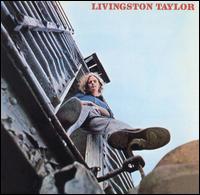
“Good Friends,” Livingston Taylor, 1970

Speaking of James Taylor, his younger brother Livingston has been a very fine singer-songwriter in his own right for decades, content to play in the shadow of such an iconic figure. His similar Carolina-born vocal style is even more nasal, and his aw-shucks approach to whimsical songwriting gives his albums much of their charm. His 1970 debut isn’t the best produced album I’ve ever heard, but Taylor’s original songs are honest and engaging, from the upbeat “Sit On Back,” “Carolina Day” and “Packet of Good Times” to the delicate “Lost in the Love of You” and “Thank You Song.” He wrote the heartwarming “Good Friends” when he was still in high school, and it has been a regular part of his concert repertoire throughout his career.

“End of the Day,” Al Stewart, 1978

From roughly 1967 until 1975, Stewart released six LPs that showed his unique talent for combining folk-rock songs with delicately woven tales of characters and events from history…but no one much noticed. Then came “Year of the Cat,” a #5 album and a #8 hit single in the US in 1976-77, followed by the equally strong LP “Time Passages” in 1978. I played the hell out of these albums and was particularly taken by the guitar stylings of Stewart’s collaborator Peter White, who really shines on tracks like “On the Border” and the lovely “End of the Day,” a lost classic if I’ve ever heard one. It is indeed one of the quintessential songs to play as you’re kicking back in your soft clothes after work watching the sun set.

***************************

Better get your coat, dear, looks like rain

I have zero interest in provoking a debate about climate change. It’s undeniable that damaging “weather events” have been occurring with much greater frequency and intensity nationwide and worldwide in recent years. All I know is, it has sparked my interest in identifying artists who have written about harsh weather in their song lyrics.

I’ve already examined songs about rain (there are hundreds), but I’m not talking about soft summer showers this time. I’m looking at really bad weather — everything from lightning storms to floods, from hurricanes to blizzards, from tornadoes to major wildfires.

I guess it’s good news to announce that there aren’t a lot of songs about disastrous weather. Maybe it’s too depressing a topic. Most who have tackled it have written about how storms (or stormy situations) eventually end, and there’s hope in the aftermath.

I’ve come up with a list of 15 weather-related songs I’d like my readers to become familiar with — great tunes with lyrics that focus, either literally or metaphorically, on the dread and the damage caused by storms of many kinds.

As is customary in this blog, I have included a Spotify playlist at the end, with some “honorable mentions” that just missed the list of featured songs.

*********************

“Ridin’ the Storm Out,” R.E.O. Speedwagon, 1973

Before they became commercially successful as a more pop-oriented group with their “Hi-Infidelity” LP in 1981, R.E.O. Speedwagon was a hard-driving Midwestern rock band out of Illinois, playing clubs and small venues throughout the Great Lakes region and in pockets as far west as Colorado. Their first two albums in 1971 and 1972 stiffed, but their third just barely made the charts thanks to some FM radio airplay for its rollicking title track, “Ridin’ the Storm Out.” It was written early in ’73 when the band was snowbound near Boulder during a blizzard: “Ridin’ the storm out, waitin’ for the thaw out, on a full moon night in the Rocky Mountain winter…”

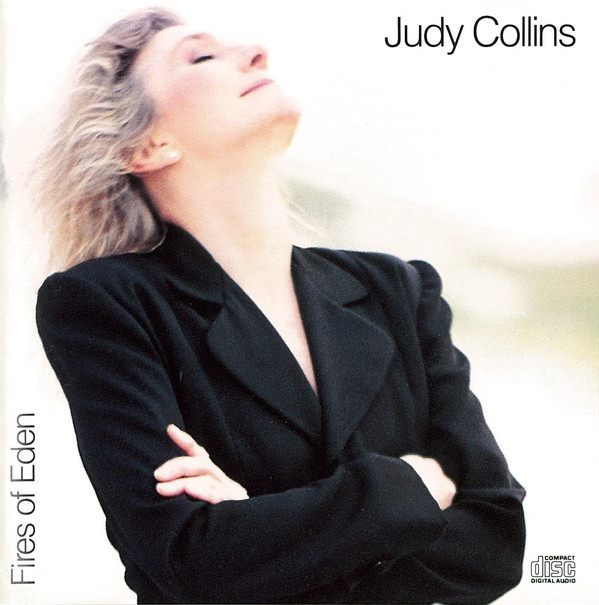
“The Blizzard,” Judy Collins, 1990

Collins made her name in the early-mid 1960s as part of the Greenwich Village folk music circuit, singing cover versions of classic and new acoustic songs, and had her breakthrough Top Ten hit in 1968 with a cover of Joni Mitchell’s “Both Sides Now.” She enjoyed periodic success throughout the ’70s, then slipped a bit in the ’80s until a superb return to form with 1990’s “Fires of Eden.” It opens with one of only a few original songs in Collins’s career, the dramatic story-song “The Blizzard,” which, coincidentally, was about the same Colorado mountain that R.E.O. sang about, where impassable snowstorms are evidently commonplace. She tells her account of her experience hunkering down in a diner with a couple of good-hearted strangers, and offers a reaffirming conclusion as well:

“Said the owner, ‘There’s a big storm on the mountain, good thing we’re open, we could be here for hours, /There’s nothing for miles and it’s too late to get to Denver, /Better not try for the summit tonight…’

“When the world leaves you shivering, and the blizzard blows, /When the snow flies and the night falls, /There’s a light in the window and a place called home at the end of the storm…”

“Electrical Storm,” U2, 2002

When U2 released their second greatest hits compilation, “The Best of 1990–2000,” they included two new tracks, one of which was “Electrical Storm.” It’s a solid U2 song and was rightly released as a single, but inexplicably, it stalled at #77 in the U.S. while it reached #1 in Canada and #5 in the UK. The band recorded two official versions of the tune, one labeled “band version” and one known as “William Orbit Mix,” which took a more toned-down approach. I find British producer Orbit’s take more aurally pleasing and have included it in the playlist. Bono wrote lyrics that effectively equated the tension of quarreling lovers with an impending thunderstorm: “Well, if the sky can crack, there must be someway back to love and only love, electrical storm, baby don’t cry…”

“Texas Flood,” Stevie Ray Vaughan, 1983

Blues music was much in vogue in the late ’60s and well into the ’70s but was no longer holding sway in the early ’80s. Still, there were always newcomers like Stevie Ray Vaughan, the Austin, Texas-based blues guitarist whose 1983 debut LP, “Texas Flood,” made stars like David Bowie take notice who featured Vaughan on his “Let’s Dance” album the same year. Tragically, Vaughan died in a 1990 helicopter crash just as he was achieving the fame he’d hoped for, but he left a superb recorded catalog as his legacy. The blues standard “Texas Flood,” written in 1958 by Larry Davis, became Vaughan’s first single. Davis wrote about how floods prevented him from reaching his girl: “Well, dark clouds are rollin’ in, man, I’m standin’ out in the rain, /Yeah, flood water keep a-rollin’, man, it’s about to drive poor me insane…”

“Bad Weather,” Emily Hackett, 2014

My daughter Emily was collaborating with fellow songwriters Adam James and (future husband) Mikey Reaves when they came up with the idea of drawing a parallel between bad weather and bad relationships. “Sometimes bad weather hits us when we’re not prepared for it, and that can happen with lovers who come back into our lives when they’re not wanted,” she said. The song appeared on her 2014 release “The Raw EP,” which adopts a certain vulnerability in its sound and lyrical themes. “Bad Weather” warns of the need to protect yourself if and when an old flame re-enters your life: “Just when I was healing, feeling good again, I shoulda known you’d come blowing back in, /Boarded all the windows, bolted all the doors, just to keep my heart far away from yours… Now I know, now I know you’re just bad weather…”

“American Storm,” Bob Seger, 1986

Let Seger himself tell the story behind this tune: “People who do drugs probably recognized it right away. That song isn’t from my experience, but from observing the experiences of those around me. I’m no saint, but I’ve never had a serious drug problem. I thought it was a bad thing 30 years ago, but it’s gotten worse. It’s a world problem now.” He said that he would hear coke users talk about “a snowstorm in my nose” and thought he’d use the storm metaphor to describe the struggles of drug addiction. As the lead single from his “Like a Rock” album, it was his 15th Top 20 single, reaching #13: “It’s like a full force gale, an American storm, /You’re buried beneath a mountain of cold, and you never get warm…”

“Before the Deluge,” Jackson Browne, 1974

Browne seemed wise beyond his years from the very beginning, writing world-weary classics like “These Days” when he was only 16. On his poignant third LP, “Late For the Sky,” he penned several sad songs about a friend who died, a relationship that ended too soon and a feeling of missed opportunities. Perhaps most notably, he wrote “Before the Deluge,” which used the Biblical story of the great flood to bemoan the future of Planet Earth and Man’s poor stewardship of it. It’s one of the earliest songs in popular music that warns of a coming apocalypse due to our own negligence: “On the brave and crazy wings of youth, they went flying around in the rain, /And their feathers, once so fine, grew torn and tattered, /And in the end, they traded their tired wings for the resignation that living brings, /And exchanged love’s bright and fragile glow for the glitter and the rouge, /And in the moment, they were swept before the deluge…”

“Avalanche,” Beth Neilsen Chapman, 1990

Chapman is one of my favorite singer-songwriters of the ’90s and since. Her well-crafted songs became hits for a broad range of country and pop singers over the years, from Trisha Yearwood and Willie Nelson to Bette Midler and Bonnie Raitt. Her eponymous debut album from 1990 includes some of her best work, as she writes tenderly and with firm resolve about relationships and life events: “Life Holds On,” “That’s the Easy Part,” “Years,” “Walk My Way” and “All I Have.” Also on that gorgeous LP is a tune called “Avalanche,” in which Chapman describes the heartbreak of a romantic breakup as an overwhelming avalanche of painful emotions: “I wasn’t ready for the avalanche when we let things slide, /I wasn’t ready for the words you chose when you said goodbye, or just how suddenly the roads could close between your life and mine…”

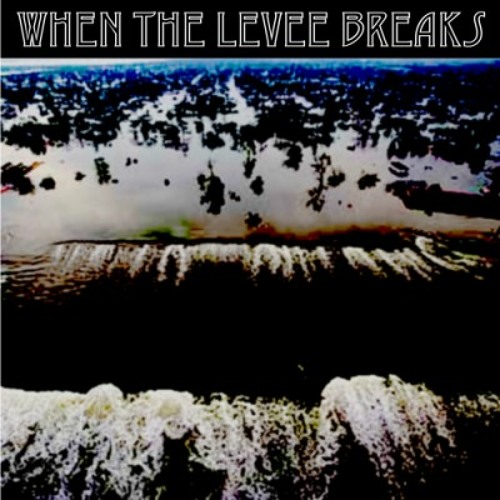
“When the Levee Breaks,” Led Zeppelin, 1971

In 1929, blues singer Lizzie “Memphis Minnie” Harris collaborated with Kansas Joe McCoy to write and record this song about the Great Mississippi Flood of 1927, which devastated 25,000 square miles, killed hundreds and displaced several hundred thousand residents. It was written as an acoustic blues, but when Jimmy Page got a hold of it in 1971, he turned it into a thunderous stomp that more closely reflected the havoc created by the flood. Page’s riffs and Plant’s vocals and harmonica do justice to the song’s roots, but John Bonham’s drums in particular are positively cataclysmic on this track. Minnie’s lyrics spoke of the destruction and consequences in stark terms: “If it keeps on rainin’, levee’s goin’ to break, when the levee breaks, I’ll have no place to stay, /Cryin’ won’t help you, prayin’ won’t do you no good, when the levee breaks, mama, you got to move…”

“Thunder and Lightning,” Chi Coltrane, 1972

Hailing from Racine, Wisconsin, Coltrane (no relation to jazz legend John) showed early promise as a pianist, singer and songwriter. She formed a jazz-blues band called Chicago Coltrane that attracted the attention of Columbia Records, who signed her to a contract in 1972. She found considerable success with her debut single, “Thunder and Lightning,” which reached #17 on US pop charts in the fall of ’72. When things dried up for her here, she moved to Europe and found success there on Teldec Records well into the ’80s. On her only US hit, she found the excitement of infatuation to be thrilling but scary, like a lightning storm: “I don’t know how to handle it, it’s more than I would dare, /I wouldn’t try to run from it, it reaches everywhere, /Thunder and lightning, ooh yeah, I tell you it’s frightening…”

“Like a Hurricane,” Neil Young, 1977

In 1975, Young was recuperating from vocal cord surgery and was told to refrain from singing for several months, but that didn’t stop him from continuing to write songs, including this simple but scorching rocker. “Like a Hurricane” was written in the back of a car during an evening of barhopping. According to a friend, Young met and became obsessed with a girl he met at one bar, and wrote this couplet about her: “You are like a hurricane, there’s calm in your eye.” When Young and his band returned to his ranch, they started jamming on the song, which started sounding like a metaphorical hurricane with plenty of furious guitar soloing. He eventually added more words about the woman and her effect on him: “I’m gettin’ blown away to somewhere safer where the feeling stays, /I want to love you but I’m getting blown away…” T wo years later, the song was recorded for his “American Stars ‘n Bars” LP and became a concert favorite on every tour thereafter.

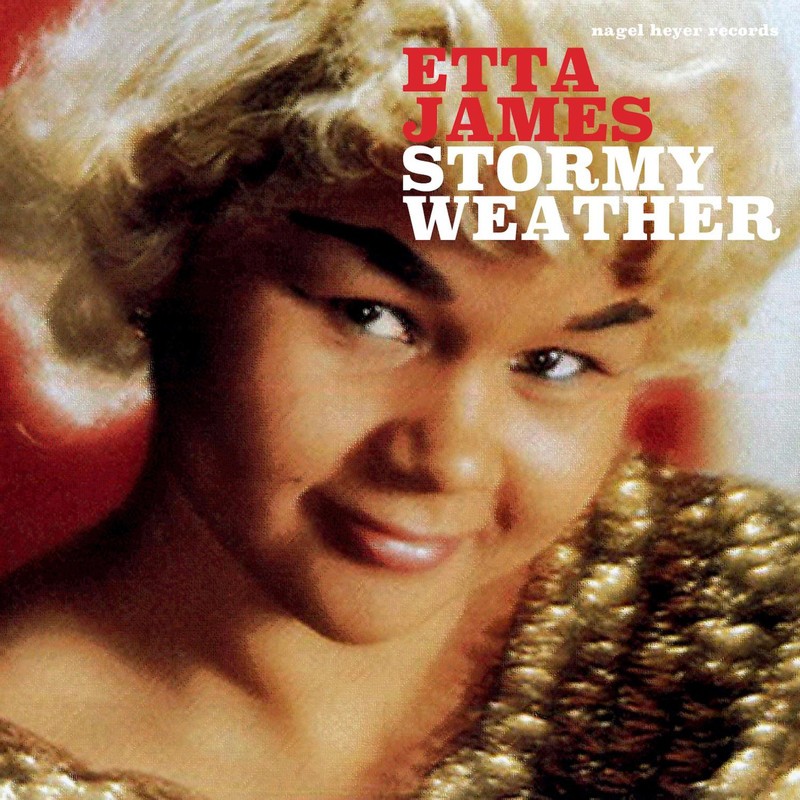
“Stormy Weather,” Etta James, 1960

Songwriting great Harold Arlen, the man behind the timeless music of “The Wizard of Oz,” combined forces with lyricist Ted Koehler in 1933 to compose “Stormy Weather,” one of the all-time best torch songs. First performed and recorded in 1933, it was later popularized by Lena Horne and then Billie Holiday. My favorite version is the one by Etta James, recorded in 1960 for her “At Last” album. A broad range of artists from Frank Sinatra to Joni Mitchell have also taken a shot at it in more recent decades. In the lyrics, a woman bemoans the loss of her lover, pining for his return, and dealing with miserable weather (literally and figuratively) in his absence: “Life is bare, gloom and misery everywhere, /Stormy weather, just can’t get my poor self together, /I’m weary all the time…”

“Here Comes the Flood,” Peter Gabriel, 1977

The former front man of British prog rock heroes Genesis began his solo career in 1977 with a strong album of mesmerizing music and enigmatic lyrical themes. The sprightly “Solsbury Hill” received most of the attention as the hit single in the UK and on FM radio here. Gabriel has always said he is most fond of “Here Comes the Flood” from this album, although he regretted that he allowed its soundscape-like passages to be overproduced. Lyrically, it is more direct, with Gabriel offering words that speak bluntly about what happens when flood waters arrive: “When the flood calls, you have no home, you have no walls, /In the thunder crash, you’re a thousand minds within a flash, /Don’t be afraid to cry at what you see…”

“Weather in My Head,” Donald Fagen, 2012

In contrast to the more cryptic lyrics he was known for when writing the Steely Dan catalog with partner Walter Becker, Fagen’s words on some of his solo albums are more obvious. On his 2012 LP “Sunken Condos,” there’s a very catchy tune called “Weather in My Head” that makes excellent use of nasty weather motifs to depict a relationship that has ended and how it has messed with his emotional balance: “Girl, when you hurt me, when you told those lies, it’s like a typhoon exploded behind my eyes… The air is boiling, sun on my back, inside I’m frozen, girl, I’m about to crack, /They may fix the weather in the world just like Mr. Gore said, /But tell me, what’s to be done, Lord, ’bout the weather in my head…”

“Riders on the Storm,” The Doors, 1971

The sound of thunder reverberating, and of rain hitting pavement, are utilized throughout The Doors’ haunting swan song, the unforgettable “Riders on the Storm,” which closes their last album with Jim Morrison, 1971’s “L.A. Woman.” The song creeps along like a slowly approaching storm, with Ray Manzarek’s immediately identifiable keyboard and Morrison’s commanding vocals dominating the proceedings. The lyrics warn about picking up hitchhikers and staying safe when the weather turns vile: “If you give this man a ride, sweet memory will die, /Killer on the road… Into this house we’re born, into this world we’re thrown, /Like a dog without a bone, an actor out on loan, /Riders on the storm…”

*************************

Honorable mention:

Bad Weather,” Poco, 1971; “Lightnin’ Strikes,” Lou Christie, 1966; “Down in the Flood,” Bob Dylan and The Band, 1972; “Thunder and Lightning,” Phil Collins, 1981; “Rock You Like a Hurricane,” The Scorpions, 1984; “Shotgun Down the Avalanche,” Shawn Colvin, 1989; “Lost in the Flood,” Bruce Springsteen, 1973; “Thunder and Lightning,” Thin Lizzy, 1983; “Storms,” Fleetwood Mac, 1979; “I Feel the Earth Move,” Carole King, 1971; “Shelter From the Storm,” Bob Dylan, 1975; “Lightning Crashes,” Live, 1992.