For more than a decade, I have been writing about the classic rock music of the 1955-1990 era and the musicians who made it.
I’ve never cared all that much about the soap-opera side stories of who sold their back catalog for a zillion dollars, who married/divorced/slept with whom, who got shafted by unscrupulous managers and record companies, or who self-destructed from overdoses or frightfully bad behavior.
For me, it’s all about THE MUSIC. The artistry, the instrumental and vocal performances, the lyrics, the recorded works.
So when just about every media outlet out there published extensive obituaries and tributes recently following the death of record industry honcho Clive Davis on June 22 at age 94, I sighed and thought, Well, just about everyone I’ve ever written about in depth has been a musician, but I guess I’ll have to write something about him for the blog. He was simply too big a figure to ignore.
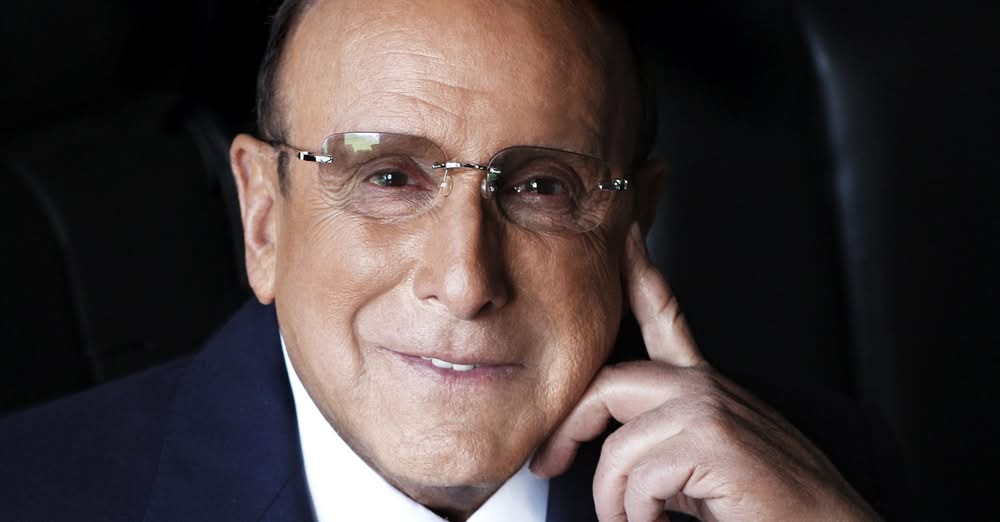
Along with Ahmet Ertegun at Atlantic and Mo Ostin at Warner Brothers, Davis was considered one of the three major players in the music business (in terms of artist development and representation) throughout the ’60s/’70s/’80s heyday and beyond. These three men, for better or worse, influenced the careers of the vast majority of popular music artists of the rock era.
I’m not naive. I know it takes money, and a lot of it, for an artist’s work to be made, promoted and presented to the public. I’ve just never been interested in the business side of the music industry. It’s the necessary evil, and there is a boatload of evidence to show that far too many of those who handle financial matters in the music business — managers, agents, record company execs — have been notoriously greedy, cutthroat, even cruel in their dealings with the people responsible for making the art.
Davis was not necessarily any of those things. Perhaps he was none of them. But he was first and foremost a businessman, not a musician. He has never written songs nor played an instrument. In his autobiography, he confessed that music meant little to him in his childhood and young adulthood. “I knew nothing about music,” he said in “Clive Davis: The Soundtrack of Our Lives,” the 2017 documentary about his career.
What he did know was how to recognize and sign promising musicians to recording contracts with whatever label he was working for at the time, and promote their work with an eye laser-focused on commercial success.
Some industry observers would say he seemed just as interested in self-promotion and the role he played in the success of the artists he came in contact with. But I must say, it was a revelation to see how many of them came forward to state publicly how much they appreciated him. I’ve read a lot of gushing praise of Davis from legends like Bruce Springsteen, Alan Parsons, Barbra Streisand, Barry Manilow and Carlos Santana, all of whom had effusively complimentary things to say about the man who played a pivotal role at some point in their careers.
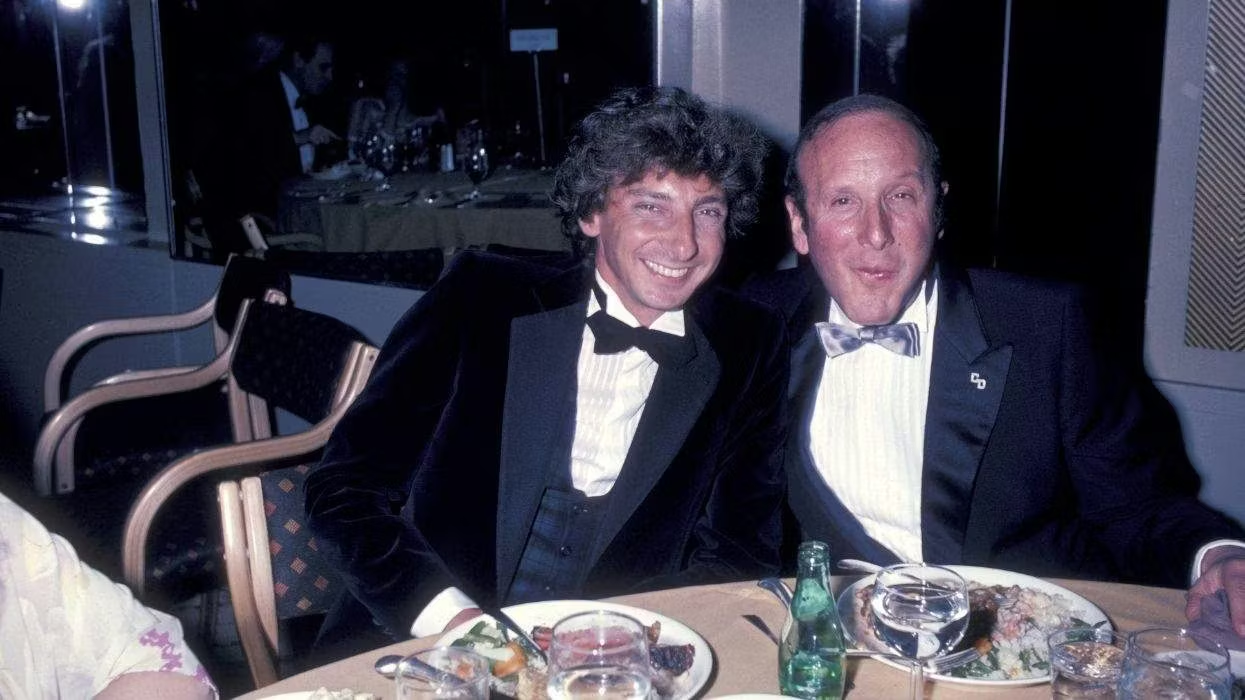
“For fifty years,” said Manilow, “we worked together, created together, argued together, and celebrated together. Yes, some would say it was business. But to Clive, I think it was more than that. It was family. And I was honored to be a part of his. Thank you, Clive. I wish we could do it all again.”
“Over here on E Street,” wrote Springsteen, “we mourn the death of the great record man and close friend Clive Davis. He changed my life in 1972 when he signed me to Columbia Records. He treated me with the same respect and kindness as a 22-year-old nobody as he did after all my success. He was a great man.”
Kenny G, the jazz saxophonist who broke through in 1986 with his “Songbird” hit single on Arista, credits Davis with his mainstream success. “He had an instinct about talent and could see things that others couldn’t,” he said. “And he knew how to connect all the parts — the songs, the artists, the writers, the producers, the performances, the sound — and then he knew what to do with it to have it make an impact on millions of people. Clive Davis changed my life, as he did for so many others.”
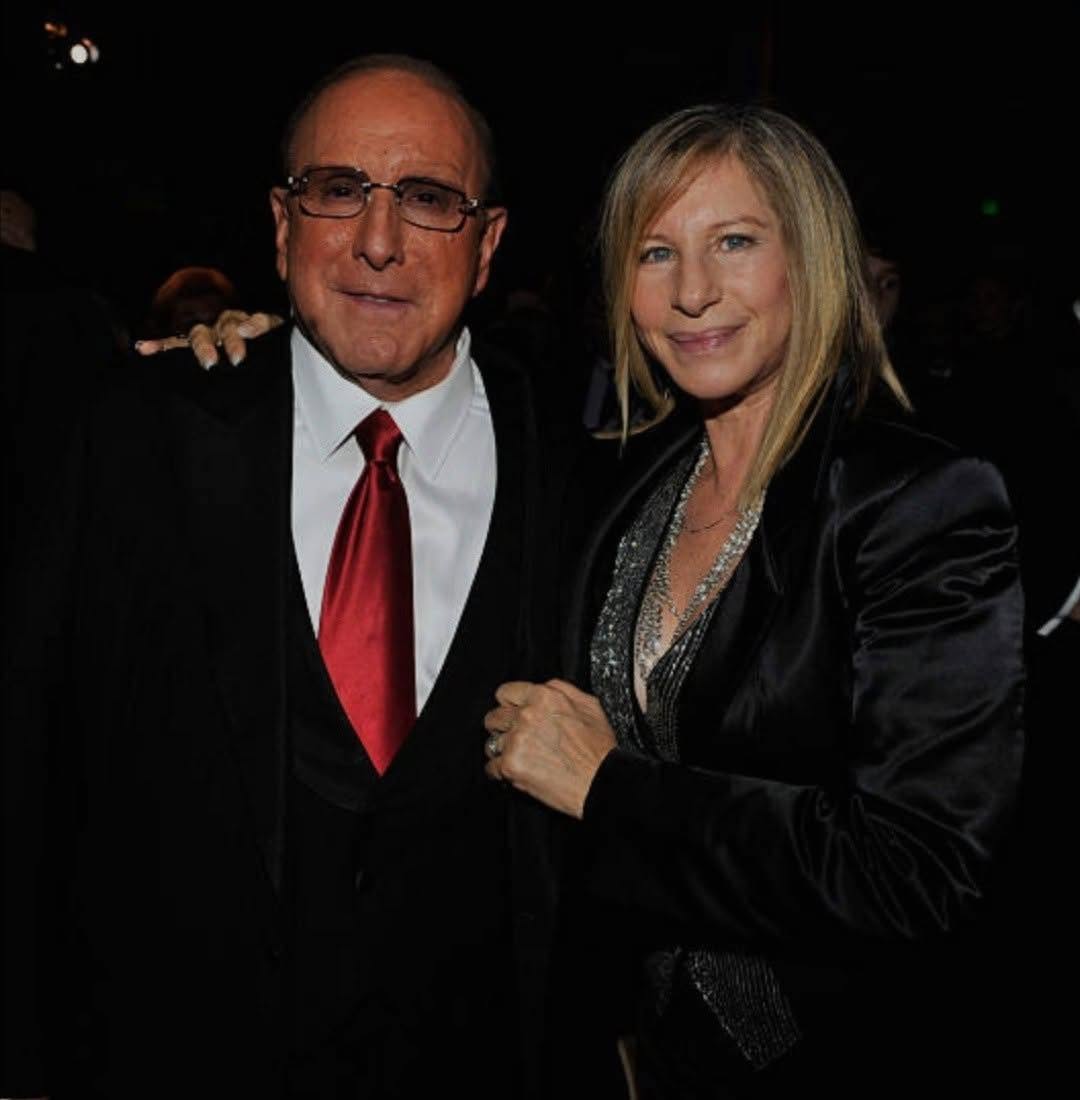
Said Streisand last week, “Back in 1970, Clive encouraged me to meet with producer Richard Perry to record an album of songs by contemporary writers like Joni Mitchell, Randy Newman, Laura Nyro and Gordon Lightfoot. The album ‘Stoney End’ opened new doors for me and became one of my most successful. I’m forever grateful for Clive’s vision and support.”
But he has always had his detractors, particularly those artists who felt he meddled in their artistry. Even Springsteen conceded that when Davis first heard the tapes of his debut LP “Greetings From Asbury Park,” his response was “I don’t hear a single.” For Davis, getting a hit on the radio was his all-encompassing goal, and he had little patience for musicians who were adamant about following their muse if he felt it lacked commercial Top 40 appeal.
Melissa Manchester, who worked with Davis at Arista, remembered both good and bad times with him. “I struggled with Clive’s vision for my career sometimes. He struggled to understand me sometimes. I’d had great success and withering disappointments with him but, in the end, I was grateful that he believed in my talent in an unwavering way for so long.”
Davis claimed credit for resurrecting the career of Rod Stewart in the 2000s by encouraging him to sing the American Songbook, but Stewart had mixed feelings about the way Davis handled that period. “Clive was involved to the extent of being too involved,” Stewart said. “He would take these songs and change keys and not even bother about whether I could sing in that key or not.”
Paul Simon recalled numerous disagreements with Davis about which songs should be the singles. In 1973, Simon wanted “American Tune” as the lead single from his “There Goes Rhymin’ Simon” album, while Davis argued for “Kodachrome.” Simon’s choice is the far better song, but Davis felt “Kodachrome” would have wider Top 40 acceptance, and he turned out to be right, which Simon eventually grudgingly admitted. Three years earlier, Davis had told Simon in no uncertain terms that his decision to break up with Art Garfunkel and pursue a solo career was wrongheaded. “He called it ‘career suicide,’ which really stung,” Simon said. “I felt, ‘How does he know what I’ll do on my own? Maybe my best work is still ahead of me.'” (I’d say Simon’s extraordinary solo catalog speaks for itself.)

Davis entered the music business in the early ’60s as a lawyer, working at a New York firm where Columbia Records (and CBS, its parent company) were clients. At that time Columbia focused on Broadway and film soundtrack albums, but when Davis was named head of A&R there, he saw the nascent commercial path of rock music and began pursuing artists who were among the more adventurous purveyors of it. Based on his early track record, he was pretty good, maybe very good, at identifying creative types who showed potential.
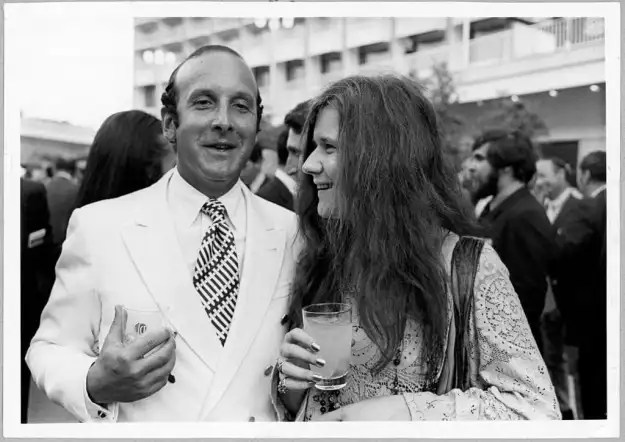
Perhaps most famously, Davis heard Janis Joplin perform with Big Brother and the Holding Company at the Monterey Pop Festival in 1967. “Joplin was mesmerizing, like a white tornado,” Davis said. “I felt my spine tingle and my arms vibrate. I realized this was going to be the future. I could feel it in my bones.” He persuaded her to join Columbia, and other acts like Blood, Sweat & Tears, Santana and Chicago soon followed. Eventually, he brought Laura Nyro, Johnny Winter, Earth, Wind & Fire, Billy Joel and Neil Diamond into the fold as well.
To tell Davis’s full story, I would have to delve into the industry ugliness that, as I said before, has nothing to do with the music. Suffice it to say, in 1973, Columbia fired Davis for some allegedly shady stuff for which he was later exonerated, but Davis bounced back a year later by taking over the foundering Bell Records label and renaming it Arista Records.
One of the acts he chose to retain from Bell was Barry Manilow, and he helped steer the singer to his first #1 hit, “Mandy,” also the first chart-topper for Arista. “It was Barry that enabled and opened up the horizon to then sign a Dionne Warwick, to sign the queen of soul, Aretha Franklin, and eventually led to signing Whitney Houston,” Davis said.
His success with Manilow indeed got the ball rolling for the new label, attracting legacy talent and new acts alike. Davis successfully signed an eclectic stew of artists, including mainstream folks like Melissa Manchester, Air Supply, Eric Carmen and Alan Parsons Project, harder rock acts like The Kinks, Lou Reed, Patti Smith and The Grateful Dead, and R&B stars like Franklin and Warwick.
“I can think of no other record man that seemed to have that magical ability to know a hit when he heard a song,” said Warwick. “The entire music industry I’m sure will mourn his passing. He was one of a kind.”
Clearly, Davis was remarkably resilient, a character trait he seemingly developed at a relatively early age when he lost both parents within months of each other when he was just 18. Professional setbacks that he endured which might have devastated other men merely served to further his resolve. “Clive was never willing to give up,” said music industry investor Charles Goldstuck. “No matter how tough or intractable a problem was, he always believed that there was a solution, and he would fight relentlessly to find it and make it happen.”
In the late ’80s and into the ’90s, Davis was instrumental in Arista entering joint ventures with several hip-hop labels like LaFace Records and Puff Daddy’s Bad Boy Records, and he became a big promoter of acts like Usher, TLC, Outkast and Toni Braxton. Then in 2000, he founded J Records, launching Alicia Keys’s career, among others. In the mid-2000s, Davis scored hits with Keys, Eddie Vedder, and Usher, and he partnered with “American Idol” to release albums from its winners, including Carrie Underwood and Kelly Clarkson.
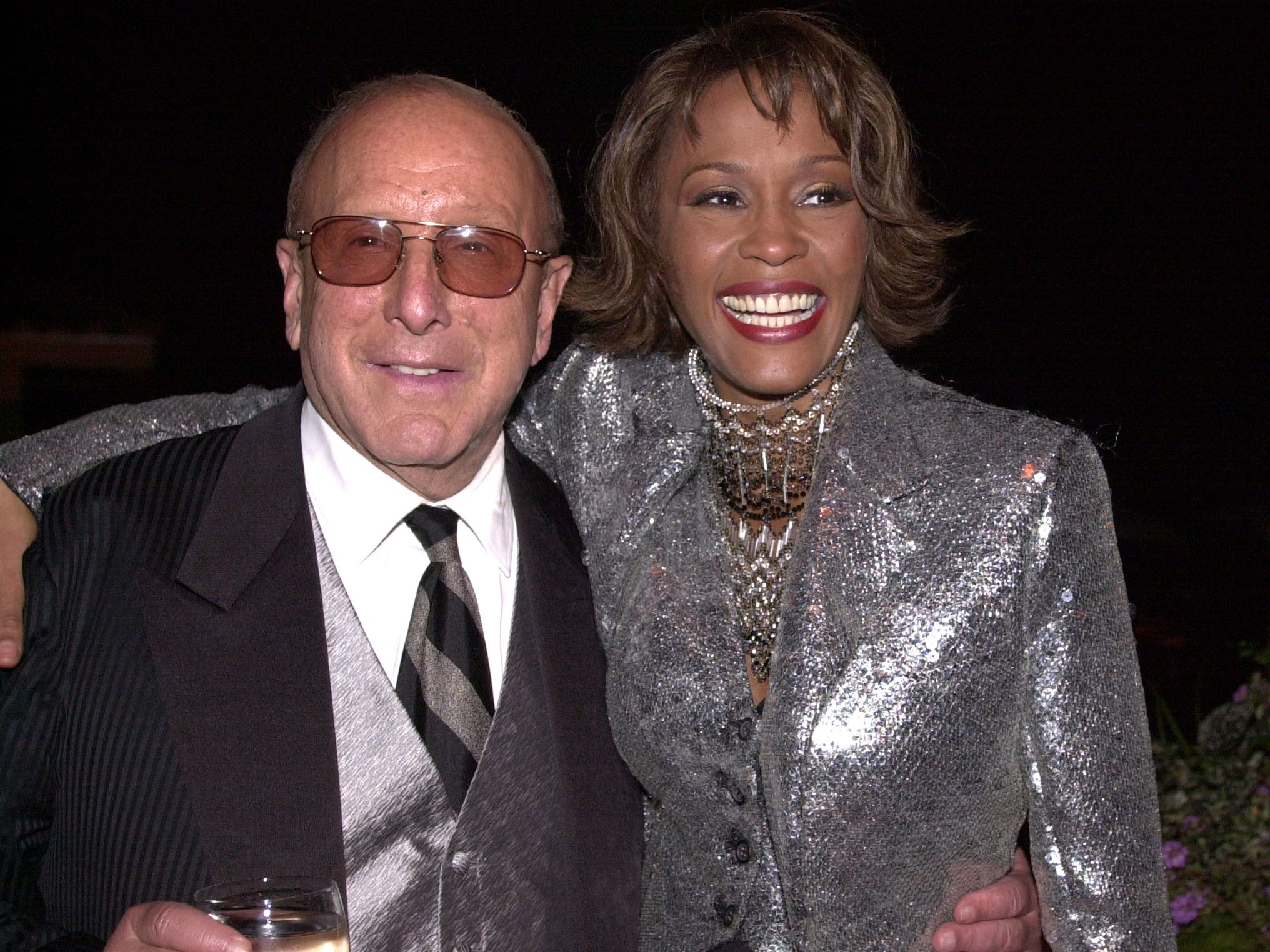
When asked what his crowning achievement was, Davis mentioned two. First was the signing, molding and championing of diva Whitney “The Voice” Houston, one of the most honored artists of all time, who sold more than 200 million records in her 30-year career before her tragic death in 2012 at age 48. Said Davis about her: “She had a voice, an innocence, a power and a beauty that was so stunning. In my view, she was the greatest contemporary singer of all time.”
The second was the role he played in the rejuvenation of Carlos Santana’s career with 1999’s “Supernatural” LP, a multiplatinum seller with multiple collaborators (notably Rob Thomas from Matchbox 20 on “Smooth,” a superb single that sat at #1 for nearly three months that year). The album won nine Grammys, displacing Michel Jackson’s “Thriller” as the most honored album ever.
Said the guitarist last week, “Clive was a visionary. He could hear the intangible before anyone else could see it. He believed in Santana from the beginning, and years later he believed in us again. He understood that music is more than entertainment; it’s a healing force, and he dedicated his life to championing artists and helping them share their gifts with the world. Because of his vision, countless musicians were able to reach hearts across the planet. I’m forever grateful.”
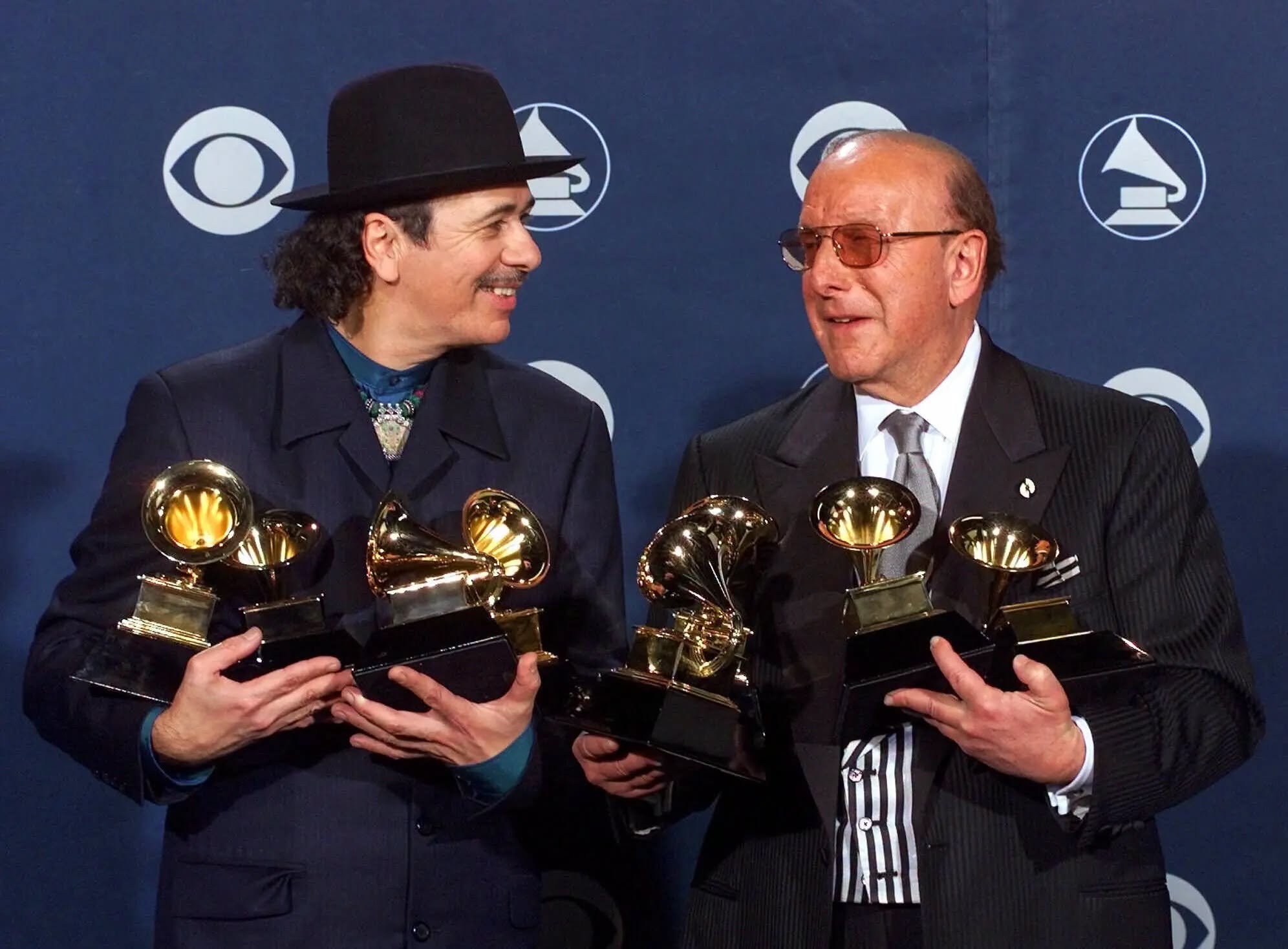
The most visible sign of Davis’s prominence in the industry all these years — in addition to the fact that he was usually referred to by his first name alone — was the annual gala event he hosted every year on the eve of the Grammy Awards. It was classic Davis glitz and glamour all the way, with a virtual Who’s Who of major music people on both the artistic and business sides, plus movie celebrities and national politicians. His friends say it was Davis’s way of paying back an industry that had been (mostly) extremely good to him. His enemies would counter that it was an annual opportunity to remind the world that Clive Davis was “and still is” the most important man in the business. Indeed, the 2026 party in February was yet another in a decades-long tradition, even though Davis’s age limited his usual place in the limelight as MC.
Rest in peace, Clive. You lived about as full a life as anyone ever has in the music business.
*************************


A very well-done and deserved tribute to a man who could see beyond his own time.
LikeLike