Think it oh-oh-ver, think it oh-oh-ver
One of the least discussed but (for me) most satisfying moments of the recent Grammy Awards show was the performance by the new “super-duo” calling themselves Silk Sonic. Bruno Mars and rapper/singer/producer Anderson.Paak have pooled their talents to come up with a marvelous ’70s soul sound exemplified by their single “Leave the Door Open.” (I’m including it as a bonus track at the end of the Spotify playlist below.)
It reminded me how much I enjoyed soul music in that sweet decade of 1964-1974. The talented vocal groups of Detroit Motown, Memphis Stax/Atlantic and “Philly Soul” were a crucial part of that musically fertile period. Funny thing, though — the great songs of that era seemed to be far better known for the music than the lyrics, which often focused rather narrowly on the flip sides of romantic relationships (betrayal and devotion).
As a guy who loves quoting memorable rock music lyrics, I thought that for this latest edition of Hack’s Back Pages Lyrics Quiz, it might be a fun challenge for readers to test their ability to recall lyrics of classic hits by soul artists. I’ve come up with 25 lines from some of the better known soul tunes of the ’60s and ’70s for you to identify. Write down your answers on a piece of paper, then scroll down to see how you did, and read a little bit about each of these memorable songs.

Enjoy!
***************************
1. “So take a good look at my face, you’ll see my smile looks out of place…”
2. “There’s no exception to the rule, listen baby, /It may be factual, may be cruel…”
3. “Comin’ to you on a dusty road, /Good lovin’, I got a truckload…”
4. “Folks say papa never was much on thinking, spent most of his time chasing women and drinking, /Mama, I’m depending on you to tell me the truth…”
5. “Ooh, your kisses, sweeter than honey, /And guess what? So is my money…”
6. “Don’t let the handshake and the smile fool ya, /Take my advice, I’m only tryin’ to school ya…”
7. “Like a fool I went and stayed too long, /Now I’m wondering if your love’s still strong, ooh baby, here I am…”
8. “Sometimes in our lives, we all have pain, we all have sorrow, /But if we are wise, we know that there’s always tomorrow…”
9. “But all you do is treat me bad, break my heart and leave me sad, /Tell me, what did I do wrong to make you stay away so long…”
10. “Every minute, every hour, I’m gonna shower you with love and affection, /Look out, it’s coming in your direction…”
11. “Who is the man who would risk his neck for his brother man?…”
12. “I can build a castle from a single grain of sand, I can make a ship sail, huh, on dry land…”
13. “Now if you feel that you can’t go on, because all of your hope is gone, /And your life is filled with much confusion, until happiness is just an illusion…”
14. “Father, father, we don’t need to escalate, /You see, war is not the answer, for only love can conquer hate…”
15. “When I call your name, girl, it starts to flame, burning in my heart, tearing it all apart, /No matter how I try, my love I cannot hide…”
16. “Today I saw somebody who looked just like you, /She walked like you do, I thought it was you…”
17. “Now if there’s a smile on my face, it’s only there trying to fool the public, /But when it comes down to fooling you, now honey, that’s quite a different subject…”
18. “Remember the day I set you free, I told you you could always count on me, darling…”
19. “For once I can touch what my heart used to dream of, long before I knew someone warm like you would make my dreams come true…”
20. “I don’t need no money, fortune or fame, /I’ve got all the riches, baby, one man can claim…”
21. “Why don’t you be a man about it and set me free? /Now, you don’t care a thing about me, you’re just using me…”
22. “I know a man ain’t supposed to cry, but these tears I can’t hold inside, /Losin’ you would end my life, you see, ’cause you mean that much to me…”
23. “When my soul was in the lost and found, you came along to claim it…”
24. “You been running all over the town now, /Oh, I guess I’ll have to put your flat feet on the ground…”
25. “Somebody’s out to get your lady, /A few of your buddies, they sure look shady…”
*
*
*
*
*
*
*
*
*
*
****************************
ANSWERS:
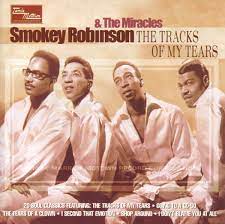
1. “The Tracks of My Tears,” The Miracles, 1965
Robinson has said he was looking in his bathroom mirror one morning and thought, “What if someone cried so much that you could see the tracks left from the tears on their face?” That became the lyrical concept, partnered with Miracles guitarist Marv Tarplin’s melody, for this classic slice of Motown gold, which peaked at #16 for them in 1965. Ten years later, Linda Ronstadt recorded her own take on the iconic tune, reaching #25.
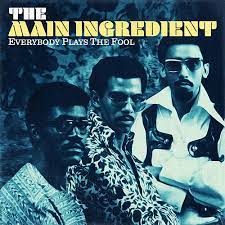
2. “Everybody Plays the Fool,” The Main Ingredient, 1972
This Harlem-based vocal group lost its lead singer to leukemia in 1970 and was replaced by Cuba Gooding, whose son would later become an Oscar-winning actor. The Main Ingredient had their biggest success with this song by seasoned songwriter Rudy Clark (who also wrote The Rascals’ “Good Lovin’,” among others), who had written it with Charley Pride in mind. But Pride thought it was more pop than country, so these guys took a stab at it and found themselves with a #3 hit in the autumn of 1972. Aaron Neville’s 1990 rendition was a #8 hit as well.

3. “Soul Man,” Sam and Dave, 1967
Singer-songwriter Isaac Hayes came up with this song after watching a news broadcast about riots in Detroit where buildings owned by Blacks were marked with the spray-painted word “soul” to spare them from vandalism. “The song became kind of like boasting, ‘I’m a soul man,'” said Hayes. “It was a pride thing.” Sam Moore and Dave Prater turned it into a #2 hit on pop charts, and The Blues Brothers revived it as their signature song in 1978 on “Saturday Night Live” and subsequent LP, “A Briefcase Full of Blues.”
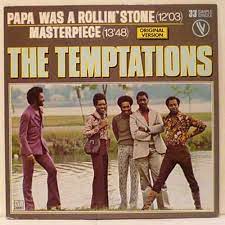
4. “Papa Was a Rolling Stone,” The Temptations, 1972
Many people don’t know that this hugely popular #1 single, which pushed pop radio boundaries at more than seven minutes in length, actually clocked in at 11:44 in the original album version (included in the Spotify playlist below). Producer Norman Whitfield gave it textures and instrumental passages that set a somewhat forbidding atmosphere for the downcast story of a young man’s memories of life in a broken home. Dennis Edwards sang lead but the others took turns singing bass and falsetto to give voice to the narrators’ siblings. A truly remarkable recording top to bottom.

5. “Respect,” Aretha Franklin, 1967
This may be the most famous song on this list, as iconic as they come. After wallowing for years at Columbia Records, she switched to Atlantic and knocked us all off our feet with her fabulous takes on riveting R&B material. Otis Redding had already put this song on the map, but when Franklin sang it, it transformed into an anthem for the burgeoning women’s movement and became her signature song for decades to come.
6. “Smiling Faces Sometimes,” The Undisputed Truth, 1971
Norman Whitfield and Barrett Strong wrote this one and gave it to The Temptations, who were undergoing a lineup change as Eddie Kendricks was going solo. They dragged their feet on releasing it, so the up-and-coming group The Undisputed Truth made their own recording and stole the spotlight on the charts, reaching #3 in the summer of 1971, but they never reached the pop charts again. You might check out The Tempts’ version, which (again) goes on for 12 minutes.
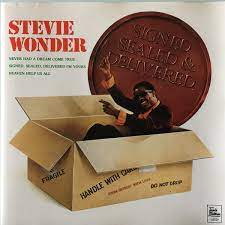
7. “Signed, Sealed, Delivered,” Stevie Wonder, 1970
Wonder wrote this one with a little help from his mother Lula Hardaway, who, upon hearing him toying with the melody, exclaimed, “I love that! Ooh, signed, sealed and delivered, I’m yours!” This single marked Stevie’s first time as producer, a role he would retain for the rest of his exemplary career. The song reached #3 in 1970, and since then, many dozens of covers have been recorded, including ones Peter Frampton, Jermaine Jackson, Chaka Khan and Michael McDonald.
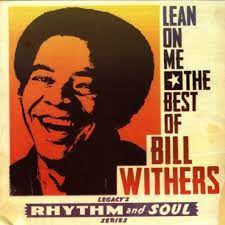
8. “Lean On Me,” Bill Withers, 1972
After first hitting the charts with the angst-ridden “Ain’t No Sunshine” in 1971, Withers could afford to move to Los Angeles to continue his career, but he missed the tight-knit community of his hometown of Slab Fork, West Virginia. “I started thinking about how we all leaned on each other for love and support, and the song came out as I played some basic scales on piano,” Withers recalled. The result was a #1 song for three weeks in July 1972.
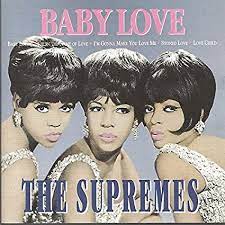
9. “Baby Love,” The Supremes, 1964
Unbelievably catchy, this classic by Holland/Dozier/Holland was the one that truly established The Supremes as a singles powerhouse on pop radio, particularly as their songs faced off against The Beatles’ initial run of chart-toppers in 1964. “Where Did Our Love Go” came before it, but “Baby Love” proved they weren’t a flash in the pan, and indeed, they went on to have five consecutive #1s, which had never been achieved before.
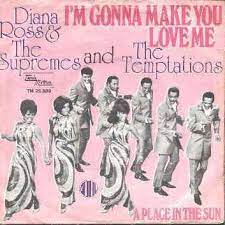
10. “I’m Gonna Make You Love Me,” The Supremes & The Temptations, 1969
Written by Kenny Gamble, Leon Huff and Jerry Ross, this song was first recorded by Dee Dee Warwick in 1966 and then by Madeline Bell in 1968, both with only minimal impact. But when The Temptations and The Supremes chose to team up for an album and TV special in late 1968, this was the song from the album that radio stations chose to play, even though it hadn’t been performed on the show and wasn’t the intended single. Once officially released as a single, it vaulted all the way to #2 on pop charts in early 1969, featuring Diana Ross and Eddie Kendricks trading off on lead vocals.

11. “Theme From Shaft,” Isaac Hayes, 1971
Hayes had been a pivotal producer/songwriter/arranger at Stax Records since its inception. In his first attempt at film scoring, he scored a hit with the quasi-funk/soul soundtrack for the Richard Rountree detective flick “Shaft” in 1971. The theme song was more instrumental than vocal, but it was nonetheless a huge hit, reaching #1 and scoring an Oscar for Best Song.

12. “I Can’t Get Next to You,” The Temptations, 1969
Immediately identified by opening applause cut short by Dennis Edwards saying,”Hold it, hold it, listen,” followed by the piano intro and horn section, “I Can’t Get Next to You” was a gigantic hit for The Temptations in the fall of ’69. Another Norman Whitfield/Barrett Strong composition, it featured each of the group’s different voices taking turns on lead. I’m also fond of the excellent cover version Annie Lennox recorded in 1995.
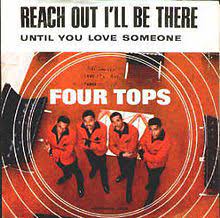
13. “Reach Out I’ll Be There,” The Four Tops, 1966
There’s an undeniable feeling of dread to the way this track begins — minor chords, echo and innovative percussion — followed by a shift to major chords to release the tension. The anguished pleading of lead singer Levi Stubbs, achieved by making him sing in a key that was right at the top of his vocal range, really makes the record. For me, this is The Four Tops at their very best.
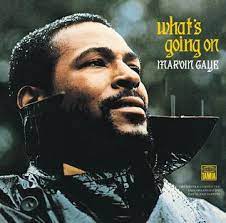
14. “What’s Going On,” Marvin Gaye, 1971
Widely considered his masterpiece, “What’s Going On” is a sonic breakthrough and a lyrical cry for our future on the planet. “With the world exploding all around me, how am I supposed to keep singing love songs?” he said. “I wanted to write songs that would reach the souls of people.” Gaye’s singing and songwriting were at their best for the title track (which ranked #4 on Rolling Stone’s 500 Greatest Songs of All Time), while “Mercy Mercy Me” and “Inner City Blues” weren’t far behind.

15. “I Can’t Help Myself (Sugar Pie, Honey Bunch),” The Four Tops, 1965
Another marquis song in the Motown canon is this spirited tune by the Holland/Dozier/Holland songwriting and producing team. Using a similar chord progression to “Where Did Our Love Go,” which they’d written for The Supremes the previous year, the H/D/H trio struck gold again for The Four Tops, who put this song at #1 on the pop charts for two weeks, and #1 on the R&B charts for nine weeks, in the summer of ’65.

16. “You Are Everything,” The Stylistics, 1971
Thom Bell, co-creator of the Philly sound, came up with this passionate ballad for The Stylistics, one of the bands on his Philly Int’l label. The falsetto voice of Russell Thompkins Jr. was the defining characteristic of the group’s sound on this and other hits they charted in the early ’70s. “You Are Everything” reached #4 on pop charts, and a cover of the song by Marvin Gaye and Diana Ross on 1973’s “Diana & Marvin” LP reached #5 in England.
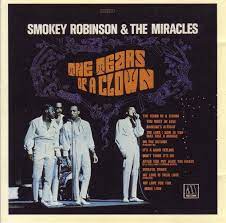
17. “The Tears of a Clown,” Smokey and The Miracles, 1970
Stevie Wonder and producer Henry Cosby had written and recorded the instrumental track for this tune in 1967, but Wonder couldn’t come up with a lyric for it. He asked for help from Smokey Robinson, who heard the calliope-like section and thought of a clown in the circus, hiding his sadness behind a smile. The Miracles recorded it as an album track, and then three years later, after Motown’s British subsidiary released it to great success, it was released as a single in the US, where it became their final #1 hit.
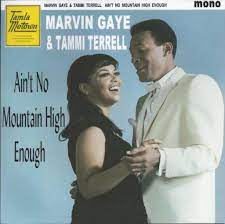
18. “Ain’t No Mountain High Enough,” Marvin Gaye and Tammi Terrell, 1967
This unforgettable song served as the entree into Motown for the songwriting team of Nikolas Ashford and Valerie Simpson, and was also the initial pairing of Gaye with singer Tammi Terrell. Gaye was a seasoned recording artist by then, which intimidated Terrell so much that her part and Gaye’s were actually recorded separately and grafted together by producer Harvey Fuqua. It peaked at #19 in 1967 but has since reached iconic status, used in film soundtracks like “Remember the Titans” and “Guardians of the Galaxy.” A slower, melodramatic, partly spoken version by Diana Ross made it to #1 in 1970.

19. “For Once in My Life,” Stevie Wonder, 1968
Originally written as a slow ballad and recorded that way by the Four Tops and The Temptations, it was recorded in 1967 in an uptempo arrangement by Stevie Wonder, but Motown head Berry Gordy didn’t like it and withheld it from release for more than a year. It reached #2 on the pop and R&B charts in late 1968 and became a standard, covered by the likes of Frank Sinatra, Tony Bennett and other crooners. The record is mentioned by bass players everywhere as the perfect example of James Jamerson’s unparalleled bass-playing style.

20. “My Girl,” The Temptations, 1964
Written by Smokey Robinson and fellow Miracle Ronald White, “My Girl” was written about Robinson’s wife Claudette and was set to be the next Miracles single, but instead, he produced it with The Temptations. Although Eddie Kendricks and Paul Williams typically sang lead vocals, Robinson insisted he wanted David Ruffin to sing it, “featuring his gruff voice on a sweet melody.” It became not only the group’s first #1 hit but their signature song ever since.

21. “You Keep Me Hangin’ On,” The Supremes, 1966
Lamont Dozier, in collaboration with Brian and Eddie Holland, incorporated a Morse code-like guitar riff into the arrangement for this magnificent R&B #1 hit they wrote for The Supremes. It became one of the most often covered songs in the Motown catalog — Vanilla Fudge did a slow-tempo, hard rock version in 1967 that made the Top Ten; British singer Kim Wilde returned the song to #1 with a supercharged electronic dance music rendition; and country artist Reba McEntire offered up a Supremes replication in 1995.
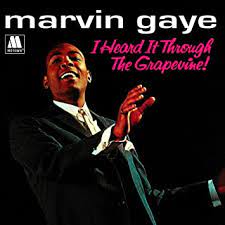
22. “I Heard It Through the Grapevine,” Marvin Gaye, 1968
This awesome tune by Motown songwriting duo Norman Whitfield and Barrett Strong was recorded first by The Miracles, but only as an album track. Gladys Knight & The Pips had a big #2 hit with their funky arrangement in 1967, but Gaye’s haunting version eclipsed them both, holding down the #1 spot for seven weeks in 1968-69, making it the most successful song in Motown history. It was later turned into a 10-minute rock interpretation by Creedence in 1970.

23. “(You Make Me Feel Like) A Natural Woman,” Aretha Franklin, 1967
Atlantic Records chief Jerry Wexler had been reading about the philosophical concept of “the natural man” when he ran into Carole King in New York one day. On the spot, he asked her to write a song about “the natural woman” for Franklin’s next album, so she and husband/songwriter partner Gerry Goffin went home and wrote this iconic tune that night. It became a #8 pop hit (#2 on R&B charts) for Aretha. King later recorded her own version for her 1971 epic LP “Tapestry.”

24. “Mustang Sally,” Wilson Pickett, 1966
R&B singer-songwriter Mack Rice wrote and recorded this song in 1965 not long after a friend told him he wanted to get a sporty Ford Mustang, which had just been introduced the previous year. Originally titled “Mustang Mama” about a woman who wanted only to ride around in her new car, he chose to change Mama to Sally because of the use of the line “Ride, Sally, ride” in the middle verses. Pickett reached #23 on the pop charts with his version.

25. “Back Stabbers,” The O’Jays, 1972
Inspired by the theme of betrayal used effectively in “Smiling Faces Sometimes,” Leon Huff came up with “Back Stabbers” for The O’Jays’ first single on Huff’s and Kenny Gamble’s new label, Philadelphia International. It was the beginning of a long and successful relationship between the vocal group and the label, followed by “Love Train, “For the Love of Money” and many more.
****************************