It’s a wonder I can think at all
Time again for Hack’s Back Pages to administer a test of your ability to remember song lyrics!

This time, you’re going to be ruminating over lyrics written by the great Paul Simon, one of the finest songwriters this country has ever produced. From simple beginnings as an introspective folk singer with Art Garfunkel through his diverse early solo work and on through the wonderful South African roots music of “Graceland”, Simon has penned some of the most precise, poignant, whimsical and memorable lyrics the pop charts have ever seen.
I have divided the lyrics into Easy, Medium and Challenging sections, depending on the song’s popularity and which line of the lyrics I chose to single out. I’m betting most of you will breeze through the Easy, identify many of the Medium and even pick out a Challenging one or two.
Get yourself a pencil and paper to write down your guesses as you go. Then you can scroll down to find the answers and read a little bit about each song. Finally, check out the Spotify list to hear the songs you remembered and those you didn’t.
Get into the zone and focus. You’ve got this!
********************
EASY
- “Your time has come to shine, /All your dreams are on their way…”
2. “The answer is easy if you take it logically, /I’d like to help you in your struggle to be free…”
3. “And she said, ‘Honey, take me dancing,’ /But they ended up by sleeping in a doorway, by the bodegas and the lights on Upper Broadway…”
4. “And all my words come back to me in shades of mediocrity, /Like emptiness in harmony, I need someone to comfort me…”
5. “They give us those nice bright colors, they give us the greens of summers, /Makes you think all the world’s a sunny day…”
6. “Look around you, all you see are sympathetic eyes, /Stroll around the grounds until you feel at home…”
7. “The papa said, ‘Oy, if I get that boy, /I’m gonna stick him in the house of detention,’ /Well, I’m on my way, I don’t know where I’m going…”
8. When I was grown to be a man, and the Devil would call my name, /I’d say, ‘Now, who do … Who do you think you’re fooling?’…”
9. “People talking without speaking, people hearing without listening, /People writing songs that voices never share…”
10. “Mr. Beerbelly, Beerbelly, get these mutts away from me, /You know, I don’t find this stuff amusing anymore…”
MEDIUM
11. “She said the man in the gabardine suit was a spy, /I said, ‘Be careful, his bowtie is really a camera’…”
12. “Flying my bike past the gates of the factory, /My mom doing the laundry, hanging our shirts in the dirty breeze…”
13. “Then I learned to play some lead guitar, /I was underage in this funky bar, /And I stepped outside to smoke myself a ‘J’…”
14. “The monkeys stand for honesty, giraffes are insincere, /And the elephants are kindly but they’re dumb…”
15. “I am shielded in my armor, /Hiding in my room, safe within my womb, /I touch no one and no one touches me…”
16. “Some people never say the words ‘I love you,’ /It’s not their style to be so bold, /Some people never say those words ‘I love you,’ /But like a child, they’re longing to be told…”
17. “I got up to wash my face, /When I come back to bed, someone’s taken my place…”
18. “Asking only workman’s wages, I come looking for a job, /But I get no offers, /Just a come-on from the whores on Seventh Avenue…”
19. “The Mississippi Delta was shining like a National guitar, /I am following the river, down the highway through the cradle of the Civil War…”
20. “Ahhh, seasons change with the scenery, /Weaving time in a tapestry, /Won’t you stop and remember me?…”
CHALLENGING
21. “They echo and they swell from Tolstoy to Tinker Bell, /Down from Berkeley to Carmel…”
22. “These are the days of miracle and wonder, /And don’t cry, baby, don’t cry, don’t cry…”
23. “Couple in the next room, bound to win a prize, they been going at it all night long…”
24. “I get the news I need on the weather report, /Hey, I got nothing to do today but smile…”
25. “It was the year of The Beatles, it was the year of The Stones, /It was 1964, /I was living in London with the girl from the summer before…”
26. “Lost in their overcoats, waiting for the sunset, /The sounds of the city sifting through trees…”
27. “August, die she must, /The autumn winds blow chilly and cold, /September, I’ll remember…”
28. “I never been laid so low in such a mysterious way, /And the course of a lifetime runs over and over again…”
29. “What a dream I had, pressed in organdy, /Clothed in crinoline of smoky burgundy, /Softer than the rain…”
30. “I’m not the kind of man who tends to socialize, /I seem to lean on old familiar ways…”
*
*
*
*
*
*
*
*
*
*
***************************
ANSWERS
EASY:
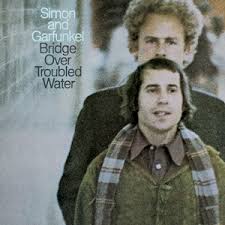
1. “Bridge Over Troubled Water,” 1970
The biggie, the biggest international #1 song of 1970. At its core, “Bridge” is a gospel song — “I envisioned Aretha Franklin singing it,” Simon said — and with Larry Knechtel on piano and Garfunkel turning in a spectacular lead vocal, it soars like nothing else Simon ever wrote. He claims it’s the song he is most proud of, out of a catalog of roughly 170 tunes.

2. “50 Ways to Leave Your Lover,” 1975
Simon was in the process of divorce with his first wife as he was writing songs for his “Still Crazy After All These Years” album, and although most of the tunes were downbeat, this one took a more humorous approach to the whole breaking-up process. In the middle of the disco era, this single defied the odds by reaching #1 on the US charts in early 1976. (By the way, Simon mentions only five ways to leave your lover.)
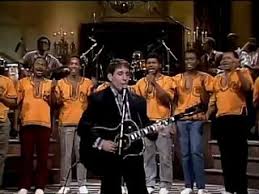
3. “Diamonds on the Soles of Her Shoes,” 1986
Simon had visited South Africa in 1985 to immerse himself in the engaging rhythms of the indigenous music there. He brought some of the musicians back to the US with him to record, most notably the vocal group Ladysmith Black Mambazo, who dazzled everyone with their vocals and dance routine when they performed with Simon on a memorable episode of “Saturday Night Live.”

4. “Homeward Bound,” 1966
The follow-up single to “The Sound of Silence” proved Simon and Garfunkel were far from “one-hit wonders.” He’d written the song while living in England in 1965, homesick for his girl and more familiar surroundings. The literary references and mature vocabulary were uncommon for the pop charts, but typical of the kind of songs Simon was writing at the time.

5. “Kodachrome,” 1973
Simon traveled to Muscle Shoals, Alabama to record this song with the extraordinary studio musicians there. In particular, keyboardist Barry Beckett really shines on this recording, playing tack piano like a man possessed. Simon said he had originally called the song “Goin’ Home,” which felt too conventional, so he switched it to “Kodachrome,” a color-saturated Kodak film that makes drab scenes look artificially bright and colorful, much like society’s penchant for glossing over ugly truths.
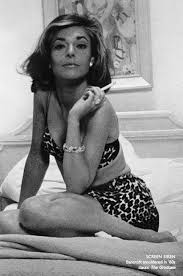
6. “Mrs. Robinson,” 1968
There she is, the tempting cougar as played by Anne Bancroft in “The Graduate.” Simon had only written the chorus when Director Mike Nichols heard it, but since he was on a tight deadline, Nichols used only that short fragment. Simon finished the song a couple months after the movie’s release, and it went to #1 that long hot summer of ’68. The line “A nation turns its lonely eyes to you” seemed to reassure us after the assassinations that occurred that spring.
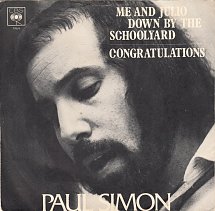
7. “Me and Julio Down by the Schoolyard,” 1972
The lyrics to this infectious single from Simon’s debut album tell a rather vague story about two boys who have broken the law (the exact crime is never mentioned) but are subsequently released and end up on the cover of Newsweek. Simon has said the story is “just a fiction, a whimsical pop song,” but its popularity has made it a highlight in Simon’s concerts for decades since its release.
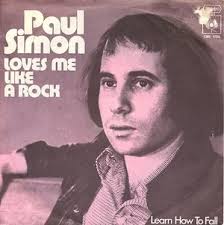
8. “Loves Me Like a Rock,” 1973
Simon brought in numerous additional musicians for the diverse music he wrote for the “There Goes Rhymin’ Simon” album. For this joyous gospel single, which reached #2 in the US, the impeccable voices of the New Orleans vocal group The Dixie Hummingbirds dominate the proceedings, singing in counterpart to Simon’s lead vocal.

9. “The Sound of Silence,” 1965
The song that got the ball rolling for Simon. He wrote it in 1963 and recorded it in acoustic form with Garfunkel for their debut album “Wednesday Morning 3 AM” in 1964, but the album was a commercial dud. Still, the song got some notice on college radio and, unbeknownst to Simon, Columbia Records producer Tom Wilson remixed the track with electric guitar and drums to capitalize on the burgeoning “folk rock” genre. It rocketed to #1 in early 1966 and put the duo on the map.

10. “You Can Call Me Al,” 1986
Simon and his pal Chevy Chase put together a hilarious music video for this upbeat single from “Graceland,” in which Chase mouths the lyrics while Simon sits quietly, then brings in various instruments to mimic playing at appropriate moments. The track peaked at #23 in the US but went Top Five in the UK and parts of Europe.
MEDIUM:

11. “America,” 1968
This is the first track that showed Simon had matured into a writer of great emotional and musical depth. It’s a snapshot of a young couple who “walked off to look for America,” unsure of what they’ll find in a tempestuous time (1968). It’s the highlight of the “Bookends” album, a real tour de force, but inexplicably stiffed when released as a single.
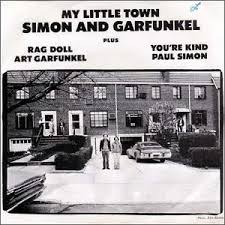
12. “My Little Town,” 1975
After five years apart, Simon and Garfunkel reunited in 1975 to record “My Little Town,” which was released simultaneously on Simon’s “Still Crazy” album and Garfunkel’s “Breakaway” LP. They also performed together on the initial season of “Saturday Night Live.” The song reached #9, helping sales of both albums. Fans hoped the duo would reunite long-term, but it proved to be short-lived…although they would reunite for tours multiple times in the ensuing years.

13. “Late in the Evening,” 1980
Simon starred in and wrote the music for the art film “One Trick Pony,” a dour look at the life of an aging pop star as he still lives most of his life on the tour doing shows while his relationships suffer. This track is the most upbeat of the bunch, describing the high he gets from performing to an enthusiastic crowd. It peaked at #6 on the pop charts, thanks to a lively arrangement with a commanding bass line and horn section.
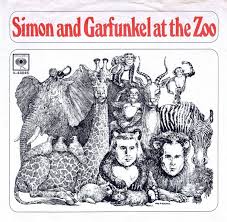
14. “At the Zoo,” 1967
Simon wrote this little ditty to be used in the zoo scene in “The Graduate,” but the director turned it down. The duo released it as a single, which peaked at #16, and was later used by various zoos in their advertising campaigns. Simon wryly assigns character traits to the various animals, and urges everyone to make the “light and tumble journey” to visit their local zoo.

15. “I Am a Rock,” 1966
This testament to isolation and loneliness might be difficult to bear if it weren’t set to a lively rock beat. It was the duo’s third single, following the brooding quietude of “The Sound of Silence” and the homesickness of “Homeward Bound” (both also set to a rock arrangement). It peaked at #3, their third consecutive Top Five appearance. Simon later found the song “a bit too depressing” and rarely included it in his concert set list.
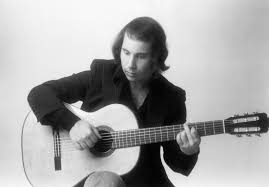
16. “Something So Right,” 1973
“There Goes Rhymin’ Simon,” Simon’s second solo LP, overflows with happy, effervescent songs. He seems happier than he’s ever been, particularly on this beautiful piece, in which he can’t believe things are going so well for him. Ironically, less than two years later, he was writing songs about splitting up. In 1995, British singer Annie Lennox recorded a gorgeous cover version on her “Medusa” album.
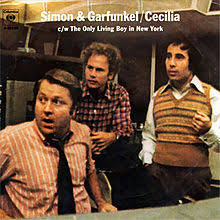
17. “Cecilia,” 1970
That’s producer Roy Halee on the left in the above photo. He was instrumental in bringing out the duo’s best sounds and arrangements on their final two albums, both of which were phenomenally popular. “Cecilia” uses random percussion — pots, pans, drumsticks on tabletops — to give the song a certain primitive feel. It went all the way to #4 as the follow-up single to “Bridge” in 1970.
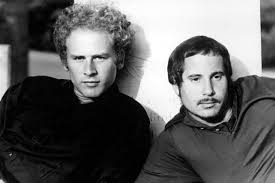
18. “The Boxer,” 1969
Easily one of Simon’s top five songs of all time. The “lie-la-lie” chorus was supposed to be a placeholder until he could come up with lyrics that fit, but he eventually decided to keep it as is. “No matter what language you speak, you can sing ‘lie-la-lie,'” he said. The producer used a snare drum inside an elevator shaft to make the gunshot sound you hear during the choruses.

19. “Graceland,” 1986
“I was taking a trip with my son after my second marriage ended, and one of the stops we made was in Memphis to see Elvis’s homestead,” Simon recalled about the lyrics to the song that would also become the album title to his massively successful 1986 LP. Five South African musicians and The Everly Brothers contributed instrumentation and vocals to the recording, and it ended up winning the Record of the Year Grammy.

20. “A Hazy Shade of Winter,” 1966
This modest hit for S&G in the fall of 1966 uncannily captures the feeling of November afternoons when it feels as if it’s about to snow. It’s one of the first of their songs to receive a more complex arrangement. The Bangles recorded a rocked-up version 20 years later that reached #2 on the charts.
CHALLENGING:

21. “Cloudy,” 1966
I always thought this track from the “Parsley Sage Rosemary & Thyme” album captured S&G at their most innocent and childlike. Its lyrics are consistent with Simon’s themes of angst and isolation, but the music is upbeat and hopeful.
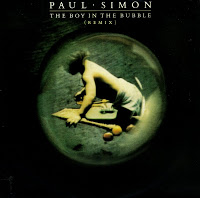
22. “The Boy in the Bubble,” 1986
The leadoff track on Simon’s astounding “Graceland” album features synthesizers, accordion and prominent African drums to discuss the strange new world of the 1980s, “the days of miracle and wonder” when violence can happen anywhere but new medicines are giving hope for those with previously incurable conditions.
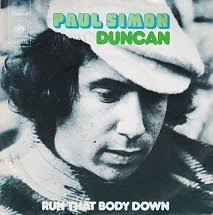
23. “Duncan,” 1972
This wonderful little “story song” from his debut solo LP uses playful, mischievous language in six short verses to tell the tale of a man who leaves home, takes a trip “down the Turnpike for New England” and loses his innocence to a young woman he hears preaching in a parking lot. Curiously, Simon ignored the song for years but revived it for his final concerts in 2018.
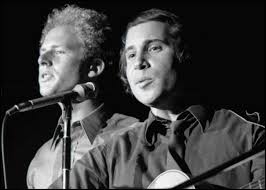
24. “The Only Living Boy in New York,” 1970
From the “Bridge Over Troubled Water” album, this favorite track of mine finds Simon alone in New York City working on the duo’s next album while Garfunkel spent six months on the set of the film “Catch-22” in Mexico. He is trying to be understanding but is very frustrated by his partner’s absence.

25. “The Late Great Johnny Ace,” 1983
On “The Late Great Johnny Ace,” from his vastly underrated “Hearts and Bones” album, Simon pays tribute to a moderately successful ’50s rocker but then goes on to recall the awful night another “Johnny Ace” — John Lennon — was shot and killed in 1980. The song was first performed at S&G’s “The Concert in Central Park” in 1981.
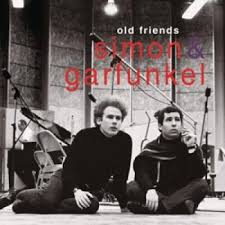
26. “Old Friends,” 1968
For their 1968 LP “Bookends,” Simon wrote a song cycle that examines different stages of life. The declining years are captured poignantly on “Old Friends,” describing two men in their ’70s passing the days on a park bench. It later became the title of the duo’s 2004 tour and live LP.
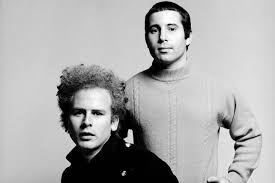
27. “April Come She Will,” 1966
One of his simplest and prettiest songs, this track appears on “The Sounds of Silence” album and also was used on the soundtrack of “The Graduate.”
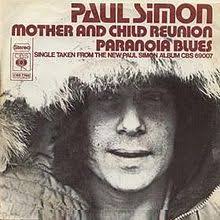
28. “Mother and Child Reunion,” 1972
Simon had been to Jamaica and was charmed by the reggae music he heard, so he thought he’d take a stab at writing a song with reggae rhythms. He always felt it fell short of what he was aiming for, but as the first single from his debut solo album, it was well received by critics and fans alike, reaching #4 in the US and the UK. “It’s a rather brave attempt at trying something very new to me, which is something I’ve continued to do throughout my career,” Simon said.
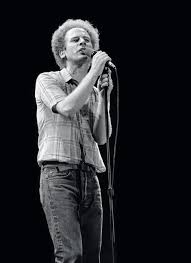
29. “For Emily, Whenever I May Find Her,” 1966
This gorgeous song, about a woman Simon knew in England but lost track of, appeared on the “Parsley Sage Rosemary & Thyme” LP. It’s one of the few where Garfunkel sings alone without harmony (with Simon accompanying on guitar as usual). A live version was included on the 1972 “Simon & Garfunkel’s Greatest Hits” package.
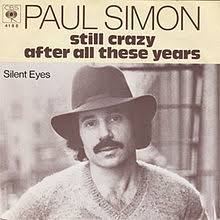
30. “Still Crazy After All These Years,” 1975
This tune is among several from the Grammy-winning album of the same name that explore the dissolution of Simon’s first marriage. It takes a look at the detached feelings one goes through when the relationship is no longer working and you’re just going through the motions. It didn’t do much as a single, but Simon drew laughs when he performed some of it on “Saturday Night Live” while wearing a turkey costume.
**************************
Here’s a Spotify list of all 30 songs so you can remind yourself, or hear for the first time, the best of Simon’s impressive body of work.