It’s a tough challenge, writing a song about a real person. It’s kind of like writing a biography with a melody.
From actors to politicians, from musicians to visionaries, real human beings have been potent subject matter for popular music. Songs about John Lennon, Marilyn Monroe, Nelson Mandela, James Dean, Duke Ellington and Jimi Hendrix have topped the charts and filled the album listings of many major artists of the ’60s ’70s and ’80s and beyond.
Some songs make only a fleeting reference to a real person. For instance: “Where have you gone, Joe DiMaggio?” in Simon and Garfunkel’s hit “Mrs. Robinson,” is just one line. The song is not about the famous baseball player. The same holds true for Crosby, Stills, Nash & Young’s “Ohio” and its mention of President Richard Nixon in the lyric, “Tin soldiers and Nixon coming, we’re finally on our own…” Although it was Ohio Governor James Rhodes, and not Nixon, who bore the blame for the Kent State shootings, Nixon’s political positions were in keeping with what happened there.
Let’s take a look at 15 songs from the golden years of rock music that are all about specific people. I think it’s great fun to consider them many years after they were released:
 “American Pie,” Don McLean, 1971
This monumental song that tries to tell the story of rock and roll from its beginnings up until 1970 makes references to numerous musical artists, songs and events of the ’50s and ’60s. There’s “The Book of Love,” there’s Elvis Presley (“the king”), there’s Bob Dylan and his motorcycle accident (“the jester on the sideline in a cast”), there’s The Beatles (“the quartet practiced in the park,” “the sergeants played a marching tune”), there’s The Rolling Stones (“the players tried to take the field,” “Jack Flash sat on a candlestick”), there’s The Byrds (“eight miles high and fallin’ fast”), there’s Woodstock (“a generation lost in space”), and there’s Altamont (“fire is the devil’s only friend,” “I saw Satan laughing with delight”)… But ultimately, its focal point is the moment when “something touched me deep inside, the day the music died,” which would be February 3, 1959, when rock pioneer Buddy Holly, Ritchie “La Bamba” Valens and J.P. “The Big Bopper” Richardson (“Chantilly Lace”) perished in a plane crash in an Iowa snowstorm.
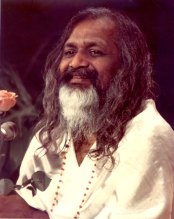 “Sexy Sadie,” The Beatles, 1968
After spending two months in India in early 1968 studying meditation with the Maharishi Mahesh Yogi, John Lennon became disenchanted with the iconic guru because of an alleged dalliance with one of the women in attendance there. Upon returning to England, he was motivated to compose a scathing put-down called “Maharishi,” taking the guru to task for being hypocritical and deceitful (“Maharishi, what have you done, you made a fool of everyone, you broke the rules, you laid it down for all to see…you’ll get yours yet, however big you think you are…”) But the lawyers at Apple Records, fearing a defamation suit, persuaded Lennon to change the title and words to something else, and he came up with “Sexy Sadie” as a code name.
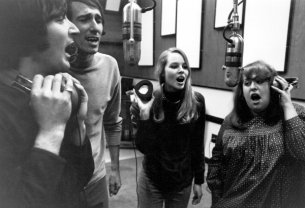 “I Dig Rock and Roll Music,” Peter, Paul and Mary, 1967
Paul Stookey and his co-writing pals James Mason and Dave Dixon wanted to write a song about the current pop music scene, which had converted from folk to rock during PP&M’s career arc. At first they were a bit bitter about that, according to Mary Travers, but eventually they faced facts and enjoyed a Top Ten tune that referenced the major acts of the day: “I dig the Mamas and the Papas…and when they’re really wailing, Michelle and Cass are sailing, hey they really nail me to the wall… I dig Donovan kind of in a dreamlike tripped-out way…and when the Beatles tell you, they’ve got a word ‘love’ to sell you, they mean exactly what they say…”

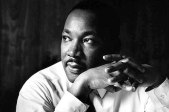
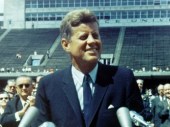
“Abraham, Martin and John,” Dion, 1968
In the spring of 1968, two beloved leaders — Martin Luther King and Bobby Kennedy — were assass inated within eight weeks of each other, and folk rocker Dion was motivated to write a tribute to them both, tying in their deaths to those of John Kennedy and Abraham Lincoln, also victims of assassinations. It’s a very moving song that speaks of the fleeting nature of life when it’s cut down too early (“can you tell me where he’s gone, he freed a lot of people, but it seems the good, they die young, I just looked around and he’s gone”).
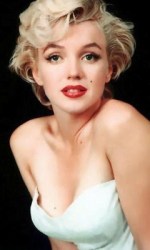 “Candle in the Wind,” Elton John, 1973
Elton John’s longtime lyric-writing partner Bernie Taupin had always been a big Marilyn Monroe fan, and for their landmark “Goodbye Yellow Brick Road” LP, they decided to write a tribute to her tortured life in the spotlight (“They set you on the treadmill, and they made you change your name…”) and sordid demise (“the press still hounded you…all the papers had to say was that Marilyn was found in the nude…”).  In 1997, Elton and Bernie made the extraordinary move of writing a new set of lyrics to this song to commemorate Lady Diana after her tragic death, and suddenly “Goodbye, Norma Jean” was “Goodbye, England’s Rose”: “And your footsteps will always fall here along England’s greenest hills, your candles burned out long before your legend ever will…”
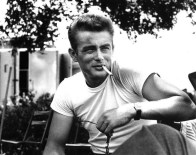 “James Dean,” The Eagles, 1974
Dean had been a major iconic figure for nearly 20 years when The Eagles wrote this song about him in 1974. It wasn’t a prominent tune in their catalog, but it still rang true with many who agreed that Dean had died too damn young and left a beautiful corpse: “You were the lowdown rebel if there ever was, even if you never had no cause, James Dean, you said it all so clean, and I know my life would look all right, if I could see it on the silver screen…”
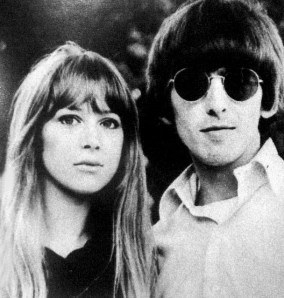 “Something,” The Beatles, 1969/”Layla,” Derek and the Dominos, 1970/”Wonderful Tonight,” Eric Clapton, 1977/”Old Love,” Eric Clapton, 1989
Pattie Boyd may have had more songs written about her, or to her, than anyone in rock music history, seeing as how she was married first to George Harrison and then to Eric Clapton. Harrison’s Beatles songs to her include “I Need You” (1965), “It’s All Too Much” (1967), “For You Blue” (1969) and especially his masterpiece “Something” (“Somewhere in her smile she knows, that I don’t need no other lover…”). 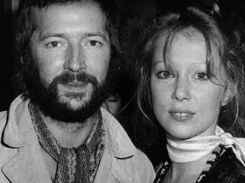 Clapton, meanwhile, was madly in love with Pattie while she was still married to George, and that unrequited love came pouring out in the lyrics to the classic “Layla” (“You got me on my knees, I’m begging darlin’ please, won’t you ease my worried mind…”). Once they became a couple, he wrote “Wonderful Tonight” to her as he waited for her to get dressed one evening (“I feel wonderful because I see the love light in your eyes, and the wonder of it all is that you just don’t realize how much I love you…”), and then wrote “Old Love” as their relationship disintegrated: “And it makes me so angry to know that the flame will always burn, Ill never get over, I know now that I’ll never learn…”
 “Here Today,” Paul McCartney, 1982
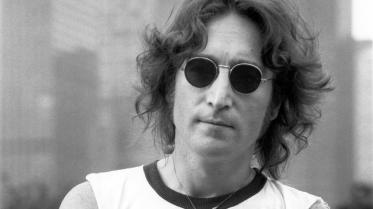
Following the assassination of John Lennon in December 1980, several artists wrote eulogies to the fallen icon — Elton John’s “Empty Garden (Hey Hey Johnny)” and Paul Simon’s “The Late Great Johnny Ace” are among the better ones. But the most poignant was no doubt “Here Today,” an extraordinary track by McCartney from his 1982 LP “Tug of War.” Their relationship was full of give and take, from their early teenage beginnings through a tumultuous breakup, but they patched up their differences before Lennon’s death, and McCartney did a wonderful job in writing the right kind of song that didn’t get too maudlin yet made it clear how much he cared for his old pal: “If I said I really knew you well, what would your answer be if you were here today…well knowing you, you’d probably laugh and say that we were worlds apart…but as for me, I still remember how it was before, and I am holding back the tears no more…”
 “How Do You Sleep,” John Lennon, 1971
McCartney had written a song called “Too Many People” to kick off his “Ram” LP. The lyric’s subtle digs at his former teammate Lennon and his overt political stances at the time — “Too many people preaching practices…that was your first mistake, you took your lucky break and broke it in two…” couldn’t go unanswered. Lennon’s response was the vitriolic “How Do You Sleep,” which appears on his “Imagine” LP, perhaps the most brutal putdown ever penned. He eviscerated McCartney’s cutesy persona and even trashed the hugely popular “Yesterday” and his penchant for romantic ballads: “The only thing you done was ‘Yesterday,’ and since you’re gone you’re just ‘Another Day’.. The sound you make is Muzak to my ears, you must’ve learned something in all those years…”
 “Mandela Day,” Simple Minds, 1989
The Irish-based Simple Minds were huge in England and Ireland for many years, and in the mid ’80s, they had a serious run in the US, including the smash #1 hit “(Don’t You) Forget About Me” from the popular film “The Breakfast Club,” and the #10 album “Alive and Kicking,” with its three singles “Alive and Kicking” (#3), “Sanctify Yourself” (#14) and “All the Things She Said” (#28). Four years later, the band released the superb “Street Fighting Years,” which featured several political tracks, including “Mandela Day,” which came out only eight months before the man was finally released after 33 years in prison.
 “Hurricane,” Bob Dylan, 1976
Rubin “Hurricane” Carter was a middleweight boxer with a bright future when he was accused of a triple murder in New Jersey. The infamous case involved trumped-up charges, inept prosecution, a corrupt trial and a huge miscarriage of justice, enough to rile up Dylan to the point where he was sufficiently outraged to write a lengthy piece about it, which became an unlikely single (#33) in 1976 on his #1 album “Desire.” The 11-stanza track clocks in at over eight minutes to tell the whole story (although the Part 1 single was only 4:56), and he was forced to alter the lyrics to avoid a libel suit: “All of Rubin’s cards were marked in advance, the trial was a pig circus, he never had a chance, the judge made Rubin’s witnesses drunkards from the slum, to the white folks who watched, he was a revolutionary bum…”
“Rock and Roll Heaven,” The Righteous Brothers, 1974


 Alan O’Day and Johnny Stevenson wrote this song in 1973 about major rock stars who had died in that time period, and The Righteous Brothers chose to tackle it as a comeback single, which reached #3 in 1974. It has been updated several times s
 ince then to reference other rock star deaths, but the original focused on Jimi Hendrix, Janis Joplin, Otis Redding and Jim Morrison: “Jimi gave us rainbows, Janis took a piece of our heart, and Otis brought us all to the dock of a bay, sing a song to light my fire, remember Jim that way…”
 “Sir Duke,” Stevie Wonder, 1976
Jazz legend Duke Ellington died in 1974, and Stevie Wonder was moved to pay tribute to him two years later with “Sir Duke,” the #1 single that has become a new standard for high school marching bands ever since. The song mentions other greats — Count Basie, Louis Armstrong, Ella Fitzgerald and Glenn Miller — who he felt were “the musicians who did something for us who are too soon forgotten”: “Music knows it is, and always will, be one of the things that life just won’t quit, but here are some of music’s pioneers that time will not allow us to forget…”
 “Suite: Judy Blue Eyes,” Crosby, Stills and Nash, 1969
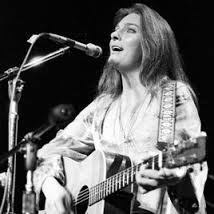
Stephen Stills and blue-eyed Judy Collins had enjoyed a two-year relationship that was winding down in 1969 as he was beginning his partnership with David Crosby and Graham Nash. The magnificent multi-part “suite” that became the trio’s signature song told the story of the breakup, from “I am yours, you are mine, you are what you are” to “Friday in the evening, Sunday in the afternoon, what have you got to lose?” to “Lacy lilting lady, losing love lamenting, change my life, make it right, be my lady…”
 “Shine On You Crazy Diamond,” Pink Floyd, 1975
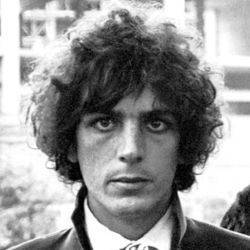
Syd Barrett was the visionary who co-founded Pink Floyd in his college days in Cambridge, England, in 1967, and was largely responsible for the debut masterwork “The Piper at the Gates of Dawn” and the early singles “Arnold Layne” and “See Emily Play.” Then he went off the rails on acid and other drugs and became a textbook case of what can happen when things go wrong with recreational drug use. Years later, his cohorts Roger Waters, Rick Wright, Nick Mason and new guitar god David Gilmour came up with a magnificent tribute, the tragic five-part opus “Shine On You Crazy Diamond” on their 1975 LP “Wish You Were Here,” which focused on Barrett’s unhinged brilliance: “Come on, you target for faraway laughter, come on, you stranger, you legend, you martyr, and shine!…”
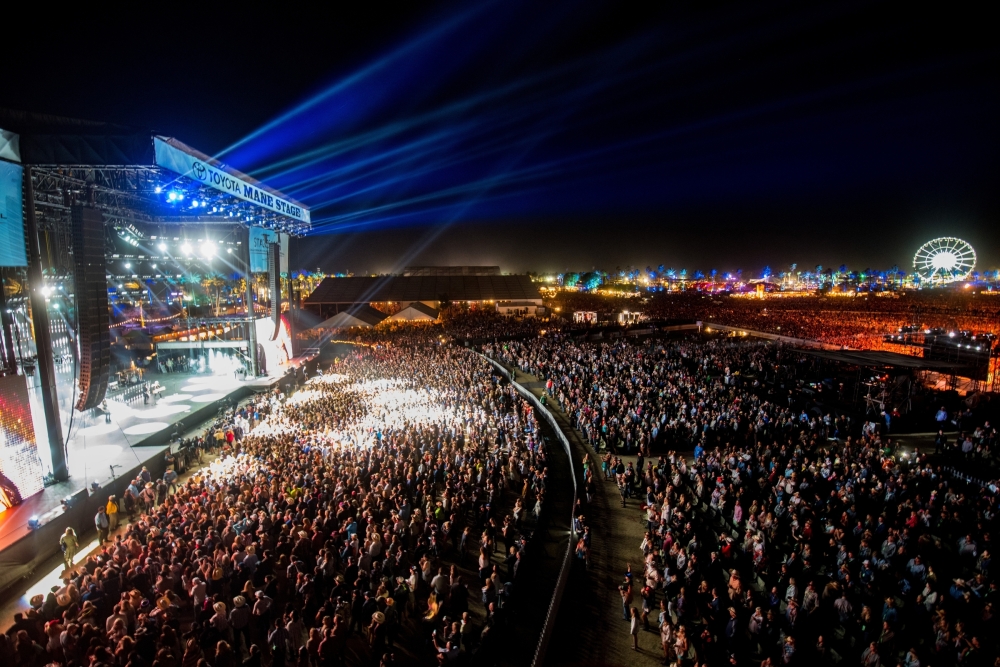 No wonder some critics are derisively referring to these shows as “Oldchella” (in reference to the event’s location at the Empire Polo Grounds out in Indio, the same grounds as the famed Coachella Music Festival). Read More
