A long long time ago, I can still remember
Historians often point at 1968 as a pivotal, transitional year in America, and elsewhere. Fifty years ago, riots, assassinations, demonstrations, even political conventions turned ugly and violent. What had been simmering under the surface for several years exploded during the 12 months of that dizzying year.
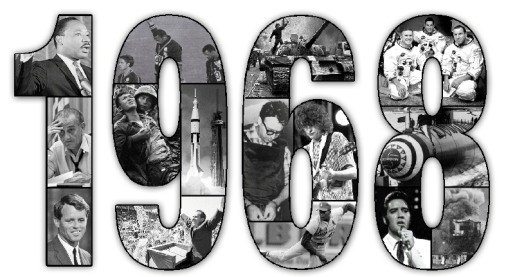 In pop culture, the same upheaval was underway. Pop art, op art, nudity on Broadway, “Rowan & Martin’s Laugh-In” on TV, and films like “Rosemary’s Baby” and “2001: A Space Odyssey” were rocking our world.
In pop music, 1968 was very much a transitional year. Throughout the ’50s and up until 1968, the 45 rpm single was the dominant format consumers chose to enjoy music. Most people didn’t care yet about full albums of songs. Many people didn’t even have the equipment to play them. As the ’60s waned and the ’70s approached, the hit single began its slide in popularity as the full-length album became the favored format.
If you peruse the list of albums released in 1968, you’ll find several subgroups. There were loads of “Best Of” and “Greatest Hits” collections of artists’ top-selling singles, compiled on one disc for the customers’ convenience. There were the rudimentary efforts by bands that would someday be great but were still finding their way at that point (Joni Mitchell, Jethro Tull, Creedence Clearwater Revival, The Grateful Dead). There were, as always, horrible LPs of filler that contained maybe one or two decent songs. And the smallest segment, perhaps, consisted of the truly groundbreaking, excellent albums full of top-quality material that, even 50 years later, stand up well to repeated listenings.
I have selected a dozen albums from 1968 that I believe are still worthy of attention, even by newer generations of fans. Beyond these, I have named another dozen “honorable mention” albums from 1968 that are historically noteworthy if not musically top-notch. As I said, it was a transitional time…
**************
 “Wheels of Fire,” Cream
Eric Clapton, Ginger Baker and Jack Bruce, each regarded as virtuosos on guitar, drums and bass, respectively, formed Cream in 1966, hoping to use improvisational jazz techniques within the pop/rock song structure. They succeeded on albums like “Fresh Cream” (1966) and “Disraeli Gears” (1967), but it was their landmark double album “Wheels of Fire” that truly cemented their status as iconic trailblazers. One album of nine studio tracks (including the hit “White Room”) and another disc of four extended live recordings (the incendiary “Crossroads” as well as the 16-minute mindblower “Spoonful”) showcased the band at its best. Sadly, their volatile personalities and a murderous touring schedule brought about the group’s demise by the end of the year. But their legacy lives on, thanks to records like this one.
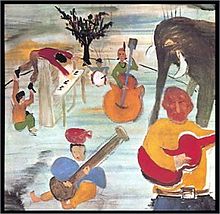 “Music From Big Pink,” The Band
Bob Dylan’s mid-’60s backup band, originally known as The Hawks, decided the time was right in 1968 for them to record their first album on their own. Songwriter-guitarist Robbie Robertson, drummer-vocalist Levon Helm, organist Garth Hudson, keyboardist Richard Manuel and bassist Rick Danko convened in the garage of a modest pink house in Saugerties, NY (where they had recorded many songs with Dylan in what were to become known as “The Basement Tapes,” released in 1975). It was there that they came up with “Music From Big Pink,” the 12-song album that is now regarded as the harbinger of the “back to nature” movement that killed acid rock and ushered in the country rock movement and the singer-songwriter era. Neither the group, its members nor its music became million-selling superstars, but they were widely respected and praised within the music community and among a loyal legion of fans. Songs like “The Weight” and “Chest Fever” are prime examples of the lasting influence of this album.
 “In Search of the Lost Chord,” The Moody Blues
The Moodies had almost been cut from their record deal in 1967 before they were paired with the London Festival Orchestra to combine orchestral/classical music with rock instruments to produce the landmark “Days of Future Passed” LP. After that successful project, the group was given more leeway to create their own vibe, which was decidedly more psychedelic and progressive. Beginning with their 1968 album “In Search of the Lost Chord,” the British group embarked on a legendary career full of spacey yet accessible music on multiple Top Five LPs, led by Justin Heyward’s songs and vocals, Mike Pinder’s mellotron and keyboards, John Lodge’s bass and vocals, Ray Thomas’s flute and Graeme Edge’s percussion. On this fine album, check out “Ride My Seesaw,” “Legend of a Mind,” “Voices in the Sky” and “Om.”
 “Aretha Now,” Aretha Franklin
The amazing pipes of Aretha Franklin came bursting forth from Stax Records’ Memphis Studios in 1967 when she took Otis Redding’s “Respect” and made it one of the iconic soul tunes of all time. From there, it was hit after hit, mostly just as singles, but Stax wisely put enough great material together to create a fabulous LP, “Aretha Now,” in 1968. Spurred on by the hugely popular “Think” (later re-recorded in a rollicking remake for “The Blues Brothers” movie soundtrack in 1980), and other killer tracks like “I Say a Little Prayer” and “Night Time is the Right Time,” Franklin reached #3 with “Aretha Now,” her fourth Top Five album in less than two years.
 “Bookends,” Simon & Garfunkel
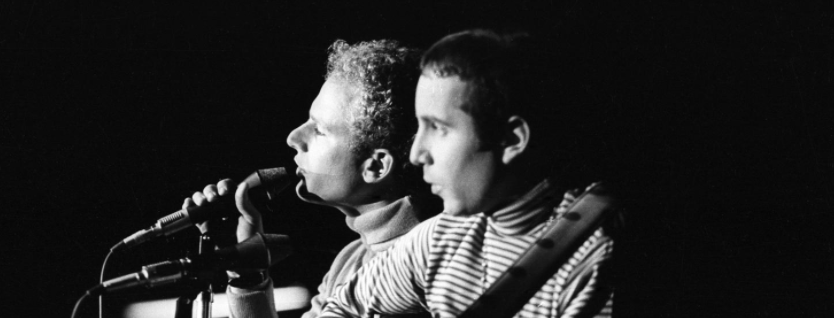
With songs like “The Sound of Silence,” “Homeward Bound” and “I Am A Rock” in 1966, Paul Simon established himself as a major songwriter, and his recordings with partner Art Garfunkel reached the Top Five. In 1967, they were asked to contribute songs to the soundtrack of the game-changing film “The Graduate,” and the soundtrack LP went to #1 in early 1968. Their next studio LP, the extraordinary “Bookends,” came out in April and also reached #1. It included the full-length version of the #1 hit “Mrs. Robinson” (the film soundtrack included only the chorus because Simon hadn’t completed the song in time!), and other 1967 hits like “Hazy Shade of Winter” and “Fakin’ It.” Most important, it included an “ahead-of-its-time” song cycle about aging, from the teen angst of “Save The Life of My Child” and the early-adult soul-searching of “America” to the depression of divorce in “Overs” and the reflection of old age in “Old Friends/Bookends.” Simon and Garfunkel have been household names ever since, and with good reason.
 “Super Session,” Al Kooper, Mike Bloomfield, Stephen Stills
Al Kooper was only 21 when he played an important role in recording sessions for Dylan’s “Like a Rolling Stone,” among others, and had founded the rock/brass group Blood, Sweat and Tears in 1967, contributing vocals and keyboards. But he was forced out of his own group, and he went off to lick his wounds by recording with blues guitar great Mike Bloomfield. But Bloomfield was a volatile soul who dabbled deeply in drugs, so when he failed to show up for a session, Kooper asked Stephen Stills, who was recuperating from the disbanding of Buffalo Springfield, to step in. The result is “Super Session,” a magnificent album with Kooper on vocals and keyboards throughout and Bloomfield on Side 1 and Stills on Side 2. This album just gets better and better whenever I put it on. By all means, immerse yourself in this one.
 “Beggar’s Banquet,” The Rolling Stones
I doubt if they realized it yet, but upon the release of this well-rounded LP in December 1968, The Stones were at the beginning of a five-album run that would prove to be the apex of their 50-plus years in the business. Their reputation as cheeky delinquents was solidified by the album cover art of a dirty, graffiti-laced bathroom, which was, of course,  refused by the US record label and replaced by a formal wedding invitation design. More important was the music, particularly the rocking “Sympathy for the Devil,” “Street Fighting Man” and “Salt of the Earth,” all offset by acoustic gems like “No Expectations,” “Parachute Woman” and “Factory Girl.” Mick Jagger and Keith Richards really stepped up here, with co-founder Brian Jones sliding further into the shadows, and the rhythm section of Charlie Watts and Bill Wyman had developed at that point into one of the very best in rock.
 “Cheap Thrills,” Big Brother & The Holding Company
By all rights, this album should officially be a Janis Joplin album, but when it was recorded, she was still just the vocalist of this unrefined blues group from San Francisco. The album includes both studio and live recordings, all of which feature Joplin’s alternately powerful and gentle vocals. This LP, with its marvelous R. Crumb comic illustrations, reached #1 in the summer of ’68, thanks in part to the popular “Piece of My Heart” single. Only months after its release, she left Big Brother behind and went off to form the Kozmic Blues Band, touring incessantly until she died of an overdose in the fall of 1970. By all accounts, her take on Big Mama Thornton’s “Ball and Chain” is one of the most sensational tracks released that entire year.
 “Truth,” Jeff Beck
Sadly, many Rod Stewart fans are unaware of Rod’s roots, when he was an unknown blues singer who joined the Jeff Beck Group and first appeared on Beck’s excellent debut LP “Truth” in 1968. Stewart offered seriously raw vocals, perfectly complementing Beck’s accomplished blues guitar stylings. And look who else is playing on this LP: future Faces/Stones guitarist Ronnie Wood on bass, future Led Zeppelin bassist/keyboardist John Paul Jones and freelance keyboard wizard Nicky Hopkins. Even Who drummer Keith Moon and Zeppelin guitar master Jimmy Page are on the amazing “Beck’s Bolero” track. This LP is a solid testimony to Beck’s stature as one of the best guitarists in rock history.
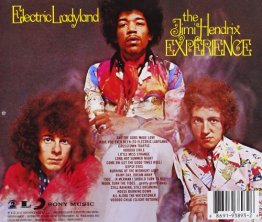 “Electric Ladyland,” Jimi Hendrix Experience
At his seismic US debut at the Monterey Pop Festival in June 1967 and on his incredible first LP, “Are You Experienced?,” Jimi Hendrix had brought shock and awe to every guitarist on the British rock scene, and to the US record-buying public as well. Only a year later, on his third album, the sprawling double LP “Electric Ladyland,” he was exploring ever-new horizons, using guest players like Steve Winwood and Dave Mason and trying a broad palette of song styles on originals and covers alike. The 16-minute jam “Voodoo Chile” still sends chills up my spine, and his rendition of Dylan’s “All Along the Watchtower” reinvented the idea of reinventing a song. There is self-indulgence here, but there’s so much great stuff as well, it just doesn’t matter.
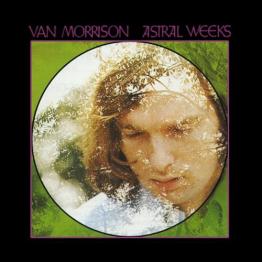 “Astral Weeks,” Van Morrison
First came the garage rock of his first band Them and their 1966 hits “Gloria” and “Here Comes the Night.” Then came his 1967 solo debut and biggest hit single “Brown-Eyed Girl.” But before he kicked off an amazing run of FM radio favorites like 1970’s “Moondance,” 1971’s “Tupelo Honey” and 1972’s “St. Dominic’s Preview,” Van Morrison put together an astounding, free-flowing, stream-of-consciousness beauty called “Astral Weeks” in 1968. It didn’t sell well, and even a lot of Van’s fans aren’t all that familiar with it. But you would do well to look it up and give it a try. There are eight very thoughtful, delicately performed story-songs here that show Morrison in a pensive and creative mood.
 “The Beatles (The White Album),” The Beatles
Ah yes, the crown jewel of the entire calendar year. The Beatles had been pretty quiet since “Sgt. Pepper” in June 1967, although the September 1968 two-sided single “Hey Jude” and “Revolution” had dominated the Top 40 throughout the fall. But very few anticipated the outpouring of 30 new songs on the group’s November release, “The Beatles,” which instantly became known as “The White Album” because of its stark white album  cover. This expansive collection had something for everybody. Harrison offered his best track yet, “While My Guitar Gently Weeps,” featuring an uncredited guitar solo by pal Eric Clapton. McCartney kicked ass with rockers like “Back in the U.S.S.R.,” “Birthday,” and “Helter Skelter,” and also offered some fine acoustic stuff like “Blackbird,” “I Will,” “Mother Nature’s Son” and “Martha My Dear.” Even Ringo wrote a song, the country ditty “Don’t Pass Me By.” Lennon, meanwhile, stepped up with nearly a dozen of his best songs — “Happiness is a Warm Gun,” “I’m So Tired,” “Dear Prudence,” “Sexy Sadie” and a slow-burn version of “Revolution.” He insisted the album include his nightmarish sound collage, entitled “Revolution 9,” as well as his saccharine lullaby, “Good Night,” sung by Ringo. Because the recordings were so good, no one was aware the group was continually at odds and headed for a breakup. For now, this was an outstanding Christmas present.
**************
Honorable Mention:
 “James Taylor,” James Taylor; “Living the Blues,” Canned Heat; “Eli and the Thirteenth Confession,” Laura Nyro; “Traffic,” Traffic; “Song to a Seagull,” Joni Mitchell; “One,” Three Dog Night; “Diana Ross and The Supremes Join The Temptations“; “In a Gadda Da
 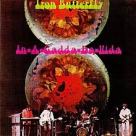 Vida,” Iron Butterfly; “Tell Mama,” Etta James; “Last Time Around,” Buffalo Springfield; “Creedence Clearwater Revival,” Creedence Clearwater Revival; “This Was,” Jethro Tull; “Sweetheart of the Rodeo,” The Byrds; “Odessey and Oracle,” The Zombies; “Ogdens’ Nut Gone Flake,” The Small Faces.

 What a difference a year makes! I was in ninth grade, now buying a lot of rock music albums to complement my Simon & Garfunkel stuff, and I was eager to check out Led Zeppelin, the new British hard rock/blues band I’d turned on to only six months before. My friends Steve and Andy were hell-bent on going, and I eagerly agreed. I have no idea why my parents agreed to let me go, but sure enough, the three of us headed downtown several hours early that Friday afternoon to the same huge venue I’d been to the previous year. If you can believe it, tickets were only $4.00 each (!), and they were general admission (!!!), which meant we might get really good seats if we got lucky. When they opened the doors, there was a crush of people fighting to get in, and once we survived that, we ran to claim seats in the 20th row. Damn, I was so excited! Eventually, the announcer said, “Will you please welcome, from Flint, Michigan, GRAND FUNK RAILROAD!!” I thought, damn, did we come to the wrong place? But no, this was a warm-up band, so I thought, “Wow, a bonus!” This trio blew the hinges off the place for 45 minutes, songs like “Time Machine” and “Are You Ready,” and the crowd responded thunderously. Me? I was in such total awe, I was almost satisfied to leave at that point. But of course we stayed, and soon, out came the soon-to-be-legendary Jimmy Page, Robert Plant, John Paul Jones and John Bonham, still young and hungry, and ready to slay us with songs from their brand new LP, “Led Zeppelin II,” featuring the new single, “Whole Lotta Love.” We watched with our mouths agape as they played “Dazed and Confused,” “Bring It On Home,” “Heartbreaker,” “Good Times Bad Times” and others from their first two albums. We inched closer to the front as the evening drew to a close, and by the encore, we were leaning against the stage, watching Plant howling into the microphone right above us as Page wailed away on his Gibson Les Paul only a few feet away. A life-changing experience!!
 The huge 1970 hit singles “Make Me Smile” in May and “25 or 6 to 4” in August had transformed Chicago from a cult favorite to a mainstream favorite, but at this stage, they were still finishing off a set of gigs scheduled in college gyms. John Carroll was a small college only 10 minutes from home in the Eastern Cleveland suburbs, so it was conveniently located, and my friend Ben had just scored his driver’s license, so he drove. He and our friend Steve and I waited with the crowd outside and, again with general admission tickets, made our way in and sat midway back on the left-side bleachers. The band, with its original lineup, was in top form, with guitarist/vocalist Terry Kath, bassist/vocalist Peter Cetera and keyboardist/vocalist Robert Lamm leading the charge. They performed just about everything from their widely praised first two LPs (1969’s “Chicago Transit Authority” and 1970’s “Chicago”) and a couple from the soon-to-be-released “Chicago III.” I remember the band exceeding my expectations, especially on “Beginnings,” “Does Anybody Know Really Know What Time It Is,” “25 or 6 to 4” and the album tracks “Poem for the People” and “In the Country.” Great show!!
 Blossom Music Center had opened in 1968 as “the summer home of the Cleveland Orchestra” in an idyllic plot of land between Cleveland and Akron. The featured acts in those early years leaned toward jazz and folk artists, in keeping with the wishes of the conservative board of trustees. (The profitable rock bands showed up in the mid-’70s and have dominated the proceedings pretty much ever since.) My friend Paul, who had moved to Canada but was back in town for a visit, had become an aficionado of jazz, and he suggested we check out Blossom to see the Cannonball Adderley Quintet and Les McCann, who were warming up for Roberta Flack. I knew next to nothing about any of these artists, but it sounded like fun, so I agreed. Neither of us can remember much of anything about the music we heard that night — I later learned to like Flack’s songs, and now have enormous admiration for Adderley as well as McCann and his other jazz cohorts. But all we seem to recall of that evening is the horrendous traffic jam getting in and out of the place (and it’s been a perennial problem at Blossom ever since).
 The downtown Cleveland facility that housed the 10,000-seat Public Hall also included a smaller, 3,000-seat theater called Music Hall, which featured artists and stage shows that attracted smaller audiences. I got my first taste of that venue with my high school girlfriend Betsy when we went to see the great Gordon Lightfoot, Canada’s premier singer-songwriter. We were crazy about him, and at the time, he was riding the success of his marvelous Top Ten hit “If You Could Read My Mind” and the impressive repertoire he’d built up since his debut in the mid-’60s. We both recalled hearing just about every song we’d hoped to hear — “Minstrel of the Dawn,” “Summer Side of Life,” “Talking In Your Sleep,” “Me and Bobby Magee,” “Did She Remember My Name” and his tour de force story-song “Canadian Railroad Trilogy.” He had a three-piece band accompanying him, and they put on a thoroughly entertaining show.
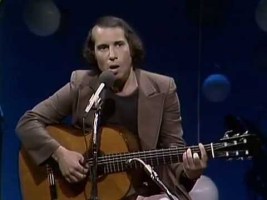 In the spring of 1972, liberal candidate George McGovern was vying for the Democratic nomination in hopes of unseating President Richard Nixon, and Hollywood celebs like Warren Beatty were actively supporting McGovern. He put together several fundraising events, one of which was scheduled in Cleveland, and to me and my friends, it seemed too good to be true: Paul Simon, Joni Mitchell and James Taylor all on the same bill!
 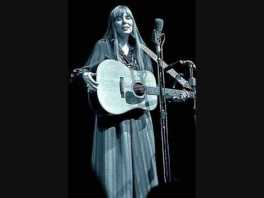 We stood in line to successfully snag tickets, but it was clear from the very beginning that this would be a disappointing evening. It was held at the decaying, acoustically miserable Cleveland Arena, a hockey/boxing venue that, although it had been the site of Alan Freed’s “Moondog Coronation Ball” in 1952 (widely considered the world’s first rock concert), was well past its prime and was torn down only five years later. Simon, who had just released
  his solo debut LP three months earlier, played his hits (“Mother and Child Reunion” and “Me and Julio Down By the Schoolyard”) and a few Simon & Garfunkel classics, but left abruptly due to the noisy crowd. Mitchell fared even worse — her music was best suited to small halls and respectful audiences, and the Cleveland Arena crowd was apparently not there for the music. Only Taylor had much success getting through to the hob-nobbers — he was riding the success of his huge “Sweet Baby James” and “Mud Slide Slim” albums and the Top Five “Fire and Rain” and “You’ve Got a Friend” hit singles. Betsy still has a photo she took of film stars Julie Christie and Jack Nicholson, who walked by our seats near the back of the arena at one point. Not a great evening musically, that’s for sure…
 Bread, the soft-rock favorites from LA, were at the peak of their success in the summer of ’72, thanks to multiple Top Ten hits like “Make It With You,” “It Don’t Matter to Me,” “If,” “Mother Freedom,” “Baby I’m-a Want You,” “Everything I Own,” “Diary” and “The Guitar Man.” Inexplicably, I corralled my ex-girlfriend Jody to come up from Mansfield to join me on a triple date with my friends Ben and Rod and their girlfriends Leesa and Darcy for this second attempt at Blossom. Harry Chapin, brand new and enjoying success with the hit “Taxi,” warmed up admirably, and Bread put on a solid, thoroughly enjoyable show, according to our collective memory. Sadly, our most vivid recollection was of Ben’s father’s station wagon overheating as we tried to leave, which resulted in us not arriving home until nearly 3 am, to our parents’ consternation (no cell phones back then!)…
 This was my ninth concert, but technically only my second rock show. Jethro Tull was hugely popular with the stoners and the critics, and their most recent LP, “Thick as a Brick,” had, against all odds, somehow reached #1 on the charts in May 1972, despite it consisting of one 45-minute-long piece of music. The group, led by the indefatigable flautist/singer Ian Anderson, performed it that night in its entirety before also treating the crowd to several tracks from 1971’s classic “Aqualung” material (“Cross-Eyed Mary,” “Wind Up,” “Locomotive Breath”). My friends Rod and Tim joined me for this amazing concert, and other friends were there that night as well. Our seats, sadly, were only average, halfway back on the left side of the Public Hall auditorium. I have little memory of Gentle Giant’s set, although I enjoyed one of their albums Rock bought afterwards. We all look back fondly on this gig and were glad we were savvy enough to attend, because Jethro Tull went on to become the biggest concert draw in the world for a spell in the ’70s. I have since seen the band in concert more than two dozen times, and Anderson still performs Tull music today in 2018.
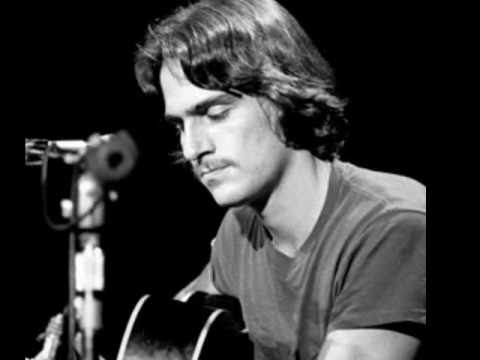 Kent State, famous for the polarizing National Guard shootings in May 1970, is an hour’s drive south of Cleveland, but my friend Ben and our dates and I loved James Taylor enough to make the drive down there one rainy night our senior year of high school. Taylor was late in arriving, and put on a rather muted show, which was mildly disappointing, because his most recent record, 1972’s “One Man Dog,” had plenty of additional instrumentation, including horns. But that night, it was pretty much just Taylor sitting quietly on a stool with almost no accompaniment. We certainly enjoyed it anyway, even if only because Taylor’s songs back then were so good (“Country Road,” “Long Ago and Far Away,” “Don’t Let Me Be Lonely Tonight,” “You Can Close Your Eyes”)…
 This almost doesn’t qualify as a music concert, because my friends Chris, Fiji and Rock and I were there at the storied Allen Theatre to laugh at the outrageous comedy of George Carlin, who didn’t disappoint (his “Seven Words You Can’t Say on Television” was all the rage at the time). But warming up that night was label mate Kenny Rankin, an astonishingly talented singer-songwriter whose song “Peaceful,” as covered by then-popular Helen Reddy, was climbing the charts. Rankin wrote wonderful songs and also was adept at covering songs by The Beatles and others on albums like “Like a Seed,” “Silver Morning,” “Inside” and “The Kenny Rankin Album” throughout the ’70s.
 About ten of my friends and I made the spontaneous decision on this night to head out to Blossom and buy tickets at the box office (I think they were only $4 each) and party on the huge lawn that faced the outdoor amphitheater. We all knew and admired Stephen Stills for his work with Crosby, Nash and Young, but I don’t think too many of us knew much of the material he did with his erstwhile country-influenced band Manassas at the time. (I have since gone back tardily and am a big fan of the original double LP “Manassas” from 1972, which includes The Birds’ Chris Hillman, CSNY’s Dallas Taylor and Al Perkins from The Flying Burrito Brothers, among others). I remember it was a wonderful, good-vibe kind of evening, with plenty of funny cigarettes being smoked.
 Hack's Back Pages