Rock is dead, they say, long live rock
What does the term “rock star” mean to you? What did it mean in the ’70s versus what it might mean today?
Let me introduce you to an extraordinarily perceptive author who has written a very intriguing book on this subject.
 David Hepworth is an accomplished and respected music journalist, writer, and editor in England. He was an on-air personality for BBC programs in the 1980s, has written for and led the charge for such influential rock magazines as Mojo and Q, and still contribute regularly to The Guardian newspaper.
His recent book, “Uncommon People: The Rise and Fall of the Rock Stars” (Henry Holt & Co., 2017), offers a thought-provoking series of 40 short essays that take a look at defining moments and turning points in the lives of 40 rock stars between 1955 and 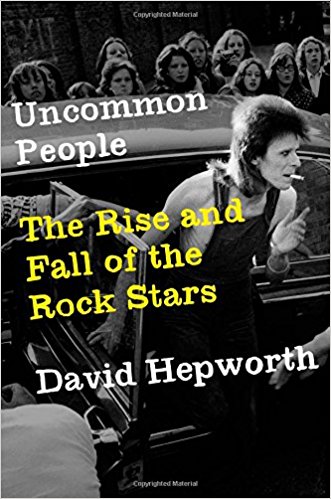 1995. He busts myths and creates new ones. He has deftly zeroed in on many of the key players and events that shaped rock music during that 40-year span (which conveniently covers roughly the same period Hack’s Back Pages has always sought to examine).
The names you’d expect to see are there: Little Richard, Elvis Presley, Jerry Lee Lewis, Buddy Holly, The Beatles, Bob Dylan, The Who, Jimi Hendrix, Janis Joplin, The Rolling Stones, David Bowie, Bruce Springsteen, Led Zeppelin. You’ll also find a few names that aren’t as familiar to American audiences: Hank Marvin, Ian Stewart, Ian Dury.
And Hepworth also latches on to key developments that have affected the arc of the rock star era: Rock tour excesses, the deaths of Elvis and John Lennon, the rise of music videos, ironic rock star parodies, the glitz of Michael Jackson and Madonna and Prince, the increased move toward drug rehab, the rise of the Internet and social media.
His main premise, which I happen to agree with, is starkly stated in the book’s foreword: “The age of the rock star, like the age of the cowboy, has passed. The idea of the rock star, like the idea of the cowboy, lives on.”
Although rock ‘n roll and its first big names emerged in the late 1950s, nobody was yet calling those people rock stars. As Hepworth notes, “The term rock star didn’t come into widespread use until the ’70s and ’80s, when the music business was looking to sustain the careers of its biggest names. The industry was beginning to realize the value of brands, and there was no better brand than a rock star. A rock star was supposed to be somebody you could rely on, somebody whose next record you had to have, regardless of its merits. Eventually, it was applied to everyone from Morrissey to Madonna, from Ozzy Osbourne to Bjork. By the 21st Century, the term had been spread so thin as to be meaningless.”
He finds it preposterous to label current celebrities like Adele or Kanye West or Justin Bieber as rock stars because they came of age in an entirely different set of circumstances. “The age of the rock star ended with the passing of physical product, the rise of automated percussion, the domination of the committee approach to hit making, the widespread adoption of choreography, and, above all, the mystique-destroying rise of the Internet.”
 He adds, “Rock stars were the product of an age when music, and details about rock stars’ lives, was harder to access and was treasured accordingly… Today, you simply can’t live the life of a rock star anymore. The mobile phone alone saw to that. That was when the rock star’s all-important mystique came to an end.”
Since 1973, he says, “We have grown increasingly used to ‘rock star’ being employed as a descriptor. Bill Clinton was supposedly the first rock-star president. Andre Agassi was a rock-star tennis player. Russell Brand was a rock star comedian. These days you can even be a rock-star fund manager.”
The reason I have chosen to delve in detail into Hepworth’s book goes beyond his provocative premise about the demise of the rock star era. Quite simply, he is a hell of a writer. I marvel at the superb descriptive phrases and metaphors he offers in his examination of the people and events of that time.
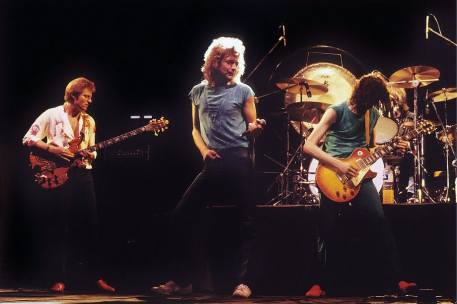 When he discusses how, in 1979, Led Zeppelin’s Robert Plant seemed to lack the confident swagger he had in the band’s heyday, he attributed it in part to “the death of distance.” He was referring to how rock stars had once been able to behave recklessly with impunity in the ’60s and ’70s, engaging in shenanigans without their wives or the public at large ever knowing for certain. There were rumors, of course, but no visual proof, no culpable evidence, no 24/7 speculating. Rock stars were untouchable mythic beings “who did things you wouldn’t dare do with people you would never meet in places you could never afford to go.”
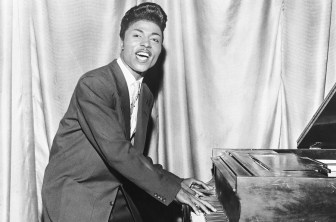 His piece on Little Richard as “the first rock star” describes how he came up with “A-wop-bop-a-loo-bop, a-lop-bam-boom” when he let out a yelp while playing a beat-up piano in a Macon, Georgia, hangout. “It was just a little riff, an imagined percussion fill that Richard was in the habit of beating out on the lunch counter, and this time it tumbled out without interruption into a song, if song it could be called.”
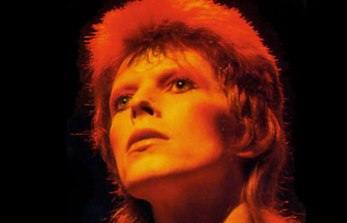 In an essay entitled “A ‘rock star’ retires,” Hepworth looks deep into David Bowie‘s Ziggy Stardust persona, which he sees as “the rock star as tragic figure, doomed to enact his own suicide on stage.” In 1973, he theorized, rock musicians felt “they could indulge themselves in the world of limelight while still retaining some intellectual standings. They felt it ought to be possible to play the part of a rock star for a while and then walk away without a scratch on them.”
 On Janis Joplin, Hepworth had this to say: “Before Janis, there had been female musical stars, like Dusty Springfield or Aretha Franklin, who were much admired for their artistry but were not permitted anything as vulgar as a personality. They were as prim and proper as young women were expected to be at the time. The idea that they might have a love life was hard to imagine. A sex life would be wholly out of the question. Janis came to the fore in the age of ‘let it all hang out.’ She understood what she needed to do to be a star, and she worked at it. She was smart enough to know that the appearance of spontaneity was something that must be worked at.”
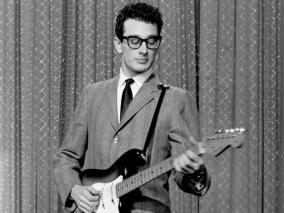 In his essay on Buddy Holly, Hepworth explains how early rockers found themselves to be popular paupers: “Holly figured in his naiveté that there would be a simple accounting of monies from which everybody would be able to walk away satisfied, but this proved not to be the case. As 1958 drew to a close, Holly found himself in the unenviable position of being massively famous, widely celebrated, and functionally penniless.” Holly, therefore, felt he had no choice but to go along with sketchy plans to perform on unpleasant bookings in unpromising venues, traveling on unsafe vehicles in ungodly weather conditions, which ultimately killed him (“the day the music died”).
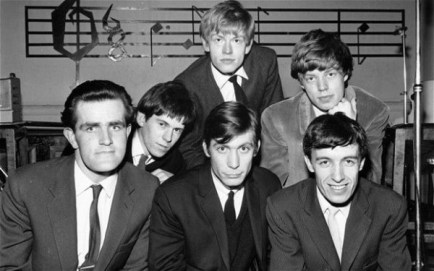
Ian Stewart (left) pictured with The Stones in 1963
Rolling Stones fans know the name Ian Stewart as the unofficial band member who played keyboards on albums and in concert. He was heard but rarely seen because the group’s manager said he didn’t work visually. As Hepworth points out in “The man who didn’t fit in”: “Stewart spoiled the look of the group. He didn’t fit the picture. In fact, ‘Stu’ looked as if he came from an earlier decade. The look the Stones were going for was a look that the presence of Stewart simply ruined. Furthermore, he wasn’t temperamentally suited to being a rock star. He seemed impervious to the passion for fame that drives rock stars on. He could never have been a rock star for the same simple reason that the rest of us aren’t rock stars: Because we can imagine not being one.”
 Conversely, drummer Keith Moon of The Who was ideally suited for the rock star world, Hepworth contends. “The very same things that made Keith Moon an impossible child made him the perfect rock star. He was hopeless at school and left at the age of 14. He had a need to be admired and noticed that could be satisfied by being the center of attention all the time. As a civilian, Keith Moon would inevitably have to find a way of growing up, fitting in with other people, and curbing his excesses. If he became a rock star, he wouldn’t have to do any such thing.”
The essay “sex, violence and television” explores the rise of MTV, which Hepworth  claims increased the visibility of both rock stars and would-be rock stars. “Marginal acts with strong visuals (The Stray Cats, the Go-Go’s, Duran Duran) quickly went mainstream. Older acts worried about how the close scrutiny of the camera could reveal the shortcomings of their appearance. Elton John’s hairline was retreating and thus his video was shot from one side only in a darkened room, and Olivia Newton John happily cut her hair, toned her body, and belatedly transformed herself into a sex symbol for the ‘Physical’ video.”
 In discussing Bruce Springsteen‘s rise following the painstaking development of his monumental “Born to Run” song and album in 1975, Hepworth noted that great rock records had often been made quickly. The recording of the debut LPs by The Beatles in 1963 and Black Sabbath in 1970, he points out, had both been hammered out in a single day. “If popular music history had one thing to teach, it is that time spent polishing records is usually time spent ruining them.” But there are always exceptions to the rule, and Springsteen, who was “possessed by a lust for rock and roll glory,” worked for six months to hone the words, and another three months to perfect the arrangements and recorded layers of “the title song’s titanic thrust.” The result, he said, “felt like some lost masterpiece that had been awaiting discovery for decades.”
Hepworth’s piece “The absurdity of the rock star” reviews the impact of the 1984 rockumentary “This is Spinal Tap.” He remarks that rock had been parodied before by older funnymen like Phil Silvers and Peter Sellers “who didn’t really understand what they were spoofing, but the difference this time is that Christopher Guest, Michael McKean and Harry Shearer knew whereof they spoke. They slid in the stiletto with loving tenderness. They revealed the overarching truth of what was now a rock industry: It relies on the audience’s willing suspension of disbelief. Once you have seen the world of rock through the lens of ‘Spinal Tap,’ the standard bunch of rock demigods are instantly revealed before you as middle-aged men in unsuitable trousers.”
 Here is Hepworth’s take on the pre-fabricated lack of spontaneity that characterized 1990-era Madonna in “Rock star as celeb”: “The Blonde Ambition World Tour was what a generation raised on MTV had come to expect of a live show, which was a very big, very loud multimedia assault. It was an experience that was so beholden to click tracks, autocue machines, and technological whizzbangs that nothing could stand in its way or alter one step or one word from night to night. The performers were elements in a production rather than autonomous individuals who might at any stage stop what they were doing and change their mind.”
 Kurt Cobain, Hepworth believes, qualifies as “the last rock star,” if only because his death affected his generation of fans as much as, if not more than, Buddy Holly’s death did to ’50s fans. “Nirvana’s second album, ‘Nevermind,’ which had been released in 1991, did something more for Generation X than other, better-known albums had done for their parents,” wrote Hepworth. In the note Cobain wrote before shooting himself in 1994, he quoted Neil Young’s “My My Hey Hey,” which insists, “It’s better to burn out than to fade away.” Hepworth concludes: “These aren’t just the words of someone who has fallen out of love with playing. These are the words of a man who has grown up with all his hopes and dreams invested in the single purpose of becoming a rock star…and has found that he simply can’t live up to the demands of the role in which he has cast himself.”
Finally, there is Hepworth’s view on how things are today, and why there are no rock stars anymore, or at least, none in the traditional/original sense of that term: “Because there are fewer and fewer places to play, and the audience now has too many options to be willing to put up with an evening’s entertainment from somebody who is only just learning their trade, it’s harder and harder for people to establish the balance between entertainment and invention. It’s never been easy to make it, and it still isn’t. You no longer need a record company to make a record, but you might need the record company’s money to make you a (rock) star.”
I heartily recommend this book. An excellent read.
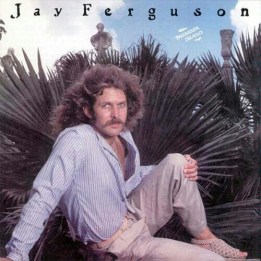 “Thunder Island,” Jay Ferguson, 1977
 “Holdin’ on to Yesterday,” Ambrosia, 1975
 “Fast Buck Freddie,” Jefferson Starship, 1975
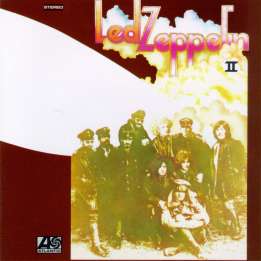 “What Is and What Shall Never Be,” Led Zeppelin, 1969
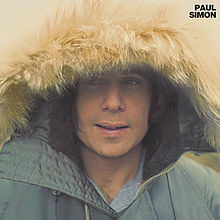 “Duncan,” Paul Simon, 1972
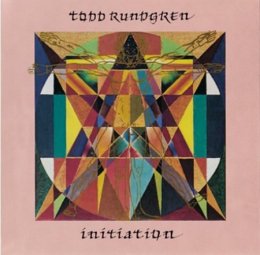 “Real Man,” Todd Rundren, 1975
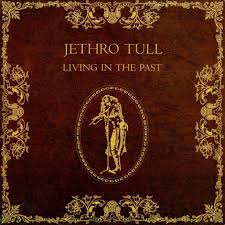 “The Witch’s Promise,” Jethro Tull, 1970
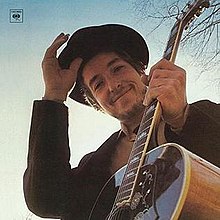 “Tonight I’ll Be Staying Here With You,” Bob Dylan, 1969
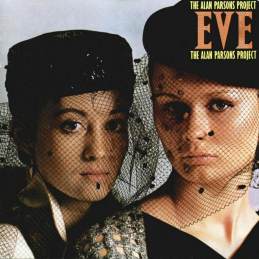 “Damned If I Do,” Alan Parsons Project, 1979
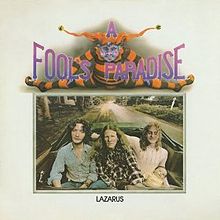 “Ladyfriends I,” Lazarus, 1973
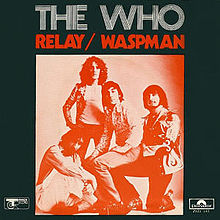 “Relay,” The Who, 1972
 Hack's Back Pages