All things must pass away
“Hallelujah, you were an angel in the shape of my mum, you got to see the person I have become, spread your wings, and I know that when God took you back, He said, ‘Hallelujah, you’re home’…” Ed Sheeran
Music can be such a powerful force.
It can make us joyous and get us up off our feet, it can soothe our aching wounds, it can take us back in time, it can bring us to our knees. In celebration or in desolation, it’s always there to help us crystallize our thoughts and emotions about the joyous and tragic events of our lives.
Through the years, popular music has tended to be mostly sunny and optimistic, but there have been hundreds of examples of songs that deal with loss and grief. For example, we can reach back to George and Ira Gershwin’s groundbreaking 1935 opera “Porgy and Bess,” which includes a heart-wrenching song of longing called “My Man’s Gone Now”: “My man’s gone now, ain’t no use listening for his tired footsteps climbing up the stairs, old man sorrow’s come to keep me company, whispering beside me when I say my prayers…”

Five years ago, on her 90th birthday
Earlier this month, I lost my mother, Phyllis Hackett, who passed away at age 95. It was quite a long and wonderful life she had, but it still hurts mightily — for me, for my sister, for the grandchildren and other relatives, and for the many who called her their friend — to lose her.
“Sometimes I feel my heart is breaking, but I stay strong and I hold on, ’cause I know I will see you again, this is not where it ends, I will carry you with me…” David Hodges/Hillary Lindsey/Carrie Underwood
These kinds of events take your breath away in their suddenness and their finality, and no one knows exactly what to do, or feel. It just doesn’t seem real, like a nightmarish scene from a bad movie. And those left behind to mourn are searching for ways to cope, to heal, to put it all in perspective and somehow make sense of it.
“Like a comet blasting ‘cross the evening sky, gone too soon, like a rainbow fading in the twinkling of an eye, gone too soon…” Michael Jackson
The Internet is full of documented scientific studies that show conclusively that music can reduce the intensity of pain, improve sleep, reduce stress, enhance blood vessel function, raise spirits and enhance mood, induce meditative states. I’m pretty certain, though, that mankind has known this for many centuries before science proved it. As they say, music has charms to soothe the savage breast: “Music, sweet music, you’re the queen of my soul…” Hamish Stuart
Musical eulogies come in a variety of forms, and they can provide just the right words and musical passages to help with what you’re going through. Hymnals are full of songs to help deal with loss. Gospel music reaches to the heavens to search for answers in life and death.
Country music is famous for its down-home laments about heartbreak and suffering: “The roses aren’t as pretty, the sun isn’t quite as high, the birds don’t swing as sweet of a lullaby, the stars are a little bit faded, the clouds are just a little more gray, and it feels like things won’t ever be the same…” Gordon Garner
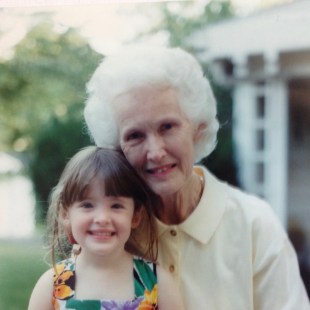
With granddaughter Emily, 1994
If it makes you feel better to get right down into the depths of grief and have a really good cry, there are so many songs that can accompany you on that journey. Some are merely about relationships that ended, but once you’ve lost someone, the same song takes on a more profound meaning: “She’s gone, she’s gone, oh why, oh why, I better learn how to face it, she’s gone, I can’t believe it, she’s gone, I’ll pay the devil to replace her…” Daryl Hall and John Oates
If, instead, you feel the need to snap out of it and celebrate the wonderful memories you have of the person you’ve lost, there are plenty of tunes for that too (“Celebrate good times, come on…”) When I lost my dear friend Chris nine years ago, we didn’t have a funeral, we had a “celebration of life,” and it was wonderfully cathartic. We listened to “Reelin’ in the Years,” among many others, and cherished him for the way we know he would have insisted that we focus on the positive and not dwell on the loss. My mother felt much the same way.
Pop music can be so fleeting, but it can still tug at the heartstrings when it addresses serious topics, and very effectively:
“And I know that you’ve reached a better place, still, I’d give the world to see your face, it feels like you’ve gone too soon, the hardest thing is to say bye bye…” Mariah Carey
“I’m so tired but I can’t sleep, standing on the edge of something much too deep, it’s funny how we feel so much, but we cannot say a word, we are screaming inside, but we can’t be heard…” Sarah McLachlan
“Now you’re gone, now you’re gone, there you go, there you go, somewhere I can’t bring you back…” Avril Lavigne

With granddaughter Rachel, 1997
Even hip-hop, infamous for its rage and bombast, can offer solace. In 1997, rapper Puff Daddy and Faith Evans collaborated on “I’ll Be Missing You,” which used The Police’s “Every Breath You Take” to create a eulogy to The Notorious B.I.G., who died that year. “Every step I take, every move I make, every single day, every day I pray, I’ll be missing you…”
Perhaps words of any kind are distracting, and you need instruments without voices. Classical music is often ideal in that situation. Or perhaps jazz, or “easy listening” music like Sinatra or Nat King Cole. Anything that lets you float in your thoughts.
Sometimes the lyrics aren’t quite right for what you’re feeling, but the music… the music is exactly what you need to hear. For instance, check out the majestic chorus of the amazing Leonard Cohen piece, “Hallelujah,” a waltz/gospel piece written in 1984 and interpreted by dozens of artists in arrangements that are alternately melancholy, fragile, uplifting or joyous.
Of course, there will always be specific songs that acutely remind us of the departed — songs you danced to together, songs you laughed to together, songs you sang with them at the top of your lungs. And songs that you know they loved deeply, songs that will now always, always remind you of them. If they liked Johnny Mathis or Frank Sinatra or even The Beatles, like my mother did, well then, perhaps that’s what you need to crank up. Whatever works. I feel pretty confident in saying that, somewhere, there is music that will help.
If I may be so bold, let me strongly suggest: Immerse yourself in music. It can be profoundly beneficial. But don’t say I didn’t warn you. Just hearing something as iconic as James Taylor’s line “Just yesterday morning, they let me know you were gone…” will take on a whole new meaning for you now. It may make you cry initially, but eventually it will help you heal.
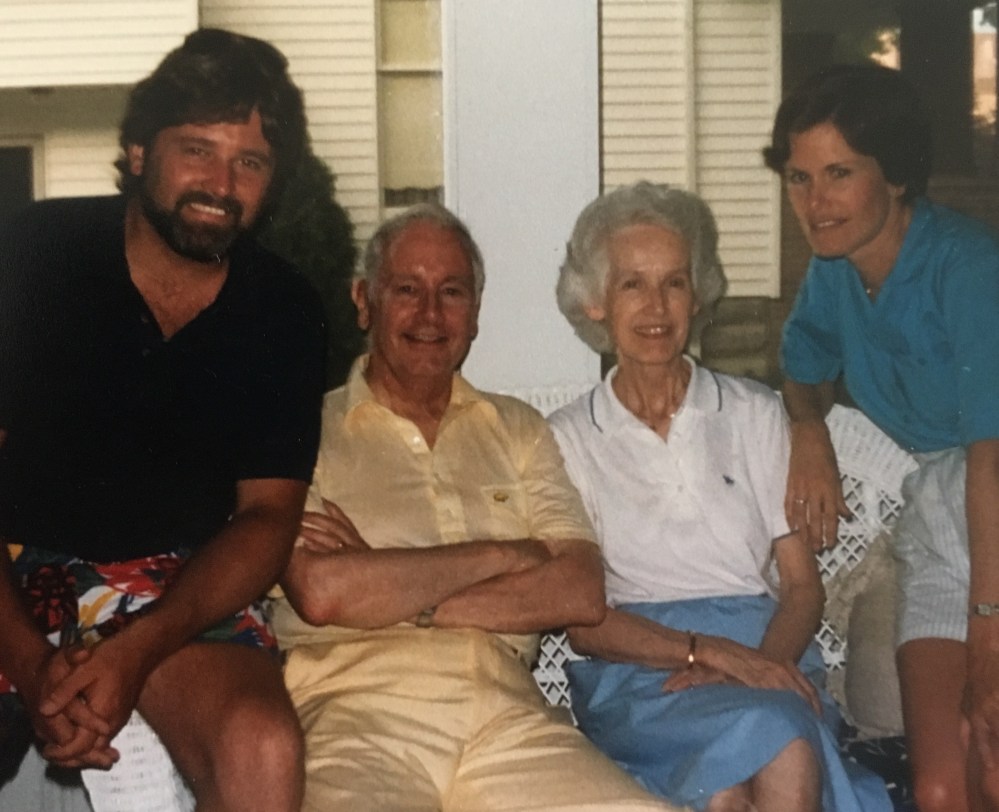
The Hacketts in 1990
Losing a loved one is so profoundly painful. But it’s a certainty. We will ALL lose people we love. Grandparents, parents, friends, brothers, sisters, children, grandchildren. It never seems fair, or right, or in any way good, but we all must eventually find a way to cope with the loss, to fill the void, to find the answer.
One of the time-honored ways for easing the pain is to surround yourself with friends and family who share your loss. They get it. They know exactly what you’re going through, and can call up a fun memory, an old story, a time from the past when it was all good and fun and right. “With a friend at hand, you will see the light, if your friends are there, then everything’s all right…” Bernie Taupin
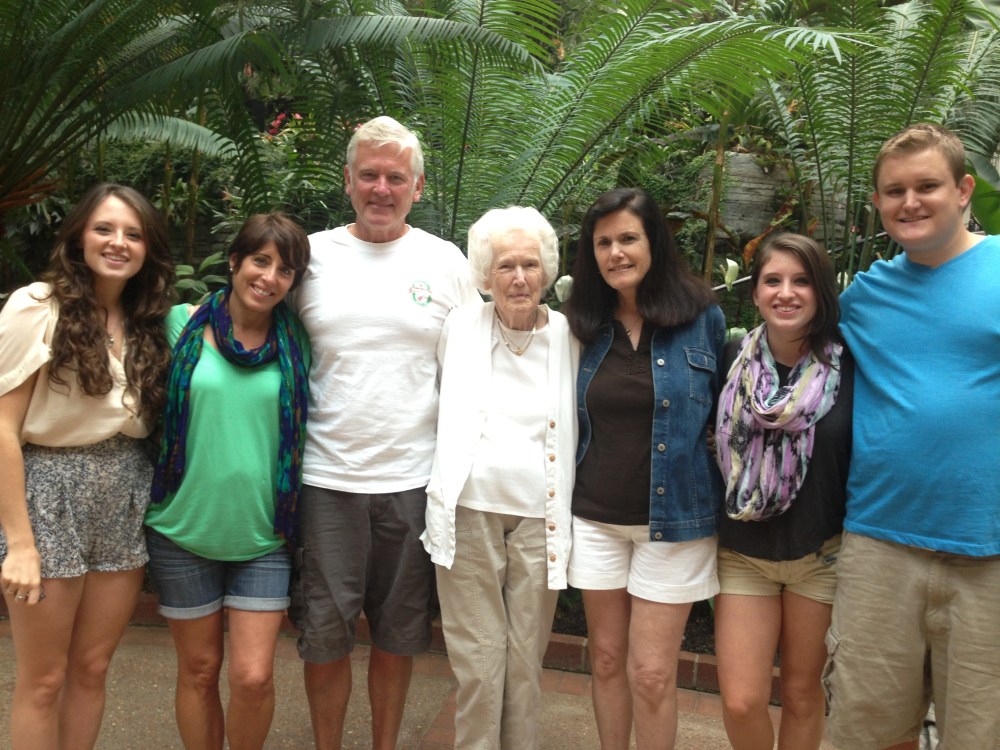
With the family in 2013
You can also look through old photos, which can be wonderfully comforting. They transport you to an earlier time. They can remind you, emphatically, why you miss this person so much. “Looking through some photographs I found inside a drawer, I was taken by a photograph of you, there were one or two I know that you would’ve liked a little more, but they didn’t show your spirit quite as true…” Jackson Browne
But music…well, if you’re like me, and you’re motivated to compile a mix of songs that focus on what you’re going through, you might look at these selections:
“Tears in Heaven,” Eric Clapton
“See You Again,” Carrie Underwood
“She’s Gone,” Hall and Oates
“All Things Must Pass,” George Harrison
“Lullabye (Goodnight, My Angel),” Billy Joel
“Supermarket Flowers,” Ed Sheeran
“Gone Too Soon,” Michael Jackson
“Hallelujah,” Leonard Cohen
“Here Today,” Paul McCartney
“Candle in the Wind,” Elton John
“Dreaming With a Broken Heart,” John Mayer
“I Grieve,” Peter Gabriel
“Everybody Hurts,” R.E.M.
“Let It Be,” The Beatles
“Heaven Got Another Angel,” Gordon Garner
Music is a remarkable medicine. Let it help you cope with loss.
“The darkness only stays at nighttime, in the morning it will fade away, daylight is good at arriving at the right time, it’s not always gonna be this grey, all things must pass, all things must pass away…” George Harrison
 lyrics that basically explained the shows’ premise in a catchy, sing-songy way: “Petticoat Junction” (1963-1970), “The Patty Duke Show” (1963-1966), “Green Acres” (1965-1971), “Flipper” (1964-1967), “The Brady Bunch” (1969-1974), “Mister Ed” (1961-1966), “The Addams Family” (1964-1966), “F Troop” (1965-1967), “The Mary Tyler Moore Show” (1970-1977), “All in the Family” (1971-1979), “The Jeffersons” (1975-1985).
 When the “Happy Days” sitcom debuted in early 1974 as TV’s answer to the film “American Graffiti,” the show used Bill Haley and The Comets’ 1955 classic “Rock Around the Clock” as its opening theme song. Over the closing credits was an early version of “Happy Days,” written by
 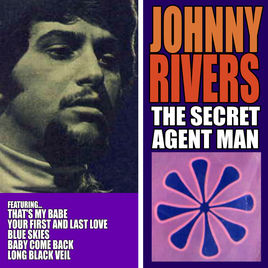 P.F. Sloan
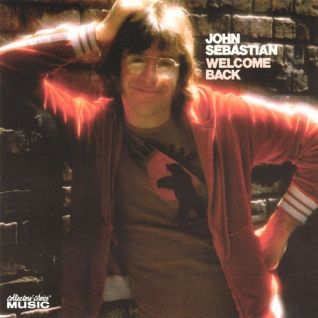 When producer Alan Sachs was putting together a Gabe Kaplan sitcom in 1975 to be titled “Kotter,” he wanted a theme song that sounded like one of his favorite ’60s pop groups, The Lovin’ Spoonful. As luck would have it, Sachs’s agent also represented former Lovin’ Spoonful singer-songwriter
 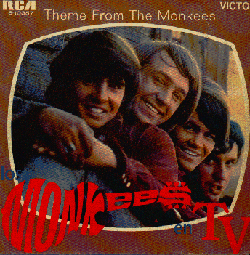 In 1966, producer Don Kirshner was tasked with the job of coming up with a TV series that mimicked the zaniness of The Beatles’ 1964 film “A Hard Day’s Night.” He held auditions and signed one true musician (guitarist Mike Nesmith), one struggling musician (bassist Peter Tork) and two actors who could sing (Davy Jones and Mickey Dolenz) to become
 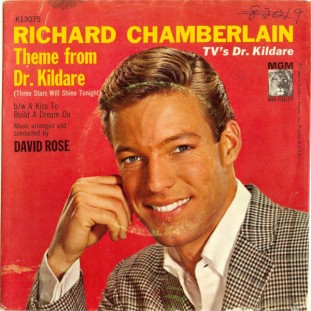 The fictional character Dr. James Kildare was created in the 1930s for a literary magazine, then made into a series of theatrical films in the 1940s, a radio program in the 1950s before becoming a Top Ten-rated TV show in the early 1960s. The instrumental theme music used for the series was written by
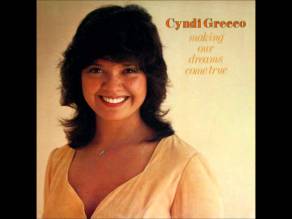 “Happy Days” proved to be so wildly popular that it successfully spun off another sitcom starring two supporting characters, Laverne DeFazio and Shirley Feeney, who became stars in their own right on “Laverne & Shirley.” A young lady named
 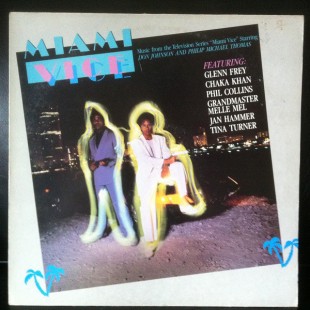 Jazz-rock keyboard virtuoso
 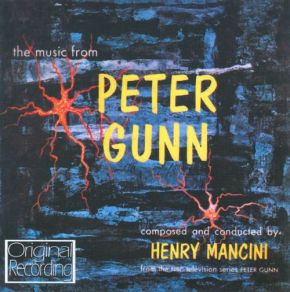 The original “night in the city” music, written by the great
 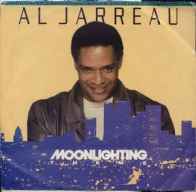 The punchy dialog and sexual chemistry between David Addison (Bruce Willis) and Maddie Hayes (Cybill Shepherd) made “Moonlighting” one of the most popular shows of the 1980s, although it lasted only four seasons (1985-1989). The Los Angeles locale required a jazzy, jet-setting theme song, and who better suited than singer
  It’s no surprise the the producers of a detective show called “Hawaii Five-0” would want to use surf music as the basis for its theme song.
 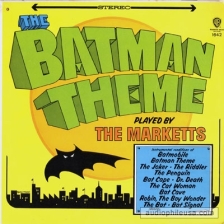 The theme song to the campy TV version of the Caped Crusader story was basically an infectious guitar riff that was part spy movie score and part surf music, with “Batman!” shouted ten times by a female chorus.
 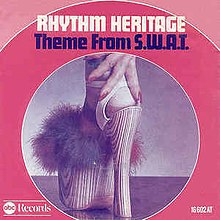 Composer
 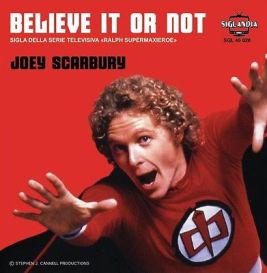 Mike Post
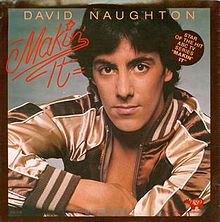 Don’t recognize this TV show? You’re not alone. If you blinked in 1979, you missed it, because it aired for only eight episodes. Created to capitalize on the popularity of the “Saturday Night Fever” film and the disco craze, the show was a victim of poor timing, debuting as the public’s love affair with disco was dissipating. The show starred actor
 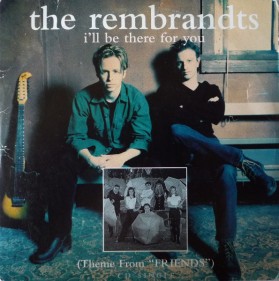 From 1994 to 2004, there was “Friends,” and then there were all the other shows. Wildly popular, the show about six friends based in Manhattan still pulls in a billion bucks a year in syndication residuals.
 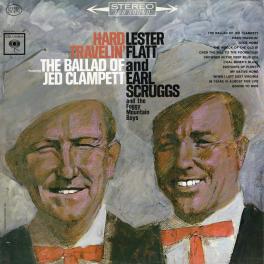 Paul Henning
 Hack's Back Pages