And I’ve been workin’ like a dog
As a child, whenever I played at a friend’s house where there was a dog, I would always spend a lot of time bonding with it. I guess I knew even then that I was “a dog person” because I was so attracted to their enthusiasm and friendliness.
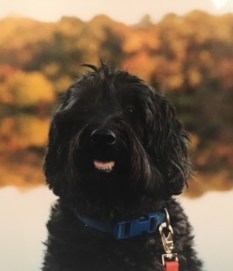
Ebony (1982-1994)
When I returned home from these visits, I would invariably plead with my mom: “Can’t we please get a dog?” She flatly refused, saying she wasn’t interested in her carpets and furniture getting stained and muddied, nor the prospect of fur shedding everywhere.
She also knew full well that the care of said dog would end up falling squarely on her, once the novelty of pet ownership had worn off on me. And she was probably right about that. “Once you grow up and have your own house, you can have all the dogs you want,” she’d say. And that was that. I had to resign myself to making friends with all my friends’ dogs instead.
Jump ahead 20 years to when my future wife and I were first dating. One day, a co-worker in my newspaper office walked in and announced that he and his wife had to give up their puppy because the apartment they were moving into didn’t allow pets.

Cocoa (1998-2014)
“Anyone want a dog?” he asked. I looked up from my work and straight into the eyes of the most adorable black doggy face I’d ever seen. Love at first sight.
“Judy,” I gushed over the phone, “oh my God, you have to come see this puppy, he’s so cute, we have to get him!” Once she’d met the dog and agreed how irresistible she was, we took her home that night, and named her Ebony. To this day, we give that dog credit for bringing us closer together as a couple, and we were married shortly thereafter.
Following Ebony’s passing at age 12, we eventually took the plunge a second time, getting a Shih-Tzu named Cocoa as a playmate for our two young daughters. Sure enough, just as my mother warned me, I found that the girls soon lost interest in the daily walks, the feeding, the cleaning up, not to mention the vet visits and other responsibilities, and guess who did the lion’s share?
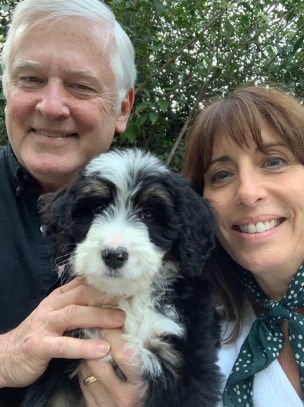 But it’s the snuggling on the couch, the fetching and horsing around, the unconditional love that makes having a dog so rewarding. And that’s why, last weekend, we bit the bullet and signed up for one more go-round. Meet Higbee, our nine-week-old Bernedoodle (that’s a mix of Bernese mountain dog and poodle). Cute as can be — now only seven pounds — but we’re told he could grow to be 80 pounds. Hoping for maybe 50-60 pounds. We shall see.
In commemoration of our new acquisition, and for dog lovers everywhere, this week I offer you a playlist of rock songs about dogs. Woof!
**************
 “Dogs,” Pink Floyd, 1977
Floyd’s songwriter Roger Waters, a scathing critic of the ethics and greed of the business world, wrote a 17-minute piece about the subject, originally titling it “You’ve Got to Be Crazy,” but then renaming it “Dogs” as part of Floyd’s 1977 LP “Animals.” He points out how businessmen and dogs both can give the appearance of being friendly and polite but are often hiding a darker agenda: “You got to be able to pick out the easy meat with your eyes closed, and then moving in silently, down wind and out of sight, you got to strike when the moment is right without thinking…”
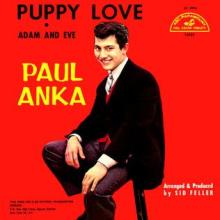 “Puppy Love,” Paul Anka, 1960
Anka was only 19 when he wrote this heartbreaker about the huge crush he had on teen queen Annette Funnicello at the time. It followed two other sad tales, “Lonely Boy” and “Put Your Head on My Shoulder,” and reached #2 on the charts. Anka wrote about how the adults always referred to teen love as inconsequential “puppy love,” but to the teens, it was monumental: “How can I ever tell them this is not puppy love?…” A decade later, Donny Osmond, while still singing with The Osmond Brothers, charted four consecutive Top Five solo hits, including a saccharine-sweet remake of “Puppy Love.”
 “I Wanna Be Your Dog,” The Stooges, 1969
Iggy Pop and his raucous Detroit band The Stooges became prototypes for both heavy metal and punk with distortion-heavy tracks like “I Wanna Be Your Dog,” in which the narrator states his masochistic desire to lie down and be the subservient pet: “Well c’mon now, I’m ready to close my eyes, and now I’m ready to close my mind, and now I’m ready to feel your hand, and lose my heart on the burning sands, and now I wanna be your dog…”
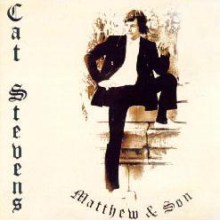 “I Love My Dog,” Cat Stevens, 1967
Very early in his career, for his debut LP “Matthew and Son,” Stevens wrote this somewhat simplistic tribute to his dog, which reiterated the belief that human relationships may come and go, but a dog will love you unconditionally ’til the end: “I love my dog as much as I love you, but you may fade, and my dog will always come through, all he asks from me is the food to give him strength, all he ever needs is love and that he knows he’ll get…”
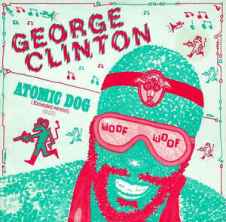 “Atomic Dog,” George Clinton, 1982
Clinton and his Parliament-Funkadelic collective were nearing the end of their late ’70s heyday when they released the funky, psychedelic “Atomic Dog” in 1982. The song’s lyrics wonder philosophically why some men persist in their unsuccessful sexual pursuits, like dogs running after cats: “Like the boys when they’re out there walkin’ the streets, may compete, nothin’ but the dog in ya, why must I feel like that, why must I chase the cat, nothin’ but the dog in me, bow-wow-wow-yippie-yo-yippie-yeah…”
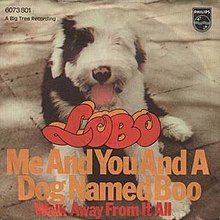 “Me and You and a Dog Named Boo,” Lobo, 1971
Kent LaVoie, who preferred to call himself Lobo (Spanish for wolf), had several Top Ten hits in the early Seventies, beginning with this easy-going, country-flavored hit in 1971. He actually had a dog named Boo, and wanted to include him as a character in the song: “Me and you and a dog named Boo, travelin’ and livin’ off the land, me and you and a dog named Boo, how I love being a free man…”
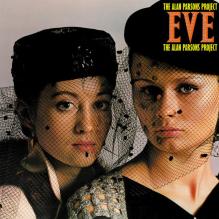 “You Lie Down With Dogs,” Alan Parsons Project, 1979
In this deep track from Parson’s fine 1979 LP “Eve,” the lyrics offer a grim reminder to women to be careful in their selection of lovers by using a time-honored piece of advice: “Well, you lie down with dogs, you fall in with thieves, you’re gonna catch something, but you do as you please, you’re scratchin’ an itch that nothing can ease, you lie down with dogs, you get up with fleas…”
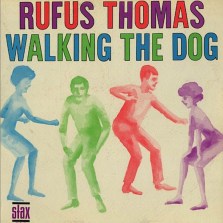 “Walking the Dog,” Rufus Thomas, 1963
Thomas was a Memphis-based singer, DJ, dancer and comic entertainer whose biggest success was the #10 hit “Walking the Dog” in 1963, later covered by The Rolling Stones on their first album, and by a dozen other artists (Aerosmith, Roger Daltrey, Green Day among them). Thomas also recorded other novelty dance hits like “Can Your Monkey Do the Dog,” “Somebody Stole My Dog” and “Do the Funky Chicken.”
 “I Want a Dog,” Pet Shop Boys, 1988
UK synth-pop act The Pet Shop Boys have been the most successful duo in British music history, and hugely popular throughout Europe, but far less so in the States. Still, they scored five hit singles here in their first few years, including the #1 “West End Girls.” On their third LP, they conjured up an engaging synth-groove on “I Want a Dog,” a paean to canine companionship: “I want a dog to walk in the park when it gets dark, my dog will bark at any passers-by, oh, you can get lonely, I want a dog, when I get back to my small flat, I want to hear somebody bark…”
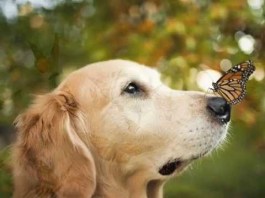 “Dog and Butterfly,” Heart, 1978
Ann and Nancy Wilson wrote this pretty acoustic piece for Heart’s album of the same name. Its lyrics explore the concept of learning one’s own limitations through the example of a dog, who would love to fly like the butterfly but must instead take comfort in “rolling back down on the warm soft ground, laughing up to the sky…”
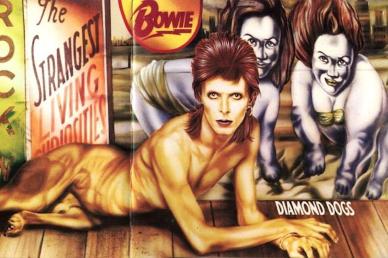 “Diamond Dogs,” David Bowie, 1974
The striking album cover artwork of Bowie’s eighth album “Diamond Dogs” depicts him as a grotesque half-man/half-dog, and the songs, especially the title track, feature his visions of urban chaos and scary nihilism that presaged the punk rock revolution a few years later: “In the year of the scavenger, the season of the bitch, sashay on the boardwalk, scurry to the ditch, come out of the garden, baby, you’ll catch your death in the fog, young girl, they call them the diamond dogs…”
 “Gonna Buy Me a Dog,” The Monkees, 1966
Tommy Boyce and Bobby Hart wrote many songs in The Monkees’ catalog, including this whimsical throwaway from their first album. Micky Dolenz and Davy Jones joked their way through the lyrics, which focused on how a dog was a better and more loyal friend than a human: “You know my girl just called me up and she woke me from my sleep, you should have heard the things she said, you know she hurt my feelings deep… She used to bring me my newspaper ’cause she knew where it was at, she used to keep me so contented, but I can teach a dog to do that, I’m gonna buy me a dog ’cause I need a friend now, I’m gonna buy me a dog, my girl, my girl, don’t love me no how…”
 “Dogs in the Midwinter,” Jethro Tull, 1987
In this deep track from Tull’s Grammy-winning LP “Crest of a Knave,” Ian Anderson equates the greedy, ravenous nature of society’s villains with scavenger dogs who have been outside too long without much to eat: “The boss man and the tax man and the moneylenders growl like dogs in the midwinter, the weaker of the herd can feel their eyes and hear them howl, like dogs in the midwinter, though the fox and the rabbit are at peace, cold doggies in the manger turn last suppers into feasts…”
 “Hey Bulldog,” The Beatles, 1968
Its working title was “Bullfrog,” but when Paul McCartney started barking during the ending of one take, they ended up changing the title to “Hey Bulldog.” It’s a Lennon song that is only marginally about dogs, but it’s one of The Beatles’ best latter-day rockers, hidden among the retreads and film-score tracks on the “Yellow Submarine” soundtrack LP, so I couldn’t resist including it on this list.
 “Black Dog,” Led Zeppelin, 1971
The lyrics of this sexually charged hard rocker make no mention of a black dog, or any dog, but again, I wanted to include it because I love it so much. Robert Plant said they named the song after an anonymous black mutt that visited their Headley Grange retreat in the British countryside while they were recording. It’s the opening track to their most successful LP, known as “Untitled,” “Zoso” or “Runes.”
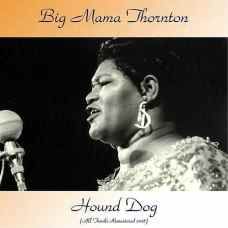 “Hound Dog,” Big Mama Thornton, 1952
Jerry Lieber and Mike Stoller, wrote the 12-bar blues classic “Hound Dog” in 1952 specifically for the great Willie Mae “Big Mama” Thornton. Said Leiber, “It’s basically a Southern blues lament about a black woman throwing a gigolo out of her house and her life.” Thornton’s rendition was influential and authentic, and although Elvis Presley’s version with altered lyrics became a far bigger chart success four years later, it is Thornton’s original that is far superior: “You ain’t nothin’ but a hound dog, been snoopin’ ’round my door, you ain’t nothing but a hound dog, been snoopin’ ’round my door, you can wag your tail but I ain’t gonna feed you no more…
A few more I should comment on:
The incessantly annoying “Who Let the Dogs Out” by Baha Men (2000) compares men to dogs and their inherent need to hump something.
Carrie Underwood’s “The More Boys I Meet” (2007) objects to men’s behavior toward women and concludes she’d rather have a dog’s companionship any day.
“Bitch” by The Rolling Stones (1971) is not about a dog, nor a woman, just a resigned complaint about how tough life can be: “It’s a bitch.”
***************
Honorable mention:
“The Puppy Song,” Harry Nilsson, 1969; “The Dogs of War,” Pink Floyd, 1987; “Bird Dog,” Everly Brothers, 1970; “Do the Dog,” The Specials, 2002; “Dog Eat Dog,” Walter Becker & Donald Fagen, 1971; “Black-Eyed Dog,” Nick Drake, 1974; “My Dog and Me,” John Hiatt, 2003; “Sleeping With the Dog,” Jethro Tull, 1991; “Dog Days are Over,” Florence + The Machine, 2008; “Rain Dogs,” Tom Waits, 1985; “Walking the Dog,” fun., 2009; “Dog Eat Dog,” Adam and The Ants, 1980; “(How Much Is) That Doggie in the Window,” Pattie Page, 1953.
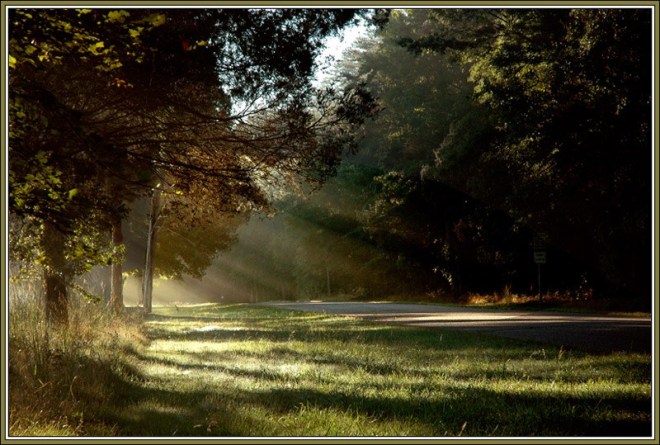
 There are several small cities in the U.S. named Morgantown, most notably in West Viriginia, and I have no idea if Mitchell was referring to any of them in particular or just a town she imagined when she wrote this delightful piece that opens her 1970 LP “Ladies of the Canyon.” The point is, she finds a way to create a warm portrait of a village where everyone greets the day with love and kindness: “When morning comes to Morgantown, the merchants roll their awnings down, the milk trucks make their morning rounds in Morning Morgantown…”
 At the beginning of Fogelberg’s career, he moved from his native Illinois to Nashville to record his first album with producer Norbert Putnam, who added nice touches of cellos and strings to some of the tracks. Although mostly ignored at first, the “Home Free” album eventually sold a million copies after his career took off in the late ’70s. This gorgeous song was the album’s memorable opening track: “Watching the sun, watching it come, watching it come up over the rooftops, cloudy and warm, maybe a storm, you can never quite tell from the morning, and it’s going to be a day, there is really no way to say ‘no’ to the morning…”
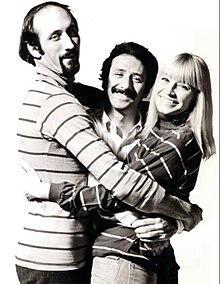 Canadian legend Gordon Lightfoot made his mark in the U.S. as a songwriter before emerging later as a successful singer as well. One of his first songs to make the charts here was “Early Morning Rain,” in a gorgeous rendition by Peter, Paul & Mary. Lightfoot deftly conveys the loneliness of being broke and homesick: “In the early morning rain with a dollar in my hand, with an aching in my heart and my pockets full of sand, now I’m a long way from home, and I miss my loved ones so, in the early morning rain with no place to go…”
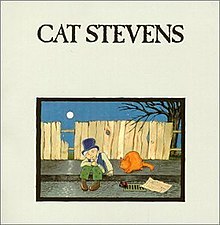 In 1931, English poet Eleanor Farjeon was asked to compose lyrics to the traditional Scottish tune “Bunessan” to create a hymn that gives thanks to the new day. By 1971, Cat Stevens decided to record the gentle piece as “Morning Has Broken,” with piano accompaniment by Rick Wakeman. It became a #6 hit in early 1972, and it’s still included in church services worldwide: “Morning has broken like the first morning, blackbird has spoken like the first bird, praise for the singing, praise for the morning, praise for them springing fresh from the world…”
  Songwriter Irene Higginbotham and lyricist Ervin Drake teamed up to write this jazz standard in 1946, and the late great Billie Holliday recorded it that same year. More than 50 other artists have covered the song, from Sam Cooke and Etta James to Natalie Cole and Tony Bennett, and Diana Ross’s version in the 1972 biopic “Lady Sings the Blues” is the best known, but I’ll take Holiday’s original any day. What a fine lyric about waking up with the blues: “Good morning, heartache, here we go again, good morning, heartache, you’re the one that knew me when, might as well get used to you hanging around, good morning, heartache, sit down…”
 “I’m gonna give you ’til the morning comes, ’til the morning comes, I’m only waiting ’til the morning comes, ’til the morning comes…” More a tune fragment than a bonafide song, this track lasts only 1:17 and finishes side one of Young’s wonderful 1970 LP “After the Gold Rush.” The album was recorded in Young’s Topanga Canyon house with help from musicians from his periodic backing band Crazy Horse, plus Stephen Stills on vocals and an 18-year-old Nils Lofgren handling piano duties.
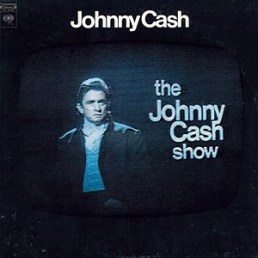 In 1969 Kris Kristofferson wrote this classic hangover song for country artist Ray Stevens, but it’s Johnny Cash who recorded the definitive version in 1970 for his live album from “The Johnny Cash Show.” It’s a lonely piece that explores how we all search for some sort of self-fulfillment but sometimes end up alone trying to cope with the effects of the night before: “Well, I woke up Sunday morning with no way to hold my head that didn’t hurt, and the beer I had for breakfast wasn’t bad, so I had one for dessert, then I fumbled in my closet and found my cleanest dirty shirt, and stumbled down the stairs to face the day…”
 Lightfoot reigns as perhaps Canada’s best-ever songwriter, with well over 250 songs to his credit. His lyrics paint vivid pictures of life and love, work and play, tough times and carefree moments. From his 1972 LP “Old Dan’s Records” is a favorite of mine called “Lazy Mornin’,” which captures the gentle feeling that often strikes us upon awakening: “Another lazy mornin’, no need to get down on anyone, my son, coffee’s in the kitchen, woman on the run, no need to get bothered, I’ll think about Monday when Monday comes…”
 Continuing the theme of sunny optimism that marked their previous #1 hit “Groovin,” songwriters Felix Cavaliere and Eddie Brigati of The Young Rascals came up with the joyous “A Beautiful Morning,” which became a big hit in April 1968, perhaps the happiest hippie anthem in a tumultuous year that needed all the good vibes it could get: “It’s a beautiful morning, I think I’ll go outside for a while, and just smile, just take in some clean fresh air, boy, no sense in staying inside if the weather’s fine…”
 “
“ “If I’ve got to be strong, don’t you know I need to have tonight when you’re gone?, until you go, I need to lie here, and think about the last time that you’ll touch me in the morning…” This bonafide classic was the first success for songwriter Michael Masser, who collaborated with seasoned lyricist Ron Miller to score a #1 hit. Ross, who had young children at the time, preferred recording in all-night sessions, and this track proved especially challenging for the Motown diva before she finally nailed the take she wanted at 5 a.m. as the sun rose.
 This delightful acoustic ditty, which appears on Mitchell’s second LP “Clouds” in 1969, became one of the most beloved songs in her catalog (it was the reason Bill & Hillary Clinton named their daughter Chelsea, they say). Mitchell wrote it while she was living in an apartment in the Chelsea neighborhood of New York City: “Woke up, it was a Chelsea morning, and the first thing that I knew, there was milk and toast and honey, and a bowl of oranges too, and the sun poured in like butterscotch and stuck to all my senses…”
 Written by Sonny Boy Williamson back in 1937, this blues standard has been recorded by dozens of artists in the years since, from The Yardbirds to Van Morrison, from Johnny Winter to Widespread Panic, from Paul Butterfield to Huey Lewis. I really like the version the late blues titan Muddy Waters recorded in 1964 on his only all-acoustic album, “Muddy Waters, Folk Singer.” I love the tune, but frankly, the lyrics sound more than a little unsavory today: “Good morning little schoolgirl, can I go home with you, I’ll tell your mother and your father that I’m a little schoolboy too…”
 This simple blues tune in five verses is one of 10 superb tracks that made up Dylan’s 1975 masterpiece album “Blood on the Tracks.” They say that misery and heartbreak are excellent muses for songwriters, and this album is proof of that. At the time, Dylan was bemoaning the breakup of his marriage to Sara Lownes, and the lyrics to “Meet Me in the Morning” reflect that loss: “They say the darkest hour is right before the dawn, but you wouldn’t know it by me, every day’s been darkness since you’ve been gone…”
 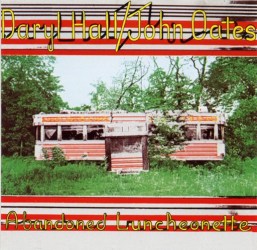 The Philadelphia duo became superstars in the early 1980s, but first Hall and Oates were struggling artists producing soft rock and blue-eyed soul in 1971-72. Their second LP, 1973’s “Abandoned Luncheonette,” included the gem “She’s Gone” (a hit upon re-release in 1976), and also a few other beauties like “Las Vegas Turnaround” and “When the Morning Comes: “Now I’m out in the cold, and I’m getting old, standing here waiting on you, but it’ll be all right when the morning comes…”
 A Canadian folk musician named Bonnie Dobson wrote this thought-provoking song in 1961 about a man and woman who survive a nuclear apocalypse: “Walk me out in the morning dew, no, there is no more morning dew, because what they’ve been sayin’ all these years has come true, it had to happen, you know, now there is no more morning dew…” The Grateful Dead included it on their first record in 1967, and probably the best known version is on Jeff Beck’s 1968 debut LP “Truth,” with vocals by a young Rod Stewart. But I’m partial to the version laid down by Duane and Gregg Allman for a shelved album that never saw release until 1972 after The Allman Brothers Band had become stars.
 Lou Gramm and Mick Jones collaborated many tunes in the Foreigner repertoire. One of their darker songs is this one about a musician who is troubled by a broken relationship and finds himself depressed and unable to reconcile: “Out in the street, it’s six a.m., another sleepless night, three cups of coffee, but I can’t clear my head from what went down last night…” The song reached #15 on the charts in March 1979 as the third single from Foreigner’s second LP, “Double Vision.”
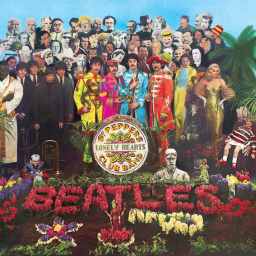 John Lennon claims he wrote this song one morning while eating corn flakes for breakfast and watching TV. “It was just another typical morning in 1967, and I was writing about how some days are just a drudgery — ‘going to work, don’t wanna go, feeling low down’ — and then by evening, you’re feeling better — ‘go to a show, you hope she goes.’ I wrote it very quickly. It’s a throwaway song, but I kind of like it.” It’s one of the 12 songs that comprise The Beatles’ most celebrated work, the landmark 1967 LP “Sgt. Pepper’s Lonely Hearts Club Band.”
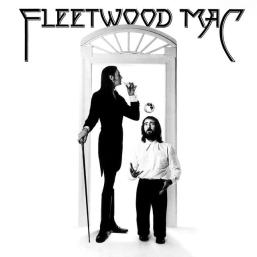 This great Lindsey Buckingham pop song kicked off the 1975 “Fleetwood Mac” album that rebooted the band’s career just as they were about to break up. Buckingham’s pop sensibility and distinctive guitar playing and vocals, combined with harmonies from Stevie Nicks and Christine McVie, gave this track the spark that turned heads from the moment you dropped the needle on that classic LP. The lyrics use days of the week to show the fleeting nature of relationships: “Monday morning you sure look fine, Friday I’ve got traveling on my mind, first you love me, then you fade away, I can’t go on believing this way…”
 While Blood, Sweat & Tears and Chicago were paving the way in the late ’60s and early ’70s with their use of jazz horn instruments in a rock band, a group called Lighthouse had considerable success in Canada with the same genre. Their only US hit was “One Fine Morning,” which offered a sizzling arrangement with guitar, horns and a rollicking jazz piano solo, and songwriter Skip Prokop’s sunny lyrics about a couple hoping to make their dreams come true: “One fine morning, girl, I’ll wake up, wipe the sleep from my eyes, go outside and feel the sunshine, then I know I’ll realize that as long as you love me, girl, we’ll fly…”
 Hack's Back Pages