I just want to say thank you
(This column originally was posted on Nov 24, 2016. I have modified it slightly by adding a few different Thanksgiving-related songs I’ve discovered since then.)
**************
Every holiday has its traditions, and Thanksgiving is no exception. Roast turkey and stuffing. Cranberry sauce. Football on TV. Football in the back yard. Black Friday strategizing. Spirited (sometimes contentious) family debates around the table. Perhaps most important, heartfelt expressions of gratitude.
And there’s one more tradition, at least in my home. Thanksgiving is the day I find my copy of the Arlo Guthrie album with the 18-minute story-song called “Alice’s Restaurant Massacree,” recorded in 1967. It’s a partly serious, mostly whimsical telling of a true story that happened “two Thanksgivings ago, two years ago on Thanksgiving” in and
around  Stockbridge, Massachusetts. It involves Guthrie and some friends, especially Alice, who cooked “a Thanksgiving dinner that couldn’t be beat,” a ton of garbage, and a cop named Officer Obie.
Frankly, the rambling piece is only marginally about this holiday, but the hip FM radio stations in most cities would always play it on Thanksgiving morning, and ever since, I make a point of cranking up the volume at my house and singing along when Arlo instructs us to do so.
Other than “Alice’s Restaurant,” though, I’ve noticed that Thanksgiving doesn’t have many songs to commemorate the day, at least not compared to Christmas with its hundreds and hundreds of carols and secular Yuletide music.
But wait. Hack’s Back Pages has done some digging, and I’ve found a few that fit the bill. These 15 songs about Thanksgiving aren’t so much about the history of the holiday as they are songs that feature lyrics that focus on thanks or gratitude, and I think we could all do better at showing our appreciation for the blessings in our lives.
I’ve offered a sample of lyrics and a little background trivia behind each tune, and there’s a Spotify setlist at the end so you can listen along.
Here’s hoping you have plenty to be grateful for, and are surrounded by family and/or friends with whom you can share the day. Peace.
**************
 “My Thanksgiving,” Don Henley, 2000
Henley collaborated with former Heartbreakers drummer Stan Lynch to write several songs for his overlooked 2000 album “Inside Job,” including this poignant tune about a man looking back with regret on his years gone by, and the blessings he didn’t appreciate at the time. But it’s never too late to be grateful: “And I don’t mind saying that I loved it all, I wallowed in the springtime, now I’m welcoming the fall, for every moment of joy, every hour of fear, for every winding road that brought me here, for every breath, for every day of living, this is my thanksgiving…”

“Gratitude,” Earth, Wind & Fire, 1976
With disco music on the rise, Earth, Wind & Fire could seemingly do no wrong in 1975-76, and their mostly-live LP “Gratitude” topped the charts for three weeks, sparked by the #1 single “Sing a Song.” The Grammy-nominated title track, written by group leader Maurice White, exemplified his focus on positivity and spiritual peace: “Want to thank you, want to thank you, we just want to give gratitude, got plenty of love we want to give to you with good music, and we’re trying to say that the good Lord’s going to make a way…”
 “I Thank You,” Sam and Dave, 1967, and ZZ Top, 1980
“You didn’t have to love me like you did, but you did, and I thank you, you didn’t have to hold me like you did, but you did, and I thank you…” Isaac “Theme From Shaft” Hayes and David Porter wrote this soul classic in 1968, and Sam & Dave’s recording reached #9 that year. Texas blues rockers ZZ Top covered it in 1980, and later, Bon Jovi, Bonnie Raitt and Paul Rodgers also recorded cover versions.
 “Thank You Pretty Baby,” Brook Benton, 1959, and Nat King Cole, 1964
In the ’50s, Benton was a songwriter for crooners like Nat King Cole until he was persuaded to record his songs himself, thus beginning a solid career as a solo artist, charting a dozen Top Ten hits in the 1959-1962 period, and throughout the ’60s on the R&B chart, culminating in the #4 hit “Rainy Night in Georgia” in 1970. He and Cole both recorded this song of appreciation for the woman the singer so clearly loves: “Thank you for your loving ways, thank you because you’ve been so kind, I’m gonna just take my time and thank you honey, because you’re mine, all mine…”
 “Thank You,” Led Zeppelin, 1969
This is one of a half-dozen acoustic-based ballads released by the undisputed kings of hard blues rock. Carried along mostly by delicate electric and acoustic guitars and subtle organ, the song features a pretty melody sung by Robert Plant, who wrote the lyrics as a loving tribute to his wife: “And so today, my world it smiles, your hand in mine, we walk the miles, thanks to you it will be done, for you to me are the only one…”
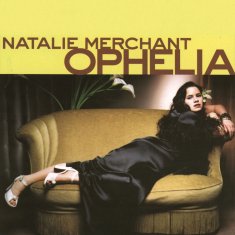 Kind and Generous,” Natalie Merchant, 1998
The former lead singer of the alternative band 10,000 Maniacs went out on her own in 1995 with “Tiger Lily,” but it was the 1998 follow-up LP, “Ophelia” that was Merchant’s commercial acme, reaching platinum status and peaking at #8 on the US Top Albums chart. One reason why was “Kind and Generous,” an uncharacteristically happy song (for Merchant) that made it to #3 on the US Adult Top 40# and #18 on the traditional Top 40. The lyrics are just about bursting with gratitude: “You’ve been so kind and generous, I don’t know how you keep on giving, for your kindness, I’m in debt to you, for your selflessness, my admiration, and for everything you’ve done, you know I’m bound… I‘m bound to thank you for it…”
 “Thank You (Falettinme Be Mice Elf Agin),” Sly and The Family Stone, 1970
“Dance to the music, all night long, everyday people, sing a simple song, mama’s so happy, mama start to cry, papa still singin’, you can make it if you try, ah, I want to thank you for lettin’ me be myself again…” Sylvester Stewart, known worldwide as Sly Stone, wrote the lyrics to most of the group’s songs, including this one, the third of four #1 singles the pop/funk/soul band charted between 1968 and 1971. The lyrics offer a virtual word salad of disjointed thoughts and images but keep coming back to the chorus, where he expresses gratitude for being allowed to just “be myself again.” Translation: After all the posturing, it’s good to get back to the real person inside.
 “Thank You For Being a Friend,” Andrew Gold, 1978
Most of the instruments you hear behind Linda Ronstadt’s vocals on her mid-’70s hit albums were played by musical virtuoso Andrew Gold, who went solo in 1977 and had a top ten hit with “Lonely Boy.” The next year, “Thank You For Being a Friend” followed as a modest #25 hit, but it’s better known (in a version recorded by Cynthia Fee) as the theme song to the popular sitcom “The Golden Girls” (1985-1992). In a 2010 appearance by Betty White on “Saturday Night Live,” it was affectionately sung to her by past and present cast members: “And when we both get older, with walking canes and hair of gray, have no fear, even though it’s hard to hear, I will stand real close and say, ‘Thank you for being a friend’…”
 “Thank You,” Dido, 2000
British singer-songwriter Florian “Dido” Armstrong exploded out of the box in 1999 with her “No Angel” album, which peaked at #4 in the US and went on to sell an astonishing 22 million copies worldwide. The #3 hit “Thank You” was spurred on by its use in the TV show “Roswell,” the film “Love Actually” and, most prominently, as an element in Eminem’s huge hit rap song “Stan,” which was on the charts simultaneously with Dido’s single. Its lyrics show gratitude to her boyfriend for being there when she needed him most: “Push the door, I’m home at last and I’m soaking through and through, then you handed me a towel, and all I see is you, and even if my house falls down now, I wouldn’t have a clue, because you’re near me, and I want to thank you for giving me the best day of my life, oh just to be with you is having the best day of my life…”
 “Thanks,” James Gang, 1970
Joe Walsh was just 22 when he became the guitarist, singer and chief songwriter of Cleveland’s heroes, The James Gang. Walsh’s songs “Funk #49” and “Walk Away” became national hits, and Walsh himself went on to become a major star in his own right, first as a solo act and then as a member of The Eagles. On the 1970 album “James Gang Rides Again,” the lyrics to Walsh’s track “Thanks” took a somewhat resigned, matter-of-fact approach to life: “Thanks to the hand that feeds you, give the dog a bone, thanks to the man that gives you, haven’t got your own, that’s the way the world is, woh-oh…”
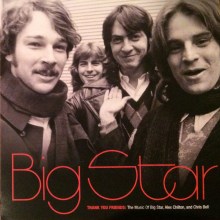 “Thank You Friends,” Big Star, 1974
The critically acclaimed but commercially unsuccessful Big Star released three albums in the early ’70s, which eventually received attention in the ’80s when bands like R.E.M. and The Replacements mentioned them as a major influence. Lead singer Alex Chilton, who had wowed the US when he sang the #1 hit “The Letter” with The Box Tops at age 16, wrote most of their material, including this joyous tribute to good friends: “Thank you friends, wouldn’t be here if it wasn’t for you, I’m so grateful for all the things you helped me do, all the ladies and gentlemen who made this all so probable…”
 “Thank You Girl,” The Beatles, 1963
“You’ve been good to me, you made me glad when I was blue, and eternally, I’ll always be in love with you, and all I wanna do is thank you girl, thank you girl, thank you girl for loving me the way that you do, that’s the kind of love that is too good to be true…” This formulaic early Lennon-McCartney song was written as the follow-up single to their first #1 hit in England, “Please Please Me,” with “From Me to You” slated for the B-side. In the end, though, “From Me to You” won out, and “Thank You Girl” became the B-side. In the US, it appeared on the Capitol album “The Beatles’ Second Album” in 1964. Said Lennon in 1980: “One of our efforts at writing a single that didn’t work.” Said McCartney about it in 1989: “A bit of a hack song, but all good practice.”
 “Thank U,” Alanis Morissette, 1998
Morissette was only 21 when her “Jagged Little Pill” LP spawned four hits and ended up selling 16 million copies in the US alone. Things had exploded so fast for her, she said, that she needed to take some time off. “When I did stop, and I was silent, and I breathed, I was just left with an immense sense of gratitude, and inspiration, and bliss, and that’s where the lyrics to ‘Thank U’ came from.” It reached #1 in her native Canada and #17 here: “How about me not blaming you for everything, how about me enjoying the moment for once, how about how good it feels to finally forgive you, how about grieving it all one at a time, thank you India, thank you Providence, thank you disillusionment, thank you frailty, thank you consequence, thank you thank you silence…”
 “Grateful,” Anthony Hamilton, 2016
In this blog, I don’t generally focus on recent songs, but sometimes exceptions are necessary. The talented R&B composer-singer Anthony Hamilton, widely praised by critics and nominated for multiple industry awards, rose to prominence in 2003 with his album and title song “Coming Where I’m Comin’ From.” Hamilton has the respect of his musical peers, who have flocked to collaborate with him these past dozen years. His 2016 release “What I’m Feelin'” includes the heartfelt album track “Grateful,” which is well worth seeking out: “Here I am, a new man, the best days of my life, and it goes without saying, you’ve turned it all around, introduced me to love, when I had given up, and I’m so grateful for you… The way you changed my life, I owe it all to you, I found real love in you, all because of you…
 “Danke Schoen,” Wayne Newton, 1963
Bert Kaempfert, a German orchestra leader who wrote Nat King Cole’s “L-O-V-E” and Frank Sinatra’s “Strangers in the Night,” also wrote Wayne Newton’s biggest hit, which was supposed to be Bobby Darin’s follow-up to “Mack the Knife” in 1963 until Darin heard Newton sing it and gave it to him. (Language lesson: The rough translation of the German “danke schoen” is “thank you kindly.”) The song got a second life in 1988 when it was featured in “Ferris Bueller’s Day Off” when Ferris sang it (lip-synching Newton’s recording) from a parade float: “Thank you for seeing me again, though we go on our separate ways, still the memory stays for always, my heart says danke schoen, danke schoen, my darling…”
 When folk music started morphing into folk rock in the mid-’60s, folk artists like Peter, Paul and Mary found themselves waning somewhat in popularity. The solution: Paul Stookey collaborated with songwriters James Mason and Dave Dixon to write “
 Similarly, R&B singer Arthur Conley teamed up with Otis Redding in 1967 to rework the old Sam Cooke song “Yeah Man” with new lyrics that called out several of the hot soul singers of that period. The result, “
 The musical fraternity of artists from the American South have supported each other throughout their careers, perhaps never as overtly as on The Charlie Daniels Band’s 1975 anthem “
 The Mamas and The Papas chief songwriter John Phillips wrote the 1966 autobiographical song “
 In “
In “ “
“ By the mid-’70s, rock music had already lost several of its stars to untimely deaths, so the time was ripe for a song like “
 One of Stevie Wonder’s biggest hits of the ’70s was “
 The Beach Boys were on both ends of the name-dropping bandwagon. In 1973 for their “Holland” LP, they wrote a suite called “
 of the outdoor festival scene: “Have you ever been to a festival, the Big Sur congregation, where Country Joe (McDonald) will do his show, and he’d sing about liberty…” Soon after, Neil Young referenced California’s favorite sons in his song “
 Steely Dan name-checked two artists in two different songs in their catalog. First, in the track “
 a suggestion to keep others from eavesdropping on their conversation: “Turn up The Eagles, the neighbors are listening…” Then on “Gaucho” in 1980, the big hit single “
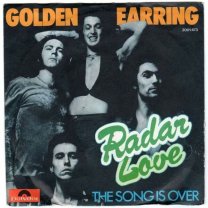 The Dutch rock band Golden Earring has had a long history of success in their native Netherlands, but their big moment on US airwaves came with the 1973 Top Ten hit “
 Soft rock crooner Stephen Bishop enjoyed success in the ’70s and ’80s with hits like “It Might Be You” (from the “Tootsie” film soundtrack) and “Save It For a Rainy Day,” but his biggest chart hit was the 1976 tearjerker “
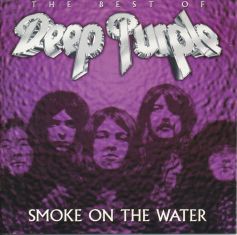 British rockers Deep Purple were scheduled to perform at a venue in Montreux, Switzerland, which was to be recorded for a live album, but at a concert held there the previous night, a reckless fan accidentally started a fire. Deep Purple turned that story into their 1973 signature song, “
 In 1972, British rockers Mott the Hoople were about to hang it up due to lack of commercial success. They got a big lift from David Bowie, who penned “
 Elton John’s lyricist Bernie Taupin finally got around to referencing another musician on Elton’s 1989 LP “Sleeping With the Past,” which contains songs meant to reflect the style of 1960s R&B. On the Motown-inspired “
 In the early ’70s, when Neil Young wrote a couple of songs (“Southern Man,” “Alabama”) taking the South to task for its racist history, Lynyrd Skynyrd took exception and wrote “
 In 1983, for his LP “Hearts and Bones,” Paul Simon wrote the song “
 Back in 1980, when John Mellencamp was going by the name Johnny Cougar, he had his first chart success (#17) with “
 “
“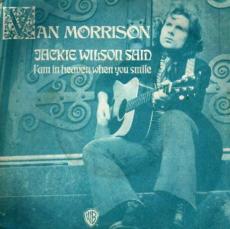 In 1972, Van Morrison boldly kicked off his “Saint Dominic’s Preview” LP with “
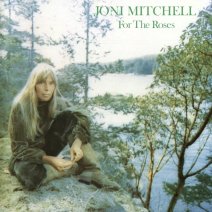 Even Joni Mitchell and Bob Dylan, two of the most celebrated songwriters of the past half-century, have not been averse to mentioning another artist by name. Mitchell’s wonderfully playful “
 one of pop music’s icons from the ’40s and ’50s: “The guy at the gas pump, he’s got a lot of soul, he sings ‘Merry Christmas’ for you just like Nat King Cole…” Dylan’s 2006 track “
 Hack's Back Pages