I’m gonna wait ’til the midnight hour
Last year, I put together a playlist of great songs with titles and/or lyrics about the morning time. A friend whose profession as a tax accountant occasionally requires him to work the late shift suggested that I come up with a playlist of songs about midnight to  help him endure the many hours burning the midnight oil, so I’ve done just that.
It’s a diverse group of 15 songs here, reaching back into the late ’40s and (among the honorable mentions) ahead into the late 1980s. There are always more candidates to choose from in the 1990s and beyond, but as usual, I specialize in the ’60s, ’70s and ’80s here at Hack’s Back Pages.
I hope you enjoy these tunes and their back stories.
**************
“Midnight Special,” Johnny Rivers, 1965
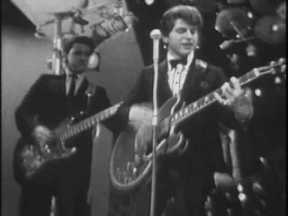 This traditional folk song about a passenger train called the Midnight Special is more than a century old, when prisoners in the American South would refer fondly to the Illinois Central train and “its ever-lovin’ light” that might someday take them to freedom. Blues legend Lead Belly recorded a version in 1934, and early rockabilly singer Paul Evans achieved the song’s highest chart success in 1960. Many rock fans may know Johnny Rivers’ 1965 rendition, which peaked at #20, and others may be more familiar with Creedence Clearwater Revival’s cover from 1971, which was used as the theme to the Midnight Special TV music showcase in the ’70s.
“Midnight Rambler,” The Rolling Stones, 1969
 This violent track from the Stones’ 1969 LP “Let It Bleed” refers to the grisly deeds of Albert DeSalvo, the ’60s serial killer better known as The Boston Strangler. Curiously, Mick Jagger and Richards wrote the song while on vacation in a picturesque town in Italy earlier that year. “Why we should write such a dark song while in a beautiful, sunny place, I don’t know,” Jagger said. The original studio version is plenty great, but the in-concert rendition from the 1970 live album “Get Yer Ya-Yas Out!” is considered the definitive one, so that’s the one you’ll hear on the Spotify playlist.
“Midnight at the Oasis,” Maria Muldaur, 1973
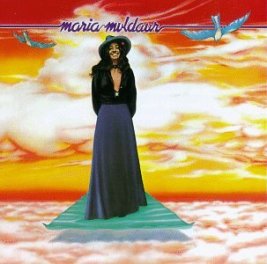 The Puerto Rican girl born Maria Grazia Rosa Domenica D’Amato grew up in New York City and became a part of the Sixties music scene in Greenwich Village, singing behind Bob Dylan, John Sebastian and others. She joined the Jim Kweskin Jug Band and later was an integral part of the Jerry Garcia Band, a side project of the Grateful Dead’s guitarist. Muldaur had her one and only hit with songwriter David Nichtern’s “Midnight at the Oasis,” which reached #6 in the spring of 1974 and was nominated for a Record of the Year Grammy. At 76, she still performs occasionally.
“Midnight Confessions,” The Grassroots, 1968
 With bassist Rob Grill on lead vocals, The Grassroots first took hold in 1967 with the psychedelic folk hit single “Let’s Live for Today.” When follow-ups failed, Dunhill Records mogul Lou Adler resumed the reins and steered the band in a more horns-oriented direction, a year or two before Blood, Sweat & Tears and Chicago popularized horns-dominant rock. The first attempt was the million-selling “Midnight Confessions,” written by Lou Josie and first recorded by the Ever-Green Blues. Its lyrics are about a man who has a secret crush on a married woman, so he keeps his midnight confessions to himself.
“Midnight Wind,” John Stewart, 1979
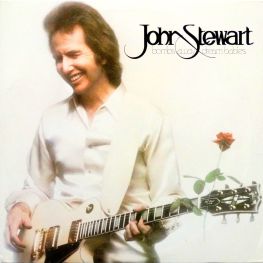 A veteran singer-songwriter from his folkie days with The Kingston Trio, Stewart also wrote The Monkees’ 1967 #1 hit “Daydream Believer.” In 1979, he collaborated with Lindsay Buckingham and Stevie Nicks, who took a break from their recording sessions for Fleetwood Mac’s “Tusk” double album. Buckingham produced and played guitar and Nicks added vocals to several tracks on Stewart’s “Bombs Away Dream Babies” LP, most notably the #5 hit “Gold” and the fantastic tune “Midnight Wind.” The album doesn’t seem to be available on Spotify, but a later re-recording by Stewart offers a satisfying alternative to the original.
“In the Midnight Hour,” Wilson Pickett, 1965
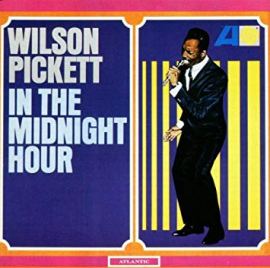 Pickett was one of the gritty soul singers signed to Stax/Volt Records, Memphis’s answer to Detroit’s Motown label. “In the Midnight Hour,” the tune that became Pickett’s signature song, was written in 1964 by Pickett and Stax session guitarist Steve Cropper during a session in the infamous Lorraine Motel, where Martin Luther King was assassinated four years later. The tune reached #1 on the R&B charts and peaked at #21 on the pop charts, and was later covered by such artists such as The Young Rascals, Mitch Ryder, Archie Bell & The Drells, Tom Jones and Bryan Ferry.
“Midnight Rider,” The Allman Brothers Band, 1970
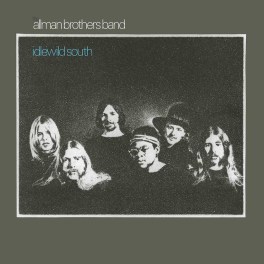 Organist-vocalist Gregg Allman wrote many of the band’s finest early songs, most notably “Whipping Post” and “It’s Not My Cross to Bear” from their debut LP, and the haunting “Midnight Rider,” which appears on the group’s 1970 second album “Idlewild South.” The tune became a popular favorite and a regular of the Allman Brothers in-concert repertoire, and later, when Gregg Allman went out on a solo tour in 1973, he performed a rearranged version that ended up on his “Laid Back” solo debut LP and even charted as a #19 hit single that year.
“Midnight Train to Georgia,” Gladys Knight and The Pips, 1973
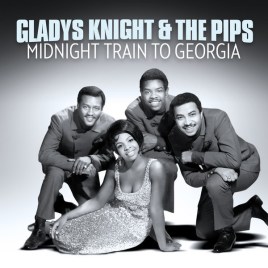 Songwriter Jim Weatherly, a friend of actor Lee Majors, called him one evening to hear that his wife, Farrah Fawcett-Majors, was “leaving on a midnight plane to Houston.” Weatherly liked the sound of that phrase and used it as the title for his soon-to-be-famous song. By the time it was presented to Gladys Knight as a great choice for her next single, the plane had been replaced by a train, and the destination had changed from Houston to Georgia. The song went on to reach #1 on both the pop charts and R&B charts in the fall of 1973, won a Grammy for Best R&B Vocal Performance.
“Midnight Cowboy,” John Barry, 1969
 Barry is one of the more accomplished film score composers of the 20th Century, responsible for the first dozen James Bond movies as well as Oscar nominees like “Born Free,” “Out of Africa” and “Dances With Wolves,” among many others. The languid, melancholy melody he came up with for 1969’s Best Picture winner “Midnight Cowboy” is especially effective, thanks in no small part to the warm harmonica solo by the legendary Toots Thielemans. A rendition by piano duo Ferrante and Teicher did better on the charts, but I think the original is far superior.
“South City Midnight Lady,” The Doobie Brothers, 1973
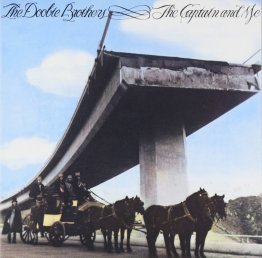 In its original incarnation, The Doobies were a rough-and-tumble biker bar band from San Jose, churning out serious boogie tunes by Tom Johnston like “China Grove,” “Long Train Runnin’,” “Listen to the Music” and “Jesus is Just Alright.” The more melodious, understated songs in the group’s repertoire were provided by second guitarist/vocalist Pat Simmons, gems like “Toulouse Street,” “Clear as the Driven Snow” and the shimmering “South City Midnight Lady.” This track from 1973’s “The Captain and Me” includes some sweet pedal-steel work by eventual full-time Doobie Jeff “Skunk” Baxter.
“Midwest Midnight,” Michael Stanley Band, 1977
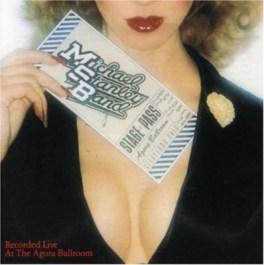 Cleveland’s own Michael Stanley Band is perhaps the best example of an excellent rock band that should’ve made it big but didn’t. Between 1974 and 1984, they bounced from Epic to Arista to EMI America, writing and recording so many great songs and touring relentlessly, but MSB never achieved the well-deserved chart success their fans think they should have. On their 1977 live LP “Stagepass,” you can find the only version of the great rocker “Midwest Midnight,” which tells Stanley’s tale of listening to music late at night as a teen and dreaming about a career as a rock musician.
“Midnite Cruiser,” Steely Dan, 1972
 From the pop craftwork of “Pretzel Logic” and “Katy Lied” to the jazzier arrangements on “Aja” and “Gaucho,” Steely Dan’s seven superlative albums were essentially a soundtrack to the styles and moods of the ’70s. Their later work sold better, but when I’m asked which album is my favorite, I keep coming back to their remarkable debut, “Can’t Buy a Thrill.” Beyond the radio hits “Do It Again” and “Reelin’ in the Years” are irresistible tracks like “Kings,” “Dirty Work,” “Only a Fool Would Say That,” “Brooklyn” and the quirky “Midnite Cruiser,” the only Dan tune featuring original drummer Jim Hodder on vocals.
“‘Round Midnight,” Thelonious Monk, 1947
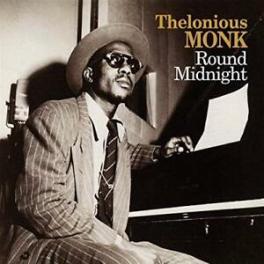 Monk, one of the two or three finest jazz pianists in music history, wrote this marvelous song in 1944, performing it in clubs for years before finally recording it in 1947. It went on to become the most recorded jazz standard composed by a jazz musician; many covers exist but Miles Davis’s rendition in 1955 is worth seeking out. Later on, torch singers like Ella Fitzgerald, Sarah Vaughan and Linda Ronstadt let the world know the song came with a great set of sad lyrics as well (also by Monk): “It begins to tell ’round midnight, midnight, I do pretty well till after sundown, supper time I’m feelin’ sad, but it really gets bad ’round midnight…”
“Midnight Moodies,” Joe Walsh, 1973
 Walsh got his start as guitarist, singer and songwriter for Cleveland’s The James Gang, then embarked on a solo career in 1972. Perhaps my favorite track from Walsh’s masterpiece album “The Smoker You Drink, The Player You Get” is this mesmerizing instrumental piece. Piano, guitar, bass, drums and flute combine to create a compelling piece that features multiple moods and styles in only 3:39. Walsh’s LP was a big seller thanks to the huge hit single “Rocky Mountain Way,” but I urge you to listen to the rest of the album, starting with this track, “Dreams,” “Meadows” and “Wolf.”
“After Midnight,” Eric Clapton, 1970
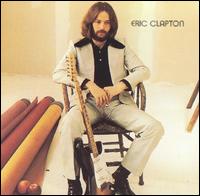 In the wake of Cream’s breakup and then the short-lived Blind Faith, Clapton chose to finally stick his toe in solo waters with the self-titled debut LP in the summer of 1970. He recruited friends like Stephen Stills, Leon Russell, Delaney & Bonnie Bramlett and his bandmates from Derek and the Dominos to work on blues, soul and rock tunes like “Let It Rain,” “Blues Power,” “Easy Now” and “Bottle of Red Wine.” The album’s best known track was J. J. Cale’s blues shuffle “After Midnight,” which Eric and company cut in an uptempo arrangement. For the Spotify playlist, I chose to feature an alternate take that prominently features a horn section.
**************
Honorable mention:
“Burning of the Midnight Lamp,” Jimi Hendrix Experience, 1968; “Midnight Man,” The James Gang, 1971; “It’s Midnight,” Elvis Presley, 1975; “Minutes to Midnight,” Midnight Oil, 1984; “Saturday at Midnight,” Cheap Trick, 1982; “Midnight Flyer,” The Eagles, 1974; “Moanin’ at Midnight,” Howlin’ Wolf, 1958; “Midnight Blue,” Lou Gramm, 1987; “Rockin’ at Midnight,” The Honeydrippers, 1984; “Isn’t It Midnight,” Fleetwood Mac, 1987; “Rockin’ After Midnight,” Marvin Gaye, 1982; “Midnight Wind,” Charlie Daniels Band, 1977; “Fire at Midnight,” Jethro Tull, 1977.
The playlist on Spotify includes the 15 featured selection, a couple of alternate versions and the 13 honorable mention tracks.
 of songs about food as well, but that’s just not the case.
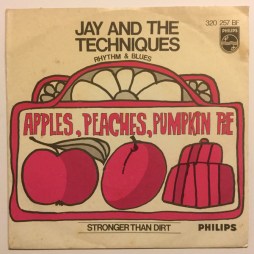 Songwriter Maurice Irby Jr. came up with this catchy tune in which the title really has nothing to do with the food items mentioned. “I was working on lyrics while sitting in a diner, and I saw ‘Apple, peach, pumpkin pie’ listed as dessert choices on the menu,” he recalled. “I thought the phrase rolled off the tongue so nice. I just made ’em plural and used it as the title.” The recording of it by Jay and The Techniques zoomed to #6 in the summer of 1967: “Apples peaches pumpkin pie, you were young and so was I, now that we’ve grown up, it seems you just keep ignoring me, I’ll find you anywhere you go, I’ll follow you high and low, you can’t escape this love of mine anytime…”
 The Wisconsin-based female choral quartet known as The Chordettes got their start singing traditional folk music, but by the mid-’50s, they chose to focus on close-harmony tunes sung a cappella. They had eight Top 20 chart entries between 1954-1961, but their two biggest claims to fame were the #1 smash “Mr. Sandman” in 1954 and the #2 hit “Lollipop” in 1958, which uses the popular candy as a nickname for a boyfriend: “Call my baby lollipop, tell you why, his kiss is sweeter than an apple pie, and when he does his shaky rockin’ dance, man, I haven’t got a chance, I call him, lollipop, lollipop…”
 Waits’ brilliant debut LP “Closing Time” is full of ballads and mournful melodies, but one exception is the upbeat ditty “Ice Cream Man,” in which he plays the role of a street vendor offering literal and/or figurative ice cream treats to the young lady he’s wooing: “I’ll be clickin’ by your house about two forty-five, sidewalk sundae, strawberry surprise, I got a cherry popsicle right on time, a big stick, mama, that’ll blow your mind, ’cause I’m the ice cream man, I’m a one-man band, yeah, I’m the ice cream man, honey, I’ll be good to you…”
 In 1962, R&B singer Sharp was a sensation with five Top Ten singles, two of which capitalized on the popular Twist-like dance move known as the Mashed Potato, where dancers would grind their feet into the dance floor as if mashing potatoes. In the lyrics to “Gravy,” Sharp says she needs more than just dancing, she needs romancing as well: “I dig this twistin’ but I want some more, there’s somethin’ missin’ while we’re on the floor, come on baby, I want some gravy, a little kissing’s what I’m waiting for, gimme gravy on my mashed potatoes…”
 Chris Difford, Squeeze’s lyricist partner with songwriter Glenn Tilbrook, said he wrote the words to this tune almost as a journal entry, telling about his vacation day by the shore as a teenager in his native England. “It’s not about food, not really. It’s about being horny with someone at summer camp, which, let’s be honest, was beautiful and true the first time we encountered it. It’s a sweet memory about finding something beautiful and pure in the middle of a sea of banality”: “Behind the chalet, my holiday’s complete, and I feel like William Tell, Maid Marian on her tiptoed feet pulling mussels from a shell…”
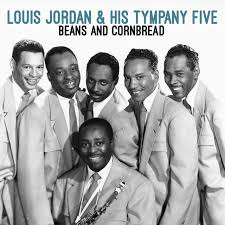 Jordan and his jump-blues band The Tympany Five were hugely popular in the juke joints as well as some of the tonier clubs in bigger cities when they could get gigs there. Many of the early rock and roll pioneers credit Jordan for writing songs that inspired them to compose their own brand of irresistible dance music. This one used food pairings to emphasize the need for couples to stick together: “Beans and corn bread, hand-in-hand, that’s what beans said to corn bread, ‘We should stick together, hand in hand, we should hang out together like wieners and sauerkraut, we should stick together like hot dogs and mustard…'”
 North Carolina-born Taylor no doubt ate his share of sweet potato pie in his youth. For his high-spirited song by that name from his 1988 album “Never Die Young,” Taylor sings about a girl the narrator knew years earlier who ends up as his delicious ladyfriend decades later: “I’m glad I had to wait awhile, a little bit too juvenile, I needed to refine my style, a silk suit and a crocodile smile, so let the whole damn world go by ’cause I just want to testify, from now on, it’s me and my sweet potato pie…”
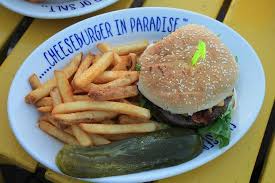 Buffett’s famous tune, which became the name of his lucrative restaurant chain as well, speaks of how it’s no fun dieting and eating healthy foods all the time, not when what he really wants is a good old-fashioned American favorite, which he describes in delirious detail: “I like mine with lettuce and tomato, Heinz 57 and French fried potatoes, big kosher pickle and a cold draft beer, well, good god almighty, which way do I steer for my cheeseburger in paradise?…”
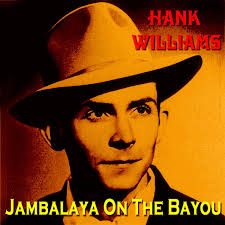 Jambalaya is a spicy, Louisiana-based dish of sausage, crawfish vegetable and rice, and Williams’ song honoring its savory flavor was written to be delivered as a Cajun two-step tune. He chose to dilute it somewhat to make it more palatable to a mass market, which was the right move — it held the #1 spot on the country charts for 13 weeks in 1952, and crooner Jo Stafford’s cover peaked at #3 on the pop charts that same year. Other major artists covering the song in the years since include Fats Domino, Elvis Presley, Jerry Lee Lewis, John Fogerty, The Carpenters, Emmylou Harris and Van Morrison: “Jambalaya, crawfish pie and fillet gumbo, for tonight I’m gonna see my cher ami-o, pick guitar, fill fruit jar and be gay-o, son of a gun, we’ll have big fun on the bayou…”
 George Harrison wrote this track from “The White Album” about his pal Eric Clapton, who had such an addiction to sweets that it caused him plenty of trips to the dentist to have teeth pulled. Harrison mentions several yummy European candy specialties that ultimately made his friend’s life miserable: “Creme tangerine and montelimar, a ginger sling with a pineapple heart, a coffee dessert, yes, you know it’s good news, but you’ll have to have them all pulled out after the Savoy truffle…”
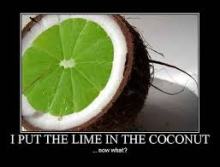 This was essentially a novelty tune that made it all the way to #6 in the summer/fall of 1972. Nilsson wrote it as a doctor’s whimsical remedy for a hangover, combining coconut and lime in a big glass: “You put the lime in the coconut, you drink ’em both together, put the lime in the coconut, then you feel better, put the lime in the coconut, drink ’em both up, put the lime in the coconut, and call me in the morning…”
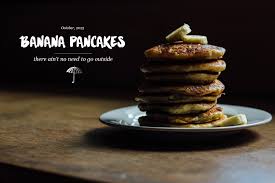 The hedonistic life of surfer Jack Johnson comes through in much of his music, which encourages enjoying life’s pleasures, laying around in a hammock, on the beach, or in bed. Johnson urges his girlfriend to remain in the sack on a cool cloudy weekday while he makes her a plate of her favorite breakfast: “Baby, you hardly even notice when I try to show you this song is meant to keep ya from doing what you’re supposed to, waking up too early, maybe we can sleep in, make you banana pancakes, pretend like it’s the weekend now…”
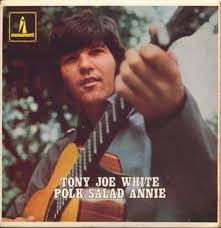 Pokeweed grows in the wild in the woods down South, and White recalled often eating cooked dishes made of it “when there wasn’t much else in the fridge.” Sallet is an old English word that means “cooked greens,” not to be mistaken for “salad,” but in fact, White’s record company did just that when they changed his song from “Poke Sallet Annie” to “Polk Salad Annie.” It reached #8 in 1969: “Down there we have a plant that grows out in the woods and in the fields, looks somethin’ like a turnip green, and everybody calls it poke sallet, poke sallet, used to know a girl lived down there, and she’d go out in the evenings and pick her a mess of it, carry it home and cook it for supper..”
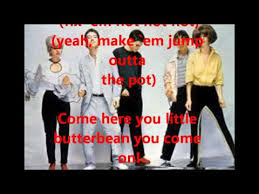 Hailing from the college town of Athens, Georgia, was the quirky punk/New Wave band known as The B-52s, known especially for their dance club classics, “Love Shack” and “Good Stuff.” Early on, songs like “Rock Lobster” and “Butterbean” were more the order of the day, and the latter celebrated the traditional Southern snack favorite: “Gramps and grannies, kids in their teens, junkyard dogs and campus queens, yeah, everybody likes butterbeans… Pass me a plate-full, I’ll be grateful, 1-2-3-4, pick ’em, hull ’em, put on the steam, that’s how we fix butterbeans…”
 NRBQ (New Rhythm & Blues Quartet) was a Kentucky-based band founded in 1966 that merged rock, pop, jazz, blues and Tin Pan Alley styles, playing mostly small clubs but occasionally opening for bigger bands like Poco or R.E.M. A concert favorite was “RC Cola and a Moon Pie,” an old Bill Lister tune from the Fifties about Royal Crown Cola (a regional competitor of Coke and Pepsi) and a Moon Pie (essentially a s’more — two graham crackers with marshmallow in between, covered in chocolate). It was known as “a working man’s lunch” throughout the South: “I don’t want no cornbread, and I can do without peas and rice, I don’t want no carrots or no real hot pizza slice, but everything’s gonna be all right with an RC Cola and a moon pie…”
 Hack's Back Pages