What the people need is a way to make ’em smile
Periodically, I use this space to pay homage to artists I believe are worthy of focused attention — artists with an extraordinary, influential, consistently excellent body of work and/or a compelling story to tell. In this essay, I take an in-depth look at a band that has enjoyed considerable success with different lineups, playing several very different musical styles from roadhouse boogie to country rock to “blue-eyed soul,” selling many millions of albums and singles, and are still active into their sixth decade: The Doobie Brothers.
********************
I have often chuckled about how many of The Doobie Brothers’ more straight-laced fans have raved about them and their songs over the years without knowing that their name is slang for marijuana.
Co-founder Tom Johnston, the group’s chief singer-songwriter-guitarist, recalls how the name came to be. “Back in 1970, we were brand new and didn’t even have a name, really. We were just playing around the San Jose area where we lived. One night after a gig, we were sitting around in the kitchen of the house where I was living, getting high. Our friend Keith walked in and said, ‘Man, you guys love smoking pot so much, why don’t you just call yourselves the Doobie Brothers?’ We thought it was a stupid name, but we used it for the next several jobs, and it kind of stuck.”

Fifty years later, after being eligible since 1996, these multi-talented former stoners were at last inducted into the Rock and Roll Hall of Fame last month. As Patrick Simmons, the band’s other co-founding singer-songwriter-guitarist, put it, “I figured it would happen eventually, but I was afraid I wouldn’t be around to enjoy it!”
For a decade (1972-1982), The Doobies were one of America’s top rock groups, pumping out nearly an album a year and sprinkling the Top 40 with all sorts of hit singles, all while touring almost relentlessly. In the years since their initial dissolution, various members have reconvened for special performances, several tours and a couple of new studio and live albums, and the band was set to embark on a full-fledged 50th reunion tour in 2020 before the coronavirus postponed those plans.
They were so good at everything they tried that it’s hard to define what Doobies music is. There’s pounding rock and roll, highlighted by hard-edged electric guitars. There’s melodic acoustic stuff, featuring country-style picking, pedal steel guitar and fiddle. There’s funky R&B, carried by soulful electric piano, jazz-inflected guitar and syncopated percussion. In the Doobies, these disparate styles had a common denominator — dominant three-part harmonies and strong lead vocals.
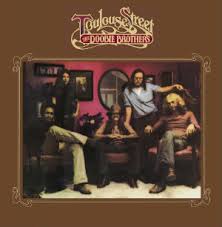
I remember the first time I heard The Doobie Brothers when their first hit, “Listen to the Music,” came bursting out of my friend’s high-quality stereo. I was immediately taken by the pristine sound of the guitars, the distinctive lead voice and the fabulous harmonies on the chorus. I picked up my own copy of their “Toulouse Street” album within a day or two and was delighted to find another five or six excellent tracks: the quintessential road song “Rockin’ Down the Highway,” the insistent “Jesus is Just Alright,” the gorgeous acoustic tunes “Toulouse Street” and “White Sun,” the island music of “Mamaloi” and a balls-out cover of Sonny Boy Williamson’s blues stomp, “Don’t Start Me Talkin’.” I became a big fan and have remained one ever since.
Johnston and original drummer John Hartman met in San Jose in 1970, eventually teaming up with Simmons and bass player David Shogren to form the group. Ted Templeman — then a young A&R man for Warner Brothers and now a respected veteran producer of multiple artists — heard their demos featuring the dual lead guitars and three-part harmonies and signed them to the WB label.
Their early following consisted of Hells Angels and other rough-and-tumble biker types who frequented the bars and roadhouses they played in Northern California, and although their debut album cover featured the band dressed in leather jackets, the music within was decidedly more acoustic-based. It didn’t sell much.
That all changed with “Toulouse Street,” which reached #21 on the album charts in 1972 and yielded two singles (“Listen to the Music” at #11 and “Jesus is Just Alright” at #35). The Doobie Brothers, now with bassist-vocalist Tiran Porter and second drummer Michael Hossack, were on their way.
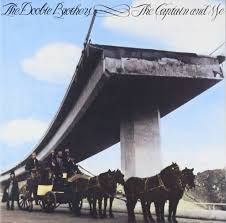
The band’s finest hour, in my opinion, came in 1973 with the outstanding “The Captain and Me” LP. Two tracks, “Long Train Runnin'” and “China Grove,” are permanently imbedded in everybody’s classic rock ’70s playlist, but it’s the deeper tracks that have always grabbed me. Simmons contributed “Clear as the Driven Snow” and the stunning “South City Midnight Lady,” two of the finest tunes in their catalog, and Johnston’s “Ukiah” and “The Captain and Me” bring the album to a dynamic finish.
The band adopted a three-guitar attack with the addition of Jeff “Skunk” Baxter in 1974. Baxter had been an original member of Steely Dan, but when co-founders Donald Fagen and Walter Becker decided to quit touring and become a creature of the studios, Baxter found a spot with The Doobies, bringing his adventurous, jazz-inflected chops to the mix. Drummer-singer Keith Knudsen took Hossack’s place on second drums, and this lineup cranked out two albums, 1974’s “What Were Once Vices Are Now Habits” and 1975’s “Stampede,” both making the Top Five. A trove of really fine material — “Song to See You Through,” “Spirit,” “Eyes of Silver,” “Daughter of the Sea,” “Sweet Maxine,” “Take Me In Your Arms,” “I Cheat the Hangman” — beefed up their already high-quality repertoire.

From “Vices and Habits,” the label released Johnston’s pretty “Another Park, Another Sunday” as the single, but it stalled at #32. In Virginia, a radio station started playing the single’s B-side, “Black Water,” partly because there was a real Blackwater River nearby. The song took off like the proverbial wildfire, first regionally and then nationally, and by early 1975, The Doobie Brothers had their first #1 single. Simmons’ lead vocal, sublime acoustic picking with intermittent fiddle, and the a cappella refrain “I”d like to hear some funky Dixieland, /Pretty mama, come and take me by the hand” made “Black Water” one of the most popular songs of the year.
During the 1975 tour to promote “Stampede,” Johnston began suffering from exhaustion and ulcers, and doctors advised him to stay off the road and rest. “I hadn’t quit the band,” he later stated. “I just wasn’t physically able to do it. I needed to get off the road and get away from that whole scene for a while.” In need of someone who could somehow temporarily replace their leader on stage, the band approved Baxter’s suggestion to invite occasional Steely Dan vocals contributor Michael McDonald to fill in. McDonald was hesitant at first: “They were looking for someone who could play organ and a lot of keyboards, and I was just a songwriter who dabbled at piano. More than anything, I think they were looking for a singer to fill (Johnston’s) shoes.” It proved to be a momentous decision, as we shall see.
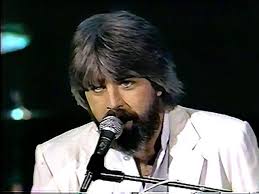
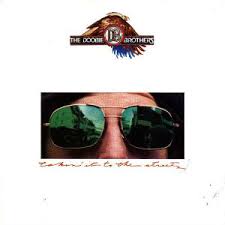
Their contract required another album in 1976, but Johnston still wasn’t able to participate fully, so the band asked McDonald if he had any original songs to contribute. Once producer Templeman heard the demos for “It Keeps You Runnin’,” “Takin’ It To the Streets,” “Carry Me Away” and “Losin’ End,” he told the band, “You’ve got a real diamond in the rough here that you can make into something if you want to go ahead.” Everyone was reluctant to mess too much with the Doobies formula, including McDonald. “I knew the record company was panicked about any change in the band,” he said. “They were leery about getting a new guy. I was thrilled just to have the gig, but I wasn’t expecting much.”
They decided to proceed, knowing this would significantly change the band’s overall sound and image. The sessions also included three Simmons songs (co-written with Baxter) and one lone track written and sung by Johnston (“Turn It Loose”) that maintained ties to the original Doobies groove, but the label chose to release “Taking It to the Streets” as the single (and album title), so the evolution toward McDonald began.
Many older fans balked, but I liked the new blood he injected, and most critics did, too. The arrangements of the new material reflected a Steely Dan influence, which suited me fine, and McDonald’s good looks made him something of a heartthrob as well, which helped attract a new audience. He, Simmons, Porter and Knudsen were ably to credibly perform the vocals on live versions of Johnston’s older songs and, with help from the four-man horn section, The Memphis Horns (who had already chipped in on the last few albums), the band never missed a step.
I saw the “new” Doobie Brothers five times over the next five summers every time they came to town, as they were one of the tightest, most entertaining bands going. McDonald cemented his place as band leader, first by singing lead on the Motown cover “Little Darling (I Need You),” the single from the 1977 LP “Livin’ on the Fault Line,” but even more dramatically on their 1978 #1 album, “Minute By Minute,” which dominated the airwaves for the better part of 1979 and made them superstars. “What a Fool Believes,” the #1 single McDonald wrote with Kenny Loggins (who also recorded his own version), won Grammys for Song of the Year (for the composers) and Record of the Year (for the band and producer).

The rigors of touring and recording albums nearly non-stop took its toll, though, causing Hartman and Baxter to depart. They were replaced by drummer Chet McCracken and multi-instrumentalist John McFee, and the lineup was further expanded with the addition of Cornelius Bumpus on saxophone, flute, keyboards and vocals. This lineup recorded what turned out to be the last Doobies album for a decade, 1980’s “One Step Closer,” with McDonald’s “Real Love” (a #5 single) and the title song (sung by Bumpus) getting most of the airplay. They were now about as far away from a boogie biker band as they could be, with several tracks that sounded more like cool jazz (later derisively known as “yacht rock”).
When Simmons, the only constant throughout The Doobies’ career arc, started itching to leave for a solo project, and McDonald voiced similar desires, the remaining members chose to dissolve, but not until they wrapped things up with a lengthy farewell tour in 1982 that even brought Johnston back for a few special performances.
Simmons’ album “Arcade” came and went without much attention, but McDonald fared far better. He had done guest vocals on several hit records for Loggins, Christopher Cross, Nicolette Larson and others, and he continued this trend through the ’80s with the likes of James Ingram (“Yah Mo B There”), Patti Labelle (“On My Own”) and Joni Mitchell (“Good Friends”). Two of his own solo singles (“I Keep Forgettin’,” “Sweet Freedom”) went Top 10 as well. In 2003 and 2004, he put together two sterling collections of Motown covers that both went Top 20.
Nothing was heard from The Doobies until the end of the ’80s when the original lineup of Johnston, Simmons, Porter, Hartman and Hossack reunited to record “Cycles,” a surprisingly strong effort that reached the Top 20 and was reminiscent of the band’s early work. “The Doctor” was a #9 hit in 1989, and the group made a triumphant return to the road to promote the LP, which included Simmons’ “South of the Border” and a kickass cover of The Isley Brothers’ “Need a Little Taste of Love.” They tried a follow-up album, “Brotherhood,” which stiffed by comparison, although “Excited” and the single “Dangerous” had merit.
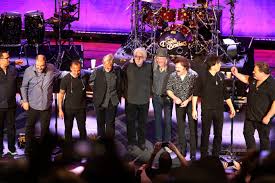
In the 30 years since, various Doobies lineups have reconvened, always with Johnston, Simmons and McFee as the core group. A 2010 LP, “World Gone Crazy,” was generally ignored, but I suggest you check out “A Brighter Day” and a remake of their very first single, “Nobody.” Five live albums have also been released capturing various lineups and eras of the band. “Live at Wolf Trap” (2014), “Live at the Greek Theater 1982” (2011) and “Live from the Beacon Theatre” (2019) all have tracks to recommend them, and some have been included on my Spotify playlist below.
Most intriguing, and beautifully executed, is “Southbound,” a 2014 release on which The Doobies, including McDonald, re-recorded some of their biggest hits with the contributions of various new-generation artists on instruments and/or vocals, including Zac Brown Band, Sara Evans, Hunter Hayes, Toby Keith, Huey Lewis, Love and Theft, Blake Shelton and Brad Paisley.
I have to rank The Doobie Brothers in my top 20 rock groups. I’ve seen them perform 10 times and I own pretty much everything they recorded, and still play their stuff often. God bless ’em, they’re still doing Zoom performances during the pandemic and are hoping to tour with McDonald in 2021. I’d buy tickets to that one, for sure.


 Hack's Back Pages