What’s it all about?

You all know me. I’m pretty transparent about my fascination with song lyrics and the stories behind the songs I love from the ’60s, ’70s and ’80s. I get a kick out of reading when songwriters let us in on what inspired them to write the words they do, the words I have memorized and continue to sing along with whenever I hear them. It gives my listening experience more depth and nuance when I learn how the music evolved or what sparked the idea for the song in the first place.

There’s this guy named Marc Myers who writes for the Wall Street Journal’s Arts section, where he fashioned a series of columns under the rubric “Anatomy of a Song.” He selected what he considered to be iconic tunes, interviewed the songwriters and other principal musicians, and laid out the who, what, where, when and why of these tracks in their own words. In 2016, Myers published a compendium of his columns titled “Anatomy of a Song: The Oral History of 45 Iconic Hits That Changed Rock, R&B and Pop.” (Why 45? Why not 50? Beats me.) I haven’t seen that first volume yet (it’s been ordered), but I came across its 2022 sequel recently, inventively titled “Anatomy of 55 More Songs” (at least I figured out why 55).

The songs hark from 1964-1996, roughly the same period that “Hack’s Back Pages” covers (1955-1990). I have taken the liberty of selecting eight of Myers’s choices and distilling the quotes and anecdotal info he provided to give you compelling tidbits of songs you surely know and revere. At the end, of course, is a Spotify playlist of these songs.

I intend to revisit this idea again in future posts, using Myers’s lists as a guide of sorts (although I’ll certainly be adding a few songs he chose not to include). And if you have a favorite you’d like to know more about, by all means, let me know!

**********************
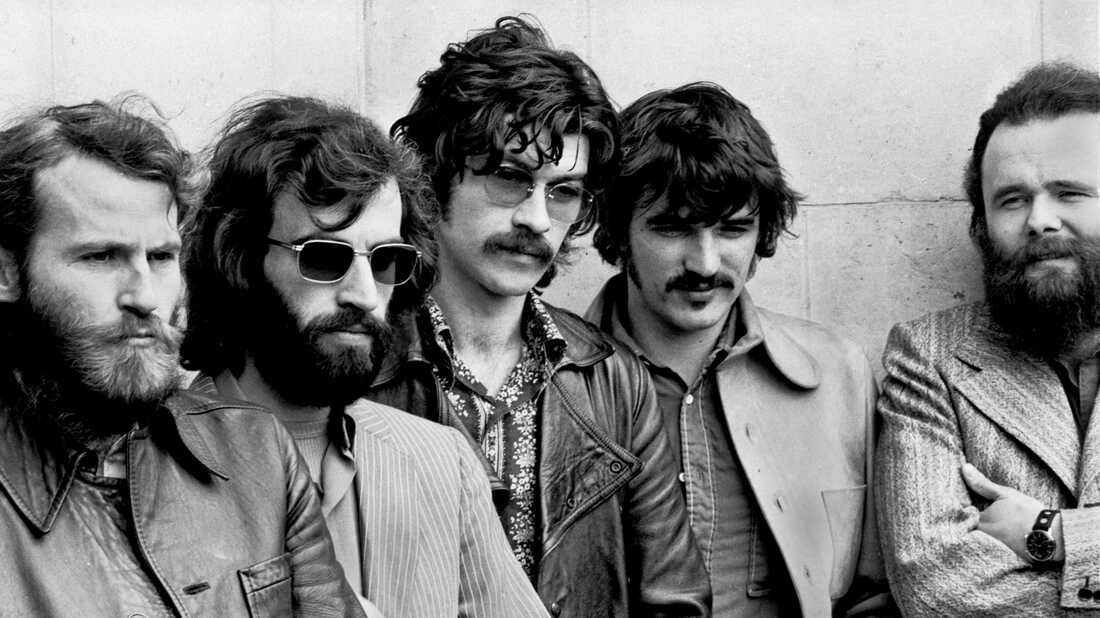
The Band (from left): Levon Helm, Richard Manuel, Robbie Robertson, Rick Danko and Garth Hudson

“The Weight,” The Band, 1968

Robbie Robertson and his band The Hawks had toured and recorded behind Bob Dylan for three years in the 1965-1967 period, culminating in sessions at a house in Woodstock, New York, which were later released as “The Basement Tapes” in 1975. “We were just finishing up with Bob, and we had already written enough material for an album we would call ‘Music From Big Pink,’ our first album under our new name, The Band,” Robertson remembered. “But we needed one or two more. One evening I picked up my 1951 Martin D-28 acoustic guitar, holding it across my lap. I looked into the sound hole and saw the label that said “Nazareth, Pennsylvania,” where Martin Guitars are made. Seeing the word ‘Nazareth’ unlocked a lot of stuff in my head from Luis Buñuel’s “Nazarín,” a Mexican film about a priest with no possessions who travels the countryside. Once I’d written a few chords, I came up with “Pulled into Nazareth, was feeling ’bout half past dead.” I had no grand plan as to where the story might go, but the first thing he does is ask the first person he sees about a place to stay the night. A very biblical concept. I wanted various characters to unload their burdens on this guy. Take care of my dog, keep my friend company. You know, ‘Take a load off, and put it right on me.'” The song stalled at #63 on US pop charts upon release, but it became an Americana classic and was covered by many artists, including Aretha Franklin, The Staple Singers, Joe Cocker, Smith, Little Feat, King Curtis and Duane Allman, and The Grateful Dead.
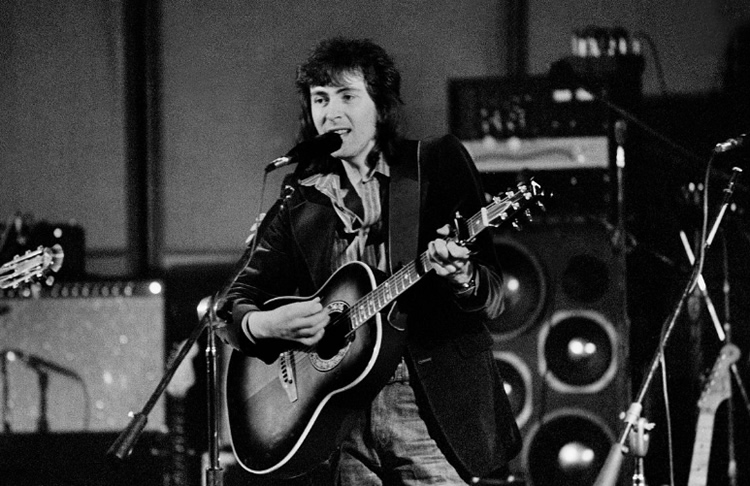
“Year of the Cat,” Al Stewart, 1976

Stewart loved to tell stories with his songs, and in 1968 he wrote “Foot of the Stage” about a comedian contemplating suicide. Using the same melody, the song evolved in 1974 into “Horse of the Year,” about Princess Anne, an accomplished equestrian. Neither version was ever recorded. In 1975, Stewart saw a book about Vietnamese astrology, which his girlfriend had left on his kitchen table, open to a chapter entitled “Year of the Cat,” which was the zodiac sign for that year. “I looked at my ‘Horse of the Year’ song title, which seemed silly, while ‘Year of the Cat’ sounded really good,” he recalled. “Later that day, ‘Casablanca’ came on TV, and it occurred to me that the song should be about some exotic place where something memorable happened, all in the Year of the Cat. The opening line came to me: ‘On a morning from a Bogart movie, in a country where they turn back time.’ It was a novelistic approach, even cinematic. The woman in the song is no one specific, just an abstract fantasy. The guy is trying to make sense of what’s occurring, but she doesn’t give him time for questions.” Keyboardist Peter Wood had written the piano riff that became the introduction, and Stewart decided to add a middle section for various instrumental solos: strings, acoustic guitar, electric guitar and sax. Producer Alan Parsons turned it all into a six-minute tour de force that reached #8 on US pop charts in early 1977.
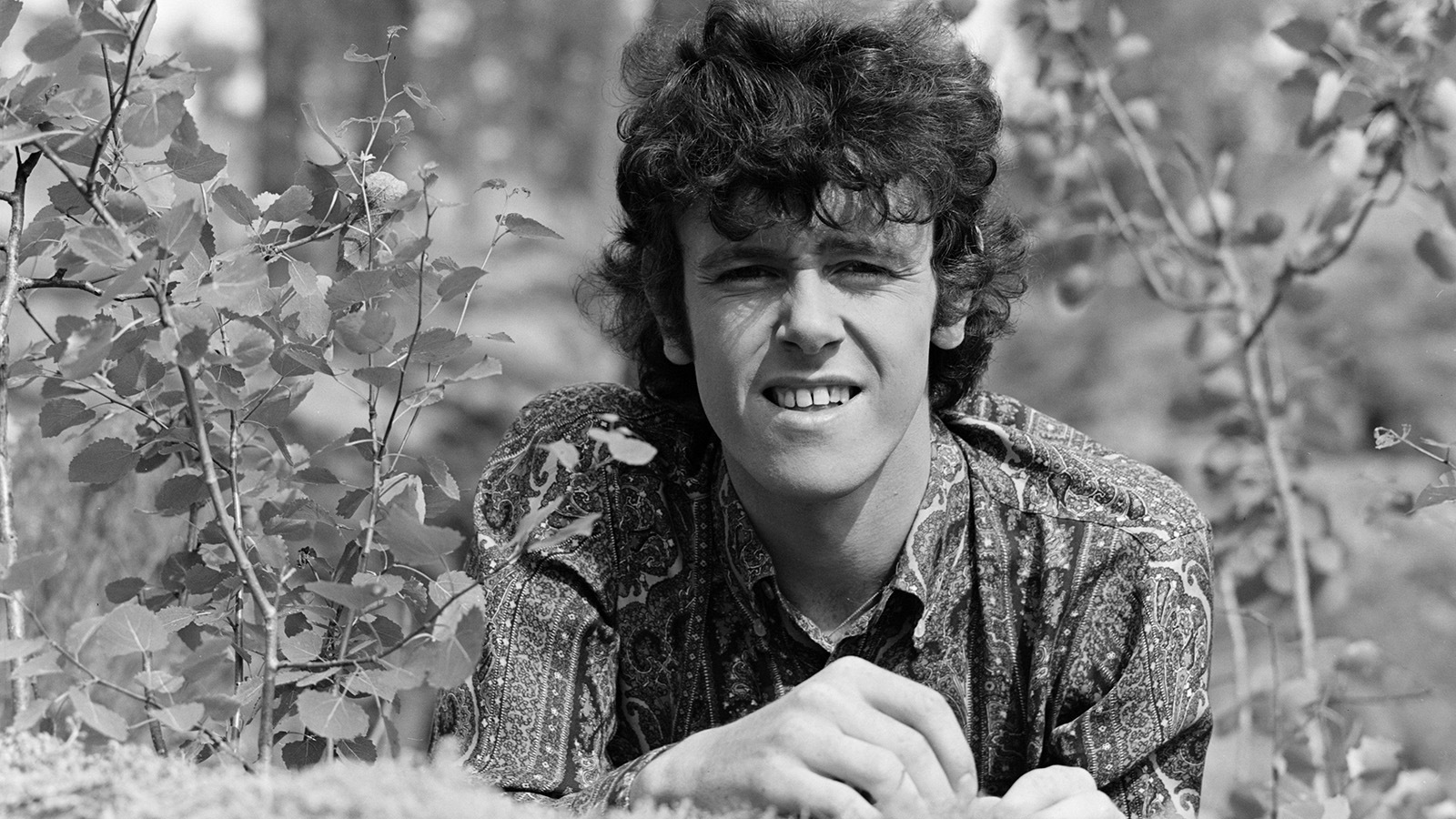
“Sunshine Superman,” Donovan, 1966

Donovan Leitch has said hearing “Sunshine Superman” brings back fond memories, even though its genesis came from unrequited love. “While in California promoting my first album and single, I met and fell for a woman named Linda,” he said. “We spent several weeks together, but she was still very fragile after breaking up with Brian Jones of The Rolling Stones, with whom she had had a child. So she turned down my marriage proposal, and I returned to England, but I missed her terribly and started writing a song about her. Like many of my songs, it expressed hopeful melancholy. I was miserable that it hadn’t worked out, but I felt optimistic it would someday: ‘When you’ve made your mind up, forever to be mine…’ ” The music used an unusual mix of harpsichord, tambura and acoustic bass and guitar, with half of what would become Led Zeppelin (Jimmy Page and John Paul Jones) on electric guitar and electric bass, respectively, which gave it what became known as a psychedelic pop vibe. Some heard veiled references to LSD (“I could’ve tripped out easy…” and “sunshine” was slang for acid), but Donovan denied it, saying “it was about how I could’ve slipped into depression but didn’t. Superman had nothing to do with the superhero or physical power. It was a reference to Frederich Nietzsche and the evolution of consciousness to reach a higher superman state.” This was all groundbreaking stuff for the US Top 40, and it went on to become his only #1 hit, and one of four Top Ten singles here.
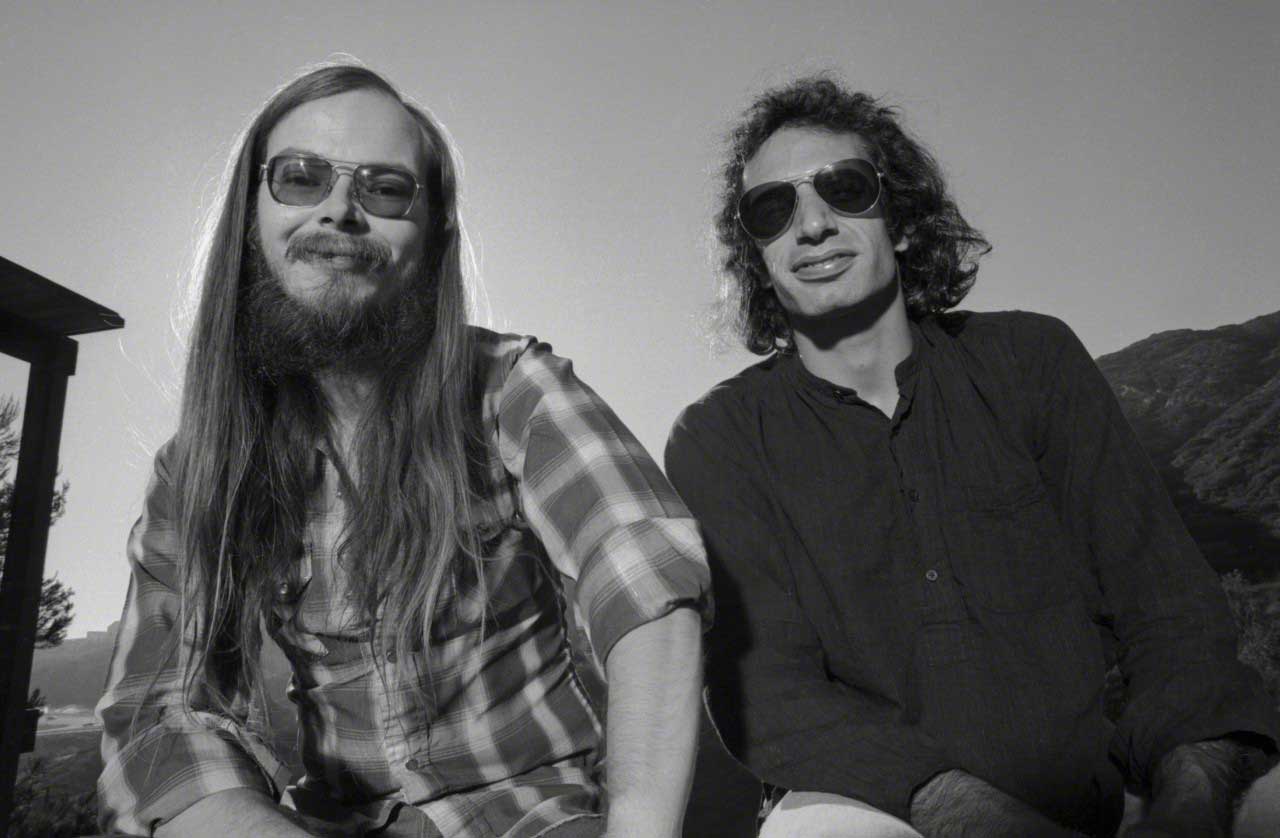
Walter Becker and Donald Fagen of Steely Dan in 1977

“Peg,” Steely Dan, 1977

In 1976, as Donald Fagen and Walter Becker were beginning to work on the songs that would comprise their milestone “Aja” LP the following year, the two songwriters watched the Bette Davis classic, “All About Eve,” which tells the story of an ingenue who manipulates her way to stardom. “Unlike Eve, the main character in our song doesn’t become a star at all but has starlet fever,” Fagen explained years later. “On her way up, she ditches her boyfriend, but he continues to hang around. All the lyrics are from his perspective, and he’s ambivalent, but he’s convinced there will be a karmic reckoning coming: ‘Peg, it will come back to you.’ He’s thinking that her career will tank, and she’ll end up in some cheesy 3-D film or in someone’s favorite foreign movie, which would be a far cry from her original aspirations.” At that point, Fagen and Becker had become meticulous perfectionists in the studio, and they had seven different guitar players come in to try their hand at the solo during the middle break. They finally settled on Jay Graydon’s work, which was actually spliced together from three different takes. Michael McDonald provided the distinctive harmonies, overdubbed three times. “We felt we’d achieved a special simplicity with that song,” Fagen added. “I think it’s easy on the ears.” As the album’s first of three hit singles, it reached #11 in the fall of 1977.

“Doctor, My Eyes,” Jackson Browne, 1972

In 1969, Browne, then just 21 and struggling to write songs on his grandfather’s old upright piano in the Echo Park area of L.A., had a problem. “During the writing process, my eyes became infected and badly encrusted,” he noted. “I could barely see until I went to the doctor and got some medicine, but it took a while for my eyes to return to normal. That was the initial inspiration for the song’s lyrics. But that’s not much of a song, so the eye issue became a metaphor for lost innocence and having seen too much: ‘Doctor, my eyes, tell me what is wrong, was I unwise to leave them open for so long?‘ It became about a slow erosion of idealism.” The first draft of “Doctor, My Eyes” was rather bleak, he recalls, with the narrator adopting an almost fatalistic point of view about life. By the time he recorded the song for his self-titled debut LP in early 1972, Browne had given it a decidedly upbeat arrangement and tempo, driven by lively drums and congas, with killer harmonies by David Crosby and Graham Nash, all of which served to make the still-downbeat lyrics more palatable: “My eyes have seen the years, and the slow parade of fears without crying, /Now I want to understand.” As one reviewer put it, “As with many of Browne’s song, ‘Doctor, My Eyes’ is essentially a spiritual search — no preaching, no conclusions, just searching.” The song put him on the map, becoming a surprise hit at #8 in the spring of 1972.
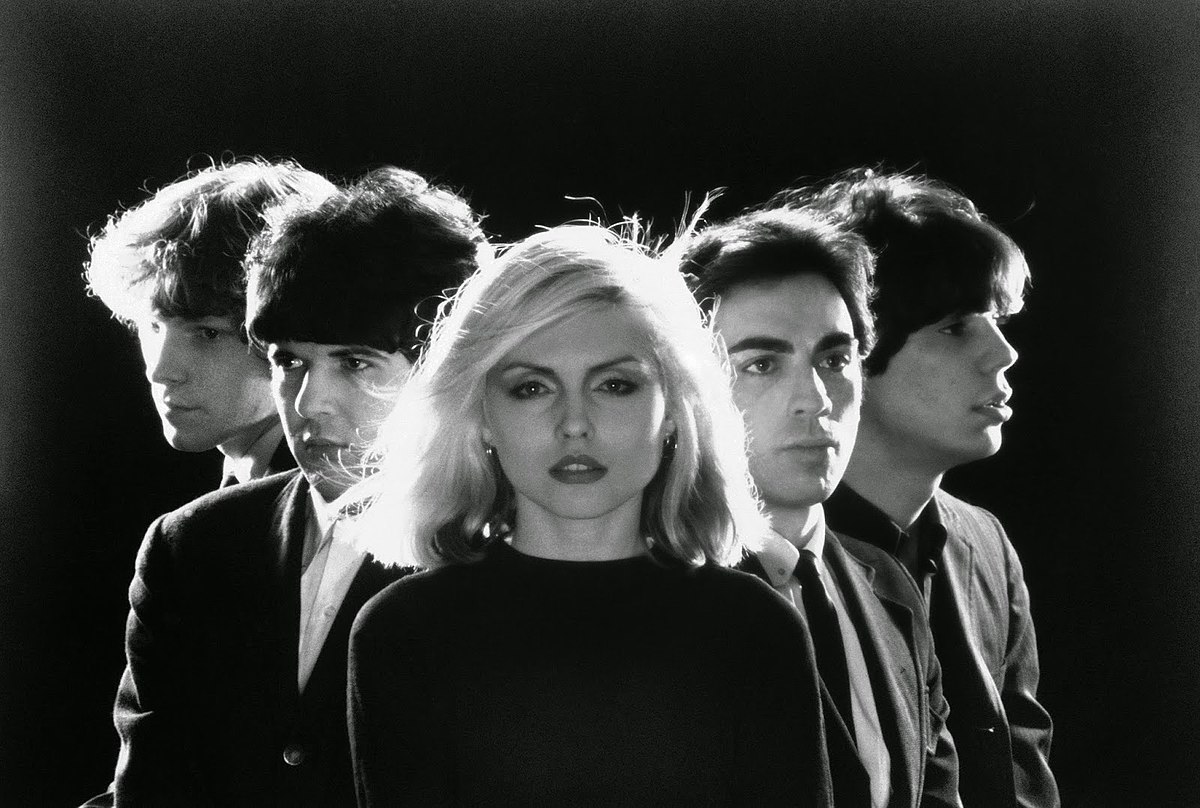
Blondie (from left): Gary Valentine, Clem Burke, Debbie Harry, Chris Stein and Jimmy Destri

“Rapture,” Blondie, 1980

Singer Debbie Harry and guitarist Chris Stein had found success in the late 1970s as founding members of Blondie, one of the best of the New York-based bands specializing in the punk/New Wave genres then in vogue. “We had become good friends with Bronx-based hip-hop artists like Fab 5 Freddy Brathwaite,” said Harry, “and he invited us to a rap event one night in 1978. We were so impressed and excited by the skill of the emcee’s rhymed lyrics delivered in a freestyle way. We went to several more of these events, jammed into this room with a writhing mass of humanity, dancing and pressing against each other as Chic-inspired disco music played. It wasn’t long before we decided to try our own rap song, and Chris thought it should be called ‘Rapture.'” He came up with the guitar and bass line, and they teamed up on lyrics for the verses based on what they’d seen in The Bronx: “Toe to toe, dancing very close, /Barely breathing, almost comatose, /Wall to wall, people hypnotized…” The band recorded the basic track in the studio, including the verses, but the rap section hadn’t been written yet. Harry and Stein took 20 minutes to figure it out, using Stein’s affinity for B-movies and science fiction imagery (“The man from Mars”), and they recorded it in two takes. The drummer found some tubular bells in the studio and added them to the mix for a haunting, ethereal feel. It became their fourth #1 single in 1981. “It was an homage to what I saw, and to a form that was exciting for us,” said Harry. “I probably should’ve worked on it a little more. It was a bit too sing-song-y and childlike, but it evolved in live performances.”

John Oates and Daryl Hall, 1974

“She’s Gone,” Hall and Oates, 1973

One of this Philadelphia duo’s finest moments, and indeed, one of the great “blue-eyed soul” songs of all time, “She’s Gone” is a classic example of how songwriting partnerships can work. John Oates had a New Year’s Eve date who never showed up, and he was feeling bummed out. “I sat on the sofa strumming my guitar,” he revealed, “and came up with a folky refrain about being stood up that I thought might make a good chorus: ‘She’s gone, I better learn how to face it, /She’s gone, I’d pay the devil to replace her, /She’s gone, what went wrong?’ When he played it for Daryl Hall a couple days later, Hall was intrigued, but felt it sounded like a Cat Stevens song. “I’m much more R&B,” he said, “so I suggested, ‘Let’s try it in another groove.’ I sat down at my electric piano and played the keyboard lick you hear on the intro, and I started hearing the way the song could really build dramatically.” Hall’s first marriage was dissolving at the time, so the “she’s gone” concept struck home and inspired some verses of his own. “Everyone was telling me not to worry, that I was going to be all right,” said Hall, “but none of that was helping,” which prompted these lines: “Everybody’s high on consolation, /Everybody’s trying to tell me what is right for me.” The song was largely ignored on its first go-around in 1973, but after H&O had the #1 hit “Rich Girl,” the label re-released “She’s Gone” in 1976 and it peaked at #7. It’s been covered by R&B artists like Tavares, Lou Rawls and The Bird and the Bee.

“Hello It’s Me,” Todd Rundgren, 1968/1972

Written in 1967 about a painful high school breakup, “Hello It’s Me” was Rundgren’s first attempt at songwriting at the tender age of 17. He had founded the band Nazz, who played cover songs, “but if we wanted a record deal, we needed original material. The chords and melody to this song came pretty quickly, but I wasn’t sure about lyrics yet.” Eventually he decided to focus on a high school crush, a girl he had been crazy about, “but her father hated me on sight, probably because of my long hair, and she was forbidden to see me anymore. I adored her and was heartbroken about it.” When he was writing the lyrics the following year, “I turned the story around so instead of being the victim, I was breaking up with her, which gave me a little power and allowed me to imagine how I might have done things differently. To ease the blow, I wrote a bridge about why the breakup was good for her: ‘It’s important to me that you know you are free, /’Cause I never want to make you change for me…’ I think it’s how I would have wanted to be let down.” Nazz recorded it first on their 1968 debut as a slow ballad, which wasn’t quite the way Rundgren envisioned it. By 1971, he had embarked on a solo career, and as he was putting finishing touches on his astonishing double-album debut, “Something/Anything?”, he updated “Hello It’s Me” with a bouncier pop arrangement. He re-released it as the third single from that album, and it reached #5 in 1973, the commercial high point of his lengthy career.

**************************

The most important thing is namin’ the band

In 1983, two guys in San Francisco who delivered singing telegrams decided to form an a cappella group they called The Oral Bobs (a play on evangelist Oral Roberts’ name). One of their humorous original songs, called “Naming the Band,” has a chorus that goes like this: “We should be writing tunes and learning where to stand, /Instead we’re spending all our time doing nothing but naming the band…”

Coming up with a suitable name for your band does seem to be an important factor in your success. Is it meaningful, or indicative of the music? Or maybe it’s just silly, or outrageous, or none of the above. (I’m surprised there’s no band out there called None Of The Above. Maybe there is!)

Where do rock band names come from? In its infancy, rock and roll was played by bands and artists with simple, straightforward names that tended to fall into three general categories:

Somebody and The Somethings:  Many dozens of bands used this linguistic structure, from Bill Haley and His Comets to Little Anthony and The Imperials, from Freddie and the Dreamers to Paul Revere and The Raiders.  Among other things, this allowed the record companies to eventually spin off the leader as a solo act, like Tommy James (without The Shondells) and Diana Ross (without The Supremes).

The Numbers:  The charts were full of groups whose names identified the number of members:  The Four Seasons, We Five, The Kingston Trio, The Dave Clark Five, Sir Douglas Quintet.

The Regular Names:  Some solo artists merely used their given names — Elvis Presley, Jerry Lee Lewis, Chuck Berry.  Others concocted a stage name to mask their real name — Bob Dylan (Robert Zimmerman), Stevie Wonder (Stevland Morris), Elton John (Reginald Dwight), Sting (Gordon Sumner).

Beginning in the mid-’60s, bands started branching out by inventing more and more outlandish, bizarre names.  California bands in particular popularized this trend, using sometimes unrelated words picked seemingly at random:  Ultimate Spinach, Iron Butterfly, Moby Grape, Strawberry Alarm Clock, the Flying Burrito Brothers.  Conversely, some groups chose to use all their names as the band’s name:  Crosby, Stills, Nash and Young; Emerson, Lake and Palmer; Hall and Oates; Beck, Bogert and Appice.  Or they took the last name of one or two band members:  Santana, Van Halen, Fleetwood Mac.

By the ’80s and beyond, the rock music world was awash in creative names — some clever, some preposterous, some blatantly offensive:  Men Without Hats.  Death Cab For Cutie.  Bare Naked Ladies.  Tears for Fears.  Garbage.  Hootie and the Blowfish.  Nine Inch Nails.  10,000 Maniacs.  Toad the Wet Sprocket.  The Psychedelic Furs.  Right Said Fred.  The Dead Kennedys.  Jimmy Eat World.  A Flock of Seagulls.  The Jesus and Mary Chain.  My Chemical Romance.  Alice in Chains.  The Butthole Surfers.  The Goo Goo Dolls.  Rage Against the Machine.  Dashboard Confessional.  Today, there are even websites that use algorithms to help aspiring artists come up with memorable names.

I’ve picked 30 classic rock bands from the ’60s, ’70s and ’80s with intriguing names that have noteworthy back stories to share.

**********************
The Who

Pete Townshend and his band had called themselves The Detours and The High Numbers for a spell in their early days.  At the time, Townshend’s hard-of-hearing grandmother was living in the Townshend household, and Pete recalls that whenever he was heading out the door to attend a concert, he’d mention the name of the band.  Invariably, his grandmother would reply, “You’re going to see the who??”  It didn’t take long for Townshend to decide that The Who would be a great name.

Lynyrd Skynyrd

Three founding members of this Southern rock band attended the same high school in Jacksonville, Florida, where the hard-nosed gym teacher, a man who strictly enforced the rules regarding hair length, was a guy named Leonard Skinner.  The fledging group had called themselves The Noble Five and then One Percent but, in a sort of mock tribute to the teacher they despised, they eventually chose to rename themselves Lynyrd Skynyrd, changing the spelling in case he objected.  To the band’s surprise, Skinner was eventually flattered by the gesture oncer they became successful, and he even appeared on stage once to introduce the band at a Jacksonville show years later.

Talking Heads

When TV news producers edit together the various clips they need to tell their on-air stories, they have a term they use to refer to ‘head-and-shoulders” shots of people talking but not doing anything:  “talking heads.”  Bass player Tina Weymouth recalls sitting around skimming through an article in TV Guide in 1976 that explored the TV producer’s job.  “I saw that ‘talking head’ basically means, ‘all content, no action,’ and we thought that described us perfectly at the time.  It just fit, so we went with that.”

Grateful Dead

Rising from the ashes of two groups — Mother McCree’s Jug Champions and The Warlocks — came San Francisco’s most celebrated band, The Grateful Dead.  There are conflicting stories about the derivation of the name.  Bass player Phil Lesh says leader Jerry Garcia randomly opened a book and saw the word “grateful” in the text of the left-hand page, and the word “dead” lined up next to it in the text of the right-hand page.  Others maintain it was a phrase from 19th Century literature, referring to “the soul of a deceased person showing gratitude to someone who, in an act of charity, arranged their funeral.”

Jethro Tull

A ragged band known as The Blades were still learning their chops in 1968 when their manager got them booked in clubs in and around London.  Sometimes the club owners didn’t like their act and refused to invite them back, so the manager simply changed their name and got them re-booked under the new name, much to the club owners’ chagrin when the same musicians showed up.  One week, the manager’s assistant, a history buff, suggested they call themselves Jethro Tull, who was an 18th Century British agriculturalist and inventor of the seed drill, a device which vastly improved efficiency in farming.  This time, as it happened, the club owners liked the act and gave them a regular gig, and the name stuck.  Through the years, many fans were under the mistaken impression that Jethro Tull, not Ian Anderson, was the name of their flute-playing frontman.

Earth Wind & Fire

Chess Records session drummer Maurice White was a big devotee of astrology.  His first band, a Chicago-based group called The Salty Peppers, broke up in 1970, and he moved to L.A. to start over.  White’s astrological sign was Sagittarius, which has the “primary element” of Earth and the “seasonal elements” of Air and Fire.  So when he established his new group, he settled on Earth, Wind (Air) & Fire, and the lyrics of many of the songs in EW&F’s catalog reflect his interest in the environment and world peace.

Led Zeppelin

In 1966, a recording session took place involving drummer Keith Moon of The Who, keyboard session man John Paul Jones, and Jeff Beck and Jimmy Page, then sharing guitar duties in The Yardbirds.  They recorded “Beck’s Bolero,” among other blues tracks, and someone suggested they ought to form a band.  Moon dismissed the idea, saying he thought they wouldn’t be well received.  “We’d go over like a lead balloon,” he said.  “Hey, we could call ourselves Lead Balloon.”  Two years later, when Page had formed a new group from the ashes of The Yardbirds, he remembered Moon’s comment and decided on Lead Zeppelin, “the perfect combination of heavy and light, combustibility and grace.”  Manager Peter Grant encouraged Page to make it “Led” instead of “Lead” so people wouldn’t mispronounce it (as in “I’ll lead the way”).

Buffalo Springfield

In the mid-20th Century, the Buffalo Steamroller Company merged with the Kelly-Springfield Road Roller Company to become the leading manufacturers of road building equipment. In 1966, guitarists Stephen Stills and Neil Young had just formed a new group but hadn’t come up with a name yet. They walked outside their manager’s Los Angeles office and spied one of the company’s steamrollers parked at a construction site. They saw the nameplate and loved the sound of the two words together, instantly settling on it as their new band’s name.

U2

In 1978, Steve Averill, a punk rocker with The Radiators and a friend of bass player Adam Clayton, offered up six suggestions for the name of the new group Clayton had formed with drummer Larry Mullen Jr., guitarist David “The Edge” Evans and Paul “Bono” Hewson.  The band members settled on U2 “because we disliked it the least of the six names offered,” said Clayton.  “It’s ambiguous and wide open to interpretation, which appealed to us.”

The Doors

Jim Morrison was a film student at UCLA who loved esoteric poetry and challenging literary works.  He and his band members were denizens of Venice Beach, where psychedelic drug use was rampant, so it’s not surprising Morrison became obsessed with a book by celebrated British author Aldous Huxley called “The Doors of Perception.”  It explores how users of psychotropic substances describe their trips as moving from one consciousness to another, passing through doorways like Alice in Wonderland stepping through the looking glass.  The band loved that image and chose the book title as their name after shortening it to simply The Doors.

Pink Floyd

Two Piedmont bluesmen from the Carolinas — Floyd Council and Pinkney “Pink” Anderson — were among the blues artists in Syd Barrett’s record collection.  He and his band had been known as The Tea Set for a year or two, but when they tried to book a gig in London and learned that another band called Tea Set regularly played there, they had to come up with a new name in a hurry.  Barrett combined the first names of the two blues musicians he admired, and the band became Pink Floyd.

Steely Dan

Counterculture author William Burroughs wrote a bizarre novel called “Naked Lunch,” which included a reference to a Japanese dildo which went by the brand name “The Steely Dan II.”  Donald Fagen and Walter Becker, songwriters whose lyrics touched on the macabre and deviant, were looking to form a band, since no one else wanted to record their songs.  They decided the name Steely Dan would fit them perfectly, and they often chuckled subversively that they went on to become hugely popular despite the fact they were named after an Asian sexual device.

Supertramp

“The Autobiography of a Supertramp” was a well-regarded book by Welsh poet/writer W.H. Davies, who had lived a vagabond existence in England, Canada and the U.S. in the late 1800s and wrote about his curious life.  Some fifty years later, a British progressive rock band that had been known as Daddy needed to make a change because of a similarly named group, Daddy Longlegs.  Composers Roger Hodgson and Rick Davies both liked the tattered but noble image of a “supertramp” from the book, and Supertramp they became.

The Rolling Stones

Originally steeped in the blues, the band featuring Mick Jagger, Brian Jones and Keith Richards was first called The Blue Boys.  When they signed a record deal with Decca Records, the management didn’t care for their name and, in a phone call with Jones, asked them to change it.  Jones looked around his flat and his eyes fell on an old Muddy Waters album that included a favorite blues track called “Rollin’ Stone.”  He immediately said, “Right, then, we’ll be The Rollin’ Stones.”  They put the “g” back on “rollin'” and have gathered no moss ever since.  (According to publisher Jann Wenner, Rolling Stone magazine was named after both the song and the band.)

Duran Duran

Fans of the late ’60s science fiction cult film “Barbarella” will instantly recognize Duran Duran as a derivation of the film’s character Dr. Durand-Durand, who invented the positronic ray, which could supposedly end humanity if it fell into the wrong hands.   When John Taylor and Nick Rhodes were first forming a group, they used to play in a popular London club called Barbarella’s.  Once they watched the movie, they agreed they should name their band after the key figure in the film.

Badfinger

When the Beatles were writing and first recording “With a Little Help From My Friends,” its working title was “Bad Finger Boogie,” because John Lennon had injured a forefinger and was playing piano with only three digits.  When the time came to rename The Iveys, one of the first groups signed to The Beatles’ Apple Records label, Badfinger was suggested, based on that previous working song title.  (George Harrison later said he thought the band had been named after a stripper they had admired in Hamburg named Helga Fabdinger…)

R.E.M.

Four struggling musicians met in 1980 in Athens, Georgia, home to the University of Georgia.  Singer Michael Stipe met guitarist Peter Buck in a record store and discovered they shared an interest in punk and proto-punk artists like Patti Smith and The Velvet Underground.  They formed a band with two other UGA students but remained nameless until after their first gig, after which they kicked around repugnant names like “Cans of Piss” and “Negro Wives” before settling on R.E.M. (which stands for Rapid Eye Movement), a random phrase Stipe saw in the newspaper that particular day.

The Kinks

The London-based group that started as the Bo-Weevils and the Ravens eventually became The Kinks, but there are conflicting views about that.  One version says the band liked the idea of a name that brought them “fame though outrage, something newsy and naughty, on the borderline of acceptability.”  Others said, “The way you look, the clothes you wear, you ought be called The Kinks.”  Either way, despite their half-dozen hits in the ’60s and early ’70s, they never came close to the success of their British peers, even though they lasted well into the ’90s.  Lots and lots of great music, though, for those who want to explore…

Grand Funk Railroad

Mark Farmer and Don Brewer spent time with a ’60s Michigan regional band called Terry Knight & the Pack, and Knight ended up managing Farner, Brewer and Mel Schacher in a new power trio in early 1969.  The Grand TRUNK Railroad Line, a subsidiary of a Canadian railroad that had been a crucial link since the late 1800s between Ontario and Chicago, ran right through Flint, where the group was based.  Knight thought, “Hey, how about you call yourselves Grand FUNK Railroad?”  They loved it, although it was eventually shortened to Grand Funk.

KISS

In 1972, Gene Simmons and Paul Stanley were in a New York City-based band called Wicked Lester which was going nowhere.  They heard a club band called Lips whose drummer, Peter Criss, was also a pretty decent singer, so they recruited him for their as-yet-unnamed group, focusing on a harder rock sound.  Once lead guitarist Ace Frehley joined, they started experimenting with costumes and makeup for their stage act.  Criss said, “Hey, Lips was a pretty good name, but how about Kiss instead?”  They chose to use all capital letters, which prompted some to speculate that it was an acronym for devil worship (perhaps for Kids In Satan’s Service)…

Simply Red

Lead singer and front man Mick Hucknall sported a head of long, unkempt red hair, which made him the undisputed visual focal point of his group.  Originally a Manchester punk band known as The Frantic Elevators, they disbanded in 1984, and Hucknall started anew with a fresh lineup, performing British soul music.  They adopted the name Red (Hucknall’s nickname, of course), but one night, when a club promoter asked them their name, Hucknall responded, “Red.  Simply Red.”  They were then promoted and announced on stage as “Simply Red.”  They liked the error and kept it.

Foreigner

In 1976 in New York City, three British musicians — guitarist/songwriter Mick Jones, multi-instrumentalist Ian McDonald and drummer Dennis Elliott — combined forces with three Americans — singer Lou Gramm, keyboardist Al Greenwood and bassist Ed Gagliardi.  They called themselves Trigger until they discovered another band with the same name.  Eventually, Jones came to the realization that “no matter what country we play in, we’re foreigners,” so the band adopted the name Foreigner.

Three Dog Night

One day in 1968, singer Danny Hutton’s girlfriend was reading an article about the Australian outback, and how aborigines there would hunker down in a hole in the ground on cold nights, cuddling up with their dogs for warmth.  Most times, one dog, or maybe two, would be sufficient, but on rare occasions, they would suffer through a brutally cold evening, which was referred to as a “three-dog night.”  The pop group, which featured three lead vocalists, decided it was a great name for their lineup.

Electric Light Orchestra

A “light orchestra,” popular in classical music circles in England in the ’60s, was a scaled down symphony orchestra, limited to as few as 10-12 instruments (mostly violins, cellos and woodwinds).  Roy Wood, leader of The Move, wanted to merge classical instruments with rock and roll, “picking up where The Beatles left off.”  New recruit Jeff Lynne, who shared Wood’s interest in the potential of a classical/rock merger, helped create an electrified “light orchestra” sound, ultimately realizing that that was the most appropriate name for the group (although it was often abbreviated as ELO).

The Velvet Underground

Lou Reed and John Cale met in New York in 1964 and formed The Primitives, which evolved into The Warlocks, and then The Falling Spikes.  Around that time, Reed read the controversial counter-culture classic “The Velvet Underground,” by Michael Leigh, about the secret sexual subculture of the Sixties, and concluded it was exactly the name they needed for their fledgling band of societal misfits.

The Doobie Brothers

Nothing mysterious here:  This bar band from San Jose, California, played to some rough biker crowds who were partial to marijuana, and the band enjoyed it as well, so why not name themselves after the slang term for a cannabis cigarette?  It’s amusing to note that many otherwise conservative folks who have enjoyed The Doobies’ music over the years may not even realize what “doobie” means.

Blue Öyster Cult

This Long Island heavy metal band was conceived as “the American version of Black Sabbath.”  Originally called “Soft White Underbelly,” the group’s manager Sandy Pearlman suggested a different name, a term from the brand of science-fiction poetry he had been writing.  The phrase described a group of aliens who had assembled to secretly guide Earth’s history.  The umlaut (two dots) above the capital O was added “just because it was unusual.”  Years later, Pearlman said in an interview that he came up with the phrase “Blue Oyster Cult” as an anagram for Cully Stout Beer, although exhaustive Google searches for such a brand have come up empty.

Creedence Clearwater Revival

The Blue Velvets were a Bay Area band playing rock ‘n roll covers in 1964-65.  Once they signed to Fantasy Records, the owner insisted they call themselves The Golliwogs, after a controversial fictional character with unfortunate racial overtones.  Draft notices issued to John Fogerty and Stu Cook put the band’s dreams on hiatus for a year or so, and when they reunited in 1968, the label’s new owner wanted another name change.   Everyone came up with multiple ideas but settled on Fogerty’s suggestion that combined three words:  Creedence (from Tom Fogerty’s friend Credence Newball), Clearwater (from the slogan for Olympia Beer, whose promotion proclaimed “It’s the water”), and Revival (for the band’s renewed commitment after the dormant period).  “It was a weirder name than Jefferson Airplane or Buffalo Springfield, that’s for sure,” said Cook.

Blondie

Guitarist Chris Stein and blonde-haired singer Debbie Harry formed a band in 1974 with drummer Billy O’Connor and bassist Fred Smith, at first known as Angel and The Snake.  When Harry was walking by a construction site in Manhattan one afternoon, several hardhats taunted her with whistles and catcalls, and one guy yelled out, “Hey Blondie!”  When a passing truck driver yelled the same thing the next day, the group took it as a sign that it was the right name for their band.

The Lovin’ Spoonful

Some thought this pop band’s name came from the illegal drug trade, where a “lovin’ spoonful” described the way a dose of heroin or cocaine was prepared.  But leader John Sebastian has always maintained that the phrase refers to the amount of an average man’s emission during sex.  The same meaning, by the way, is behind the name of the ’70s British band 10cc.