The “how” and the “why” of classic rock songs

Talk about a pair of books that are right in my wheelhouse! In 2017, author Marc Myers came up with “Anatomy of a Song: The Oral History of 45 Iconic Hits That Changed Rock, R&B and Pop,” in which he interviewed the artists and producers involved in creating some of the more seismic songs of the rock era. He doubled down in 2022 with “Anatomy of 55 More Songs,” which cumulatively gave us the “how they came to be” stories behind an even 100 records that broke barriers and forged new directions in the early development of rock, pop and soul music.

Some songs have been around for so long and have been so ingrained in our minds that we may take for granted how ground breaking they were when they were released. In many cases, we’ve been unaware what went into writing and recording them. Myers has done an admirable job of shining a light on “the discipline, poetry, musicianship, studio techniques and accidents that helped turn these songs into meaningful generational hits that still endure today,” as he put it in his introduction.

For the purposes of this blog entry, I have selected eight songs from the Myers books that serve to represent the first four decades of the rock era: Two songs each from the 1950s, 1960s, 1970s and 1980s. These are, for the most part, songs I truly love and respect as game changers in rock’s evolution. My takes are admittedly not as detailed as those published in the books, but they include key comments from the principals involved as well as a few opinions of my own.

****************************

“Lawdy Miss Clawdy,” Lloyd Price, 1952

What was the first rock and roll record? A few dozen songs have laid claim to that designation, from Fats Domino’s “The Fat Man” to Ike Turner’s “Rocket 88,” but surely Lloyd Price’s 1952 classic “Lawdy Miss Clawdy” is in the running. Price was a self-taught piano player and singer from New Orleans who would play on a beat-up old piano in his mother’s sandwich shop, hoping to someday write and record a song that could be played on her jukebox. “I remember a black radio announcer who often said, ”Lawdy, Miss Clawdy, eat your mother’s homemade pies and drink Maxwell House coffee,'” Price said. “I loved that phrase and began fooling around on the piano with that line. One day a customer asked me to play it all the way through. Turned out it was Dave Bartholomew, one of the most important R&B musicians and producers in New Orleans.” Said Bartholomew, “The feeling in his voice caught me. Lloyd sang it with such emotion and intensity.” The lyrics bemoaned the fact that although “Miss Clawdy” excited him, she wasn’t interested in him. Bartholomew was impressed enough with Price and his song that he brought in his own band to a local studio, worked up an arrangement, and had Price sing it “with his soulful authenticity,” and within a few weeks, it was on the radio, peaking at #1 on the R&B charts for seven weeks. Domino recorded it himself 15 years later, as did Joe Cocker in 1969, and Paul McCartney on an album of oldies in 1988.

“Shout,” The Isley Brothers, 1959

In the late ’50s, singer Jackie Wilson made a huge impact on R&B and early rock ‘n roll, and other acts like The Isley Brothers paid close attention. In particular, Ronald Isley was so taken by Wilson’s “Lonely Teardrops” that he and his brothers began singing it to close out their shows. “Jackie would sing ‘say you will’ and his backup singers would respond in kind, and Jackie would then ad-lib, ‘say it right now, yeah baby, come on, come on,'” remembered Isley, “so when we did it, I continued that ad-libbing, things like ‘you know you make me want to shout’ and ‘kick my heels up’ and ‘don’t forget to say you will.’ Audiences just went wild over the participatory call-and-response, which was straight out of gospel.” The Isleys were urged to record the “Shout” ad-lib part as a separate song, without “Lonely Teardrops” before it, and they invited friends to the studio to give the record a party atmosphere. “Shout” was released in 1959 but managed only #47 on the pop chart. In 1962, the New-Jersey-based Joey Dee and The Starlighters took their less soulful version to #6 on the charts. In 1978, when the producers of “National Lampoon’s Animal House” began selecting a soundtrack for the film (set in 1962), they decided “Shout” would be the perfect vehicle for Otis Day and The Knights to play at the frat house toga party. The movie was a huge success, and that version of “Shout” took on a life of its own, to the point where virtually every wedding reception you’ve attended since has whipped up the crowd on the dance floor with it.
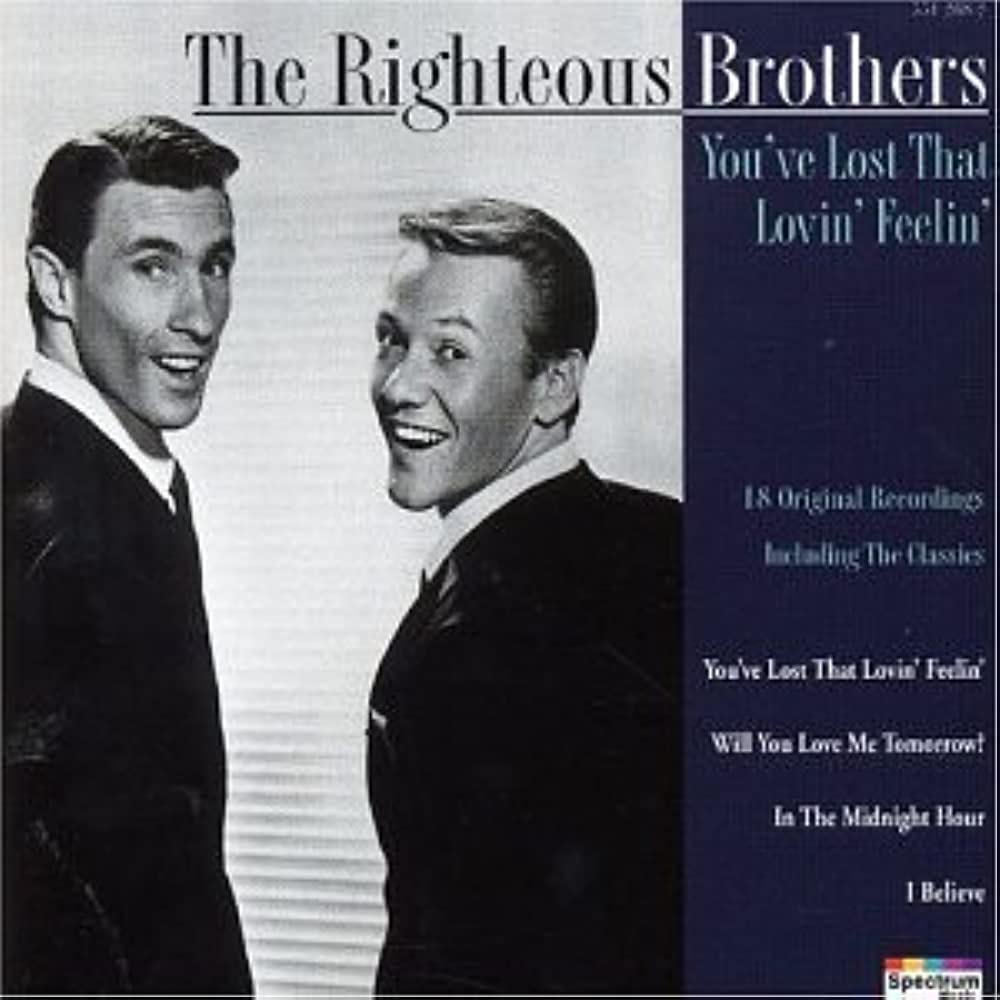
“You’ve Lost That Lovin’ Feeling,” The Righteous Brothers, 1964

Barry Mann and Cynthia Weil, the husband-and-wife songwriting team operating out of New York City’s famous Brill Building in the ’50s and ’60s, were asked by legendary L.A.-based producer Phil Spector to write songs for The Righteous Brothers, who had struggled for two years to chart a song in the Top 40. Spector heard the potential in their voices — Bobby Hatfield’s tenor and Bill Medley’s baritone — and knew they’d be big if only they had the right song and his production chops. “We loved the yearning and slow buildup of The Four Tops’ ‘Baby I Need Your Lovin’,’ which had just been released,” recalled Weil, “and we wanted to write something in that vein.” Mann came up with the great opening line, “You never close your eyes anymore when I kiss your lips,” and the story of heartbreak flowed from there through two verses and the chorus, but they turned to Spector for help with the bridge, which turned out to be the same chord progression as in “Hang On Sloopy.” He had Medley sing the verses alone, doing numerous takes on top of Spector’s trademark “wall of sound” instrumental layering. “I’d been through a breakup, so the aching emotion you hear was real,” said Medley. For the finished record, Spector chose to slow the tempo, which Mann objected to at first, but it made for a more dramatic, longer single, and it worked magnificently, reaching #1 in February 1965.

“Whole Lotta Love,” Led Zeppelin, 1969

“I came up with the opening guitar riff back in 1968 and I knew it was strong enough to drive the entire song,” recalls Jimmy Page. “It felt addictive, like this forbidden thing.” He had a master plan for it, which is why he didn’t rush to record it for Led Zeppelin’s quickly recorded debut LP in late ’68, instead working on it over the next nine months and saving it as the opening track for the band’s second album. As a former “studio brat” and session musician, Page loved to experiment with recording techniques, using different mikes to capture the drum sound he wanted from John Bonham. He also employed a new electronic instrument called a theremin during the free-form middle section, and had Robert Plant record his vocals in a separate booth to better isolate his voice. When Page later mixed the track with engineer Eddie Kramer, they worked with older equipment with rotary dials instead of sliding faders, which allowed them to send the guitar solo and vocals back and forth from one channel to the other, a radical tactic at the time. Plant, meanwhile, ruminated on what lyrics to sing and decided to lift lines from Muddy Waters’ 1962 blues tune “You Need Love,” which generated a lawsuit years later requiring back royalties and co-writing credit for Waters. Said Plant, “Page’s riff was Page’s riff. It was there before anything else. I just nicked the words, now happily paid for. We figured it was far enough away in time … but hey, you only get caught when you’re successful (“Whole Lotta Love” reached #4 in the US). That’s the game.”

“Rock the Boat,” Hues Corporation, 1974

If you’re not a fan of disco music, I guess you can blame it on The Hues Corporation, who came up with one of the first examples of the genre in 1973. Songwriter Wally Holmes had formed a soul/funk group he wanted to name Children of Howard Hughes but was advised against it, so he altered it to The Hues Corporation instead. “I would often write in terms of ‘do re mi’ and so on,” said Holmes. “Those kinds of things like ‘Row, Row, Row Your Boat’ tend to stick around for a long time, and ‘Rock The Boat’ came out of that, but it was written on the beat, so it was pretty stiff.” Producer John Florez agreed: “The first version was a dog that had nothing going on. I brought in arranger Tom Sellers, who had just come back from the Caribbean where he heard a dance beat that had an upbeat at the end of each measure. Then I brought in Joe Sample, Wilton Felder and Larry Carlton from the Jazz Crusaders and Jim Gordon on drums, and they laid down a groove with a backward beat, like a rumba.” The Hues Corporation vocalists laid their parts in on top, and with horns and strings added for the crowning touch, “Rock The Boat” had an irresistible dance-ability that DJs at New York underground clubs couldn’t resist. At RCA, they chose a different song as the group’s single, but word got out about how “Rock the Boat” was all the rage on dance floors. It was rush-released as a single, and by May 1974, it was #1 on pop charts. After that, many dozens of songs followed that mimicked the Sellers/Gordon beat and arrangement, and the disco era was born.

“Another Brick in the Wall (Part Two),” Pink Floyd, 1979

“I got criticized for writing an anti-education song,” said Roger Waters, “but it was never that. It was a protest song against the tyranny of stupidity and oppression, which I experienced at my high school in the ’50s. They were locked into the idea that young boys needed to be controlled with sarcasm and brute force to subjugate us to their will. I just wanted to encourage anyone who marches to a different drum to push back against those who try to control their minds, rather than to retreat behind emotional walls.” The concept behind “The Wall,” he said, was inspired by the barrier he felt had been erected between the artist and the audience at many of Pink Floyd’s concerts. He also wanted the music to graphically depict the alienation and isolation Waters had felt in his life. His father’s death at a young age became the first brick (Part One), while the stifling school experience (Part Two) was the second brick, and the character’s mental breakdown after his wife’s betrayal (Part Three) was the final brick. The Part Two track that became a #1 single for Pink Floyd in early 1980 was almost finished when engineer Nick Griffiths hit on the idea of recording children from a nearby high school adding their defiant voices on the chorus. When combined with a throbbing bass line, thumping drum beat, and David Gilmour’s sublime guitar solo, “Another Brick in the Wall” became something truly memorable.

“Time After Time,” Cyndi Lauper, 1983/4

Keyboardist Rob Hyman collaborated with singer Cyndi Lauper on this stunning track as the final song to be recorded for her landmark debut album, “She’s So Unusual.” Said Lauper, “We knew ‘Girls Just Want to Have Fun’ would be the first single, a bouncy tribute to the female spirit. But I wanted to write a song with Rob that would be a deeper, more heartwrenching ballad.” Hyman had a repetitive piano melody based on four chords, and Lauper had seized on the phrase “time after time” as a possible title after seeing a TV Guide listing for the 1979 film of that name. Words came out about the constancy of having someone’s back –“If you fall, I will catch you, I will be waiting time after time” — and as the serious lyrics took shape, they decided to reduce the tempo. “Even though we slowed down the music, the chorus retained that clipped, calypso-type melody, which worked perfectly,” said Hyman. Lauper’s song became a paean to female individualism and independence at just the right time, and it ended up at #1. An instrumental rendition of “Time After Time” was even recorded by legendary jazz great Miles Davis the following year.

“Nick of Time,” Bonnie Raitt, 1989

Writing songs from the heart that are commercially appealing is a rare gift, and Bonnie Raitt had struggled to come up with the right formula for years. By the mid-1980s, she took stock of her excessive partying and had what amounted to a spiritual awakening, giving her a renewed sense of optimism about her career. “I retreated to Mendocino to write some new music honoring how grateful I felt to have made it through tougher times,” she said. “I began thinking about the most poignant aspects of my life as I approached 40, and I tried to capture the essence of what my friends were going through as well. I realized this whole idea of time being more precious as we age would be what I wanted to write about.” The main theme — “I found love, baby, love in the nick of time” — was more about a universal love than romantic love but could be interpreted either way. Because the lyrics were so heartfelt, she felt the song needed a mid-tempo beat to deliver the message in a lighter, more pleasing way. “My demo of it was recorded with a drum machine that had pre-set synthesized grooves that were unintentionally hilarious to me,” Raitt said, but once she huddled with the great producer Don Was, he understood the soulful inspiration she was aiming for. He brought in drummer Ricky Fatter, “who knew how to translate the basic elements I had written to an updated organic feel.” The final result struck a chord and the “Nick of Time” LP reached #1 in early 1990, rejuvenating Raitt’s career.

*************************

Pretty good at making bad decisions

In life, there are so many factors that might lead to making ill-advised choices that it’s a wonder we make any good decisions at all.

Arrogance and overconfidence cause us to do things we wouldn’t otherwise do. So can stubbornness, inflexibility and apathy. Overwhelming emotions — fear, anger, greed, lust, guilt — can affect our thinking at precisely the wrong time. Impulsiveness, immaturity or ignorance can manipulate us in damaging ways when we need to make decisions with far-ranging consequences.

In the business world, these things can influence those in leadership positions, and the ramifications can affect the lives and livelihoods of hundreds, even thousands, of others.

For half a century, the rock music business has been populated with misguided executives and decision makers (sometimes the artists themselves) who chose courses of action which, over time, proved to be wrong-headed, even calamitous. Rolling Stone recently compiled a catalog of 30 stupid decisions in rock history, and from that list, I selected a dozen that struck me as particularly noteworthy.

******************************

Decca Records rejects The Beatles

Manager Brian Epstein had tried in vain to secure a record contract for The Beatles with a half-dozen different companies in 1961 but had no takers. Decca Records, to their credit, was the first to invite them in for a commercial test audition, at which they performed 15 songs, including three Lennon-McCartney originals. A month later, Decca sent word to Epstein that they weren’t interested, saying, “The Beatles have no future in show business. Guitar groups are on the way out.” It’s unclear which individual at Decca had the final say on rejecting the group that would soon change the face of pop music, but there’s no question Decca missed out on many millions because someone there couldn’t hear the potential in those early recordings. Decca ended up signing The Tremeloes instead, who scored a few hits in the ’60s but had only a fraction of the impact and influence The Beatles had. (A couple months later, George Martin at EMI Records’ Parlophone label liked what he heard and signed the Liverpool foursome, and we all know how their chemistry worked out.)

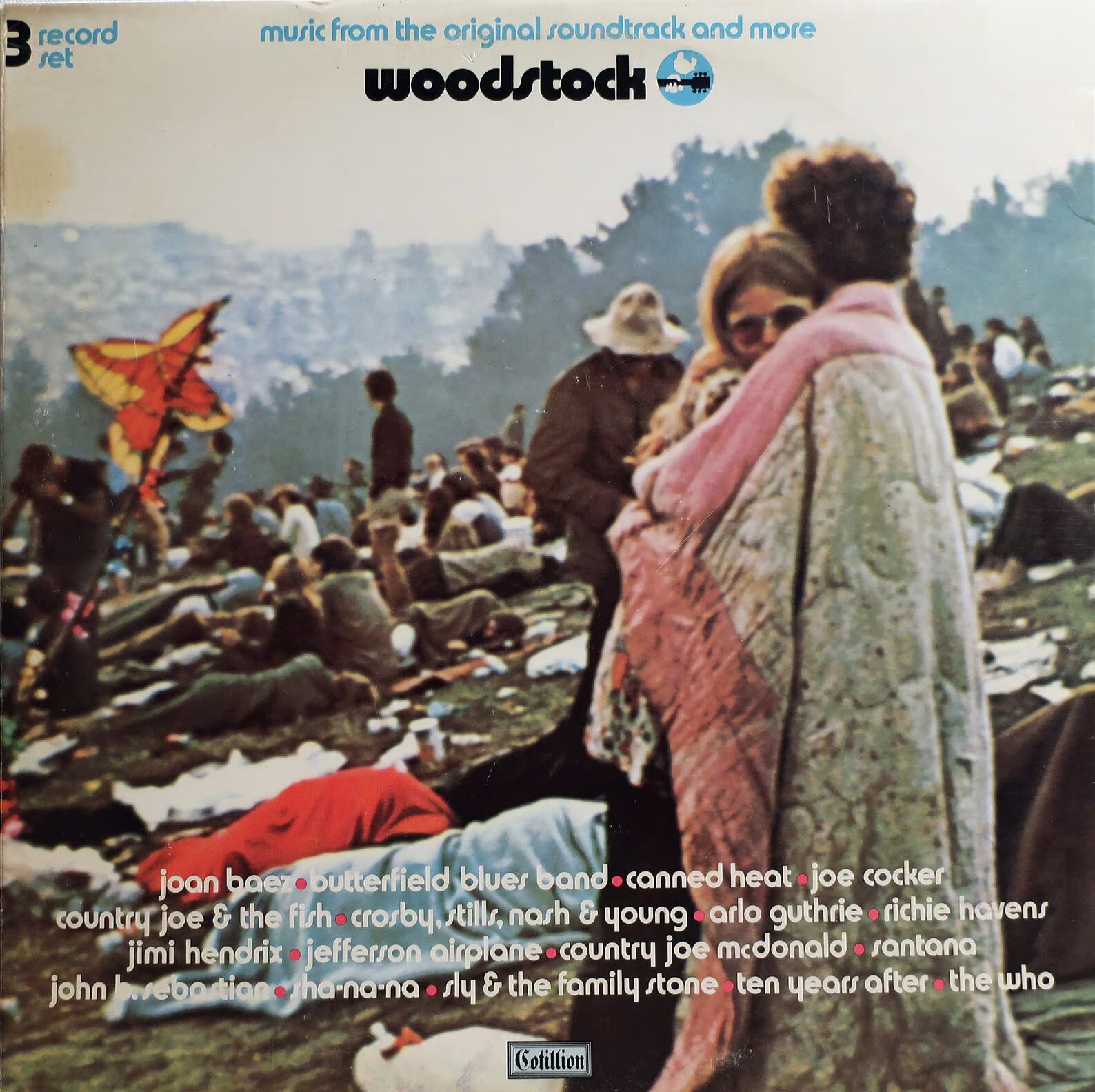
Bands refuse to be on “Woodstock” album or film

More than 30 musical acts performed at the Woodstock Music and Arts Fair in August 1969 in upstate New York, and several of them — especially Crosby, Stills and Nash, Joe Cocker, The Who, Santana and Sly and the Family Stone — benefited in a big way from their participation because they agreed to be included in the Michael Wadleigh documentary film and the triple-album release, which were both big commercial successes. Other bands, however, made the boneheaded decision to refuse permission to use their performances on the record or in the movie. Blood, Sweat and Tears, Creedence Clearwater Revival, Mountain and The Grateful Dead all said no, which denied them the exposure to the much broader audience that saw the film and bought the album. Leslie West, Mountain’s guitarist, said the band played a strong, hard-rocking set on Day Two, but he never got a satisfactory answer as to why the group’s manager chose not to sign off on the contract. “Who knows? Maybe he asked for too much money,” he said years later, no doubt wondering how a different decision might have changed the band’s career arc in the ensuing years.

Prince’s “Love Symbol” replaced his name

The Artist Now Known as an Unpronounceable Symbol

Prince was a wildly prolific artist, recording many dozens of songs and compiling them into albums, but Warner Brothers, his record company, was reluctant to “flood the market” with too many releases and held them back. By 1993, Prince said he felt like “a slave” and, in hopes of nullifying his contract, changed his name to a “Love Symbol” that combined the symbols for man and woman with something resembling a trumpet. Warner Bros. started calling him “The Artist Formerly Known as Prince,” and the whole thing ended up confusing and/or alienating some of his fans, and sales suffered. By 2000, he changed his name back to Prince and admitted the stunt hadn’t worked out as intended.

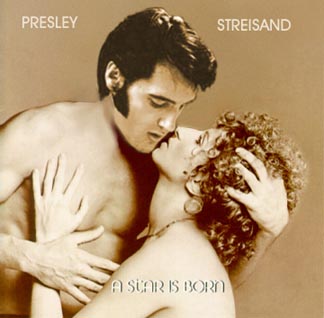
A mock-up cover of what might have been

Elvis misses out on “A Star is Born” opportunity

In 1976, singer/actress Barbra Streisand and then-partner Jon Peters were eager to revive the Hollywood classic “A Star is Born,” reimagining it for the music business instead of the film industry. Streisand would play the budding young singer on her way up, and she and Peters set their sights on Elvis Presley to play the part of the past-his-prime rock star. Presley, who had made a handful of decent movies amidst a raft of bombs throughout the ’60s, allegedly showed real interest in the project, but his notoriously greedy, controlling manager, Colonel Tom Parker, stood in the way. Parker decided to ask for too much money and insisted that Presley receive top billing, and that the story must tone down the characterization of of Presley as “washed up.” The producers, put off by these excessive demands, turned their attentions elsewhere, eventually casting singer Kris Kristofferson instead. The film and soundtrack album were both enormous box office and pop chart successes, which would have been a real shot in the arm for Presley, who needed a win at that point in his life. Less than a year later, Presley was dead.

Wright, Gilmour and Mason without Waters, 1987

Roger Waters underestimates the rest of Pink Floyd

As the runaway successes of “Dark Side of the Moon,” “Wish You Were Here,” “Animals” and “The Wall” made Pink Floyd one of the top rock acts in the world, relations between chief songwriter Roger Waters and the other band members deteriorated. By 1984, David Gilmour, Nick Mason and Rick Wright found Waters’ ego insufferable, and Waters decided he’d had enough of their lack of gratitude for his talents and chose to leave for a solo career. He felt he WAS Pink Floyd, and without him, the group would simply fold. But he miscalculated how much cachet the Pink Floyd brand had, and the fact that the group had been essentially a faceless entity. Many fans didn’t know or care about a solo career from any of these guys, just “more Pink Floyd.” Consequently, when they went on tour simultaneously in 1987, ticket sales were tepid for Waters while the band sold out arenas everywhere. Waters remained bitter for decades and has remained estranged from Pink Floyd except for only a couple of one-off appearances.

The Bee Gees and Frampton in Pepper outfits

“Sergeant Pepper: The Musical”

In 1978, Peter Frampton and The Bee Gees were riding high on two of the best selling albums of all time: “Frampton Comes Alive” and the “Saturday Night Fever” soundtrack. Bee Gees manager Robert Stigwood convinced the two superstar acts to join forces for a “jukebox musical” film loosely based on the songs from The Beatles’ watershed 1967 LP “Sgt. Pepper’s Lonely Hearts Club Band.” They could’ve said no, but they went along with it, despite a lame script and substandard re-imaginings of Beatles songs for the soundtrack. Critics pounced, and a case could be made that the reputations of both acts never fully recovered from the ill-advised project. They could’ve said, “We goofed on that one,” but the damage was done, thanks to pre-release comments liked this one from Robin Gibb: “Kids today don’t know the Beatles’ ‘Sgt. Pepper,’ and when they see the film and hear us doing it, that will be the version they relate to and remember. The Beatles no longer exist as a band and never performed ‘Sgt. Pepper’ live, so when ours comes out, it will be as if theirs never existed.” The arrogance was breathtaking.

The Beach Boys take a pass on Monterey Pop

The Monterey Pop Festival, which preceded Woodstock by two years, had a little something for everybody: psychedelia (Jimi Hendrix, Grateful Dead), folk rock (Simon and Garfunkel, The Byrds) sunny pop (The Mamas and The Papas, The Association), blues (Janis Joplin), jazz (Hugh Masakela) and soul (Otis Redding). It was a gentle, tolerant audience eager to hear a broad array of groovy music. Even though Brian Wilson served on the festival board, and “Good Vibrations” had been a #1 hit only six months earlier, The Beach Boys reached the curious conclusion that they somehow wouldn’t fit in and chose to take themselves out of the lineup. Mike Love has said they feared they might seem outdated when seen up against the edgier, newer acts of that “Summer of Love.” They still had good music ahead of them, but they missed a prime chance to claim their place in the pantheon and still be considered truly hip members of the rock/pop music scene rather than an oldies act in the years ahead.

Jerry Lee and Myra Lewis, 1958

Pioneer rocker takes 13-year-old cousin/bride on European tour

Jerry Lee Lewis was right up there with Chuck Berry, Buddy Holly and Elvis as one of the trailblazers of rock ‘n’ roll in 1955-1958. “Great Balls of Fire,” “Breathless” and “Whole Lotta Shakin’ Going On” became iconic musical milestones of that era. But Lewis seriously misjudged the public’s mood and moral judgment when he headed off for his first tour of Great Britain. The press quickly learned that the woman by his side, Myra, was not only his third wife in six years, she turned out to be his first cousin…and she was only 13. In his home state of Louisiana, this might’ve been legal and no big deal, but in England and the rest of the United States, this was shocking and unacceptable. The tour was canceled after only a couple of shows, and Lewis struggled mightily on the charts and on the road for many years afterwards. He eventually had some success as a country artist and on the ’50s nostalgia package tours, but the scandal followed him for the rest of his days.

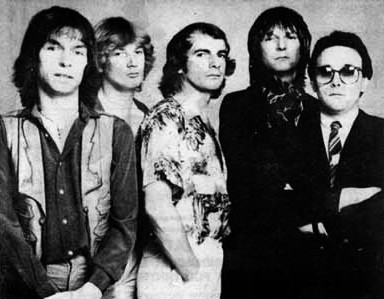
Howe, Downes, White, Squire and Horn as Yes, 1980

The Buggles join Yes

By 1979, with New Wave and disco holding sway on the charts, progressive rock as a genre seemed to be way out of fashion, which posed a dilemma within the ranks of Yes. Vocalist Jon Anderson and keyboardist Rick Wakeman preferred lighter, more folk-oriented material, while guitarist Steve Howe, bassist Chris Squire and drummer Alan White leaned toward harder arrangements, which proved to be an irreconcilable difference that sent Anderson and Wakeman packing. Yes’s manager, a guy named Brian Lane, was also managing an act called The Buggles, who had a big New Wave hit in the UK with “Video Killed the Radio Star.” Since Yes had upcoming tour dates and needed a new album out beforehand, Lane suggested bringing Buggles principals Trevor Horn and Geoff Downes into Yes to flesh out and update the group’s sound. The resulting LP “Drama” was an unwelcome departure, and when Yes took the stage with two new people out front, fans balked. “It was a nightmare,” conceded Squire, and Yes broke up for several years. When they reformed in 1983, Anderson was back as lead singer.

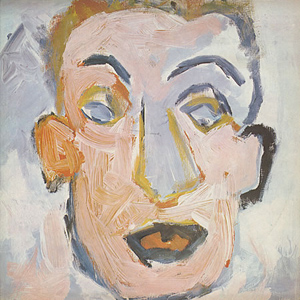
Bob Dylan’s “Self-Portrait”

For the first decade of his distinguished career, Bob Dylan wrote and recorded game-changing songs featuring profound lyrics that captured the changing times better than any other artist. By 1970, though, he was sick to death of the “voice of a generation” label that had been pinned on him, so he made a drastic move that can only be viewed as foolhardy in retrospect. “I said, ‘Well, fuck it, I wish these people would just forget about me,'” he said in 1984. “I wanna do something they can’t possibly like, they can’t relate to at all.” The result was “Self Portrait,” a double album comprised almost entirely of covers made almost unlistenable by uncharacteristic strings and choirs. He said it was intended as a cruel joke but it backfired when the press and the public crucified him for it. “The album went out there, and the people said, ‘This ain’t what we want,’ and they got more resentful.” It took him a few years to fully rebound from that move.

A Taste of Honey win Best New Artist Grammy, 1979

The Grammys overlook bonafide artists for one-hit wonders

Over the years, those who cast votes in The Grammys have shown themselves to be hopelessly out of touch, and nowhere more so than in the Best New Artist category. Too often, this award has gone to someone who had one popular hit single and then was barely ever heard from again. In the 1970s, this happened almost every year, as major rock bands who were truly groundbreaking and far more worthy were passed over for a “flavor of the month” group that had one big hit and then vanished. In 1977, it was Starland Vocal Band (“Afternoon Delight”) over Boston; in 1978, it was Debby Boone (“You Light Up My Life”) over Foreigner. The most embarrassing example came in 1979, when A Taste of Honey (“Boogie Oogie Oogie”) inexplicably triumphed over legitimate contenders Elvis Costello, The Cars and Toto. Good grief, what a colossal error.

Hells Angels picked to provide security at Altamont concert

To close out their U.S. tour at the end of 1969, The Rolling Stones hoped to capitalize on the rock-festival vibe then in vogue by staging a free concert in San Francisco’s Golden Gate Park, but they hadn’t planned sufficiently and were forced to move the event to Altamont Speedway, an auto racing venue 40 miles east of Oakland. Inadequate water supplies, food and toilet facilities made for a surly mood, and with a stage barely three feet high, security became a crucial component. Bay Area bands like Jefferson Airplane and The Grateful Dead suggested the violence-prone Hells Angels, a dangerous idea by all accounts, and the Stones, as headliners, inexplicably signed off on it. The biker group, juiced up on too much booze and drugs, manhandled concertgoers and beat one man to death in view of a film crew as Mick Jagger and the band played “Under My Thumb.” It was a horrible decision that led many observers to label the event “the end of the Sixties peace-and-love dream.”