All under one roof

The generally accepted narrative of rock and roll’s first decade goes something like this:

1955-1958:  Chuck Berry, Elvis Presley, Carl Perkins, Jerry Lee Lewis, Little Richard, Buddy Holly and others successfully merged blues, country, gospel and swing into an exciting new hybrid dubbed rock and roll, which was embraced by teenagers coast to coast and sold millions of records in that period.  But plane crashes, arrests, military service and a conservative backlash combined to stymie careers and quash the momentum of rock and roll’s early successes.

1964-1969:  The arrival of The Beatles and other British bands heralded a resurgence of vibrant rock music, which grew exponentially through the rest of the ’60s, with such sub-genres as garage rock, psychedelic rock, blues rock and country rock each enjoying growth and popularity.

The era between those two periods is typically disparaged as a forgettable wilderness during which rock had become tame and whitewashed, dominated by non-threatening teen idols and “girl groups.”  

While there is truth in these generalizations, the early ’60s period certainly had its stellar moments, thanks in large part to the songwriting teams employed in New York City publishing companies who churned out many dozens of classic tunes that dominated the airwaves of that relatively innocent era when lyrics focused on idealized romance and adolescent anxieties.
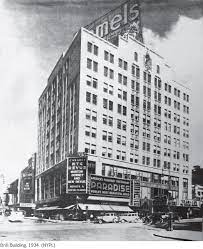
One such publishing Mecca was known as the Brill Building, a Midtown Manhattan structure that housed dozens of music publishers, all competing to come up with the next big hit for the nation’s pop music charts.  Although songwriters worked in a number of different buildings in the city, it was the 11-story office tower at 1619 Broadway near 49th Street that became known as the epicenter of the music industry for many years, serving as a magnet for the most prolific and successful pop music composers of that period.

If you were a musician at the Brill Building in, say, 1962, you could pick out a brilliant new pop song, have it arranged, cut a demo, and make a deal with radio promoters — all under this one famous roof. The 11-story, Art Deco Brill Building — 1619 Broadway, at 49th St. — became known as a one-stop shop for recording artists, but above all as an almost mythical place for songwriting.

Here, hundreds of high-quality hits were cranked out in an almost assembly-line fashion for girl groups, R&B luminaries, teen idols and more. Together, Brill Building songwriters conjured up a soundtrack for the “Mad Men” era — a playlist that in many cases would prove timeless. Granted, these writers turned out their share of teen-oriented drivel, but at their best, they married the excitement and urgency of rhythm-and-blues music to the brightness of mainstream pop.

The roster of songwriting talent under contract there was fairly astonishing:  Carole King, Gerry Goffin, Burt Bacharach, Hal David, Neil Sedaka, Howard Greenfield, Barry Mann, Cynthia Weil, Jeff Barry, Ellie Greenwich, Neil Diamond, Mort Shuman and Doc Pomus.  Readers surely recognize names like Carole King, Neil Sedaka, Burt Bacharach and Neil Diamond because they went on to become accomplished performing artists in their own right, but the others worked in relative anonymity even as they composed some of the most popular songs in American music history.
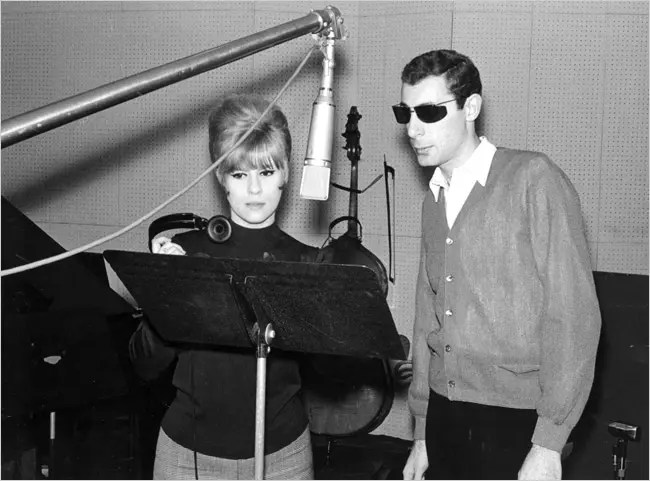
Let’s consider Jeff Barry and Ellie Greenwich, one of three Brill Building songwriting teams comprised of married partners.  In the tradition of the earlier Tin Pan Alley period of the ’30s and ’40s and early ’50s, these teams would split duties, with one composing the music while the other came up with the lyrics.  Together, Barry and Greenwich pooled their talents, and the result was an impressive list of chart successes recorded by various artists of that time:  “Da Doo Ron Ron” and “Then He Kissed Me” by The Crystals;  “Be My Baby” and “Baby, I Love You” by The Ronettes;  “Chapel of Love” and “People Say” by The Dixie Cups;  “Maybe I Know” by Lesley Gore;  “Leader of the Pack” by The Shangri-Las;  “Do Wah Diddy Diddy” by Manfred Mann;  “Hanky Panky” by Tommy James and The Shondells;  and “River Deep – Mountain High” by Ike and Tina Turner.

Barry Mann and Cynthia Weil, another prolific married couple who worked in the Brill Building for a few years, generated many hit singles in the ’60s, ’70s and ’80s, none more famous than The Righteous Brothers’ two monumental #1 hits, “You’ve Lost That Lovin’ Feeling” and “(You’re My) Soul and Inspiration.”  The songwriting duo also penned “On Broadway,” a smash for The Drifters and, later, George Benson; “Kicks” and “Hungry,” both Top Ten hits for Paul Revere and The Raiders;  “We Gotta Get Out of This Place” by The Animals; “Uptown” and “He’s Sure the Boy I Love” by The Crystals; “My Dad” by Paul Petersen; “I Just Can’t Help Believing” and “Rock and Roll Lullaby” by B.J. Thomas.  In the late 1980s, two of their songs — “Somewhere Out There” by Linda Ronstadt and James Ingram, and “Don’t Know Much” by Ronstadt and Aaron Neville — won major Grammy awards.

Weil died in June of this year at age 82.

The Gerry Goffin-Carole King song catalog is probably the most well known of the Brill Building successes, thanks to the recent popularity of the stage show “Beautiful” about Carole King’s life.  Together, they wrote these Top Ten hits:  “Will You Love Me Tomorrow” by The Shirelles; “Take Good Care of My Baby” by Bobby Vee;  “The Locomotion” by Little Eva;  “Up on the Roof” and “Some Kind of Wonderful” by The Drifters;  “Go Away Little Girl” by Steve Lawrence;  “One Fine Day” by The Chiffons;  “Chains” and “Don’t Say Nothing Bad About My Baby” by The Cookies;  “I’m Into Something Good” by Herman’s Hermits;  “Don’t Bring Me Down” by The Animals;  “Pleasant Valley Sunday” by The Monkees and “(You Make Me Feel Like) A Natural Woman” by Aretha Franklin.     
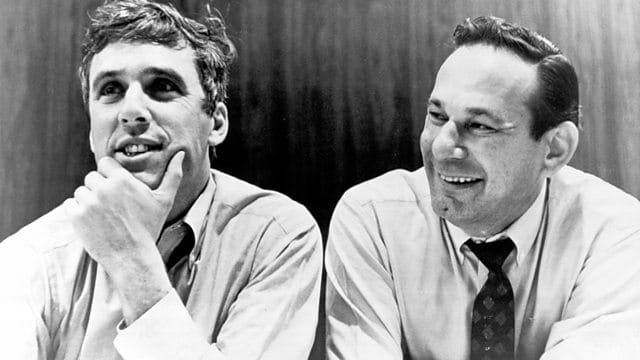
I’ve written recently about the many hits by Burt Bacharach and Hal David, in the wake of Bacharach’s death earlier this year:  “What the World Needs Now is Love,” “(They Long to Be) Close to You,” “I Say a Littler Prayer,” “The Man Who Shot Liberty Valance,” “Do You Know the Way to San Jose,” “Raindrops Keep Falling on My Head,” “Walk On By,” “One Less Bell to Answer,” “This Guy’s in Love With You.”  
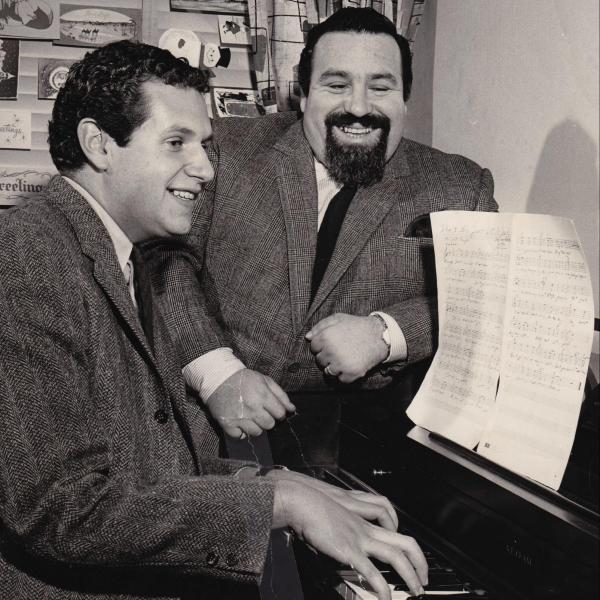
Mort Shuman and Doc Pomus found Top Ten success as a team beginning in 1958 with “A Teenager in Love” by Dion and The Belmonts, followed by “This Magic Moment,” “I Count the Tears,” “Sweets for My Sweet” and “Save the Last Dance for Me” by The Drifters;  “Surrender,” “Little Sister” and “His Latest Flame” by Elvis Presley; and “Can’t Get Used to Losing You” by Andy Williams.
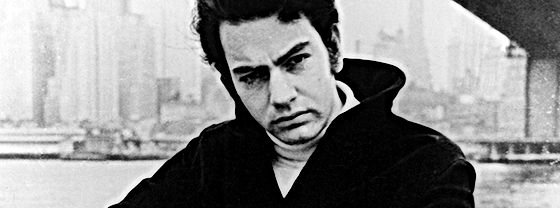
Neil Diamond, of course, wrote “I’m a Believer” and “A Little Bit Me, A Little Bit You” for The Monkees, plus dozens more that he recorded himself (“Cherry Cherry,” “Shiloh,” “Kentucky Woman,” “Holly Holy,” “Solitary Man,” “Thank the Lord for the Night Time”). 
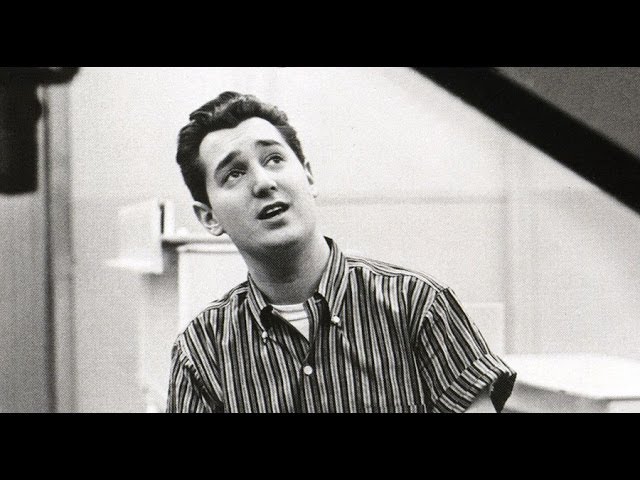
Neil Sedaka, too, composed many songs (sometimes with Howard Greenfield) while working as a Brill Building professional songwriter, but he recorded all of them himself simultaneously during that early ’60s period (“Oh Carol,” “Calendar Girl,” “Happy Birthday Sweet Sixteen,” “Breaking Up is Hard to Do”).

The whole environment was creatively charged, said King in 1978. Some of the music publishers, notably impresario Don Kirshner, would pit one songwriter against another to have them compete for whose song would be selected by the performing artist he had in mind. “It was a pressure cooker,” said King, “but kind of in the same way that pressure cookers can produce fabulous meals, the system often pushed us to do our best work.”

I recommend you check out Ken Emerson’s 2006 book “Always Magic in the Air: The Bomp and Brilliance of the Brill Building Era,” which goes into great detail about the amazing Brill Building songwriters and the songs they created. Admittedly, some of the tunes listed above haven’t aged well.  Indeed, some were even kind of cringeworthy at the time (“My Dad” by Paul Petersen?), but most are worthwhile entries in any rock music history lesson, and have been revisited and covered by other artists in subsequent decades.
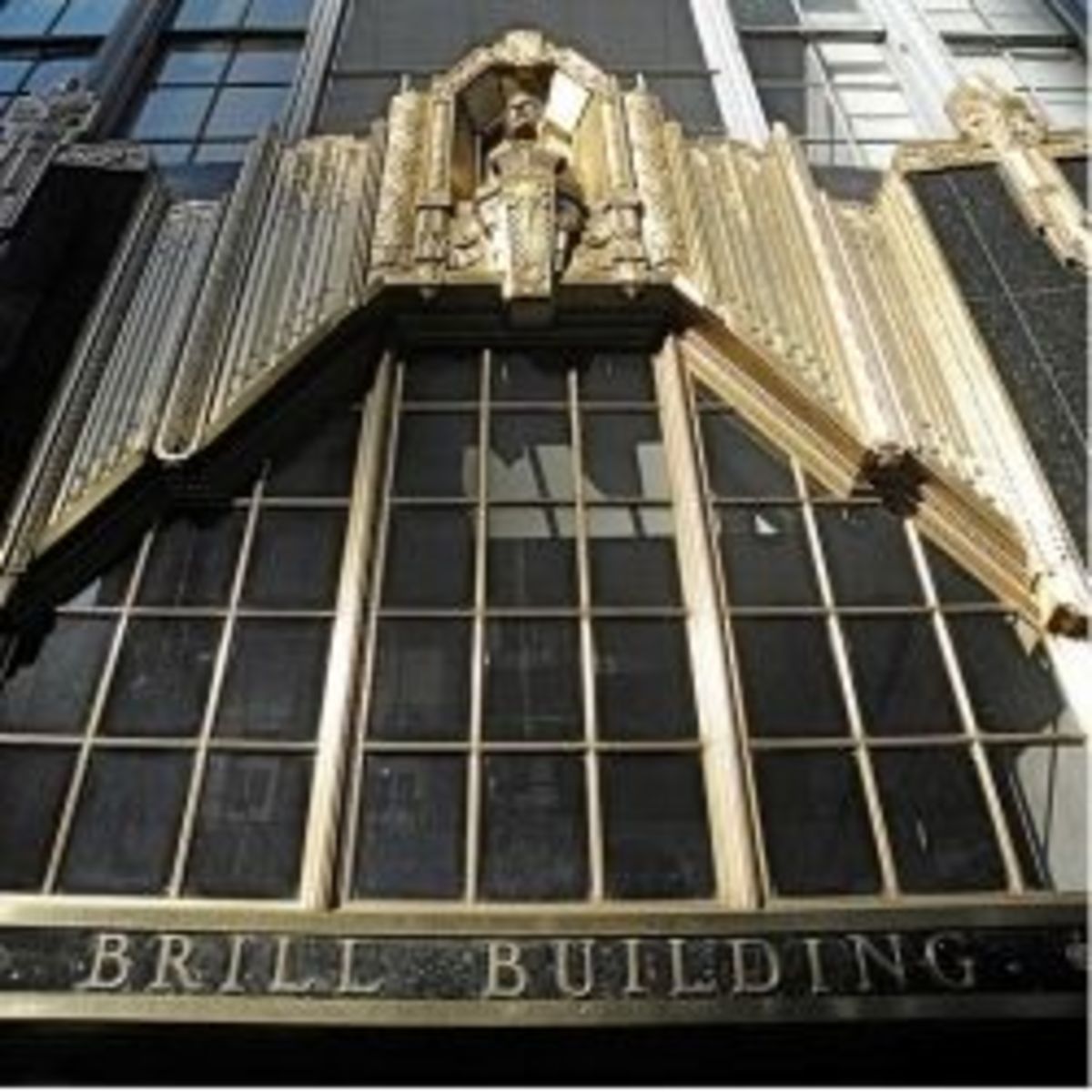
So, a tip of the hat to the Brill Building, still around today, for providing the environment where these songwriting teams could work their magic in a 9-to-5 setting!

**************************
All alone at the end of the evening

September 1977. The Eagles were on top of the world, with their multi-platinum #1 album “Hotel California,” a string of Top Five singles, and sold-out concert venues wherever they appeared. But the group’s bassist/singer didn’t really want to be there anymore and, as it turned out, the rest of the group didn’t seem to want him around anymore either.

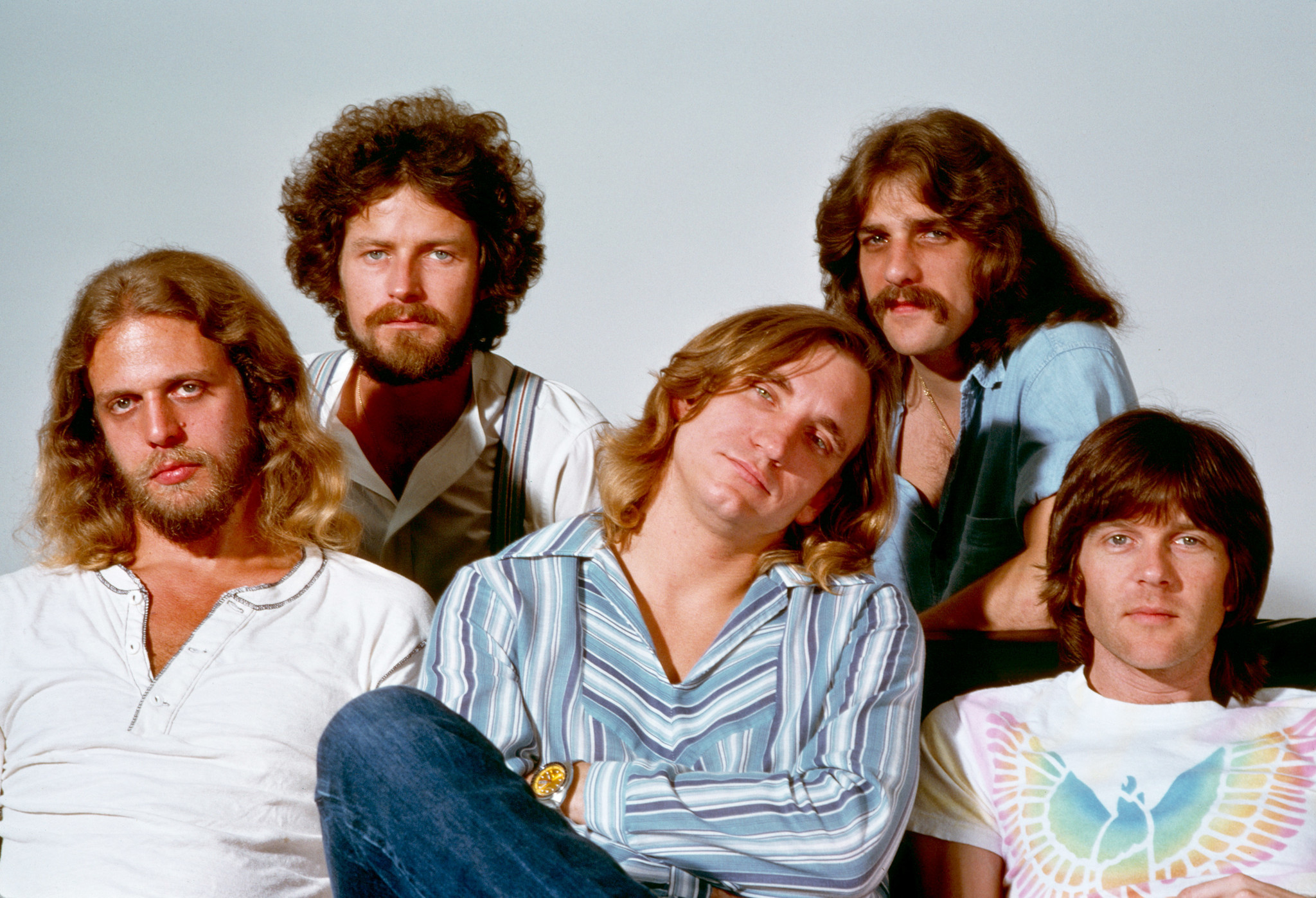
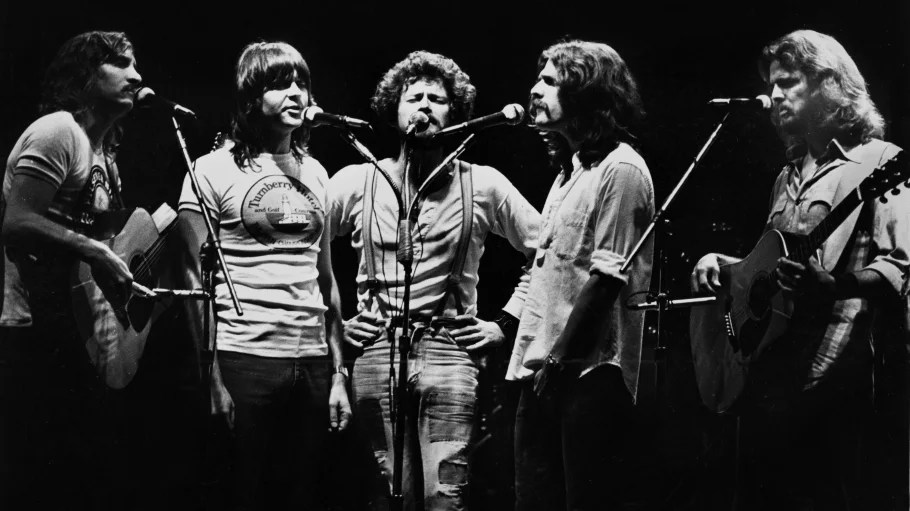
The Eagles in 1977: Joe Walsh, Randy Meisner, Don Henley, Glenn Frey, Don Felder

“I was always kind of shy,” said Randy Meisner, a founding member of The Eagles back in 1971, “so I didn’t like being in the spotlight. It made me uncomfortable.” That hadn’t been a problem when he was merely playing bass and adding harmonies to group vocals, but then “Take It to the Limit,” his song from the band’s 1975 LP “One Of These Nights,” became a Top Five hit and a highly anticipated part of their concert setlist, often as an encore.

Gifted with a high tenor voice, Meisner sometimes found himself dreading singing the song because it required him to hit several very high notes, and he wasn’t always confident of his ability to hit them cleanly. One night in June 1977, backstage in Knoxville, the band had already played three encores, but the crowd was screaming for more, and Glenn Frey thought they should do Meisner’s song as the final selection. Meisner refused.

Frey tried to reassure him: “It’ll be okay, you can sing it. Let’s go back out and do it.” Meisner was adamant. “No man, I’m not gonna sing the fucking song.”

Frey was livid. “You pussy!” he screamed, inches from his face. Meisner took a swing at him, and although security personnel quickly broke up the fight, the damage was done.

As Don Henley put it, “He was a hypersensitive guy, and at that point, there was always something wrong for him. ‘We’re touring too much. I’ve got to go home to my wife. I can’t take this life on the road.’ When he was feeling good and everything was right with the world, he was a great guy and fun to hang out with, and of course, he was a fine singer. But he would descend into this dark place. It got to be too much.”

The tour continued for another dozen dates, but then, as Meisner remembered, “When the tour ended, I left the band. Those last days on the road were the worst.  Nobody was talking to me, or would hang out after the shows, or do anything with me.  I was made an outcast of the band I’d helped start.”

Meisner, who died last week of chronic obstructive pulmonary disease at age 77, said he was glad to have been a part of The Eagles’ story, but he had grown tired and frustrated that “our tight little family had turned into a cold business.”

From many accounts, Frey and Henley, as the band’s chief songwriters and lead singers, had evolved into insufferable control freaks who insisted on calling all the shots.  Making matters worse, they were overly competitive with each other and often communicated only through intermediaries.  It’s not for nothing that the group was sometimes derisively referred to as The Egos.

“There was so much discontent over everything,” Meisner said, “from salaries to hotel accommodations to setlists.  It got real difficult.  The fact that we were all doing a lot of coke and drinking too much didn’t help.  Don would get real bossy, and others would sometimes just laugh it off, but I couldn’t.  I was there from the beginning and didn’t appreciate the star trip he was on.”

***********************

The “beginning” Meisner referred to was in 1971, when guitarist Frey and drummer Henley were first jamming together and ended up becoming part of Linda Ronstadt’s back-up band during her initial modest success at The Troubadour and other L.A. clubs.  Frey’s R&B/rock background growing up in Detroit, and Henley’s country roots coming out of small-town Texas, provided an interesting contrast, and they were eager to form their own band.

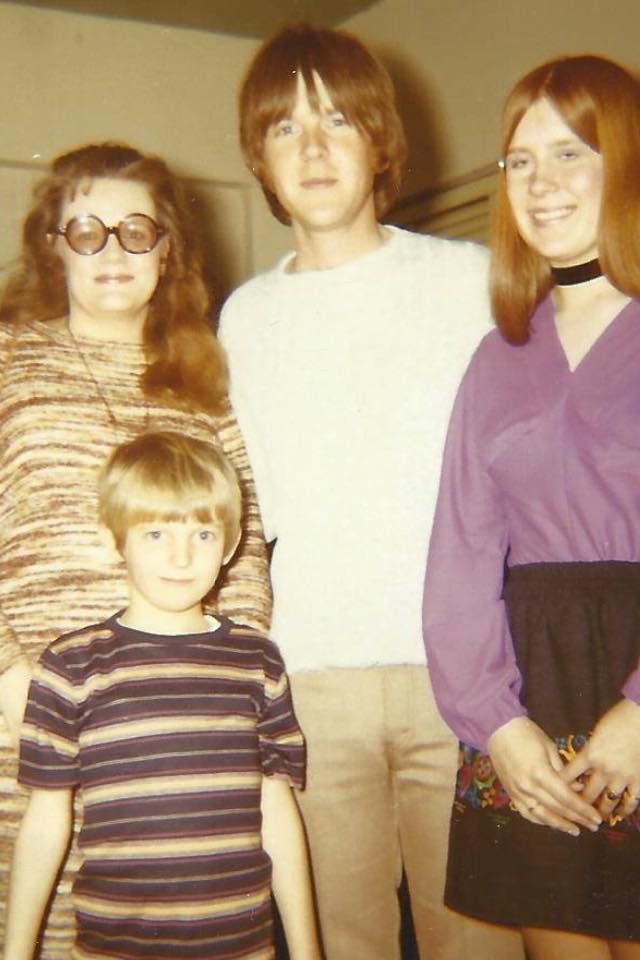
Meisner in the early 1960s with family members

Meisner’s own beginning goes back to a farm in Nebraska, where his parents were sharecroppers, and he fell in love with music through TV (Elvis Presley on “Ed Sullivan”) and a grandfather who played the violin.  “Playing guitar and bass was the only thing I knew how to do,” said Meisner in Marc Eliot’s 1998 book “To the Limit: The Untold Story of The Eagles.”  A high-school dropout who never attended college, Meisner knew that “music was the only thing for me.  I taught myself scales, and chords, and put together a few bands and played at local dances.”

At a talent contest in Denver in 1964, he was invited to sit in on bass and vocals with The Soul Survivors, which turned into a bigger offer to tour with them, opening for an LA-based band called The Back Porch Majority.  “We headed for the West Coast, where we all nearly starved to death.  But we landed a contract with Loma Records, a subsidiary of Atlantic, and at their offices, I met and became friendly with Buffalo Springfield — Richie Furay and Steve Stills, mostly.”

The Soul Survivors struggled, bouncing back and forth between Colorado and California, eventually going through personnel changes and renaming themselves (aptly) The Poor.  Meisner and The Poor eked out a meager living on the fringes of the L.A. scene until 1968, when Meisner was asked to replace Jim Messina in Buffalo Springfield.  He passed the audition, but before a single gig occurred, the band dissolved, with Messina and Furay combining forces with pedal steel guitarist Rusty Young in a new band they called Poco.  Meisner, along with drummer George Grantham, were brought in to round out the group.

The country rock scene was in its formative stages, with The Byrds’ “Sweetheart of the Rodeo” and Bob Dylan’s recent records leading the way. Poco relished the idea of “using country instruments and flavorings in a rock band,” as Messina once put it, and the group’s debut performance at The Troubadour in November 1968 was widely praised and led to a contract with Epic Records. Their debut LP was entitled “Pickin’ Up the Pieces,” which referred to picking up the pieces of Buffalo Springfield and starting anew.

Debut album cover with Meisner replaced by dog

But in an incident that presaged Meisner’s difficulties with Frey and Henley in The Eagles, Meisner found himself shut out from mixing sessions for the album, as Furay and Messina insisted on handling that responsibility themselves. Poco was their baby, and no matter how talented a bass player and backup singer Meisner was, they felt he was just a hired hand. “I said I wanted to be involved,” he recalled. “I said, ‘Hey, I’m a musician, and I played on it, too.’ They said, “No, no, we never allow anyone in when we’re mixing.’ So I said, ‘If that’s the way it is, then I don’t feel like being part of the band.’ They said okay, and that was that. I was stubborn, I guess, but felt I had the right to be there.”

On the album, released in 1969, you can hear Meisner’s bass parts and high vocals on several tracks, but his name was nowhere to be found on the credits, and they even replaced him on the cover drawing with an illustration of a dog. “I’d sung lead on a couple songs, but they took my voice off,” he noted. “I didn’t talk to those guys for nearly twenty years after that,” he said.

Meisner was replaced in Poco by another bass-playing high-tenor singer named Timothy B. Schmit. Ironically, the same personnel change would happen eight years later when Meisner left The Eagles.

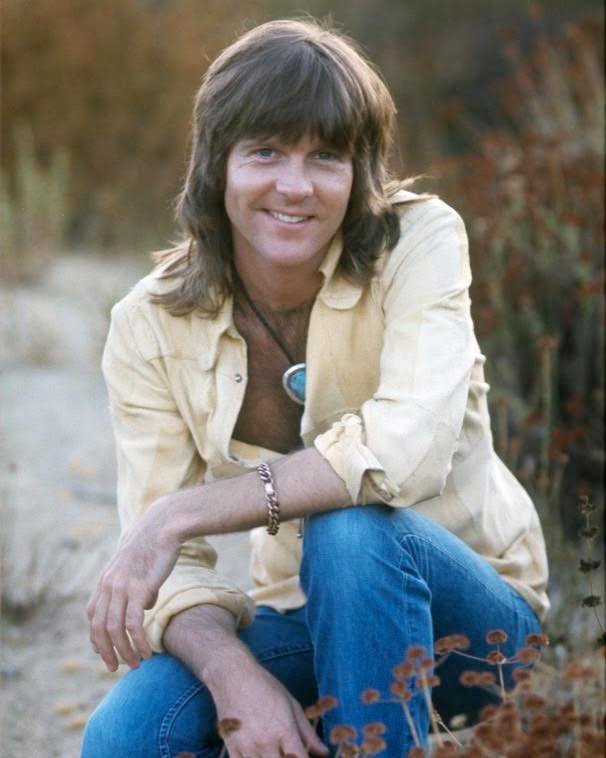
Meisner (far right) with Rick Nelson’s Stone Canyon Band

Dejected and disillusioned, Meisner considered packing it in and returning to Colorado, but he was approached by none other than Rick Nelson, the former teen idol from “Ozzie and Harriet” TV fame, who had attended Poco’s Troubadour show and was forming what became the Stone Canyon Band. Meisner enthusiastically signed on and became part of the touring band for the next two years, contributing significantly to a couple of Nelson’s LPs, especially 1971’s “Rudy the Fifth.”

Meanwhile, Frey and Henley had pulled their own band together, but gigs were sporadic and the bassist quit, so they recruited Meisner, who they’d seen multiple times at The Troubadour and was, at that point, the closest of any of them to a proven rock star. The final piece of the puzzle fell into place when they signed up veteran country rocker Bernie Leadon, a multi-instrumentalist who had been with Gram Parsons in The Flying Burrito Brothers.

They chose Eagles as their name because they liked the flight imagery, the mythological connotation and the fact they were from all over America (Michigan, Texas, Nebraska and Florida). Their debut LP, recorded in England under the tutelage of veteran producer Glyn Johns, included two Top Ten hits (“Take It Easy” and “Witchy Woman”) and Meisner’s first three attempts at lead vocals — “Most of Us Are Sad,” “Take the Devil” and “Tryin’,” the latter two also written by him.

The four original Eagles in 1972: Leadon, Henley, Meisner, Frey

Songwriter J.D. Souther, a close friend of The Eagles in the early days and pretty much ever since, summarized the founding members’ contributions. “When they came together, they were Glenn’s band. He brought that R&B sensibility and was also a natural country singer. We used to call Don the “secret weapon,” sitting back there behind all those drums with that insanely beautiful voice. Bernie was probably the most talented musician of all of them. He could play anything — guitar, banjo, mandolin, pedal steel.

As for Meisner, Souther said, “Randy was a very important part as well. It would never have been the same band without him. His singing on the high end was unlike any other sound, and he helped define a style of songwriter-rooted bass playing. He always managed to make a nice melody under what the others were doing.”

While The Eagles’ first effort met with commercial success, their follow-up, the “cowboy outlaw” concept project called “Desperado,” did not, at least not until years later. Meisner’s contributions included “Certain Kind of Fool” and the marvelous ballad co-written with Henley, “Saturday Night.”

The band beefed up its sound and its rock-band credentials by adding guitarist Don Felder in 1974 for their third LP, “On the Border,” where Meisner’s only track was the lackluster “Is It True?” (although he sang lead on “Midnight Flyer”). The group may have been eager to be recognized as a rock band, but their first #1 single turned out to be “The Best of My Love,” a countryish original that sounded more like the material on their first album.

The evolution from country to rock continued with “One Of These Nights,” which served to frustrate Leadon’s preference for country. Despite the new album (and single) hitting #1 and establishing The Eagles as an arena-filling entity, Leadon had had enough. In the final transition from country outfit to rock band, The Eagles hired gunslinging guitar hero Joe Walsh to replace Leadon.

Meisner benefitted financially from the royalties afforded by “Take It to the Limit”‘s chart success, but as The Eagles became internationally famous, he found himself partying too much and no longer enjoying his role in the juggernaut. He wrote “Try and Love Again,” viewed by many critics as the sleeper gem on the multi-platinum “Hotel California” LP, but he was unhappy with the changing dynamics in the band’s inner workings.

Said manager Irving Azoff in Eliot’s book, “In truth, Randy had become a major pain in the ass, and I think he knew it. He was probably looking for a way to leave, and that night in Knoxville, he found it.”

After his departure from The Eagles, Meisner went on to release a half-hearted solo album (“Randy Meisner”) in 1978 that included only one original song. By 1980, he had six new tunes written for his next LP, “One More Song,” including a duet with Kim Carnes (“Deep Inside My Heart”) and his only Top 20 hit, “Hearts on Fire.” He toured with several different band lineups during the 1980s, one that included Rick Roberts of Firefall.

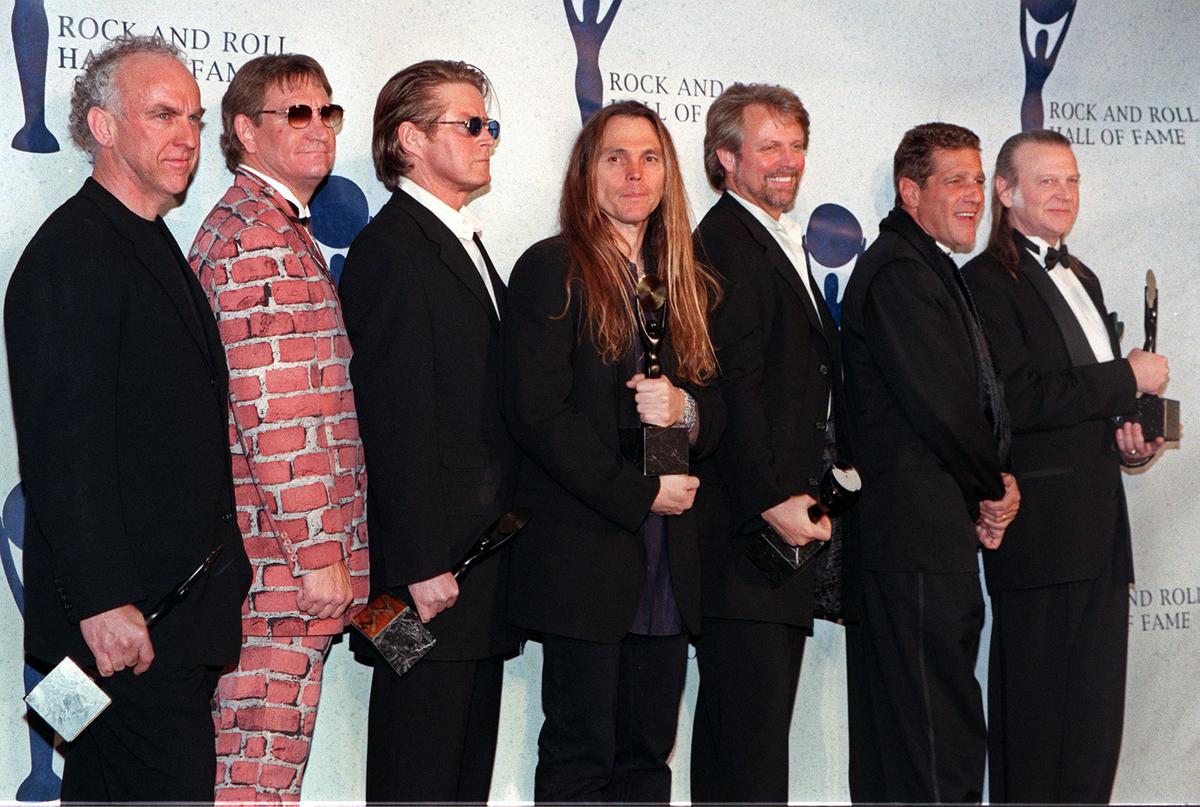
The seven Eagles inducted in 1998: Leadon, Walsh, Henley, Schmit, Felder, Frey, Meisner

Meisner said he was disappointed not to be asked to participate in The Eagles 1994 “Hell Freezes Over” LP and tour, but he was pleased to be invited when the band was inducted into the Rock and Roll Hall of Fame in 1998. That evening, all seven Eagles — Frey, Henley, Meisner, Leadon, Felder, Walsh and Schmit — performed together for their one and only time, doing “Take It Easy” and “Hotel California.” Said Meisner about it: “I’d just like to say I’m honored to be here tonight. It’s just great playing with the guys again.”

Meisner developed health issues in the 2000s that brought on an early retirement from performing and recording. Last week, the end came. Felder, who had also left The Eagles under acrimonious circumstances, had this to say about his former bandmate: “Randy was one of the nicest, sweetest, most talented, and funniest guys I’ve ever known. It breaks my heart to hear of his passing. His voice stirred millions of souls, especially every time he sang ‘Take It To The Limit.’ The crowd would explode with cheers and applause. We had some wild and wicked fun memories together, brother. God bless you, Randy, for bringing so many people joy and happiness.”

I, for one, hope he can finally Rest In Peace.

*********************

The Spotify playlist I’ve assembled includes performances and/or songs Meisner contributed to Poco and Rick Nelson’s Stone Canyon Band; songs he wrote and/or on which he sang lead vocals with The Eagles, and a handful of songs from his solo albums.