My early Christmas present to my readers this holiday season is to post these great rare or unusual photos of vintage rock artists during their peak years in the 1960s, 1970s and 1980s, with a couple more recent shots thrown in for good measure.
I gathered these from various websites that serve as platforms for rock photography, showing us the musicians in not-often-seen moments — rare concert shots, backstage huddles, outtakes from staged photo shoots — revealing them as mere humans just doing the deal.
May the Yuletide season bring you peace and comfort!
**************************
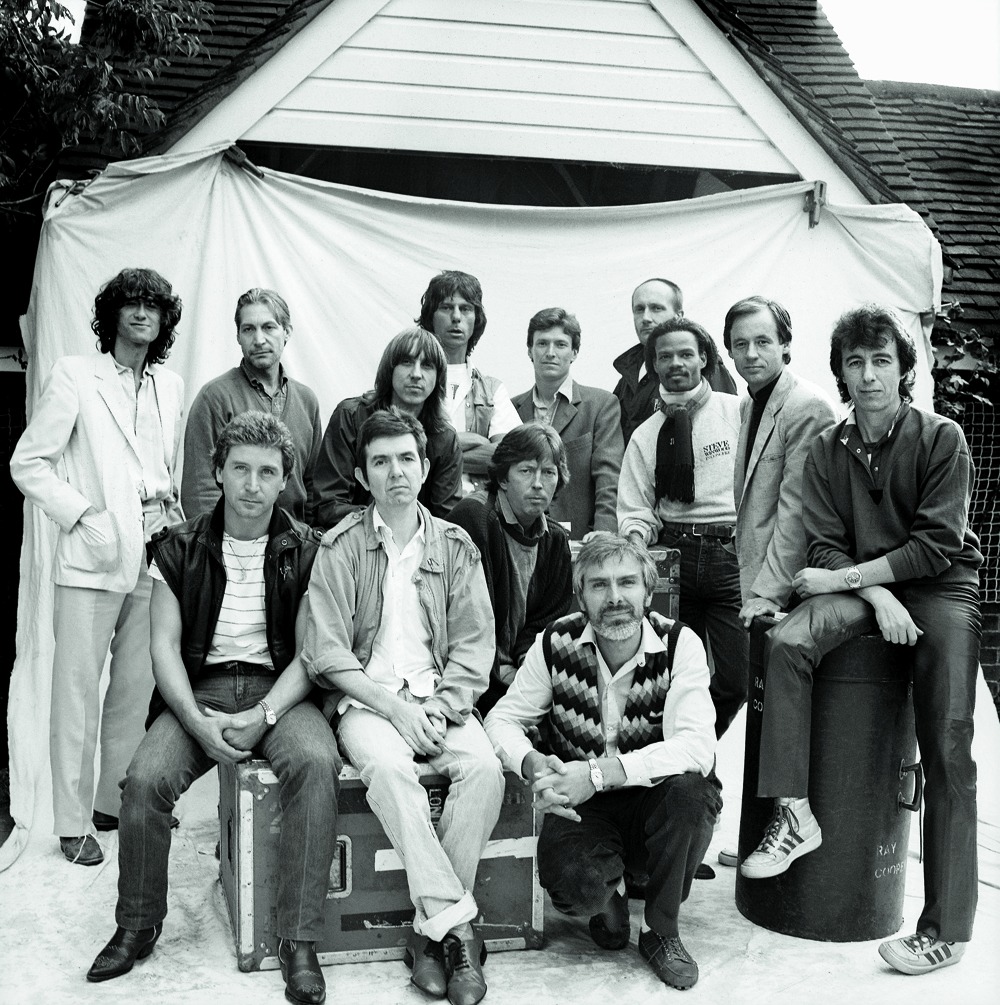
In 1983, this all-star assemblage of some of rock’s best and brightest assembled for a benefit concert for Ronnie Lane of Small Faces, who had been diagnosed with multiple sclerosis. Seated: Kenny Jones, Lane, Eric Clapton, producer Glyn Johns (squatting), Bill Wyman. Standing: Jimmy Page, Charlie Watts, Ian McLagan, Jeff Beck, Steve Winwood, Ray Cooper, Fernando Saunders, Andy Fairweather-Low.
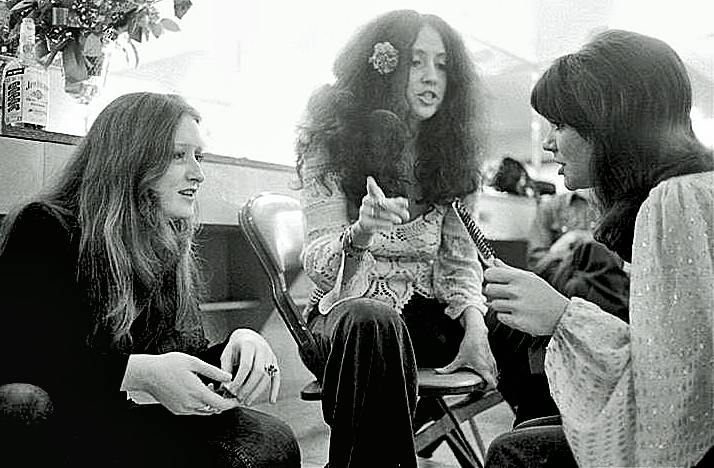
Bonnie Raitt, Maria Muldaur and Linda Ronstadt huddle at the Hollywood Bowl, 1974
Crosby, Nash and Stills rehearsing for the CSNY Stadium Tour, 1974
Sonny & Cher backstage with Bob Dylan in Los Angeles, 1965
The photo for Neil Young’s “After the Gold Rush” album cover before Graham Nash was cropped out
Paul McCartney and Mick Jagger on a train in England, 1967
Tina Turner and Janis Joplin harmonize at a Madison Square Garden gig, 1969
Gregg Allman and Cher relax in a back yard in Macon, Georgia, 1975
Joni Mitchell, Mimi Farina and Herbie Hancock at the Greek Theatre in LA, 1979
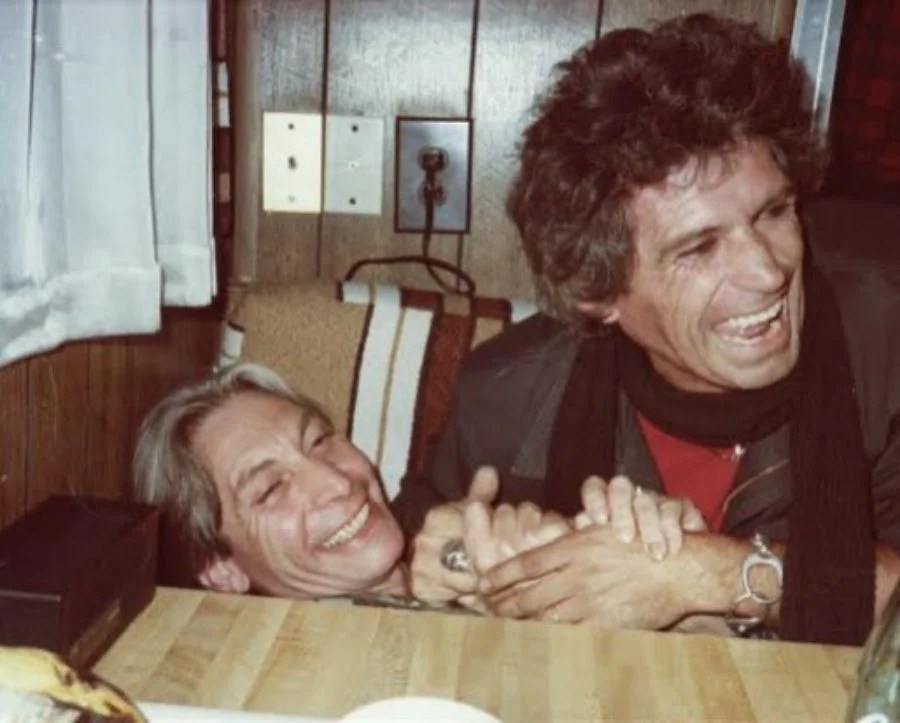
Charlie Watts and Keith Richards goof around in a New York pub booth, 1995
Michael Jackson & younger brother Randy backstage in Memphis, 1976
Eric Clapton sharing teatime with his grandmother Rose Clapton, 1970
Rod Stewart offers a drink to David Bowie at a New York party, 1975
Ozzie Osbourne and granddaughter Andy at brunch in Paris, 2018
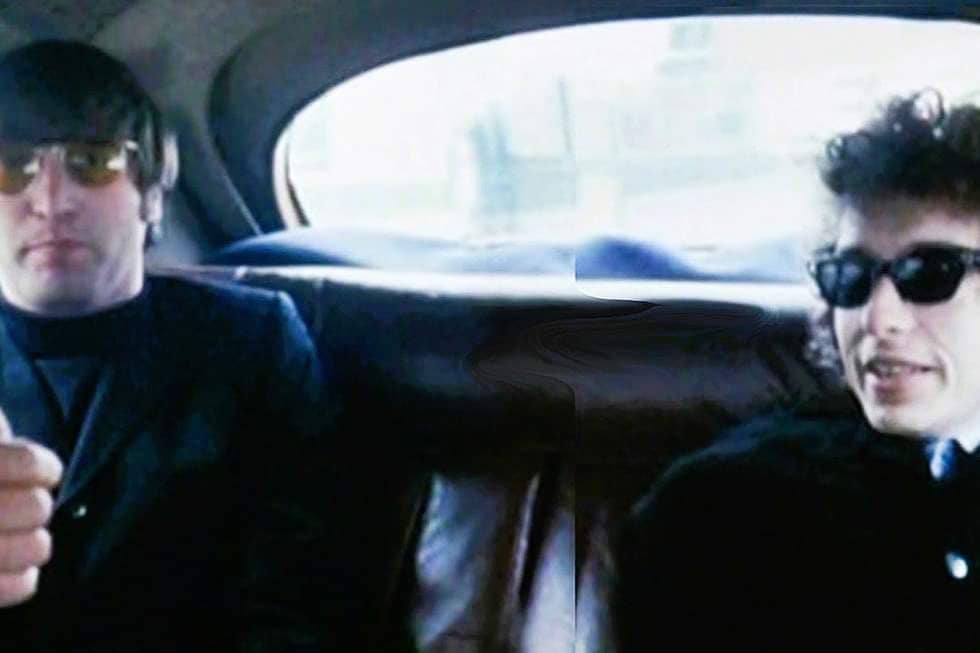
John Lennon and Bob Dylan share a cab ride in London, 1965
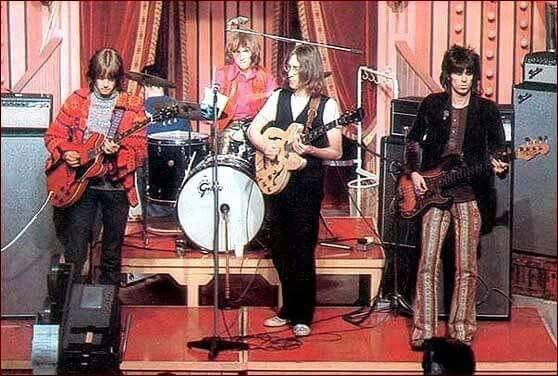
A one-off performance by The Dirty Mac (Eric Clapton, Mitch Mitchell, John Lennon and Keith Richards) for The Rolling Stones’ “Rock ‘n Roll Circus” film, 1968.
Joan Baez offers a bong hit to Jimi Hendrix backstage at the Fillmore East, New York, 1968
Valerie Bertinelli and Eddie Van Halen share a moment at home in the Hollywood Hills, 1989
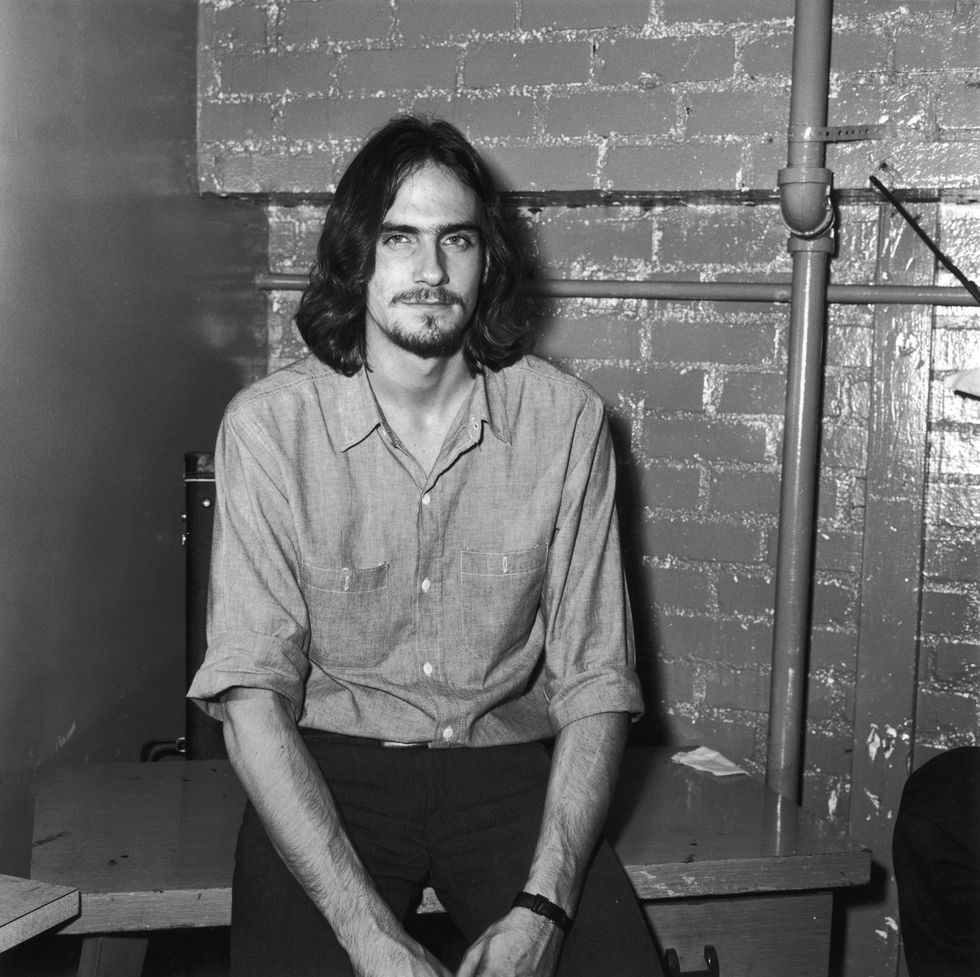
James Taylor chilling before his set at The Troubadour, Los Angeles, 1970
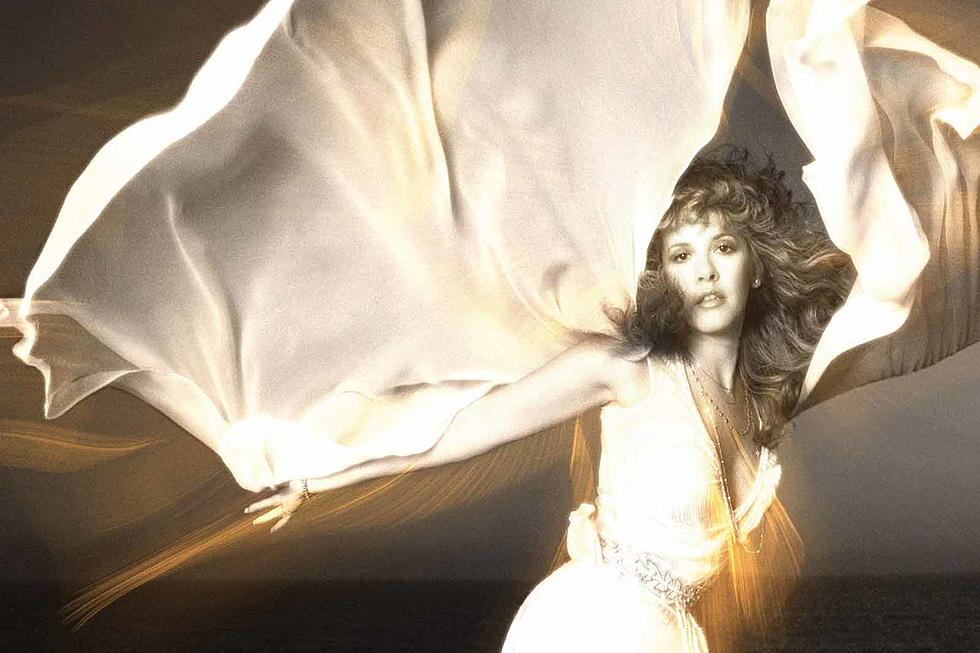
Stevie Nicks at a Vogue cover shoot, 1983
************************
Just for fun: A photoshopped re-imagination of the 1964-era Beatles as young women
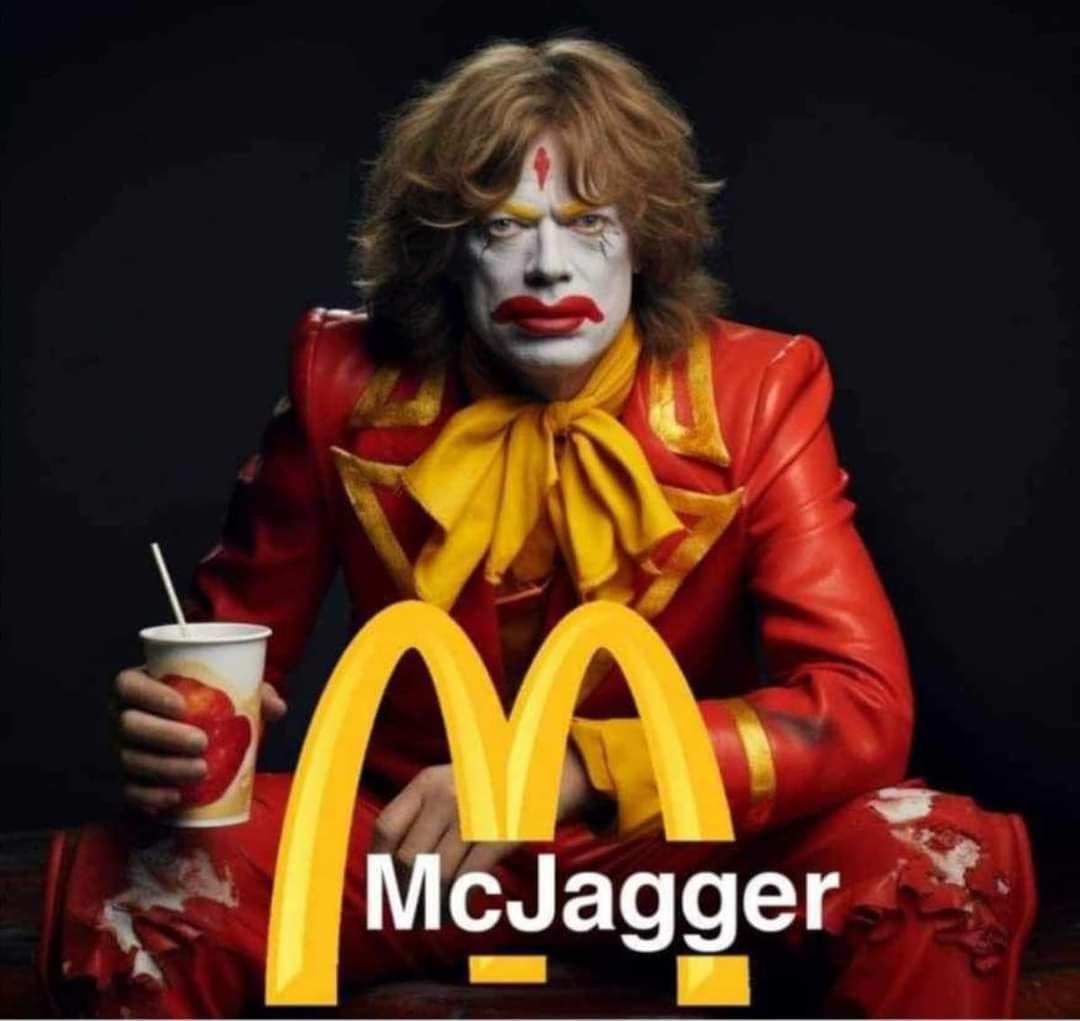
A hilariously frightening take on Mick Jagger as Ronald McDonald
In the summer of 1971, Paul McCartney was ready to form his own band.
Since the breakup of The Beatles in late 1969, he had partnered with his wife Linda on the solo debut “McCartney” and utilized New York session musicians to embellish the tracks on the follow-up LP “Ram.” But if he was going to fulfill his goal of going back out on the road to perform concerts, he needed a couple of guitarists and a drummer willing to make a more long-term commitment.
He asked drummer Denny Seiwell and guitarist Hugh McCracken, who had participated on the “Ram” sessions. Seiwell was amenable, but McCracken declined, citing a need to be near his young family in the U.S. McCartney kept looking, and noticed in the New Musical Express, the British music magazine, that the Midland band called Balls was breaking up. A light went on when McCartney recalled the guitarist/singer in that group was an old friend. His name was Denny Laine.
McCartney was thrilled when Laine eagerly accepted, which initiated a hugely successful ten-year run as bandmates in Wings, marked by eight Top Ten albums, more than 15 Top 20 hit singles and several successful tours. Other members of Wings came and went during that decade, but Laine remained the loyal sideman throughout.
Laine died this week at age 79 of lung disease brought on by COVID-19.
“Denny was a great talent and a kind guy with a fine sense of humor,” said McCartney in the wake of Laine’s death. “We wrote some songs together and had a great deal of respect for each other. We had drifted apart since Wings disbanded, but we re-established our friendship in recent years and shared memories of our many times together. It was such a pleasure to work with him.”
Laine was born Brian Hines in Birmingham, England, where he showed a talent for guitar and eventually became frontman and singer of his own group, Denny and The Diplomats, in the early ’60s. (His stage name, he said, came from combining his sister’s favorite teen idol, Frankie Laine, with the nickname Denny because he was always hanging out in his family’s den.) By 1964, Laine left the Diplomats when he was invited by Mike Pinder and Ray Thomas to join their new group, The Moody Blues.
The early Moody Blues, with Laine at center
Laine’s arrival as their lead singer coincided with the band’s first taste of success, the single “Go Now,” which reached #1 in the UK and #10 in the US in early 1965. Laine first met McCartney at that point when “Go Now” earned The Moody Blues a spot on the bill as one of the warmup acts for a Beatles tour of Britain. Their debut LP, “The Magnificent Moodies,” included some Laine originals and several R&B covers, all featuring Laine’s Merseybeat vocals. The album failed to chart, and subsequent singles stalled as well, precipitating Laine’s departure. (The Moody Blues, of course, went on to stardom with singer/songwriter Justin Hayward as Laine’s replacement.)
Laine, meanwhile, formed The Electric String Band, playing a hybrid of classical and rock genres, and McCartney was in the audience when that group warmed up for the Jimi Hendrix Experience in London in 1967. Laine also wrote and released a few solo singles, most notably “Say You Don’t Mind,” which later became a UK Top 20 hit for Zombies singer Colin Blunstone in 1972. By 1969, Laine joined Balls, which included alumni from British bands like The Move and Spooky Tooth, but little of their recorded work ever saw the light of day. Laine also spent a few months on tour in 1970 with Ginger Baker’s Air Force, offering guitar and vocals in the large jam band led by the former Cream drummer.
According to Allan Kozinn’s book “The McCartney Legacy (Volume 1),” McCartney’s phone call in 1971 came as Laine was struggling and practically homeless, writing songs as a staff writer for Essex Publishing. “I’m hoping to form a band,” McCartney said. “Do you fancy doing something?” Laine recalled, “I wasn’t at all happy with what I was doing and thought, ‘This is just one of those twists of fate.’ I flew up to his farm in Scotland the next day.”
Laine quickly realized that although McCartney said he wanted the new group to be “a band of equals,” it was clearly going to be Paul’s group, Paul’s songs, Paul’s arrangements and Paul’s star power as a former Beatle that would dominate the proceedings. While drummer Denny Seiwell was skeptical about novice Linda McCartney handling keyboard duties, and hoped to persuade them to hire a professional keyboardist, Laine was more accepting. “She wasn’t a musician and never really wanted to be,” he said, “and being on stage scared her. But she was Paul’s wife, and served an important role as a sounding board for his ideas.”
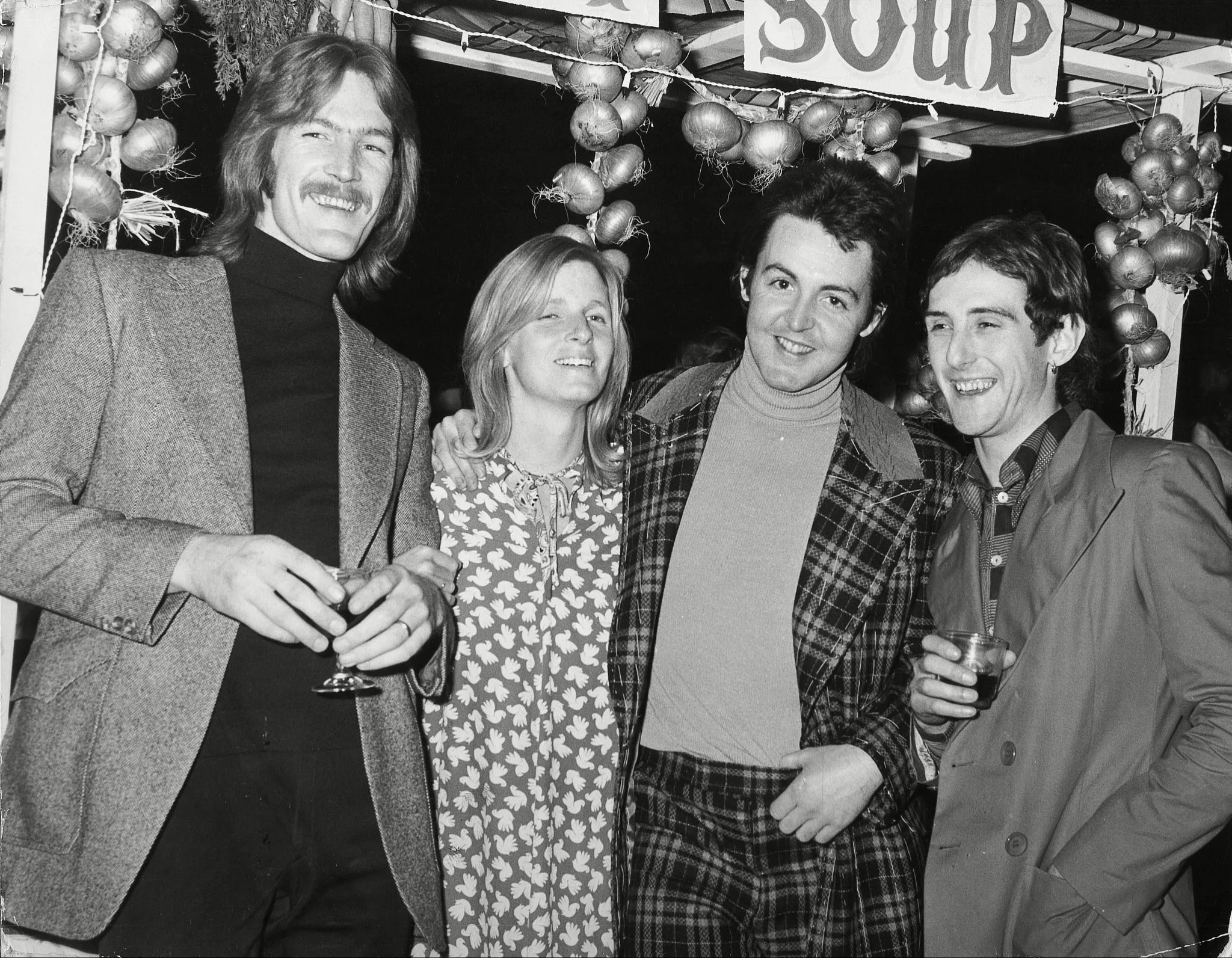
Drummer Denny Seiwell, Linda and Paul McCartney, and Laine in 1971
Wings had the absurdly difficult task of helping McCartney move past the trauma of The Beatles’ breakup. “It was always in the back of our minds,” Laine recalled in 2019. “How do you follow the Beatles? It was purely just a fact of getting a band that could sound pretty good live, which we did…It was easier for me because he and I knew each other pretty well. We had the same attitude toward it all, and we knew that if we just played live as much as possible we’d get good, and that includes the studio performances.”
Still, it was a rocky beginning. The lame debut album “Wild Life” was vilified, after which Henry McCullough joined on second guitar in 1972 and Wings undertook a few tentative, unannounced gigs at universities around England to hone their chops. A strange trio of singles followed: McCartney’s foray into political protest, “Give Ireland Back to the Irish,” which was banned by most UK radio; a creative but slight interpretation of the children’s song, “Mary Had a Little Lamb”; and a gutsy pro-pot rocker called “Hi Hi Hi,” which was also too provocative to get much airplay.
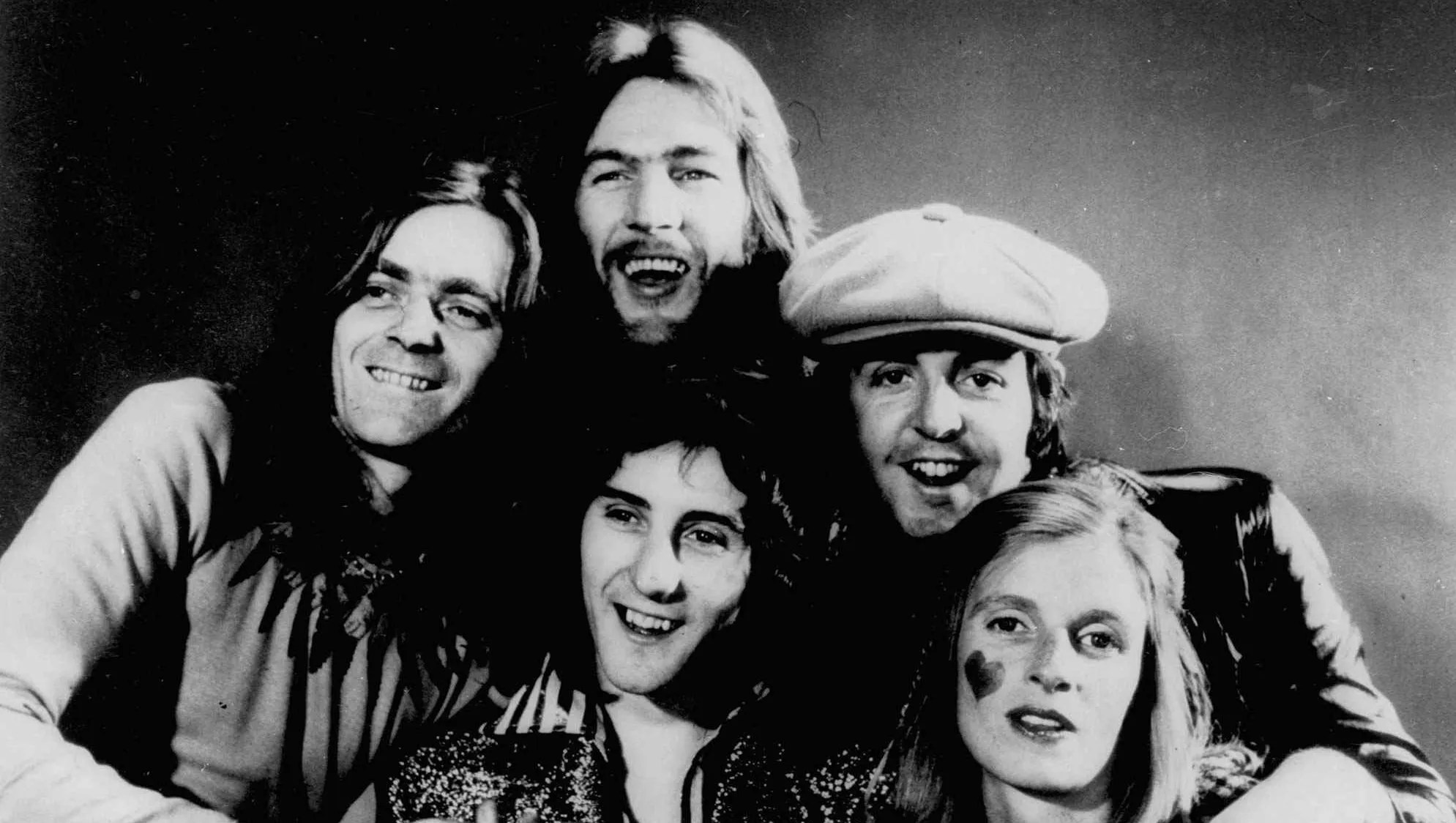
Laine (front, center) with Wings in 1973
Things improved for Wings in 1973 with “Red Rose Speedway,” their first #1 LP in the US, carried by the strings-laden ballad “My Love,” also reaching #1. Concurrent with those wins was the over-the-top dramatic production of the theme song for the latest James Bond film, “Live and Let Die,” and a TV special called “James Paul McCartney.” Laine played a key role in all these projects and yet was also putting finishing touches on his first solo LP, “Ahhh…Laine,” compiling tracks he’d been writing over the previous seven years in an effort to satisfy earlier contractual obligations.
When McCartney insisted on heading to Lagos, Nigeria, to record the next album, Seiwell and McCullough both said no thanks, which meant Wings was now a trio, with just the McCartneys and Laine. Under trying circumstances in a sometimes hostile environment, the threesome cobbled together ten songs that became “Band on the Run,” widely regarded as the crown jewel in the Wings catalog.
Years later, Laine admitted that he was disappointed that Wings rarely recorded any of his songs. “Perhaps it wasn’t reasonable to expect that, seeing as how Paul is one of the most accomplished songwriters of all time. At least I was given the chance to sing lead vocals on a song or two on most of the Wings albums, and we included ‘Go Now’ in the setlist during the ‘Wings Over America’ tour in 1976.”
Laine (left) on acoustic 12-string in concert with the McCartneys, 1976
Laine was something of a jack-of-all-trades in the Wings lineup, contributing electric and acoustic rhythm guitar, occasional lead guitar, bass, harmonica, percussion, and lead and backing vocals. He wrote, co-wrote and/or sang lead vocals on these deep album tracks: “I Lie Around” (the B-side of “Live and Let Die” single); “No Words” (from “Band on the Run”); “The Note You Never Wrote” and “Time to Hide” (from “Wings at the Speed of Sound”); “London Town,” “Children Children,” “Deliver Your Children,” “Don’t Let It Bring You Down” and “Morse Moose and the Grey Goose” (from “London Town”); and “Again and Again and Again” (from “Back to the Egg”).
By far the most lucrative song on Laine’s resumé is “Mull of Kintyre,” the 1977 Scottish ode he co-wrote with McCartney that become a virtual anthem all over Europe. As a Wings stand-alone single, it was ridiculously popular in the UK, becoming one of the biggest hits of all time there, although it got almost no traction in the US.
In 1980, when McCartney was arrested in Japan for marijuana possession and forced to cancel the Wings tour, he chose to close the books on Wings, but Laine turned up to help on sessions for McCartney’s “Tug of War” and “Pipes of Peace” LPs in 1982-83. Financial disagreements caused a period of estrangement between the two that went on for decades, so Laine resumed his mostly lackluster solo career by releasing five albums between 1980 and 1988, although none charted in the US.
In 1996, he released “Wings… at the Sound of Denny Laine,” on which he re-recorded Wings songs he had written or co-written, plus a few Wings hits like “Silly Love Songs” and “Listen To What the Man Said.” Laine continued to perform regularly through the years, and participated in numerous live shows in 1996-2002 as part of a loose confederation known as World Class Rockers, which had a changing lineup that included the likes of Spencer Davis, Camine Appice, Nick St. Nicholas, Bobby Kimball and Randy Meisner.
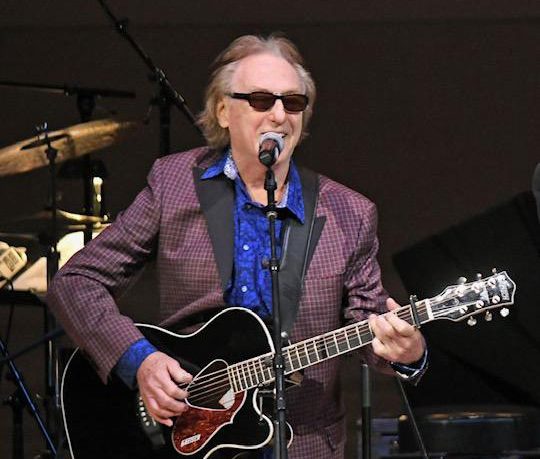
Laine performing in 2018
In 2018, he was inducted into the Rock and Roll Hall of Fame as a member of the Moody Blues after he was initially left off the list of inductees. “I thought [the rest of the band] deserved it because of the amount of work and their popularity, and I thought, ‘Well, that’s the way it goes,'” he told a reporter. “Obviously, I’m very pleased I’m in there after all. It’s an honor. I think I’m at least a little part of their story, so I feel very content, really, that it’s all come full circle now.”
Laine is survived by five children from previous wives, and his wife Elizabeth Mele, to whom he was married only six months before he died.
Famous musicians ranging from Nancy Wilson of Heart, Axl Rose of Guns ‘n Roses, Mickey Dolenz of The Monkees, Dave Davies of The Kinks, Christopher Cross and Steve Van Zandt all made fond public statements honoring Laine and his contributions. Said Mike Pinder of The Moody Blues: “I will remember Denny’s fun-loving sense of humor and the musical collaboration we shared. My first foray into professional songwriting was with him. Our creative collaboration was inspiring and our future was unfolding. It was such an exciting time in our lives.”
Rest In Peace, Denny. You left a fine legacy in the world of classic rock.
***************************
The Spotify playlist below offers an overview of songs by the early Moody Blues and Wings in which Denny Laine made significant contributions, as well as samples of his lesser known solo recordings.









 Hack's Back Pages