How I hate to be late

For most of my life, I have made it my business to be on time as often as possible. I think punctuality is an admirable trait that demonstrates responsibility and consideration for others. 

Still, there have been instances when I have not acted in a timely fashion, like showing up late to a play, movie or wedding, which can come across as rude. Other times, I missed a deadline or let too much time go by (signing up for a health plan by the deadline, taking too long to apologize for bad behavior) and it cost me money or damaged a friendship. Sometimes, being late can’t be helped, like when unforseen traffic tie-ups cause us to miss a flight.

There are people in my life who don’t share my desire to be prompt. Perhaps their parents didn’t stress the importance of being punctual, so it’s never been all that important to them. In their defense, they are often ambitious folks who try unsuccessfully to cram too many tasks into too little time and end up late for most everything. Their intentions may be good, but their time management skills need improvement. 

Just as I enjoy the feeling of being on time, it makes me a little crazy when I realize I miscalculated how much time it takes to get somewhere and am now going to be late. There’s a scene in Walt Disney’s 1951 animated film version of “Alice in Wonderland” where The Rabbit, on his way to an “Un-Birthday Party,” checks his watch and realizes he’s running behind schedule. He frantically runs off, singing: “I’m late, I’m late for a very important date, /No time to say hello, goodbye, I’m late, I’m late, I’m late!”

Popular songwriters have written plenty of songs about being late. I found it interesting that there are at least ten different songs that share the title “It’s Too Late,” generally referring to a person being too tardy to change one’s ways and save a romantic relationship. I’ve rounded up 15 songs from the 1950s through the 2010s that focus on the consequences of failing to act in a timely manner. There’s a Spotify playlist at the end, including multiple versions of some songs.

**************************

“It’s Too Late,” Carole King, 1971

After toiling away for a decade in New York’s famed Brill Building writing many hit singles for other acts like The Shirrelles, Bobby Lee, Herman’s Hermits, The Monkees and Aretha Franklin, King divorced her songwriting partner Gerry Goffin and moved to LA, where she began her second career as a performing artist. Her second LP, 1971’s “Tapestry,” became one of the biggest sellers of all time, and its double-sided single “It’s Too Late”/”I Feel the Earth Move” topped the charts as well. On “It’s Too Late,” King and her new songwriting collaborator Toni Stern captured the resigned feeling of knowing when it’s time for a once-great relationship to end. Several R&B artists, notable The Stylistics, Billy Paul and The Isley Brothers, recorded their own versions of the song within the next year or so.

“Too Late For Goodbyes,” Julian Lennon, 1984

When he was only five years old, Julian Lennon’s father John divorced his mother Cynthia and, from then on, the boy rarely saw his father, and never fully reconciled with him before Lennon’s murder in 1980. So it was only natural that many people interpreted Julian’s single, “Too Late for Goodbyes,” as being about the estranged father-son relationship, but that’s not the case. ”Initially, it was about a relationship with a girl, that’s all,” he said. “The phrase kept coming up as I was working on the music , so I stuck with it for the title and chorus.” It reached #5 on US charts in early 1985, followed by “Valotte,” the album’s title song, which peaked at #9.
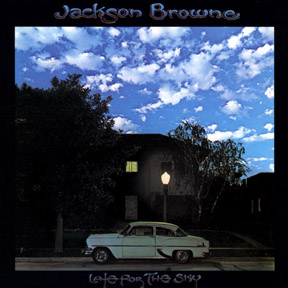
“Late For the Sky,” Jackson Browne, 1974

Browne, a masterful lyricist, had only a handful of hit singles, but his first seven albums (1972-1983) all reached platinum or multi-platinum status and were widely praised. His third LP had no singles but is considered by many to be his masterpiece, with tracks like “Fountain of Sorrow,” “For a Dancer” and “The Late Show.” The lyrics of the title cut (which some speculate are about his affair with Joni Mitchell) poignantly tell of a relationship that’s doomed to fail because the lover’s expectations of him are too great: “You never knew what I loved in you, I don’t know what you loved in me, /Maybe the picture of somebody you were hoping I might be…”
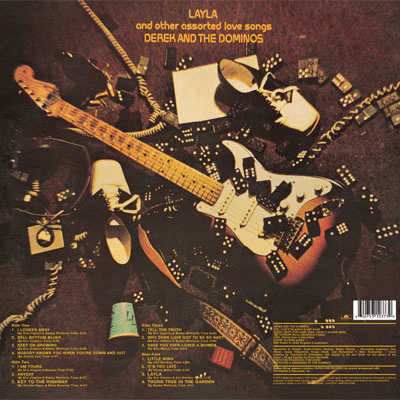
“It’s Too Late,” Derek and The Dominos, 1970

R&B singer/songwriter Chuck Willis wrote and recorded this song (about taking too long to tell someone you care about them) in 1956, reaching #3 on the R&B charts that year. Other legendary artists later recorded it as well, including Buddy Holly and The Crickets (1957), Roy Orbison (1960), Otis Redding (1965) and Freddie King (1969). I hadn’t heard any of these versions when Eric Clapton, then leading Derek and The Dominos, added their own take on it to the landmark 1970 double LP “Layla and Other Assorted Love Songs.” Clapton’s singing and guitar fills, along with Bobby Whitlock’s counterpoint vocals, made it one of my favorite tracks on the LP. The Dominos performed “It’s Too Late” on “The Johnny Cash Show” in 1971 in the group’s only TV appearance.

“Too Late to Turn Back Now,” Cornelius Brothers & Sister Rose, 1972

In 1970, Rose Cornelius had been touring and making TV appearances as part of a group called The Gospel Jazz Singers. When her brothers, Eddie and Carter, won a recording contract with United Artists, they convinced their sister to join their act, somewhat awkwardly titled Cornelius Brothers & Sister Rose. They scored a #3 hit in the summer of 1971 with the Eddie Cornelius tune “Treat Her Like a Lady.” A year later, the follow-up single “Too Late to Turn Back Now” (also by Eddie Cornelius) made it to #2, and although they managed two more minor chart appearances in the autumn of 1972, they disbanded in 1975 when both brothers joined different religious sects.
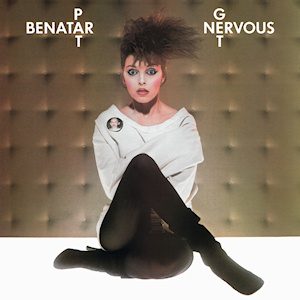
“Little Too Late,” Pat Benatar, 1982

In the fall of 1982, Benatar released her third consecutive Top Five LP, “Get Nervous,” carried by her Grammy-winning single “Shadows of the Night.” The follow-up single, “Little Too Late,” which reached #20, was written by the underrated singer/songwriter Alex Call, who also co-wrote the Tommy Tutone hit “867-5309/Jenny” and Huey Lewis’s “Perfect World,” as well as lost classics like “Just Another Saturday Night,” “New Romeo” and “Blue Avenue.” The song’s lyrics put the cheating boyfriend in his place: “And now you come collapsin’ back, I feel the heat of your attack, /Want me to take you back, I’m givin’ you the sack, so don’t waste your time, /It’s a little too little, it’s a little too late…”

“It’s Late,” Rick Nelson, 1959

Rockabilly singer Dorsey Burnette Jr., who formed the Rock and Roll Trio with brother Johnny Burnette, wrote “It’s Late” in 1958 and recorded it that year, but it was never released until included on a compilation record in 1980. In early 1959, Nelson, then a TV celebrity on the family sitcom “The Adventures of Ozzie and Harriet” and a burgeoning pop idol in his own right, took his version of “It’s Late” to #9 on the US charts, his eighth of 18 Top Ten singles in his career (“Poor Little Fool,” “Hello Mary Lou,” “Travelin’ Man,” “Garden Party,” among others). He once performed the song on the TV show, as he often did with his hit singles as his singing career blossomed.

“Late For Your Life,” Mary Chapin Carpenter, 2001

Carpenter emerged from the Washington D.C. area in the late ’80s and enjoyed a successful run of hit singles and Top Ten albums in the 1990s, mostly on the country music charts (“Down at the Twist and Shout,” “Passionate Kisses,” “He Thinks He’ll Keep Her,” “Shut Up and Kiss Me”). After a five-year hiatus, Carpenter returned in 2001 with her “Time*Sex*Love*” LP, which maintained her streak of Top Ten country albums despite a lack of charting singles. One that should’ve done well was “Late For Your Life,” which urges us to act before it’s too late: “A change of scene would sure be great, the thought is nice to contemplate, /But the question begs: Why would you wait? Don’t be late for your life…”

“It’s Too Late,” Wilson Pickett, 1963

Although the Chuck Willis tune “It’s Too Late” was already successful in various versions, Pickett wrote an original R&B song with the same title in 1963 that became the title track for his debut LP and his first significant exposure on radio (#7 on R&B charts, although only #49 on pop charts). The lyrics, both sung and spoken, share the same focus on the narrator regretting bad behavior that caused his girl to walk. Pickett’s own “It’s Too Late” was the first of an impressive 32 Top Twenty R&B singles (including four #1s) and a half-dozen hits on pop radio (“In the Midnight Hour,” “634-5789 (Soulsville USA),” “Land of 1,000 Dances,” “Mustang Sally,” “Funky Broadway”).
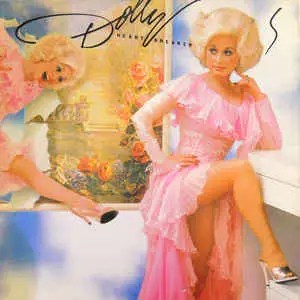
“It’s Too Late to Love Me Now,” Dolly Parton, 1978

After more than a decade as a country singer, Parton made a conscious attempt in the late ’70s to write and record songs that might have pop chart success. She succeeded with “Here You Come Again” (a #3 pop hit in 1977) leading up to the huge #1 mainstream hit “9 to 5″ in 1980. ”It’s Too Late to Love Me Now,” a deep track from her 1978 LP, didn’t have much of an impact but was later a minor hit for Cher and Jeanne Pruett. The lyrics admonish the suitor for waiting too long and missing his chance with her:  “Don’t you know how hard I tried to hold out just for you? Lovin’ you from memory day by day, /Then someone came into my life, turned my dreams around, he’s takin’ all the love you threw away…”

“Late Again,” Stealers Wheel, 1972

Scottish school pals Gerry Rafferty and Joe Egan formed a folk rock band called Stealers Wheel in 1972, and their debut LP performed well, reaching #50 in the US, thanks to the hit single, “Stuck in the Middle With You,” which reached #6 on US pop charts in early 1973. All the LP’s songs were written by either Egan or Rafferty or as a duo, including the hit and the leadoff track, “Late Again,” in which the narrator berates himself for staying out too long and disappointing his lady when he arrives home “late again.” Six years later, Rafferty would be back on top as a solo artist with a string of successful albums, and singles like “Baker Street,” “Right Down the Line” and “Get It Right Next Time.” 

“Late to the Party,” Kacey Musgraves, 2015

Josh Osbourne, one of country music’s most prolific songwriters of the past decade, co-wrote this fun, suggestive tune with Musgraves for her 2015 LP “Pageant Material,” which reached #1 on the country charts and #3 on Billboard’s Top 200 albums that year. He previously earned a Grammy for Best Country Song in 2014 for Musgraves’ single “Merry-Go-Round.” The lyrics to “Late to the Party” slyly wink about the reason why the singer and her man were late (lingering at home for a little roll in the hay). Perhaps it’s a bit self-indulgent, but I’d call it just about the best possible excuse for being tardy to the party!
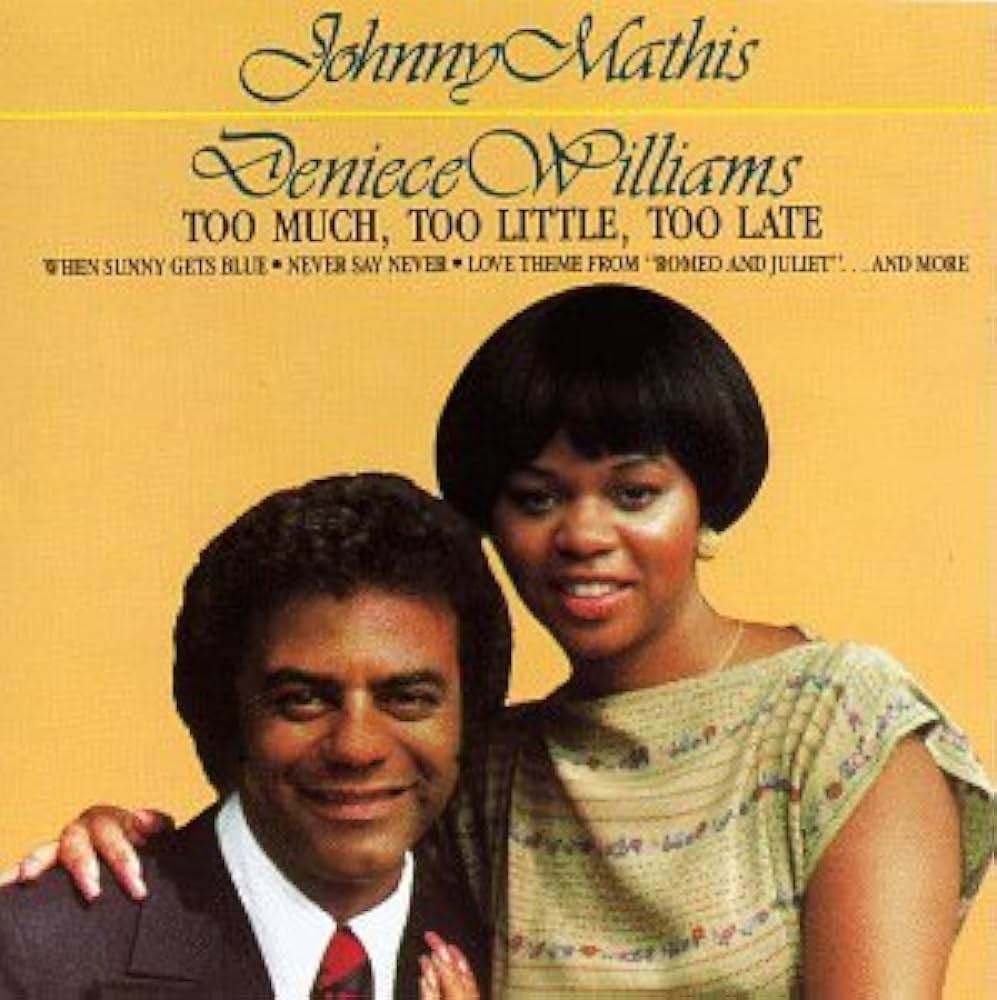
“Too Much, Too Little, Too Late,” Deniece Williams and Johnny Mathis, 1978

From 1956 to 1960, Mathis charted an astounding ten consecutive Top Ten albums, offering his soothing brand of what became known as “easy listening” music, notably “Chances Are,” “The Twelfth of Never” and “Misty.” In 1978, he found himself back at the top of the charts briefly with “Too Much, Too Little, Too Late,” a duet with Deniece Williams, in which the songwriting team of Nat Kipner and John Vallins hit just the right balance of affection and resignation in describing a long-time marriage that’s breaking up: “Yes, it’s over, the kids are gone, what’s the use of tryin’ to hang on? /Somewhere we lost the key, so little left for you and me, and it’s clear to see, /Too Much, Too Little, Too Late to try again with you…”
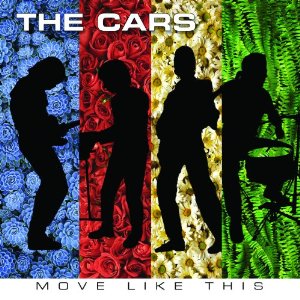
“Too Late,” The Cars, 2011

Songwriter Ric Ocasek, the clear leader of The Cars during their ten-year run (1978-1987), felt burnt out and dissolved the group at that point. In 1997, when asked about a reunion, he said, “I’m saying never and you can count on that.” Nevertheless, he reconsidered in 2010, reconvening the band members (except Benjamin Orr, who had died in 2000) and cranking out the surprisingly strong and consistent “Move Like This” LP, which one critic described this way: ”As bright, infectious, and tuneful as The Cars in their prime.” Ocasek (who died in 2019) wrote songs like “Keep on Knocking,” “Take Another Look” and especially “Too Late,” a song of remorse about an old flame.

“It’s Too Late,” Johnny Rivers, 1967

Hollywood club impresario Elmer Valentine gave Rivers a one-year contract as the opening act at the Whisky A Go Go on the Sunset Strip, and he capitalized on that opportunity by recording a series of live albums there (1964-1968) with spirited audience participation. Some tracks became big radio hits, l.ike his cover of Chuck Berry’s “Memphis,” Willie Dixon’s “Seventh Son” and the spy novelty tune “Secret Agent Man.” A marvelous deep track from his fifth live album is “It’s Too Late,” which was actually written and first recorded by middle-of-the-road crooner Bobby Goldsboro. The live rendition Rivers cut ran circles around Goldsboro’s vanilla version.

**************************

Honorable mention: ”It’s Late,” Queen, 1977; ”Too Late For Love,” Def Leppard, 1983; ”It’s Too Late,” Aldo Nova, 1982; ”Too Late,” Journey, 1979; ”It’s Too Late,” The Kinks, 1965; ”It’s Late,” David Gray, 2019.
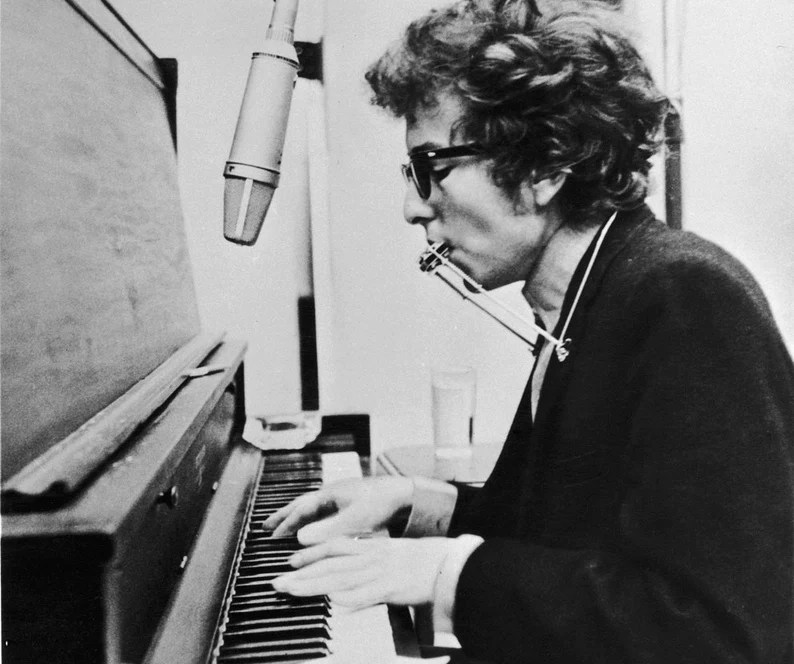
The answer, my friend, is blowin’ in the wind

So many seismic lyrics.  So little space.

You might hate his voice.  Many people do.  You can find his public persona too prickly for your tastes.  You can certainly find fault with the lame songs, even whole albums, in his 60-year repertoire of recorded music.

But I don’t believe anyone can argue with the fact that Bob Dylan is an unparalleled master of poetic thought.  He possesses a rare command of the language that is brought to bear in epic storytelling, persuasive protest, angst-ridden idolatry, even throwaway singalongs.

He is supremely gifted in putting powerful and poignant phrases to all kinds of music — folk, rock and roll, blues, country, gospel.

His lyrics are insightful, piercing, funny, scathing, heartbreaking, whimsical, bleak, fierce, enigmatic, profound.  On the occasion of Dylan’s 70th birthday in 2011, Rolling Stone published a special issue, in which seasoned writer Jon Pareles pointed out how Dylan’s songwriting draws “from the Bible and Shakespeare, from Celtic ballads and deep blues, from abstract poetry and street talk, from obscure movie dialogue and private lovers’ quarrels.”

In this installment of my blog, I offer 20 examples of his lyrics in a quiz format, just to see if you can identify the songs from whence they came. Take a look at these lines, ruminate on them a while, then jot down your answers, and scroll down to see how well you did. You can learn a little about what inspired Dylan to write them, and give them a listen on the accompanying Spotify playlist.

*******************************

1“You coulda done better, but I don’t mind, you just sorta wasted my precious time…”

2 ”Peace is not welcome at all, it’s turned away from the door…”

3“I was standing on the side of the road, rain falling on my shoes, heading out for the East Coast, Lord knows I’ve paid some dues gettin’ through…”

4 ”Why wait any longer for the world to begin? You can have your cake and eat it too…”

5 ”People are crazy and times are strange, I’m locked in tight, I’m out of range…”

6“May your heart always be joyful and may your song always be sung…”

7 ”Let us not talk falsely now, the hour is getting late…”

8 ”I was so much older then, I’m younger than that now…”

9 ”All the criminals in their coats and their ties are free to drink martinis and watch the sun rise…”

10 ”And something is happening here but you don’t know what it is, do you, Mr. Jones?…”

11 ”You may be a preacher with your spiritual pride, you may be a city councilman taking bribes on the side…”

12“If your time to you is worth savin’, then you better start swimmin’ or you’ll sink like a stone…”

13Standing on the water, casting your bread while the eyes of the idol with the iron head are glowing…”

14 ”The cracked bells and washed-out horns blow into my face with scorn, but it’s not that way, I wasn’t born to lose you…”

15 ”I was thinking about Alicia Keys, couldn’t keep from crying, when she was born in Hell’s Kitchen, I was living down the line…”

16 ”If I had wings and I could fly, I know where I would go, but right now, I’ll just sit here so contentedly…”

17 ”I’ll see to it that there’s no love left behind, I’ll play Beethoven’s sonatas, and Chopin’s preludes…”

18 ”Yes, I wish that for just one time, you could stand inside my shoes, you’d know what a drag it is to see you…”

19 ”She was standing there with silver bracelets on her wrists and flowers in her hair, /She walked up to me so gracefully and took my crown of thorns…”

20 ”Now you don’t talk so loud, now you don’t seem so proud about having to be scrounging for your next meal…”

****************************

*

*

*

*

*

*

*

*

*

*

****************************

ANSWERS:

1“Don’t Think Twice, It’s All Right” (1963)

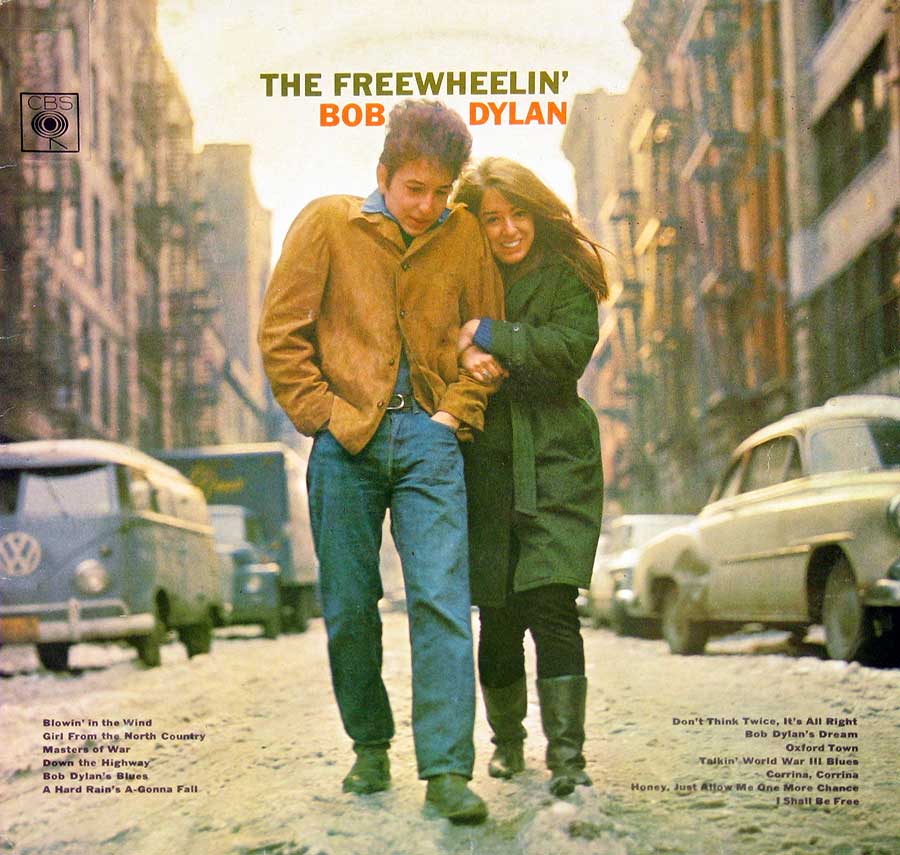
One of the greatest break-up lyrics ever written, Dylan came up with this early song in late 1962 when he learned his girlfriend at the time had indefinitely prolonged her stay in Europe, and he felt the relationship appeared doomed. In the liner notes for the album “The Freewheelin’ Bob Dylan,” released in 1963, the liner notes say “Don’t Think Twice, It’s Alright” is “a statement that you can say to make yourself feel better, as if you were talking to yourself.” The song borrows musically and lyrically from folksinger Paul Clayton’s “Who’s Gonna Buy You Ribbons When I’m Gone?” Peter, Paul & Mary covered Dylan’s song in 1963 and took it to the Top Ten on US pop charts. Johnny Cash, Waylon Jennings, Willie Nelson and Dolly Parton are among the major artists who also recorded it.

2“Political World” (1989)

In the “Oh Mercy” chapter of his memoir “Chronicles: Volume One,” in the chapter about his 1989 LP “Oh Mercy,” Dylan wrote, “One night, at the Malibu house, when everyone was asleep and I was sitting at the kitchen table, and the hillside was a shiny bed of lights, I wrote about 20 verses for a song I was calling ‘Political World.’ It was the first of as couple dozen songs I would write during the next few weeks. I hadn’t written much recently, and with this song, I thought I might have broken through to something. It was like you wake up from a deep and drugged slumber and somebody strikes a little silver gong and you come to your senses.”

3“Tangled Up in Blue” (1975)

This amazing tune, one of the most appealing and widely praised songs of his entire catalog, “took ten years to live and two years to write,” according to the composer. It examines the nature of relationships as told through different narrative perspectives, and as he has often done over the years, he sometimes altered the lyrics in live performances, changing the point of view and some details. ”Tangled Up in Blue” is essentially the story of a love affair, and a career, and how the “past upon present, public upon privacy, distance upon friendship, and disintegration upon love” transform and are complicated over time. Dylan wrote it and first recorded it in Minnesota, where he had retreated to recover from the imminent breakup of his 10-year marriage to Sara Lownes. He re-recorded it in New York a few months later, which is the version that appears on “Blood on the Tracks.”

4“Lay Lady Lay” (1969)

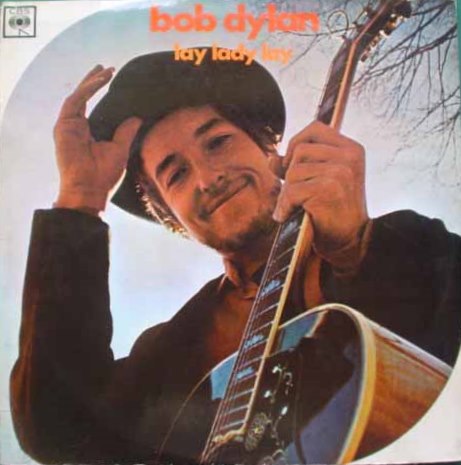
Film director John Schlesinger approached Dylan about writing a song for his bleak film “Midnight Cowboy,” but he took too long to submit it, and the director instead used Harry Nilsson’s recording of “Everybody’s Talkin’.” Lyrically, “Lay Lady Lay” would’ve worked well in scenes where Jon Voight’s naive character assumed he’d be welcomed as a gigolo. Dylan has said the song speaks of romantic and sexual anticipation as the singer beseeches his lover to spend the night with him. As the most prominent track on Dylan’s popular “Nashville Skyline” album, which features Dylan singing in a low croon instead of his customary high nasal style, “Lay Lady Lay” reached #7 on US pop charts in the summer of 1969, which would prove to be his last Top Ten hit (although his albums continued to chart high for years to come).

5“Things Have Changed” (2000)

Director Curtis Hanson, a big fan of Dylan’s music, made it his mission to persuade the songwriter to contribute an original song to the soundtrack of his 2000 film “Wonder Boys,” about a college professor struggling to duplicate the enormous success of his first novel. As Hanson put it, “Who knows more about being a Wonder Boy and the trap it can be, about the huge expectations and the fear of repeating yourself?” Dylan finally relented to watching 90 minutes of rough footage, and three weeks later, submitted “Things Have Changed,” which beautifully captured the lead character’s search for purpose amidst a world that seemed to be falling apart. It won the Academy Award for Best Song that year, giving Dylan yet another feather in his career cap.

6“Forever Young” (1974)

Written in 1973 as a lullaby of sorts for Dylan’s eldest son Jesse, born in 1966 and age 7 at the time, this time-honored tune relates a father’s hopes that his child will remain strong and happy throughout his life. He was leery about appearing overly sentimental, so on “Planet Waves,” the album on which it appeared, there are two different versions of the song — the lullaby and a more rock-oriented arrangement featuring members of The Band. A cover version by Joan Baez reached #13 on US charts in 1974, and then in 1988, Rod Stewart had a #13 US hit with a song (written mostly by guitarist Jim Cregan) that shared the same title, structure and lyrical intent. In 2010, Dylan’s original was used as there theme song to the TV series “Parenthood.”

7“All Along the Watchtower” (1967)

Know primarily for the incendiary cover version by Jimi Hendrix, “All Along the Watchtower” in Dylan’s original form was much shorter with a barebones arrangement of guitar, harmonica, bass and vocals. The song’s lyrics have been subject to various interpretations, with some reviewers noting it echoes lines from the Book of Isaiah. Others contend that the 12 lines, over three brief stanzas, seem to be out of chronological order with the last verse first and the first verse last. ”Dylan seems to be setting up the listener up for an epic ballad with the first two verses,” said another critic, “but then, after a brief instrumental passage, the singer cuts to the end, leaving much of the story untold.” The song appeared on Dylan’s understated 1967 LP “John Wesley Harding.”

8“My Back Pages” (1964)

This song from Dylan’s fourth LP, “Another Side of Bob Dylan,” is the inspiration for the name of this blog you’re reading. He had built his early reputation writing meaningful tunes that protested war and various societal injustices, but by the time of his fourth set of songs, he had grown tired of “being a know-it-all” and wondered whether he had become his own enemy “in the instant that I preach.” He questions whether one can really distinguish between right and wrong, and even begins to think about the desirability of the principle of equality. ”My Back Pages” signals Dylan’s disillusionment with the protest movement in general and a desire to write more mature, less reactionary lyrics, culminating in the famous refrain quoted here, which one critic called “an internal dialogue between what he once accepted and now doubts.”

9“Hurricane” (1976)

Boxer Rubin Carter had been found guilty in 1967 in a triple murder case marked by highly questionable evidence, shaky eyewitness testimony and a racially biased prosecutor. When Dylan learned of the particulars, he was sufficiently moved to write a story-song that reads like a screenplay and plays like an eight-minute movie. In his autobiography, Carter credited the song with helping to win his release in 1985. ”I think the key was putting the song in a total storytelling mode. I don’t remember whose idea it was to do that. But really, the beginning of the song is like stage directions, like what you would read in a script: ’Pistol shots ring out in a barroom night…. Here comes the story of the Hurricane.'” It was split into two parts for radio play, and Part II cracked the Top 40 in 1976.

10“Ballad of a Thin Man” (1965)

Critic Andy Gill described this incredible piece as “one of Dylan’s most unrelenting inquisitions, a furious, sneering, dressing-down of a hapless bourgeois intruder into the hipster world of freaks and weirdoes which Dylan now inhabited.” The song, one of the highlights of his watershed 1965 LP “Highway 61 Revisited,” revolves around the stumblings of a Mr. Jones, superficially educated and well bred but not very smart about the things that count, who keeps blundering into strange situations. Dylan said he was writing about the media, alternately disgusted and amused by their inability to understand him and his songs. Years later, a reporter named Jeffrey Jones, who had twice tried unsuccessfully to interview Dylan in 1965, claimed he was the Mr. Jones of the song. When asked in 1990 if this claim was true, Dylan said, “There were a lot of Mister Joneses at that time.”

11“Gotta Serve Somebody” (1979)

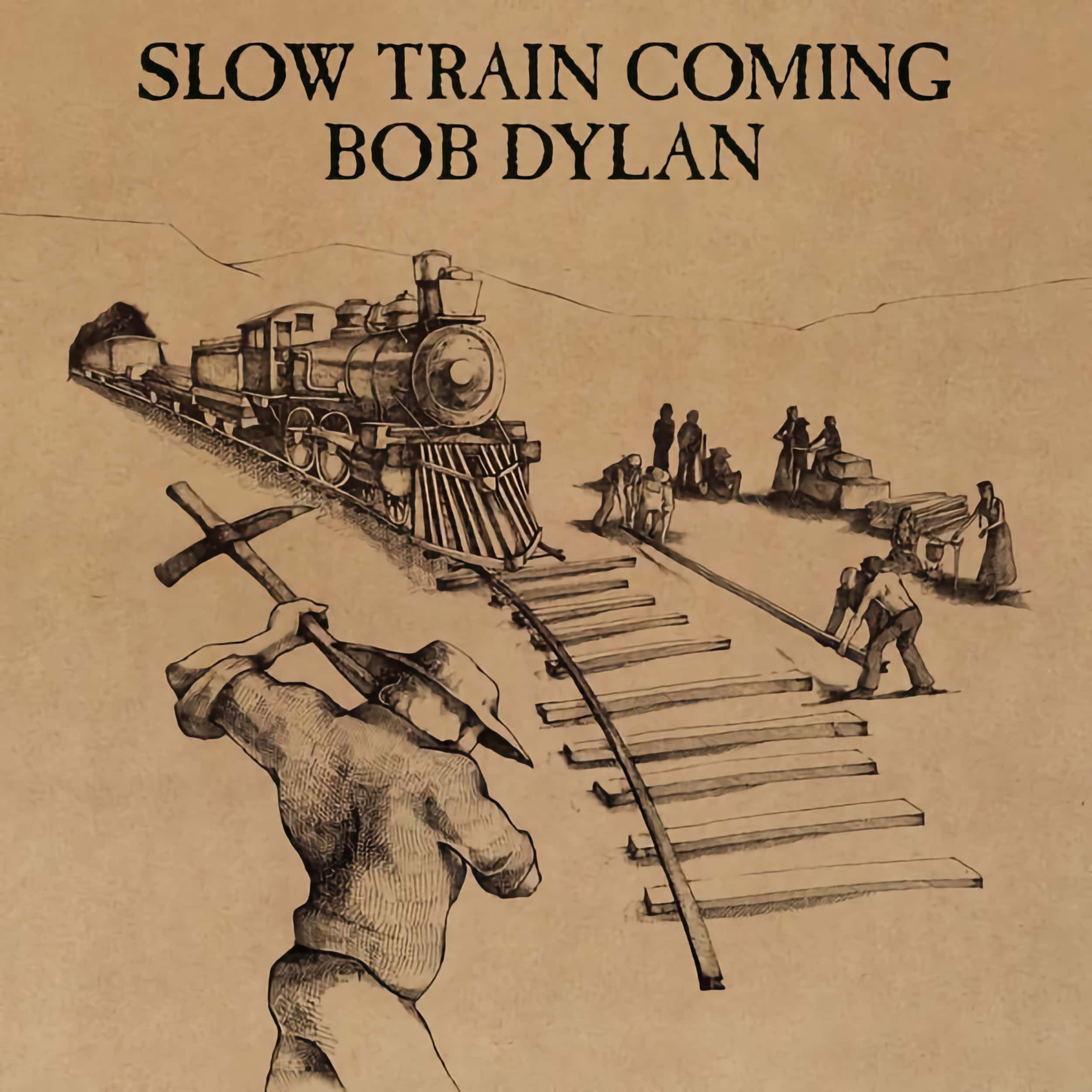
Many critics and longtime fans were perplexed in 1979 when the Jewish-born Dylan confirmed his conversion to Christianity with the release of his “Slow Train Coming” LP, a collection of songs that stressed the importance of Christian teachings and philosophy. While this alienated some listeners, it attracted new fans, and the album reached #3 on US charts. Its single, “Gotta Serve Somebody,” peaked at #24, and was performed that year on Dylan’s only career appearance on “Saturday Night Live.” The lyrics claim that, no matter one’s status in life, we will all have to answer for the decisions we have made. It manages to avoid sounding too preachy by the incorporation of humorous asides, and his convincing vocals, augmented by a female gospel chorus and subdued keyboard/guitar lines, make it a compelling musical statement.

12“The Times They Are A-Changin'” (1964)

Widely regarded as the song that best captured the spirit of social and political upheaval that characterized the 1960s, this iconic piece became the title track to his third album, his first to feature only Dylan originals. He said he set out to write an anthem about “the only constant in life is change” and our need to embrace that fact or perish. ”I wanted to write a big song, with short concise verses that piled up on each other in a hypnotic way,” he said. “Musically, it was inspired by the Irish and Scottish folk ballads. The civil rights movement and the folk music movement were pretty closely allied together at that time.” It became one of the most covered songs in his canon, with versions released by Peter, Paul and Mary, Nina Simone, The Byrds, Simon and Garfunkel, Joan Baez and Bruce Springsteen, and is ranked #59 on Rolling Stone‘s “500 Greatest Songs of All Time.” 

13“Jokerman” (1983)

It’s fairly astonishing to me that this gem from Dylan’s 1983 LP “Infidels” failed to chart when released as a single. The combination of stunning production, riveting lyrics, irresistible melody and thrilling musicianship make this one of my Top Ten Dylan songs of all time. Once again, he has used the Bible as a creative source, interwoven with mystical imagery derived from Dylan’s sojourns in the Caribbean Islands. ”‘Jokerman’ came to me there,” he said. ”The shapes and shadows seem to be so ancient. The song was inspired by these furtive spirits they call jumbis.” One critic said at the time that the track is “the strongest evidence available that Dylan continues to operate at another level long after some fans and critics had dismissed him.”

14“I Want You” (1966)

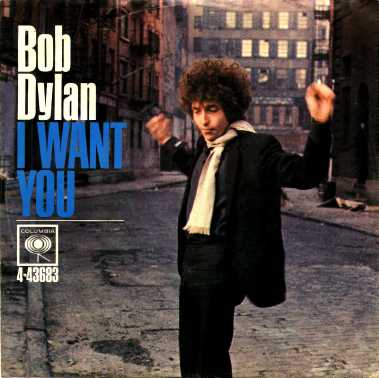
One of five singles released from Dylan’s 1966 double studio album “Blonde on Blonde,” this breezy tune reached #20 on US charts that summer. The track strikes an intriguing balance between the direct address of the chorus — “I want you so bad” — and the enigmatic cast of characters that populate the verses (the guilty undertaker, the lonesome organ grinder, the chambermaid, the Queen of Spades, the dancing child with his Chinese suit). One interpretation is that the song is about the failure to accept the death of a loved one; another posits that it’s an expression of lust for someone other than the narrator’s current partner. Dylan himself hasn’t said much about what inspired him in this case.

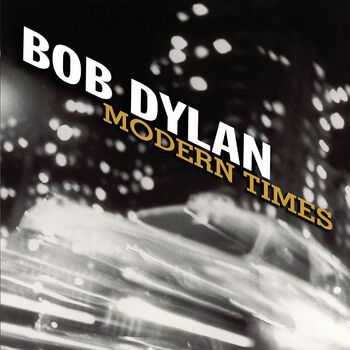
15“Thunder on the Mountain” (2006)

 Here’s yet another Dylan original that’s packed with Biblical allusions, this one from his 2006 album “Modern Times.” The song’s title evokes the divine presence at Mount Sinai discussed in Exodus, while the line “Today’s the day I’m gonna grab my trombone and blow” suggests Dylan himself playing the role of archangel Gabriel sounding his horn. Still, the playful references to current day (Alicia Keys, no less) show that while he may sound a bit apocalyptic in places, he seems rather cheerful about it, thanks to an upbeat sound that falls somewhere between rockabilly and Western swing. One review said, “Nearly half a century into his legendary career, he is still managing to keep people scratching their heads while tapping their feet and nodding along to the infectious flow of his delivery and impeccable backing musicians.” 

16“Watching the River Flow” (1971)

Country rock elements dominated the albums Dylan released in the 1967-1970 period, leading to the search for something different in 1971. He found it with the considerable input of Leon Russell and Jesse Ed Davis, whose rollicking piano and blistering guitar work carries the day on this stand-alone single. Dylan had become a father and was eager to balance his public and private life, leading him to write this ode to the easy, reflective life of the savvy observer just watching the river flow on by. Like life, the song was not without conflict; two verses begin with “people disagreeing on just about everything.” Still, the overall vibe is carefree and upbeat.

17“I Contain Multitudes” (2020)

It was a spectacular surprise when Dylan, who had been releasing mostly collections of torch song standards and Christmas music over the previous decade, came roaring back in 2020 with his “Rough and Rowdy Ways” album, full of lyrics every bit as robust and descriptive as anything he’s done. “Murder Most Foul,” which clocks in at a career-long 16:54, got most of the attention with its fever-dream treatment of the Kennedy Assassination and its aftermath. For my money, though, it’s “I Contain Multitudes” that offers the deepest lyrical dive. ”Obviously, the catalyst for the song is the title line,” he said. ”It was one of those where you write it on instinct, kind of in a trance state. I’ve always been fascinated by the concept of the multiplicity of the self. I wake and I’m one person, and when I go to sleep, I know for certain I’m somebody else.”

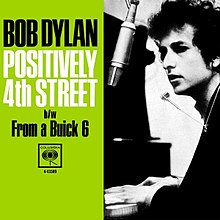
18“Positively 4th Street” (1965)

This bitter diatribe, released in 1965 as a single between his “Highway 61 Revisited” and “Blonde on Blonde” albums but not included on either, had everyone speculating at the time to whom Dylan was referring. He lambastes the individual by saying he (or she) has “a lot of nerve to say you are my friend” and then offers several examples of the person’s duplicity. In the years since, Dylan has revealed that it’s an amalgam of many people he knew from his days playing folk clubs in Greenwich Village (where 4th Street is a main thoroughfare) who turned on him when he went electric and started playing rock instead of folk. One critic called the song “righteously nasty”; nevertheless, it peaked at #7 on US pop charts. 

19“Shelter From the Storm” (1975)

One of Dylan’s simplest songs musically, “Shelter From the Storm” is lyrically poignant and bittersweet. In a nutshell, the song’s ten verses tell the story of a man who finds a woman when he is at rock bottom, and she welcomes him into her life, but he wanders off and loses her, much to his eternal regret. As one writer put it, “It’s essentially a study in the beauty and spirituality in pain, highlighting the terror that accompanies the greatest joy.” It’s found as the penultimate track on his superb “Blood on the Tracks” LP, when his voice was arguably at its best. 

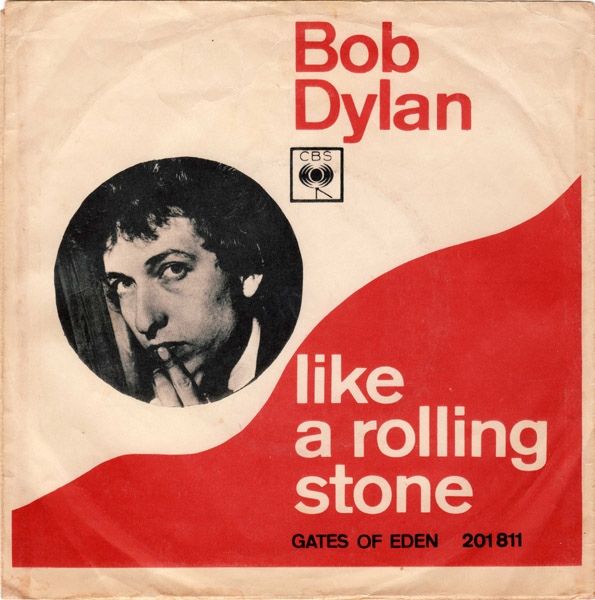
20“Like a Rolling Stone” (1965)

Considered one of the most influential compositions in postwar popular music, this epic piece (the first Top 5 hit single to break the six-minute mark) set the stage for the folk rock revolution of the mid-to-late ’60s and the singer-songwriter genre of the early ’70s. It started life as an extended piece of verse Dylan wrote over three days in early 1965. ”It was ten pages long,” he said. ”I just vomited up all these words and images on my typewriter, just a rhythm thing on paper about my honest contempt for a hostile, unfamiliar world that fragile people have to endure.” He tried recording it in 3/4 time at first, but once he shifted to a rock beat that featured Al Kooper improvising the Hammond organ riff that defined the track, “Like a Rolling Stone” evolved into one of the landmark releases in all of rock music.

********************************