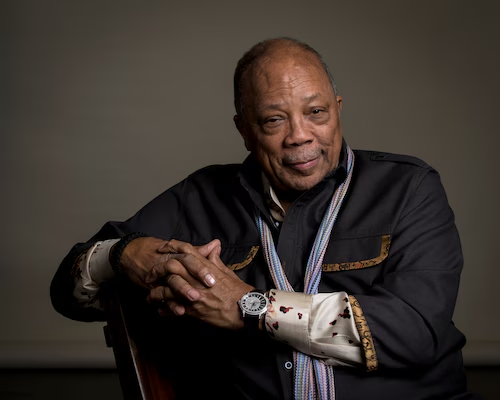
They’re just not my cup of tea

Funny thing about popular music:  There’s no accounting for taste.  One person’s trash is another person’s treasure.

Or, as Paul Simon once put it, “One man’s ceiling is another man’s floor.”

Everyone has them:  Hugely successful groups that you just don’t like.

Now, if you’re a classic rock music fan like me, you can’t be naming people like Bobby Goldsboro or The Osmonds.  That’s not the point here.  Of course you don’t like acts like these, but you were never in their demographic target audience anyway.  No, I’m talking about majorly successful rock bands who, for sometimes undefinable reasons, just rub me the wrong way.

People may not like musical artists because of the unfavorable circumstances in which they first heard them.  Perhaps you found them noisy and harsh, or too derivative of another band you liked much better.  Or maybe you heard them on the car radio as your main squeeze was breaking up with you.  Or it could be that your boyfriend/girlfriend loved the group and you tried (unsuccessfully) to learn to love them too.

Here at Hack’s Back Pages, I try to focus on the good stuff from the 1955-1990 period. I have praised the bands, albums and songs that I think deserve it, and have pretty much ignored the rest. But every once in a while, I focus attention on the music that I feel does NOT deserve the success it has achieved, and this post will be one of those instances.

As you peruse this list of ten popular classic rock bands I cannot stand, it will become abundantly clear to you that I cannot abide groups that have poor singers.  I hold Robert Plant, Roger Daltrey and even Ozzy Osbourne (in Black Sabbath days) as exemplars of hard rock singers who have a command of melody and control without constantly consorting to shrieking and howling like a bag of angry cats.

I also have a problem with bands who can’t seem to write songs that show at least a modicum of musical sophistication.  Yes, I know, rock ‘n’ roll is supposed to be basic, primal, rebellious, energetic, revolutionary.  But must it be devoid of actual melody and harmony?

Go ahead, call me a snob, or a dinosaur.  I can take it.

I know I’m going to piss off a whole lot of people here — people who will no doubt vigorously disagree with some of the bands I’m criticizing. Too bad.  It’s my blog.  If you want to come up your own list of ten bands you never liked, you might start your own blog.  But hey, I’d still be happy to hear your objections, or your candidates for bands that you think should be on a list like this.

************************
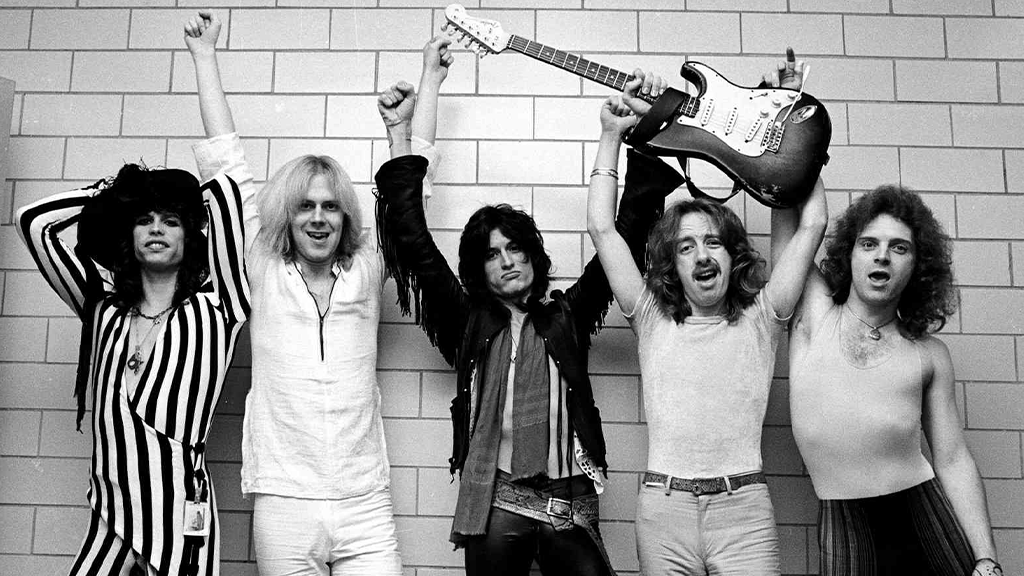
Aerosmith

They have had their moments:  The 1974 anthem “Dream On” is a great classic, and their 1975 LP “Toys in the Attic” is pretty consistent.  But I’ve never cared for Steven Tyler’s screechy voice, and I would venture to say that nearly every album they made was more filler than anything worthwhile.  I made the mistake of trying to read Tyler’s appallingly self-indulgent 2012 autobiography, “Does the Noise in My Head Bother You?” which made me dislike him as a person as much as I disrespect him as a singer.  The group fell apart in the ’80s and I thought that was the well-deserved end of them, but then they were somehow reborn in the late ’80s with more singles and albums and tours.  I had no use for any of it.  Joe Perry is a pretty solid electric guitarist, but that’s about the extent of anything nice I can say about these bad boys from Boston.
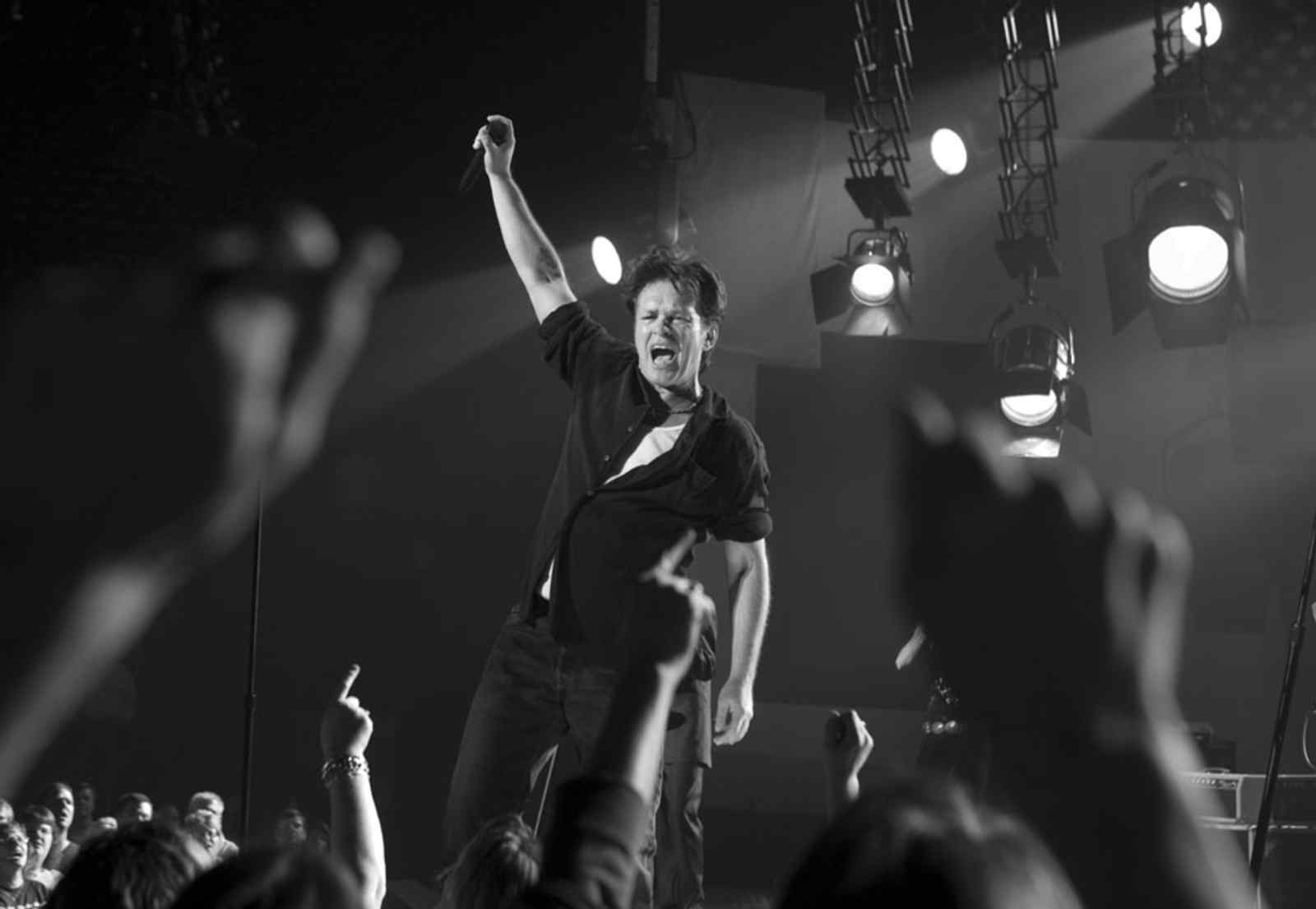
John Mellencamp

Before you Mellencamp fans come looking for me with a meat ax, let me just say that I don’t hate him or his music.  But I sure don’t love it either.  It’s just okay, and he’s way overrated.  Maybe it’s because he came along in Bruce Springsteen’s shadow, but I always thought of Mellencamp as a cheap imitation, a poor man’s attempt at Springsteen’s perceptive and effective working class anthems and public persona.  (I suppose you could say the same about Bob Seger, a fine rock singer of basic Midwest rock songs.  He was very good, but he wasn’t The Boss.)  Mellencamp has toured incessantly and continued to release new albums every couple of years, and some of them are even interesting in places.  But I can only shrug my shoulders and say, “Eh…”

Van Halen

Even if you account for Eddie Van Halen’s remarkable lead guitar solos and riffs throughout the group’s early catalog, one fact remains:  For the most part, Van Halen is mind-numbingly average.  They sometimes did a nice job on vocal harmonies, and David Lee Roth was actually a strong singer, but most of the group’s material is just so boring, plodding, nondescript.  And yet, these guys are held up as some sort of saviors of hard rock music during the disco/New Wave era.  Sorry, I’m not buying it.  Things got way worse when they recruited Sammy Hagar (also a decidedly average talent at best) to take over for Roth in 1985.  Just like that, a band that was capable of the occasional B- classic rock track (“Runnin’ With the Devil,” “Dance the Night Away”) suddenly slipped to C- and worse.  Thanks for nothing, Sammy…
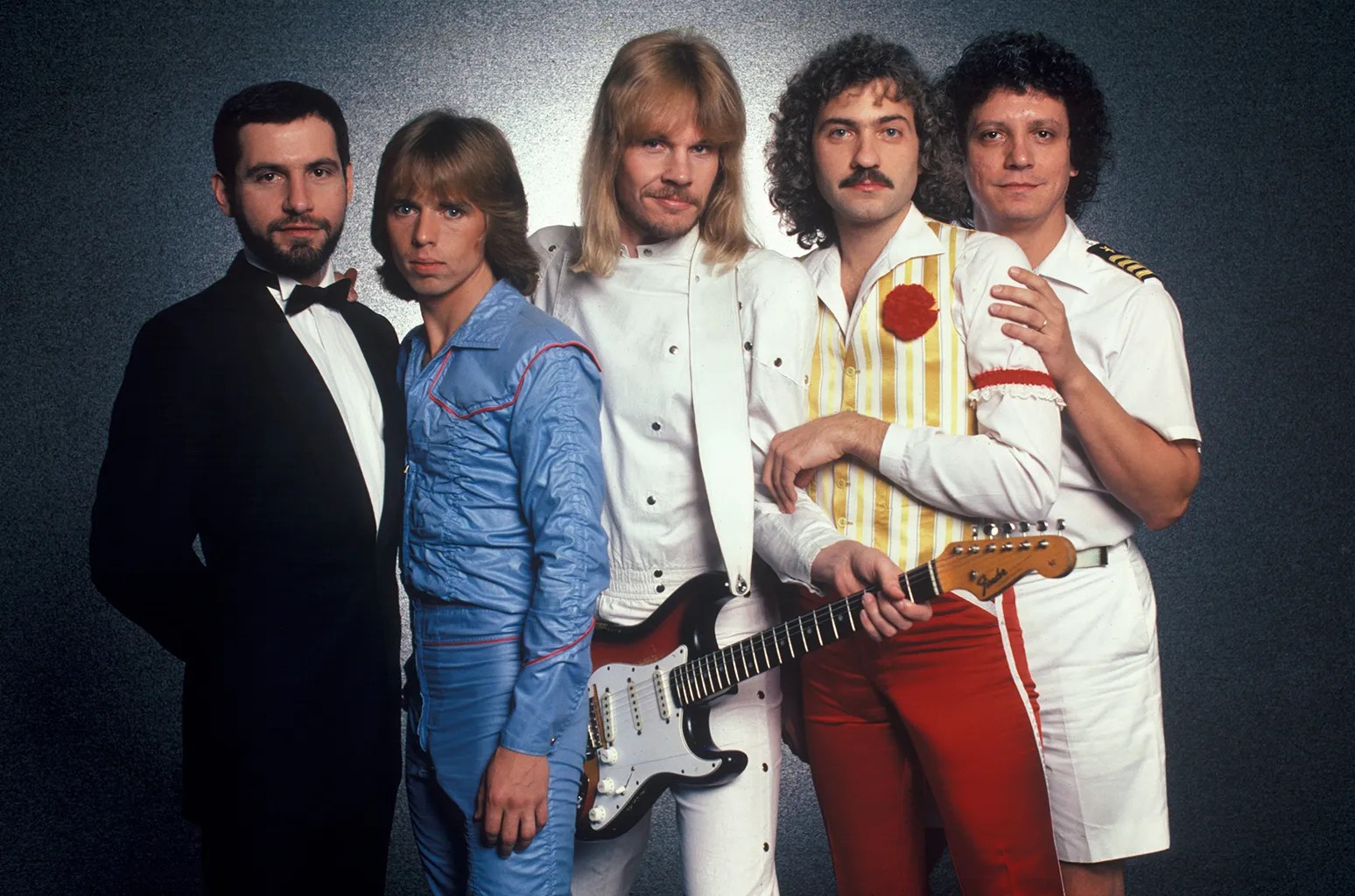
Styx

Oh, spare me.  I’d rather plunge knitting needles into my ears than put up with five seconds of Dennis DeYoung’s cringe-inducing vocals.   “Lady”?  “Babe”?  “Come Sail Away”?  “Mr. Roboto”???  Just awful stuff, all of it, thanks to that voice.  I was so turned off that I never bothered to explore Styx’s catalog until very recently, and I wasn’t even aware that DeYoung and guitarist Tommy Shaw feuded continually, each left the band for solo careers, and attempted reuniting with little success.  Things got so bad between DeYoung and the rest of the band that his name has been omitted from Styx’s official website, as if he had never been a member.  Ouch.  Maybe there’s hope yet for me to learn to appreciate the Styx stuff without DeYoung on it.  We’ll see.  But I maintain my dislike of the Styx songs that were played ad nauseum in the late ’70s and early ’80s.

Bon Jovi

Simplistic, unimaginative, unremarkable, annoying.  That’s Bon Jovi in a nutshell to me.  I recognize that Jon himself is quite the hunk who brings tons of women to his concerts.  And there are a few moments buried on his albums that stand out from the numbing sameness of his oeuvre.  But I’m sorry, he’s just not for me.  I’ve been listening to a lot of Bon Jovi’s stuff the past week, racking my brain to pinpoint what it is about them that leaves me cold.  I suppose it’s because they sound to me like a hundred other groups.  Not much originality to speak of.  When I hear even their big hits like “Livin’ On a Prayer,” I have to think, “Who is this again?”  It could be any other nameless American group of the 1980s, and I’m just not impressed.

AC/DC

If you want to send me running screaming from your room, just cue up AC/DC’s “Dirty Deeds Done Dirt Cheap,” one of the saddest excuses for a hard rock anthem ever recorded.  These guys were Australia’s biggest rock success story, and for the life of me, I have never understood why.  “Fingernails on a blackboard” is the most accurate way to describe the voice of original AC/DC vocalist Bon Scott.  Simply unlistenable.  I find it both telling and pathetic that when Scott died of self-inflicted alcohol poisoning in 1980, the band held auditions and came up with a replacement (Brian Johnson) who somehow matched that excruciating larynx-shredding style (it certainly can’t remotely be called singing).  Nevertheless, the group has sold untold millions of copies of albums, and they rank among the most popular rock acts of all time.  Not in my house, man.
Beastie Boys

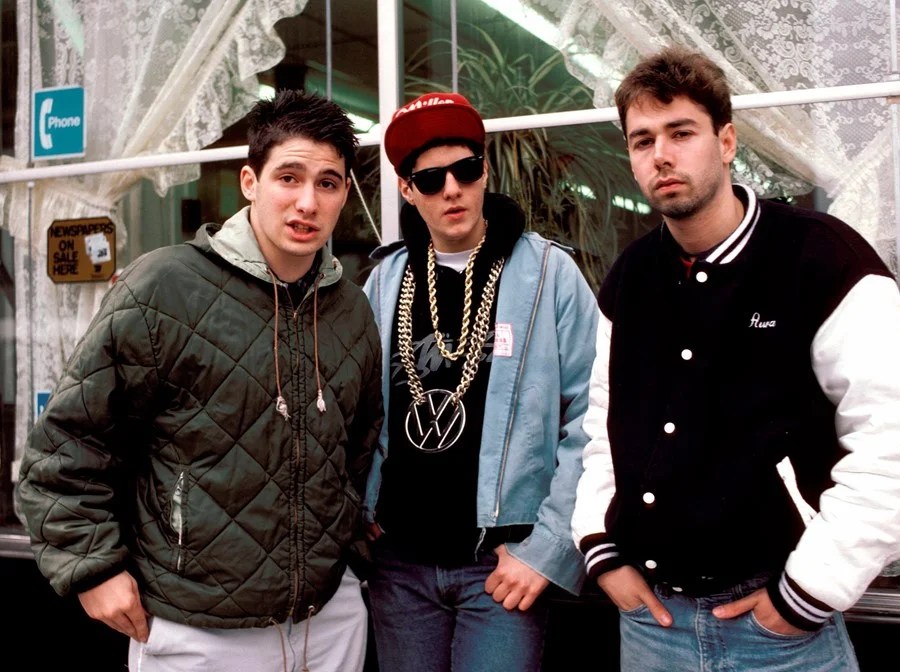
Originally a hardcore punk band out of New York City in 1980, this trio made the switch to hip-hop in 1985, and became the first white group to dabble in (and find success with) what had exclusively been a black phenomenon.  I admit to not much caring for hip-hop in general, but I found these guys irritating for trying to pose as something they weren’t.  Suburban white kids chose to eat them up, and they proceeded to release eight Top 20 albums (including four Number Ones) over the next 30 years.  Incredible.  And to add musical insult to eardrum injury, The Beastie Boys were actually inducted into the Rock ‘n’ Roll Hall of Fame a few years ago.  Like I said, there is NO accounting for taste.

Guns ‘n Roses

Debuting in 1985, they claimed to be “a mixture of hard rock, punk, blues and metal.”  It’s a horrendous mess, mostly.  As with almost every band I’ve mentioned here, they had a couple of memorable tracks.  By far, their best moment was the 8-minute anthem “November Rain,” which has two parts, showcasing their melodic side followed by a lengthy guitar solo by Slash.  I just couldn’t get into the band overall, though, partly because vocalist Axl Rose was such a pretentious ass who was simply begging to be punched in the face.  But again, who can explain the preferences of millions of rock music fans who found anything appealing about GNR’s music?  I just don’t hear it.
KISS

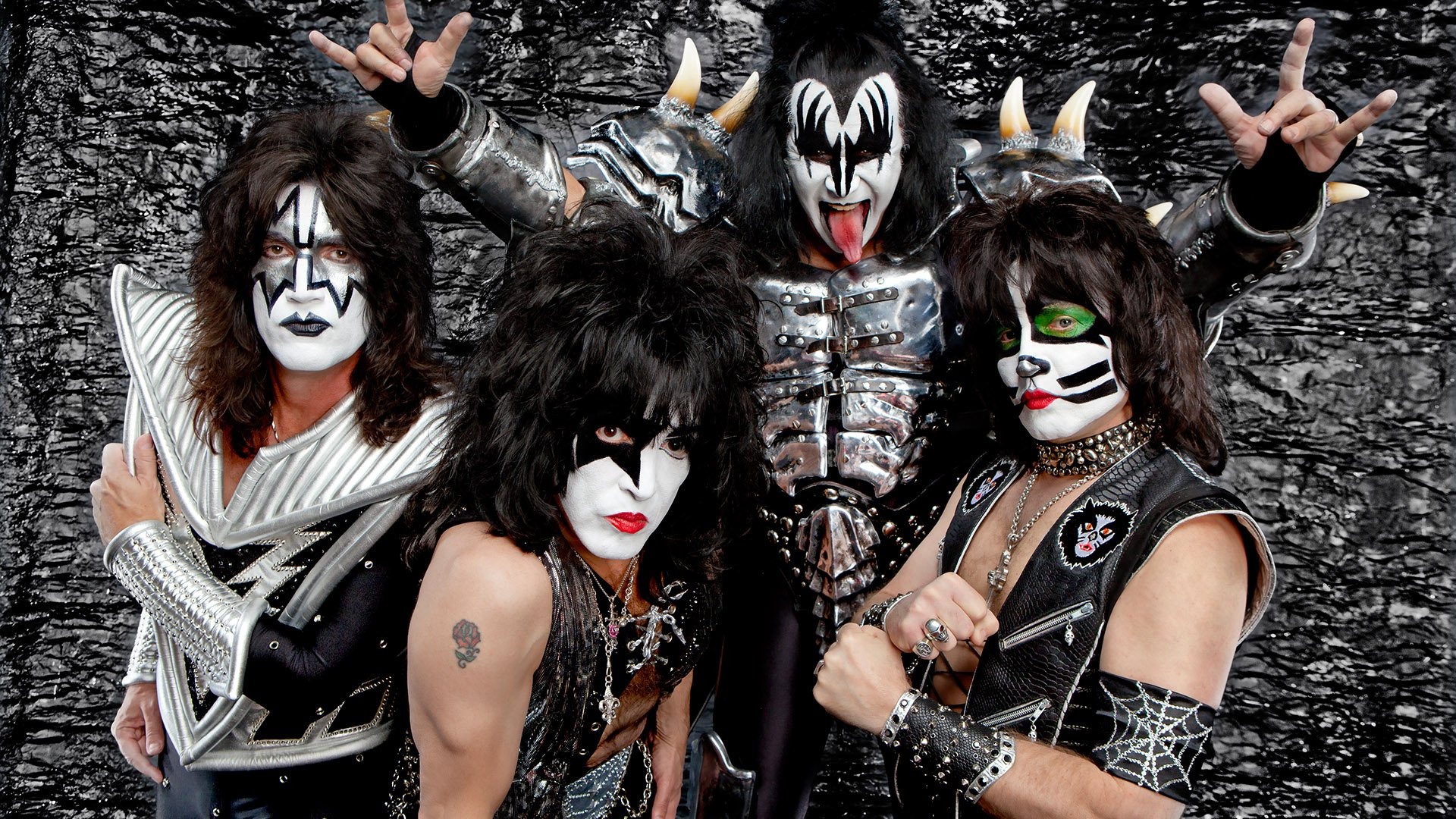
Bwahahahahaha!  There is absolutely nothing musical to be heard from this band of costumed showmen.  And let’s be clear, even Gene Simmons has said KISS was born of the notion that it didn’t much matter what they played.  It was all about the pyrotechnics, the light show, the sheer volume and, of course, the face paint and faux-threatening poses they struck onstage.  To attend a KISS concert was to be assaulted and overwhelmed by what you saw more than what you heard.  Therefore, to listen to a KISS album was an exercise in total futility, for there was nothing there deserving of your time.  But sure enough, the group’s fans lobbied for years until these clowns were also inducted in the Rock Hall.  As showmen?  Well, okay, I guess.  As musicians?  Not on your life, nor mine.
Ted Nugent

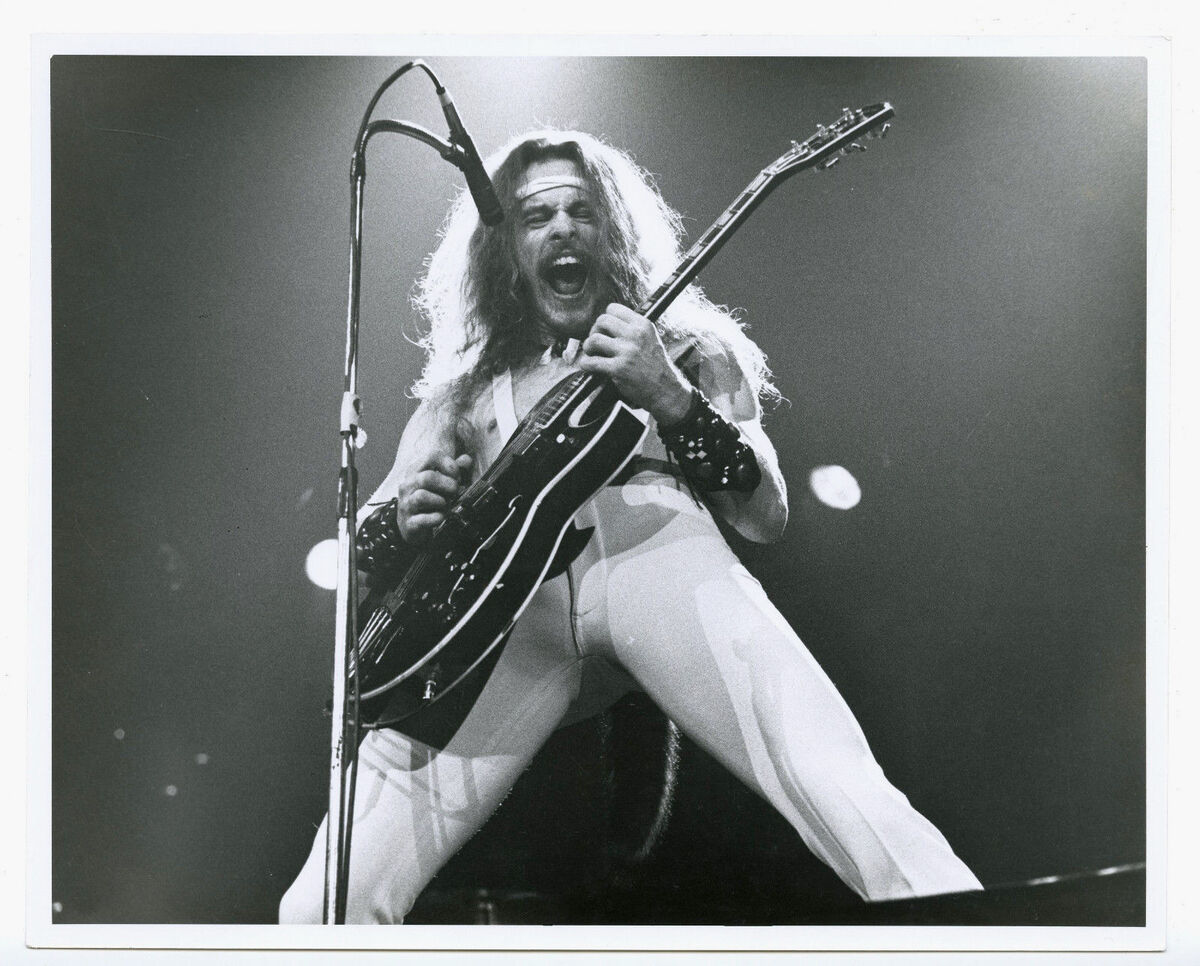
All right, here’s credit where it’s due:  When he was only 19, Nugent was the lead guitarist and songwriter for a ’60s band out of Michigan called The Amboy Dukes, who were responsible for a wonderful psychedelic nugget from 1968 called “Journey to the Center of Your Mind,” which reached #16 on the charts.  Okay, that’s the only good thing I have to say about this raging lunatic.  He inexplicably became a popular solo artist in the mid-’70s, riding the wave of dreck like “Cat Scratch Fever,” where his voice sounds like, well, a feverish catfight.  So I’ve never liked any of his harsh, tone-deaf albums, but an even better reason to dismiss him is for his hateful political views that include condoning violence against gun control advocates.  The guy is an unhinged racist and thoroughly unlikable in every way.

*************************

I started putting together a Spotify playlist of songs by these bands, but then I said to myself, “Why on earth would anyone ever listen to it?  I certainly wouldn’t.”  So if you happen to enjoy any of the ten bands mentioned above, by all means, head on over to Spotify, or to your album/CD collection, and put ’em on.  Just don’t invite me over until you’re finished.

I’ve got my finger on the pulse

In Chicago in 1944, an 11-year-old boy had begun to hang out with a gang of troublemakers in his rough-and-tumble neighborhood. In the community rec center, they picked a lock and broke into the kitchen to sample lemon meringue pies, and the boy noticed a piano sitting on a small stage nearby.

“I went up there, paused, stared, and then ran my fingers across the keys for a moment,” the boy wrote in his memoirs decades later. “That’s when I began to find peace. I was 11. I knew this was it for me. Music was it. Forever.”

That young boy would go on to be nominated 85 times for Grammy Awards, winning 28. He collaborated with the broadest array of musicians you can imagine — Duke Ellington, Snoop Dogg, Lesley Gore, Ray Charles, Sarah Vaughan, Michael Jackson, Frank Sinatra, Aretha Franklin, Donna Summer, Ella Fitzgerald, George Benson, and many dozens more.

That man was Quincy Jones, one of the most accomplished figures in the music business over the last seven decades. He died November 3 at age 91.

The incomparable Stevie Wonder said, “The most important thing Quincy taught me was, ‘Don’t stop until you know you got it like you want it, until it feels right, it feels good to you. Don’t settle for your vocals just being OK. Make sure that you give it all that you’ve got — not for the money of it, but for the art of it.’ You can look back and hear all of that when you hear the records he made.”

From the jazz records he made in the ’50s to the pop songs he produced in the ’60s, from the R&B LPs he cut in the ’70s, to the multiplatinum albums he produced for iconic stars of the ’80s, Jones showed an uncommon ability to understand and appreciate a wide variety of genres. As a producer, arranger, conductor, songwriter and instrumentalist, and later as a businessman and industry mogul, Jones made his indelible mark, influencing and mentoring many artists and protégés over his seven-decade career.

It might not have worked out that way. When he was just 7, Jones lost his mother to mental illness and institutionalization, and his father remarried and moved his family of eight children and step-children to Seattle. Jones was tempted by “the gangster life,” as he put it, but he was driven by an even stronger passion to create music. He learned trumpet and musical arranging, playing in marching bands and jazz combos alike. He earned a scholarship to Berklee School of Music in Boston but dropped out when jazz giant Lionel Hampton tapped him to join his touring band at only 20.

In New York, he worked with the Tommy Dorsey Orchestra at CBS, where he played trumpet behind Elvis Presley’s first TV appearances on “Ed Sullivan.” Jones toured the world as trumpeter and musical arranger for Dizzy Gillespie’s band and also studied music composition and theory with world-renowned music teacher/composer Nadia Boulanger in Paris. “She taught me so much,” Jones said, “and gave me the best advice I ever got: ‘Quincy, your music will never be more nor less than you are as a human being.’ It made me realize the importance of treating people fairly and kindly, and to encourage people to be their best selves.”

Jones in the 1950s

In the late ’50s, he formed The Jones Boys, an 18-piece big band he led, who toured North America and Europe to enthusiastic audiences and rave reviews, but the earnings failed to cover costs, and the band was forced to dissolve. “We had the best jazz band on the planet,” Jones recalled, “and yet we were literally starving. That’s when I discovered that there was music, and there was the music business. If I was going to survive, I would have to learn the difference between the two.”

He began concentrating his efforts in recording studios, helping to produce, arrange and conduct orchestras for some of the biggest stars of the late ’50s and early ’60s — Dinah Washington, Billy Eckstine, Ray Charles, Peggy Lee. He produced all four of Lesley Gore’s million-selling singles (“It’s My Party,” “Judy’s Turn to Cry,” “She’s a Fool” and “You Don’t Own Me”).

For Frank Sinatra, Jones arranged and conducted on two of his most popular albums — “It Might As Well Be Swing” with Count Basie in 1964 (which included the award-winning “Fly Me to the Moon”), and his live LP “Sinatra at the Sands” in 1966. “He took me to a whole new planet,” said Jones. “Working successfully with Frank opened a lot of doors for me.”

Jones and Sinatra in the studio in 1964

But Jones had already opened a few doors through his own efforts in the front office at Mercury Records, where he rose to be vice-president, the first African-American to do so at a major label. By the mid-’70s, in a partnership with Time Warner, he created Quincy Jones Entertainment, which included the pop-culture magazine Vibe and Qwest Broadcasting. He later sold it the 1990s for $250 million.

He also showed a talent for composing and producing film scores, beginning with 1964’s “The Pawnbroker.” He wrote more than three dozen, including “Walk, Don’t Run,” “In Cold Blood,” “Cactus Flower,” “$ (Dollars)” and “The Getaway.” Most notably, he scored the Oscar-winning “In the Heat of the Night” in 1967, with Ray Charles singing the title song. “I loved scoring films,” he once said. “It’s a multifaceted process, an abstract combination of science and soul.”

For a few years in the early ’70s, he recorded several solo albums that fared well on both pop and R&B charts, especially “Walking in Space” (1969), “You’ve Got It Bad Girl” (1973), “Body Heat” (1974), “Mellow Madness” (1975), “Sounds…and Stuff Like That! (1978) and “The Dude” (1981). He also wrote the theme music to such top TV series as “Sanford and Son” and “Ironside” and the first episode of the groundbreaking “Roots” miniseries. During that same period, he worked on successful album projects with Aretha Franklin, The Brothers Johnson, Rufus with Chaka Khan, Donny Hathaway and Billy Preston.

His most famous collaboration came when he supervised the adaptation of the Broadway score for the 1978 film “The Wiz,” where he met Michael Jackson. They hit it off immediately, and Jackson insisted on Jones as producer of what would become his landmark solo album, 1979’s “Off the Wall.” Jones remembered Jackson having very strong opinions about how the tracks should be recorded, and they sometimes disagreed. “I recall Michael thought we needed to get rid of the strings during the intro to ‘Don’t Stop ‘Til You Get Enough.’ I said, ‘No, Michael, those will be like a siren calling everyone to the dance floor.’ Sure enough, I was right about that one.”

Jackson and Jones with their multiple “Thriller” Grammys in 1984

Their studio chemistry peaked three years later when they recorded 30 tracks and then selected the best nine to comprise the universally appealing “Thriller,” widely regarded as the biggest selling album of all time. It held the #1 slot for nearly 40 weeks in 1983-84, and Jackson credited Jones with pushing him to reach further, higher, deeper. “He’d make you do a thing until it’s perfect,” Jackson said in 1985. “He’d say, ‘It’s beautiful, Michael. We have a take!… Now, can you give us one more?'” It was also Jones who came up with the idea to bring in Eddie Van Halen to record the electrifying guitar solo on “Beat It” and Vincent Price to handle the spooky narration that closes “Thriller.”

Jones went on to produce Jackson’s third multiplatinum album, 1987’s “Bad,” with its five chart-topping singles, and he also shared his studio talents with Donna Summer, producing her 1982 LP and co-writing its hit “Love is in Control (Finger on the Trigger),” and George Benson’s “Give Me the Night” album in 1980.

Jones (second from left) with Lionel Richie, Daryl Hall, Stevie Wonder and Paul Simon in 1985

Some have called his leadership role as producer of the extraordinary “We Are the World” recording session in early 1985 as his crowning achievement. Lionel Richie, who co-wrote the song and helped shepherd the project, said he assumed they would bring in the numerous stars one by one to sing their parts and then put it all together afterwards, but Jones said, “No way, man. We’ll be here for three weeks. We’re going to bring them all together, put ’em in a circle with all the mics, and everyone will sing it looking at each other.” It seemed daunting, but Jones managed to control the concentration of major celebrities by famously posting a sign at the studio entrance: “Check your egos at the door.” Said Richie, “Quincy had everyone’s complete respect and attention, so it worked. He got everyone to cooperate. It was incredible. He was a master orchestrator, not only of music but of personalities.”

Jones still wasn’t done. In 1991, he won the Album of the Year Grammy for his LP “Back on the Block,” which brought together more than a dozen major stars from three generations, including Miles Davis, Sarah Vaughan, Dionne Warwick, Luther Vandross, Ice-T, Barry White, Al Jarreau and Ray Charles. The album topped R&B charts and spawned multiple singles like “I’ll Be Good to You” and “The Secret Garden.”

Wonder and Jones

He followed that up with “Q’s Jook Joint” in 1995, another star-studded affair he produced that topped jazz charts and merged musical styles. Stevie Wonder said, “There was one track where he had Ray Charles, Bono and me doing ‘Let the Good Times Roll.’ The three of us weren’t in the room together, we did our parts separately, but Quincy put it together like we were there at the same time. It’s kind of like making a movie. You have to make it feel like it was right there and then. And he was able to do that, put the pieces together and come up with a great track.”

Jones said at the time, “Music transcends time, and it bridges generations. Bebop and hip-hop, in so many ways, they’re connected. A lot of rappers remind me so much of bebop guys in terms of improvisation, beats and rhymes.”

In a sort of “full circle” symmetry, one of Jones’s early recorded pieces, “Soul Bossa Nova” (1962), was prominently featured in the 1997 box-office smash “Austin Powers: International Man of Mystery.”

He was married three times, most famously to actress Peggy Lipton (1974-1990), and had seven children. His daughter Rashida, an actress who starred on the “Parks and Recreation” TV series, described her father as “a genius, a giant, an icon, a culture shifter.”

In a 2018 TV interview, Jones was asked how he “worked his magic” in the studio. “I listen to the orchestra like an x-ray machine,” he noted. “I’ve been around it all my life. If it’s too thick, too thin, too slow, too fast, wrong key, whatever, I can just tell. And we do another take and modify it accordingly. I don’t go by surveys or focus groups. I go by my goosebumps. If it gives me goosebumps, it’s right.”

“If an album doesn’t do well, some people will say, ‘it was the producer’s fault,'” Jones said, “but if’s that’s true, then if it does well, it should be his ‘fault,’ too. The tracks don’t just all of a sudden appear. The producer has to have the skill, experience and ability to guide the vision to completion.”

When asked for any words of wisdom, Jones talked about the need to remove negativity from his life. “Holding grudges, allowing anger in, it’s all a big waste of time. Some words from Mark Twain still overwhelm me: ‘Anger is an acid that does more harm to the vessel in which it’s stored than to anything on which it’s poured.‘ Isn’t it amazing it took me until I was 85 to figure that out?”

Rest in peace, Quincy Jones. You’ve brought positive vibes to music lovers everywhere, and you’ll be sorely missed.

***********************

The Spotify playlist below provides a cross section of material Quincy Jones has written, produced, arranged and conducted and/or performed on during his half-century in the business.