Tell me why you’re crying, my son

In 1968-69, I was learning how to play guitar as a middle schooler. The songs my friend Ben Beard and I chose to learn and memorize were acoustic guitar-based with tight harmonies: a lot of Simon and Garfunkel, some Beatles and several by Peter, Paul and Mary.

Peter Yarrow, Paul Stookey and Mary Travers in 1962

We were especially fond of three songs PP&M played: the old spiritual “If I Had My Way,” their #1 hit written by John Denver, “Leaving On a Jet Plane,” and especially Peter Yarrow‘s rousing antiwar anthem “Day Is Done,” with its lyrics that balanced angst with hope: “Do you ask why I’m sighing, my son? You shall inherit what mankind has done, /In a world filled with sorrow and woe, if you ask me why this is so, I really don’t know, /And if you take my hand, my son, all will be well when the day is done…”

So the news that Yarrow had died of cancer January 6th at age 86 tugged a bit at my heartstrings. Although the righteous folk music that was PP&M’s specialty had largely fallen out of favor in the late ’60s as rock music took over, I always thought highly of their marvelous voices and strong passion for the noble causes of peace and civil rights, and counted the trio among my early influences.

Yarrow, Paul Stookey and Mary Travers first joined forces in Greenwich Village in 1961 amid a thriving folk music club scene there, populated by the likes of Pete Seeger, Woody Guthrie and a then-unknown Bob Dylan. Indeed, it was Dylan’s then-manager Albert Grossman who saw their individual talents and commercial appeal and brought the three artists together. They hit a home run right out of the box with their self-titled Grammy-winning debut LP, which reached #1 and included folk standards like “Where Have All the Flowers Gone,” “500 Miles,” “Lemon Tree” and “If I Had a Hammer.”
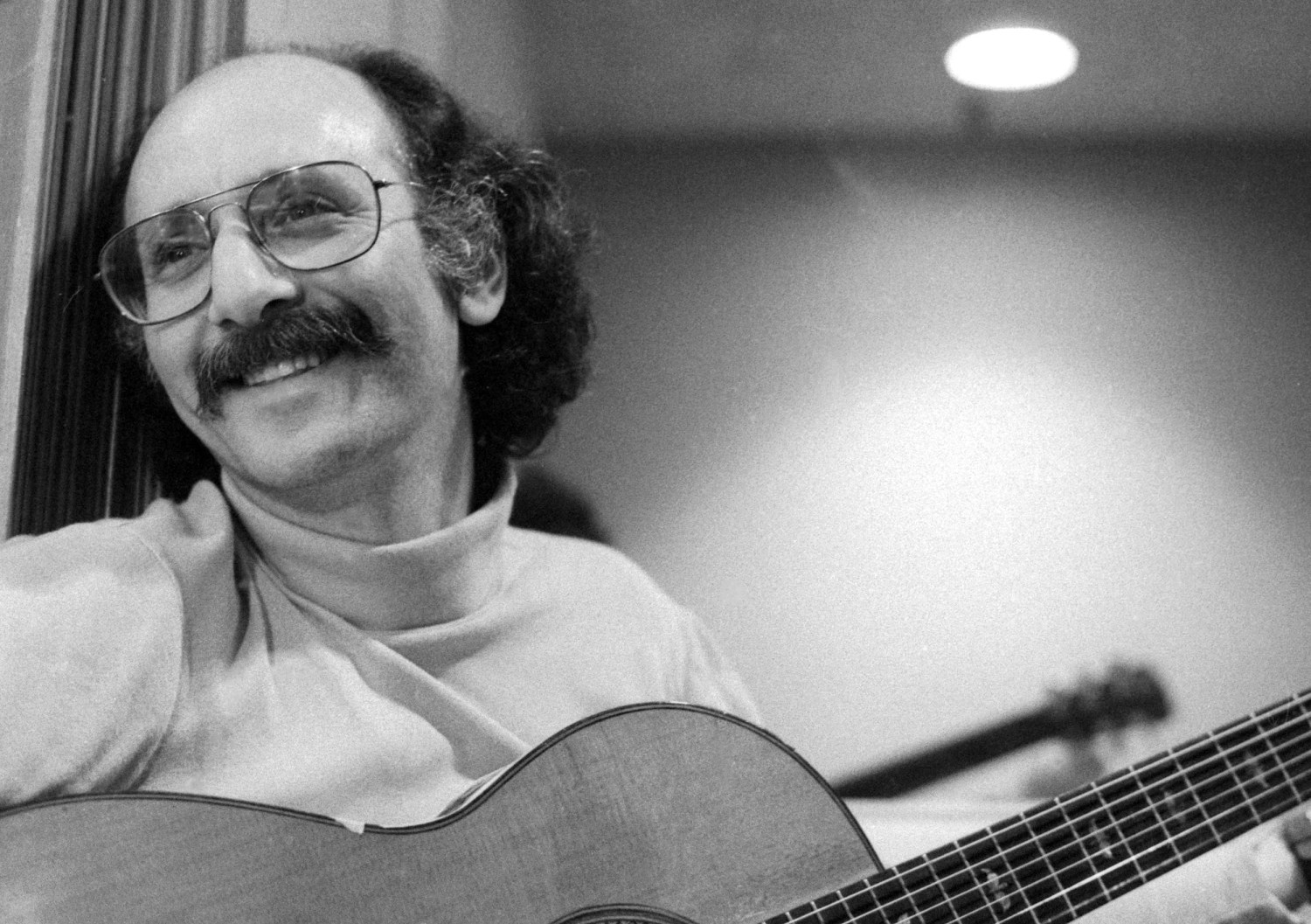
Yarrow recalled in 2009, “I had a very strong sense of purpose at that time. Mary never believed this would go much further than a year or so. Paul also was doing it on a temporary basis. But I had a different concept. Our voices, singing the way we were singing … I felt that we were carrying on a tradition that would be very important in terms of what was happening in the world. I really felt that we had something important to share.”

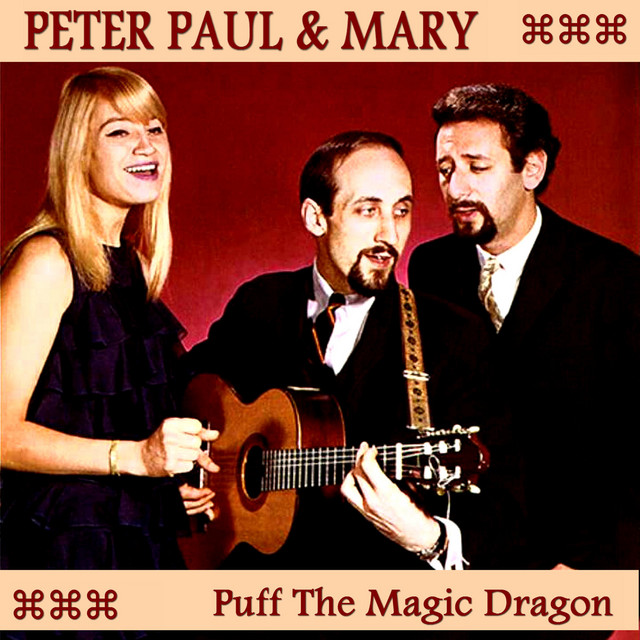
Some conservative factions in those days saw subversive meanings in popular music lyrics where none existed, and one of the first to face such criticism was Yarrow’s children’s tale, “Puff the Magic Dragon.” Ludicrously called out for being all about illicit marijuana use, “Puff” was nonetheless an enormous hit, reaching #2 in the US and a Top Five entry in four other countries. Yarrow always maintained that the song “never had any meaning other than the obvious one — the loss of innocence in children, and the hardships of growing older.” It went on to inspire three animated TV specials in the late ’70s and early ’80s, and a book adaptation.
Partly due to Grossman’s influence, Peter, Paul & Mary recorded and had huge chart success with original songs by Dylan, most notably “Blowin’ in the Wind” and “Don’t Think Twice, It’s All Right.” The trio famously performed the former song at the legendary March on Washington in 1963 when Dr. Martin Luther King Jr. delivered his “I Have a Dream” speech, and the lyric’s focus on questions about peace, war and freedom pushed it, and PP&M, to the forefront of the civil rights movement.

“It was so incredibly powerful, that moment,” Yarrow said years later. “Washington was a segregated city at that time. Here we were in our nation’s capitol, where we proclaimed with others that there was liberty and justice for all, and yet there still separate drinking fountains for blacks and whites. Mary later told me, ‘Do you remember when we were standing there listening to the speech? I took your hand, and I said, ‘Peter, we are watching history being made.””

The trio, and especially Yarrow, took on leadership roles as activists and as musicians, joining the board of the Newport Folk Festival, organizing the 1969 March on Washington and pushing for liberal candidates and causes for decades afterwards, including Barack Obama’s presidency and the National Hospice Movement and the Operation Respect anti-bullying campaign.

But Yarrow was apparently a complicated man, and it pains me to have to write about a dark chapter in his life when, in 1970, he was convicted of “immoral and improper liberties” with a teenage girl and spent three months in prison for it. He said years later, “It was an era of real indiscretion and mistakes by many male performers, and I was one of them. I got nailed for it, I was wrong, and I’m sorry for it.” In recent years, his ability to publicly support candidates and causes was curtailed by rekindled attention on his regrettable behavior.

I don’t recall hearing much about the matter in 1970 as I was playing his albums and learning his songs, but being reminded of it in obituaries last week forced me to come to terms with Yarrow as a flawed man whose unforgivable actions conflicted mightily with his support for humanitarian concerns.

My favorite PP&M LP, “Album 1700” (1967)

Still, I continue to admire his body of musical work. Yarrow was instrumental in devising the vocal arrangements that made the best use of Stookey’s baritone, Travers’s contralto and his own tenor, combined in soothing harmony on nine albums during their initial 1962-1970 run. Almost as important, his and Stookey’s deft acoustic guitar playing lifted their material above the majority of folk-based musical offerings of that era.

Yarrow wasn’t a prolific songwriter, but the philosophical wisdom and loping melody of his 1967 song “The Great Mandella (The Wheel of Life)” stands, in my view, as one of his best moments. I also recommend checking out his sadly ignored solo debut LP — now available as one third of a trio of the solo albums “Peter” (1972), “Paul And” (1971) and “Mary” (1971). On Yarrow’s record, you’ll find several tracks worthy of your attention such as “Mary Beth,” a lovely ballad to his wife, the spiritually centered “River of Jordan” and the hopeful singalong “Weave Me the Sunshine.”
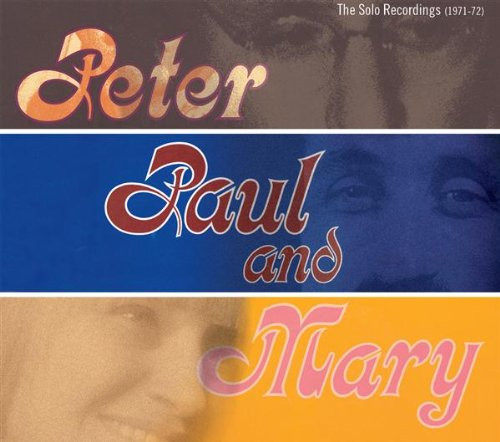
Stookey ended up scoring the biggest chart success of the three solo careers with “Wedding Song (There is Love),” a ceremonial ballad he wrote on 12-string guitar and performed for Yarrow’s wedding in 1971, which peaked at #24 on the US Top 40 chart.

Here’s something I never knew about Yarrow: He co-wrote and co-produced “Torn Between Two Lovers,” the hit single about a romantic love triangle that managed to reach #1 on US pop charts for Mary MacGregor in early 1977.

Peter, Paul and Mary reconvened in 1978 for the aptly titled “Reunion” LP, and they went on to release four more albums between 1986 and 2003, but they barely made a dent in the charts. Their time, evidently, had come and gone, although their occasional concerts during those years drew appreciative audiences of older, faithful fans.

Stookey, Travers and Yarrow (photo by Hackett)

In 1981, as a newspaper concert critic in Cleveland, I had the opportunity to interview them backstage, take some performance photos and write a justifiably favorable review (see photos above and below). In that interview, Yarrow told me how they would select their repertoire. “For us to sing a song, not only does it have to have an engaging melody, but the words need to have a sense of truth. They can’t advocate a philosophy we don’t believe in. They should be somewhat constructive. They can be angry but not hopeless. In short, they have to move us.”
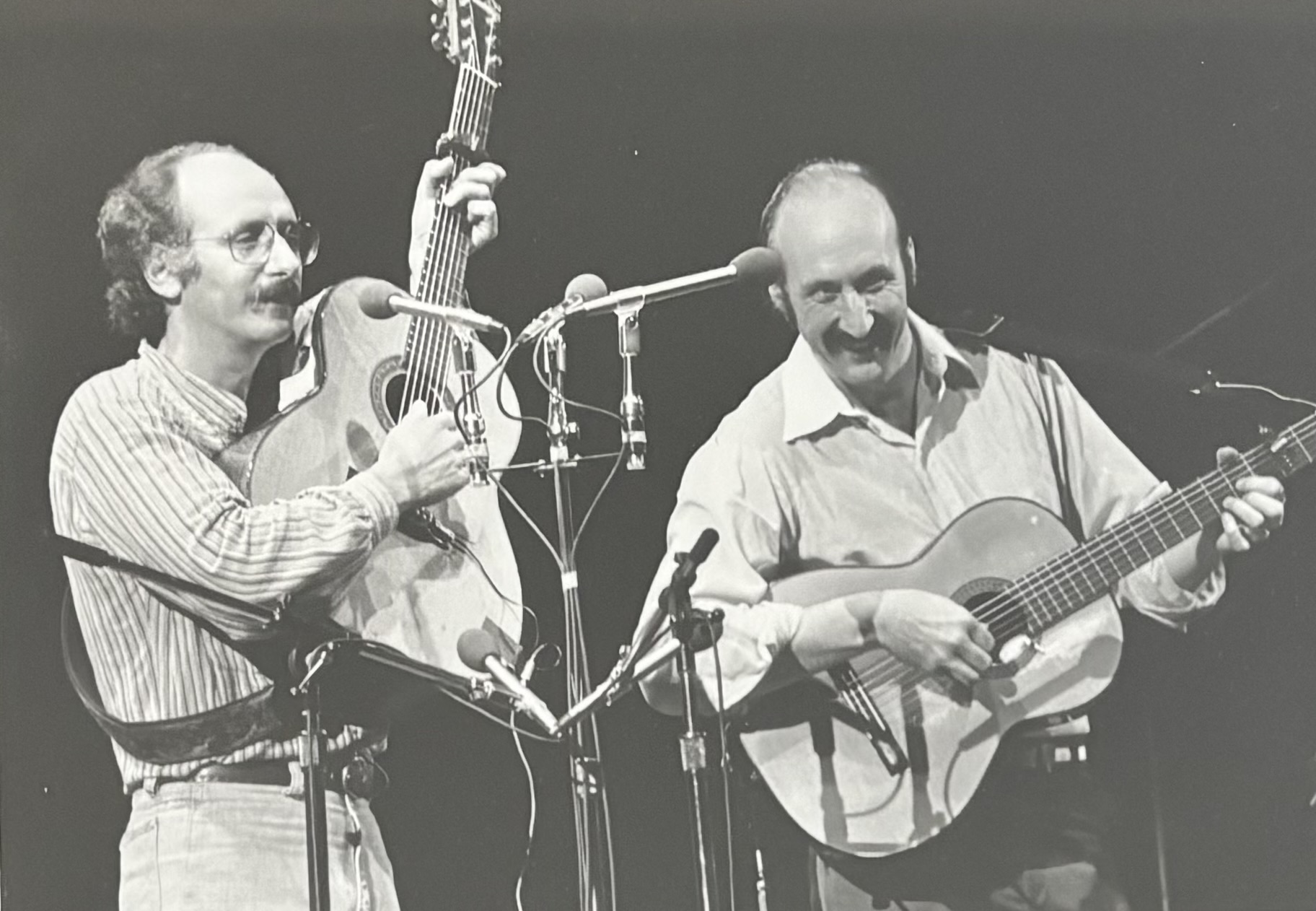
Yarrow and Stookey (photo by Hackett)

In addition to the anthems of commitment and concern, they sang tender ballads (Gordon Lightfoot’s “Early Morning Rain,” Yarrow’s “Moments of Soft Persuasion”), rousing pop tunes (“Rollin’ Home,” “I Dig Rock and Roll Music”), holiday madrigals (“A-Soalin'”) and whimsical ditties like “I’m in Love With a Big Blue Frog,” a parody of “Ghost Riders in the Sky” called “Yuppies in the Sky,” and an anti-racist screed called “Listen Mr. Bigot.” They even did “Peter, Paul & Mommy,” a whole album of children’s songs.
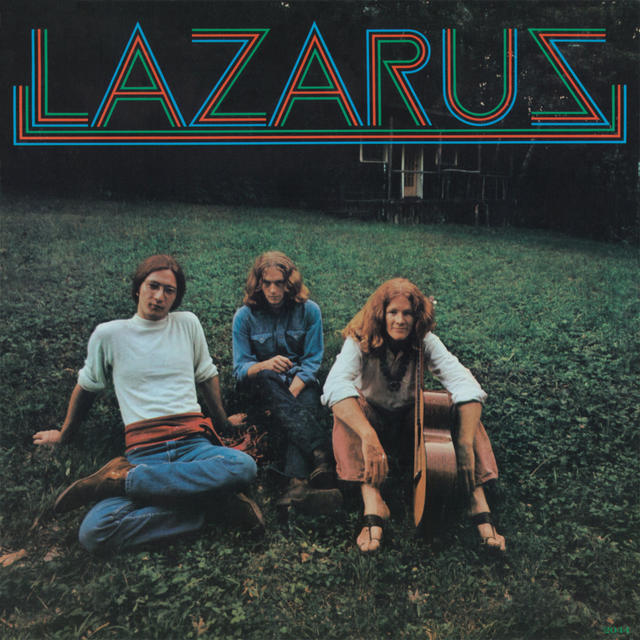
“Lazarus” (1971)

On another more personal note, I shall be forever indebted to Yarrow for discovering and signing a trio of musicians known as Lazarus in 1970. Their stunning harmonies and original songs by guitarist Billie Hughes made an indelible mark on me, and on a number of friends with whom I shared their two albums. On the first LP’s liner notes, Yarrow wrote, “A thousand talented kids had spoken to me after concerts, asking me to hear their tunes. Why had I not just offered them an address to send their tape? Then I heard their music, and it was all clear to me the role I would play in their lives. Their songs just made me feel so good.” Although they toured behind Yarrow and other acoustic acts of that period, they never caught on, which is a huge shame. (I’ve included two of their songs on the Spotify playlist below to give you a taste. The members of Lazarus also sang harmonies on Yarrow’s solo track “Take Off Your Mask.”)
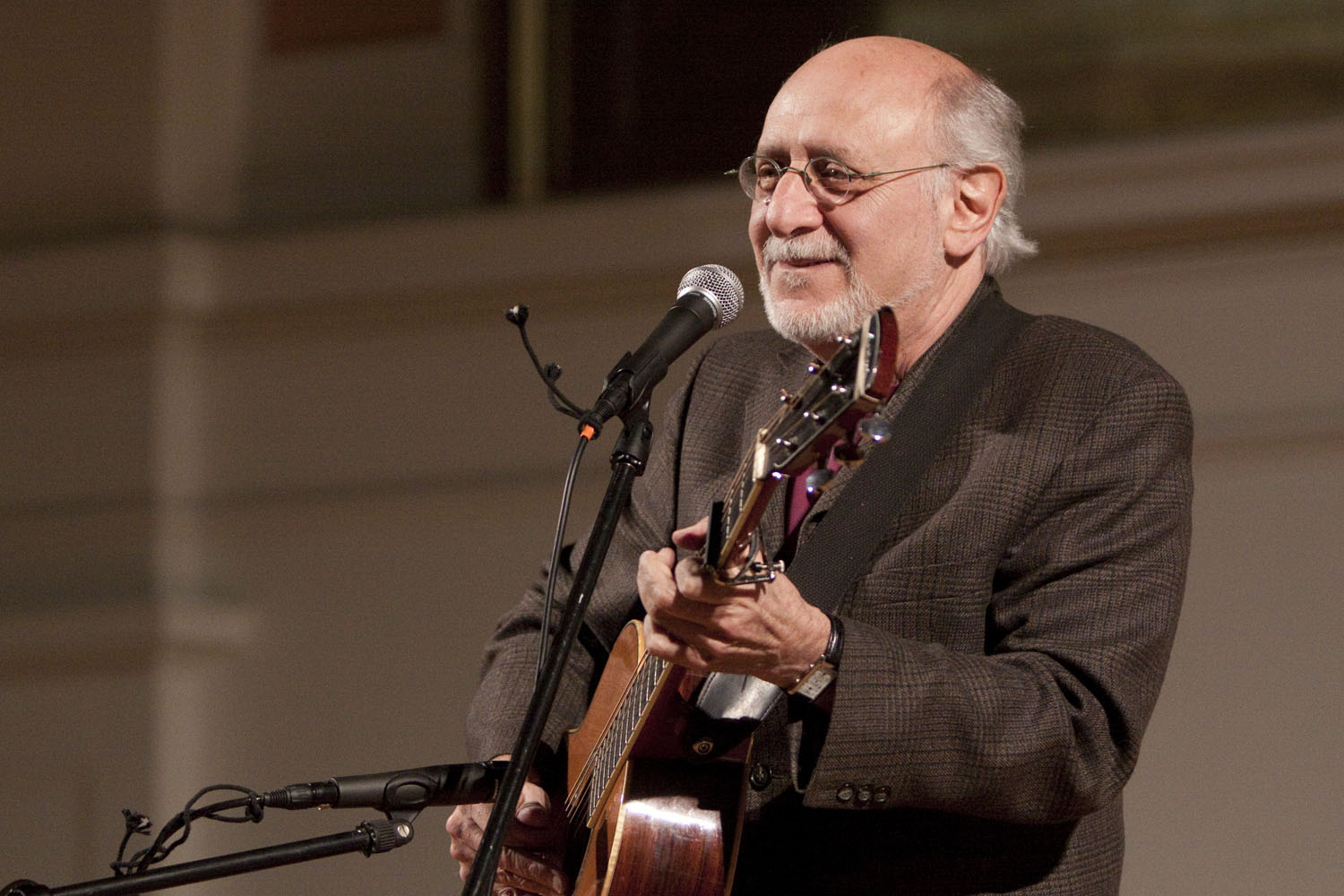
R.I.P., Mr. Yarrow. Thanks for your musical contributions, and I hope you find some measure of peace in your next life.

********************************

I am music, and I write the songs

Before the arrival of Bob Dylan, The Beach Boys and The Beatles, singing and songwriting were considered two distinctly separate talents.  Up until about 1960, you were pretty much one or the other, but not both.

Songwriters, by and large, accepted their place in the scheme of things, churning out catchy melodies and lyrics that someone else turned into hit singles.  In some cases, however, the songwriter nursed a dream of becoming a recording artist in his/her own right, even if that didn’t happen until years later.

Carole King is perhaps the best example of this.  Throughout the ’60s, she and husband Gerry Goffin wrote dozens of hits made famous by others — “Up on the Roof” by the Drifters, “I’m Into Something Good” by Herman’s Hermits, “The Locomotion” by Little Eva, “Will You Still Love Me Tomorrow” and “One Fine Day” by the Shirelles, “Pleasant Valley Sunday” by The Monkees, “(You Make Me Feel Like a) Natural Woman” by Aretha Franklin, “Hi-De-Ho” by Blood Sweat and Tears, to name just a few.

Then in 1970, King took a stab at singing, and although her debut album went unnoticed, her second was “Tapestry,” one of the biggest-selling albums of all time, and the beginning of an accomplished career as a singer.

There are some intriguing examples of hit songs from that era that were written by songwriters who hadn’t yet made their name on the charts as singers.  In the process of creating the song, the composers often recorded their own versions, either as demos or as official recordings that received little attention.  Hearing these “rough drafts” of tunes that became huge hits by others makes for fascinating listening, as the Spotify song list at the end of this blog will demonstrate.

***************************

“I’m a Believer,” written by Neil Diamond.  Made famous by The Monkees (#1 in 1967)

Diamond, who went on to write 37 Top 40 hits, developed a passion for songwriting at age 15 growing up in Brooklyn.  He had his eye on a recording career, but meanwhile, he was happy to have his songs picked up by others.  In 1966, TV producer Don Kirshner, in charge of finding material for the new created-for-TV pop rock band The Monkees, came to Diamond and selected one of his recent compositions called “I’m a Believer,” which ended up at #1 on US pop charts for seven weeks.  Diamond recorded his own version later the same year on his “Just for You” LP, which also included his first hits “Cherry, Cherry” and “Girl, You’ll Be a Woman Soon.” 

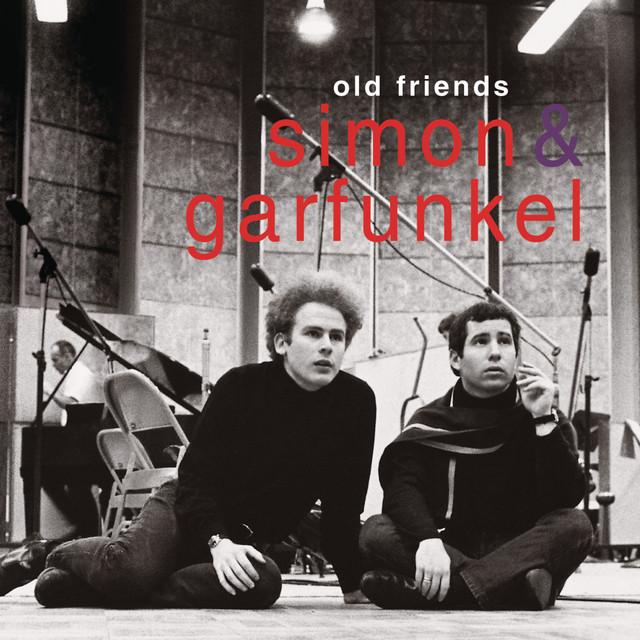
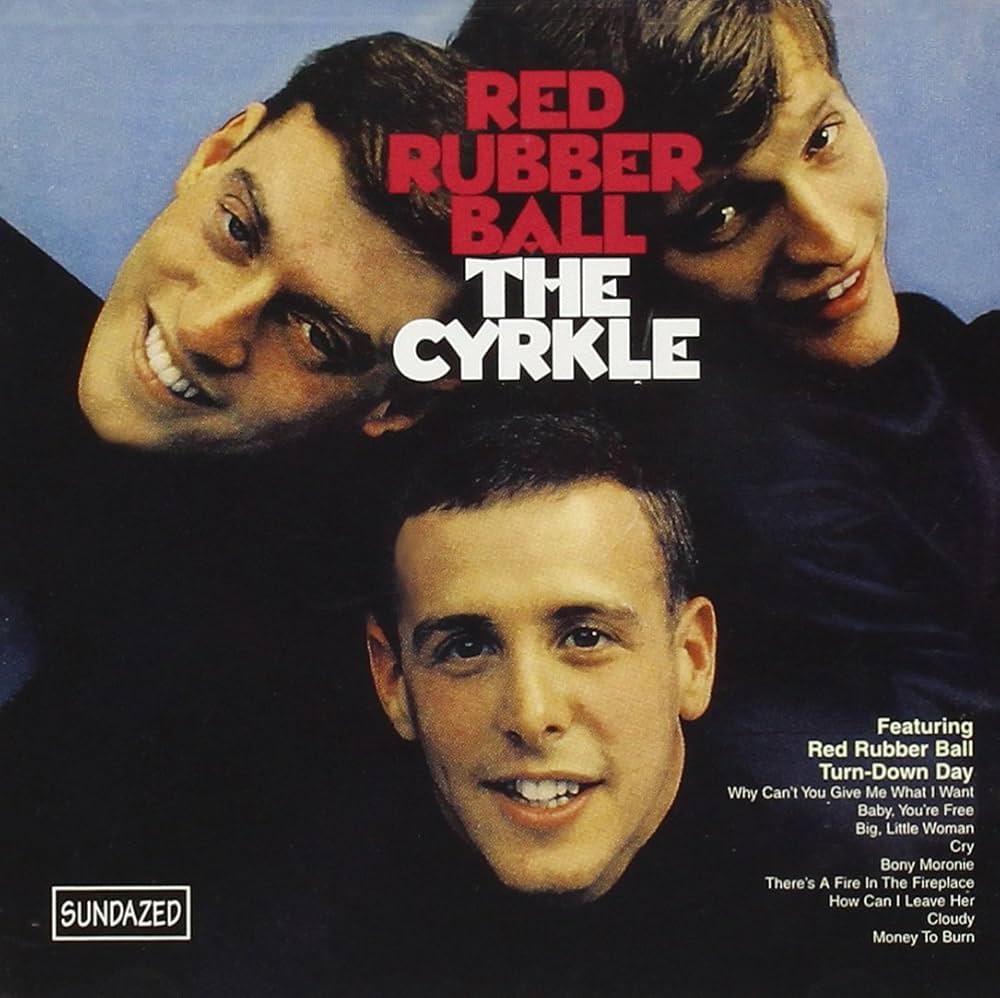
“Red Rubber Ball,” written by Paul Simon.  Made famous by The Cyrkle (#6 in 1966)

Simon had been writing his irresistible melodies and introspective lyrics since 1963, and had recorded one album with Art Garfunkel that went nowhere.  But when a producer added drums, bass and electric guitar to their acoustic recording of “The Sound of Silence,” it became a #1 hit in early 1966, and Simon and Garfunkel were off and running.  Meanwhile, he had written “Red Rubber Ball” with Bruce Woodley of The Seekers, and the short-lived band called The Cyrkle made it into a big hit.  S&G played it in concert occasionally, and their live recording of it appears on the 1997 collection “Old Friends.”

“One,” written by Harry Nilsson.  Made famous by Three Dog Night (#5 in 1969)

In 1968, at a time when bands wanted to (or were expected to) write their own songs, Three Dog Night went the other way, covering songs written by others, mostly struggling young songwriters who had great material.  Singer Chuck Negron heard the unknown album “Aerial Ballet” by Nilsson, which included a track called “One,” a simple, mellow song about the loneliness felt following a romantic breakup.  The band recorded a more exuberant arrangement for their debut album, and “One” became a #5 hit in 1969, the first of 15 Top 20 singles for the trio.

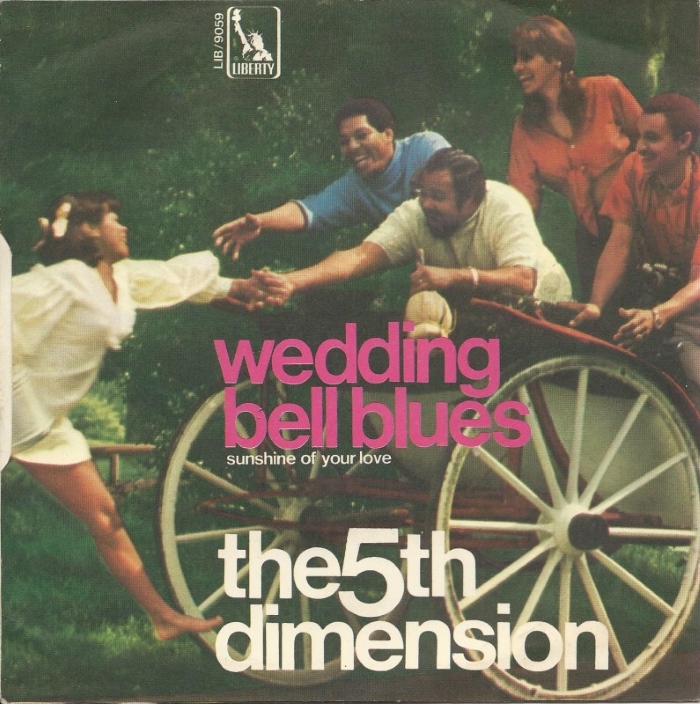
“Wedding Bell Blues,” written by Laura Nyro.  Made famous by The 5th Dimension (#1 in 1969)

Nyro’s original vision for “Wedding Bell Blues” was as part of a mini-suite with dramatic rhythm changes to reflect the dual themes of adoring love and frustrated lament felt by the woman who “wonders if she’ll ever see her wedding day.”  That version was turned down by her producer, but instead she recorded a more soulful arrangement and released it in 1967 on her “More Than a New Discovery” debut album.  Two years later, The 5th Dimension enjoyed a pair of hits with Nyro’s songs “Stoned Soul Picnic” and “Sweet Blindness,” so they tried a third time with their rendition of “Wedding Bell Blues” (which was very similar to Nyro’s), and it went to #1.

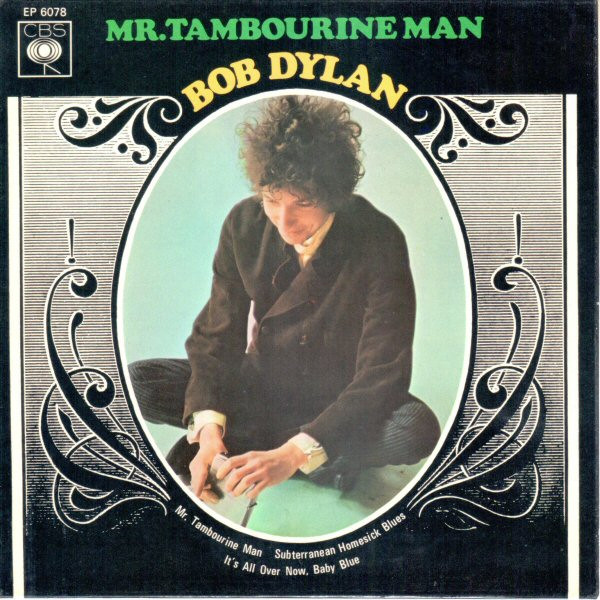
“Mr. Tambourine Man,” written by Bob Dylan.  Made famous by The Byrds (#1 in 1965)

By 1965, Dylan was already regarded as a songwriting genius/prophet in some circles, but he hadn’t yet made a dent on the charts as a recording artist.  That began to change when the Southern California band The Byrds used their jangly electric 12-string guitar sound and lush harmonies on a folk-rock arrangement of Dylan’s acoustic “Mr. Tambourine Man,” and The Byrds’ cover rocketed to #1.  Dylan’s version, found on his “Bringing It All Back Home” LP, has a running time of 5:34 and includes four verses; The Byrds’ version is severely truncated to 2:29, using only the second of the four verses.

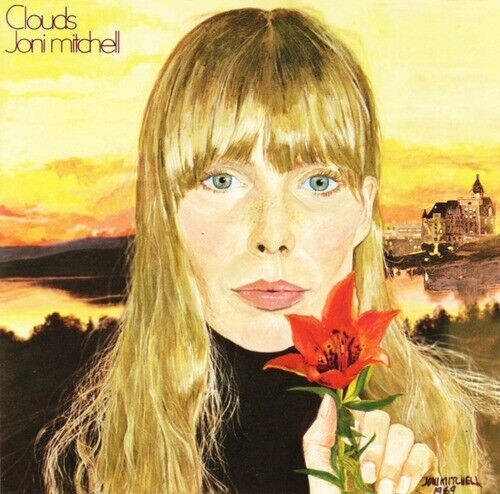
“Both Sides Now,” written by Joni Mitchell.  Made famous by Judy Collins (#8 in 1968).

Judy Collins gives credit to her friend and musician Al Kooper for introducing her to the genius of Joni Mitchell, still a relative unknown at the time.  “He knew I was in the midst of recording my ‘Wildflowers’ album, and he wanted me to hear Joni’s songs, particularly ‘Both Sides Now,'” Collins wrote in her autobiography.  “Joni’s writing was magnificent.  ‘Both Sides Now’ has everything — sweep and tenderness, specificity and breadth.  It’s a perfect jewel of a song, perhaps one of the greatest songs ever written.”  Mitchell’s own version appeared on her second album, “Clouds,” in 1969.

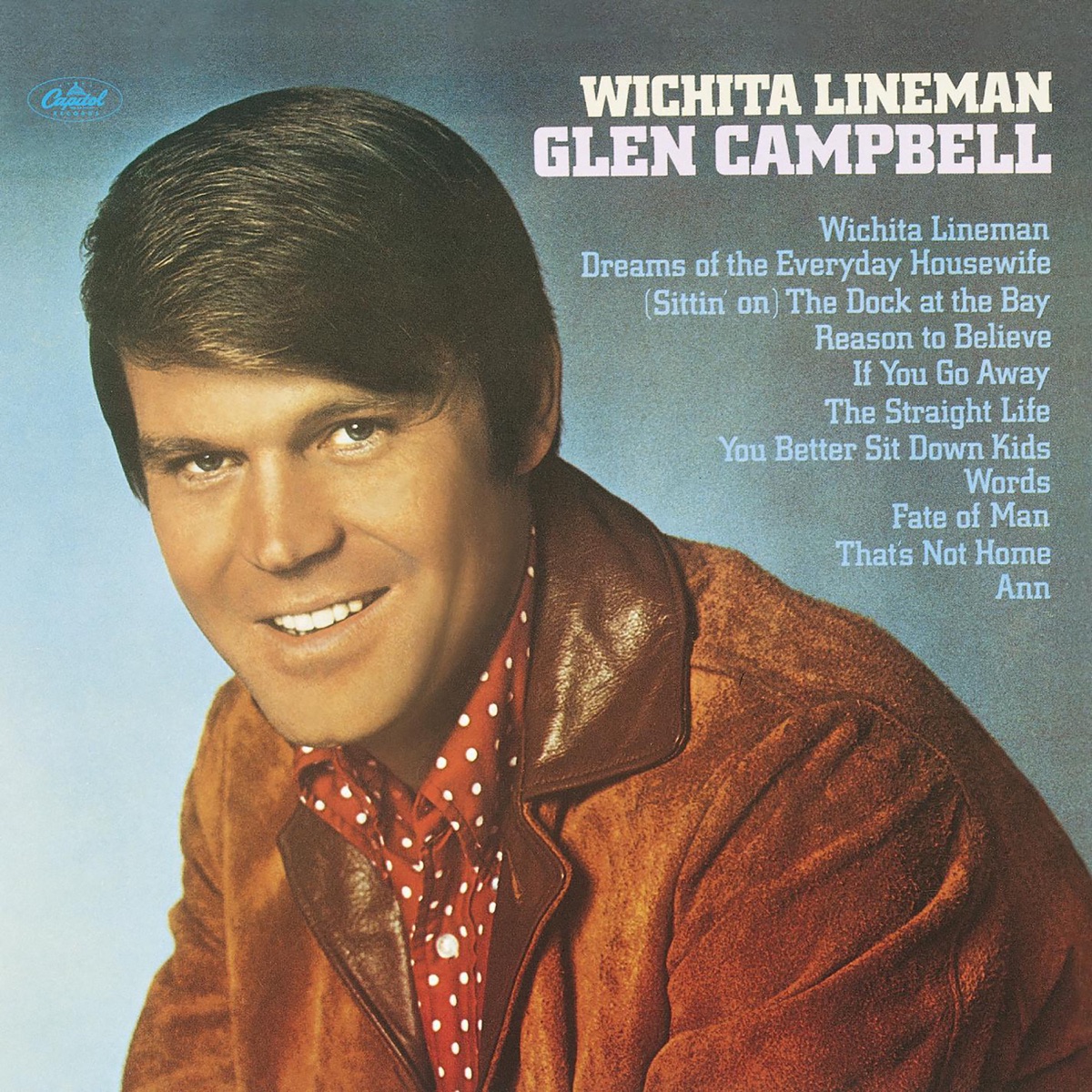
“Wichita Lineman,” written by Jimmy Webb.  Made famous by Glen Campbell (#3 in 1968)

Webb remembers driving toward the late afternoon sun one day in Oklahoma, passing endless miles of telephone poles, until he saw the silhouette of a solitary lineman atop a pole.  “He looked like the absolute picture of loneliness,” said Webb, who put himself in the lineman’s place and wrote what has been described as “the first existential country song” and “the greatest pop song ever composed.”  Glen Campbell was the first of many artists to record “Wichita Lineman,” which charted at #3, and Webb himself finally got around to it on his 1996 album called “Ten Easy Pieces,” which also includes new arrangements of other hits he wrote like “By the Time I Get to Phoenix,” “The Worst That Can Happen,” “Galveston” and “MacArthur Park.”

“Mama Told Me Not to Come,” written by Randy Newman.  Made famous by Three Dog Night (#1 in 1970)

After an early attempt as a recording artist flopped, Newman concentrated on songwriting throughout the ’60s, and his 1966 song “I Think It’s Going to Rain Today” was recorded by a dozen different singers.  That same year he wrote “Mama Told Me Not to Come” for Eric Burdon and The Animals, but it ended up an overlooked album track.  Four years later, Newman released his “12 Songs” LP, which included his piano-based rendition of the song.  Almost simultaneously, Three Dog Night’s rock/funk version raced up the charts to become one of the biggest singles of the year.

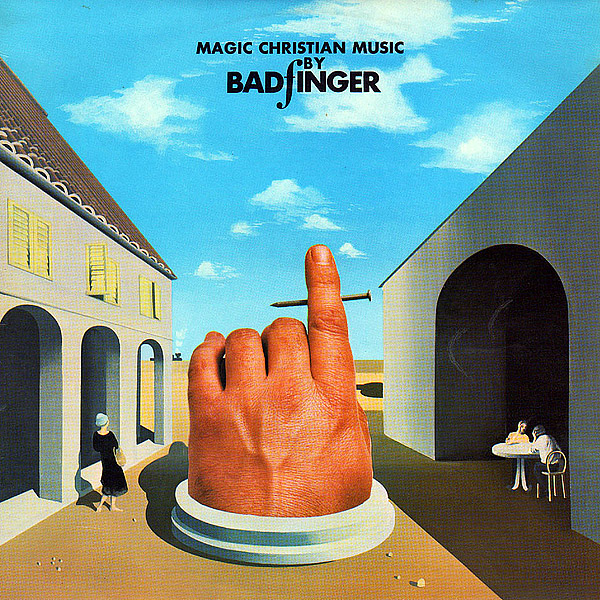
“Come and Get It,” written by Paul McCartney.  Made famous by Badfinger (#7 in 1970)

McCartney wrote several songs during the Beatles years that he gave away to others, particularly Peter & Gordon (Peter Asher was the brother of his then-girlfriend Jane Asher).  In 1969, McCartney was commissioned to write songs for “The Magic Christian” soundtrack, and in the midst of the “Abbey Road” sessions, he arrived early one day and recorded a polished demo of “Come and Get It” by himself.  Badfinger was a new band signed to the Apple label, and to help jumpstart their career, he gave them “Come and Get It,” also producing it exactly as he had recorded it on the demo.  McCartney’s original was finally released as a Beatles track on the “Anthology 3” CD in 1996.

“Red Red Wine,” written by Neil Diamond.  Made famous by UB40 (#1 in 1988)

This one has this list’s longest gestation period from composing to hit-single status.  Originally written and recorded by Diamond in 1967 on his “Just for You” LP, “Red Red Wine” was resurrected 15 years later by British pop/reggae band UB40, who released an album in 1983 of cover versions of songs by their early rock idols.  Their reggae version went to #1 in the UK but stalled at #34 here, but five years later in 1988, it was re-released in the US and went to #1 here as well.

“Stoney End,” written by Laura Nyro.  Made famous by Barbra Streisand (#6 in 1971)

Another Nyro composition that appeared on her underrated 1967 debut “More Than a New Discovery” was this upbeat number that eventually captured the attention of producer Richard Perry.  He suggested it as a featured song for Barbra Streisand’s first album of pop-rock songs, and although she initially balked at the line “I was raised on the good book Jesus” because of her Jewish faith, it ended up being the title song when released in 1971.  She took Nyro’s song to #6, her first Top Ten hit since “People” in 1964, and the beginning of an impressive run on the charts throughout the ’70s and into the ’80s.

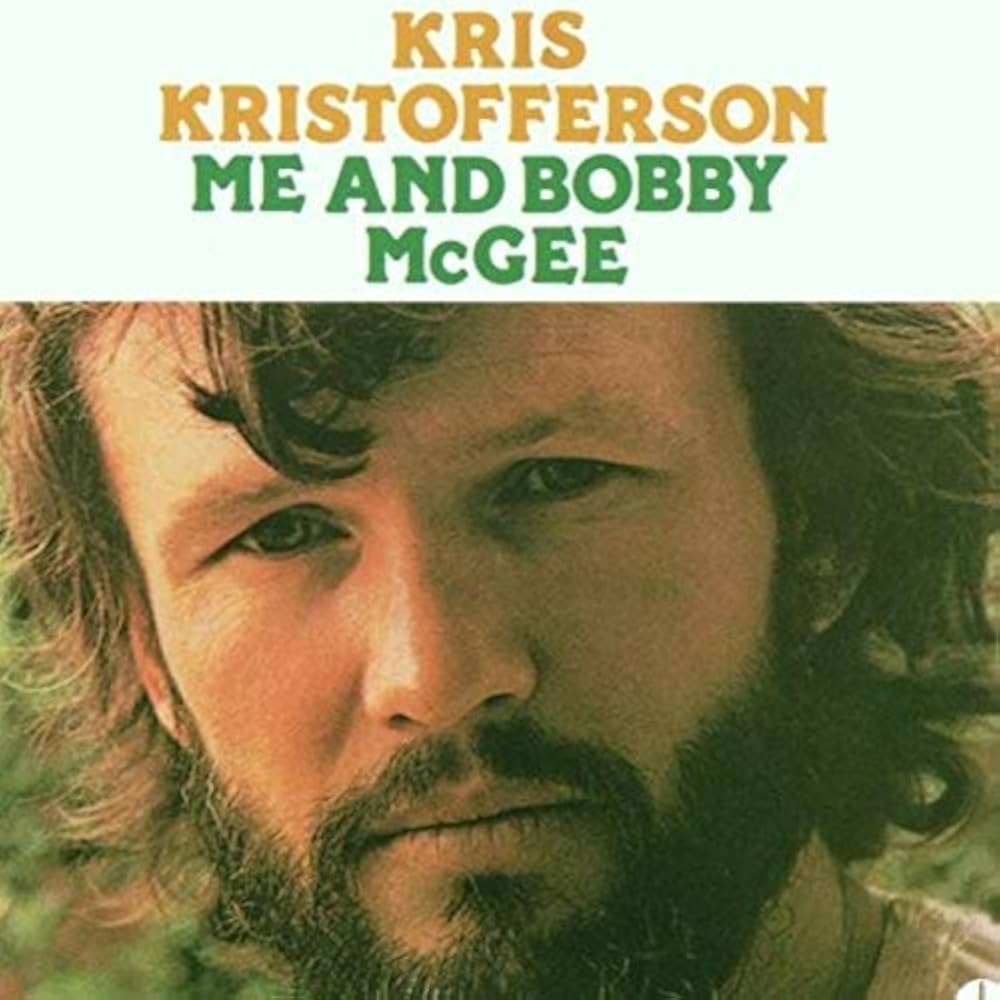
“Me and Bobby McGee,” written by Kris Kristofferson.  Made famous by Janis Joplin (#1 in 1971)

Kris Kristofferson was an Army brat who became an accomplished pilot, an award-winning boxer and rugby player, and a Rhodes scholar at Oxford — and he left all that behind to pursue his dreams of writing music and acting.  He found his niche in Nashville, where his songs were recorded by dozens of country stars from Johnny Cash to Ray Price, but Kristofferson’s own recordings never achieved much commercial success.  He introduced one song from his debut album “Kristofferson” to his friend Janis Joplin, who decided to record a rollicking arrangement for what would become her final album, “Pearl.”  Four months after her death, Janis’s recording of “Me and Bobby McGee” was the #1 song in the country.

“All the Young Dudes,” written by David Bowie.  Made famous by Mott the Hoople (#37 in 1972)

In 1972, Bowie’s career was only just starting to take off in the US when he heard that his friends in Mott the Hoople were about to break up because of a lack of chart success.  He offered them his song “Suffragette City” from the “Ziggy Stardust” LP, but they turned him down, so instead, Bowie sat down in a London flat across from singer Ian Hunter and wrote “All the Young Dudes” specifically for them.  It went to #3 in the UK, saving the band’s career, and it became the unofficial anthem of the glam-rock era.  Bowie recorded it himself during the “Aladdin Sane” sessions but never released it until the mid-’90s on several different compilation CD sets.

“Lotta Love,” written by Neil Young. Made famous by Nicolette Larson (#8 in 1979)

Larson had sung backing vocals on Young’s “American Stars and Bars” album in 1977, and the two had become friends. One day she was driving around Malibu with him when she popped a cassette of his demos in his tape player. She praised his early take of “Lotta Love,” and Young responded, “You want it? It’s yours.” Her shimmering arrangement of it became her successful debut single in early 1979, while Young’s more stripped-down version appeared on his “Comes a Time” LP around the same time.

***********************

I urge you to compare the composers’ and cover versions of these other hits that made my honorable mention list:

Bruce Springsteen wrote “Blinded by the Light,” “Fire,” and “Because the Night” (popularized by Manfred Mann, The Pointer Sisters and Patti Smith, respectively);  Bob Marley wrote “I Shot the Sheriff,” a #1 hit for Eric Clapton; Leon Russell wrote “This Masquerade” (a hit for George Benson) and “A Song for You” (the title song of The Carpenters’ fourth album);  Tom Waits wrote “Ol ’55,” a popular track for The Eagles;  Prince wrote “Nothing Compares 2 U” (Sinead O’Connor’s big debut) and “Manic Monday,” (a #1 smash for The Bangles);  and Bob Dylan wrote “All Along the Watchtower” (wildly reimagined by Jimi Hendrix).

*****************************