Bands that shoulda woulda coulda

I was recently listening to a CD mix I put together several years ago, comprised of songs by artists that never quite hit the big time but, in my opinion, deserved to be bigger than they were.  And it got me thinking:  Why do some truly talented singers/musicians/songwriters never achieve the success they struggled so hard for? What prevented them from earning the attention, critical praise and/or chart success that other artists did?

From rock and roll’s beginnings to the present day, there are hundreds of examples of artists who never achieved the fame and fortune many people think they should have. (There are also scores of examples of groups who inexplicably garnered attention and Top Five albums/singles that were wholly unwarranted, but that’s another essay for another day.)

Like many discussions of rock music, this is a very subjective area.  If I were to say, for example, that Humble Pie wasn’t as big as they should have been, there are those who might say, “Humble Pie?!  They sucked!”  One man’s trash is another man’s treasure, and so forth. But we all have our favorite under-the-radar artists who we believe should have made it big.  “I LOVE this band, why doesn’t everybody else??”

Bands missed the limelight for good and bad reasons.  Some were victims of poor timing; their music was perhaps ahead of (or behind) its time.  Others had bad management or promotion; some were plagued by internecine warfare that broke them apart too soon; some didn’t seem to care about fame and fortune, either because they shunned the spotlight or were more interested in art than dollars; and a few came up with one or two great songs or albums but couldn’t sustain that level of quality.

Any music lover can name specific artists whose concerts or albums hold a special place in their hearts but are unknown to the general public.  The list is almost endless.  To help me identify some of these “shoulda been big” groups, I conducted a very informal survey of a dozen friends and associates who grew up listening to a lot of rock music in the ’60s, ’70s and ’80s.   They each offered at least a half-dozen examples of bands they felt were underrated by the critics, the buying public, or both.

Here is the composite list:

Spirit, Moby Grape, Audience, Laura Nyro, Southside Johnny and the Asbury Jukes, The Flying Burrito Brothers, Camel, Batdorf and Rodney, Michael Stanley Band, It’s a Beautiful Day, Humble Pie, Kenny Rankin, Be-Bop Deluxe, Savoy Brown, Free, Blodwyn Pig, Sensational Alex Harvey Band, Gentle Giant, The Rainmakers, Pousette-Dart Band, Dixie Dregs, Atomic Rooster, Brian Auger, Lighthouse, Delaney and Bonnie, Blue Cheer, Quicksilver Messenger Service, Aztec Two-Step

It’s far from a complete list — I’ve focused on the ’60s and ’70s here, with a few ’80s groups for good measure — but it serves to point out the number of artists who never (or barely) made the charts, or failed to be as successful as they probably deserved.

Laura Nyro

A few artists had stage fright and weren’t really interested in performing.  The gifted Laura Nyro is perhaps the best example of this; she performed at the iconic Monterey Pop Festival in 1967, but she felt uncomfortable on stage, and it showed, even to the mind-altered crowd that assembled there.  She made a few neglected records but mostly withdrew into a more isolated life as a songwriter and gained plenty of critical praise for her excellent songs made famous by others (“Stoned Soul Picnic,” “Eli’s Comin’,” “And When I Die,” “Wedding Bell Blues,” “Stoney End”).  She died in 1997, and has been too often criminally overlooked when the names of major female artists are mentioned.

Some bands never achieved success because they were handled by people who were either clueless or had hidden agendas.  It’s a Beautiful Day was a great San Francisco-based group who could’ve been as big as the Jefferson Airplane or the Grateful Dead but were shuffled off to Seattle to play in their manager’s brother’s clubs there instead of the hot Bay Area clubs where they had a following. Quicksilver Messenger Service was another Bay Area group that, in a parallel universe, might’ve been huge.

Flying Burrito Brothers

Some groups, frankly, were train wrecks in the making:  Their members couldn’t seem to get along, so there was a revolving door of musicians coming and going, and this lack of stability meant they could never get any kind of momentum going.  Savoy Brown, an excellent British blues rock band from the 1966-1975 period, comes to mind.  They reached the US charts in 1972 with their “Hellbound Train” LP, but are mostly forgotten (although three members went on to form Foghat, who had modest success in the mid-’70s).  Same goes for The Flying Burrito Brothers, one of Southern California’s best and most influential early country rock ensembles, whose short-term alumni include such luminaries as Bernie Leadon (of The Eagles) and Gram Parsons and Chris Hillman (of The Byrds).

Delaney and Bonnie

There were artists with great energy and enthusiasm (and notable guests onboard) who somehow didn’t score that big hit.  Delaney and Bonnie, a Southern rock/soul outfit who worked with icons like Eric Clapton and George Harrison in 1969-1970, are largely unknown to most rock fans.  LA-based Spirit offered a wonderful mix of rock, jazz, pop and blues during its five-year tenure (1967-1972), and even Top-40 appearances on the singles chart (“I Got a Line on You”) and album charts, but they were never exactly household names.

Michael Stanley

Sometimes bands were victims of circumstance:  They were signed to labels who chose to devote their promotional dollars toward other artists instead.  For example, in the fall of 1973, MCA Records released three albums:  “Goodbye Yellow Brick Road” by Elton John, “Quadrophenia” by The Who, and “Friends and Legends” by Michael Stanley.  The first two probably would’ve gone Top Five without spending a dime of promotion, but that’s where the money went anyway.  In my opinion, they should’ve spent their marketing dollars on their rising star, Cleveland’s Michael Stanley, who had great songs like “Let’s Get the Show on the Road” and the likes of Joe Walsh and others helping him in the studio.  Why not promote the up-and-coming guy instead of the already established artists?  Sigh…  And it gets worse:  Between 1975-1990, The Michael Stanley Band went through multiple labels, each mishandling the promotion of this great Midwest band, who flirted with stardom in 1980 with the Top 40 hit “He Can’t Love You,” but never grabbed the brass ring.
Batdorf and Rodney

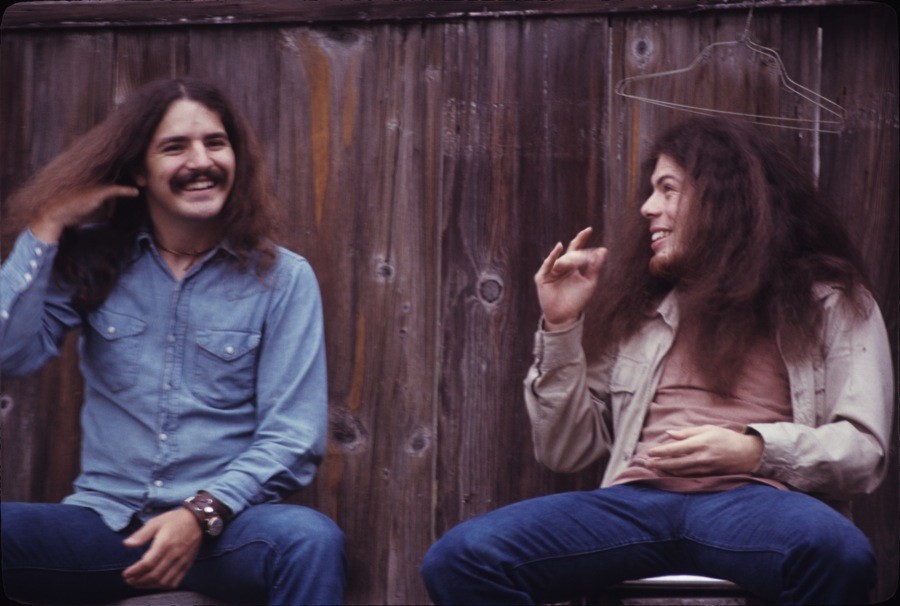
Or let’s take the singer-songwriter genre — acts like Batdorf and Rodney, Aztec Two-Step or Kenny Rankin.  Most people I know have never heard of them.  But if you enjoy singer-songwriter music from the early ’70s (Crosby Stills & Nash, James Taylor, Joni Mitchell, America, Seals and Crofts, Loggins and Messina, et al), you need to check out the songs on Batdorf & Rodney’s phenomenal 1971 debut “Off the Shelf.”  Just try the opening track “Oh My Surprise.”  Oh my, indeed.  Then try “Can You See Him,” one of my top 25 favorite songs of all time.  Why weren’t these hits?  Why weren’t Batdorf and Rodney more famous?  We’ll probably never know.

Other acts missed out on stardom because they didn’t really seek it.  Progressive rock bands were less interested in commercial appeal than musical exploration, so it’s not really surprising that most of them — with the exception of Yes, Pink Floyd, Genesis and Emerson, Lake and Palmer and a few others — never achieved widespread fame.  Still, groups like Gentle Giant and Camel could have, or should have, been more popular than they were.
Southside Johnny and The Asbury Jukes

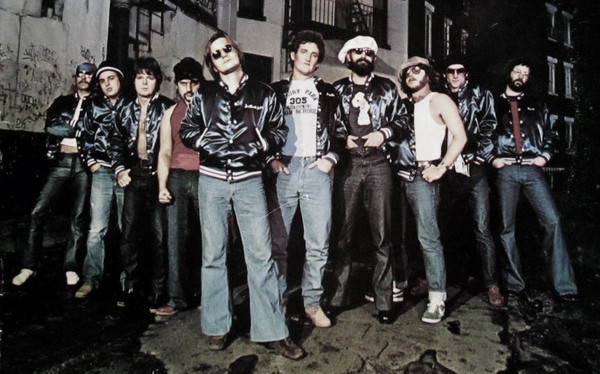
If R&B-laced rock tunes in the Bruce Springsteen/Van Morrison vein is more to your liking, you have to agonize over the failure of New Jersey’s greatest-ever bar band, Southside Johnny and The Asbury Jukes, to hit the big time.  Johnny Lyons was a buddy of Springsteen in the Jersey Shore bars; they jammed together, shared band members, and Springsteen contributed a dozen or more songs to Southside’s repertoire (“The Fever,” “Talk to Me,” “You Mean So Much to Me”) as they struggled in the late ’70s and early ’80s under Springsteen’s ever-growing shadow.  They released seven albums on four different labels between 1976 and 1986, but they never cracked the Top 40 charts (album nor singles).  Sometimes I think his connection to The Boss did him more harm than good, as critics sometimes called him “a poor man’s Springsteen” and the like.  But if you ever saw this band in concert, you would beg to differ.  They get my vote for most overlooked band ever.

Canadian bands tended to get short shrift in the US market as well.  The Guess Who, Gordon Lightfoot and transplants like Joni Mitchell and Neil Young achieved plenty of commercial success here, but there were others worthy of our dollars:   Lighthouse, for example, had modest hits but perhaps deserved more attention.

You might think most of these artists are bitter that they didn’t make it big, but many look at their careers philosophically.  Perhaps they didn’t become millionaires, but they got to make a living creating music — albums, TV show themes, movie soundtracks — that appealed to a core audience, and that was plenty satisfying.  Maybe the many trappings of fame — the paparazzi, the business negotiations, the nasty critiques in the press, the constant pressures — wouldn’t have been worth it anyway.

I recommend you take a closer look at any or all of the artists mentioned above and discover some of the amazing music they made that never quite reached the mainstream marketplace.  It may not be in your wheelhouse, but then again, it might very well light your fire.

**********************

This Spotify playlist includes two songs from each artist mentioned above, which is admittedly an inadequate sample on which to judge their relative worthiness. If you find songs that are intriguing, I suggest you delve deeper into the artists’ catalogs.

The magic’s in the music, and the music’s in me

The mid-1960s was a uniquely fertile time in rock music history. The Beatles had arrived to shake up the status quo. Bob Dylan was changing the kinds of things we sang about. Motown was bringing effervescent soul to mainstream audiences. The palette of musical styles was exploding with variety — folk rock, funk, psychedelia, country rock, bluesy hard rock, Big Band rock, bubblegum pop and more.

In the midst of this, basic rock groups with exhilarating vocal harmonies were forming in small towns and big cities across the nation, churning out solid hit singles that caught listeners’ attention and sold millions. Some managed only one decent song (“one-hit wonders”) while others managed to sustain their stay on the charts for two or three years’ worth of singles, or more.

I feel lucky to have been coming of age during this vibrant time. In 1964, I was nine years old the night when we all watched Ed Sullivan together. By 1970, I was 15 and buying albums every week, listening to hipper music on WMMS-FM in Cleveland, Ohio. But for six years, it was all about the music I heard on Top 40 radio, sometimes buying the 45 RPM singles I heard on WIXY 1260 on the AM dial.

Many of these feel-good songs of the Sixties are still favorites of mine 60 years later, with their words and melodies indelibly etched in my memory. You could make a case that some of them were slight, inconsequential, even a little cringey, but most of the ones I’ve featured here are arguably time-capsule classics, well worth hearing again, or for the first time, perhaps, for some younger readers.

I’m not alone in my appreciation of these great hit singles from the Sixties. Virtually every summer since 2010, a handful of the artists responsible for these tunes pool their efforts to mount a musical revue known as the Happy Together Tour, named for the iconic 1967 hit by The Turtles. The brainchild of Turtles singers Howard Kaylan and Mark Volman (who also marketed themselves as Flo and Eddie in the ’70s), the 60-date tour has featured such acts as The Grass Roots, The Buckinghams, Gary Puckett & The Union Gap, Mark Lindsay (of Paul Revere and The Raiders), The Association, Mickey Dolenz of The Monkees, The Cowsills, The Vogues, Jay and The Americans, Mitch Ryder and The Detroit Wheels, and Little Anthony. These tours have often sold out their venues to eager patrons looking to escape to some semblance of their simpler youth.

Curiously, I’ve never attended one of these gigs. I guess I’m leery that what I hear may fail to meet even modest expectations. Better to just crank up the originals on my sound system.

To do that properly, I’ve selected ten of these bands (and some honorable mentions) and offered brief career summaries, highlighting their best work in the Spotify playlist at the end. I can reasonably assure you that you’ll love 75% of the songs I’ve picked, maybe more.

***********************

The Turtles

I always found something indescribably joyous about the hit records of The Turtles. Emerging in 1965 with a harmonious cover of Bob Dylan’s “It Ain’t Me Babe,” the group proceeded to churn out at least three of my favorite pop tunes of the period: “You Baby,” the ubiquitous “Happy Together” and “She’d Rather Be With Me.” The effervescent melodies, and especially the glorious vocals of Howard Kaylan and Mark Volman on these tunes, have had a lasting impact (on me, anyway), and so have lesser hits like “Elenore” and “You Showed Me.” By 1970, the group dissolved, but Kaylan and Volman branded themselves as Flo & Eddie, performing as a duo and also as part of Frank Zappa’s Mothers of Invention. The duo resurrected The Turtles and, as previously mentioned, spearheaded the popular Happy Together reunion tours in the ’80s, ’90s and beyond that featured a half-dozen bands reliving their glory days. Sadly, Volman died just last week at age 78.

Paul Revere and The Raiders

Hailing from the Pacific Northwest, this band, led by organist Revere and lead singer/teen idol Mark Lindsay, were picked by impresario Dick Clark in 1965 to be the house band on his afternoon pop music showcase, “Where the Action Is.” Their gimmicky Revolutionary War costumes and a comedic approach to their live performances made them seem like a joke in some circles, but their string of a dozen catchy, potent Top 20 hits between 1966 and 1971 made Revere and The Raiders a commercial success, beginning with the #11 hit “Just Like Me.” The early hit “Kicks” was notable as an early anti-drug message song which made them seem decidedly unhip to the growing rock intelligentsia, but it was followed by the hard-rocking “Hungry” and “Good Thing” with lethal bass lines and strong vocals by Lindsay. Five years later, they scored their only #1 hit with “Indian Reservation,” a tribute to the Cherokee Native American nation.

The Monkees

Probably the most lasting legacy of the bands included here belongs to The Monkees, who had the undeniable advantage of starring in their own scripted TV series for three years (and even won a Best Comedy Emmy for the debut season). Indeed, they were hired as actors, as part of a plan to make a weekly show about a fictional pop group in the zany vein of The Beatles’ “A Hard Day’s Night” film. Their first records featured group members Micky Dolenz and Davy Jones on vocals, but all the instruments were played by studio musicians instead, and The Monkees’ biggest hits were written by professional songwriters like Neil Diamond, Carole King and Tommy Boyce and Bobby Hart (Hart died last week at age 86). “Last Train to Clarksville” and “I’m a Believer” were both huge #1 hits on US pop charts, while “A Little Bit Me, A Little Bit You,” “Pleasant Valley Sunday,” “Daydream Believer” and “Valleri” all reached the Top Five. They eventually demanded and won the right to play on their recordings and contribute their own material, but interest waned and the hits stopped in 1969. Numerous comebacks and reunion tours involving at least two of the four members were staged in the decades since. Dolenz is the only Monkee still alive in 2025.

The Buckinghams

This Chicago-based band was unique in several ways. They were one of the first pop bands to incorporate horn arrangements in their repertoire, which was the brainchild of producer James Guercio, who went on to produce horn-driven bands Blood, Sweat & Tears and Chicago. The Buckinghams had five Top 20 hits, all of which peaked during the calendar year 1967: “Kind of a Drag” (#1 in January), “Mercy Mercy Mercy” (#5 in February/March), “Don’t You Care” (#6 in May), “Hey Baby They’re Playing Our Song“(#12 in August) and “Susan” (#11 in October). Four of those were written or co-written by Chicago-based songwriter Jim Holvay, while “Mercy, Mercy, Mercy” was penned by Cannonball Adderley Quintet keyboardist Joe Zawinul, who went on to form jazz fusion pioneers Weather Report. Most of the lead vocals were handled by guitarist Carl Giammarese, who still performs with a new Buckinghams lineup, often as part of the Happy Together Tour.

The Lovin’ Spoonful

Led by singer-songwriter John Sebastian, The Lovin’ Spoonful cut their musical teeth in Greenwich Village in the early ’60s as a jug band, and churned out some of the most popular tunes of the mid-’60s period. “Do You Believe in Magic” became an anthem of sorts as their debut single in 1965, followed by such memorable pop classics as “You Didn’t Have To Be So Nice” and the easygoing “Daydream” and “Did You Ever Have to Make Up Your Mind?” I’d say their finest moment came with the irrepressible “Summer in the City,” a #1 smash in 1966 that bemoaned the noisy humid daytime and celebrated the cooler, festive nighttime hours. “Nashville Cats,” “Rain on the Roof” and “Darling Be Home Soon” rounded out their Top 20 chart successes in 1967. Sebastian made a memorable impromptu appearance at Woodstock and began a solo career the next year. The Spoonful was inducted into the Rock and Roll Hall of Fame in 2000.

The Dave Clark Five

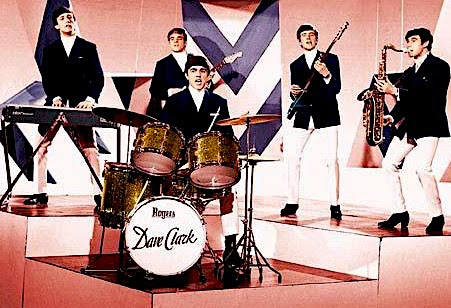
Many readers may not know or remember that The Dave Clark Five were a close second to The Beatles among the groups who made up the “British Invasion” of US pop charts in 1964-1965. They came from the Tottenham district of North London, with Dave Clark’s gunshot drumming, Mike Smith’s keyboards and lead vocals and Denis Payton’s sax and guitar being the prominent elements of their sound. They scored 10 Top Twenty singles on US charts, with their early hits (“Glad All Over,” “Bits and Pieces,” “Can’t You See That She’s Mine“) competing simultaneously with The Beatles’ first big singles. Their commercial success continued in 1965 with “Because,” “I Like It Like That” and “Catch Us If You Can,” while “Over and Over” became their only #1 in the last week of 1965, edging out The Beatles’ “We Can Work It Out” from the top spot in the final week of 1965. The DC5 appeared on “The Ed Sullivan Show” 18 times, more than any other rock band. Clark, a shrewd businessman, negotiated their royalty deals that made him wealthy. In 2008, they, too, were inducted into the Rock and Roll Hall of Fame.

The Grass Roots

In 1965, the songwriting/producing team of P.F. Sloan and Steve Barry, in tandem with Dunhill Records owner Lou Adler, created an imaginary group called The Grassroots so they could record their folk-rock song “Where Were You When I Needed You.” When the demo ended up reaching #28 on the US pop charts, they searched for and found a band called The Bedouins, and convinced them to become The Grass Roots. Several lineup changes occurred over the next year, and by 1967, they hired Rob Grill as lead singer, and the band’s fortunes took off. From 1967 through 1971, The Grass Roots charted eight songs on the Top Twenty, most notably 1968’s megahit, “Midnight Confessions.” Also popular were such tunes as “Let’s Live For Today,” “Bella Linda,” “I’d Wait a Million Years,” “Temptation Eyes” and “Sooner or Later.” With Grill in charge, The Grass Roots attempted to tour in the late ’70s, but it wasn’t until the Happy Together tours of the mid-’80s and beyond that they were able to attract sizable audiences again.

The Association

In 1964, an ad hoc folk group called The Inner Tubes became the house band at The Troubadour in Los Angeles, eventually expanding to a 13-member lineup called The Men. That group was streamlined down to six musicians who called their harmony vocal group The Association, with Terry Kirkman, Larry Ramos and Jim Yester leading the way. By 1966, they had honed their sound and found success with two big singles: a cryptic song about marijuana called “Along Comes Mary” and the harmony-rich ballad “Cherish,” which topped the charts. These two tracks gave them enough cachet to earn them an invitation to be the opening act at the legendary Monterey International Pop Festival in 1967, and they built on that with two more huge singles that year: “Windy” (another #1) and “Never My Love” (one of the most-played songs of the 20th Century, according to BMI). They continued releasing albums into the early ’70s but as times changed, the group dissolved; still, a revised lineup of The Association participated in several editions of the Happy Together reunion tours in recent years.

Tommy James & The Shondells

James was only 17 when he and his group, The Shondells recorded “Hanky Panky” for a small Michigan-based label. It sold regionally, but the band soon broke up, and two years later, a Pittsburgh DJ unearthed the track and gave it airplay, and within a month it was the #1 song in the country. James corralled another group, The Raconteurs, to become the new lineup of The Shondells, and on the strength of “Hanky Panky,” signed to Roulette Records, run by mafia-connected Morris Levy. James and The Shondells charted seven Top Twenty hits between 1966-1969, most prominently “I Think We’re Alone Now” (#4), the garage-rock classic “Mony Mony” and the trio of psychedelic pop tunes from 1969 (“Crimson and Clover” in February, “Sweet Cherry Wine” in May and “Crystal Blue Persuasion” in August). James almost died from a drug overdose in 1970, but he returned as a solo artist for one last hit in 1971, “Draggin’ the Line.” He’s been a regular on the nostalgia tours.

Herman’s Hermits

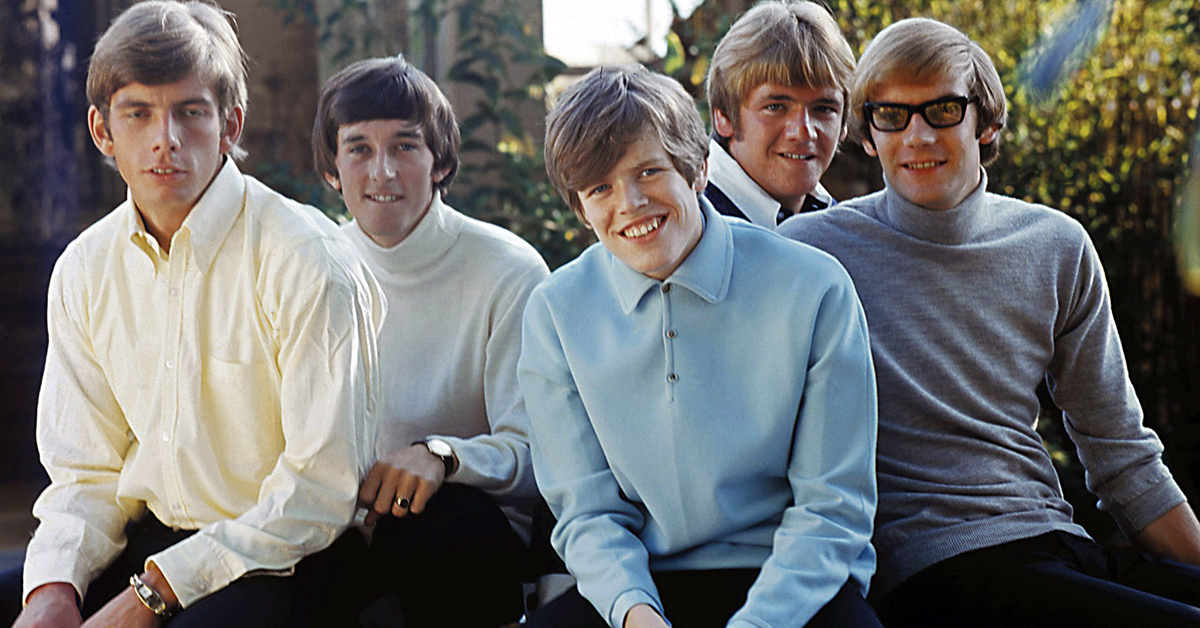
Here are three things I bet you never knew about Herman’s Hermits: 1) Peter “Herman” Noone, at 15, had been a child actor on the British TV soap opera “Coronation Street” before becoming a pop singer; 2) he was given the nickname Herman based on his supposed resemblance to the animated character Sherman on the “Mr. Peabody” cartoon feature from the “Rocky and Bullwinkle” series; 3) In 1965, Herman’s Hermits were ranked #1 (ahead of the #2 Beatles!) as the Top Singles Act of the year in the US. They logged 24 consecutive weeks in the Top Ten that year, and in total, charted 14 Top Twenty singles between 1964 and 1967. Some were cringeworthy novelty songs like “Mrs. Brown You’ve Got a Lovely Daughter” and “I’m Henry VIII, I Am,” but most were catchy, pleasant ditties like “I’m Into Something Good” (by Carole King) and “Can’t You Hear My Heartbeat,” or white-bread covers of The Diamonds’ “Silhouettes” and Sam Cooke’s “Wonderful World.” Noone, with various backing musicians, has been a regular presence on nostalgia events and tours since the 1980s.

***********************

Honorable mentions:

Gary Lewis & The Playboys (“This Diamond Ring,” “Save Your Heart For Me,” “She’s Just My Style,” “Everybody Loves a Clown,” “Green Grass“); Spanky & Our Gang (“Sunday Will Never Be the Same,” “Lazy Day,” “Like to Get to Know You,” “Give a Damn“); Jay & The Americans (“She Cried,” “Come a Little Bit Closer,” “Cara Mia,” “This Magic Moment“); Gary Puckett & The Union Gap (“Woman, Woman,” “Young Girl,” “Lady Willpower,” “This Girl is a Woman Now“); The Box Tops (“The Letter,” “Cry Like a Baby“); The Cowsills (“The Rain, The Park and Other Things,” “Hair,” “Indian Lake“); The Vogues (“You’re the One,” “Five O’Clock World“).

Worthwhile “one-hit wonders” from the ’60s period:

The American Breed (“Bend Me, Shape Me“), Every Mother’s Son (“Come on Down to My Boat“), The Standells (“Dirty Water“), John Fred and His Playboy Band (“Judy in Disguise (With Glasses)“), The Music Explosion (“Little Bit o’ Soul“), The Knickerbockers (“Lies“), The Gentrys (“Keep On Dancing“), Syndicate of Sound (“Little Girl“), The Blues Magoos (“(We Aint Got) Nothing Yet“), “The Easybeats (“Friday On My Mind“).

************************