I’m scared, lordy Lord, I’m shakin’, I’m petrified

Favorite holiday?

Many say Christmas, and with good reason. Others pick Thanksgiving, also a fine choice. Even the Fourth of July gets a nod from a few, and that makes sense as well.

But me? I’ve always loved Halloween. As the leaves turn, the temperatures dip and the sun keeps setting earlier in the day, I get a sense of foreboding that gives me goosebumps. I relish a good scare, whether it’s from negotiating my way through a haunted house or sitting through a marathon of really hair-raising horror movies.

Like other holidays, Halloween comes with its own soundtrack, but I don’t mean the tired, overplayed stuff like “The Monster Mash” or “Werewolves of London.” I’m talking about music that imparts a sense of unease and makes you want to glance repeatedly over your shoulder to be sure there’s no one about to do you harm.

I’ve gathered 15 haunting pieces of music from the classic rock era that should make your trick-or-treat season just a little bit more creepy. They’re all on a Spotify playlist at the end of this post, along with a handful of honorable mentions.

May the ghosts, goblins and monsters from your psyche come visit you this weekend!

****************************
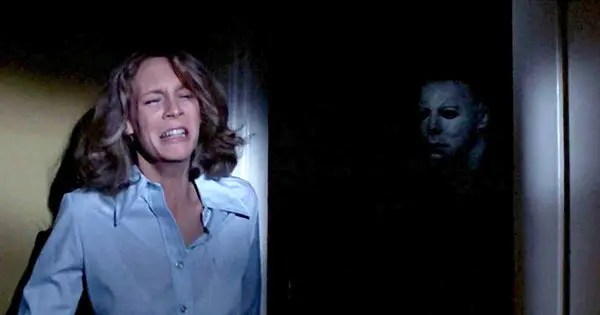
“‘Halloween‘ Theme,” John Carpenter, 1978

Every October, I dial up this horror classic starring a young Jamie Lee Curtis, and it never fails to give me the willies. I was astonished to learn very recently that the frightening soundtrack theme music was written by the movie’s director, John Carpenter. We used to use it every year for the haunted house we staged in our Atlanta neighborhood. It’s such a hypnotic piece, using a 5/4 beat, minor chords, piano and synthesizer to build a relentless heartbeat to what turned out to be the first in a long series of scary movies about the unkillable killer Michael Myers.

“‘Psycho‘ Prelude,” Bernard Herrmann, 1960

I still rank this Alfred Hitchcock masterpiece among my favorite films of all time (not just scary ones), and part of the reason it retains its effectiveness is Herrmann’s incredible score. He uses staccato violins almost exclusively to build tension as he torments the audience while star Janet Leigh struggles with moral issues, and then co-star Tony Perkins as Norman Bates wrestles his inner demons. It might be the most terrifying soundtrack ever created. This piece and two others from “Psycho” were also a regular part of our haunted house music accompaniment.

“Season of the Witch,” Donovan, 1966

It’s hard to decide which version of this classic song grabs me more: Donovan’s five-minute original or the 10-minute track by Al Kooper, Stephen Stills and Co. on the legendary 1968 “Super Session” LP. Donovan, the British mystical folkie responsible for “Sunshine Superman” and other flower-garden reflections of the mid-to-late ’60s, wrote it as a somewhat creepy ode to October. Two years later, Kooper & Stills recorded a remarkable jam on Donovan’s chords that became something else entirely, also haunting and intriguing in its own way. “When I look out my window, so many sights to see, and when I look in my window, so many different people to be, and it’s strange, so strange…”
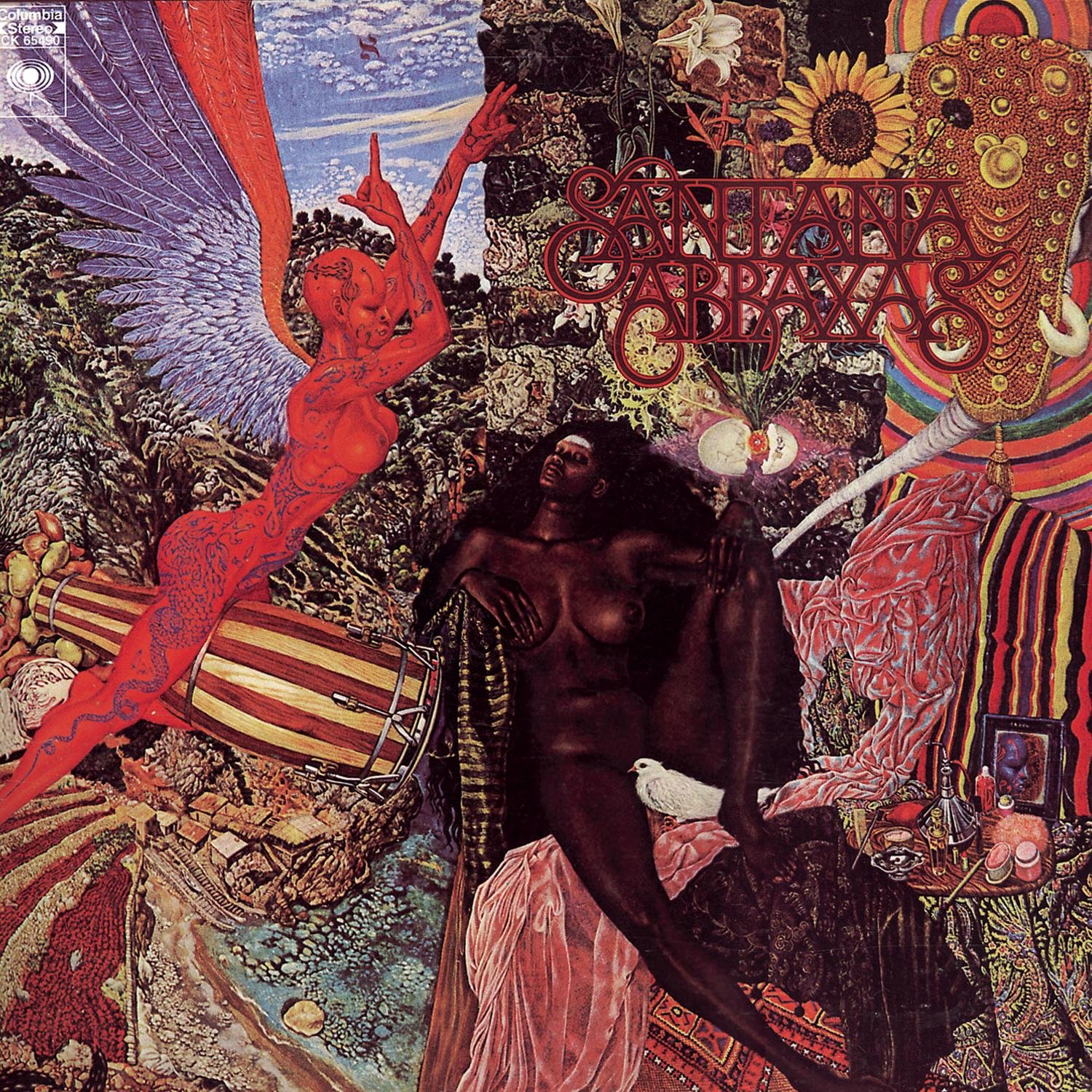
“Black Magic Woman,” Santana, 1970

Written by the great blues guitarist Peter Green and released as a single with his band Fleetwood Mac back in 1968, this song became a huge #4 hit for Carlos Santana and his band in 1970, from “Abraxas.”   It was combined in a medley with the 1966 track “Gypsy Queen,” and utilised congas, timbales and Latin polyrhythms to give the whole thing a distinct voodoo feel: “Got your spell on me baby, yes, you got your spell on me baby, you’re turning my heart into stone, I need you so bad, magic woman, I can’t leave you alone…”

“Spooky,” Classics IV, 1968

Written in 1967 as an instrumental featuring the saxophone riffs of Mike Shapiro, “Spooky” stalled at #57, but the next year, Mike Hirsch added lyrics about “a spooky little girl like you,” and the Classics IV took that version to #3.   James Cobb of the Classics IV went on to form The Atlanta Rhythm Section in the ’70s, and their re-recorded rendition in 1979 reached #17 on the charts.  Not really a very spooky tune at all, but still appropriate lyrically:  “Just like a ghost, you’ve been haunting my dreams, so now I know you’re not what you seem, love is kinda crazy with a spooky little girl like you…”
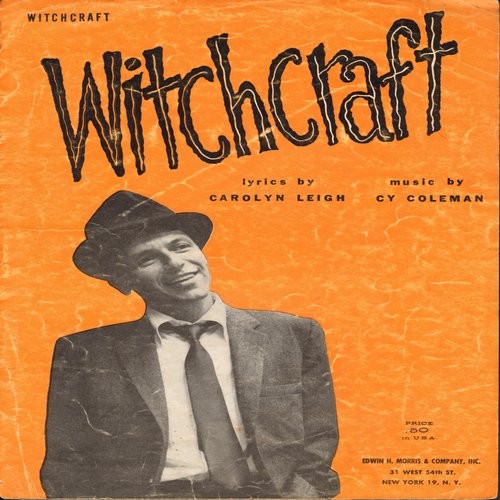
“Witchcraft,” Frank Sinatra, 1957

Carolyn Leigh was a successful lyricist for Broadway shows and films throughout the ’50s, ’60s and ’70s. Among her most popular efforts was her collaboration with composer Cy Coleman on “Witchcraft,” the 1957 song made famous by Frank Sinatra. It reached #6 that year on US pop charts and was nominated for Song of the Year and Record of the Year at the very first Grammy Awards. Its lighthearted tempo and melody may not be exactly right for Halloween, but the words certainly send a few chills up the spine: “Those fingers in my hair, that sly ‘come hither’ stare that strips my conscience bare, /It’s witchcraft, /And I’ve got no defense for it, the heat is too intense for it, /What good would common sense for it do? /’Cause it’s witchcraft, wicked witchcraft…”

“Thriller,” Michael Jackson, 1982

Jackson’s trailblazing 13-minute music video of his title track “Thriller” broke new ground as a short story, fully choreographed with gory zombie makeup, and the first to be preserved in the National Film Registry…and for the finale, horror movie legend Vincent Price recites the spoken section that ends with his maniacal laugh. It has become a Halloween classic, and rightly so:  “It’s close to midnight, and something evil’s lurking in the dark, under the moonlight, you see a sight that almost stops your heart, you try to scream, but terror takes the sound before you make it, you start to freeze as horror looks you right between the eyes, you’re paralyzed…”
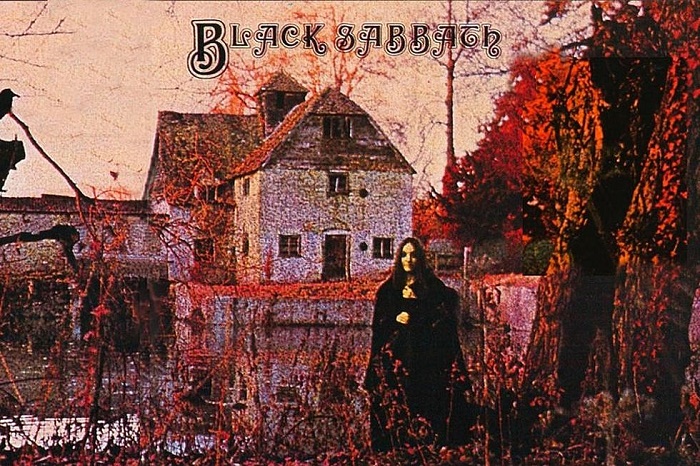
“Black Sabbath,” Black Sabbath, 1970

Death metal, Goth, Satanic rock — the bands who revel in these genres have plenty of disturbing, macabre lyrics that could certainly be deserving of space on a Halloween setlist, but frankly, I don’t claim to know much about them.  I do, however, recall the spooky chill that made me shudder the first time I heard the song “Black Sabbath,” the leadoff track from Black Sabbath’s debut LP (and check out that creepy album cover).  An ominous tolling bell, a rainstorm with distant thunder, then huge power chords in a minor key, and Ozzy Osbourne demanding to know, “What is this that stands before me?”  Brrrrr. If this isn’t appropriate Halloween music, I don’t know what is.

“Too Much Blood,” The Rolling Stones, 1983

Mick Jagger gets the lion’s share of songwriting credit for this strangely compelling dance track from The Stones’ 1983 LP “Undercover” that protests gratuitous violence in 1980s films even while it’s knee-deep in graphic images about that same violence.  Sparked by a lurid murder in Paris that year involving dismemberment and cannibalism, the song’s lyrics devolved into rap in the middle third, specifically mentioning the 1974 film “The Texas Chainsaw Massacre” and bemoaning, “I can feel it everywhere, feel it up above, feel the tension in the air, there’s too much blood, yeah, too much blood…”
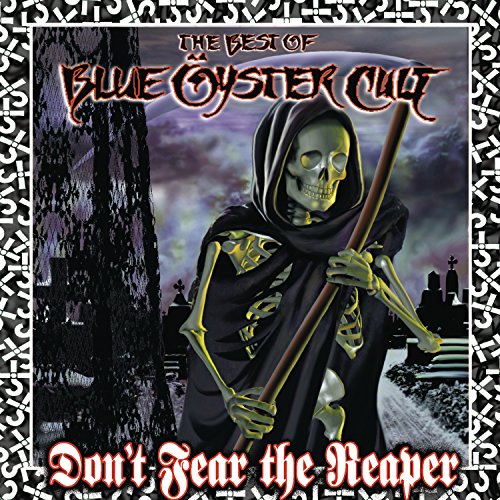
“Don’t Fear the Reaper,” Blue Oyster Cult, 1976

Out of Long Island, New York, in 1971 came Blue Oyster Cult, one of the stalwart hard rock bands of its era.  BOC guitarist Donald “Buck Dharma” Roeser wrote this 1976 hit single in his early 20s, imagining an early death for himself.  “I wasn’t suicidal,” he said, “just thinking cosmically about eternal love and premature death.”  Seems spooky enough to me to be perfect for a Halloween mix… “Then the door was opened and the wind appeared, the candles blew and then disappeared, the curtains flew and then he appeared, saying, ‘don’t be afraid, come on baby, don’t fear the reaper’…”

“D.O.A.,” Bloodrock, 1971

The two-note drone of a European emergency siren is the basic hook on which this gruesome song hangs, and embodies that feeling of dread you might feel in a dark alley or as you approach a haunted house.  The lyrics, which caused the song to be censored in some markets, graphically describe the thoughts of a plane crash survivor as he is brought into a hospital:  “I try to move my arm and there’s no feeling, and when I look, I see there’s nothing there…Life is flowing out my body, pain is flowing out with my blood, the sheets are red and moist where I’m lying, God in heaven, teach me how to die…”

“Scary Monsters (and Super Creeps),” David Bowie, 1980

Bowie had written an early version of this song called “Running Scared” in 1975, and recorded a demo, but ultimately put it aside until compiling tracks for his 1980 LP that he intended to be more commercial than the so-called “Berlin Trilogy” albums that preceded it. “Scary Monsters (and Super Creeps)” is a punky, heavily distorted track featuring Robert Fripp’s harsh guitar, and Bowie so loved the way it turned out that he chose to make it the album’s title track. The eerie lyrics convey the dysfunction behind a strange relationship: “When I looked in her eyes, they were blue, but nobody home, /Well, she could’ve been a killer if she didn’t walk the way she do, /She opened strange doors that we’d never close again…”
“Devil Woman,” Cliff Richard, 1976

British rock ‘n’ roll legend Richard ruled the UK airwaves in the pre-Beatles years (1957-1962) and is one of the most successful recording artists of all time, but he rarely made a dent in the US charts. In 1976, after he had gone through a softening phase, dabbling in gospel and Christian music, he found himself with a big hit in “Devil Woman,” which reached #6 in the US and sparked four more Top 20 hits here in the late ’70s. The lyrics tell the tale of a man jinxed from an encounter with a stray cat with evil eyes, and his discovery that the psychic whose help he sought to break the spell turned out to be the one responsible for the curse in the first place.

“I Put a Spell on You,” Nina Simone, 1965

Written and originally recorded by “Screamin'” Jay Hawkins in 1956, “I Put a Spell on You” has been covered by more than a hundred different artists, from Creedence and Jeff Beck to Annie Lennox and Bryan Ferry. In 1965, blues/jazz singer Nina Simone recorded an amazing rendition that reached #23 on the R&B charts here and also charted well in England. Hawkins, a blues singer, had established himself in the rock ‘n’ roll pantheon by turning the song into a ghoulish stage centerpiece, rising from a coffin amidst smoke and dry ice to deliver a frightful screaming vocal that gave him his nickname.
“‘The X-Files‘ Theme,” Mark Snow, 1993

Martin Fulterman, known professionally as Mark Snow, has written theme music and incidental score parts for several hundred film and TV series since his first project, “The Boy in the Plastic Bubble,” in 1976. Other series include “Hart to Hart,” “Starsky and Hutch,” “Vega$” and “Cagney and Lacey.” At first, Snow was hesitant to work on “The X-Files” because he thought creator Chris Carter and his staff were “kind of weird.” That weirdness is reflected in the theme he ended up composing, which utilized electronic whistling and spooky piano scales that complemented the often macabre story lines.

*************************

Honorable mention:

Welcome to my Nightmare,” Alice Cooper, 1975; “Yes, I’m a Witch,” Yoko Ono, 1974/2007; “Evil Woman,” Electric Light Orchestra, 1975; “Cemetery Gates,” The Smiths, 1986; “Witchy Woman,” The Eagles, 1972; “Halloween,” The Misfits, 1981; “Hells Bells,” AC/DC, 1980.

**************************

Don’t let ’em tell you that there’s too much noise

When a classic rock artist dies (as so many have in recent years), I like to write a tribute-type obituary here at “Hack’s Back Pages.” Typically, it’s someone whose work I have greatly admired, and I enjoy researching his or her career to perhaps learn a few things I didn’t know, and immerse myself more deeply in their musical repertoire.

Sometimes, though, it’s someone whose work I never cared for, and I struggle to write something complimentary and/or respectful. That happened last week when Paul “Ace” Frehley, lead guitarist for Kiss, died at 74.

Full confession: I never liked Kiss. A couple of years ago, I wrote a piece entitled “They’re just not my cup of tea,” which singled out ten commercially successful rock bands I just can’t stand, and Kiss was one of them. Here’s what I wrote:

“There is almost nothing musical to be heard from this band of costumed showmen.  And let’s be clear, even Gene Simmons has said Kiss was born of the notion that it didn’t much matter what they played.  It was all about the pyrotechnics, the light show, the sheer volume and, of course, the face paint and faux-threatening poses they struck onstage.  To attend a Kiss concert was to be assaulted and overwhelmed by what you saw more than what you heard.  Therefore, to listen to a Kiss album was an exercise in futility, for there was little there deserving of your time.  But sure enough, the group’s fans lobbied for years until these clowns were inducted in the Rock and Roll Hall of Fame.  As showmen?  Well, okay, I guess.  As musicians?  Not on your life, nor mine.”

So, what to do? I decided it might help to get input from some of my loyal readers, most of whom are pretty savvy music lovers, and most are in my generation (born between 1950-1965). What was their take on Kiss? Did they buy their albums? Did they ever see a Kiss concert?

I found their responses amusing, mostly dismissive, even contemptuous, and I figured it would be illuminating to share them here.

Bob P said, “Never a fan. They must have had something, but I didn’t see it.”

Kevin W. wrote, “Great band for a one-time teenager to smoke pot, drink beer and rock out to. Never saw them live, but had the ‘Alive’ album.”

Paul V concluded, “Their whole shtik left me cold.”

Patty M. noted, “My brother was a fan (age 12-14). His first concert was Kiss and he thought it was the best thing ever…until he discovered other music. I never cared for their gimmick, and their music was not my style.”

Mark F. warned, “Seems best if you don’t spend your time trying to make Kiss interesting enough for a blog entry.”

Andy W. recalled, “When I was in junior high, Kiss was the biggest band in the world. People would come to school in garish Kiss t-shirts. I never liked them one bit. I thought their music was bad.”

Chris A. added, “Saw them once, and it was what I anticipated — lots of makeup, lots of noise, a visually fantastic show, and that was it. Never owned one of their records, and never needed to see them again.”

Ed F. declared, “Kiss sucked! Face paint and heels? Enough said.”

Margie C. revealed, “Don’t like them. Couldn’t tell you the name of any of their songs.”

Glen K. observed, “I was an Alice Cooper fan, and I always thought Kiss was trying to ride the wave he perfected. But they certainly had a following that can’t be ignored.”

Irwin F. opined that writing something laudatory about Frehley or Kiss was “Mission Impossible…the rock and roll equivalent of eulogizing Charlie Kirk.”

Steve R. called Frehley “an ’80s shredder. Not my favorite style.”

Ira L. graciously said, “Not a fan of Kiss, but blessings to his family and all of his fans.”

One reader, Richard K., offered this hilarious anecdote: “In 1980, I was publishing the #1 Lifestyle magazine in Perth, Australia. Kiss came to town and we were sent free 4th-row seats to the concert, which I reluctantly attended. I’d been to many concerts but hadn’t been exposed to the theatrics or volume level of Kiss. I stuffed some candy wrappers in my ear to save my eardrums. At the end of the show, I couldn’t remove the wrapper because it was lodged too far in my ear and had to go the emergency room to remove it. A gossip writer from the Sunday Times heard about this and wrote it up in his column, which was the most embarrassing thing for me. The last thing I wanted was for anyone to know I had been to a Kiss concert!”

Since Kiss has always tended to appeal mostly to pre-teen boys (even the band agreed this was true), perhaps the proper perspective came from Sean M., who is 15 years my junior: “I was pretty young, about 9 or 10, when Kiss was huge in the late ’70s. They completely captured my attention, and the attention of every kid I hung out with. They were my introduction to hard rock. The theatrics made them seem like slightly dangerous superheroes to us. Ace was my first guitar hero. The image of his smoking Les Paul is lodged in my brain. I definitely grew out of them as I got older. My friend and I went to the reunion tour in 1996 because we’d never seen them as kids and, well, we had to. Damned if I didn’t remember every song and every lick that had been stashed away in my brain all that time. Lots of guitarists are now paying tribute to Ace. The guy left a mark.”

**************************

Sean M. has a point. Kiss not only left a mark, they set new records, they changed the boundaries of rock concert presentations, and they were innovative (some might say shameless) marketers.

“Destroyer,” Kiss’s biggest selling studio LP (1976)

Between 1974 and 2012, they released 19 studio albums and six live albums, ten of which reached platinum status in the US (a million copies sold). They had less success with singles, but still found a way to chart five songs in the Top 20 on US charts (the highest was #7 for the uncharacteristic romantic ballad “Beth” in 1977).

Other bands before them had unusual visual elements to their stage shows, but Kiss was pretty much the first rock group whose concerts featured everything: overwhelming pyrotechnics displays, glittery costumes, over-the-top stage sets and, perhaps most important, full face makeup that gave each member a specific stage persona. For their first decade of existence, no one knew what they really looked like because they were never photographed, nor appeared in public, without their face paint on.

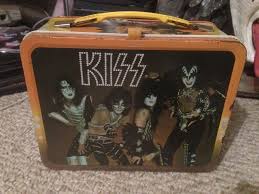
There were predecessors in rock history who sold all sorts of merchandise featuring the band’s likenesses (The Beatles come to mind), but Kiss was the first to sell stuff at the shows. Not just the usual t-shirts and posters but lunch boxes, games, watches, badges, stickers, action figures, you name it. Call it crass or cheesy, but it earned them a ton of money that helped offset the growing cost of the elaborate staging requirements.

Millions of these were sold over the years to the “KISS Army”

Over the span of their career, Kiss has been classified under the genres of hard rock, heavy metal, shock rock, glam metal and glam rock. They dabbled in a disco-ish pop rock briefly, and even some progressive rock, but mostly kept returning to the hard rock that marked their 1974-1979 heyday. One critic described their stuff as “a commercially potent mix of anthemic, fist-pounding hard rock, driven by hooks and powered by loud guitars, cloying melodies, and sweeping strings.” Love it or hate it, Kiss offered an onslaught of sound that laid the groundwork for both arena rock and the pop-metal that dominated rock in the late 1980s.

You may have noticed that, so far, I haven’t talked about the actual music Kiss recorded and performed. That’s because, with only a couple of exceptions, it was mind-numbingly average, even pretty awful. Before sitting down to write this, I felt that, to be fair, I needed to give their catalog another listen (actually a first listen, for much of it), so I spent a few hours on Spotify (I own none of their albums), and tried, really tried, to find something I liked.

I found five songs. The aforementioned “Beth” is a delicate, melodious tune carried by acoustic guitar and adorned with orchestration, sounding 180 degrees different from Kiss’s typical fare; “Hard Luck Woman,” which is reminiscent of “Maggie Mae”-era Rod Stewart but with far worse vocals; two catchy hard rock radio faves (“Rock and Roll All Nite” and “Shout It Out Loud”) that I don’t mind hearing maybe once every other year; and “I Was Made For Lovin’ You,” which starts like ZZ Top before heading off into an ’80s pop rock groove more like Richard Marx.

Gene Simmons (“The Demon”) and Paul Stanley (“The Starchild”)

Bassist Gene Simmons and rhythm guitarist Paul Stanley were the primary songwriters and singers in Kiss, so I guess they’re mostly to blame for the band’s lame repertoire. Frehley’s guitar chops and rock star attitude, on the other hand, were easily the most satisfying part of their sound and stage presence. The fact that several notable guitarists from recent years spoke out in praise of Frehley’s talents in the wake of his death speaks, um, volumes.

Pearl Jam guitarist Mike McCready added, “All my friends have spent untold hours talking about Kiss and buying Kiss stuff. Ace was a hero of mine, and I would consider him a friend. I studied his solos endlessly over the years. I would not have picked up a guitar without Ace’s and Kiss’s influence. R.I.P. it out, Ace. You changed my life.”

Geddy Lee of Rush said, “Back in 1974, we were the opening act for Kiss, and Alex, Neil and I spent many a night hanging out together in hotel rooms after shows. We’d do whatever nonsense we could think of, just to make him break out his inimitable and infectious laugh. He was an undeniable character and an authentic rock star.”

Tom Morello, the astonishing guitarist from Rage Against the Machine who inducted Kiss into the Rock and Roll Hall of Fame in 2014, called Frehley his “first guitar hero.” Said Morello, “The legendary Space Ace Frehley inspired generations to love rock and roll, and love rock and roll guitar playing. His timeless riffs and solos, the billowing smoke coming from his Les Paul, the rockets shooting from his headstock, his cool spacey onstage wobble and his unforgettable crazy laugh will be missed but never forgotten. Thank you, Ace, for a lifetime of great music and memories.”

Frehley in 1979

Frehley was noted for his aggressive, atmospheric guitar playing, and for the use of many outlandish custom guitars that produced smoke or emitted light to each song’s tempo. Guitar World called him one of the best metal guitarists of all time.

As a kid growing up in the Bronx, Frehley was torn between sports and rock music but he soon decided the guitar came first. He became even more certain at age 16 when he saw the Who and Cream at RKO Theater in Manhattan. “The Who really inspired me towards theatrical rock,” he said. “When I saw them, it totally blew me away. I’d never seen anything like it. It was a big turning point.”

In 1972, Frehley stumbled across a Village Voice ad that forever changed his life: “Lead guitarist wanted with Flash and Ability. Album Out Shortly. No time wasters please.” When he showed up to audition, “I just soloed through the whole song,” he recalled. “They all smiled. We jammed for a few more songs, and then they said, ‘We like the way you play a lot.'”

The band’s distinct stage makeup, black and silver costumes and bombastic show generated instant attention when they started gigging around New York City in 1973, but they didn’t find mainstream success until their 1975 concert album Alive! took off. To a certain segment of young fans, Frehley was the coolest member of the band, and such adulation sometimes went to his head. “When I play guitar onstage, it’s like making love,” he told Rolling Stone in 1976. “If you’re good, you get off every time.”

Frehley and the other band members sometimes had tense disagreements behind the scenes, and Frehley admitted that drug and alcohol abuse played a role in that. “There was so much cocaine in the studio, it was insane,” Frehley recalled in a 2015 interview. “I liked to drink, but once I started doing coke, I really liked to drink more, and longer, without passing out, so I was really off to the races. I made my life difficult because there were so many times I’d walk in with a hangover, or sometimes I wouldn’t even show up.”

By 1982, Frehley simply had had enough. “I was mixed up,” he said. “We were this heavy rock group, but now we had little kids with lunchboxes and dolls in the front row, and I had to worry about cursing in the microphone. It became a circus. I believed that if I stayed in that group I would have committed suicide. I’d be driving home from the studio, and I’d want to drive my car into a tree.”

Interestingly, when all four members simultaneously released solo albums in 1978, it was Frehley who had the only Top 20 single, a remake of the Russ Ballard rocker “New York Groove.” After a spell of inactivity after leaving Kiss, Frehley formed his own band, Frehley’s Comet, who had two modestly popular LPs, but successive releases were met with comparative indifference.

Frehley performing with his solo band on his “Space Invader” tour, 2014

A brief reunion of all four original members at the band’s 1995 “MTV Unplugged” special lead to a massive reunion tour in 1996 where they put the makeup back on, dusted off the old songs, and returned to stadiums and arenas all over the world. In 1998, they cut the new studio LP “Psycho Circus,” but Frehley only played on a single track. “I wasn’t invited to the studio,” he said in 2014. “When you hear Paul and Gene talk about it, they say I didn’t show up. The reason I’m not on any of the songs is because I wasn’t asked. They tried to make it look like I was absent.”

He once again left the band in 2002 following the conclusion of that year’s Farewell Tour. He was replaced by Tommy Thayer, who wore his signature Starman makeup and replicated all of his guitar parts. “Tommy played the right notes, but he didn’t have the right swagger,” Frehley claimed. “He just doesn’t have my same technique.”

Frehley continued performing and recording over the past 20 years but to smaller and smaller venues. In a 2013 interview,, he spoke about the mighty devotion of the band’s fanbase. “They’ve always been there for me through ups and downs. My life has been a roller coaster ride, but somehow I’ve always been able to land on my feet and still play the guitar.”

Simmons and Stanley without makeup, 2016

Considering the testy relationship Frehley had with Simmons and Stanley since 2002, it’s fairly remarkable that the two men did the right thing and released a compassionate joint statement. “We are devastated by the passing of Ace Frehley. He was an essential and irreplaceable rock soldier during some of the most formative foundational chapters of the band and its history. He is and will always be a part of Kiss’s legacy.”

R.I.P., “Spaceman.” Hope you enjoyed your stay on Earth.

****************************

I’ll probably never listen to it again, but for the record, here’s a playlist of selected tracks from Kiss’s albums, and a few from Ace Frehley’s solo releases. You’ll note I didn’t call the playlist “Essential Kiss.”