I never weep at night, I call your name

I remember when I was young thinking how cool it would be to have a song named after you.  Well, not me personally, but a song that was entitled “Bruce.”  I soon learned, however, that while there are many dozens, even hundreds, of songs named after women, there are only a handful featuring men’s names.  Elton John’s “Daniel” comes immediately to mind, or that macabre tune from 1971 which features two boys who apparently ate their friend in order to survive being trapped in a mine (“Timothy, Timothy, where on earth did you go?”).

Men (and a few women) have been writing songs about the women in their lives for at least a century or two.  These tunes have come in the form of romantic ballads, bitter break-up songs, heartfelt tributes and bittersweet odes.

More often than not, songwriters don’t mention these women by name, perhaps to preserve anonymity, or because their manager urged them to keep it more generic so the song might have more universal appeal.  But sometimes a writer insisted on keeping it specific to pay homage, or to hold in contempt, or simply because the sound of the name fit nicely in the song’s meter.

There are several dozen pretty great examples of classic rock songs with women’s names as the title.  No modifiers, no extra words.  Just the name.

In searching for these titles, I came across many others that use women’s names with descriptors (“Judy in Disguise,” “Long Tall Sally”), verbs (“Come on Eileen,” “The Wind Cries Mary”) and other qualifiers (“Mary Jane Can’t Dance,” “Caroline No”).  All perfectly good songs, but I limited my list to one-word titles.

Here are 20 for your consideration, with another baker’s dozen “honorable mentions.” There’s my usual Spotify playlist at the end.  Enjoy!

**************************

“Sara,” Fleetwood Mac, 1979

It took a while, but in 2014, Stevie Nicks finally confirmed what had been rumored for quite some time — that this 1979 song from Fleetwood Mac’s “Tusk” LP is about an aborted child she and lover Don Henley chose not to have.  “Had we gotten married and had that baby, and if it had been a girl, her name would have been Sara,” Nicks said.  “It’s a special name to me.  One of my very best lifelong friends is named Sara.”  The recording reached #7 as a single in early 1980, and Nicks still performs the song, both with the band and as a solo act.
“Roxanne,” The Police, 1978

In 1977, when The Police were performing in dive clubs around Europe, Sting was inspired by the prostitutes who worked outside the seedy hotel in Paris where the band was staying.  He wrote this sympathetic tune, urging the woman to give up the hard life she had chosen.  He decided to call her Roxanne after seeing a movie poster in the hotel lobby featuring the old film “Cyrano de Bergerac,” whose female lead is named Roxanne.   The song peaked at only #32 in the US in 1978, but it remains one of The Police’s signature songs.

“Gloria,” Them, 1964

Van Morrison said he wrote “Gloria” in the summer of 1963 as he was turning 18.  The song is as simple as it gets, only three chords, and he often ad-libbed lyrics as he performed it, sometimes stretching the song to 15 or 20 minutes.  Gloria was a real person, a girl he was infatuated with, and his desire to seduce her made it more challenging for some ’60s radio programmers to include the song in Top 40 formats.  Indeed, when an obscure group called The Shadows of Knight had a Top 10 hit with their cover of “Gloria” in 1966, it eliminated the reference to “coming up to my room.”

“Victoria,” The Kinks, 1969

In the leadoff song on The Kinks’ criminally underrated 1969 LP “Arthur,” Ray Davies’ satirical lyrics juxtapose the grim realities of life in Britain during the 19th century (“Sex was bad and obscene, and the rich were so mean”) with the empathetic hopes of the British Empire in the Victorian age (“From the West to the East, from the rich to the poor, Victoria loved them all”).  Throughout her reign, Queen Victoria was beloved even by the downtrodden working class (“Though I am poor, I am free, when I grow, I shall fight, for this land I shall die”). The song? Not so much — it managed only #33 in the UK and stalled at #62 in the US, despite its catchy melody.

“Jolene,” Dolly Parton, 1973

Parton’s solo career was just gathering momentum when she penned this evocative song about a simple gal who pleads with a stunningly beautiful woman named Jolene to leave her man alone:  “Pretty girl, please don’t take my man just because you can.”   So many country music fans could relate to that woman’s desperate feeling that the song soared to #1 on the country charts (although only #60 on the pop charts).  It became one of Parton’s most loved tunes, and many cover versions have been recorded since. There was even a song called “Diane” by country singer Cam in 2017 that serves as a sequel to “Jolene” in which the pretty woman apologizes, saying she was duped by the cheating man.

“Amie,” Pure Prairie League, 1972

Craig Fuller was the chief singer-songwriter in the original lineup of the country rock group Pure Prairie League, and he wrote great down-home songs on those classic but largely overlooked first two albums in 1971 and 1972.  One song, “Amie,” didn’t do much at first but eventually earned listeners through FM and college radio stations, and by 1975, it was a #27 hit nationwide.  The narrator and Amie have one of those on-again, off-again relationships, and it’s never clear whether they end up together.  As Fuller said later, “The protagonist of the song is just laying it out there, and the rest is up to her.”

“Suzanne,” Leonard Cohen, 1967

Cohen said “Suzanne” was inspired by his platonic relationship with a woman named Suzanne Verdal, who had been the girlfriend of one of his contemporaries, the famed sculptor Armand Vaillancourt.  The lyrics deftly describe the rituals they enjoyed in Montreal, where they lived near each other.  Contrary to some interpretations, Cohen insisted he and Suzanne were only friends, not lovers.  “I admit I imagined having sex with her, but there was neither the opportunity nor the inclination to actually go through with it,” he admitted. It never charted in the US, but it was one of his signature tunes, and after Cohen’s death in 2016, “Suzanne” reached the Top Ten in France and Spain.

“Martha,” Tom Waits, 1973

From the 1970s to the current day, Waits has been known for his distinctive deep, gravelly singing voice and song lyrics that focus on the underside of U.S. society.  Many of the characters who populate his music are unpleasant ne’er-do-wells and unsympathetic outliers, but a few reek of pathos, such as Tom Frost, the elderly guy who places a phone call to “Martha,” an old flame with whom he is meekly hoping to rekindle something.  It becomes clear that that’s not going to happen, but we listeners feel supportive of Tom’s wistful trip down memory lane to speak with her once again.

“Maybellene,” Chuck Berry, 1955

Berry wrote and recorded this prototype rock and roll song as an adaptation of the Western swing fiddle tune “Ida Red,” recorded in 1938 by Bob Wills and his Texas Playboys.  Leonard Chess, owner of the legendary Chess Records label, loved Berry’s sprightly lyrics about a hot rod race and a broken romance, but told him he felt the woman’s name needed to be something less rural than Ida Red.  He spied a bottle of Maybelline mascara in the studio and said, “Well, hell, let’s name her Maybellene,” altering the spelling to avoid a potential suit by the cosmetic company. It reached #5 on US pop charts in 1955 as one of the first-ever rock ‘n’ roll songs.

“Cecilia,” Simon and Garfunkel, 1970

This #4 hit, among Simon and Garfunkel’s final chart singles, began life as a cacophony of rhythms pounded out on coffee tables and kitchen counters in Simon’s apartment.  He later wrote the lyrics as a reflection about anguish and jubilation regarding an untrustworthy lover.  “Cecilia,” Simon has noted, refers to St. Cecilia, patron saint of music in the Catholic tradition, and he conceded that the song also refers to the frustrations and joy he has experienced in the songwriting process, as musical inspiration often arrived and departed quickly for him.

“Melissa,” The Allman Brothers Band, 1972

Gregg Allman wrote the acoustic tune “Melissa” back in 1967 when he and his brother were recording and performing as The Allman Joys. “Duane adored that song,” Gregg said, “which was one of the first decent tunes I wrote after many failed attempts. I always thought it was too mellow for The Allman Brothers Band, and I was saving it for a solo album I figured I’d put out eventually.” When Duane died at only 24 in 1971, Gregg was persuaded to record it with the band as a tribute to his brother for their “Eat a Peach” album in 1972, and it became a regular part of the band’s set list over the years since.

“Rachel,” Emily Hackett, 2020

My daughter Emily has been writing, recording and performing music since her high school days, and her sister Rachel has always been her biggest fan. In 2020 during the pandemic, “She had just given me an epic present for my 30th birthday,” Emily recalled. “I decided it was high time I wrote a song for her, so I sat on my front porch and wrote ‘Rachel’ as if I was writing a letter. It came fast. I think the lyrics really nail who she is. ‘A golden ray of sunshine.’ ‘Her eyes are so blue, it’s painful.'” She produced it herself in time for Rachel’s 27th birthday and released it three weeks later. I cherish this song.

“Julia,” The Beatles, 1968

During the sessions for The Beatles’ “White Album,” John Lennon was burning with a desire to write a song about his mother, Julia Baird.  “I lost her twice,” he said, “once as a five-year-old when I was moved in with my auntie, and then again when she physically died when I was 17.”  He borrowed phrasings from Kahlil Gibran’s “Sand and Foam” in which the original verse reads, “Half of what I say is meaningless, but I say it so the other half may reach you.”  Although it’s a Beatles track, no one but the composer was present for the recording, which featured Lennon alone on acoustic guitar and vocal.

“Angie,” The Rolling Stones, 1973

When the Stones reached #1 on the charts with the ballad “Angie” in the fall of 1973, speculation was rampant about the identity of the woman in question.  Some said Jagger and Richards were writing about David Bowie’s first wife Angela, with whom they had been spending time during that period.  Others assumed it was a tribute to Richards’ newborn daughter, Dandelion Angela.  In his 2010 autobiography “Life,” Richards said that he had chosen the name at random when writing the song, before he knew that his daughter would be named Angela or even knew that the baby would be a girl.

“Rosanna,” Toto, 1982

This Song of the Year Grammy winner in early 1983 was written by Toto keyboard player David Paich, who said it was a composite of several girls he had known.  During recording sessions, Toto band members initially played along with the assumption that the song was based on actress Rosanna Arquette, who was dating keyboard player Steve Porcaro at the time.  Arquette herself played along with the joke, commenting in an interview that year, “that song was about my showing up at 4 a.m. at the studio to bring them juice and beer.”

“Brandy,” Looking Glass, 1972

Elliot Lurie, guitarist and vocalist for the New Jersey-based group Looking Glass, had been reading old novels when he was inspired to write “Brandy,” a tune about a barmaid in a busy harbor town. Although lonely sailors flirted with her, she instead longed only for a man who left her years earlier because, he claimed, “my life, my lover, my lady, is the sea.” The song quickly moved up the charts to #1 in the summer of 1972, and enjoyed a second life in 2017 when it was used in the soundtrack for “Guardians of The Galaxy Vol. 2.” Interesting note: In 1974, Barry Manilow had to change his song “Brandy” to “Mandy” after the Looking Glass song became a huge hit.
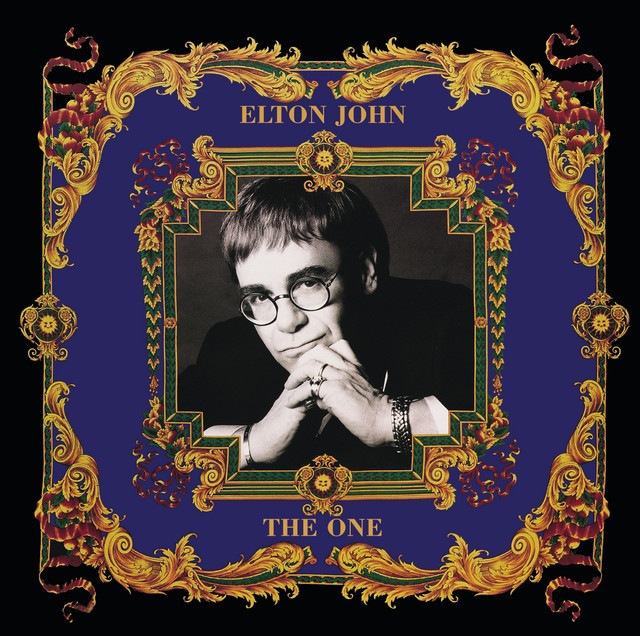
“Emily,” Elton John, 1992

John’s longtime lyricist partner Bernie Taupin penned one of the most poignant character studies in his catalog on this deep track from the 1992 album “The One.”  Taupin recalled writing the lyrics to “Emily” after an afternoon walk through the streets and cemeteries of Paris, France, where he couldn’t help but notice an elderly woman paying respects at various gravesites as she walked haltingly among the headstones.  “Elton wrote such a glorious melody to accompany this one,” Taupin said.  “It’s one of my favorites”:  “The old girl hobbles, nylons sagging, talks to her sisters in the ground…”

“Jane,” Jefferson Starship, 1979

Vocalist figurehead Grace Slick had temporarily left the band in 1978 when the Jefferson Starship brought in singer Mickey Thomas for the “Freedom at Point Zero” LP. Bassist David Freiberg wrote most of the music and lyrics for what would become the album’s single, “Jane.”  He said, “She’s no one in particular, just the kind of girl who’s insincere and manipulative in the way she behaves in a relationship.  I think we’ve all know women — and men — like that”:  “You’re playing a game called ‘hard to get’ by its real name, you’re playing a game you can never win, girl…”

“Aubrey,” Bread, 1972

Of the several hit ballads David Gates wrote in the early ’70s as chief songwriter for the soft-rock band Bread, “Aubrey” came across as one of the most sad and heartfelt.  One interpretation had it that Aubrey was the name of a baby girl who died at birth; another said she was a woman the narrator was infatuated with but was too shy to approach.  In the booklet from Bread’s 2006 anthology collection, Gates said the truth behind “Aubrey” was less interesting — it was inspired by an Audrey Hepburn film he saw but never fully understood. It peaked at #15 in 1973 as the third single from Bread’s fifth LP, “The Guitar Man.”
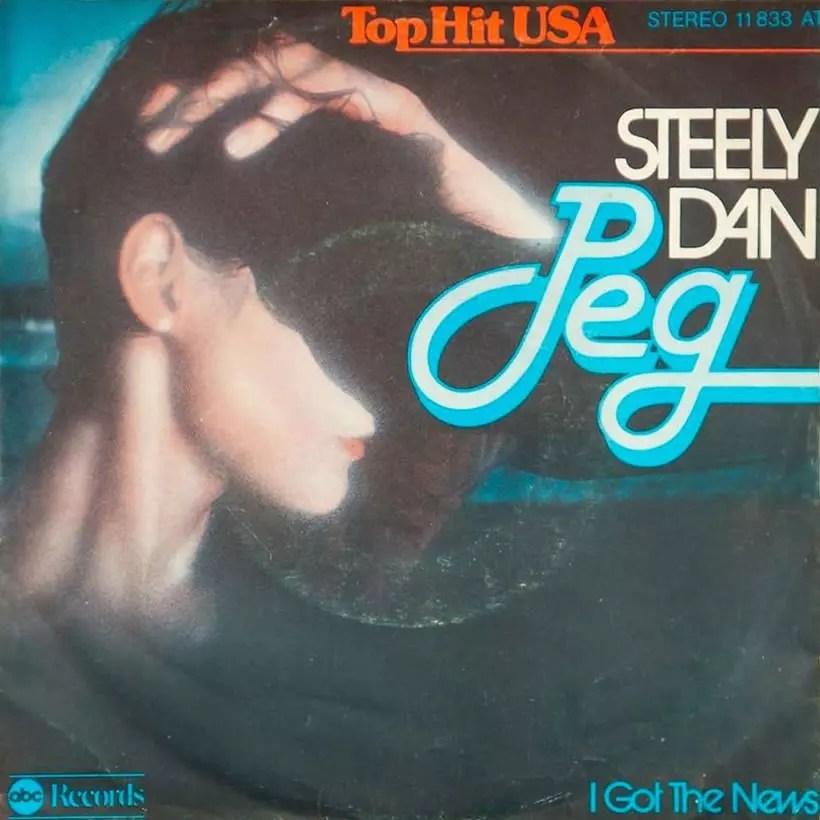
“Peg,” Steely Dan, 1977

Songwriters Donald Fagen and the late Walter Becker have typically been tight-lipped about the meaning behind their often puzzling lyrics, but Fagen once conceded in an interview that “Peg,” a #11 hit in 1978 from their platinum LP “Aja,” referred to Peg Entwistle, a star of Broadway theater in the 1920s and 1930s.  Fagen and Becker found her to be a suitable entry in the Steely Dan cast of offbeat characters because, in 1932, she jumped to her death off the famous Hollywood sign (when it was “Hollywoodland,” an advertisement for a new housing development) before her first film was ever released.

****************************

Honorable mention:

Michelle,” The Beatles, 1965;  “Lucille,” Little Richard, 1957; “Clarice,” America, 1971;  “Wendy,” The Beach Boys, 1964;  “Valerie,” Steve Winwood, 1982;  “Amanda,” Boston, 1983;  “Sherry,” The Four Seasons, 1962;  “Jessie,” Joshua Kadison, 1992; “Carrie-Anne,” The Hollies, 1967;  “Luka,” Suzanne Vega, 1987; “Diana,” Paul Anka, 1958;  “Nanci,” Toad the Wet Sprocket, 1994; “Veronica,” Elvis Costello, 1989.

******************************

I said, ‘Do you speak-a my language?”

In order to gain airplay and recognition on American pop music charts, a song has to be sung in English. Doesn’t it?

Well, yes — and no. The overwhelming majority (probably 99.9%) of songs that have reached the Billboard Top 40 since the charts were first published in the 1930s have been in English. As with any rule, however, there have been exceptions.

In the early 1960s, two songs reached the top of American pop charts with foreign-language lyrics. “Sukiyaki,” a song of lost love written in Japan in 1961 and sung in Japanese by crooner Kyu Sakamoto, somehow became a #1 hit here in 1963. Later that year, a Belgian singer named Jeannine Deckers, better known as The Singing Nun, reached #1 with “Dominique,” a French song about Saint Dominic, the Spanish priest who founded the Dominican Order.

Most American listeners enjoyed the songs’ melodies and never bothered to learn what the lyrics meant in English. In case you’re interested, here’s a translation of “Dominique”:

Domi-nique -nique -nique s’en allait tout simplement, /Routier, pauvre et chantant, /En tous chemins, en tous lieux, /Il ne parle que du Bon Dieu, /Il ne parle que du Bon Dieu.” The literal English translation is: Domi-nic -nic -nic went about simply, /A poor singing traveller, /On every road, in every place, /He talks only of the Good Lord, /He talks only of the Good Lord.

Guantanamera,” a 1920s Cuban patriotic song with Spanish lyrics, reached the Top Ten in 1966 when the easy-listening trio The Sandpipers recorded their rendition.

Far more common is the use of French, Spanish, even Zulu and Sanskrit phrases in songs with predominantly English lyrics is far more common. I’ve gathered 25 popular rock music songs that feature words, phrases or full verses sung in foreign languages. There’s a Spotify playlist at the end so you can hear these tunes as you read about them.

Apprécier! (Enjoy!)

*************************

“La Bamba,” Ritchie Valens, 1958

The first song sung with 100% foreign-language lyrics to reach the US Top Ten was this classic Latino rocker by Ritchie Valens in 1958. It’s actually a traditional Mexican folk song that Valens recorded as the flip side of his bigger hit single “Donna.” (“Donna” reached #2 while “La Bamba” peaked at #22.) Its Spanish lyrics are: “Para bailar La Bamba, /Para bailar La Bamba, /Se necesita una poca de gracia, /Una poca de gracia, /Pa’ mí, pa’ ti, arriba, y arriba, /Y arriba, y arriba…” The English translation is: “To dance the Bamba, /To dance the Bamba, /One needs a bit of grace, /A bit of grace, /For me, for you, now come on, come on, /Now come on, come on…” In 1987, Los Lobos had a #1 hit with its great cover version for the “La Bamba” biopic film about Valens.

“99 Luftballons,” Nena, 1983

The West German band Nena wrote and recorded this song (entirely in German) with lyrics that tell a story about 99 red balloons that are launched during a concert and mistaken for UFOs. When the military investigate and find only balloons, they nevertheless put on a show of firepower that triggers a cataclysmic war, causing devastation on both sides. It was a big #1 hit in Europe, Japan and Australia in 1983. Although an English-language version with slightly different lyrics was also released, it curiously failed to chart here, while the German original was embraced by American listeners, who pushed it to #2. Here’s a sample of the original German lyrics: “Neunundneunzig Luftballons, /Auf ihrem Weg zum Horizont, /Hielt man für UFOs aus dem All, /Darum schickte ein General, /’Ne Fliegerstaffel hinterher, /Alarm zu geben, wenn’s so wär, /Dabei waren dort am Horizont, ?Nur neunundneunzig Luftballons…”

“Oye Como Va,” Santana, 1970

Although most songs on Santana’s lengthy recording career are either instrumentals or feature English lyrics, there are a handful of tracks that have been sung either partly or entirely in Spanish, none more famous than their early hit “Oye Como Va,” which reached #13 in early 1971. It was actually written in 1962 by bandleader Tito Puentes, and Mexican-born guitarist Carlos Santana loved it so much as a kid that he brought it to his group to include on their second LP “Abraxas.” The Spanish-language lyrics are brief: “Oye como va, mi ritmo, /Bueno pa’ gozar, mulata.” Translated, it means, “Listen how my rhythm goes, /It’s good for enjoying, mulatta.”

“Hungry For You (J’aurais toujours faim de toi),” The Police, 1981

Allegedly, Sting was miffed that he couldn’t hear Police songs on French radio stations because they aired only French-language songs, so when he wrote “Hungry For You” for the band’s “Ghost in the Machine” album in 1981, he sang it in French. The tactic didn’t work — French radio still didn’t play it because of a brief section sung in English. It’s a great tune that sounds like earlier songs by The Police, with passionate lyrics about sweaty sex and carnal desire. Here’s a portion of the French lyric: “Rien de dormir cette nuit, /Je veux de toi jusqu’à ce que je sois sec, /Mais nos corps sont tous mouillés, complètement couverts de sueur, /Nous nous noyons dans la marée, /Je n’ai aucun désir, /Tu as ravagé mon coeur, /Et moi j’ai bu ton sang, /Mais nous pouvons faire ce que nous voulons, /J’aurai toujours faim de toi…” The English translation is: “No sleep tonight, /I want you until I’m dry, /But our bodies are all wet, completely covered in sweat, /We’re drowning in the tide, /I have no desire, you ravaged my heart, and I drank your blood, /But we can do whatever we want, /I’ll always hunger for you…”

“C’etait Toi (You Were the One),” Billy Joel, 1980

Joel’s ballad “Honesty” from his 1978 LP “52nd Street” had been popular in France, so he thought he’d try to write a ballad sung in French, which appeared on his harder-rocking “Glass Houses” album in 1980. “It failed miserably because I don’t even speak French. I love the sound of their language but I guess I massacred it.” Still, it’s a lovely melody about “the woman who got away.” The first verse, in English, is: “Here I am again in this smoky place with my brandy eyes, /I’m talking to myself, /You were the one, you were the one, /Here I go again, looking for your face, And I realize that I should look for someone else, /But you were the one, you were the one…” That verse is repeated later, in French: “Me revoici dans ce bar fumé avec mes yeux ivres, /Je me parle à moi même, /Ooh, c’était toi, ooh c’était toi, /Me revoici, cherchant ton visage, /Et je realisé que je devrais chercher une autre, /Ooh, c’était toi, ooh c’était toi…”

“Diamonds on the Soles of Her Shoes,” Paul Simon, 1986

This irresistible track from Simon’s iconic “Graceland” LP in 1986 opens with South African male choral group Ladysmith Black Mambazo singing these phrases in Zulu: “(A-wa) O kodwa u zo-nge li-sa namhlange, (A-wa a-wa) Si-bona kwenze ka kanjani, (A-wa a-wa) Amanto mbazane ayeza.” This essentially translates to “It’s not usual, but in our days, we see those things happen, /They are women, they can take care of themselves.” The song was performed by Simon and the choral group in an epic “Saturday Night Live” episode that year and is easily one of the most popular songs from his solo career.

“Jennifer Juniper,” Donovan, 1968

This charming tune from Donovan’s 1968 LP “Hurdy Gurdy Man” was inspired by his friend Jenny Boyd, older sister of Pattie Boyd, who married George Harrison, and later, Eric Clapton. Jenny Boyd was married to drummer Mick Fleetwood for a while. On a whim, Donovan sang it partly in English, partly in French. It was a #5 hit in the UK, but only a minor hit here, reaching #26 on US pop charts. The English lyrics are: “Jennifer Juniper lives upon the hill, /Jennifer Juniper, sitting very still, /Is she sleeping? I don’t think so, /Is she breathing? Yes, very low, /Whatcha doing, Jennifer, my love?…” The same verse appears later, sung in French: “Jennifer Juniper vit sur la colline, /Jennifer Juniper, assise très tranquille, /Dort-elle? Je ne crois pas, /Respire-t-elle? Oui, mais tout bas, /Qu’est-ce que tu fais, Jenny, mon amour?…”

“Only a Dream in Rio,” James Taylor, 1985

At the inaugural Rock in Rio Festival in 1985, Taylor was among the performers, and he was overwhelmed by the crowd’s enthusiasm and the fact that they could sing along to many of his songs. The welcome reception had a profound effect, helping him finally kick his addiction issues, and in gratitude he wrote and recorded “Only a Dream in Rio” for his “That’s Why I’m Here” LP that year. Halfway through the song, he sings a section in Portuguese, Brazil’s primary language: “Quando a nossa mãe acordar, andaremos ao sol, /Quando a nossa mãe acordar, cantará pelos sertões, /Quando a nossa mãe acordar, todos os filhos saberão, /Todos os filhos saberão e regozijarão…” The English translation is: “When our mother wakes up, we will walk in the sun, /When our mother wakes up, we’ll sing through the backlands, When our mother wakes up, all the children will know, and rejoice…”

“Hold On Tight,” Electric Light Orchestra, 1981

For Electric Light Orchestra’s ninth album “Time,” singer/songwriter/producer Jeff Lynne decided to record in a German studio in 1981. “Hold On Tight,” which anchored the album as its lead single, serves as a tip of the hat to Jerry Lee Lewis and 1950s rock ‘n’ roll. It opens with this verse: “Hold on tight to your dream, /Hey, hold on tight to your dream, /When you see your ship go sailing, /When you feel your heart is breaking, /Hold on tight to your dream…” Lynne chose to revisit that verse later in the song, but just for fun, he sang it in French: “Accroche-toi à ton rêve, /Accroche-toi à ton rêve, /Quand tu vois ton bateau partir, /Quand tu sens ton cœur se briser, /Accroche-toi à ton rêve…”

“Desert Rose,” Sting, 1999

In 1998, Sting became entranced by the music of Algerian singer Cheb Mami and, already a devotee of “world-beat” music, he approached Mami about co-writing a song together. Sting had begun the music for “Desert Rose” and had envisioned lyrics about love and longing. He asked Mami to provide Arabic lyrics and sing them on the record, and the end result was an exotic song that begins with Mami’s words: “Hadaee mada tawila, /Wa ana nahos ana wahala ghzalti,” which translates into English as “It has been a long time, /And I am looking for myself and my loved one.” Sting regards the track as “an interesting experiment” that worked well enough to reach the Top Five in multiple European countries, #15 in the UK and #17 in the US.

“Psycho Killer,” Talking Heads, 1977

Although David Byrne first wrote this song in 1974 as a ballad, its was resurrected as a New Wave tune for the Talking Heads debut LP in 1977. The chorus asks, “Psycho killer, qu’est-ce que c’est? (What is it?)” At the song’s midpoint, Byrne sings in French: “Ce que j’ai fait, ce soir-là, /Ce qu’elle a dit, ce soir-là, /Réalisant mon espoir, /Je me lance, vers la gloire.” Translated, this means: “What I did that evening, /What she said that night, /Fulfilling my hope, /I launch myself towards glory.” The track proved popular in Italy, Netherlands and the UK, and eventually reached platinum status in the US. An acoustic version of “Psycho Killer” opens the superb “Stop Making Sense” 1984 Talking Heads concert film.

“Lawless Avenues,” Jackson Browne, 1986

For his 1986 politically charged album “Lives in the Balance,” Browne collaborated with Puerto Rican singer/producer Jorge Calderón on one track, “Lawless Avenues,” which decries the desperate environment some Hispanic populations are forced to live in. The lyrics, mostly in English but intermittently in Spanish, are filled with righteous anger about social inequality. In Spanish, Browne and Calderón sing: “Hoy amigo, tal igual como ayer, /La lucha en el barrio no cambia, /Nuestros hijos son los que han de crecer, /Por ley de la calle, viviendo entre abrazos Y chingazos…” In English, that means: “Today my friend, just like yesterday, /The struggle in the barrio doesn’t change, /Our children are the ones to grow up by the law of the street, Living between hugs and blows…”

“Michelle,” Beatles, 1965

In the early ’60s before fame arrived, Paul McCartney attended a party where an art student with a goatee and a striped T-shirt was singing a French song. He soon wrote a farcical imitation to entertain his friends that involved French-sounding groaning instead of real words. The song remained a party piece until 1965, when John Lennon suggested he rework it into a proper song. McCartney asked a French teacher he knew to help him write lyrics, and they chose “Michelle, ma belle (‘my beautiful’)” as the title and first line. He asked for a translation of “These are words that go together well…” and was amazed they perfectly fit the song’s meter: “Sont les mots qui vont tres bien ensemble…” It ended up on The Beatles’ “Rubber Soul” LP and was covered by many dozens of artists.

“Soolaimon,” Neil Diamond, 1970

In one of the earliest examples of a popular Western artist dabbling in African rhythms and culture, Brill Building composer Neil Diamond stretched his boundaries on the 1970 LP “Tap Root Manuscript.” Although “Cracklin’ Rosie” and a cover of The Hollies’ “He Ain’t Heavy He’s My Brother” got the airplay, the album’s second side was devoted to an “African Trilogy” anchored by the compelling track “Soolaimon,” a term found in various African dialects that can mean several things: “Hello” or “Welcome,” or “Goodbye,” or even “Peace be with you.” One critic described the track as “African folk styles entwined with blues and gospel, all coming from a Jewish New Yorker.”

“La Isla Bonita,” Madonna, 1986

Initially developed as an instrumental by songwriter Patrick Leonard (who would become co-leader of Toy Matinee in 1990), this likable slice of Latin pop became a hit once Madonna wrote lyrics for it and sang it with accompanying flamenco guitars, maracas and Latinesque percussion. The lyrics refer to the fictional island of San Pedro, an idyllic paradise where love and samba music rule. The Spanish title “La isla bonita” translates to “The beautiful island.” A key line is delivered in Spanish — “Te dijo te amo, which means “He told you ‘I love you.’” The record reached #4 on US charts in early 1987 as the fifth single from Madonna’s “True Blue” LP

“Kýrie,” Mr. Mister, 1985

Lyricist John Lang worked often with Mr. Mister vocalist/bassist Richard Page and keyboardist Steve George to compose material for the group’s four albums recorded in the mid-to-late 1980s. While attending a Greek mass, Lang was struck by how lyrical the phrase “Kýrie, eléison” sounded and urged the band to use it for a song they were working on. It’s a Greek phrase used in Christian prayer that translates as “Lord, have mercy.” Page was leery about the use of religious language in a pop song, but he needn’t have worried. “Kyrie” became Mr. Mister’s second #1 single from their 1985 LP “Welcome to the Real World” (“Broken Wings” came first).

“Lady Marmalade,” LaBelle, 1974

In the early ’70s, songwriter Bob Crewe (who wrote many of The Four Seasons’ biggest hits) visited New Orleans’ French Quarter and reveled in the festive, somewhat tawdry environment there. When a bustier-clad Creole woman propositioned him, she asked, “Voulez vous coucher avec moi ce soir?” In English, of course, this means “Do you want to sleep with me tonight?” Crewe used that French lyric as the focal point of “Lady Marmalade,” the timeless ’70s disco tune by Labelle that reached #1 in 1974.

“Pearl of the Quarter,” Steely Dan, 1973

Another song about the bawdy French Quarter vibe came from the minds of Donald Fagen and Walter Becker, who co-wrote the utterly charming jewel “Pearl of the Quarter,” found on Steely Dan’s second LP, 1973’s “Countdown to Ecstasy.” Unlike the assassins, perverts and other outliers that populate other Steely Dan songs, the narrator on this one is a regular guy who has a crush on a lusty prostitute he befriends on Bourbon Street. Fagen sneaks in a little Français when he sings, “She stole my heart with her Cajun smile, singing ‘Voulez voulez voulez vous,” which basically means “Do you wanna?

“Across the Universe,” The Beatles, 1970

John Lennon was deep in the midst of his temporary immersion in transcendental meditation in 1967 when he came up with “Across the Universe.” It’s full of descriptive phrasing (“Words are flowing out like endless rain into a paper cup”) set to a dreamscape melody and arrangement, culminating in the mantra-like chorus lyric: “Jai guru deva.” It’s a Sanskrit phrase which means “Victory to the divine teacher” followed by the universal meditation one-syllable chant “Om,” designed to help a person achieve a higher state of consciousness. It took three years before the song was finally released on The Beatles’ final album “Let It Be.”

“Games Without Frontiers,” Peter Gabriel, 1980

On his third album (the third to be called “Peter Gabriel” but known unofficially as “Melt” because of the album cover image), Gabriel wrote this enigmatic gem, with lyrics that compare international diplomacy and war to children’s games. Gabriel invited British singer Kate Bush to add a vocal counterpoint to his melody, intoning the French lyric “Jeux sans frontières” several times, which is the French translation of the song’s title, “Games without frontiers.” Not coincidentally, “Jeuz sans frontières” is also the name of a long-running TV game show broadcast in several European countries.

“Eyes Without a Face,” Billy Idol, 1983

Idol loved black and white horror movies, and one of his favorites was the 1960 French film “Les Yeux Sans Visage,” about a plastic surgeon who murders victims to use skin grafts to restore the face of his daughter who’s been disfigured in an accident. It became the inspiration for Idol’s hit “Eyes Without a Face,” which is the English translation of the film title. In each chorus, Idol’s then girl-friend Perri Lister sings the line “Les yeux sans visage” in tandem with Idol singing “Eyes without a face” just after. As a single from his double-platinum “Rebel Yell” LP, it peaked at #4 on US pop charts in 1983, Idol’s first of four entries in the Top Ten here.

“Suite: Judy Blue Eyes,” Crosby Stills and Nash, 1969

I’ve listened and sung along to “Suite: Judy Blue Eyes,” the leadoff track on the landmark “Crosby, Stills & Nash” album in 1969, probably a thousand times, but I never took the time to find out what Stephen Stills was singing in Spanish during the song’s final moments…until now. The seven-minute track is an ode to his then-girlfriend Judy Collins, so it makes sense that the words praise her beauty, and lament the fact he can’t be with her. The lyrics he sings are: “¡Que linda! Me recuerda a Cuba, La reina de la Mar Caribe, /Quiero sólo visitarla allí, /Y que triste que no puedo, /¡Vaya! O Va! O Va!” Translated, the words are: “How beautiful! She reminds me of Cuba, /The queen of the Caribbean Sea, /I just want to visit her there, and how sad that I can’t, /Damn! Or Go! Or Go!”

“My Cherie Amour,” Stevie Wonder, 1969

This ballad was originally written by Wonder in 1966 as “Oh My Marcia” about his high school girlfriend. Motown mogul Berry Gordy thought it still needed work, at which point songwriter Henry Cosby suggested the title should be in French, “like The Beatles’ ‘Michelle,'” he said, “but without mentioning a specific girl’s name.” The title became “My Cherie Amour,” which translates to “My dearest love.” It reached #4 in 1969, the eighth of an incredible 17 Top Ten hit singles Wonder scored on US pop charts between 1962 and 1985.

“C’est La Vie,” Bob Seger, 1993

In 1964, after serving a two-year stint in prison, Chuck Berry re-emerged to reclaim his place in the rock and roll pantheon with an uptempo country blues that he called “You Never Can Tell.” It was also unofficially subtitled “C’est La Vie” after the French phrase Berry repeats at the end of each verse: “‘C’est la vie,’ say the old folks, ‘it goes to show you never can tell.‘” In 1993, when Detroit rocker Bob Seger put out his Greatest Hits package, he added a new track, a rollicking cover of the Berry song, released with the “C’est La Vie” title.

“C’est La Vie,” Emerson, Lake & Palmer, 1977

Most people know the oft-used maxim “C’est la vie” means “That’s life,” which can have a certain resignation to it when fate deals us a bad hand. That’s the way Greg Lake looked at it when he wrote “C’est La Vie,” an entirely different song, for the Emerson, Lake & Palmer LP “Works Volume 1” in 1977. The lyric says, “Who knows who cares for me? C’est la vie…”

“Sun King,” The Beatles, 1969

The Beatles have appeared twice here already, but they also offered a third example of using foreign language in their song, although this time it was tongue in cheek. “Sun King” is one of John Lennon’s three mini-songs that comprised the phenomenal 13-minute medley on Side Two of “Abbey Road.” To conclude the sublime tune, Lennon and McCartney mischievously devised three lines of nonsensical phrases sung in Spanish and Italian words. “We just made it up,” Lennon said later. “Paul knew a few Spanish words from school, so we just strung together any Spanish or Italian words that sounded vaguely like something.” The lines are: “Quando paramucho mi amore de felice carathon, /Mundo paparazzi mi amore cicce verdi parasol, /Questo abrigado tantamucho que canite carousel…” It makes little sense when translated to English: “When for much my love of happy heart, /Paparazzi world my fat love green parasol, This thank you so much much, which can eat it carousel.” Lennon delighted in such wordplay — remember “I Am the Walrus”?

****************************