Looks like we’re in for nasty weather
Periodically, I use this space to pay homage to artists who I believe are worthy of focused attention — artists with an extraordinary, influential, consistently excellent body of work and/or a compelling story to tell. In this essay, I share the sad tale of a driven, talented musician who reached the mountaintops of rock and then found himself bottoming out, the victim of naiveté and greed: John Fogerty and Creedence Clearwater Revival.
**************
The history of popular music is littered with hundreds of cases of rapacious managers and record labels screwing artists and songwriters out of their rightful share of profits and royalties from the music they have written and recorded.
It happened to The Beatles. It happened to The Rolling Stones. It happened to many bands because they were usually just kids in their teens or early 20s, with no understanding or proper advice on how to avoid the charlatans and greed heads who
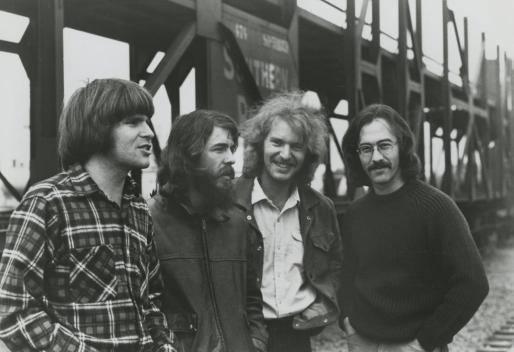
Creedence Clearwater Revival in 1969: John Fogerty, Doug Clifford, Tom Fogerty, Stu Cook
manipulate the artists’ naiveté and make off with most of the money made from the sale and airplay of their hit records.
What happened to John Fogerty and Creedence Clearwater Revival is perhaps the most heartbreaking story I’ve heard about what can and did happen in this brutal, unsavory business.
There are those who will read Fogerty’s 2016 autobiography “Fortunate Son: My Life, My Music” and feel little sympathy. They’ll see him as an egotist with no business sense who made some very bad decisions that haunted him for decades. But I see him as a guy with 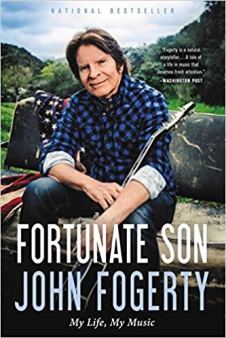 a dream, a strong work ethic, a fierce determination and, perhaps to his detriment, resolute trust that those around him would be true to their word and treat him fairly.
Fogerty grew up in El Cerrito, California, a small town north of Berkeley, where his hardscrabble childhood was marred by divorce, family alcoholism and estrangement. In high school, he formed a band with fellow classmates Stu Cook (bass) and Doug Clifford (drums), eventually recruiting older brother Tom Fogerty (rhythm guitar) from a rival group and branded themselves The Blue Velvets. They were just having fun, Fogerty recalls, playing school events and parties while covering the rock and roll hits of the late ’50s and early ’60s.
In 1964, The Blue Velvets signed to Fantasy Records, a small, San Francisco-based label run by Max and Sol Weiss, specializing in jazz and comedy records. They were renamed The Golliwogs, but had no luck releasing records under that name, and by 1967, a man named Saul Zaentz took over Fantasy Records, and became the group’s manager.
Fogerty had spent a year in active military duty, and upon his discharge, he and the band decided “it was time be more serious about getting really good. We made a regimen of practicing every day, because we figured this was going to be our last fling at the big dream. So we were gung ho. It was acknowledged that I seemed to have a clear idea of what we should be doing musically, because not only was I able to sing, but I understood the music enough that I could teach. I knew how the instruments should sound. My arrangements had become more focused. I had the strong belief that we could actually achieve our dream.”
Zaentz gave the group a pep talk and told them he believed in them, and was eager to sign them to a new contract. “We put faith in him because he seemed like he was our friend,” Fogerty recalls. “At that time, Fantasy consisted pretty much of just the five of us — Stu, Doug, Tom, Saul and me.”
Fogerty said the band had always hated the name Golliwogs, and Zaentz encouraged them to select a new name. In the spirit of other long-winded band names of the time (Quicksilver Messenger Service, Strawberry Alarm Clock), they came up with Creedence Clearwater Revival. As Fogerty remembers it: “Credence Nuball was a friend of Tom’s, and I liked the idea of credence, which means credibility, belief, positive vibe. Then ‘clearwater’ came from an Olympia Beer commercial, and a public service announcement I saw about the push for clean water legislation. And I really liked the i dea of our band having a renewal, a resurgence, so ‘Revival’ fit. It seemed like quite a mouthful, but we loved it.”
Creedence told Zaentz they wanted to record in a proper studio so they could make a more professional-sounding record, so they booked time in RCA Studios in LA. That resulted in their first breakthrough: “Susie-Q,” a cover version of the 1957 Del Hawkins rockabilly classic. The album version was an eight-minute jam with Fogerty solos and vocal adornments, but the single version, at 4:30, hit #11 on the charts, giving them a foothold on the ladder to further success.
And that’s when Zaentz insisted on the new contract. Recalls Fogerty, “We didn’t have any legal representation, but Stu’s father was an attorney, so we decided to have him
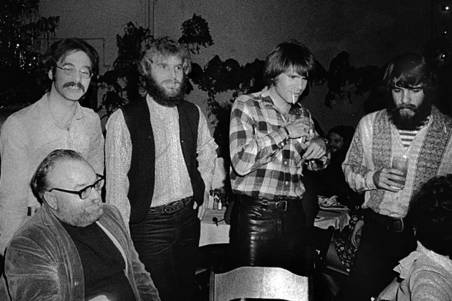
Saul Zaentz (below left) with CCR
give it to his dad to look it over. We were told the contract looked fine and was okay to sign. To this day, I don’t think Stu even showed it to his father. I take my share of the responsibility for signing it in January 1968, but at the time, I thought ‘Saul is our friend. He isn’t going to screw us, right?’
“How innocent and naive we all were. That contract was terrible for all of us financially — our royalty rate was 10 percent, paid out of net sales, not gross — but for me, as the sole creator of the material, there were long-reaching implications. Saul owned the copyright on all our songs, lock, stock and barrel. But I didn’t really discover this until two years later.”
Fantasy was now owed 180 songs over seven years (about 25 per year) — and if not completed once that period ended, they’d still be owed. “In our best year, 1969, we recorded three albums, or 26 songs. Besides me, nobody wrote songs in Creedence that amounted to anything, so when we broke up, the other guys were all set free. Not me. Fantasy Records not only chiseled me out of a fortune, they still owned my future. I was basically enslaved.”
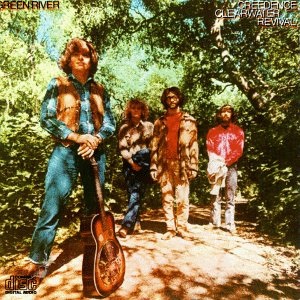 Meanwhile, Fogerty began one of the most remarkable songwriting streaks that rock has ever seen. Between late 1968 and early 1972, Creedence was the nation’s most prolific, most successful band, and all the hit songs (and most album tracks) were Fogerty compositions — “Proud Mary,” “Born on the Bayou,” “Bad Moon Rising,” “Lodi,” “Green River,” “Commotion,” “Down on the Corner,” “Fortunate Son,” “Travelin’ Band,” “Looking Out My Back Door,” “Who’ll Stop the Rain,” “Up Around the Bend,” “Have You Ever Seen the Rain.”
“I was very driven,” he says. “It was life and death. We didn’t have a publicist, we didn’t have a manager, we didn’t have a producer, and we were on the tiniest label in the world, so we had to do it with music. And that pretty much meant me.”
Fogerty perfected a simple approach, writing basic rock and roll melodies with relatable lyrics, and using recording techniques and specific types of guitars to get the sound he  wanted on the records. He said he was disappointed when he discovered that the others in the group weren’t much interested in learning, preferring to party and leave the hard work to Fogerty.
“It was very frustrating, because they chose to see this as me trying to be in control of every detail about our recordings and how they sounded. To some extent, they were right — I took over doing all the vocals, both the lead vocals and the harmonies on overdub, because they just didn’t sound as good when the others sang. But to me, this was all about making the very best records we could, and the results prove I was right.”
Five albums — “Bayou Country,” “Green River,” “Willy and the Poor Boys,” “Cosmo’s Factory,” and “Pendulum” — were all multi-platinum, Top Five chart successes, and “Green River” and “Cosmo’s Factory” reached #1 in 1969 and 1970, respectively. They were every bit as popular as any other band at that time.
*************
My first encounter with Fogerty’s music, like so many of my earliest discoveries, came at a wonderful little independent record store called, oddly enough, Fantasy Records, located in the bohemian Coventry Village section of Cleveland Heights, Ohio, about two miles from my home. Albums cost $3.99 back then, and each day the proprietor would put a different new album on sale for only $1.99. It was a great ploy to get customers to  stop in regularly, and I would ride my bicycle there at least twice a week, eager to see which album was on sale. One day, it was “Bayou Country,” and although I’d never heard of Creedence Clearwater Revival before, I liked what I heard coming out of the store’s sound system, so I plunked down my two bucks and took the album home.
I think I must’ve played that record every day for two months. “Born on the Bayou” in particular simply mesmerized me, and the band’s version of the Little Richard classic “Good Golly Miss Molly” was a close second. Fogerty’s growl was so distinctive and unusual, and the band played tight rock arrangements that grabbed me. And let’s not forget the amazing groove of the album’s closer, “Keep on Chooglin’,” an infectious jam the band often saved as the finale at their live shows. I didn’t know what “chooglin'” was, but I didn’t much care. I sure loved the sound of it.
***************
By 1972, the other members of Creedence mutinied, insisting that they be able to contribute songs and record them their way. Fogerty, against his better judgment, acquiesced, and the resulting album, “Mardi Gras,” was by all accounts a failure, with only Fogerty’s song “Sweet Hitch-hiker,” getting any airplay. It would prove to be CCR’s final album.
 Once Fogerty learned the particulars about the implications of the onerous contract he had signed, he found it so soul-crushing that he lost the desire, and ability, to write hit songs. The muse had left him. Almost as soon as the band was over, he realised the songs no longer flowed like water from a tap. He’d never known where they came from, and when they no longer came, he didn’t know where they’d gone.
What followed were decades of legal strife, bad blood and creative paralysis. In fact, Fogerty even became estranged from his own songs. He refused to perform them for another 25 years, even though this audiences wanted to hear them. The associations were too painful, he said, and he couldn’t stand the thought of Zaentz making any more money from them. Whenever one of his old hits came on the car radio – which happened often – he would turn it off.
Fogerty claims Zaentz repeatedly broke promises and went back on his word in their dealings together. The fact that Zaentz used the money made off Creedence’s music to launch a hugely successful movie producer career only made things worse for Fogerty.
It took him more than a decade to mount a solo comeback. In 1985, Fogerty managed to score a #1 LP, “Centerfield,” with a Top Ten hit, “The Old Man Down the Road,” but even 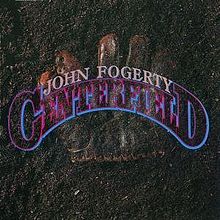 that was tainted after Zaentz sued him, saying “The Old Man Down the Road” plagiarized Fogerty’s earlier hit, “Run Through the Jungle.” He couldn’t believe it. “How can you steal your own song?” He took some satisfaction out of playing both songs live in a courtroom, demonstrating there was only a modicum of similarity, thus winning his case.
But the damage done to his spirit was profound. Fogerty was shaken by the malicious, mean-spirited way in which he had been treated by his adversaries. He withdrew from touring, becoming isolated as he began drinking heavily, losing all sense of the drive and determination that had served him so well in earlier years. It wasn’t until the ’90s when he met his current wife Julie, who he credits with saving his life and turning him around.
He finally began playing his old catalog again, partly because other musicians like 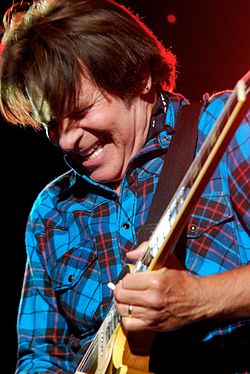 George Harrison urged him to do so. In a reference to Ike and Tina Turner’s #4 hit cover version, Harrison said, “John, if you don’t start playing ‘Proud Mary’ again, people are going to start thinking Tina Turner wrote it!”
In 2013, Fogerty recorded “Wrote a Song for Everyone,” an album of Creedence songs done in collaboration with such artists as Bob Seger, The Foo Fighters, Miranda Lambert, Brad Paisley, My Morning Jacket and Jennifer Hudson. It peaked at #3 on the album charts that year.
These days, Fogerty is much more serene and matter-of-fact about his life and the music business. “When I was coming up, I met so many rock ‘n’ roll people from the first wave who were bitter,” he says. “I was 22 and I’d think: ‘Why is he so angry?’ You’d think with lots of hit records and success that you’d be very happy. Of course, we both know that in a lot of cases, that’s not what happens. In fact, show business seems to be unusually full of folks who things go wrong for. They were justifiably frustrated.
“But I’ve learned that frustration is a destructive emotion, and you just have to let it go, as difficult as that often can be. I focus on the things I’m grateful for, like Julie, and my love for music.
“I’m fortunate I was given the gift of being able to write and record all those Creedence songs that ended up in the soundtracks to millions of people’s lives. What a blessing.”
 folks. Hack’s Back Pages is here to remedy that situation.
 Steely Dan went on hiatus after their seventh LP, 1980’s “Gaucho,” primarily because co-founder Walter Becker was struggling with personal issues. His partner Donald Fagen stayed busy writing a cycle of songs that paid tribute to his recollections of growing up in New Jersey in the 1950s. The album, “The Nightfly,” sounds every bit like a Steely Dan record, thanks to Fagen’s vocals and jazz-pop arrangements, and it earned a Grammy nomination for Album of the Year. The single, “I.G.Y.,” reached #26. I’ve always enjoyed the title track, which centers on Fagen’s memories of a hip disc jockey at an all-night jazz station he used to listen to when he found rock ‘n roll had become too repetitive: “An independent station, WJAZ, with jazz and conversation from the foot of Mt. Belzoni, sweet music, tonight the night is mine, late line till the sun comes through the skylight…”
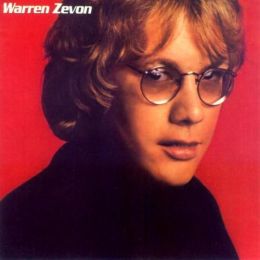 Zevon was highly praised as a songwriter of strange, macabre pop songs with deadpan humorous lyrics, and when he teamed up with L.A. wonder boy Jackson Browne in 1978 on his major-label debut, “Excitable Boy,” the result was both commercial success and critical acclaim. “Werewolves of London” and the title track may have received most of the airplay, but I found tracks like “Tenderness on the Block” (co-written by Browne) the most appealing. Savvy lyrics about a teenage girl trying to find her way in a challenging world make it one of the standout tracks in Zevon’s catalog: “She’s all grown up, she has a young man waiting, she was wide-eyed, now she’s street-wise to the lies and the jive talk, she’ll find true love and tenderness on the block …”
 There are very few bands in the history of rock who came exploding out of the blocks with a masterpiece on their very first try, and The Doors are one of them. In addition to the anthemic “Light My Fire” and the ferocious “Break On Through (To The Other Side),” the album runneth over with one great song after another: “The Crystal Ship,” “Back Door Man,” “20th Century Fox,” “Soul Kitchen” and the terrifying finale “The End.” Easily overlooked is the penultimate track, “Take It As It Comes,” with Jim Morrison’s vocals alternately sweet on the verses and fierce on the choruses. Keyboardist Ray Manzarek, guitarist Robby Krieger and drummer John Densmore (and an uncredited Larry Knechtel on bass) played like a tightly oiled machine on this and every track.
 One of the best songwriters of the ’80s/’90s was Aimee Mann, who spearheaded the alternative rock band ‘Til Tuesday through the 1985-1989 period before she went solo. The band won Best New Artist at the MTV awards in 1986 on the strength of their #8 hit “Voices Carry.” On the group’s second LP, the excellent “Welcome Home,” Mann wrote several songs that veered more toward mainstream pop (“Coming Up Close,” “Will She Just Fall Down”). One track, the mesmerizing “Lovers’ Day,” harkened back to the New Wave-ish debut LP, with lyrics that drove home the reality that “there’s no way to betray and still be true.”
 This British progressive rock group, which dabbled in rock, folk, jazz and classical, played largely instrumental songs written by guitarist Andrew Latimer and keyboardist Peter Bardens. The group never caught on much in the US, but English fans loved them, putting six of Camel’s first eight LPs into the Top 40 on the UK album charts, beginning with 1975’s impressive “The Snow Goose.” Just before that LP came “Mirage,” which was very popular on West Coast FM stations. One lively track, “Supertwister,” offers some dazzling flute work by Latimer that’s reminiscent of mid-’70s-era Jethro Tull.
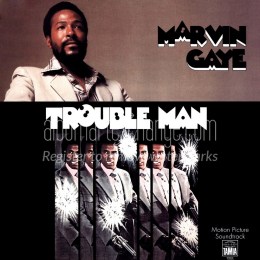 When Marvin Gaye’s name comes up, many people gravitate to the many outstanding hits he churned out as a leader of Motown Records’ stable of recording artists in the 1960s, tracks like “I Heard It Through the Grapevine,” “Ain’t That Peculiar,” and duets like “Ain’t No Mountain High Enough” and “It Takes Two.” Others linger on Gaye’s brilliant early ’70s anthems like “What’s Going On” and “Mercy Mercy Me.” Sometimes forgotten is a track like 1972’s “Trouble Man,” a dreamy piece written and recorded by Gaye for the somewhat cheesy crime drama film of the same name. The song actually charted well, reaching #7 in early 1973, but you don’t hear it much anymore. Until now.
 Following the unqualified success of the 1981 reunion event, “Simon & Garfunkel: The Concert in Central Park,” the duo headed into the studio to collaborate on a new S&G studio LP, their first since 1970’s “Bridge Over Troubled Water.” Garfunkel provided vocal harmonies to a handful of tracks before the duo had an acrimonious split (again), and Simon went on to develop ten songs as his next solo album, 1983’s “Hearts and Bones.” A favorite from this mostly overlooked Simon project is “Train in the Distance,” one of three songs that delve into Simon’s short, stormy marriage to actress Carrie Fisher: “Two disappointed believers, two people playing the game, negotiations and love songs are often mistaken for one in the same, everybody loves the sound of a train in the distance, everybody thinks it’s true…”
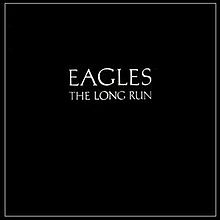 Coming up with a worthy follow-up to the mega-success of “Hotel California” proved an arduous task for The Eagles, particularly songwriters Don Henley and Glenn Frey. They admitted that tour burnout and excessive coke use brought on a case of writer’s block that delayed recording sessions for many months. Perhaps the best track that emerged on the final product, 1979’s “The Long Run,” was the Henley-Frey collaboration “King of Hollywood,” which criticized movie and record producers for their demands for sexual favors from struggling actresses and artists. This one could’ve been about Harvey Weinstein: “Now look at me and tell me, darlin’, how badly do you want this part? Are you willing to sacrifice? And are you willing to be real nice? All your talent and my good taste, I’d hate to see it go to waste…”
 All eyes were on Plant when he made his solo debut on the first post-Led Zeppelin album, “Pictures at Eleven,” in 1982. Guitarist Robbie Blunt had big shoes to fill, and he contributed admirably with strong guitar riffs and helped Plant write the bulk of the songs. The singles released from the album — “Burning Down One Side” and “Pledge Pin” — fared well on US Mainstream Rock stations but stiffed on the pop charts. I think the better choice would’ve been “Fat Lip,” which offers an almost pop sensibility set against some Zep-like vocal acrobatics from Plant.
 The prolific songwriting team of lyricist Bernie Taupin and Elton John cranked out several dozen great songs in their early years together, most of which turned up on Elton’s debut LP (1969’s “Empty Sky”), the phenomenal “Elton John” album and the concept LP “Tumbleweed Connection,” both in 1970. During that period, John and Taupin had also agreed to write songs for an obscure little French film called “Friends,” about a young pair of neglected teens who ran away to the French countryside, had a baby and attempted to start a life together. The title song “Friends” was a minor hit with a wonderful sentiment (“If your friends are there, then everything’s all right”), but another tune from the film soundtrack I have always loved is “Michelle’s Song,” with a gorgeous melody line and a chorus that soars.
 Following the March 1970 release of “Deja Vu,” Crosby, Stills, Nash and Young were pretty much the hottest band in the country, with hits like “Teach Your Children” and the ripped-from-the-headlines “Ohio” on the charts as they toured the land. Sadly, their egos and jealousies proved to be insurmountable obstacles, and they broke up only three months later. In the fall of 1971, Atlantic Records released “Four-Way Street,” a double live album of acoustic and electric performances culled from that shortened tour. Some tracks exposed how ragged their harmonies could be in a concert setting, but others were true diamonds in the rough. The best, I think, is Crosby’s stunning, previously unreleased “The Lee Shore,” with just Crosby and Nash weaving a delicate harmonic web.
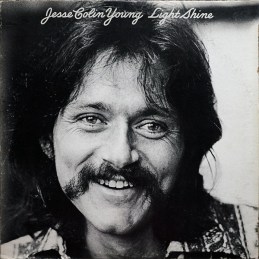 In the late ’60s, Jesse Colin Young and Jerry Corbitt co-founded The Youngbloods, a folk rock act that had success with the Chet Powers song “Get Together” (“Come on people now, smile on your brother…”) which became a bellwether of the Woodstock generation. Young soon went solo and established himself as a superior songwriter and arranger of light pop/jazz tunes like “Ridgetop,” “California Child” and “Songbird.” The title song from Young’s 1974 LP “Light Shine” picks up where “Get Together” left off, radiating positive vibes with lyrics that encourage peace, kindness and love: “We all got a light inside, people how can we survive if we don’t let it shine on all night and day, you know the world is dark with fear, people scared to let you near, they need you to shine on, shine on all day…”
 Hack's Back Pages