Gonna make you, make you notice
Here in 2020, we’ve seen a whole bunch of “50 years ago” lists and tributes to albums, songs, bands and events from 1970. I wrote my own blog about it several months ago.
This week, I thought I would instead focus on what was going on in music 40 years ago. Here’s what I found: 1980 was a year of transition, when many artists of the Seventies were losing their clout and new artists were leading the industry in a different direction.

Techno-pop. The drum machine. The morphing of punk into “New Wave.” The death of disco.
In reviewing the list of more than 500 rock albums released 40 years ago this year, I found that nearly half were by artists who had been around for a while, while the other half were by newer bands, working on their debut or second LP. I listened again to as many as I could and whittled down my list of the Best Albums of 1980 to the 25 or so that most inspired and influenced me. My list has a similar split between established artists and new upstarts, reflecting my passion for Seventies styles while embracing the best of the new. The hard part was selecting the final dozen; most of my “honorable mentions” could easily have made the cut on someone else’s list.
My accompanying playlist includes four tracks from each of the dozen albums on the list, plus two tracks each from the honorable mentions.
Crank it up!
*****************
“Pretenders,” The Pretenders
 Of the new contenders who first emerged in 1980, the most pleasant surprise was The Pretenders, led by the indefatigable Chrissie Hynde, one of the most talented badass women rock music has ever seen. A product of the rough-and-tumble milieu of Akron, Ohio, Hynde moved to London in her early 20s and was profoundly influenced by not only the energy of the British punk scene but its defiance and “up yours” stance as well. The difference between The Pretenders and the lame “pretenders” who had similar ambitions, in my view, is Hynde’s ability to write great songs with pop hooks that made their stuff palatable to old-school skeptics like me. Their debut LP came out the first week of 1980 and went immediately to #1 in England, while in the US their popularity grew more slowly until the LP reached #9 mid-year. “Brass in Pocket” became their signature hit single, although just as interesting were “Kid,” “The Wait” and “Stop Your Sobbing,” among others from this fine record.
“Arc of a Diver,” Steve Winwood
 When he was still just 15, Winwood wowed critics and fans with his amazing voice on Spencer Davis Group’s “Gimme Some Lovin'” and “I’m a Man.” At 18, he formed Traffic, the British band who came up with a dazzling mix of folk, jazz and rock. He took a break to join forces with Eric Clapton in Blind Faith for a short spell, and then reformed Traffic for another four-album run that included the exemplary “John Barleycorn Must Die” and “Low Spark of High-Heeled Boys.” A first attempt at a solo album in 1977 was surprisingly flat, although not without great moments. Late in 1980 came “Arc of a Diver,” a phenomenal LP which featured Winwood playing every instrument and singing in fine form on a great batch of songs. The album reached #3 on US pop charts, led by the #7 hit single “While You See a Chance.” Other strong tracks included “Spanish Dancer,” “Night Train” and the title song. He followed it with three more strong albums in the same vein — “Talking Back to the Night,” “Back in the High Life” and “Roll With It.”
“Empty Glass,” Pete Townshend
 Since forming The Who with singer Roger Daltrey in 1964, Townshend had assumed the responsibility of writing nearly all of the band’s material, which took its toll on his physical and mental health. His never-easy relationship with Daltrey became strained, largely because Townshend would occasionally insist on handling lead vocals on certain tracks. When drummer Keith Moon died in 1978 after the release of their “Who Are You” album, the band wasn’t sure how to proceed. Townshend took the opportunity to gather some intensely personal songs about alcoholism, drug abuse, marital strife and the death of friends and release them as a solo album, “Empty Glass,” which reached #5 in the US. This further rankled Daltrey, who felt the songs were superior to the ones Townshend offered to the band for their lackluster concurrent album “Face Dances.” I think he’s right — “Rough Boys,” “And I Moved,” “Gonna Get Ya” and “Empty Glass” are superb tracks that might have been even better if The Who had recorded them. Still, Townshend’s solo effort is a fine piece of work on its own.
“Zenyatta Mondatta,” The Police
 I remember first hearing this Brit trio’s debut hit, “Roxanne,” and thinking it was an enticing blend of reggae and punk. “Message in a Bottle” from their second LP grabbed me as well, but I wasn’t motivated to buy either album. By the time “Don’t Stand So Close to Me” was released in September 1980, I was far more open to the New Wave styles that were beginning to reach the mainstream, so I bought “Zenyatta Mondatta,” The Police’s strong third album. It became a popular soundtrack at the crazy parties my roommates and I were throwing, where we danced up a storm to these songs, sometimes on the furniture! The mix of Andy Summers’ guitar stylings, Stewart Copeland’s jazzy drumming and Sting’s bass lines and vocals created an indelible sound that only grew more compelling with their subsequent albums — “Ghosts in the Machine” and the phenomenal “Synchronicity” — before they disbanded. On “Zenyatta,” tracks like “Man in a Suitcase,” “Canary in a Coal Mine” and the hypnotic “When the World is Running Down, You Make the Best of What’s Still Around” stay with me four decades later.
“One-Trick Pony,” Paul Simon
 Following the success of his 1975 LP “Still Crazy After All These Years,” which won a Grammy as Album of the Year, Simon took some time off. Never a prolific writer, he suffered through one of his bouts of writer’s block by turning his attentions to film. He had a small role as a music industry luminary in Woody Allen’s Oscar-winning “Annie Hall” and then began work on his own film project. He not only composed the songs for the soundtrack but also wrote the script and assumed the lead acting role. “One-Trick Pony” is the story of a once-popular folk musician who is struggling to record a new album in the face of pressure from record label execs and a wife who is pulling away from him. The poignant movie flopped at the box office, which affected sales of the accompanying album, which is a crying shame. “Late in the Evening” was a hit, but there are so many other fine tunes that flew under most people’s radar. “God Bless The Absentee,” “Ace in the Hole,” “Jonah” and the title song all deserve your attention.
“Gaucho,” Steely Dan
 Over the course of six outstanding albums in six years, from “Can’t Buy a Thrill” to “Aja,” Donald Fagen and Walter Becker had taken Steely Dan from an actual band to a two-man project involving dozens of session musicians. Then 1978 and 1979 went by with no new album, and fans wondered if they’d heard the last of them. Turns out the period was full of personal and professional problems that affected recording sessions and relationships. When “Gaucho” finally appeared in the fall of 1980, it was cause for celebration. To me, the seven beautifully produced songs carried on logically from the sound heard on “Aja,” and lyrically, they continued the Steely Dan tradition of creating character studies about sketchy outliers and woeful ne’er-do-wells. Sadly, “Gaucho” would be the last Steely Dan album for 20 years, but with songs like “Babylon Sisters,” “Glamour Profession,” “Time Out of Mind” and the hit single “Hey Nineteen,” they surely went out with class.
“Making Movies,” Dire Straits
 I found the first two LPs by this band mildly interesting, mostly because of the spare, delicious guitar playing of Mark Knopfler. His singing left me cold and some of his songs were kind of dull. But boy, did I sit up and take notice when Dire Straits’ third LP, “Making Movies,” arrived in late 1980. Knopfler had been writing more sophisticated, more personal songs, and with the stunning contributions from The E Street Band’s Roy Bittan on piano, the arrangements and production quality took quantum leaps forward. Even Knopfler’s singing had improved, to the point where I no longer wished they’d hired a different vocalist. Dire Straits would go on to become one of the biggest sellers of the decade, thanks to the 1985 blockbuster “Brothers in Arms” and its mega-hit single “Money for Nothing.” But I will always be partial to the outstanding tracks on this album, especially the gorgeous “Romeo and Juliet,” “Tunnel of Love,” “Skateaway” and the aggressive rocker “Solid Rock.”
“Hotter Than July,” Stevie Wonder
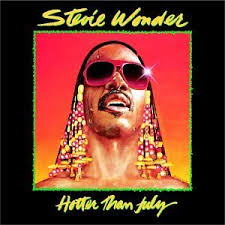 Following the unparalleled success of his 1970s albums (“Talking Book,” “Innervisions,” “Fulfillingness’ First Finale” and “Songs in the Key of Life,” three of which won Album of The Year Grammy awards), Wonder tried something new and wrote a soundtrack for a documentary called “The Secret Life of Plants.” That album had some fine tracks like “Send One Your Love” and “Black Orchid,” but overall, it didn’t click with most fans. So it was a welcome return to form when he came roaring back in September 1980 with “Hotter Than July.” Critic Stephen Holden accurately described Wonder as “our most gifted pop muralist because of his evocative, unique synthesis of pop and African musical elements.” He dedicated the album (and the song “Happy Birthday”) to his effort to have Martin Luther King’s birthday declared a national holiday, which came to pass only three years later. “Master Blaster (Jammin’)” was a fabulous dose of reggae in honor of Bob Marley, while “I Ain’t Gonna Stand for It,” “Rocket Love” and “All I Do” stand out as the best tracks.
“Boy,” U2
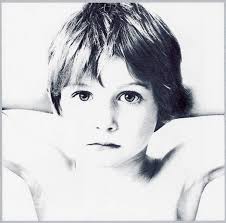 From 1980 onward, few bands have had the impact or the sales success of U2, Ireland’s most popular rock band. I wasn’t hip to their music from the get-go, but I joined the party around the time of 1984’s “The Unforgettable Fire.” The combination of innovative guitar work by The Edge and passionate vocals by Bono have served the band very well throughout their 14-album catalog. Just as important is the songwriting, which the band claims is credited to all four members, though it’s clear that Bono writes the lyrics and The Edge is responsible for most of their musical direction. U2 has evolved into international superstars, both in concert and on record, but you would be well advised to go back to their humble beginnings, where you’ll find “Boy,” a remarkably mature album for a bunch of 20-year-olds. The songs deal largely with childhood, adolescence and young adulthood, including “I Will Follow,” “Stories For Boys,” “Out of Control” and “Twilight.” It’s a damn good record — overshadowed by later works, perhaps — but well worth your time.
“Shadows and Light,” Joni Mitchell
 I’m not much of a fan of live albums. In most instances, the crowd noise serves as an annoying distraction, and too often the band is encouraged to turn a five-minute song into a ten-minute excuse for endless soloing. There are exceptions, of course; The Allman Brothers Band’s “At Fillmore East” immediately comes to mind. In 1980, no less than nine major artists saw fit to release a live album (and they’re always double albums, by the way, increasing the risk of boring the listener). Nevertheless, I was thoroughly taken by Joni Mitchell’s “Shadows and Light,” which beautifully captured her creative genius as she performed with jazz greats like Pat Metheny on guitar, Jaco Pastorius on fretless bass and Don Alias on drums. (There’s a great concert video of this show available that you should definitely check out). Mitchell drew mostly from her more recent jazz-influenced tunes like “Amelia,” “Shadows and Light” and tracks from her 1979 collaboration with Charles Mingus, but she included favorites like “Free Man in Paris,” “Raised on Robbery” and “Coyote” as well.
“Remain in Light,” Talking Heads
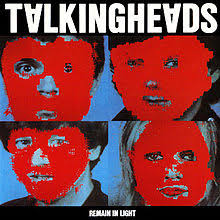 I have a difficult confession to make. David Byrne and his amazing band from New York City weren’t really my cup of tea when they were new. There, I said it. I loved “Take Me to the River,” but that was about it. It took me until sometime in the late ’80s when I saw the astounding live concert film “Stop Making Sense” to appreciate the great songs and excellent sonics of this band. In 1992, I bought “Sand in the Vaseline,” a 2-CD anthology of the best of Talking Heads, and finally brought myself up to speed on their catalog. Since then, I have delved back into the original albums, and decided that “Remain in Light,” released in the fall of 1980, is probably their best work. “Once in a Lifetime” is easily my favorite, but I was impressed with unfamiliar tracks like “Seen and Not Seen” and “Houses in Motion.” I’ve been jazzed by Byrne’s more recent solo stuff, which I’ve been listening to lately, but the Talking Heads tracks here are not to be missed.
“The Turn of a Friendly Card,” The Alan Parsons Project
 Back in the late ’70s and early ’80s, if you went shopping for new speakers for your home stereo, you made sure to have some albums by Alan Parsons Project to test their quality. Parsons, you may know, was engineer for The Beatles’ “Abbey Road” and producer for Pink Floyd’s sonically perfect “Dark Side of the Moon,” so he knows what he’s doing in the studio. Much like Steely Dan, Parsons and his musical partner Alan Woolfson wrote songs together and then brought in dozens of different players to turn the tracks into aural gold. “I Robot” from 1977 is many fans’ favorite APP album, but I have always been partial to the majestic tracks heard on “The Turn of a Friendly Card,” released in the waning days of 1980. Side two (remember album sides) was largely devoted to the titular five-song suite, of which I’ve included the final section on the playlist. Just as strong are the sax-dominated instrumental “The Gold Bug” and the two Top 20 hits, “Games People Play” and “Time.”

*****************
Honorable mention:
“The Up Escalator,” Graham Parker; “Duke,” Genesis; “The River,” Bruce Springsteen; “One Step Closer,” The Doobie Brothers; “Double Fantasy,” John Lennon & Yoko Ono; “Crimes of Passion,” Pat Benatar; “Back in Black,” AC/DC; “Hold Out,” Jackson Browne; “Sandinista!,” The Clash.

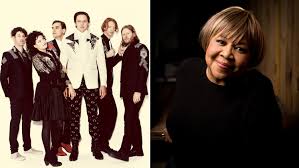 Arcade Fire may be a Canadian band, but they still have the right to make their feelings known about political power in a free society, be it in the U.S. or elsewhere. Written by leader Win Butler with help from singer Mavis Staples in the spring of 2016 and released the day before Trump’s inauguration in January 2017, “I Give You Power” is a brilliantly concise reminder to those who win elections that they can lose their political power as easily as they win it: “I give you power, power, where do you think it comes from, who gives you power, where do you think it comes from, I give you power, I can take it all away, I can take it away, watch me take it away…”
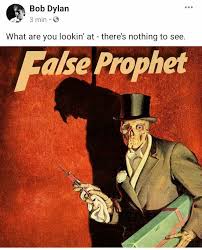 The man who offered up such iconic ’60s protest songs as “The Times They Are A-Changin'” and “Masters of War” is still at it nearly 60 years later with a new album of thought-provoking tunes. In addition to a 17-minute epic about the Kennedy assassination called “Murder Most Foul,” Dylan has written “False Prophet,” which comments on our current situation but ends with hope: “Another day that don’t end, another ship goin’ out, another day of anger, bitterness, and doubt, I know how it happened, I saw it begin, I opened my heart to the world and the world came in…” Later, he makes reference to Trump and where he might be headed soon: “Hello stranger, a long goodbye, you ruled the land, but so do I, you lost your mule, you got a poison brain, I’ll marry you to a ball and chain…”
 Pearl Jam has a whole slew of overtly political songs in their catalog, and for their 2006 album “Pearl Jam,” several tracks dealt with the Iraq War and its aftermath, as well as the “War on Terror,” as it was referred to by the Bush Administration. I think “World Wide Suicide” is the best of the bunch. Singer Eddie Vedder has never been shy about challenging authority nor bemoaning the horrors of war in his lyrics: “It’s a shame to awake in a world of pain, what does it mean when a war has taken over, it’s the same everyday and the wave won’t break, tell you to pray while the devil’s on their shoulder, the whole world over, it’s a worldwide suicide….”
 A Las Vegas-bred rock band since the early 2000s, The Killers have been led by singer-keyboardist Brandon Flowers, who has written or co-written nearly every song in their five-album repertoire, which have sold nearly 30 million copies worldwide. Flowers recently wrote “Land of the Free,” a song that makes ironic use of the title to protest issues that still bedevil us in this country, specifically mentioning immigration, gun control and racism. In regards to the unfairness of systemic racism: “When I go out in my car, I don’t think twice, but if you’re the wrong color skin, you grow up looking over both your shoulders… Incarceration’s become big business, it’s harvest time out on the avenue in the land of the free…”
  Dion DiMucci, popular singer of ’50s and ‘early ’60s hits like “The Wanderer” and “Runaround Sue,” has re-emerged recently with Paul Simon for a powerful duet about the late Sam Cooke, one of the best soul/gospel singers of all time, who was gunned down in 1964 by a white motel owner. The lyrics deal with the racism of those times while reminding us that race relations are still tenuous in many parts of the country today: “I never thought about the color of your skin, I never worried ’bout the hotel I was in, here in America, here in America, but the places I could stay, they all made you walk away, you were the man who earned the glory and the fame, but cowards felt that they could call you any name, you were the star, standing in the light that won you nothing on a city street at night…”
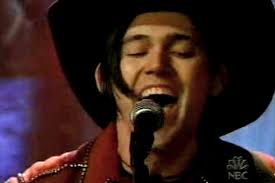 Since the beginnings of the nation, presidents have mentioned God and the need for guidance, but none quite as arrogantly as George W. Bush, who claimed to have actual conversations with God. Conor Oberst, the singer-songwriter behind the indie rock band Bright Eyes, wrote this piece that took strong exception to Bush’s use of God to justify his policies and decisions. In early 2005, NBC surprisingly gave the green light to Bright Eyes performing the song on “The Tonight Show.” It was released as a free track on iTunes shortly after: “Does he fake that drawl or merely nod when the president talks to God? Does God suggest an oil hike when the president talks to God? Does what God says ever change his mind when the president talks to God? When he kneels next to the presidential bed, does he ever smell his own bullshit when the president talks to God?…”
 Ben Gibbard, singer-songwriter for the popular alt-rock band Death Cab for Cutie, said he was outraged by then-candidate Trump saying during one of the 2016 presidential debates that he self-made his fortune “with just a small million-dollar loan” from his father. “He made it sound like anyone could get a million dollar loan,” Gibbard said, “which is just insane.” Gibbard poked a sharp stick at Trump’s silver-spoon upbringing: “He’s proud to say he built his fortune the old fashioned way, because to succeed, there’s only one thing you really need, a million dollar loan, nobody makes it on their own without a million dollar loan, you’ll reap what you’ve sown from a million dollar loan, call your father on the phone and get that million dollar loan…”
 The Texas-based, three-woman country group, riding high in 2003 as one of country music’s most popular acts, came out against the Iraq War while performing in England, adding, “We’re ashamed that the President of the United States is from Texas.” The backlash from the group’s conservative fan base was fierce and instantaneous, and most country radio stations began boycotting their music. It took them off the charts for a few years before they returned with “Not Ready to Make Nice,” which reinforced their previous statements, not angrily but with a heartfelt rejoinder that defended their right to speak their minds: “How in the world can the words that I said send somebody so over the edge that they’d write me a letter, saying that I better shut up and sing or my life will be over? I’m not ready to make nice, I’m not ready to back down…”
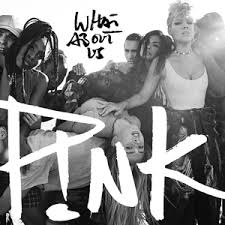 Alecia Beth Moore, better known as the multi-talented singer-songwriter Pink, has enjoyed a spectacular solo career since her debut 20 years ago. Selling upwards of 90 million albums worldwide with multiple #1 albums and singles, she avoided being typecast as a mindless pop act by writing songs of real substance and using her gymnast-like dancing skills to reach new levels of artistry in her live performances. When she wrote “What About Us” for her 2017 album “Beautiful Trauma,” she kept it general enough so it could be interpreted to be about a failed relationship, but most believe it to be a political protest song about the Trump administration: “We are billions of beautiful hearts, and you sold us down the river too far, we were willing, we came when you called, but man, you fooled us, enough is enough… What about all the times you said you had the answers? What about all the plans that ended in disasters? What about love? What about trust? What about us?…”
 Not so much a song as a chant with gospel overtones, this track (the title is a contraction for “What the hell are you talking about?”) is a powerful message piece that Monae wrote and recorded with a loose collective of musicians she called Wondaland. Originally, the verses painted vignettes of three black people who died at the hands of overzealous police, but as more such incidents began occurring, the lyrics evolved into a chanting of names of the victims, imploring listeners to “say their names!” David Byrne, late of Talking Heads, was so impressed by it that he has been concluding all his concerts lately with his own rendition of it. A live recording of Byrne with a chorus and tribal drums is included in the Spotify list below.
 Hack's Back Pages